• Training
    • Injury Prevention
    • Training Tips
  • How To
    • Bike Fit
    • Gear
  • Nutrition
    • Nutrition Tips
    • Weight Loss
  • Repair
  • Reviews
  • Stories
    • Funny Stories
    • Jokes
    • Quotes
    • Videos
    • Funny Videos

I Love Bicycling

I Love Bicycling is a website that is geared towards cycling for beginners with road cycling tips, training articles, nutrition tips, weight loss, how to’s and bike repair articles.

Training

  • Injury Prevention
  • Training Tips
  • Training Camps

What is Adaptive Muscle Shortening?

April 23, 2018 by Sarah Lauzé

Have you heard of adaptive muscle shortening? Muscles do not naturally maintain their healthy or ideal range of motion on their own. In fact, it’s just the opposite, especially with the increase of 9-5 desk jobs. Muscles will change their functional resting length to adapt to the length at which they are habitually used or positioned.
Adaptive Muscle Shortening and Cycling

This is bad news for cyclists. Cycling is one of the few activities in which muscles contract concentrically (while shortening), rather than eccentrically (while lengthening). The repetitive motion causes muscle fibres to shorten if action is not taken. Not only will shortened muscles impact your efficiency, comfort, and aerodynamics on the bike, but they will eventually lead to injury.

Do you have tight hamstrings?
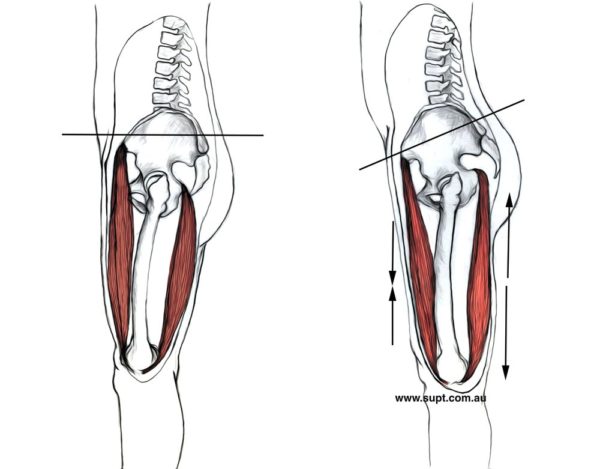
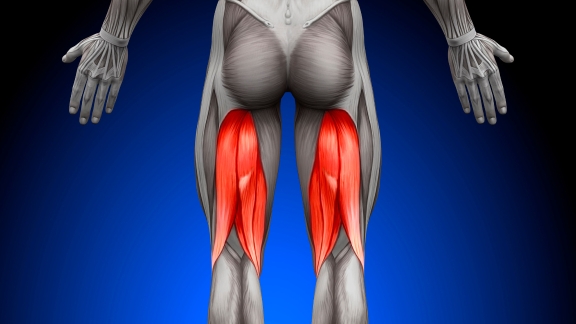
An example common to most cyclists is shortened hamstrings. Running down the back of your leg, the hamstrings start at your hips and cross behind the knee joint. Their main job–extend the hip and flex the knee, two of the most important movements in the cycling motion. The upper portion of the hamstring plays a role in the down stroke, and the lower part is active in the up stroke. The muscle is affected in the following ways:

  • The upper section of the hamstring muscles attached at the hip can become loose and weak.
  • The lower section crossing behind the knee remains bent, and never fully extends. This is the portion that will become shortened and tight over time.
  • The combination leads to muscle imbalance between the two ends of the muscles, which leads to problems, stress, strain, and even serious injury, most common in the knee or lower back.

Your body will naturally try to keep muscles balanced on both sides by providing equal, muscular support, but adaptive shortening prevents this from happening. As one end of a muscle loosens, the other end can become more and more shortened.

Muscle Function and Balance
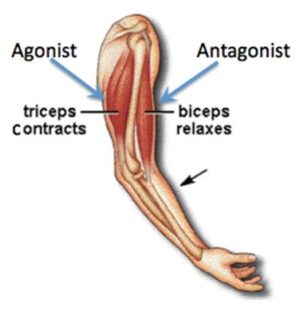
In every movement there are four main functions of the associated muscles, Agonists (primary mover), Antagonists (it’s balancing muscle), stabilizers and assistors.

  • Agonists – the muscle being exercised/worked.
  • Antagonist – the opposing muscle acting in contrast to the agonist.
  • Stabilizer Muscles – hold the joint in place so that the movement can be performed, but are not necessarily moving.
  • Assistors help the Agonist muscle that’s doing the work.

Muscle Balance speaks primarily to the agonist and antagonist muscles in any give movement. It is important to have balance to prevent injury, which is why stretching is so important for cyclists. When one muscle becomes tight, it’s antagonist will also be effected, and can even be injured as a result.

How to Prevent Adaptive Muscle Shortening

Most cycling injuries are caused by tight muscles or a limited range of motion, from knee pain to underdeveloped glutes. By targeting certain muscles and their often neglected counterparts, routine sequence stretching will unlock the full potential of your muscles and joints.

Lengthening the muscles needs to be done in the right order, with balance and intention. Concentrating on one muscle before the other can actually add to the problem, rather than improving it.

This is why so many people give up when they don’t experience results within the first few days. The reality is, lengthening the muscles takes time. To get started and prevent and even reverse adaptive muscle shortening, check out Dynamic Cyclist‘s stretching program. Made specifically for cyclists with easy to follow video stretching sequences, you can maintain a healthy range of motion and increase flexibility, so you can feel your best both on and off the bike. Click here to try 7 days free!

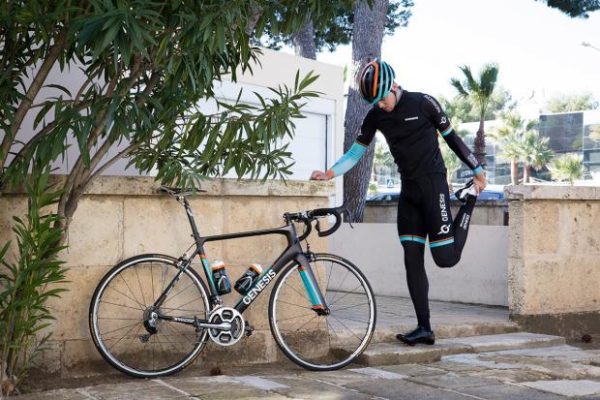
Do Cyclists Need to Stretch?

April 18, 2018 by Sarah Lauzé

How many times have you found yourself saying, “I should really stretch more?” It’s common knowledge that cyclists need to stretch, but many of us fail to do it enough, if at all.

If it’s not broken then don’t fix it right? If you’re putting in the miles and feeling strong, you may not feel like you need to switch up your routine at all. However, if we truly understood the benefits of stretching, perhaps we would be as disciplined to stretch as we are to get out cycling.

Cyclists Need to Stretch

Is stretching important for cyclists?

The most important thing for cyclists, and human beings in general, is to have a healthy range of motion and flexibility to move freely and efficiently. Stretching can aid in aligning the thick and thin muscles back into their ordered state after movement, as well as remove the lactic acid buildup that causes soreness.

Being able to stretch your legs up around your head may not make you a better cyclist, but the more a muscle is able to stretch the better range of motion it will have. For cyclists, the more you can flex your hips, knees, and ankles, the more room for improvement you will have.

Two main types of stretching

  1. Dynamic – Dynamic stretching takes a joint or muscle through a range of motion. It is best done before cycling as a way to prepare the joints for the repetitive movement, get blood flowing and warm up your muscles.
  2. Static – Static stretches are designed to be held in one position for at least thirty seconds, and are what most people think of when it comes to stretching. The goal is to relax the muscle and deepen the stretch bit by bit. This is best done after exercise, as static stretching before can actually hinder the muscle’s ability to fire.

The benefits of stretching

Improves posture – As a society that spends a lot of time at our desks, stretching as a means of correcting poor posture has never been so important. For cyclists, you will want to focus on correcting the hunched over position that comes with cycling and ensuring you are stretching out your lower back. By lengthening tight muscles you keep them from pulling areas of the body out of their intended position.

Reduces risk of injury – By supplying nutrients to the muscles through blood flow, stretching can reduce the risk of muscle and joint injury and help speed up recovery.

Improves performance  – Your cycling performance is largely based on your mechanical efficiency (range of motion) and power output. Stretching before and after a ride gives your muscles time to relax, enabling them to be more available during those long rides.

Provides relief from muscle stiffness – Post-activity stretching has been shown to reduce Delayed Onset Muscular Soreness (DOMS) by increasing blood flow and getting a much needed nutrient supply to your tired muscles.

While there is some debate as to how long you should hold each stretch, anywhere between 30-60 seconds should be enough. Make sure you are only stretching as deep as it feels comfortable. Any signs of pain, pinching or discomfort signals that it is time to back off a tad. Check out some of the best stretches for cyclists for more information to get you stretching.

You don’t need to sign up for daily yoga classes or commit a ton of time to stretching, but even a little bit can go a long way in keeping you injury free and feeling your best. Start with 10 minutes a day, 4-5 times a week and you will start seeing and feeling the results. If you want a more intensive stretching program for cyclists, check out Dynamic Cyclist. They have daily, easy to follow stretching videos designed specifically for and by cyclists. Spend less time thinking about how and what to stretch, and more time in the saddle!

Stretches You Can Do At Your Desk

April 12, 2018 by Sarah Lauzé

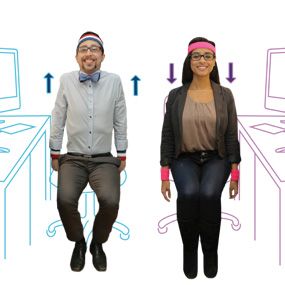
As cyclists and as human beings, our bodies are meant to be moving. With the integration of technology into almost every area of work, there are more and more of us sitting at a computer for 40 hours a week. So we ride to and from work, walk to get groceries, and head out for long rides on the weekend as a way of offsetting the desk chair. The bad news is – this may not be enough to counteract an entire workday of sitting. Incorporating stretches you can do at your desk into your day-to-day routine can help reduce the risks of a sedentary lifestyle.

In addition to this problem, as cyclists we develop a selection of major muscles through time in the saddle, but there are other that remain underdeveloped. Opposing muscle groups are not often moved through their full range of motion, which can cause muscle imbalance. Regular stretching for cyclists, even if it’s brief, can help balance posture and reduce stiffness and soreness.

Stretches You Can Do At Your Desk

Ideally, you should stand up from your chair every 20 minutes. If you have a standing desk, raising it up at different intervals can help combat the risk of a sedentary lifestyle. Getting up to go to the bathroom, grab a coffee, walk to a meeting, or head out for lunch are all great, so you just have to target those sections of your day where you are not getting as much relief. You don’t have to stop working, run a lap of the office and drop down into downward dog. Even simple stretches at your desk can help get blood flowing and wake up your muscles. Here are some of the most effective stretches you can do at your desk.

Stretches You Can Do At Your Desk

Stand up and sit down

Okay, so it’s not exactly a stretch, but the simple act of standing up and down does wonders! Plus, you can do it while you’re on the phone and no one will ever know.

Shoulder Shrug

Inhale deeply and shrug your shoulders up towards your ears like you’re saying “I don’t know.” Hold, then release and drop them back down slowly. Repeat 3-5 times.

Torso Twist

While sitting, turn your upper body to the right and grab the back of your chair with your right hand, holding the arm of the chair with your left arm. Turn your head as far the right as you can, feeling a stretch in your spine, abs, and neck. Hold for 15 seconds. Slowly come back to face forward, and repeat with the left side.

Leg Extensions

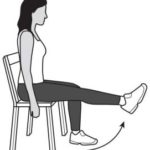
Brace your upper body and raise your legs up one at a time so they parallel to the floor. Depending on your desk set up and how much leg room your have, you may even be able to do this under your desk. Holding your leg our in front of you, point and flex your toes forward 5 times. Release and repeat with the other leg. Repeat as many times as you want!

Give yourself a hug

Not only does this stretch feel great, but you get to give yourself a much deserved hug. Place your hands on the opposite shoulders, breathing in and out slowly. You should feel a stretch between you shoulder blades.

Raise Your Hands

Sit up tall in your chair, stretching your arms overhead and interlocking your fingers. Turn your palms toward the ceiling as you left your chin and tilt you head back, looking up at the ceiling. Take a few breaths here before releasing.

Leg Crossover

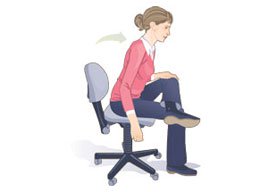
Sit on the front edge of you chair, with your thighs parallel to the floor and feet below your knees. Lift your right foot and place it over your left thigh, ensuring the ankle clears the leg. Your right shin should be parallel to the ground, feeling a stretch in your hip flexor. To deepen the stretch, hinge at the hops and tilt your torso forward, keeping your back straight. Hold for 30 seconds, and repeat with the left side.

You don’t need to sign up for daily yoga classes or commit a ton of time to stretching, but even a little bit can go a long way in keeping you injury free and feeling your best. Start with 10 minutes a day, 4-5 times a week and you will start seeing and feeling the results. If you want a more intensive stretching program for cyclists, check out stretching routines for cyclists by Dynamic Cyclist. They have daily, easy to follow stretching videos designed specifically for and by cyclists. Spend less time thinking about how and what to stretch, and more time in the saddle!

The Best Stretches for Cyclists

March 31, 2018 by Sarah Lauzé

Cyclists are known for their toned calves, strong thighs and overall cardiovascular fitness. We may be able to output a ton of power into each pedal stroke, but when it comes to flexibility and range of motion, most of us are lacking. This isn’t without cause, and we want to provide the best stretches for cyclists to keep you feeling your best.

Cycling is one of the few activities in which muscles contract concentrically (while shortening), rather than eccentrically (while lengthening). It’s great for our bodies as it’s low impact, but this repetitive motion can cause the muscle fibres to shorten, also known as ‘adaptive shortening.’ This will not only cause an imbalance in your muscles and put you at risk of injury, but it can make maintaining proper posture almost impossible. The best way to combat this is with regular and targeted stretches for cyclists.

Flexibility and range of motion can be an easy thing to ignore. So long as we can keep up on those group rides or stay in the saddle for hours at a time, it can quickly fall off the radar (if it was ever there). However, the range of movement around a joint or multiple joints is actually extremely important for all athletes, and especially for cyclists. As humans we are not built to be in a cycling position for extended periods of time, just as we aren’t built to sit at desk jobs 40 hours a week. This doesn’t mean we need to give either one up, but that we need to take the right steps to ensure it doesn’t have a negative effect on our body.

Stretches for Cyclists

The hunched over, forward leaning position on the bike is known for causing the hip flexors to tighten over time. From there, these short, tight muscles with a limited range of motion can cause an anterior pelvic tilt, and arched lower back and weak core muscles. The domino effect is no fun, so it’s always better to take preventative measures rather than reactive.

The focus should be on maintaining, or probably regaining, a healthy range of motion in the joints. From there, you’ll find you ride more comfortably, efficiently and with better technique.

Why Cyclists Need to Stretch

Immediate EffectsStretches for Cyclists

Accelerate recovery – Stretching reduces muscle soreness and stiffness by increasing blood flow, delivering more nutrients to your muscles and removing lactic acid and metabolites. Stretching also promotes whole body relaxation; boosting recovery, rejuvenation and adaptation by increasing the activity of the parasympathetic nervous system after exercise.

Increased Oxygen Flow – Stretching increases blood (and oxygen) flow to the muscles, reducing post-ride soreness with the added bonus of promoting cell growth and organ function.

Relaxation – Stretching before and after a workout can give both you and your muscles time to relax. With stress or exhaustion, the muscles will begin to tighten. Stretching can encourage a release of endorphins and leave you feeling encouraged.

Cumulative Effects

Stretches for CyclistsPrevent Tissue Degradation  – Generally speaking, our day to day lives are restricted to certain movements and physical exertion. Over time and with age, the body starts dehydrating and stiffening. On a cellular level, muscle fibres start developing cross-links with parallel fibers making them stick together. Stretching slows this process by stimulating the production of tissue lubricants and pulling the interwoven cellular cross links back into an ordered state.
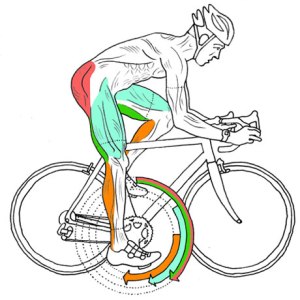

Flexibility – Your range of motion is the distance parts of you body can move and rotate before causing damage to muscles and tendons. Everyone naturally has a different range of motion, but stretching can help you define what that looks like for you. As cyclists, we have to have the freedom and flexibility to move without resistance or pain.

Injury Prevention – Everything in the body is connected, and as cyclists we demand a lot from our muscles, joints and ligaments. Stretching keeps the connections strong, treating and preventing injury, improving functionality and longevity. We also can’t forget about the muscles and joints that are not used in cycling. On the bike, all movements are in a straight line, with no other plane of movement. So, it’s important to keep this in mind while stretching. Not only do you want to focus on the muscles used, but those that aren’t, as a means of reversing and preventing muscle imbalance.

Better Posture & Aerodynamics – Stretching the right muscles can help correct poor posture both on and off the bike. By lengthening tight muscles that pull areas of the body away from their natural position you can maintain proper posture without the desire to round the back or slouch.

The Focus Areas

There is no one recipe for optimal flexibity, as that will vary on an individual basis, but there are target areas that will be more or less the same for all cyclists. The areas that become tightened are fairly universal:

Stretches for Cyclists

Hip Flexors – The action of cycling involves repeated hip flexion with the hip never full extending, which can cause tightness or even a shortening of the muscle over time. Not only can tight hip flexors cause discomfort in your everyday life, they can also reduce your cycling performance. It can lead to lower back pain and will make it tough to access the glutes (see below).

Hamstrings – Tight hamstrings pull the pelvis back on the saddle, rather than allowing a forward tilt. Also, when they become shortened they don’t allow the involvement of the glutes, which can have a negative effect on how much power you can produce.

Quads – The powerhouse of the pedal stroke, it’s pretty obvious that the quads need some attention.

IT Band – The IT Band stabilizes the knee; if it’s tight it can rub against the knee, become inflamed and lead to knee pain.

Glutes – The glutes are one of the largest and strongest muscles in your body. Leaving them inactive is not only costing you power, but can lead to injury as the hamstring and quads overcompensate. Tight glutes prevent you from achieving an aerodynamic position on the bike. First things first, proper pelvic posture is key. If your front side (anterior side of your hips/hip flexors) are tight you won’t be able to access your glutes completely. Work on keeping your pelvis in a neutral position and remember to keep your core engaged when stretching the glutes.

Lower Back – Another symptom of tightness in other areas, lower back pain most commonly stems from tight hamstrings.

10 of the Best Stretches for Cyclists

After a gentle warm up, complete 4-5 of these stretches, holding each one for 1 minute if you can. If not, start with 30 seconds and build up the time. Ideally cyclists should try to stretch everyday, but 5 days a week will be enough to start experiencing some of the long term benefits.

Half Pyramid

The half pyramid stretches the hamstrings, inner thighs, lower back and opens the chest.

Knight’s Pose

The knight’s pose targets the hip flexors and the quads.

Flamingo

This classic quad stretch is important for recovery after a ride.

IT Opener (With Strap)

The iliotibial band stabilizes the knee, so this stretch is great to keep it loose and functioning properly.

Child’s Pose

Great for releasing post-ride tension, child’s pose stretches the groin, chest, and shoulders.

Can Opener

Focusing on the glutes, the can opener is great for cyclists to help release tension.

Lower Twist

For those who suffer lower back pain from cycling, the lower twist targets the bottom of the spine and the glutes.

Figure Four

The figure four is a great multi-target stretch, focussing on the hamstrings and glutes, as well as opening up the hips. 

Downward Dog

One of the more well-known poses, the downward dog is popular for a reason. It fully stretches the hamstrings, calf muscles, shoulders and lengthens the spine.

Pigeon

Also known as “The King of Hip Openers,” the pigeon stretch works to loosen up tight hip flexors. There is also plenty of room for adaptation in the stretch, so it’s great no matter your level of flexibility.

You don’t need to sign up for daily yoga classes or commit a ton of time to stretching, but even a little bit can go a long way in keeping you injury free and feeling your best. Start with 10 minutes a day of stretches for cyclists, 4-5 times a week and you will start seeing and feeling the results. If you don’t know where to begin, check out Dynamic Cyclist. They have daily, easy to follow stretching videos designed specifically for and by cyclists. Spend less time thinking about how and what to stretch, and more time in the saddle!

Heart Rate Variability – What You Need To Know

March 28, 2018 by Andrew Funamoto

Heart Rate Variability. Resting Heart Rate. Functional Threshold Power. Acute Training Load. Ramp Rate. Anaerobic Capacity. Training Stress Score. With all of these metrics, how and why do cyclists still end up overtraining? As it turns out, the data is both a blessing and a curse. It’s not how much data you have; it’s how you use it.

Heart Rate Variability

Heart Rate Variability Addresses Systemic Stress

Enter the yogi of metrics. Heart Rate Variability is the measure of how stressed the system is. A brief Google search will show that HRV breaks down heart rate into smaller slices than a minute and measures the variability between peaks. It is assumed that when one is comfortable and relaxed, with few distractions and stresses, that the heart will pump blood somewhat sporadically. Conversely, when either physical or psychological stress begin to accumulate, the heart will beat with consistency that is symptomatic of a “fight or flight” response.

Overtraining Despite ‘All of the Watts’

Despite the data collected from heart rate monitors and power meters, very few cyclists are prepared or diligent enough to dissect the plethora of information on their own. Cyclists with a competent and engaged coach will be better informed but are still at risk of overtraining. Heart Rate Variability might become the key metric in avoiding injury and overtraining. Unlike Chronic Training Load (CTL) HRV can be a personal assessment of your training load, regardless of your training history.

HRV will allow you to tap into your prana and start listening to your heart. Jokes aside, keeping tabs on your HRV will keep your system topped up and healthy.

Heart Rate and Power

The purchase of a heart rate monitor is a good first step in guiding your training. It’s useful when doing steady threshold efforts and can be used to watch fitness progress.
When coupled with Rate of Perceived Exertion (RPE) it can indicate how fatigued you are on a given day, but the relationship between the two is generally inconclusive when judging long term fatigue.

The power meter is the single best tool for training, but the stubborn and resilient can find themselves in a deep pit of overtraining. The game of hitting threshold numbers and smashing anaerobic workouts can have unsuspected psychological and physical implications. The metrics generated by Strava, Training Peaks and Golden Cheetah to assess stress and fatigue are good guidelines, but can frequently lead you into thinking that you aren’t doing enough. Tracking fitness can be addictive and may come at the price of overtraining. Heart Rate Variability will help cyclists put a measure on just how fatigued they are.

Heart Rate Variability in Sport and at Work

The workload at your 9-5, budget concerns, relationship problems and heavy training loads can cause elevated HRV. Monitoring these values consistently will keep you mindful of how your system is on a daily basis. Do you wonder why it’s been hard to focus at work? Are you having trouble sleeping? Or maybe your patience has been pretty short with your family… These are all signs that your body is running on fumes.

Using Heart Rate Variability Daily

A number of applications exist that quantify HRV. Check out Elite HRV (free app) to start your investigation. Not all heart rate monitors will connect to your smartphone, so do some investigating before you buy. Wahoo and Suunto make HRMs that are easily paired with a smartphone. All require the use of a Heart Rate Monitor and will give you a measure of your systemic stress. Use this, paired with RPE to determine if you need a few days off the bike. Keeping HRV in check will all but eliminate burning out mid-season

I’m in Too Deep! Now What?

HRV is not a new measure, just like how yoga isn’t a new activity, but the rise of mobile technology has brought the tool to the consumer. Some clinical studies have shown that meditation, yoga or routine stretching can keep HRV in check. Theoretically, HRV can be restored throughout the course of a single session of meditation.

The next time you’re feeling irritable, stressed, overtired and uninspired, think about going to the local yoga studio for a full body reset instead of jumping on the trainer, or try some stretching a relaxation techniques at home. If you don’t know where to begin, check out Dynamic Cyclist. They have daily, easy to follow stretching videos designed specifically for and by cyclists.

How to Stretch Tight Hamstrings

February 2, 2018 by Sarah Lauzé

Most cyclists focus on the performance of the quads and glutes, but the hamstrings are one of the main muscle groups activated cycling.  So, it makes sense that they are often a source of pain or discomfort, but taking time to stretch tight hamstrings can make all the difference.

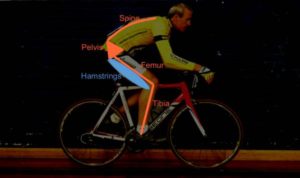
The hamstrings run down the back of your leg from your hips, crossing behind your knee joint. The upper portion of the hamstring is where your power comes from as you push the pedal in the down stroke. The lower part is activated as you pull, reach the up stroke and bend your knee. The muscle works as a whole, but it’s important to think of these two general parts, so you can target stretching to different areas of the muscle.

The Effect of Bike Position

The position the body is in on the bike does put some strain on the hamstring, and not just in the pedaling motion. When we spend a lot of time bent over to reach the handlebars, two things tend to happen:

  1. The upper hamstring is stretched, so if the muscle is not flexible enough to comfortably maintain this position, you will likely compensate by adjusting other parts of your posture.
  2. The lower hamstring remains bent at the knee, which can cause the muscle to actually become shortened.

These two aspects can lead to imbalance within the muscle which can, in turn, cause pain and injury.

Hamstring Strain

Technically speaking, a strain is micro-damage within the muscle fibres from being overstretched and over exerted. The only thing you can do is take adequate time to rest, ice the area, and elevate it when possible.

Hamstring strain can be a result of grinding in too high of a gear at a low cadence. It can also happen if you go too hard or too soon, not giving your muscles the time to adapt and strengthen. This is most often an issue at the beginning of the season, as you may want to pick up right where you left off, but your body just isn’t ready.

Prevention through strengthening and stretching

The easiest way to avoid hamstring pain and strain altogether is strengthen and stretch. This means slow progress, so monitor your training load and frequency to ensure you avoid overuse injuries. Some strength training, with exercises like squats and deadlifts, can keep the muscles strong and engaged, especially when you aren’t riding as much.

Doing a daily stretching routine is the best way to prevent hamstring injuries and stretch tight hamstrings. It works to keep the muscle balanced, and the upper portion from shortening as a result of the cycling position.

How to stretch tight hamstrings

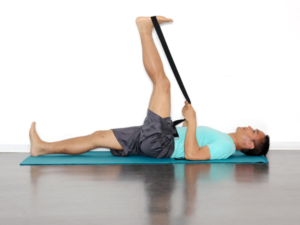
Reclining Hand-to-Toe

You will need a yoga strap, or a tie or belt, for this stretch. Start by lying on your back on a soft surface (like a yoga mat), bend your knee into your chest and place the strap around the arch of your foot. Slowly extend the foot up towards the ceiling, straightening the leg by contracting the quadriceps. You don’t want to completely lock the knee, but keep a slight bend.


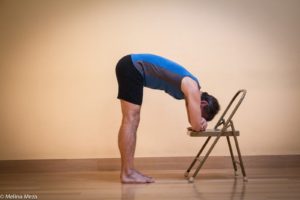
Standing Forward Bend with Chair

You will need a chair for this stretch. Stand with your feet shoulder-distance apart, bending your knees slightly. Slowly bend forward toward the chair, resting your head on your forearms. To increase the stretch down the back of the legs, push your hips up, driving your weight through your heels. Roll up one vertebra at a time.


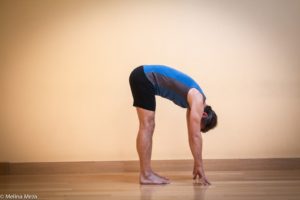
Standing Forward Bend

Stand with your legs shoulder width apart. Hinge at your hips and slowly bring your fingertips to the floor as you use the weight of your torso to stretch the back of the legs. If you can’t reach the floor, use a block or stack of books to support yourself on.


Cycling Overuse Injuries: Treatment and Prevention

January 29, 2018 by Sarah Lauzé

As with any form of exercise, cycling does come with a list of common injuries. This article will not focus on injuries that come with crashing, like broken bones and road rash, but instead will focus on common cycling overuse injuries.

These are injuries that can and will (most likely) pop up if you are putting a lot of miles on your bike. Some can come from doing too much too fast, others from improper bike fit, and still others simply from the motion of cycling itself. Although cycling is a low-impact sport, making it great therapy for those who struggle with other injuries, it is a repetitive motion that can cause issues over time.

Whether your looking to treat your cycling overuse injuries or prevent them from occurring in the first place, here’s what you need to know.

Cycling Overuse Injuries

Common Cycling Overuse Injuries

Upper Back Pain

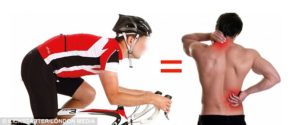
Pain in the upper back and neck is one of the most common cycling overuse injuries. A cyclist’s position on the bike is not a natural one, and there is a repetitive sub-maximal loading that can lead to damage. The neck and shoulders are often tense and contracted for extended periods of time, compromising blood flow to those muscles. This will inevitably lead to muscle spasms or stiff and sore muscles over time.

Aside from regular stretching of the shoulders and neck, there are also a couple of exercises you can do while out riding. When you are at a stop light, or stopping for a quick breather, get in the habit of doing some reverse shoulder shrugs. This is simply shrugging your shoulders up towards your ears, then back down towards the ground behind you. Not only does this alternate between contraction and full relaxation, it also combats the hunched over position and helps you avoid the rounding of your shoulders.

Lower Back Pain

Another very common cycling overuse injury is lower back pain. First, you have to understand why this occurs before taking action to fix it. While pedaling, the quadriceps pull the pelvis forward. To keep your body on the bike, your lower back resists that pull. It is an action that is not inherent to the design of your lower back muscles. The result is overworked lower back muscles that may cross into pain.

The best way to both prevent and treat lower back pain from cycling is to work on strengthening your core (transverse abdominal muscles) and glutes. A strong core will activate before any movement takes place in the limbs (like pedaling), and therefore takes the stress away from lower back and works to stabilize the motion.

Calf Muscle Tightness & Strain

Although most your power comes from your quads, your calf muscles also play a major role. Muscle tightness and strain can be a direct result of keeping your foot and ankle stable while pedaling. Improper bike fit, in particular cleat position, may be a contributing factor, but it is a very normal issue to have.

Achilles and Patella Tendinitis
Another common injury that comes from overuse. However, this can also be caused by a poor bike fit and shoe cleats that are not properly positioned. Achilles tendinitis causes inflammation which in turn will cause you pain in your ankle. If you think this is developing, go easy on your training for a few days. After any exercise make sure you apply ice to the tendon to fight any inflammation you may have.

Hamstring and Quadricep Strain

Hamstring and quadricep strain are most commonly caused by too much too soon. Also, over time, the hamstrings can become shortened and tight from the position on the bike. Regular stretching can both prevent and treat this.

Knee Pain

There are different types of knee pain that can point to different causes and, therefore, different solutions. The four main types of knee pain are anterior (front of the knee), posterior (behind the knee), medial and lateral pain (sides of the knee), and IT band syndrome. Some knee pain is a sign of an improper bike fit, whether it be cleat or saddle position, while some is caused by simple overuse or going too hard too soon. Regular and targeted stretching can be an easy solution.

Treatment and Prevention


Stretching

The most important thing for cyclists, and athletes in general, is to have a healthy range of motion and flexibility to move freely and efficiently. Stretching can aid in aligning the thick and thin muscles back into their ordered state after movement, as well as remove the lactic acid buildup that causes soreness. Flexibility, or rather inflexibility, can lead to unbalance in the body and even cause the body’s structure to move out of alignment. Failing to properly stretch and maintain flexibility can not only affect you performance, but it will inevitably lead to injury and discomfort.

Strength Training

A common problem with cyclists is muscular imbalance. Some muscles become strong, while others are too weak to keep things balanced. By strengthening your muscles and connective tissues with strength training, you can keep your body balanced and even avoid some overuse injuries altogether. It can also help you maintain proper posture on the bike, as a strong core can keep your back nice and straight.


Bike Fit

Getting a proper bike fit is well worth the investment, or at least taking the time to fine tune things yourself. Getting everything adjusted just right for you will ensure you will be comfortable on the bike. You will be more efficient and have a higher degree of power and endurance. It can be overwhelming when you think about saddle height and angle, cleat position, handlebars, and so on, but it is worth taking it one piece at a time. It will lower the risk of developing any injuries associated with an improper bike position.

Best Bike Stretching Exercises

January 11, 2018 by Sarah Lauzé

The importance of stretching really can’t be overstated, especially for cyclists. Bike stretching exercises can help maintain flexibility and prevent injury, and can be done even while you’re out on your ride or before you head inside after a ride. Long rides and intense training sessions can result in tight and sore muscles, and being sure you properly cool down and stretch afterwards can go a long way to prevent muscle tightness and discomfort.

Now, you’ve probably seen some cyclists in the Tour de France somehow managing a quad stretch while on their bike, looking something like superman. Although this can be great for ensuring your stretching those muscles out along the way, for most of us its a better idea to attempt these stretches in a stationary position. These bike stretching exercises can be done with the aid of you bike, whether during a quick break mid-ride, or right after before you put your bike away. It is a good way to get into a routine and ensure you always remember to stretch.

Bike Stretching Exercises

Quad Stretch

The quads are where a lot of your power comes from, and therefore are important to keep from getting tight. Place one hand on the saddle for support, and bend the other leg. Hold onto your foot or ankle , level your knees, and hold each side for 30-60 seconds. To increase the stretch, try tensing your glutes and pushing your hips forward, leaning into the stretch. Look straight ahead, or bring you chin to your chest and stretch the back of your neck.

Bike Stretching Exercises

Hamstring & Shoulder Stretch

This stretch is great for stretching out the hamstrings as well as releasing tension in the shoulders and upper back from holding the cycling position. Place one hand on your hand bars, and the other on your saddle. Step back and hinge over at the hips, keeping your back flat and engaging your core. You should feel the stretch all along your hamstrings, as well as in the shoulders. To increase the stretch, push your hips away from your bike until you feel a decompressing effect as the spine lengthens. Hold for 30-60 seconds.

Bike Stretching Exercises

Glutes

Lift one leg onto your other knee, placing your ankle on top of the other thigh, using your bike to steady yourself. Slowly sit lower and relax into the stretch, keeping your back straight and core engaged. To protect your knee joint, flex the foot of the leg being stretched to keep the knee joint from straining.

Bike Stretching Exercises

Upper Back & Calves

This one looks a little funny, but stretches your shoulders, upper back, calves and hips all in one position. Place your hand shoulder-width apart on your bike and lower yourself into a deep squat, keeping your arms straight. You should feel the stretch deep in your calves and in your shoulders the most, but you can try adjusting the positioning of your feet and hands until you hit those spots that need the most stretching.

Bike Stretching Exercises

Chest

The tense upper body position on the bike can make for a sore back, but over time it can also cause a shortening of the chest muscles and rounded shoulders. This stretch is great to do while you’re waiting at stop lights or having a water break. It will open up your chest and release tension. Place your hands behind your back and interlace your fingers, or hold onto your saddle. Lean forward slowly, keeping your back straight and core engaged, feeling the stretch in your chest.

Bike Stretching Exercises

Hip Flexors

Many cyclists suffer from tight hip flexors as they put in a lot of the work to lift your legs with each pedal stroke, so this stretch is important. Place both hands on the top tube of your bike, shoulder width apart. Step one foot back and bend the front leg as if going into a lunge position. Gently push your hips forward to feel the stretch in your hip flexor and in the thigh.

Bike Stretching Exercises

Best Road Bike Upgrades

December 31, 2017 by Adam Farabaugh

As a cyclist we are always trying to improve. Improve ourselves in our fitness, bike handling skills, and the level at which we ride. There is general idea in cycling that you don’t need an upgrade to get faster, but rather ride up grades. While it’s true there are no shortcuts to get faster, there are some road bike upgrades can help you along your way.

Fortunately you don’t need a lot of time or money to make substantial improvements on your bike. Making a few improvements can help your riding in many ways, but the biggest issue is knowing which one is going to give you the most benefit.

Best Road Bike Upgrades

Upgrade #1: Comfort

The most important thing in riding is comfort. The more comfortable you are on your bike the more you’ll ride, so the first things that you should upgrade are things that improve how you feel on your bike. Whether your bike is an entry level road bike or a top of the line model, some of the features may just not be a good fit for you.

Saddle

The saddle on your bike is the biggest part that is going to give or take away from your comfort. It’s very important to have one that’s a good fit for you and your style of riding. The best way to find the right saddle is to ask around and see what other people have ridden and if they have one you could try (most all bike shops will let you try before you buy). Some key things to look for is how wide the saddle is as you want it to match up with your sit-bones, as well as how soft or firm it is. A new saddle doesn’t have to cost a lot of money either and any money spent on a saddle is a good investment in your comfort.

Shoes

Your feet are the second biggest contact point with the bike, so making sure they’re comfortable as well will go a long way. Cycling shoes can be a bit more expensive than a saddle, but they will last a very long time so the extra money you spend here will last you years. The key to finding the right shoes is fit. Feet come in all shapes and sizes and a lot of shoes have different styles of foot beds; meaning some are wider and narrower in different spots throughout the shoe. The best way is to try a lot of them on and find what feels the best.

Upgrade #2: Reliability

Depending on where you’re riding, having a reliable bike can trump comfort, so unless you can easily catch a ride home, invest in improvements that will keep you rolling no matter what is thrown your way.

Tires

The thing that will slow you down the most are flat tires. The best way to prevent this is by having a set of tires that are not prone to flatting and replacing them when they are getting close to worn out. A good starting point is to get a wider tire, 25mm to 28mm if your bike frame will allow it. This will lessen the likelihood of pinch-flatting. A tire with harder casing and harder rubber, will last longer as well as be less penetrable. If you want to lessen the likelihood of flatting even more, consider upgrading to a tubeless set up that uses sealant inside the tire to fill any leaks before all the air escapes.

Brake Pads

Another area of the bike that you should make sure is in top-notch are the brakes. Being able to stop quickly not only gives you piece of mind, but also can prevent unnecessary crashes. Replace your brake pads before they wear out. Not changing them has the potential to not only leave you without good brakes on a ride but also can potentially damage your rim which will cost much more to replace than what the brake pads would have cost you.

Chain

Although chains break relatively infrequently, they still break. If you’re mid-ride and without a chain tool to take a link out to get you home, you’re going to be asking for a ride. The best way to prevent this is to replace your chain before it becomes old and worn out. This will also save you from having to get a new cassette along with the chain as the chain won’t have stretched past the point where a new one won’t mesh with the old cassette.

Upgrade #3: Speed

Now that you’ve upgraded the parts to your bike that have the biggest impact on you, you can upgrade a few specifics to help you ride faster. The cheapest to ride faster is to ride more, but once you’ve done that upgrading your equipment comes next.

Helmet

A more aerodynamic helmet can save up to 1 minute in a 40 km time trial. Now, no self respecting road cyclist is going to go strap on an aero TT helmet, but the principle still remains. A more aero helmet will shave time off your ride and is your best bang for your buck. Just make sure the helmet has enough vents if you are prone to overheating.

Wheels

Your wheels can easily be changed and may be contributing to what is slowing you down. Cheaper wheels can be heavy as well as less aerodynamic. Depending upon the riding that you’re doing, choosing a lighter and/or more aerodynamic wheelset can drastically improve your speed on climbs and flat sections.

Wheels can go up in price past the cost of your bike, most likely, so you need to find a good balance of lightness to aerodynamics to cost. Typically the best are a clincher rim, to give you the ability to easily change a tire, with a moderate amount of depth and are fairly light with a lower spoke count. There are about a zillion wheelsets out there both in aluminum and carbon. A bit of homework is required to find your perfect wheel but it’s time worth spending if you’re looking to improve your speed.

Clothes

You may not think that clothing would have a significant effect on speed; however, a skin suit can save over 2 minutes on 40 km time trial. This emphasizes how important the clothing you wear can be. Scrap the baggy clothing and embrace the lycra bib shorts and tight fitting jerseys.

Upgrade #4: Style

The last thing to improve on your bike is how it looks. Some may think this should fall higher on the list of what to upgrade, but in reality it’s not how you look, but that you’re out there doing what you want and having fun. Even at the professional level.

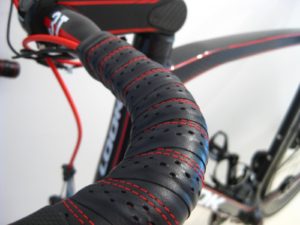
Bar Tape

Having clean, well-wrapped bar tape will make your bike look much better particularly after it has been cleaned. Color is personal preference, but typically any colors other than black or white are only used if it goes with colors on the bike. White typically is the most professional, but keeping it clean can be hard. Having well wrapped bars with black bar tape is the best style as it stays clean and looks good.

Bottle Cages

You probably already have bottle cages on your bike, but upgrading them to something lighter and sleeker looking can be a good option. The first thing though in upgrading bottle cages is making sure they still hold a bottle well even down a bumpy road. It can be the sweetest looking bottle cage in the world but if your bottle falls out, it didn’t do its one job and is worthless. After you’ve determined that it can securely hold a bottle, find a style and weight you like and match the color with your bike. Black typically goes with everything but it all depends. It’s style, find yours.

Saddle Bag

Style on the bike continues to more than just the bike itself.  This continues to accessories on the bike such as a saddle bag that a lot of riders have just flopping around under their seat. Having a bag that isn’t too big and is securely attached to your seat not only has a purpose but also looks good. The best looking things are the ones that have a purpose and look good too.

Upgrading parts on your bike doesn’t have to be expensive and time consuming. Knowing which parts to upgrade first will help you get the most out of your riding. The best upgrades are the ones you need, not what other riders think you need. There is always the “latest and greatest” equipment out there but just because it’s sweet and functional for someone doesn’t mean that it’s a great investment. Often times the most simplest of upgrades will take your riding the farthest. Find that one upgrade, make it, and go on to the next when the time is right.

Stretches to Treat Neck Pain from Cycling

December 29, 2017 by Sarah Lauzé

Neck pain from cycling is one of the most common injuries, but it is often left unaddressed. Pain of any kind is your body telling you something, and shouldn’t be ignored. Typically, the discomfort is localized in your anterior deltoids, upper trap muscles and neck extensors. This can be attributed to a few causes such as bike fit, head positioning when riding, and muscle tightness.

Neck Pain from Cycling

What Causes Neck Pain

Bike Fit

As a beginner cyclist it’s important to work with a bike fitting specialist and tweak one thing at a time, ride for about a week, and assess the changes. This allows you and the fitter to pinpoint the exact solution or cause in order to improve riding conditions.

Often neck pain from cycling is linked to having a high seat post in relation to your bars. When the seat post is too high it can place you in an aggressive position, which your body may not be ready for. It’s a better tactic to gradually increase the aero position as you get used to cycling. Additionally, if your road or aero bars are too far away causing you to overreach you can place unnecessary strain on these muscles. The solution would be to place the bars closer in relation to your body so you’re in a “tucked” position when riding.

Head PositionNeck Pain from Cycling

It’s natural to try and keep your head up on your bike, looking forward to ensure you don’t swerve off the road. The key is to learn to look up with you eyes, rather than your entire head. Keeping your head down puts less strain on your neck, and allows you to ride for longer periods of time without irritating the muscles.

Tight Muscles

As a beginner cyclist you are now forcing your body to use muscles either it hasn’t in other activities or in a different way. This leads to tightness, muscles spasms, and pain. However, there are a few stretching exercises that can be completed which will lead to disruption of the pain-spasm cycle.

How to Treat Neck Pain from Cycling

Stretching is the best way to keep the neck muscles relaxed and prevent neck pain. Adding these stretches into your routine (or building a routine around them) will help keep you pain free, or address any neck pain you may already have. Hold each one for 20-30 seconds, and repeat at least twice.

Neck bend

Stand with your back straight, feet shoulder-width apart, and your arms at your sides. Look straight ahead and relax. Let your head drop forward by bringing your chin to your chest. Keep your back straight and your eyes on your toes as you hold this position. You can put your hands behind your head and pull down gently to extend the stretch.

Neck Pain from Cycling

This stretch is for cyclists who experience muscle tension at the back of their neck after spending extended periods of time on the bike.

Neck and bend rotation

Stand with your legs slightly apart, your back and neck straight, and look forward. Your hands can be at your sides, or clasped behind your back. Lower and rotate your head to the left, looking down toward the ground. Relax into the stretch, trying to extend the movement. You should feel the stretch along the right side of the neck. Bring your left arm up and gently pull down on your head to lengthen the stretch. Repeat the movement, lowering your head to the right.

Neck Pain from Cycling

This stretch is especially important for track and road racers who spend a lot of time in an aerodynamic position, creating tension in the neck and head extensor muscles.

Lateral neck bend

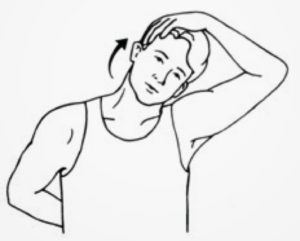
Stand with your feet slightly apart, back and neck straight. Raise your right arm and place it on the left side of the head, with your forearm going over top of your head. Your fingers should be pointing towards the ground, with your fingertips touching your ear. Gently pull down on your head, leaning so your ear is approaching your shoulder. Keep your shoulder down and relaxed throughout the stretch. Repeat with your left arm reaching up to the right side of your head.

Neck Pain from Cycling

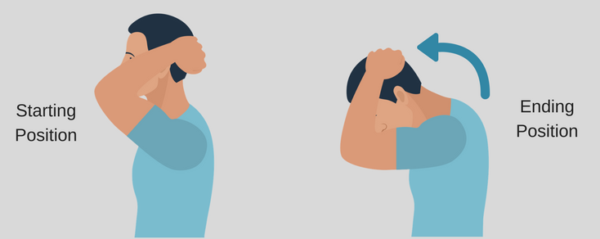
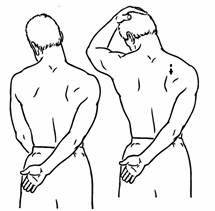
Rear neck pull

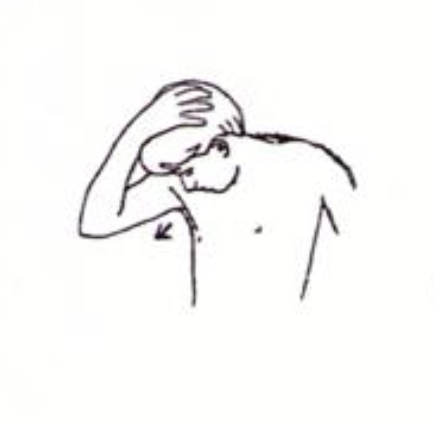
Turn your head slightly to the left. Raise your left arm and place your hand on the top of your head, fingers pointing down the back of your hand, forearm resting on the top of your head. Even though your head is turned, keep your neck and back in line with your body. Gradually pull on your head, rotating so your face is near your armpit.

Neck Pain from Cycling

Stars

Sit or stand, keeping your neck, shoulders, and torso straight. Looking straight ahead, imagine there is a star in front of your with a vertical line, horizontal line, and two diagonal lines. Trace the vertical line, looking up at the ceiling and then bringing the chin down to the chest three times. Next, follow the horizontal line side to side once. Finally, trace the two diagonal lines once each. Return to the starting position and repeat three more times. This is a great stretch because is combines flexion, extension, rotation and lateral rotation to give you a complete neck stretch.

If you want stretching routines for cyclists, check out Dynamic Cyclist for the daily video program.

« Previous Page
Next Page »
  • Facebook
  • Tumblr
  • Twitter

Latest Articles

JOIN Cycling: A New Training Platform for Cyclists

May 27, 2024 By Eric Lister

cold exposure

The Benefits of Cold Exposure for Cycling & Life

June 13, 2023 By Eric Lister

hill climb

The Ultimate Hill Climb Training Guide

May 31, 2023 By Eric Lister

shoulder pain cycling

How to Treat & Avoid Shoulder Pain While Cycling

April 12, 2023 By Eric Lister

psoas stretch

The Importance of the Psoas Stretch for Cyclists

April 6, 2023 By Eric Lister

cycling neck pain

The Ultimate Guide to Cycling Neck Pain: Causes and Solutions

March 21, 2023 By Eric Lister

Useful Info

  • Contact
  • Finally, A Global Cycling Club That Is Focused On Community And Love Of Cycling!
  • Privacy Policy
  • Share Your Story!
  • Terms And Conditions Of Use
  • Welcome to I Love Bicycling
  • What Happened When I Stretched Every Day For a Month

Recent Posts

  • JOIN Cycling: A New Training Platform for Cyclists
  • How to Hang Bikes in Your Garage: 4 Inexpensive Options
  • Gravel Bike Vs. Road Bike: Which One Is Better For You?
  • The 6 Types of Mountain Bikes & How to Choose the Best One for You
  • What Is a Touring Bike Good For? 5 Benefits We Know You’ll Love

Search I Love Bicycling

Connect with Us

  • Facebook
  • RSS
  • Tumblr
  • Twitter

Copyright © 2026 · Magazine Pro Theme on Genesis Framework · WordPress · Log in