 Alcohol and cycling. Do they really mix?
How bad is alcohol in relation to cycling performance? Well… some of this information might make you feel depressed. If you would like to plead ignorance in the future I would just stop reading now.
The Liver
I think we have all heard/said the statement “I am carbo loading” in relation to having that delicious cold beer. Unfortunately, this could not be further from the truth. What actually happens when you start drinking any type of alcohol is that your liver spends all of its energy trying to remove alcohol from your bloodstream; it no longer has the capacity to convert glucose into glycogen.
Glycogen is a major energy source that your body uses to pedal that bicycle. It is generally quite depleted after a ride and should be replenished by consuming carbohydrates.
Since your liver is busy trying to clear the alcohol from your bloodstream and is unable to convert the glucose to glycogen, your body has to do something else with it… I’ll give you one guess… … … Fat. Yup… that glucose will now be stored as fat. Soo… to be more realistic, we should actually be say “I am fat loading.”
Recovery
Alcohol has been known to affect sleeping. If you do not sleep well then you will not produce as much human growth hormone – a hormone that builds muscle. Coupled with that, alcohol is a diuretic resulting in the fact that you will likely need to get up from your already disturbed sleep.
As you know from my article about hydration as little as a 2% decrease in body water weight decreases your performance. So it is going to be difficult to perform the next day at your best.
On top of all of this, studies have shown that drinking alcohol lowers testosterone levels. Testosterone is key to developing muscle in men AND women.
All of these factors add up to a less than optimal recovery.
What Are You Going To Do About It?
1. Having a few cold beer after a ride because I feel I “deserve” it.
I certainly make a point to refuel properly by eating before indulging in my “reward”.
2. Drinking before an event.
It is not a good idea to drink the day, or even 2 days, before an event, as the 2% dehydration rule may effect your outcome.
3. Overall consumption.
Decreasing your overall consumption is relatively easy in small increments. Just focus on cutting out excess as discussed in my 5 healthy tips for cycling article.
This article may be a little depressing;however, I am not going to give up drinking. It took me a couple frosty beverages to complete this article. I am not getting paid to bike for a living and I am all about enjoyment of life. On the other hand, knowing this information certainly has changed a few bad habits.
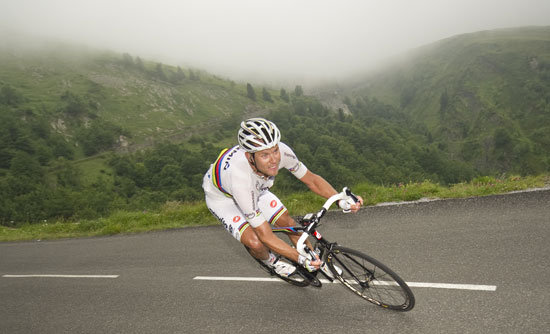 Brake your bad habits! Proper braking will lead to safer riding and ultimately… faster riding. Scrubbing the proper amount of speed at the right times will make you a more efficient rider saving valuable energy for when it is needed.
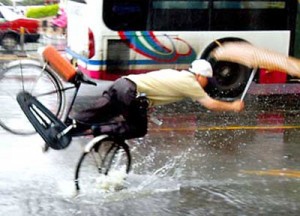
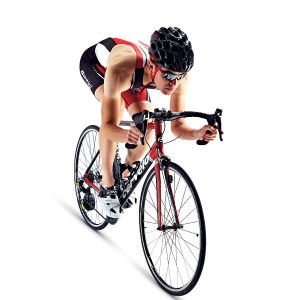 You obviously have to be much more careful on wet and slippery surfaces. If you brake with your front brake too much on slippery surfaces the front wheel will slide out from underneath you and you may end up in a ditch faster than you know what happened. Your experience will be very important here as the proper touch and weight distribution will be amplified. Try to keep your bike more upright in order to prevent slip outs, break earlier and more gently and if you start to feel as if you are losing traction ease up on the breaks.
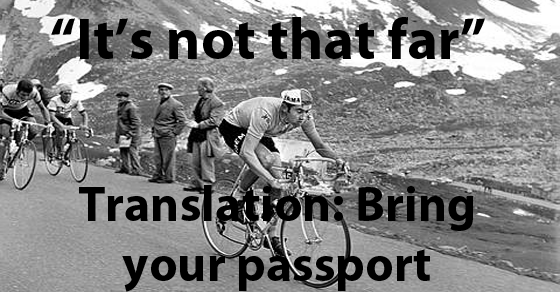 I think my tire pressure is low.”
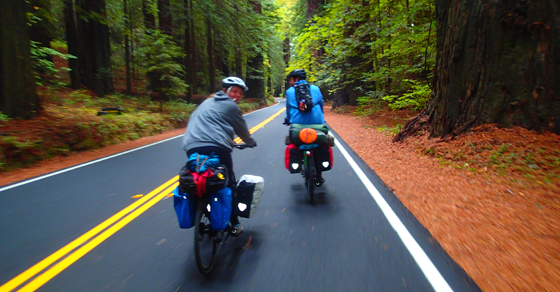 Getting on my bike for the first ride was unforgettable – down pouring rain, crazy side winds, one long road, hills, a bridge, and my mom screaming in the background telling us not to go. I wore a thin jacket that I thought was waterproof but apparently wasn’t, so I was soaked to the bone and shivering pretty quickly. I have a problem with packing (I always pack way too much) so I packed a few nights before leaving and only put in the bare necessities.


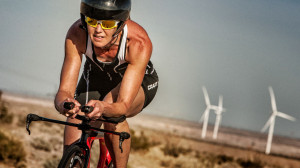
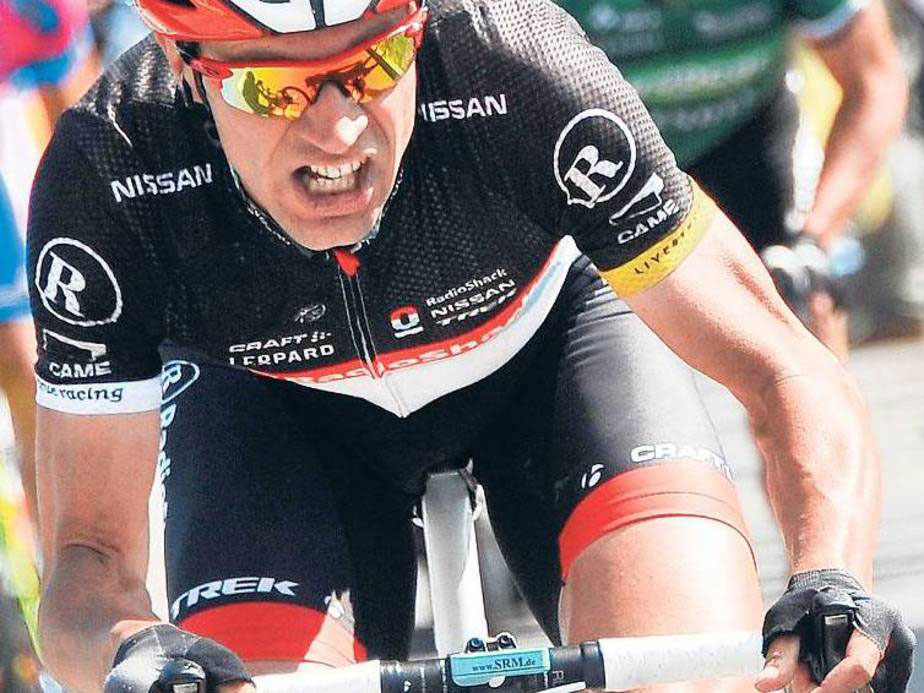
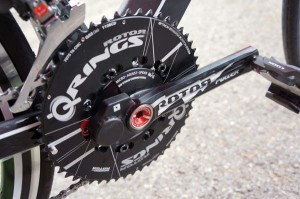 It’s pretty simple really…power is a measure of work over time. It’s measured in watts. While it might seem as easy as visualizing the amount of pressure or torque you’re putting into the pedals, it’s in fact a little more than that. The same amount of pressure at 80 revolutions per minute (rpm) and 100 rpm will give you lower and higher wattages relatively. This is because you are doing less or more work per minute. If you’re cruising along on a pancake flat road at 90 rpm in an easy gear, and then you switch into a harder gear and while maintaining an identical cadence, you will also be applying more power. In this case the amount of pressure on the pedals has increased. One thing is certain, more power means more speed.
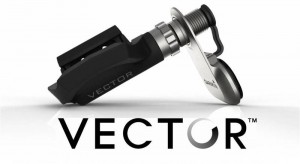 Accurate power tools for cyclists are more available now than ever before. Of course, you can also purchase power tools that are not as accurate. There are plenty of options out there. Which power tool should you get? That’s a question that demands it’s own dedicated article. Should you get hub-based, bottom bracket-based, pedal-based, or crank-based power? It all depends on several factors. The purpose of this article is not to debate the merits of different power tools available on the market. I do hope I have shed some more light on why people are choosing to use power meters and how you can benefit from getting on that bandwagon. I will say this, however, in regards to power meters: the “get what you pay for” axiom applies. Pay for a decent power meter or don’t bother. Like grandma used to say: “do something right or don’t do it at all”. Some of the decent power meters available include: SRM, Power-Tap, Garmin Vector Pedals,
 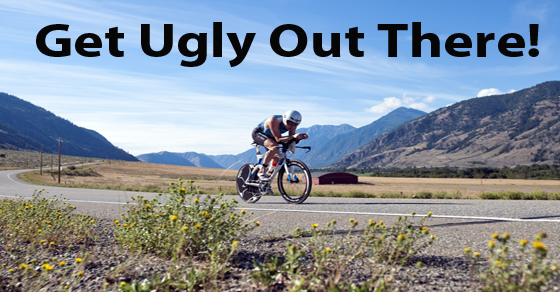 Jeff Symonds (2013 Challenge Penticton Champion)
 Jeff Symonds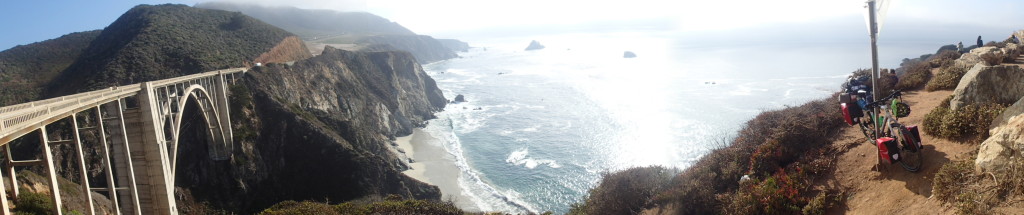
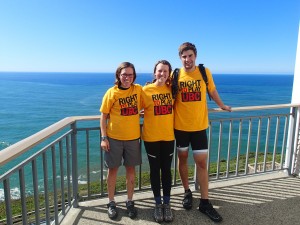 Several months ago, I worked up the courage to mention to my parents that I was going to bike from Canada down the U.S. west coast, Baja, Mexico and into Central America to raise funding and awareness for
 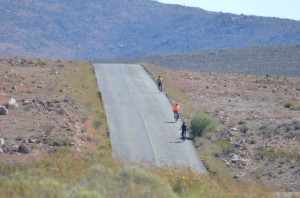 As for our adventure, we are 160 km from Cabo San Lucas where we are going to call it quits for now. The rest of Mexico, Central and hopefully South America will have to wait until I can speak Spanish and have a bit more money saved. The trip up until now has been unforgettable for all of us. The only bike repair I knew how to do before I left home was how to change a tire and put a patch on… amazingly I haven’t had a single flat this whole trip! How is that even possible?! However I did get two broken spokes in the most rural part of Baja (of course I didn’t have any extras or know how to change them) so I had to improvise with some emergency wiring until I found a very rustic bike shop in Guerrero Negro. Other than that my back tire is almost completely worn through to the tube and my chain looks like it will fall apart at any moment. Hopefully my bike can pull through for another 160 km!