Why Is Core Strength Important for Cyclists?
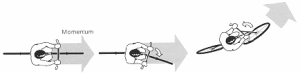
 When we think of cycling, the first parts of the body we generally think of are legs. Yes, it’s fairly obvious that our legs are important to cycling, but what may not be so evident is the role that other parts of our bodies play in moving ourselves along on our two wheeled beauties, namely our core! If you are serious about cycling this year and you want to do more than ride at a gentle pace down a sunny road or trail then you really need to start strengthening your core!
What is the Core?
There is a common misconception about the core: when the ‘layman’ talks about ‘core strength’, they usually think of the abdominal muscles, the ‘six-pack’ and so those who think that way tend do a hundred thousand crunches and then wonder why they’re not as good at cycling as they’d like! (If this sounds like you, don’t worry; you’re in good company).
The core muscles are actually quite a bit larger than just your abdominal muscles. They start at your hips and go all the way through your abs, up along your spine and to your shoulders and neck. The core muscles are complex muscles requiring far more than simple crunches in order to get stronger. However, if you do improve your core strength, you’ll find that your cycling will vastly improve.
Why Do Cyclists Want a Strong Core?
A strong core is vital to a strong pedal stroke as it is the platform that you push from. If your core is not strong and stable, it will fatigue and you will waste a lot of energy compensating and using smaller muscles, your body will move up, down and sideways instead of putting that energy into the pedals. Having strong legs but a weak core is like having a muscle car with a hyundai chassis.
If you have a strong core it will increase your power to your pedals, increase your endurance, allow you to be more comfortable on the bike (specifically reducing lower back pain), take corners more efficiently and have a more efficient pedal stroke. All of which are very important to any cyclist. Unfortunately, merely biking around won’t do much for your core muscles which is why you have to work them out separately.
Strong legs will only take you so far; a strong core will bear you to the finish line and beyond. Don’t worry; we have some great exercises coming up (One of the next posts so sign up for our newsletter below so you don’t miss it) that will have you strong and ready when it comes time for your training, races, and long rides. Until then, keep those wheels spinning!
If you would like to learn more on core strength and truly how important it is pick up Tom Danielson’s Core Advantage: Core Strength for Cycling’s Winning Edge
 In a study
 About the Author:
 This training article comes courtesy of Rob Swan, a NCCP Level 3 certified coach with
 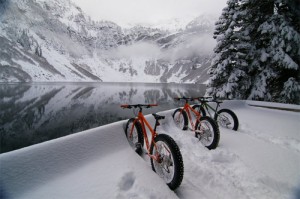 FAT Biking: Now if you truly want to stay outdoors through the winter months, test-ride a FAT Bike. Then, of course, you will be buying a FAT Bike because you will want to ride every day, winter or summer. These bikes can go anywhere, anytime and anyone can ride them. For winter, they are great as a commuter because they will roll over roads, dirt, snow and ice without a problem at all. You can take them on snow covered mountain bike trails and on snowmobile trails for the ultimate in winter fun. As well as sheer enjoyment, these bikes will help you maintain your fitness.
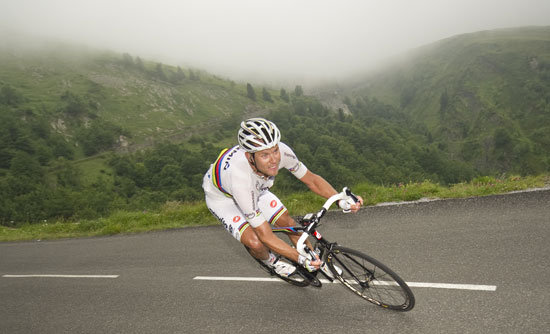 Brake your bad habits! Proper braking will lead to safer riding and ultimately… faster riding. Scrubbing the proper amount of speed at the right times will make you a more efficient rider saving valuable energy for when it is needed.
 You obviously have to be much more careful on wet and slippery surfaces. If you brake with your front brake too much on slippery surfaces the front wheel will slide out from underneath you and you may end up in a ditch faster than you know what happened. Your experience will be very important here as the proper touch and weight distribution will be amplified. Try to keep your bike more upright in order to prevent slip outs, break earlier and more gently and if you start to feel as if you are losing traction ease up on the breaks.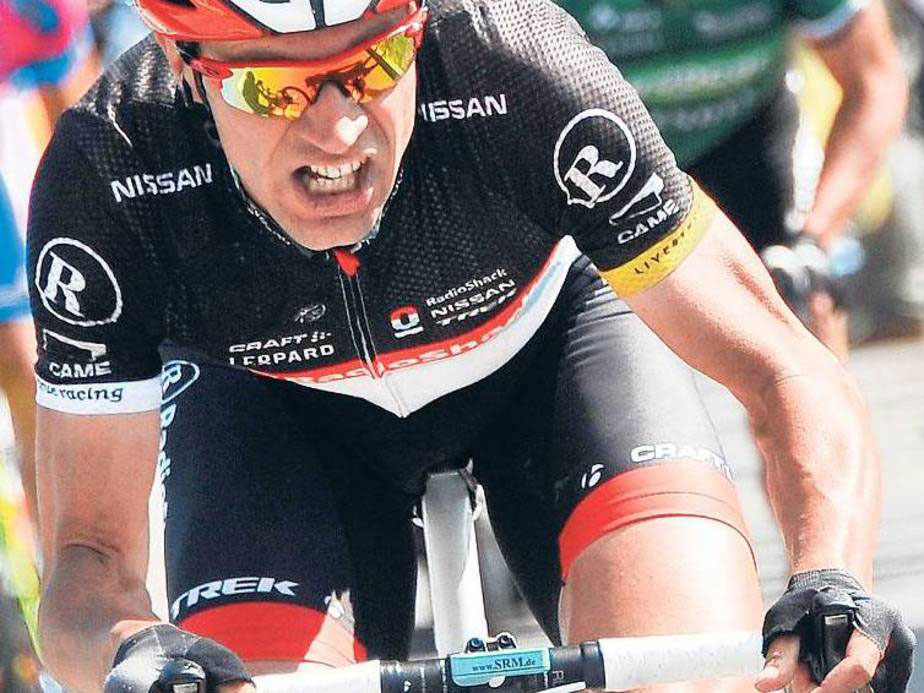
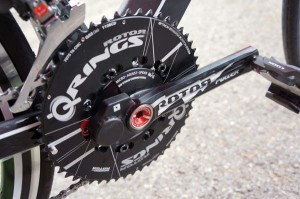 It’s pretty simple really…power is a measure of work over time. It’s measured in watts. While it might seem as easy as visualizing the amount of pressure or torque you’re putting into the pedals, it’s in fact a little more than that. The same amount of pressure at 80 revolutions per minute (rpm) and 100 rpm will give you lower and higher wattages relatively. This is because you are doing less or more work per minute. If you’re cruising along on a pancake flat road at 90 rpm in an easy gear, and then you switch into a harder gear and while maintaining an identical cadence, you will also be applying more power. In this case the amount of pressure on the pedals has increased. One thing is certain, more power means more speed.
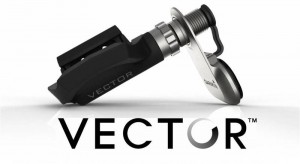 Accurate power tools for cyclists are more available now than ever before. Of course, you can also purchase power tools that are not as accurate. There are plenty of options out there. Which power tool should you get? That’s a question that demands it’s own dedicated article. Should you get hub-based, bottom bracket-based, pedal-based, or crank-based power? It all depends on several factors. The purpose of this article is not to debate the merits of different power tools available on the market. I do hope I have shed some more light on why people are choosing to use power meters and how you can benefit from getting on that bandwagon. I will say this, however, in regards to power meters: the “get what you pay for” axiom applies. Pay for a decent power meter or don’t bother. Like grandma used to say: “do something right or don’t do it at all”. Some of the decent power meters available include: SRM, Power-Tap, Garmin Vector Pedals,
 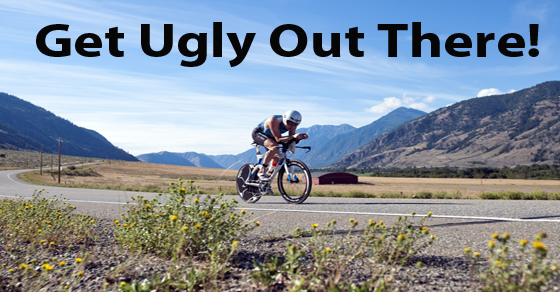 Jeff Symonds (2013 Challenge Penticton Champion)
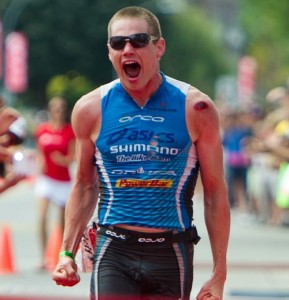 Jeff Symonds
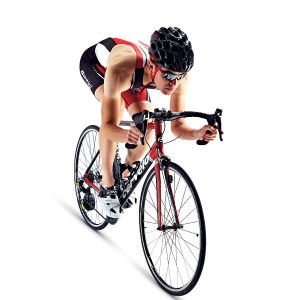
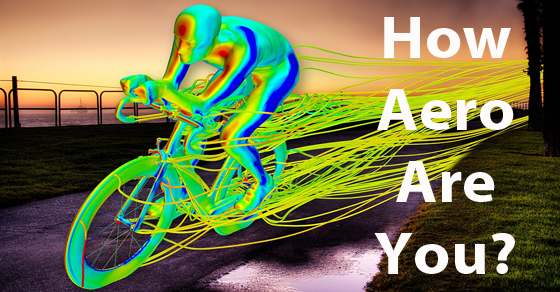 There are two ways to get faster on a bike; increase power or increase aerodynamic efficiency.
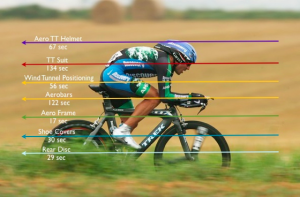 Test how slippery you have become with the small tweaks you have made.
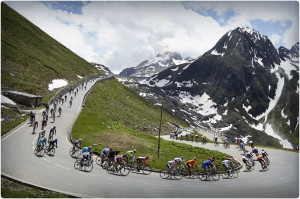 Get FREE SPEED and learn how to corner. Cornering a bike properly can save you massive amounts of energy and time. I have been working on cornering every ride since my last race… where I got destroyed on the downhill. So… what was I doing wrong?
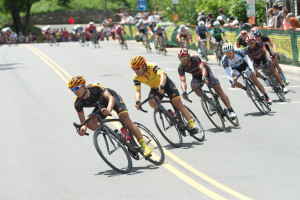 I am aggressive when it comes to cornering, too aggressive. I loose valuable speed because I do not brake enough before the turn which results in me having to brake in the turn. Braking in the turn actually makes the bike want to stand up on itself and straighten out, two things you are trying not to do. You end up fighting the bike and shedding more speed than necessary to make the turn safely.