• Training
    • Injury Prevention
    • Training Tips
  • How To
    • Bike Fit
    • Gear
  • Nutrition
    • Nutrition Tips
    • Weight Loss
  • Repair
  • Reviews
  • Stories
    • Funny Stories
    • Jokes
    • Quotes
    • Videos
    • Funny Videos

I Love Bicycling

I Love Bicycling is a website that is geared towards cycling for beginners with road cycling tips, training articles, nutrition tips, weight loss, how to’s and bike repair articles.

How To Choose a SUV Bike Rack

January 26, 2023 by Guest Post

As cyclists, we love the sport. Apart from providing freedom, the simple two-wheel bicycle offers physical and mental health benefits such as relieving stress and maintaining a healthy weight. 

Cycling can be an expensive sport, and with bikes costing thousands of dollars, cyclists need to ensure their bikes are secure. Enter the SUV bike rack. Fortunately, these bike racks won’t break the bank like many other cycling accessories. Moreover, choosing the best bike rack for an SUV is critical not only to the safety of your bike but also to the size of the hole in your wallet.

So how exactly do you choose an SUV bike rack? And are there different types of bike racks for SUVs? You bet there are. When choosing the best SUV bike rack, you need to consider a few factors.

So without further adieu, let’s take a look at the different types of bike racks and some of the important factors to consider.
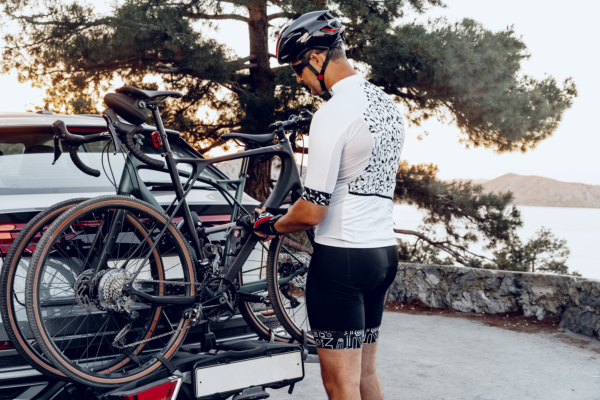
Man loading a SUV bike rack

Important Factors To Consider When Purchasing A SUV Bike Rack

Generally speaking, the two most frequently asked questions that pop up are how often and how far do you intend to travel with your bikes? Next up, you need to tackle the question of the type of bikes you have and how many bikes your SUV bike rack will have to carry.

Are these questions really necessary to answer? YES. Taking the time to answer these fundamental questions will not only save you money but a big headache later on.

Other factors to consider:

  • Does your bike have thru-axles?
  • Do you own heavy mountain bikes?
  • Do you own light road bikes?
  • Are they expensive bikes made from carbon?

As you’ll see, there are several types of bike racks for SUVs, so it’s essential to consider how you want to carry your valuable bikes. Do you prefer to carry them on an SUV bike roof rack or a no hitch bike rack for an SUV? 

One additional factor that many cyclists don’t consider is the simple fact that most bikes are entirely different in terms of weight, style, dimensions and price. Because of this, you need to do plenty of thorough research on the many SUV bike rack brands on the market. 

Simply put, you’ll probably want to invest in a quality SUV bike rack that doesn’t cost a third of one of your Pirelli P-Zeros. 

Types Of SUV Bike Racks 

Before we look at the best bike racks for SUVs, let’s look at the types of racks available. Each rack serves a different purpose, so it’s important to know which rack serves what purpose.

Roof Bike Racks

SUV roof racks are remarkably adaptable and offer some of the best safety for your pricey bikes. That being said, they tend to be a bit more costly than other SUV bike racks.

Hitch Bike Racks

As the name suggests, the hitch mount bike rack fits directly into your trailer hitch. These bike racks are pretty common among bike enthusiasts as they are generally cheaper and still provide a decent amount of safety compared to a no hitch bike rack for SUV’s.

Trunk Bike Racks

Trunk bike racks attach to the trunk of your car via a series of unsightly straps and hooks. These SUV bike racks are cheap but tend to move around during travel, damaging your bikes.

Truck-Bed Bike Racks

These types of bike racks are perfect for SUVs and are incredibly versatile. They are easy to install and can also carry boats, mini-bikes and ride-on mowers.

The Top Five Bikes Racks For SUVs

Saris Bike Rack
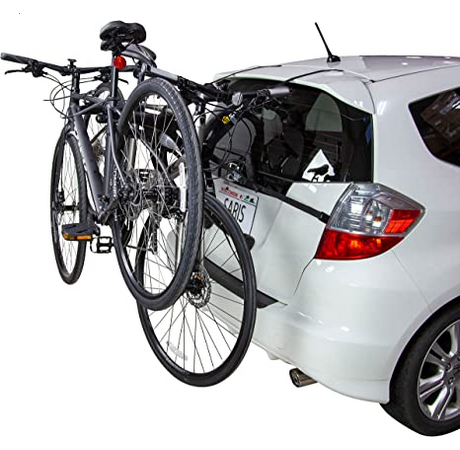
Price: $215.93

Boasting one of the lightest yet strongest frames, the Saris Bike rack utilizes an “arc design,” enabling bikes to be transported without hitting each other. Made in the USA, this bike rack is perfect for your SUV and can carry two bicycles. Amazingly this SUV bike rack suits 90% of the most popular cars on the market.

Things We Liked

  • Sleek and stylish design
  • Rust resistant
  • Lightweight 
  • Robust and durable

Things To Consider

  • Only comes in black

Young 2-Bike Rack Hitch Mount Platform Style
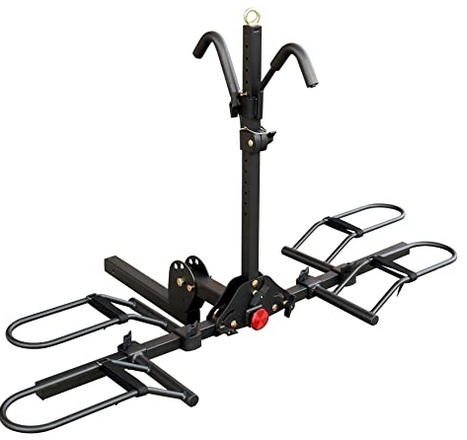
Price: $249.99

The Young 2 bike rack is safe and secure, comes with a 1-year warranty and can hold up to 200lbs. Not only does the Young 2 SUV bike rack use a tilt-back design, but it also folds away easily, saving you plenty of space. The padded hooks are an excellent feature that secures your bike without scratching it.

Things We Liked

  • One-year warranty
  • 200lbs carrying capacity
  • Tilt-back design
  • Folds away 

Things To Consider

  • Not the best-looking SUV bike rack; that said, it does a great job

KAC K2 2” Hitch Mounted Rack 2-Bike Platform Style Carrier
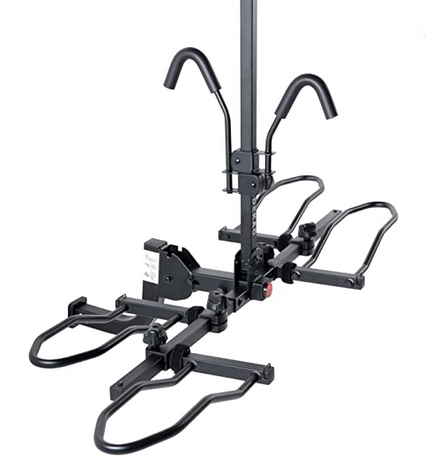
Price: $359.99

The KAC K2 is a platform-type, hitch-mounted SUV bike rack that allows you to transport  2 bikes. The KAC K2 simply attaches to your 2-inch trailer hitch for a secure ride. With a total carrying capacity of 120 lbs, it provides more than enough durability to give you peace of mind on the highway. 

Things We Liked

  • Limited lifetime warranty 
  • Tilt-action to access your trunk easily 
  • Easy-to-follow assembly instructions
  • Supports even the widest E-Bikes

Things To Consider

  • Slightly on the pricey side but well worth the money 

Thule EasyFold XT 2 Hitch Bike Rack
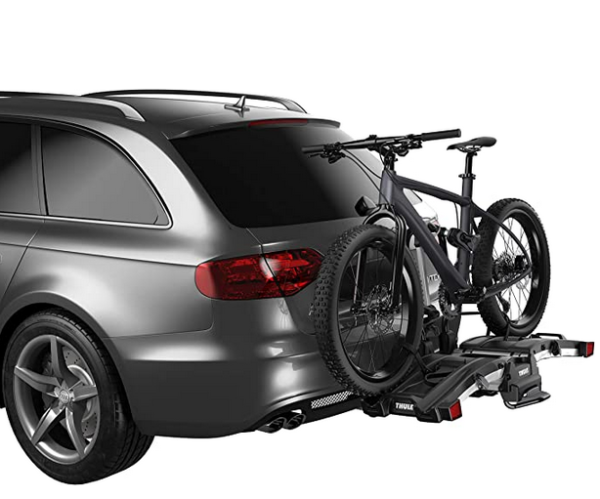
Price: $999.95

Undoubtedly the cream of the crop in the SUV bike rack category, the Thule EasyFold is the premium option for cyclists who want a safe and secure rack with all the bells and whistles. Thule is one of the industry’s most reputable brands and has built quality bike racks since 1962. 

With easy trunk access via a smart foot pedal and a fully foldable design, the Thule bike rack screams style while remaining functional. Best of all, it requires no tools to assemble.

Things We Liked

  • Reputable brand
  • Quality build materials
  • Rust resistant
  • Sleek design
  • Functional
  • No tools needed to assemble

Things To Consider

  • Price; but as they say, if you want the best, sometimes you’ve got to pay

ROCKBROS Suction Cup Bike Rack
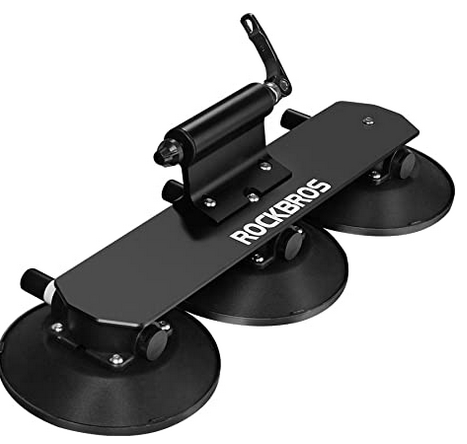
Price: $238.18

The ROCKBROS Suction rack takes a unique approach when it comes to securing your bikes. As the name suggests, the rack uses suction cups and attaches easily to your roof. The cups are made of soft yet highly-durable rubber, so they won’t damage your car paint.

The ROCKBROS suction rack comes with an easy-to-install video that guides users through an easy 5-step installation process. All ROCKBROS bike racks come with a one-year guarantee. 

Things We Liked

  • Easy-to-install
  • Super lightweight
  • Sleek design
  • Affordable
  • Fits all types of vehicles

Things To Consider

  • Can be a bit fiddly

That’s A Wrap

So there you have it, everything you need to know before purchasing an SUV bike rack. Remember, several factors should be considered before you pull the trigger and spend your hard-earned cash. 

Factors such as: 

  • How often you’ll be using the bike rack?
  • What type of bikes do you own?
  • How many bikes do you have?
  • Do your bikes have thru-axels? And, of course,
  • Your budget

Take your time, explore all the bike rack options, and I’m sure you’ll find the right SUV bike rack for you and your beloved bikes.

Happy biking!!

What Is a Hybrid Bike? (A Beginners Guide)

January 18, 2023 by Eric Lister

You may be a road cyclist, mountain biker, non-participant or somebody just getting into the sport of cycling. But whoever you are, it’s not at all uncommon to have posed the question upon visiting your local sporting goods store, “What is a hybrid bike?”

You may have had the experience of being one of those poor souls entering into a bike shop for the first time. It is then that you were encountered by an enthusiastic young salesman asking what kind of rig you might be in the market for.

Road? 

Mountain? 

Commuter? 

Touring? 

City? 

Hybrid? 

It can be a bit overwhelming…

Hearing the word hybrid no doubt implies the combination of some such things…all of which you know absolutely nothing about!

Well, we’ve today endeavoured to mitigate this experience to the best of our ability, by teaching you a little bit about what this style of bicycle entails, its uses, and who it might be best suited for out there in the vast landscape of buying possibilities. We hope that by the end you’re able to approach the matter in a way that makes you a little more comfortable, especially for those out there getting into cycling for the first time.

Sales associate helps a woman pick out a bike at a bike shop.

torwaiphoto/Adobe Stock

What Does “Hybrid Bike” Mean?

Hybrids are basically a blend of the two major cycling disciplines, road biking and mountain biking. They are a composite that seeks to address some of the major components of both types of bike in one, so as to create a machine that is versatile enough to accommodate activity performed on the road and on the trails.

Some of these components include the following:

Handlebars –  Hybrids typically have flat handlebars, like those of a mountain bike, as opposed to dropped handlebars like you would see on a road bike. This contributes to a more upright riding position.

Tires – Modern hybrid bikes can be fitted with several sizes and types of tires that you’ll find on both road and mountain bikes. 26” used to be the standard, but it is now common to see 27.5” and 29” as well.

Suspension – Typically hybrid bikes are limited in suspension, and some don’t have any at all. It’s not uncommon though to see front suspension forks that offer some relief if you were to head out on some light-medium duty trails.

Gears – Some hybrid bikes have only one speed (and are aptly named “single speed bikes”). Others can have a wide range of gears, which is something you’ll want to pay attention to. Less gears means less variability in intensity, which for a beginner rider can be overwhelming.

The term hybrid bikes can mean a lot of things. In general, yes, it means the combination of a road and mountain bike in one. But depending on the brand, style, etc. that hybrid bike could lean more towards a road bike or more towards a mountain bike. Let’s look at the pros and cons of this bike category to better determine if it’s going to be the right choice for you.

Hybrid bike on a trail

MarekPhotoDesign/Adobe Stock

Pros of Hybrid Bikes

If you’re someone who is just getting into bike riding (or haven’t done it in a long time), a hybrid bike is a good way to start acclimatizing your body to the sport. The more specialized you get with a bike into a particular discipline, the more aggressive the positions you’re going to be in on the bike. Different parts of your body are going to be subject to more load and intensity, and it’s going to vary depending on the specialty of your machine. 

A hybrid bike keeps you in a more upright position, which lessens the load on your hands, wrists, shoulders and lower back. Your body needs time to adapt to spending time on the bicycle, and if you eventually decide to get into road cycling, for example, your body will appreciate the time it had to strengthen itself on a hybrid before dropping into a more loaded, aerodynamic position.

The cost of a hybrid bike is another excellent benefit, and is reflective of its more generalized nature. If you were looking for the tip of the spear in terms of performance, parts and quality…you wouldn’t be buying a hybrid bike. That’s not to say they aren’t well-built and dependable pieces of technology. But it is to say that they will only take you so far in any such direction…

…which takes us to the cons.

Cons of Hybrid Bikes

By far the biggest con of a hybrid bike is going to be its limited performance. If you start to become more serious about a particular type of biking, a hybrid bike is going to quickly fail you as soon as the demands exceed its capabilities. A hybrid bike rapidly becomes just a bad road or mountain bike as soon as you venture further into one discipline or the other.

If you want to become a competitive triathlete, you better be able to ride a road bike – fast – and maybe for hours on end. If you want to rip down gnarly mountain terrain – tackling tight turns, huge drops and acute changes in speed – you better be able to harness the unique feel and frame of a high-end mountain bike. A hybrid bike just won’t cut it either way.

This can also have a troubling psychological effect, particularly on people who are getting further and further into mountain biking (which is what hybrids are often marketed for). Not knowing the potential performance metrics of your bike can be catastrophic when trying out new terrain that is more difficult than you’re used to. These types of bikes have to be treated with caution, and the trails you’re on have to always be respected for their level of difficulty.

Is a Hybrid Bike Right for You?

Hybrid bikes are perfect for people who want to cycle recreationally and on different types of terrain. They’re great for commuting and weekend rides with the family. They allow you to get into the sport at perhaps a slightly lower price point, and at the same time experience all the diversity of the outdoors, which is a major part of what makes cycling so engaging and attractive to its participants.

They help your body mold to the bike without putting it into positions that can lead to injury. This helps prepare the body for more aggressive postures that might need to be sustained in things like road racing somewhere down the line. But being more upright and taking things slow is always a good approach. The hybrid bike allows for that.

As soon as you start to become more specialized, it’s time to start looking at more specialized bikes. Not only will a more specific rig be more functional, efficient and durable for the tasks it is designed to do – it will be safer and more dependable as well. 


vit/Adobe Stock

Become a Better Cyclist!

Dynamic Cyclist is a training platform for cyclists that offers interactive, follow-along videos and programming that addresses mobility, strength, injury prevention and more! No matter what type of bike you’re riding, it’s always good to make sure your body is in check, healthy and prepared for the demands you’re about to place on it. Sign up for a 7-day free trial HERE!

How To Choose The Best Women’s Cycling Gloves

December 1, 2022 by Guest Post

Do you aspire to become the next Marianne Vos but feel like your fingers might fall off while cycling? You are not alone to have taken an unexpected tumble and cut up your palms, lost grip on handlebars, or had sweaty hands.

These are the most common complaints among women cyclists trudging through the miles. Thankfully, a pair of cycling gloves can solve all these issues. Cycling gloves provide more control, protection in a crash, and a comfortable grip.

Cycling gloves improve the grip on handlebars and protect the palms from road rashes in the event of a crash by preventing friction and absorbing road vibration.

women's cycling gloves helmet and water bottle

Choosing The Best Women’s Cycling Gloves

The ideal cycling gloves must fit perfectly to retain sensitivity between the bike and hand. They serve as your second skin, so they shouldn’t cut off blood circulation or cause discomfort during cycling. After all, you need a comfortable grip to change gears, ring bells, and pull brakes efficiently.

Always go for touch-sensitive material and breathable fabric, as nothing is worse than sweaty hands inside a cycling glove that isn’t moisture wicking. A winter ride can cause your extremities to drop in temperature, so to avoid a disconnected feeling in your fingers, go for the best cold-weather cycling gloves made of insulating fabric. Cycling gloves come with both full-finger and half-finger covering and padding options.

Are you looking for the best road cycling gloves? We have tested dozens of pairs in the quest to find the best gloves for cycling.

Here’s our pick of the best women’s cycling gloves.

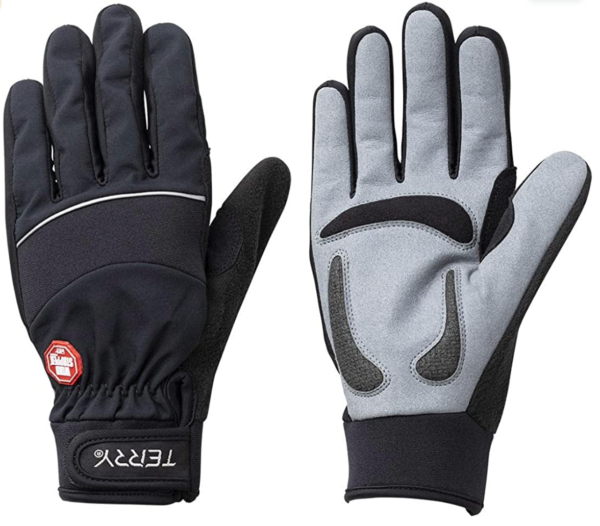
1.     Terry Women’s Windstopper Bike Gloves

Price: $54.95

Terry Full Finger WINDSTOPPER gloves are designed to deliver enhanced warmth during a chilly winter breeze with suede palms that are pre curved.

They come with thin gel inserts and Amara palms for better road shock absorption and enhanced comfort. These gloves are water-resistant, breathable, and windproof, which is why they come first in our list of the best cycling gloves for hand numbness.

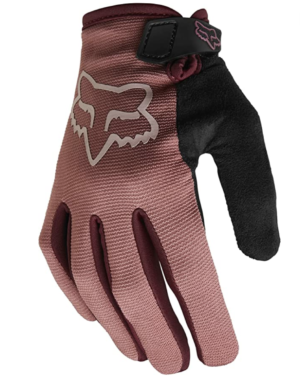
2.     Fox Racing Women’s Mountain Ranger Bike Glove

Price: $29.95

At just $ 29.95, Fox Rangers are one of the best cycling gloves you can get. They come with compression molded cuffs for an excellent and secure fit.

Fox Ranger gloves are made with absorbent micro-suede material and conductive threads at the index finger, allowing smart device touch sensitivity. These gloves set the standard in performance and comfort by offering high functionality and protection for a smooth cycling trip.

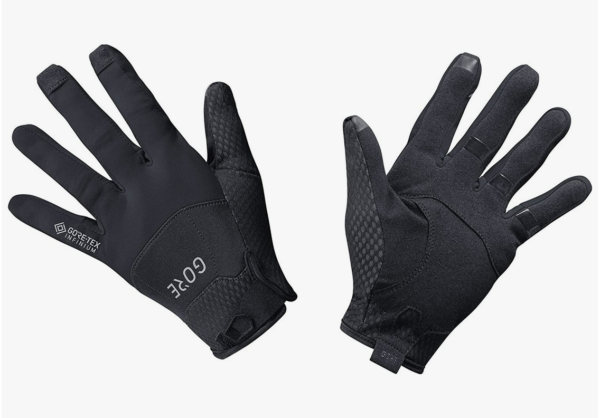
3.     Gore C5 Cycling Gloves

Price: $60.00

Like other Gore gloves, the Gore-Tex Infinium technology supports well-being and an active lifestyle without compromising functionality or comfort during cycling. Being the best cycling gloves for the winter season, they are windproof, water-repellent, breathable, and versatile.

They come with touch screen compatibility, Velcro wrist fastener, pre-shaped fingers, and silicon print with outstanding grip.

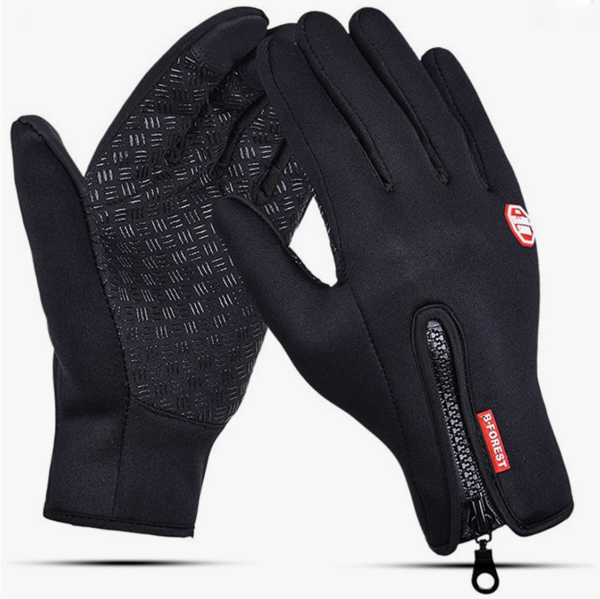
4.     B-Forest Lyna Winter Gloves

Price: $18.88

B-Forest Lyna gloves are loved by thousands of women cyclists, mainly due to their versatility, durability, and reliability. They are lightweight, breathable, and anti-abrasive, with hook closure and high elastic microfiber. Lyna gloves feature touch-sensitive pads on all fingers, allowing you to use your smart devices without removing them.

Powerful shock absorption, reduced road vibration and lower hand fatigue are some of its best characteristics.

5.     ROVOS Cycling Gloves

Price: $16.99

These half-finger cycling gloves make it to our best cycling glove list as they are designed to meet women’s anatomy and size and deliver optimal performance and grip. The foam padding placement in the palm lowers pressure and absorbs road vibrations and shocks.  

They are made with breathable lycra and spandex, delivering seamless construction for unbeatable comfort. ROVOS cycling gloves are available in different colours and sizing options with Velcro closure to provide a custom and secure fit.

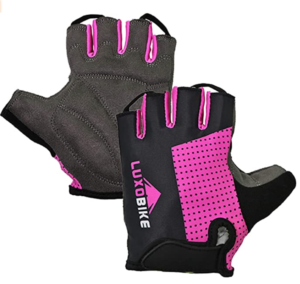
6.     LuxoBike Cycling Gloves

Price: $15.99

An affordable yet superior pick in our list of the best-padded cycling gloves, LuxoBike cycling gloves are your ideal partner for all types of cycling. The interior padding minimizes road vibration and absorbs road shock, while the durable micro suede palm delivers maximum comfort, flexibility, and a firm grip on handlebars.

These gloves are available in 8 different colours and sizes. They offer convenient features like pull-on closure, 4-zone shock adsorbing pads, moisture wicking, impact resistance, soft thumb towel, and innovative finger loops.

Wrapping Up

Always look for anti-slip, breathable fabric, cushiony comfort, and adjustability when choosing the best cycling gloves. A snug fit on the wrist, easy-pull lugs, and versatility are a few other points to consider.

No matter the type of women’s cycling glove you purchase for your next cycling trip, ensure that they meet your style and needs.

The Best Way to Avoid Cycling Injuries

November 17, 2022 by Eric Lister

“How can you prevent injury while cycling?”

It’s one of the first questions you should be asking as a cyclist. We all want to get faster, stronger and better on the bike, and while there’s definitely tried and true methods to attaining those things, there’s also a guaranteed way to prevent them from happening: Getting injured.

injury while cycling

Being sidelined from the saddle is a cyclist’s worst nightmare. We all know the exercise-induced-junkie-type behaviour that is all too common in ourselves and our fellow riders. We love to ride and we love to ride often. Being “injured” is almost a misnomer for many members of the cycling community, and we’re all too inclined to take a position of out of sight, out of mind. 

But that can only go on for so long. Anybody who has been riding for a while knows that the aches turn into pains if you give them enough time, and because of the repetitive nature of our sport, cycling injuries in general tend to stick around longer than others. 

This calls for action, a plan, something to have in place and fall back on. It’s not a pill, it’s not a tool, and it’s not a quick fix. It’s more of a philosophy, a necessary component. Something you need to build yourself and your cycling practice around. Something that will help you keep your status not just as a cyclist, but as an overall strong, healthy human being. 

One of the best ways to avoid cycling injuries is by implementing a strength, mobility and conditioning program into your training. 

Common Cycling Injuries

Think about it, apart from falls and collisions (which, admittedly, make up a large percentage of cycling injuries), how do we get injured in our sport? There are no rapid changes of direction that blow out our ACL’s. No violent kicks, throws or punches to tear a hip or shoulder. No lifting of heavy loads to herniate a disc…it’s just different from other sports. 

There is one word, though, that could characterize the plight of the average cyclist…

That word, is overuse.

Overuse injuries are the bane of your existence if you are an avid bike rider of any kind. The bike keeps you in a more or less fixed position while riding, which is something the body can adapt to, but only so much. There comes a time where you cross the point of adaptation and creep into the realms of imbalance; a place where lurking, recurring injuries love to dwell. 

Knee pain, neck pain, lower back pain, groin pain, hamstring tightness, headaches, shortness of breath and so much more can all be the result of overworked muscles. Not necessarily just in the area of pain, but somewhere in the chain of the human body’s unbelievably complex web of connectedness.

How do we restore function? How do we get rid of pain? How do we find balance? It is something we have to achieve in our time spent off the bike. 

Strength Training for Cyclists

prevent injury while cycling with strength training

fizkes/Adobe Stock

Exposing your body to exercises that work opposing muscles from the ones you use while cycling are going to help pull joints back into alignment and strengthen the tissues that get neglected through our sport. It is common for cyclists to think that any time off the bike is wasted time, but going back to the beginning of this article, if you end up injured, you might not be spending any time on the bike at all.

Some people fear the idea of strength training because they don’t want to get too bulky, and are afraid it will actually hinder their performance on the bike. Nothing could be further from the truth. Several studies have shown that in both men and women, one of the best things you can do to increase cycling performance is to increase the cross sectional area (size) of your muscles. 

Remember this as well, building muscle is a slow and tedious process. It requires weeks, months and years of consistent week-in-week-out effort. So the idea that you’ll wake up one day and be too bulky to ride efficiently is a myth you should be all too willing to dispose of.

What Should My Program Consist Of? 

Dedicating time to bringing harmony back into your body is the only way to counter everything we put ourselves through on the bike. A strength training program isn’t all about lifting heavy weights, there are several other components as well to ensure it remains balanced and complimentary to your body and the sport of cycling. 

We can not only increase our strength, but our endurance as well. The higher our fitness level the less likely it is that our form will break down while riding, which can lead to our muscles being used improperly and adding significant stress to our joints.

We can also work on our mobility and flexibility to help keep tissues supple and vascular. Too much cycling activity can really start to limit our ranges of motion due to its relatively minimal amount of movement. The pedal stroke doesn’t take our hip or knee through a full range, and the rest of our body doesn’t move that much at all. Resultant stiffness can lead to constriction, which means less blood flow and nutrients delivered to the area, and an increased risk of injury.

How Do I Start? 

Starting to exercise off the bike can be the most intimidating part of the process. We’re taking you away from what’s familiar and plunging you into a whole other world that applies to not just cycling, but every other sport and activity that there is. Sometimes the best thing to do is hire a professional, but coaching costs can be discouraging. That’s why we decided to come up with something better…

Dynamic Cyclist is our partnered training platform designed by cyclists, for cyclists. We’ve integrated mobility, conditioning and strength training into one, easy to use, 100% online user interface that our members can use 24/7 to fit their schedules. There’s no need for a gym membership, because all of our routines can be done at home with little to no equipment!

Everything has been prepared for you with high quality instructional videos led by world class coaches. All you need to do is press play and follow along!
For a fraction of the cost of a single physio appointment or personal trainer session, you can become part of our community of cyclists who want to ride pain free and be the best version of themselves on and off the bike. Try it for yourself by signing up for our 7-day free trial!

9 Tips on How to Build Your Own Cycling Training Plan

November 9, 2022 by Eric Lister

Whether you just bought your first rig or are an experienced road racer, a cycling training plan is going to be (or become) that friend who always tells you the truth, no matter how ugly that truth is. Saying you want to do something (increase your fitness, be a better cyclist, lose weight, etc.) is something entirely different from actually seeing your progress written down on a piece of paper. 

Perhaps that’s why most people never do it.

It can be both heartbreaking and encouraging to look down at a planned workout or multiple week program, and then to see how you’ve been succeeding (or failing) throughout it. There’s no sense lying to ourselves, though. It’s better to see it in front of you than live in the delusion of doing better than you actually are. 

This is one of the most important reasons to have a cycling training plan. It keeps you on track, makes you responsible for something and holds you accountable. While all that sounds great, actually building a training plan can be another monster all on its own. There are a lot of variables and areas of focus that you need to consider, all depending on your experience and current state of fitness.

Today we’re going to give you three tips and/or things to focus on whether you’re a beginner, intermediate or advanced cyclist. These ideas can be combined with any current training program you’re working through or currently building, and can be used for reference whenever taking consultation from a coach, training template or fellow rider.

Beginner


Source: jul14ka/Adobe Stock

Beginner cyclists can vary to a wide degree. You could have zero experience on the bike, or, be a once avid cyclist who hasn’t rode in a long time. This is the only stage out of the three that has a sliding scale, especially due to the cardiovascular fitness and muscular endurance required for our sport. But whether you’re fresh to the bike or revisiting it after a prolonged absence, the beginner cycling training plan principles will remain the same. 

1. Build Consistency

Getting used to regular riding is something your body needs time to adapt to. The pressure from the saddle, the energy requirements, the time allotment…all these things add up, and they’re just a few of the components required to build on more advanced levels of cycling. So focus on getting on the bike often, at least 3-4 times a week.

2. Try Different Intensities

This can be explored in a number of ways, one of the most freeing and encouraging for someone new to the sport would be to try different routes and terrains wherever it is you live. This will present a number of challenges depending on how many hills there are, the contours of the ground, etc. Start learning where your boundaries are in terms of pushing yourself.

3. Increase General Strength & Conditioning

In many ways, as a beginner, you are most susceptible to injury. You’re going to be asking your body to do a lot of things it’s not used to. This is why it’s important to carve out some time in your training schedule to develop overall strength and conditioning. It will help balance you on and off the bike and prevent injury long term.

Intermediate

Intermediate cycling training plans typically include training for races around the five hour mark.

Source: Friends Stock/Adobe Stock

If you’ve built up the discipline and capacity to put in six to eight hours/week, and have been doing so consistently for at least six months, you might be able to call yourself an intermediate cyclist. People in this range are typically training for races around the five hour mark, and will aim to put in around eight to 10 hours/week of training.

1. Learn to Use Fat as Fuel

Don’t really, this isn’t really a conscious thing, but more of an experiential one. When people talk about “hitting the wall” in long duration aerobic exercise, the sudden halt in energy is often the point at which their body is switching from carbohydrates to fat as the primary fuel source. It’s a jarring feeling, one that takes getting used to. Longer rides will help you adapt to this.

2. Develop Your Muscles

The intensity and length of road races favours your slow-twitch muscle fibers. These are highly oxygenated muscle fibers that are capable of producing low amounts of force over long periods of time, which is exactly what needs to be done on the bike. They are workhorses, and can only be developed through sustained, long duration, consistent time riding.

3. Improve Your Cycling Economy

Your economy on the bike refers to the amount of oxygen required to move your body at a given speed or power output. As you build up higher training volumes, the capillarization of your muscles increases, you produce more mitochondria and your aerobic fitness goes up. All contributors to how well you will use your oxygen intake while riding.

Advanced

Advanced cyclists have completed several races and are used to putting in a lot of volume on the bike.

Source: Charte Photography/Adobe Stock

Advanced riders have been training for a bare minimum of one year. They’ve completed several races and are used to putting in a lot of volume on the bike. Because of the adaptive changes their body has made in terms of fitness and resilience, they’re able to push their bodies much harder than a beginner. This opens up new possibilities for training, especially at higher intensities.

1. Develop Your Anaerobic Threshold

Anaerobic threshold is the highest exercise intensity you can sustain before lactic acid starts to quickly build up in the blood. In other words, your submaximal effort. A place that tilts on the edge of serious discomfort. To become a serious competitor in cycling, you need to become very comfortable with that discomfort, because you’ll be spending a large portion of your races there.

2. Changes in Intensity

Advanced riders are more free to play with interval training, and expose their bodies to large scale changes in intensity over short periods of time. This can help mimic race conditions when going over varying terrain, hill climbs, attacking for and defending position. Your body should be built up by this point to where you can throw anything at it without worrying about injury.

3. Improve Your VO2 Max

Cyclists have some of the highest VO2 max scores ever recorded. It refers to the maximum amount of oxygen you’re able to utilize during intense exercise. The combination of aerobic base training (long duration, low intensity) and maximum effort training (short duration, high intensity) is key. This should become a prime goal in the last phase of training before a race.

Ready to Ride Pain Free?

Our partner Dynamic Cyclist is a world class training resource for cyclists worldwide. They have a comprehensive library of follow along instructional videos with routines for stretching, mobility, strength and injury prevention. We invite you to join the community and try their programming in a FREE 7-day trial that can be accessed here.

This Pre-Ride Warm Up Will Make You A Better Cyclist

August 24, 2022 by Eric Lister

Most people don’t even bother with a proper warm up before biking. They figure they’ll just ease into the ride and then kick it into high gear when everything starts to feel loose. It’s a common problem in all sports and recreational physical activity. As cyclists, we often take our bodies for granted and get ahead of ourselves before the rubber even meets the pavement.

This, is how injuries occur.

Knowing what to do before a bike ride can help settle nerves, set goals, reduce the risk of injury and improve overall cycling performance. A correct cycling warm up will address several things at once, so it’s important we integrate it into our race days, training sessions and even prior to an easy ride. 

This article will briefly teach you the importance of warming up before cycling, and then show you a simple 5 minute routine that you can have in your arsenal at all times!


Source: Andriy Bezuglov – Adobe Stock

Why Warm Up Before Cycling?

One definition of intensity is the amount of load being put through the body during an exercise or activity. For example, doing a 1RM back squat is more intense than doing 50 bodyweight air squats. The heavy weight on your back is putting more axial load through the body than you doing a squat with no weight at all. With this definition, cycling is a low intensity exercise.

However, another definition of intensity is how hard the body has to work to do the exercise. Depending on your level of fitness, those 50 bodyweight air squats might take your RPE (rate of perceived exertion) to a level 8 or 9. With this definition, we can see how cycling could span the spectrum of intensity from low to high.

All this to say that cycling has the potential to place huge demands on your body despite its reputation for longevity and low impact on the joints. Yes, the bike supports your body. Yes, you push against free moving pedals instead of the immovable ground. Nevertheless, it is probably more intense than the rest of your day’s activities, so we need to prepare accordingly.


Source: brizmaker – Adobe Stock

Benefits Of A Cycling Warm Up

By performing a pre-ride cycling warm up you will increase the temperature and blood flow in your muscles. This has been shown to increase performance outcomes and reduce the risk of cramps or injury by making your tissues more pliable (“limbering up” so to speak).

Something else not often talked about is the psychological benefits to a warm up routine. This time can be used not only to prepare your body but your mind as well. Western medicine and society as a whole tends to compartmentalize the body and mind as different (sometimes opposing) entities. In reality, you as an individual are a complex intermingling of both.

Pay attention to how you feel prior to riding. Set goals for the session whether it’s for enjoyment, recovery, training or performance. Visualize the outcome of your race or desired sensations during your ride. Calm your nerves and avoid an “adrenaline dump” early in a race or heavy training session. All things we can attend to and include in the space of a dedicated warm up.


Source: fifeflyingfife – Adobe Stock

Should You Stretch Before Cycling?

It depends on the type of stretching. You’ll notice that all our warm up routines at Dynamic Cyclist are…dynamic. This means that we are constantly moving through a range of motion as opposed to just holding an end position (which is known as static or passive stretching). 

A dynamic warm up is more productive in terms of increasing the temperature of your muscles and preparing them for movement. Static stretching also has a number of downfalls prior to exercise including the decreased neural excitation of your muscles. This means they won’t fire as quickly, won’t be as strong and won’t last as long.

Holding a static stretch means you’re asking the muscle to relax into a lengthened state. This is contradictory to what you want during exercise, which is for the muscle to contract forcefully for several repetitions. These opposing ideas are a recipe for injury. Best to save any static stretching for after your ride or a rest day.

Pre-Ride Warm Up

Now that you know a little bit about why a cycling warm up is beneficial, it’s time to actually do one! This is a full 5 minute warm up routine you can use before going out on any ride. We will show you the exercise, tell you how to do it and why it will contribute to better cycling performance. 

Each exercise has an accompanied link that will take you to a follow along video teaching each exercise, led by our Dynamic Cyclist coach, Alisha. Let’s jump in!

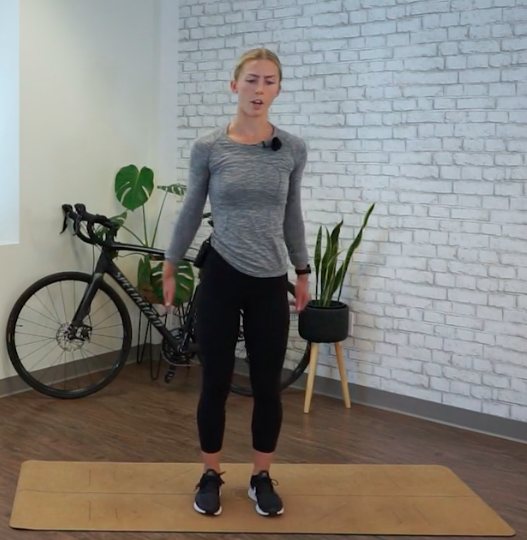
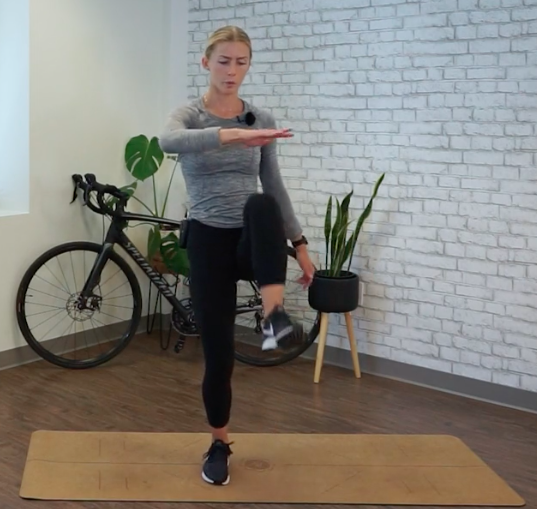
March In Place

Try this exercise with Alisha!

Why It Works

  • Warms up the hip flexors which play an important role in recovery phase of the pedal stroke; hip flexors tend to be dysfunctional in cyclists with lower back pain
  • Balancing on one leg works unilateral stability and fires all your glute muscles which is important for power initiation while cycling and overall hip health
  • Integrates hip and core musculature together; crucial for force absorption and production while riding
  • Large movement gets the heart rate up, circulates blood and increases the body’s core temperature
  • Cross lateral movement integrates your brains left and right hemispheres which results in better focus, peace of mind and improved motor functioning

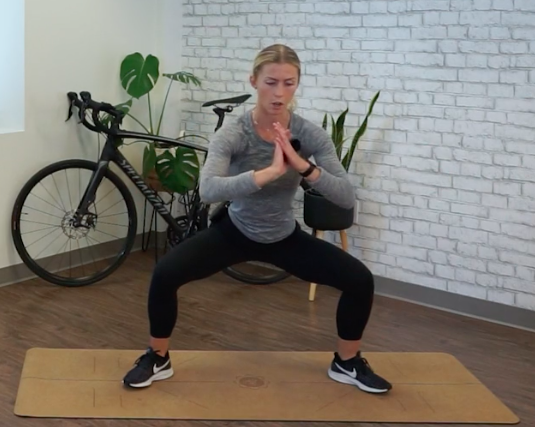
Pulse Squats

Try this exercise with Alisha!

Why It Works

  • Works all your knee extensors (quadriceps) which do the majority of the work while cycling
  • The wide stance works your adductors (groin muscles) who, in addition to adducting the leg (bringing it towards the midline) also have a secondary hip flexing function
  • Squatting deeply forces activation of the gluteus maximus, which is important for initiation of the power phase while biking
  • Alisha’s cue to drive the knees out helps engage all other glute muscles including gluteus medius/minimus; important for single leg stability and support of the pelvis while riding
  • Pressure from the saddle leads to several urogenital problems in cyclists (like numbness, infection and sexual dysfunction); this exercise opens up that sensitive area and stimulates blood flow to the surrounding tissues

Arm Circles

Try this exercise with Alisha!

Why It Works

  • Important for shoulder health; cycling limits the range of our shoulders and never takes our arms into an overhead position
  • Our shoulder joint is the most mobile joint in the human body, this exercise takes it through the full range of flexion and extension
  • Mobilizes your scapula (shoulder blade) which becomes stuck and stagnant staying in prolonged, fixed positions on the bike
  • Opens up connecting tissues in the chest and lats (under your armpit), both of which become compressed in a rounded, forward flexed cycling position
  • Bringing the arms overhead helps mobilize the thoracic spine (mid back) which cycling and several modern activities tend to stiffen

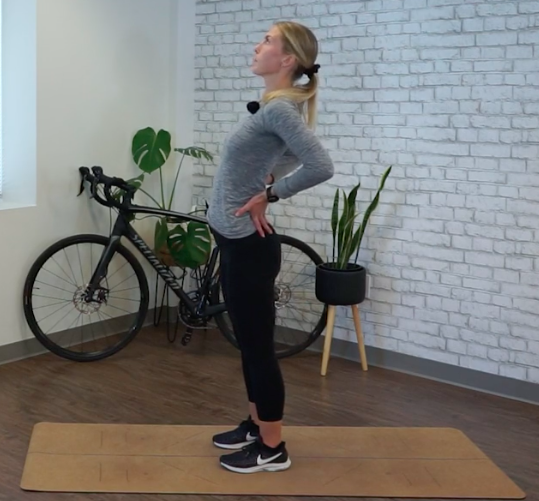
Dynamic Forward Fold

Try this exercise with Alisha!

Why It Works

  • Both strengthens AND stretches muscles on the front and back of your body through a large range of motion
  • Stretches hamstrings and back on the way down, contracts them on the way up; Stretches core, chest and hip flexors leaning back, contracts them folding forward
  • The core/chest stretch you get leaning back is great for maximizing your breathing capacity once you get on the bike where these tissues are crunched up and compressed
  • You get a pumping sensation in the low back as you hinge forward and backward which stimulates blood flow to this often injured area
  • Fluid movement that feels fantastic on the whole body; great for overall feelings of agility and nimbleness prior to riding

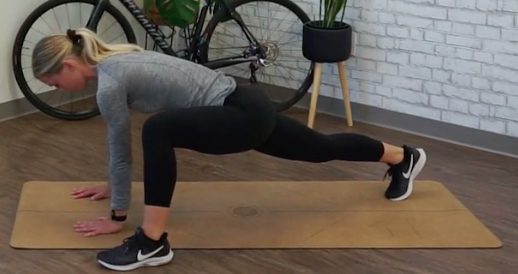
Dynamic Lizard

Try this exercise with Alisha!

Why It Works

  • Integrates the whole body and helps it work together as a single unit prior to getting on the bike
  • Great mobility exercise for hip health as you have to use your own strength to bring the hip into almost full flexion
  • Prepares you for mounting and dismounting, where you perform a large hip movement very much outside the range of normal pedaling; often injures bikers at the beginning of a ride when they’re not warmed up or at the end of a ride when they’re fatigued
  • Integrates loaded wrist extension into the warm up; it’s often overlooked that the wrists are under sustained load in different positions on the bike
  • Loads the upper body, particularly the front of the shoulders, which are going to be working hard when leaning forward on your handlebars

Take Your Cycling To The Next Level

This was just one of the many warm up, mobility, injury prevention and strength workout routines we have available through our Dynamic Cyclist training platform. Also available is 1-on-1 coaching for a more personalized approach.

We want to help you ride pain free and feel your best on and off the bike! We hope you join us and become part of our community of cyclists committed to riding pain free!

This Will Make You Faster On The Trails

August 17, 2022 by Eric Lister

Mountain biking is that unique brand of our sport notoriously responsible for its abrasions, broken bones, banged up shoulders and the odd concussion from time to time. Strength training for mountain biking should prepare us for what can sometimes be a winding trail of hostility and potential danger. That doesn’t, however, mean it’s something we should avoid.

The chance to get into nature, explore new technical paths and take in the beautiful scenery are what biking outside is all about. Preparing our bodies to handle the sudden drops, body jolts, jagged turns and unorthodox terrain means we can enjoy ourselves with a built-in insurance policy that protects us from injury and improves our cycling performance as a whole.

Becoming a better, faster mountain biker is always going to be a dynamic, ever changing goal. There are so many areas we can pay attention to for a sport that shifts focus quickly depending on where we are and how we’re riding. We have some universal tips to help and a special routine excerpt from our Dynamic Cyclist training program at the bottom for you to try!

Build Your Confidence

Source: Simona

It’s one thing to preach this idea, it’s a whole other to actually go out and do it. Especially when you’re careening down a mountain at God knows what speed, with every tree and boulder just waiting to stop you dead in your tracks. Exposing yourself to those situations though is precisely the way you get better at mountain biking.

The mitigation of fear is a competitive mountain biker’s innate advantage compared to the amateur rider. They have dealt with almost every situation, and understand how to control the forces that are going to be applied to them. They know their bike and they know their body, so they’re free to let go of the brake and use it all to their advantage.

Riding on different terrain, paths and trails will help educate your mind and body to be more comfortable amidst all the chaos. High confidence has been shown to be one of the few differentiators in downhill mountain biking performance. Other factors included hand grip endurance and aerobic capacity which, if you lack, could be significant performance detractors…

Improve Hand Grip Endurance & Aerobic Capacity

Source: marchsirawit/Adobe Stock

Surprise! In case that last sentence wasn’t a clue. Imagine the feeling of losing your grip on the handlebars or gasping for air with nature’s every creation flying by you at lightning fast speeds. That doesn’t sound to us like optimal conditions for the intense concentration required under such circumstances. 

One of the best ways to get direct functional cross over from your mountain bike training to the trails is with the use of cables. As you can see above, the woman has her arms angled similarly to the position you’ll find yourself in on the bike. Cable machines can challenge the hands, forearms and shoulders to stabilize in a similar way to biking but with progressive loading.

For aerobic capacity, making sure to challenge yourself with lots of uphill riding is a surefire way to get your heart pumping. It’s important to remember too that your aerobic capacity and overall cardiovascular health are the first variables of fitness to decrease upon taking a break from physical activity. Quick to gain, quick to lose, so make sure you train it regularly!

Adjust Your Gaze

Source: yanik88/Adobe Stock

Where you look actually has a significant influence on your overall body position, and this plays an important part in getting the most out of your muscles on the bike. Our eyes have a stimulating effect on the muscles in whatever direction we look, which is built into our nervous systems to help anticipate movement in that direction

The pelvo-ocular response is a reflex that orients our pelvis and lower extremities based on where our eyes are looking. Because of the positions we find ourselves in while mountain biking, there can be a tendency to crane the neck upwards to keep our eyes level with the horizon. This is indeed necessary sometimes, but not all the time.

Tilting the chin too far up will cause our lower backs to arch as a result of this pelvo-ocular response, this in turn will stretch the core muscles and cause them to disengage, which is not something we want. It is instead better, when possible, to keep the spine and neck in a neutral position, retracting the chin and letting your gaze fall naturally in front of you for a tight, stable core.

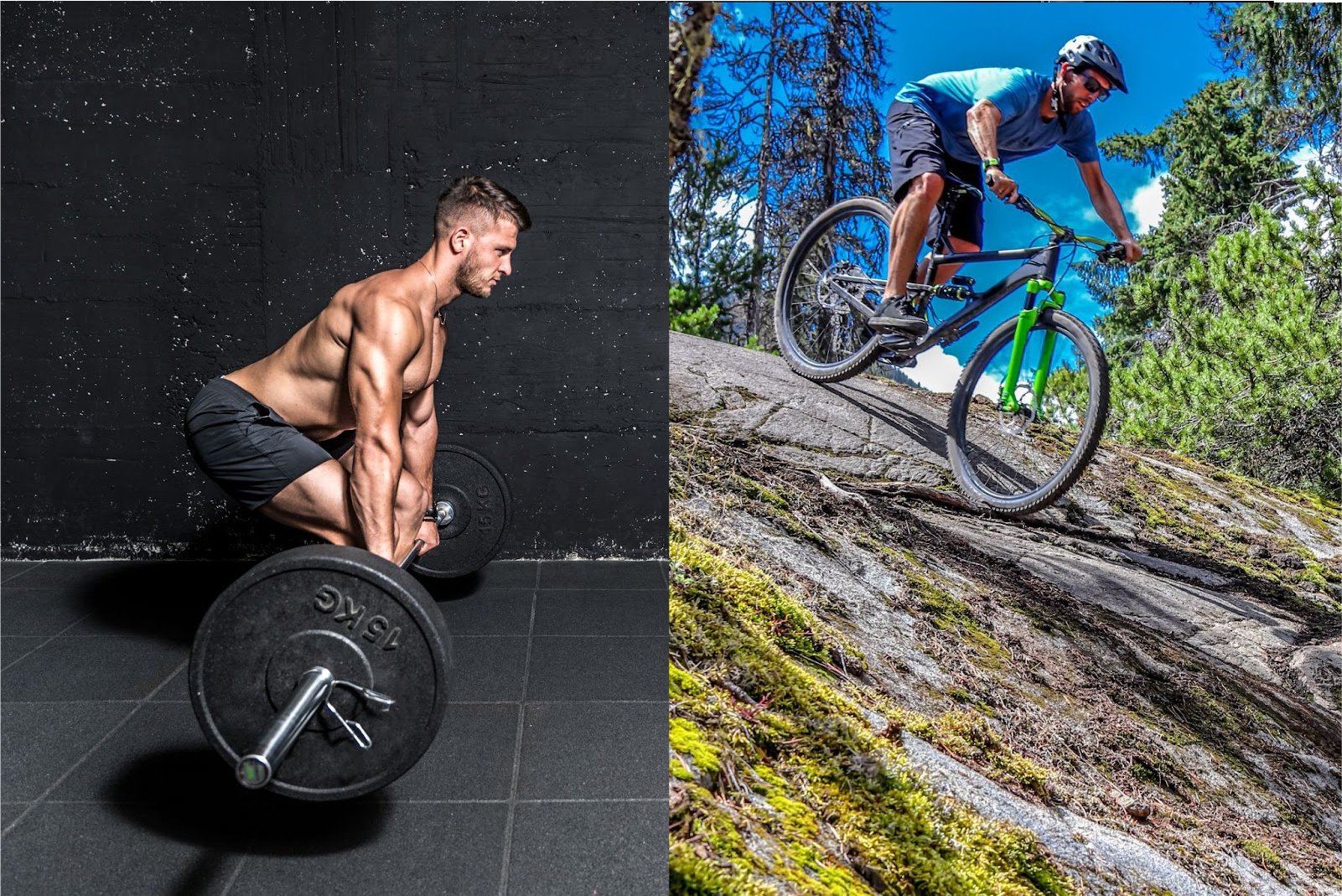
Deadlift Position & Mountain Biking

An interesting parallel to the fitness world is deadlift positioning in the gym. It has been shown that retraction of the neck and chin into a straight, neutral position helps a person to engage the erector spinae (back) muscles and exterior obliques in their core when lifting. Transferring this activation to the bike would result in far superior force production and absorption.

Ready To Get Stronger On The Bike?

Dynamic Cyclist offers an all around training platform for cyclists of all disciplines worldwide. We have comprehensive strength training workouts, injury prevention sessions, mobility and warm up routines all available with the click of a button! 

Give it a try by following along today with our coach, Alisha. This is just one of the hundreds of videos from our library that is available for a low monthly subscription. Our goal is to make you a better, stronger cyclist who enjoys being on the bike and rides pain free. You can sign up here for a 7-day free trial and see what you think! 

Strength Training Considerations For Different Types Of Biking

August 10, 2022 by Eric Lister

Whether you’re on the road, a velodrome or carving up mountain trails, your bike riding is going to be significantly improved with a proper strength and conditioning routine. Strength training for cycling is often overlooked because it takes you off the bike, but with a small shift in perspective we’d like to suggest it will actually pack more riding into your life over time.

Source: 24K-Production – Adobe Stock

Strength Demands of Different Rider Types

Depending on the type of bike riding you choose to participate in, the demands on your body will also change from style to style. While there’s certainly cross over amongst the three types we have categorized below, they all have distinct differences that are unique to that particular discipline.

 Mountain Biking

Source: yanik88 – Adobe Stock

Diverse terrain, varying depths, hard corners, jumps, rocks, roots and everything the outdoors has to offer are factors that every mountain biker must deal with. The movement is much more dynamic than road or track cycling, and in terms of force absorption this is most definitely the hardest type of biking on your body. 

It is well known that adult road cyclists are typically at a much higher risk for osteoporosis than other athletes. Some studies actually show their bone density to closely resemble (and in one case, even be lower than) sedentary control groups. This is not encouraging news for the cycling community.

Conversely, related research has made note of mountain biking being a possible cycling alternative that doesn’t so negatively affect a person’s bone density. Operation of a heavier bike, turbulent jolts and violent carving all translate to more load being put through your body. Strength training for mountain biking should prepare you to handle these types of forces.

Road Cycling

Source: ibravery – Adobe Stock

As mentioned above, road cyclists tend to have a lower bone mineral density compared to other athletes and even the general population. This is because the bike is supporting you while you’re riding, so even though your legs are pumping hard and your heart is beating fast, your bones are sitting there wondering what all the huff and puff is about.

Another factor to consider with road cycling is the prolonged, folded over postures you’ll often find yourself in. The hips have to work in a less than optimal range, the lower back is in a vulnerable position and the neck gets craned back (only some of the issues unfortunately). Low back problems, faulty breathing patterns and tight hips are often the result.

Strength training for cyclists should focus on correcting these postural and functional shortcomings. Introducing load through the body off the bike will help you become stronger on the bike. Not only that, a properly designed program will actually make riding more comfortable and lower your risk of injury despite the less than optimal positions you might find yourself in.

Track Cycling

Source: AboutLife – Adobe Stock

Track cycling is a unique discipline within the broader realm of our sport. There are many types of events and formats, but for the purpose of this article we want to focus on the particular differences in sprint cycling. These are races performed over short distances where maximum power and force production is required. 

Athletes who are successful in sprint cycling tend to have a higher composition of type II (fast twitch) muscle fibers. Individuals with more fast twitch fibers are capable of producing quicker movements and generating more strength in a shorter period of time (power). There is a direct correlation between muscle fiber composition and sprint cycling performance.

Different muscle fibers react to different training modalities. An explosive athlete like a sprint cyclist will likely be doing a lot of jumping and sprinting exercises. Training with heavy weights for low repetitions will also be common in order to teach their body to produce as much force as possible in as little time as possible. Long, leisurely rides will be for nothing more than recovery.

Lifting Weights For Cycling

Source: Flamingo Images – Adobe Stock

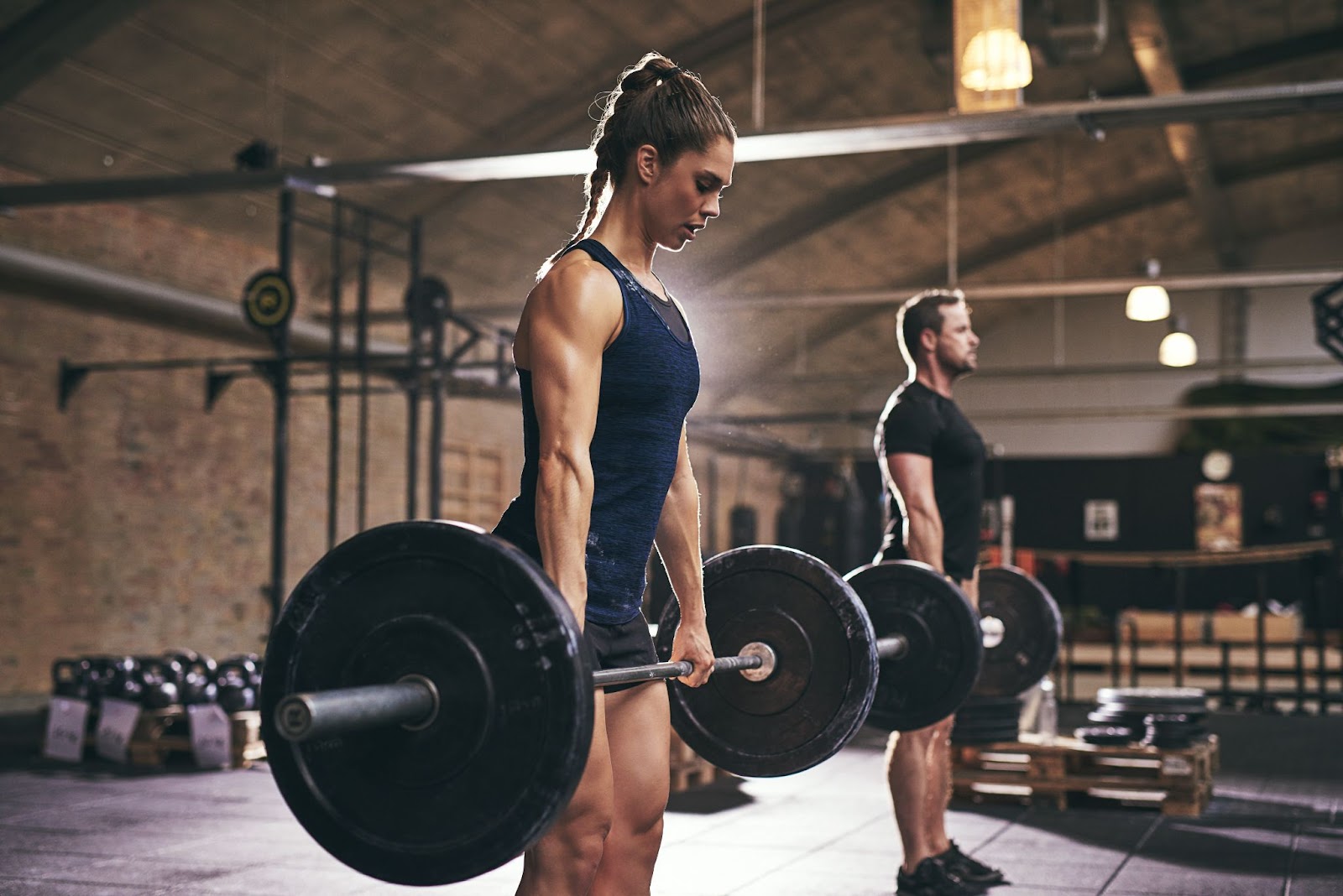
Incorporating weight lifting into your cycling training plan is a great way to make yourself stronger on the bike, balance your pedal stroke and most importantly reduce the risk of injury. The #1 goal of any athlete in the gym (unless you’re a powerlifter, olympic lifter or bodybuilder) is injury prevention, because nothing else matters if you can’t actually do your sport.

Determining how to train, what exercises to do, in what rep range and at what weight can all be tricky variables if you don’t have much experience in the gym. This is where the help of a one-on-one coach becomes valuable, as they’ll be able to provide you with the guidance necessary to ensure you’re not wasting your time doing something counterproductive. 

As we’ve already seen, the type of riding you’re doing is going to determine the bulk of your strength training routine. You might be wondering though, is there anything I can do for strength training outside the gym? Regardless of whether I’m a mountain biker, road or track cyclist? The answer is yes!

At Home Strength Training For Cyclists

Dynamic Cyclist is our fully immersive training platform that combines mobility, stretching, injury prevention and strength workouts all into one, easy to use interface. We’ve taken care of all the programming, technical work and coaching so that all you have to do is follow along!

To give you a taste of the world class instruction and workout quality we provide, we’ve included below one of our FULL BODY routines that is going to work you from head to toe. Everything at Dynamic Cyclist is designed to make you better on the bike, regardless of what discipline you most participate in.

Follow along with Alisha, Dynamic Cyclist’s certified coach!

Training With Power

December 10, 2017 by Aaron Robson

One of the biggest revolutions in cycling training has been the introduction of the power meter as a training tool. It has rapidly thrown cycling into the highly technical world of sports science, and the benefits can be enormous – Chris Froome’s win in the 2013 Tour de France was aided greatly by Team Sky’s extensive use of power meters in both their training and racing plans. So what is power training, and more importantly, can it benefit you?

Training With Power

What is Power?

Everyone has heard of power, but unless you have a particularly good memory of high school physics, you may not be familiar with what it means in a technical sense. Power is defined as the rate of work; how much ‘work’ is done in a certain interval of time. Work is defined as a force applied over a distance. So power is essentially a measure of how hard you can push on the pedals (the force) and for how long (time). The harder you can push, and the longer you can maintain a certain level of ‘push’, the faster you go! And going faster is what bike racing is all about.

Why Should I Use it?Training With Power

Now, you might be saying to yourself ‘OK, that’s nice. So what?’ Well, the ‘so what’ is that cyclists can use power to train and race much more effectively. Power is ultimately a measure of how hard you are working, and by using a power meter on your bike, you can more precisely monitor your effort. Other ways of monitoring effort do exist – rate of perceived exertion (a subjective assessment of how hard you feel you are working) and heart rate are the two most common methods, but neither comes close to the precision you get from a power meter.

This precision can be extremely beneficial to cyclists. By using a power meter on a climb, for example, you can ride the entire climb at precisely your optimal power output – never going too hard and pushing yourself into the ‘red zone’, but also not being too conservative and leaving too much in the tank at the end. You can also train more effectively, doing intervals at an exact percentage of your maximum output, or riding a tempo ride right at your lactate threshold to name a few possible applications.

How to Integrate Power into your Training

Hopefully you’re convinced that using a power meter can make you a better cyclist. The obvious question is how? First things first, you need a power meter. Debating the merits of the many options available on the market will be the subject of another article, but in short – invest in a good one. You might be tempted by the low cost of some models, but these are no where near as accurate as the better ones, and accuracy is the whole point of using a power meter. The cheapest worthwhile option I know of is the Stages Power meter, which retails for $700.

Training With PowerAfter you have your new power meter ready to go on your bike, the next step is to do some baseline tests to determine your power profile. Ideally, you will want to determine the maximum power you can produce for 5 seconds, 1 minute, 5 minutes and 30+ minutes (this last one is referred to a Functional Threshold Power). All-out 5 second effort is easy enough, and even a 1 minute maximum effort isn’t too daunting. The 5 minute and 30 minute efforts take a bit more planning to execute properly, but when you know all these numbers you will have a much better idea of your strengths and weaknesses as a rider. There are tables available online that provide approximate equivalent levels of power for each duration. If your values for 5 second and 1 minute power rate higher than your 5 minute and 30 min values, then you know you are relatively weaker aerobically, and can emphasize aerobic training.

Power meters also help you to gauge efforts better. If, for example, you know that your FTP is 300 Watts (watts are the standard unit of power), then you know that in a time trial that will take you about 45 minutes to complete, you shouldn’t be riding above 300 Watts at any time. Riding with the most even power output over the course of your effort will give you the best results.

It is impossible to cover every aspect of power training in a single article – there are entire books written about it. If you are an aspiring racer, or even just someone who loves to track progress, a power meter will be your best friend. Now that you are familiar with the basics, you can start your journey into training with power!

What To Do After a Bike Accident

April 2, 2014 by Aaron Robson

What To Do After A Bike Accident

what to do after a bike accidentSo it finally happened. After years of close calls and near misses, you finally hit the deck. Maybe it was a errant patch of gravel, or someone’s back wheel that was the culprit, but the end result is always the same – you leave a significant portion of your skin behind on the road. Recovering from a crash can be a tricky process, and you will only ever do it the wrong way once (it hurts that much!). To spare you some learning pains, here are some tips on dealing with the dreaded road rash.

Cleaning the Wound

The first thing you want to do is wash the wound out as well as you can – unless you managed to fall on hardwood floors (velodrome?), you are going to have a ton of grit and dirt embedded in there. This needs to come out. A lot of people are tempted to use alcohol or hydrogen peroxide to ‘disinfect’ the wound. DON’T!!! These substances will damage your exposed tissue, potentially increasing the likelihood of scarring, and delaying recovery. Warm water and a mild soap, and/or a saline solution are all you need. Try to get as much of the dirt out as possible, but don’t scrub too hard and inflame the area. A small squirt bottle can be really handy here.

Now that you have a relatively clean area to work with, it is time to disinfect the wound. Depending on how much things are hurting at this point, I will use a couple different methods. If the pain is really bad, I have a antiseptic spray that contains lidocaine (a numbing agent) that works so well I think it might be some sort of witch magic. After spraying it on and letting it dry off a bit, I will cover the affected area with a triple antibiotic ointment like Neosporin. If you can find the stuff that also has ‘pain relief’ get it – it’s not lidocaine, but it will help. You want to have a thin film of the ointment covering the area – don’t gob the stuff on!

Bandaging the Wound

Hopefully by now, things are hurting a little less, and you can think about dressing the wound. This was where I made my biggest mistake on my first crash – I used regular dressings, and didn’t change them soon enough. By the time I got around to switching my bandages a day later, my skin had started growing back into the bandage, and I ended up spending two hours soaking in the bathtub, slowly ripping my own skin off as I peeled the bandages off. So beware!!!

In general, you should always keep the wounds covered – if your raw skin gets too much sun it will scar for sure and letting them scab over will leave you with a couple of weeks (or more) of very stiff, painful, awkward moving about. By keeping the wounds covered, you allow the new skin to form underneath, and when it has completely closed up, you can take the bandages off and be just about good as new! There are a couple of options for dressings. If you are super fancy, you can use what are called semi-occlusive dressings – these allow the wound to breathe while still sealing fluids inside and other contaminants outside. All of the professional racing teams use these – the best brand is probably BIOCLUSIVE. The downside is that they are pretty pricey – depending on what size you need, up to $5 per patch.

My low-tech alternative to these was a combination of the non-stick gauze pads you can find at any drug store and vaseline. I found that the non-stick pads alone weren’t quite non-sticky enough, but with a thin layer of vaseline on them, they worked perfectly! I used mesh wrap to hold them on. You will have to change these a bit more frequently than the Bioclusive dressings (once a day, versus once every few days) but if you can’t find the fancy stuff, these are a great second option.

Now you should be well on your way to a successful recovery! Change your dressings frequently, and don’t try to do too much too soon, and you will be back riding in no time. After the aforementioned crash and skin peeling incident, I was back racing (still slightly bandaged up, albeit) in two weeks.

« Previous Page
Next Page »
  • Facebook
  • Tumblr
  • Twitter

Latest Articles

JOIN Cycling: A New Training Platform for Cyclists

May 27, 2024 By Eric Lister

cold exposure

The Benefits of Cold Exposure for Cycling & Life

June 13, 2023 By Eric Lister

hill climb

The Ultimate Hill Climb Training Guide

May 31, 2023 By Eric Lister

shoulder pain cycling

How to Treat & Avoid Shoulder Pain While Cycling

April 12, 2023 By Eric Lister

psoas stretch

The Importance of the Psoas Stretch for Cyclists

April 6, 2023 By Eric Lister

cycling neck pain

The Ultimate Guide to Cycling Neck Pain: Causes and Solutions

March 21, 2023 By Eric Lister

Useful Info

  • Contact
  • Finally, A Global Cycling Club That Is Focused On Community And Love Of Cycling!
  • Privacy Policy
  • Share Your Story!
  • Terms And Conditions Of Use
  • Welcome to I Love Bicycling
  • What Happened When I Stretched Every Day For a Month

Recent Posts

  • JOIN Cycling: A New Training Platform for Cyclists
  • How to Hang Bikes in Your Garage: 4 Inexpensive Options
  • Gravel Bike Vs. Road Bike: Which One Is Better For You?
  • The 6 Types of Mountain Bikes & How to Choose the Best One for You
  • What Is a Touring Bike Good For? 5 Benefits We Know You’ll Love

Search I Love Bicycling

Connect with Us

  • Facebook
  • RSS
  • Tumblr
  • Twitter

Copyright © 2026 · Magazine Pro Theme on Genesis Framework · WordPress · Log in