• Training
    • Injury Prevention
    • Training Tips
  • How To
    • Bike Fit
    • Gear
  • Nutrition
    • Nutrition Tips
    • Weight Loss
  • Repair
  • Reviews
  • Stories
    • Funny Stories
    • Jokes
    • Quotes
    • Videos
    • Funny Videos

I Love Bicycling

I Love Bicycling is a website that is geared towards cycling for beginners with road cycling tips, training articles, nutrition tips, weight loss, how to’s and bike repair articles.

Reviews

  • Funny Stories
  • Jokes
  • News

Crank Brothers Y-16 Multi-Tool, Just In!

March 17, 2016 by Ryan Taylor

The Crank Brothers Y-16 multi-tool boasts a great range of features!

Crank Brothers is a brand which is no stranger to shaking up the bicycle industry. They have re-invented the wheel, brought ground breaking pedal designs to the market, and introduced clever, chic multi-tools.

The Crank Brothers Y-16 Multi-Tool

The new Crank Brothers Y-16 Multi-Tool sits at the top of their list for usable tools. It’s features include:

  • CO2 Inflator
  • Chain Tool: 8/9/10 speed compatible
  • Spoke Wrenches: #0, 1
  • Hex Wrenches: #2, 2.5, 3, 4, 5, 6, 8
  • Screwdrivers: phillips #2, flat #2
  • Torx: t-10, t-25

Most muli-tools in this price bracket do not feature a C02 Inflator and its nice to have this included along with all the other emergency bits you may need all in one unit.

Initial Impressions
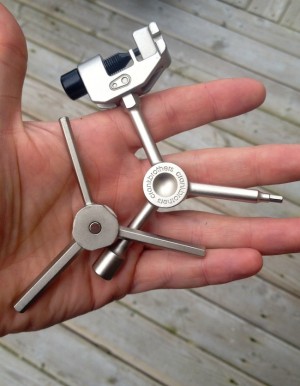
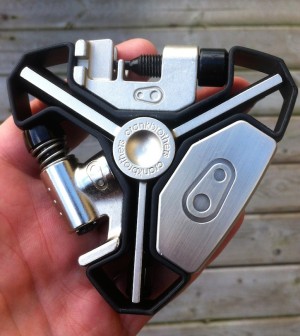
The Y-16 multi-tool has many interlocking features. Such as the y-handled tool holding the chain tool.

Construction

The Y-16 is no lightweight. At 260 grams it is a utilitarian multi-tool not meant for any weight weenie. This is a good thing when it comes to a do-all tool as it signifies quality. When holding the Y-16 it becomes apparent that a lot of thinking outside the box has come into play with this multi-tool. The 2 Y-tools which hold the Torx and allen head keys are held together with internal magnets, with the C02 inflator, chain tool, and small stash of bits surrounding this.

There are a lot of great materials being used with intricate stamping and forging. It is interesting that all of these quality crafted items are held together with a plastic skeleton. The torx bits are held into a canister with a piece of foam instead of a hinged top.

We will put this multi-tool through a thrashing and have a follow up review of how it holds up!
Price – $49.99 USD

Link to Buy

The S1-A Search And State Cycling Jersey – Hand Made in Manhattan

March 17, 2016 by Ryan Taylor

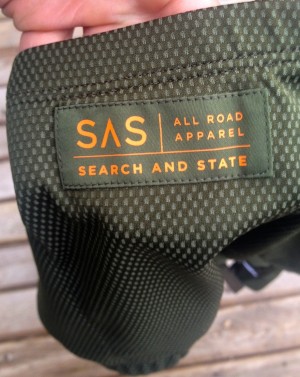
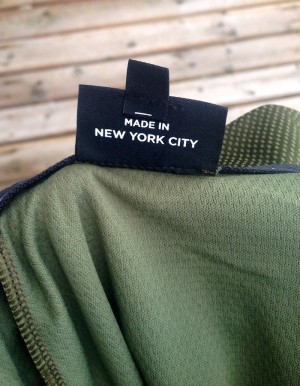
You dont see this label on much clothing these days.
You don’t see this label on many clothing items these days.

Search And State has been gaining traction as a small cycling specific clothing company based in Midtown Manhattan. Their mantra is “Handmade products designed to last with all USA produced fabrics.” This is a bit of an anomaly in the clothing industry these days and S&S would have it no other way.   

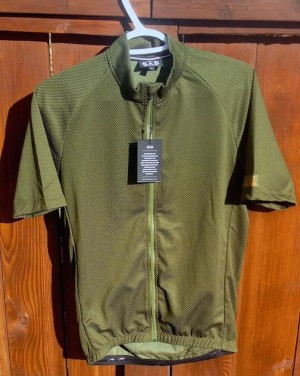
The S1-A has rugged features throughout.
The Search And State Cycling Jersey S1-A  has rugged features throughout.

The S1-A Search And State Cycling Jersey

In the S1-A jersey there are many hidden, finer touches that point to great attention to small details. First impressions of the S1-A are that of being very rugged. This is not a lightweight climbers jersey. The S1-A is heavy and robust to the point where riders in warmer climates may find it too hot but else where is of perfect construction.

Search and State S1-A in a color on featured on the website. Possibly a new color?
Search and State S1-A jersey in a color not featured on the website. Possibly a new color?

Zipper Construction

The S1-A is constructed with a Riri zipper, which is the best in the industry. It offers a very positive feel similar to that of a Campagnolo Shifter. There is a zipper covering on the inside of the jersey to protect from pinching the rider during use and to keep that annoying chilly breeze from going through the zipper onto your bare skin.

IMG_2646

Material

The jersey material itself is the same throughout and this jersey is a very pleasant olive green with hunter orange accents. Similar to the stitching and zipper construction, it is heavy and durable. After a formal long term test of its wicking ability and warm temperature performance we will have a follow up review.

Search and State market themselves as primarily a maker of road oriented clothing. Using the S1-A on the mountain bike however, you wouldn’t think twice about it. The durability of the product is that confidence inspiring.

The Fit of the S1-A Jersey

The fit of the S1-A is an accurate race cut. The materials are thicker and don’t have as much stretch as some of the lighter jerseys coming out these days. It pays to buy the size that fits, instead of a size down hoping for a skin tight fit. Being more of a race, there is a gentlemanly relaxedness to it, not too tight, but not too loose either.

We will be back in a few months with a long term review of the Search And State S1-A Cycling Jersey!

Price – $150 USD

Where to Buy

http://searchandstate.com/

Black Burn Airstick SL Review

March 10, 2016 by Ryan Taylor

Black Burn Airstick SL Review‏Black Burn Airstick SL Review‏

Initial Impressions:

When initially holding the Blackburn Airstick SL, the lack of size and weight are what jump out at you. At only 68grams this pump is no heavy weight. It is  small enough to fit into most medium sized saddle bags, and comes in a variety of colors. For a non-race situation this pump will make you question carrying C02 as your main source of emergency inflation.

Performance:

Despite the Airstick’s size, Blackburn claims it can produce 37% more stroke volume than pumps of a comparable size due to its duel chamber system. Many companies throw stats at users with non-tangible percentages, so to get to the point, does it pump!?

The answer is yes. Very well in fact. The first time I used the Airstick Sl, I was pleasantly surprised. It is by no means as efficient as a floor pump but for fixing a flat, or inflating tires after a flight while on vacation or at a race, it is very capable. Its ability to fit inside most saddle bags is a huge feature for this pump as it takes some of the worry away should a first flat happen.

I would like to mention I would classify this as a road or touring only pump. I think inflating a mountain bike tire would be painful, but do-able if absolutely necessary.

Gripes:

Despite the performance of the Airstick SL, it is not perfect. Most of these reasons stem simply because of its size! It is a presta specific pump, and is a little tricky to stay on the valve effectively. While pumping I was very aware of not to pump too erratically so to not break off the valve and be in a worse spot than I was initially. Also, because the pump itself is so small it is sometimes hard to control in the later stages of the pumping when air pressures go above 90. Blackburn claims the pump can go up to 160, but around 110-120 is difficult enough to be satisfied with that pressure. That being said as a means to get home this is plenty for most people.

Conclusion:

Overall Blackburn has made a fantastic product with the Airstick SL. It comes in many colours, has a sheik look, is a great price, and is small enough that it is unnoticeable in a jersey, or saddle bag(it does come with a frame mount also).

After 3 months of use, the pump has continued to work as intended with no issue.

However, it is not perfect as its connection to the presta valve is sometimes finicky when pressures go up.

4/5 Hearts.

US $24.99

http://www.blackburndesign.com/

Fixed Gear Bike – My Legs Are My Brakes, My Legs Are My Gears

March 9, 2016 by Wade Shaddy

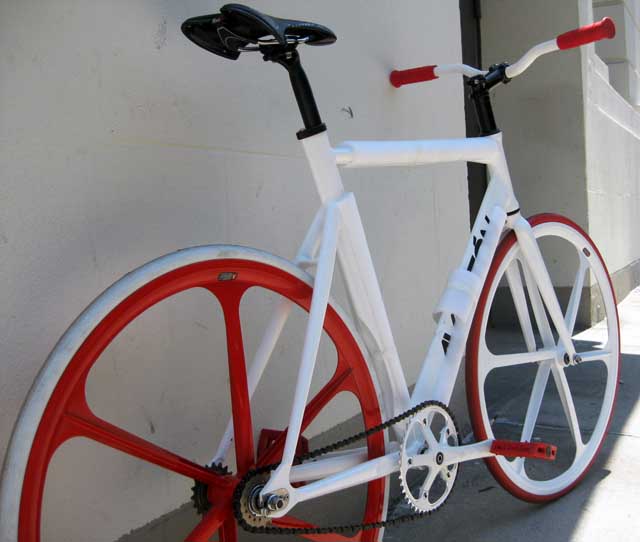
 fixed gear bike

Fixed gear bikes are fun, efficient, and trendy. They represent simplicity. Your legs are your gas, brakes, and gears. Your body and technique replace the missing parts. Fixed gear bikes are probably the purest form of cycling. Here’s the lowdown on the fixed gear bike.

Fixed Gear Bikes are Freedom

Fixed gear bikes were popularized by bike messengers and bike messenger movies. One reason messengers prefer fixed gear bikes is because they provide increased control in gridlock conditions. The absence of brakes makes them seem dangerous — though it’s less dangerous than it sounds. Fixed gear bikes represent freedom — darting past everybody stuck in cars. Fixed gear bikes represent the hardcore cyclist at his or her best. Skeptics see fixed-gear bikes as antiquated or dangerous but gears and brakes have become standard for a reason — right?

Sheldon Liked Fixed Gear Bikes

Before you dismiss riding a fixed gear as only a trend, take a look at what traditional riders have to say about the fixed gear. Sheldon Brown died in 2008. He was a bearded old guy and remains one of the most respected men in cycling. His legacy of cycling knowledge exceeds most cyclists today and he wouldn’t ride a bike if it was only considered a trend. Sheldon liked fixed gear bikes. “It feels like an extension of your body to a greater extent than does a freewheel-equipped machine.”  He said of the fixed gear bike.

Riding a Fixed Gear Bike

Authentic fixed gear bikes have no brakes but not all fixed gear bikes are brakeless. Brakeless bikes are actually safe in the hands of an experienced rider. You slow down by slowing and locking the pedals with your legs.

Front Brake or Not

Some riders add front brakes to their fixed gear bikes which makes them a little more practical and depending on where you live — legal. But adding brakes to a fixed gear bike is considered a direct insult to conformity and functionality. Trying to make it more like a traditional bike seems self-defeating.

Safety Standpoint

You can ride a fixed gear bike safely without brakes once you’re used to it. Putting back-pressure on spinning cranks slows you effectively, just like a brake handle does. But in perspective, or to look at it strictly from a safety standpoint, if you break a chain, a front break can really come in handy.

Gearing Absence

While the absence of gears might seem impractical, it’s not that bad. Riding a fixed gear bike promotes better pedaling technique and strength. Road racers like them for improving form and a strong rider on a fixed gear can often out-climb a geared bike.

Effort Equals Distance

Riding a traditional road bike for fitness can be counterproductive if you succumb to the temptation to pick the most efficient gear and maintaining a heart rate you can sustain over the long haul. Riding a fixed gear bike takes you out of that comfort zone. All effort is pretty much identical. When riding a fixed gear bike, the gear is established and you must choose the effort expended to match the distance. It puts you through paces that you might never experience on a traditional road bike.

Fixed Gear Bike Advantages

  • Climbing hills without having to think about gears forces you to optimize your effort.
  • The constant spinning control translates to a smoother, rhythmic cadence.
  • You can feel the road when riding a fixed gear bike. There is no slack going forward or backward before the “catch” on the chain. The subtle lag of the chain on geared bikes is absent.
  • Because there are fewer components, the bike is lighter and more responsive, which means you’re able to maintain speed easier.
  • No derailleur maintenance or clicking. No wait on gear shifts. No finding the right gear.
  • Fewer people know how to ride them so they are less attractive to thieves.
  • You can stop more easily in wet weather. Braking with a fixed wheel drive train is not impeded as much by wet conditions.
  • Maintenance is low with fewer components — tires and chain, that’s all.
  • On velodromes, you have to ride a fixed gear bike, so if you race track, you have no choice.
  • Good for ‘off season’ training by serious road cyclists.
  • Defines simple machines. In addition to being the most efficient human-powered device, the fixed gear bicycle is an important fashion accessory. Trendy.
  • Fixed gear bikes are silent.
  • Riding a fixed gear bike adds fun and variety to your routine. For someone who rides a traditional road bike, the contrasting experience of riding a fixed gear bike can rev things up, keeping bikes interesting.

Fixed Gear Bike Disadvantages

  • Fixed gear bikes are harder work than a normal bike with a free hub that spins. Your legs are constantly moving so there’s no rest.
  • Going down hills is hard too. You have to keep spinning your legs to keep up with the speed of the cranks.
  • You can’t stop as quickly without the benefit of a front brake and braking on a fixed gear bike depends on the skill of the rider.
  • Brakes are not optional in some jurisdictions. Some states have laws that require brakes. You should have at least one brake on a fixed gear bike in case your chain breaks.
  • Not good for longer rides.
  • Not as fast as a geared bike.
  • Not the best at climbing unless you’re fit.
  • Fixed gear bikes can be hard on your knees. If you ride in hills and you push big gears, it can cause more wear and tear on your knees and hip joints than if you were able to switch to lower gears and keep spinning.
  • They require unique skills and have an element of risk that discourages many cyclists.

The Trackstand Maneuver

Trackstands are the ability to stabilize a bike without moving forward. Since the bike can pedal backwards under force, it makes it possible to keep balanced while stopped. This is useful while waiting for cross traffic for example, and is a demonstration of the skill of the cyclist. It is impressive. Nothing performs better trackstands than a fixed gear bike.

Types of Fixed Gear Bikes

Fixed gear track bikes are designed for the velodrome. Horizontal rear-facing drop-outs, no quick release on wheels, no brakes, drop bars for most events. Steeper geometry than road bikes and handling is twitchy. Tires no wider than 25mm.

Street fixed gear bikes are designed for riding on street surfaces. Horizontal drop outs, front brake, drop-bars, bullhorns or flat bars, gears typically lower. Geometry more like a road bike and can accommodate tires wider than 25mm.

Trick fixies are intended for stunts that involve pedaling backwards, climbing walls, ramps, jumps, and other crazy stuff. Lots of back-pedalling. Geometry like a big BMX bike, very low gears.

Road bike conversion fixie. You can always tell a conversion because the drop outs are not rear-facing. Everything else is much the same as a street fixed gear. This is a good way to experiment with a fixed gear bike if you don’t want to shell out $700-$1000 for a dedicated fixed gear. You can’t race one of these in the velodrome because of the dropouts however.

Curious About Fixed Gear Bikes

The benefits of owning a fixed gear bike are undeniable. If you love bikes, no matter what kind, then add one to your stable. You won’t regret it.

Trekking Bars – What They are and Why you Need Them

February 27, 2016 by Wade Shaddy

trekking bars

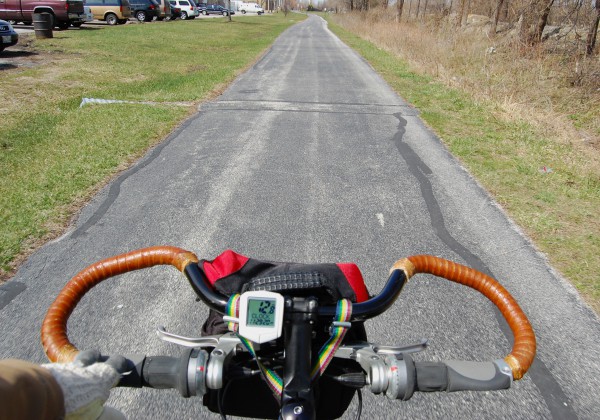
Trekking bars are not a new incarnation of an energy bar. Trekking bars are actually bike handlebars. Sometimes referred to as butterfly, hybrid, or touring bars, trekking bars originated with touring bikes in continental Europe and spread across the world to the UK, the United States, and other countries. Trekking bars are designed for comfort and efficiency on long rides, and typically found on touring bikes.

What they Are

Touring, butterfly or trekking bars work similarly to drop bars with different hand positions. Instead of your hand positions going up and down, trekking bar hand positions go forward and back. You don’t reach down with trekking bars, but instead reach farther forward. This position creates a more stretched out torso, which does tend to lower you a bit, but not as much as drop bars.

Long Distance Bars

Trekking bars are designed for long distance, multi-day cycling so using them on a bike meant for faster rides is not ideal. The wide side position also offers better control at slow speeds and over rough terrain, especially when heavily loaded.

Why You Need Them

The most important criteria for a touring bike is comfort. Trekking bars offer more comfort than drop bars in most touring situations.  This isn’t just about the saddle. How is the whole bike going to feel with trekking bars, day after day, mile after mile for the duration of your tour. Trekking bars also give you more room for things like bells, mirrors, and extra gear.

Avoid Numb Hands

When your hands are in the same position for hours, and especially if you’re riding everyday for a week or more, the pressure on nerves can cause you to lose sensation in your hands. Avoiding numb fingers, hands, arms and wrists are one big advantage of trekking bars.

Four or More Hand Positions

Road bikes with drop bars provide a rider at least three main hand positions. While there are technically four hand positions on trekking bars — they also have a wide spectrum of space between positions. If you want to experiment, almost unlimited combinations can be found that may be comfortable for you. If you’re a rider who needs to move your hands frequently when riding, having so many combinations for hand position is ideal. Even for those who don’t have injuries or ailments that require position changes, it’s a good idea not to stay in one position for too long to prevent strain, injuries, pain, and numbness.

Climbing Concerns

Another benefit of trekking handlebars over drop bars is that the large “side” hand position gives you more leverage when climbing with a heavy load. But on the flip side of the climbing argument is the fact that having the bars curve back to the middle can interfere with your knees if you like to climb out of the saddle.

Never Upside Down

Trekking bars can be flipped over to ride on either side (neither side is really considered upside down), and they can be changed so that the opening point is closest to your body, or flipped so that the opening is at the farthest point from your body. Both of these set-ups work fine. It’s a matter of personal preference or what feels natural to the individual rider more than anything else.

Stem Control

The stem on your bike will regulate how trekking bars are installed on any given bike. Extremely short stems such as on a touring or cruising bike, typically benefit from the handlebars facing forward. Long stems typically require the bars facing back toward your body. A simple stem swap can make them face either direction.

Stable Touring Bike Feel

If you come from a road or mountain biking background, a fully-loaded touring bike with trekking bars may at first feel cumbersome and heavy, but you’ll soon learn that the design is in its stability. You will be pleasantly surprised at how spacious a touring bike feels with trekking bars when compared to your road or mountain bike.

Switching to Trekking Bars

Road bikes are not set-up, nor are they easily compatible with racks and other equipment and are not typical candidates for trekking bars. One option is adding trekking bars to a mountain bike, but it too may require considerable effort. Depending on what you have now and how everything is set up, you might have to switch out brake levers and shifters. The other concern is stem length, which will may or may not need to be changed.

What They Can Do For You

Although they may look funny, even cumbersome, trekking bars can add more comfort to longer rides by providing you with more versatility for hand positions, gear, and bike handling. They’re not supposed to look aerodynamic or cool, and after taking a spin on them you’ll appreciate what they can do for you.

Other Bar Designs

If you’re not sold on trekking bars, other types of bars, such as the mustache bar, also adds comfort without the extra bulk of the trekking bar. It’s somewhere between a drop bar and a flat bar and worth looking at if you’re considering long distance riding. What type of handlebar you put on your bike is a matter of personal preference, pure and simple. It’s mostly a matter of trying them out and seeing what you like.

The Bird of Prey Bike – A New Take on Bike and Rider Integration

February 15, 2016 by Wade Shaddy

 bird of prey bike

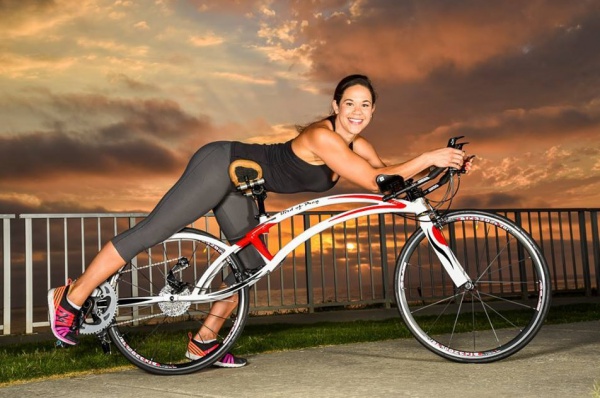
Recumbents have been around for years, but the Bird of Prey Bike is not a recumbent. The new design integrates a semi-prone position that’s been described as flying like Superman. Riders report that bike is indeed fast and efficient. But it doesn’t stop there. The Bird of Prey Bike also allows for a level of comfort not typically found on upright or recumbent designs.

The Inventor of The Bird of Prey Bike

California-based designer John Aldridge, 69 years old, is an architect and inventor. He came up with the concept for the original Bird of Prey Bike in 1991. Aldrich attests that it’s the fastest racing bicycle in the world, having hit 45 mph on his own Bird of Prey.

The Inspiration

Part of Aldrige’s inspiration in building a semi-prone bicycle dealt with the fact that standard bikes had poor aerodynamics. Riders are subject to too much wind resistance. The laying-down position of the Bird of Prey solved all of that.

The Builder

Aldridge connected with Russ Denny in Texas who was a bike builder for 30 years. Denny was the catalyst giving the Bird of Prey its physical form in 2010. It was first publicly shown in 2014. Advertising for the production model officially began in September of 2015.

Why it’s Different

Semi-prone means that even though you’re in a laying down position, your torso is still facing upward so that you can see. You’re not looking straight down at the pavement. Semi-prone also means you’ll never do an endo over the handlebars. “Panic braking on a Bird of Prey is safer. You come to a direct stop immediately, because the center of gravity is lower. The rider is not thrust forward when they brakes”, says Aldrich.

Pedal Force

Aldrich says the pedaling force is greater than on a standard bicycle. Aldrich compares it to a runner. “I’ve never seen anyone in a footrace in a sit-down position”. He says. “The same thing could be said for swimming.”

Climb Like a Bird

“Uphill, the stability when you’re stretched out allows you to crank more easily, at 90 to 100 rpm, (that’s spinning like crazy going uphill) and it takes you to the top in a shorter time”, says Alridge, who got 7th place overall and first place in his age category using a Bird of Prey in the Long Beach Triathlon this year. At the time of publication, it was perfectly legal for triathletes to use the Bird of Prey in competition.

Body Position

The body weight of the rider is supported by an aero bar-like rest. “You’re laying down on the front of your hips (the iliac crest). You don’t get tired at all, and when you push your pedals you can shove your body against those bones and they counteract the push on your pedals”, says Alridge.

Upside Down, Backwards

An upside down, backward drivetrain differentiates the Bird of Prey from sit-down bikes. With a 60-tooth chainring (mounted behind the back tire), the raptor is bound to be fast, albeit a bit odd looking. Most standard road bikes for example have only 50-53 tooth chainrings at best. The Bird of Prey runs a somewhat standard 10 or 11 cogs on the cassette. Another advantage, if you break something, it utilizes parts that can typically be found on other bikes.

Pro Testimony

Caleb Thompson is a professional cyclist from Colorado, and one of Aldridge’s first customers. Thompson says: “With a bit of practice and getting used to, I could see it being faster than a time trial bike.”  Thompson adds that he believes he could “potentially generate more power, because of the leg positioning, and the larger-than-normal chainring. “I’m able to turn it over fairly easily once up to speed,” he adds.

Spine Issues

Although designed for aerodynamics, the Bird of Prey has other benefits — comfort. Standard sit-down bikes center the weight and pressure of the spine on the saddle, which can lead to pain or discomfort for some riders. Riding the semi-prone Bird of Prey relieves pressure on the spine, and is reported to be quite comfortable. “You have to ride the bike to understand how comfortable it really is,” Aldridge insists.

Low Rider

A single disadvantage — visibility — both seeing and being seen by other traffic could be a challenge.

Fly Away

The Bird of Prey Bike was made available to the public on December 1st, 2015, starting at $5,800.

3 Wheeled Bike For Adults — Best 5 For Your Riding

February 12, 2016 by Wade Shaddy

When you say 3 wheeled bike, you probably think about the tricycle that you rode as a child. However, contemporary 3 wheeled bike models are designed for adults. Some of them have little in common with the trike from your childhood, while others are almost exactly like the smaller versions.

Common Transportation

You’ve probably seen a traditional upright 3 wheeled bike on TV or in movies, or perhaps on your travels if you have visited any Middle Eastern or Eastern countries. The 3 wheeled bike is as common a mode of transportation as any other type of vehicle.

The Older Crowd

More older riders than ever are now riding recumbent trikes. As the price has come down, more younger buyers are trying trikes, but the 50-plus crowd continues to lead the trend. According to the AARP Bulletin, some manufacture’s have estimated that at least 75 percent of 3 wheeled bike customers are over 50. It only makes sense; Recumbent trikes benefit riders who experience conditions common in older people.

Advantages of The 3 Wheeled Recumbent Bike

  • Spreads the weight: Standard upright bicycles or trikes,  focuses your body weight on two small sit bones, the hands, and the feet. A recumbent bike, with its reclined seating position focuses weight on the rider’s bottom, back, legs and feet, effectively spreading the weight.
  • More aerodynamic: 3 wheeled recumbent bikes have a lower level of gravity and a triangular shape to cut through the wind. This results in less drag and as a result it is less taxing on the arms or legs, depending on the model you have.
  • Speed: Having the body positioned so low to the ground really makes a huge difference in speed, especially in windy conditions.
  • Balance: For many older riders, or anyone else for that matter, not having to worry about balance is a big plus.
  • Adaptability: Can be adapted to people with disabilities.

Potential Downfalls

  • Hard to see in traffic. Flags can help you overcome it.
  • On hills, you can’t stand up to gain leverage or power. Gearing should allow for you to overcome this.

Advantages of  The Upright 3 Wheeled Bike

  • Better visibility in traffic. The higher seating position allows more visibility above car hoods and other obstacles.
  • Step through design for easy mounting and dismounting
  • Bicycle stores love you, much more availability of parts for easy repair. Also are easier to work on.
  • Typically more cargo area.
  • Built to last.

Potential Downfalls

  • Less efficient than a recumbent.
  • Upper body weight is placed on the rear end and hands the same as a normal bike.
  • Typically built cheaper than a recumbent.

A Lot of Choices – The Best 5

With what seems like hundreds of different configurations, styles, prices and types of 3 wheeled bikes out there, it’s almost counterproductive to state that any bike is better than another. It depends on your individual needs. With that in mind, here are some different options:

Greenspeed GT3 Folding Recumbent 

Small trike with a lot of personality. Designed to be easily transported so you can fold it up to fit in your car, or take up less space in storage. It is quickly folded with only a 6mm hex wrench and one quick-release for the frame hinge.

What to Use it For

This bike is great for weekend warriors, commuters, or even assisted touring. Available in small and standard sizes, it’s easy to find one that fits. With a weight limit of 265 lbs, it accommodates most people with ease. $2,690

Terra Trike Tadpole Rover   

The Rover has probably introduced more people to a 3-wheeled bike than any other recumbent trike on the market. It’s restored health and happiness to thousands of owners who never thought they would be active again. The Rover is perfect for any type of rider – young or old, large or small.

Internal Gearing

The Rover employs the NuVinci N-360 hub. It works with a continuously variable shifting system to give the rider minute control over the ride. It is a zero maintenance, zero learning curve, zero intimidation hub that makes learning to ride a 3-wheeler easy.  There is no derailleur or fixed gears to worry about, and it doesn’t matter if you are pedaling or not to shift. All the rider has to do is twist the shifter on their handlebar and the hub increases or decreases the gearing immediately to what feels best for the rider.
$1,499 with the NuVinci Hub.

Mobo Triton Pro 20 

Easy to ride for adults and kids with easy adjustments. Think of it as a more affordable version of the tadpole design. Sturdy and stable. $499.00

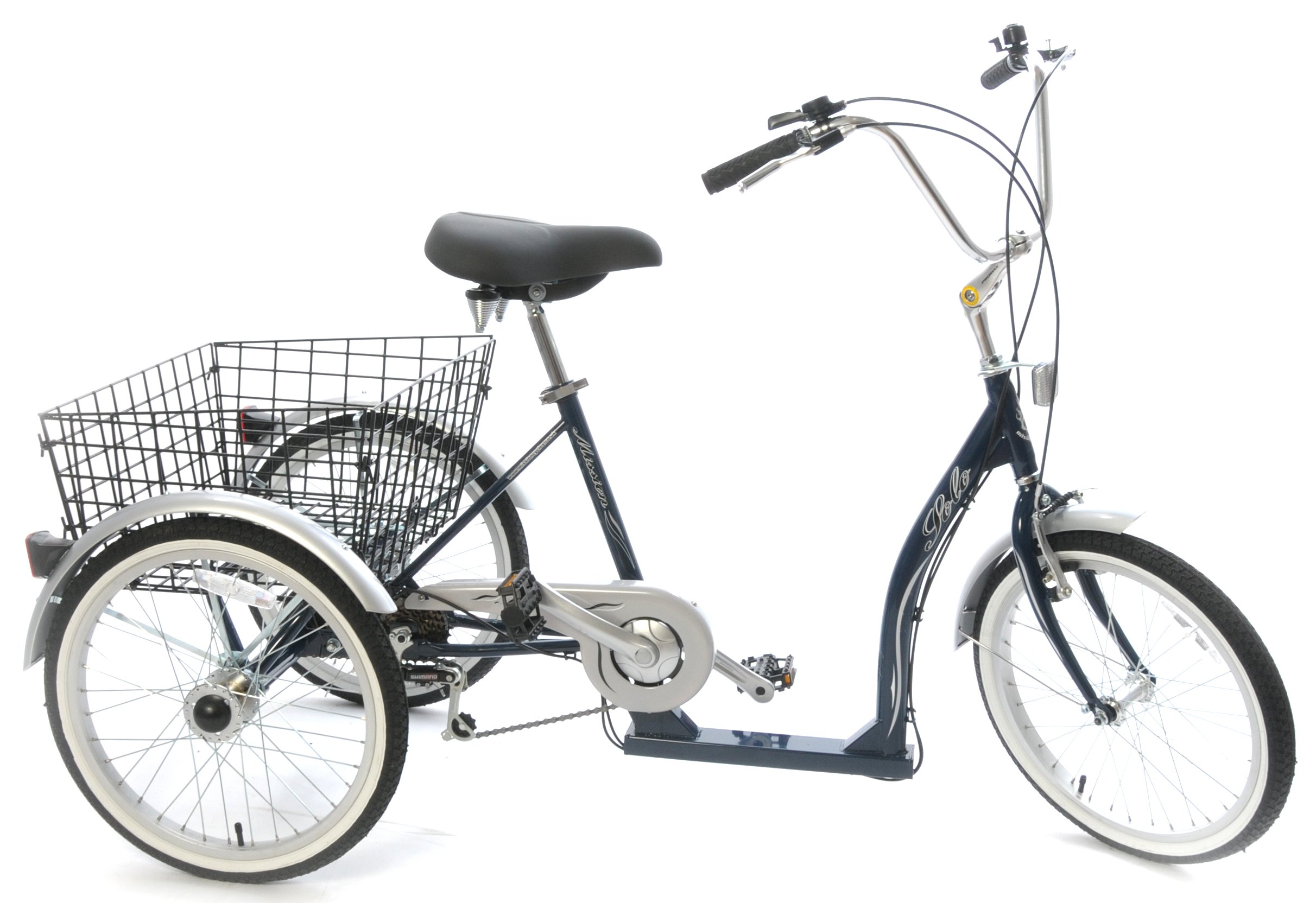
Mission SOLO Low Step Adult Tricycle  

The new Mission SOLO has been specially designed with a low step over of only 6 inches from the ground making it easy to mount and dismount. It’s proven to be very popular with the elderly and physically challenged. The Mission SOLO helps to raise the independence of disabled people and achieve a greater sense of self-worth. It’s ideal for those little shopping trips with a large basket on the rear to carry groceries. $820.

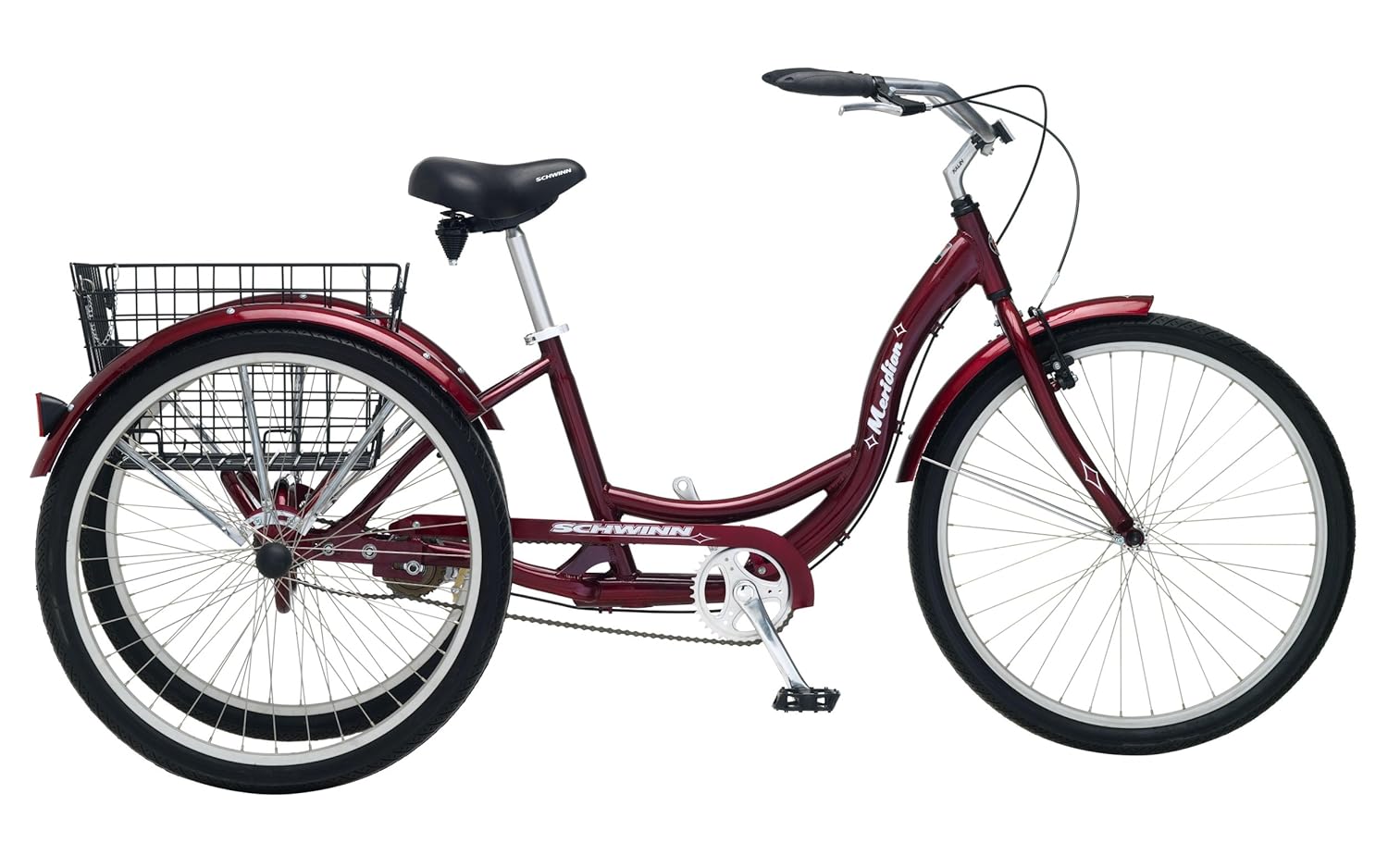
Schwinn Meridian Single Speed Adult Tricycle  

This is the basic 3 wheeled bike for beginners which might remind you of the trike you had as a child. It’s also the most affordable at only $269.

Ten Best Fat Bikes and Their Advantages

February 10, 2016 by Wade Shaddy

 Think of the fat tire bike as the monster truck of the cycling world. You might have seen one before; a bike that looks like it has car tires. To put it mildly — they’re FAT. They look ungainly, and for the most part they are. Bearing in mind that the over-the-top fat tire bike is not designed for speed or responsive handling, the fat tire bikes look really cool and they’re a blast to ride in conditions that a normal bike would go nowhere with. Following a brief run-down are ten of the best fat bikes out there right now. Have another one you’re a big fan of? Let us know in the comments below.

Fatties in Competition

Fatties have been around for more than a decade but have only captured the mainstream cycling world’s attention over the past couple of years. It’s due in part because of their versatility and the growing popularity of extreme adventure riding and racing. For example; hundreds of competitors ride fat bikes over the challenging Arrowhead 135 course every January in Minnesota. If you’re interest is peaked, there are a lot more racing and events out there just waiting for you and your best fat bikes.

Wide Tires

Standard mountain bikes typically have a tire width of about 2 inches. Fat bike tires are about double that — or more even. The massive tires can also be ridden at dramatically lower pressure. The width allows fat bikes to float on loose, non-solid surfaces where any other bike would just sink in and go nowhere.

Low Pressure

Mountain bike tires range from about 25–65 psi, but the gigantic fat tires can handle pressures as low as 10 psi or even less. Lower pressure allows the tire to grip the ground under the rider’s weight, drastically increasing the contact area of the tire thus increasing traction even of loose surface such as snow or sand where the fat bike is at home.

All Terrain

For other conditions, such as sand or soft snow, the extra width and low pressure allows the rider to float more easily over the softer, more unstable surface. The tires react to snow-packed and icy surfaces gliding through icy corners that can send you hurtling to the ground on a standard mountain bike. As an added benefit, the squishy tires also make for a much more comfortable ride on any surface as it’s a built in suspension.

The Best Fat Bikes For You

Now that you know a bit more about fat bikes here are ten of the best fat bikes for you to consider for a totally different riding experience.

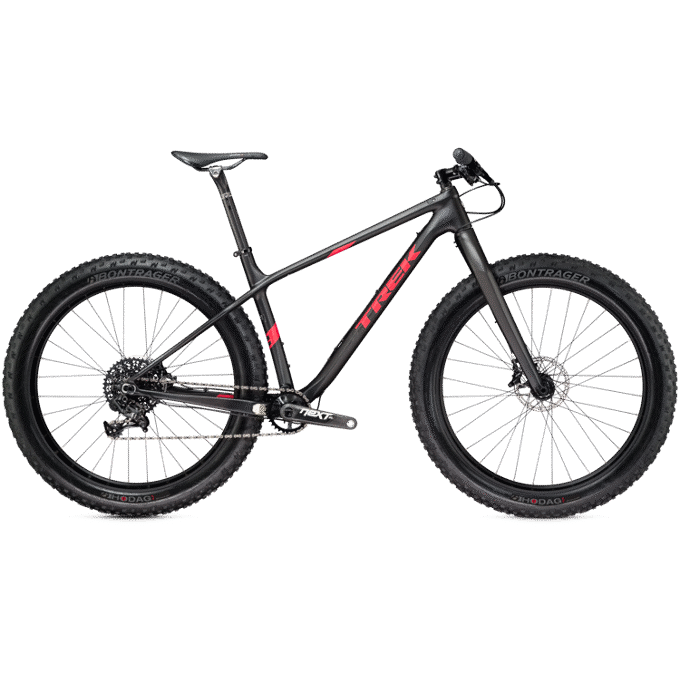
Trek Farley  Farley 9.8

The Trek Farley may just be at the top of the food chain, both in performance, looks, and price. It also accommodates one of the widest tires out there at 5 inches.

  • Carbon or Alloy frame
  • Tubeless tires
  • Rockshock Bluto Fork
  • Up to 11 speeds

With up to six different models of the Trek Farley the models range from about $1,200 to about $4,800.

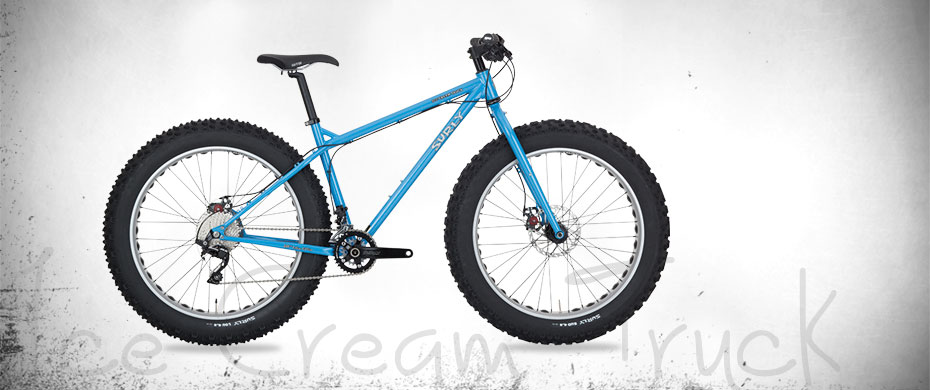
Surley Ice Cream Truck  
The Ice Cream Truck is near the top of the best fat bikes list primarily because it has one of the largest, most voluminous tires out there at 4.8 inches. And it’s eye candy.
  • 4130 chromoly steel tubing
  • Shimano SLX CS-HG81-10-speed cassette
  • Six frame sizes from extra small to xxLarge
  • $2,700.00

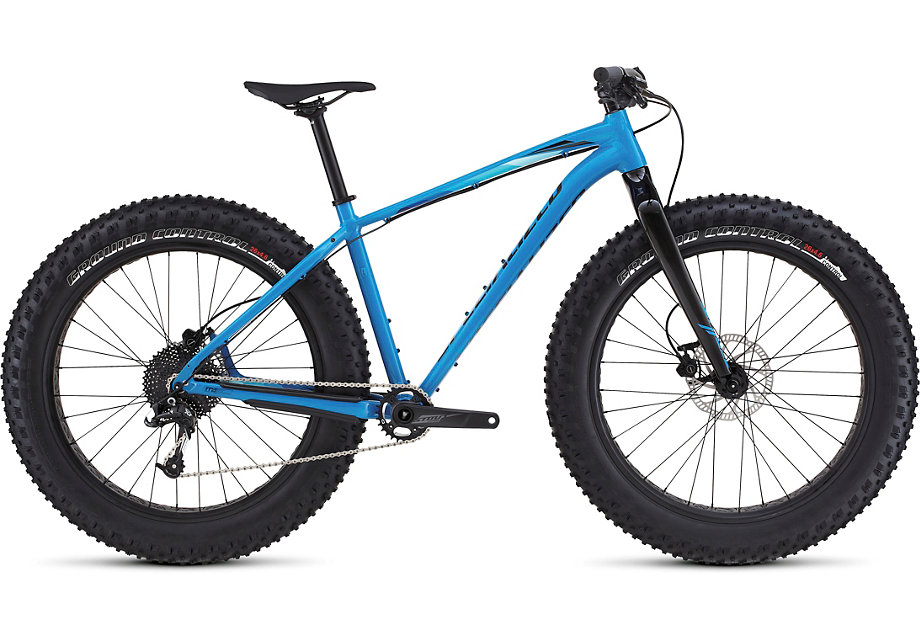
Specialized Fatboy  

A worthy first-time fat bike, with only slightly less width at 4.6 inches.

  • FACT carbon fiber fork
  • M4 alloy frame construction
  • SRAM X7 Type 2.1, 10-speed
  • $ 1,699.00

Felt Double Double 30  

Tires getting smaller at 4 inches in width, the Double Double is at home for daily use on any surface.

  • Aluminum Frame
  • Custom hydroform fork
  • Shimano 10-speed
  • $1,999.00

Borealis Echo XX1 fat bike  

The echo is performance-oriented, with clearance for 4.8 inch tires.

  • Full carbon frame
  • Fully guided internal cable routing
  • SRAM XG-1195 cassette
  • $4,750

Turner King Kahn  

The Kahn, with over five inches of travel and a massive foot print, allows a rider to stick lines only available to mountain goats and downhill pro’s in the past. When traction is virtually unlimited, a rider can push through limits. You only need to know one thing: This fat bike is full-suspension since Turner only makes full suspension bikes

  • $5999

Cannondale Fat CAAD 1  

The bike for those who ride in every season on every surface. Fans of the “lefty” fork will recognize this unique design on the Fat CAAD.

  • Aluminum Frame
  • SRAM components
  • 4.8-inch tires
  • Bike specialty — mowing things down
  • $3,730

Canyon Dude CF 9.0 EX  

With an innovative carbon frame weighing in at an incredible 1550 g, this is one of the lightest fatties out there. The Dude may look fat but don’t let that fool you – nothing stands in its way.

  • SRAM drivetrain
  • 4.0-inch tires designed for a faster ride than other fatties
  • Rockshock fork
  • $4273.13

Genesis Caribou Caribou

Not tied-down to specific single-season use, and much more than a just ‘snow bike’, the trail-orientated geometry and fat tires lend themselves well to year-round use.

  • Chromoly steel frame
  • Shimano and Samox drivetrain
  • 4-inch tires
  • $ 1852.42

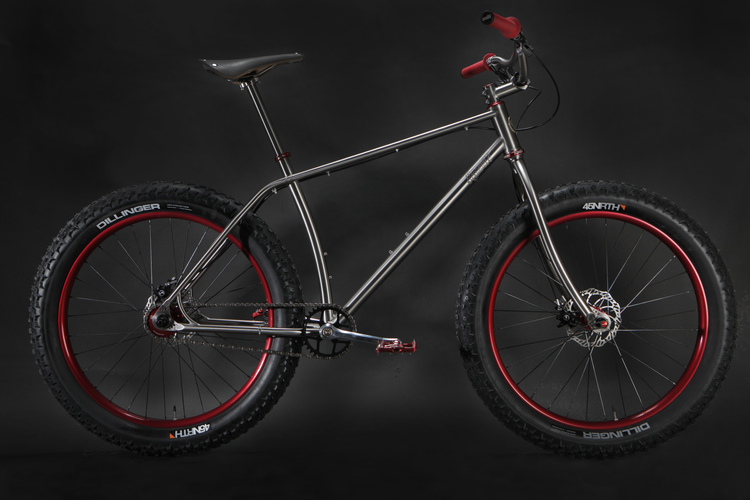
Moonmen #MOO  click em to make em big

This bike is all about playing. Moonmen bikes are foremost about the joy of riding, especially when you’re floating over a fluffy snow, bike packing across the desert, or taking a podium at your local race series. This bike company is so new, that reviews are for the most part, unavailable. It also has so many different options, that listing even part of them is not fair, but here are the basics:

  • Single Speed
  • Titanium
  • $3600 and up

Finding The Best Road Bike Saddle For You

February 8, 2016 by Wade Shaddy

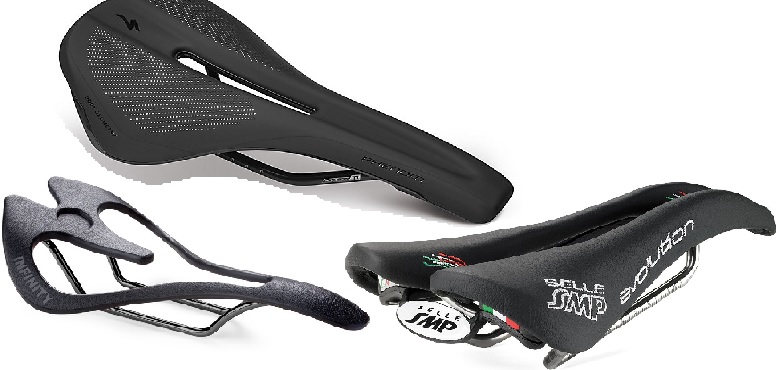
best road bike saddle

The majority of cycling articles focusing on bike fit don’t fully address saddle fitting. Fitting a road bike saddle works best when you start with the right size bike, or at a minimum, a bicycle that is close enough to your correct size to be comfortable and efficient.  Finding the best road bike saddle should focus primarily on the contact points between the cyclist and the saddle assuming that your bike fits you.

Don’t Compromise When Searching For Your Best Road Bike Saddle

Bicycles are symmetrical. The human body is not. A saddle that is not right for your body and butt can compromise your position on the bike as well as your comfort. One saddle may be great for one rider while being the worst option for the next. A general rule of thumb for saddles is that it fits when it disappears, meaning that you’ve forgotten all about your saddle and don’t even know it’s there.The only thing on your mind is the ride and the scenery.

One Exception

An exception to this general rule of thumb is if you have been in the saddle all day for miles and miles. At this point, you’ll likely take note of your saddle. The thing is, if it didn’t fit, you wouldn’t have ridden this far.

The Finger Test

Changing a saddle can take up to 15 minutes per seat when choosing and testing saddles.  This means that many cyclists skip the hassle and make a seat choice by pressing a finger into it, testing it’s firmness or lack of softness.

Widely Advertised

Another option widely employed is simply choosing a saddle based on the one that is most advertised. This might actually work for the majority of cyclists, as most high-end saddles are tested and proven to be comfortable for the wide majority of riders. This is more down to chance however. You get what you pay for, both in time spent deciding and money.

Gender or Not

Keep an open mind as you search for the best road bike saddle. Most bike shops start you out by indicating saddles that are specifically designed for men and women with most women’s saddles being wider towards the rear. But some men find that women specific saddles are actually really comfortable and ideal for them. At the same time, some women realize that a men’s saddle is the better choice for themselves also. Gender specific is worth taking a look at, but choose the saddle that’s the most comfortable for you.

The Cutout

A popular design for bike saddles includes a cutout in the center of the saddle to relieve unwanted pressure in sensitive areas. A good-fitting saddle may not need a cut out if the support is in the ideal area for you. It varies from person to person but in general, male or female, it means not too much pressure in the front or in the center of the saddle. A cutout design may prove the most comfortable but at the same time, don’t discount saddles without a cutout before trying them first. You might be surprised as to which feels best.

Saddle Width

Saddle width has been a source of controversy for many years. A comprehensive study sums saddle width up like this:”Stresses within the perineum are reduced when saddles are sufficiently wide to support both ischial tuberosities”. (Your sit bones). You should find a saddle that is wide enough for your sit bones by measuring them and choosing the right width.

Back in the Saddle

With all that information fresh in your head, here are a few options for your best road bike saddle starting off with narrow and ranging toward wide.

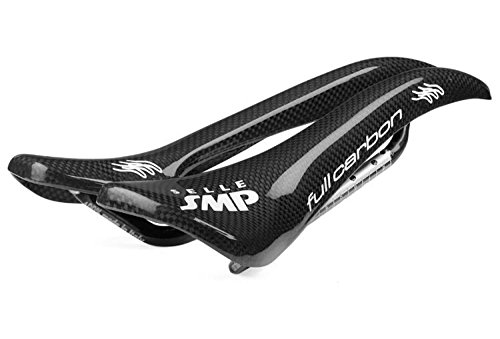
Selle SMP 

This full carbon model is at the top of the list. It’s designed for cyclists looking for the lightest weight possible. It sports a completely free central channel, eagle-beak nose and raised design that gives these models an aerodynamic touch. They are suited for smaller sized people with narrow pelvises.

Selle SMP Evolution 

A good saddle for racing, and cycling in your free time. It’s a   composite model with minimal padding. It relies on foamed elastomer padding where the ischial tuberosities (sit bones) and rear rest. The minimal padding also makes it particularly suited for thinner cyclists with narrow pelvises.

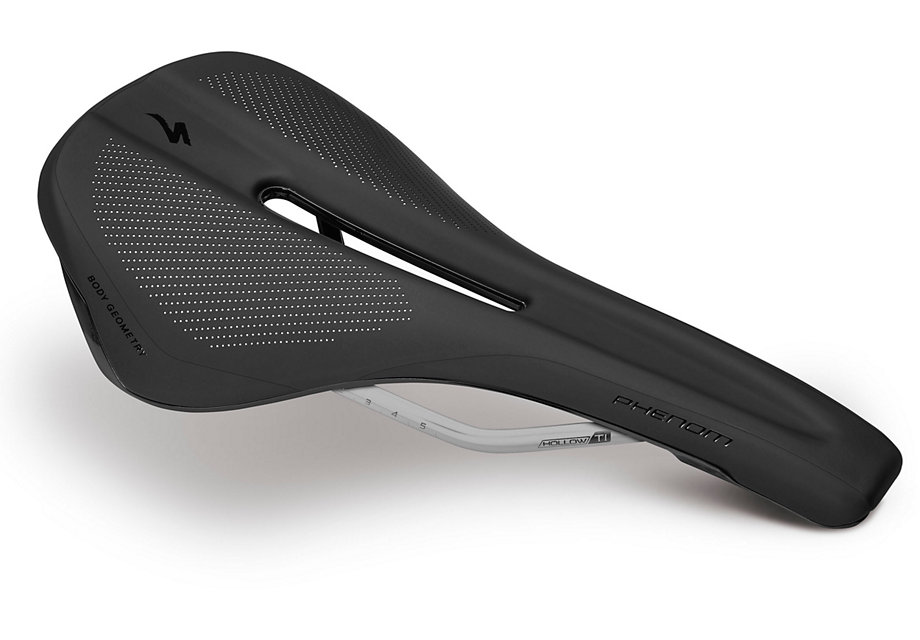
Specialized Phenom Expert 

The Phenom Expert is designed with ‘adaptive edge’ construction. It allows the outer edge to conform to your body for a custom fit. Lightweight, stiff and efficient, this saddle features hollow titanium rails and the perfect amount of padding for those long grinds in the mountains.

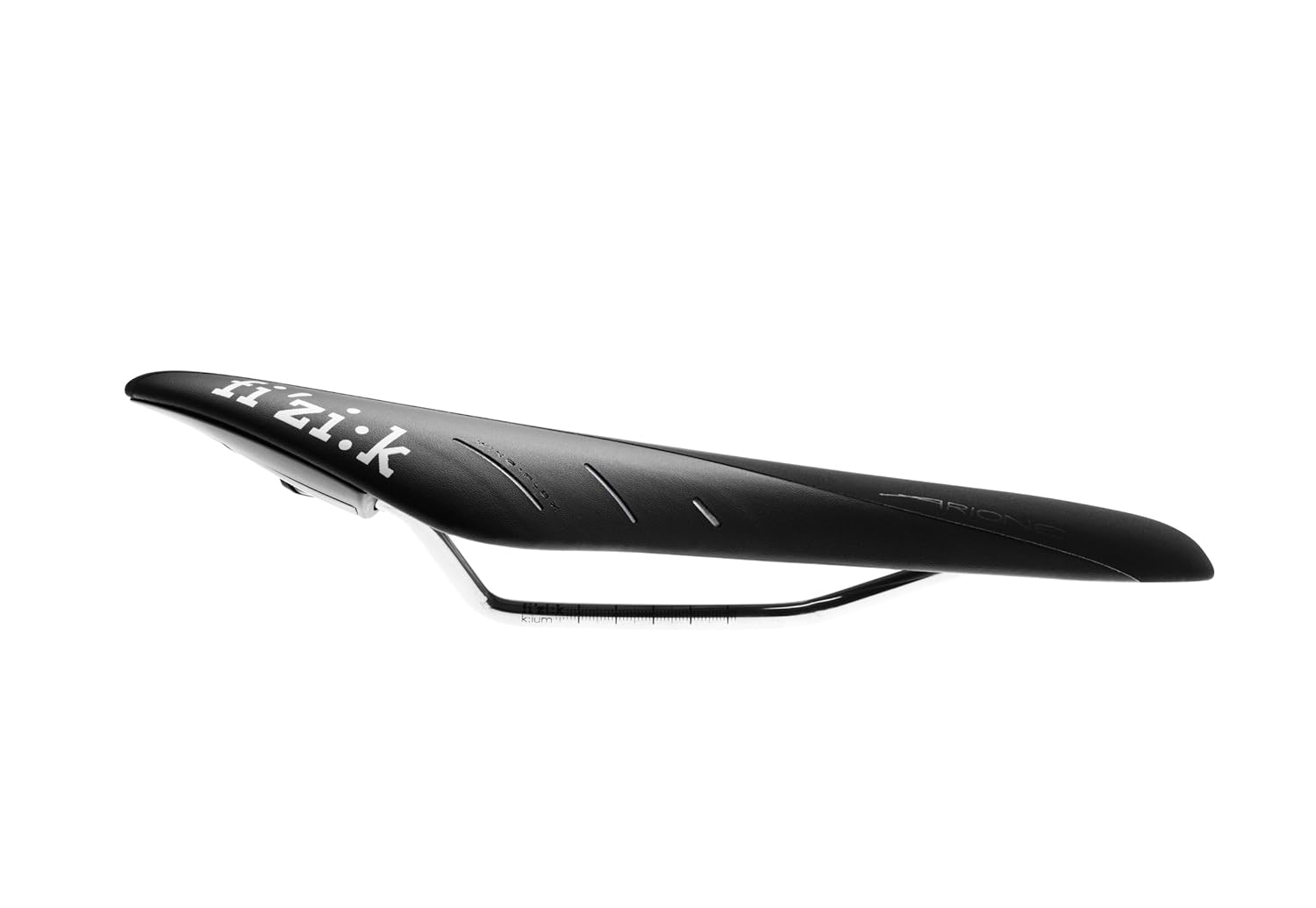
fi’zi:k Road Arione R5 K:IUM
The Arione R5 features a Carbon Reinforced Nylon base and Wing Flex technology. This saddle is made for competition. It aids in high-performance because it takes into account that cyclists have varying degrees of flexibility, and human flexibility is in direct relation to riding behavior when cycling. Popular with pros such as Sir Bradley Wiggins and Geraint Thomas, this saddle has no cutout, and they like it.
Infinity N-Series Infinity N-Series Bike Seat
Bare bones saddle — it looks like a skeleton — this saddle is perfect for the cyclist who wants all the performance with none of the frills. One of the lightest saddles on the market, weighing in at just 210 grams, the N-Series Seat is made of injection-molded nylon. Its has two purposes: Comfort and Performance. Don’t let the odd look of the saddle deter you; it’s built to withstand the rigors of even the longest rides.

Best Women’s Bike Saddle – Consider These 5

February 4, 2016 by Wade Shaddy

women's bike saddle

Women and men come in a variety of shapes and sizes. The choice of a women’s bike saddle is all about the individual and her needs as a cyclist. As far as purpose goes, it’s perfectly acceptable for roadies to put mountain bike saddles on a road bike, and vice-versa. It’s done all the time. With that in mind, here are a few good saddles for you to look at and consider. Specs and pricing may differ per location and dealer.

All-Round Women’s Bike Saddle

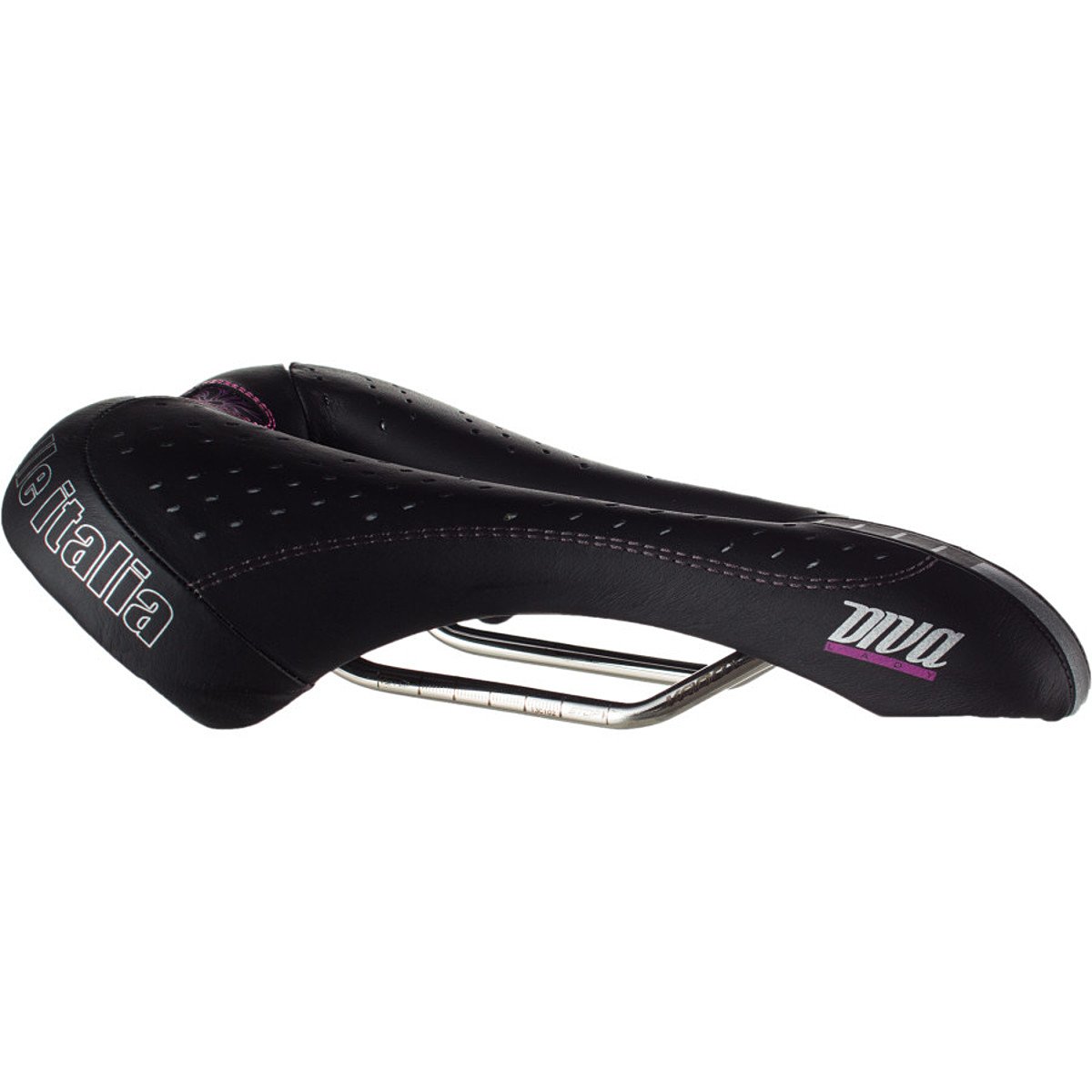
Selle Italia Women’s Diva Gel Flow Saddle Women's Bike Saddle

This great looking, women’s bike saddle is designed to bring unparalleled riding comfort and performance to your road or mountain bike.

Comfortable Flow

Reviewers say that the silicone gel inserts and elastomer suspension shock absorber system make the Selle Italia Diva Gel Flow the most comfortable saddle for immediate results. It’s not designed for racing. The Selle Italia Diva Gel Flow is perfect for those purchasing a saddle for the first time or even those looking to take their cycling to the next level. $159.99.

Endurance Saddles Women's Bike Saddle

Terry Butterfly Ti Saddle

Terry has been designing and testing saddles with female athletes, distance riders, and recreational cyclists for more than two decades. The Italian-made Butterfly is wider in the rear than typical race saddles for good support of a woman’s sit bones. It has a complete cut away through the nose and mid-section, making it flexible and comfortable against soft tissues. It’s low profile, with a flat top and multi-density injection foam that’s stiffer in the rear makes for more power while pedaling. Textured leather wears beautifully over time. It’s completed with a debossed butterfly graphic.$159.00.

Another All-Arounder Women's Bike Saddle

WTB Deva

While not a women’s specific saddle the WTB Deva provides added width with gel inserts to aid in support in the right places. It does not
have a full cut out like some of the other saddles but rather a small recess to relieve pressure on sensitive areas.  $150

The Racer Women's Bike Saddle

Fizik Arione Donna Ladies Saddle

The female version of the Arione borrows technology from it’s highly sought out men’s specific saddle. The ladies-specific Donna K:ium Wingflex Women’s Saddle is Fizik’s answer to female riders who loved the shape of the men’s Arione, but wanted something that addressed their unique anatomical needs while still having the pro-level quality they could find in the men’s versions. The women’s model is slightly shorter and slightly wider at the rear to accommodate a woman’s wider sit bones.

Arione Donna – Support in the Right Places

This saddle also makes use of a high density foam padding and  pressure relief channel running the length of the saddle. The foam is somewhere between medium and firm to offer the right kind of support in the right places. The shell itself, like the men’s version, is made from nylon reinforced with carbon and it makes use of Wingflex technology. The Wingflex shell flexes downward in the critical area where the inner thighs contact the saddle allowing for more efficient, full-range movement while pedaling. Tipping the scale at less than 200 grams, the Donna K:ium Wingflex is in line with some of the lightest minimalist men’s saddles.  $160

Traditional Unisex

Scientists have measured sit bone spacing for large populations. On average, the sit bones in men range in width, between 100mm – 140mm — give or take a few mm — and women’s range between 110mm – 150mm. The two averages show an overlap of 30mm between men and women’s average sit bone spacing. The small difference typically discredits the common perception that saddles require gender specificity. This overlap is is covered well with the Brooks saddle to sum things up .

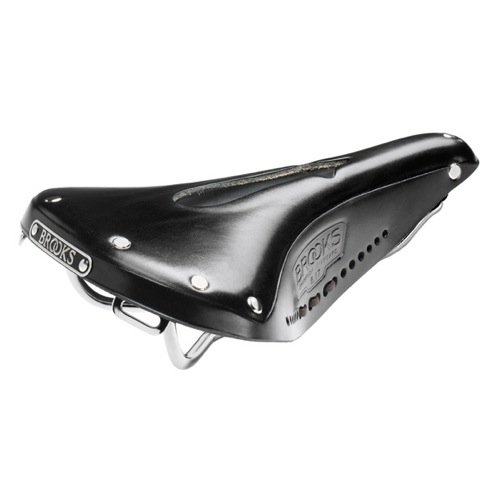
Brooks B17 Narrow Imperial Women's Bike Saddle

Brooks is synonymous with quality and they’ve been in the business of making handmade leather saddles for over 100 years. Brooks also has somewhat of a cult following. If you’re a product of the ’70s, your first bike may have come with a Brooks saddle.

The First Cut-Out

The Brooks Imperial B17 features a hole in the middle of the saddle that’s designed to relieve perineal pressure for both men and women. Though some may think this is a new trend in bike saddles, Brooks was actually the first to use this design way back in the 1890’s — yea, it’s been around forever.

For Serious Riders

The Brooks Narrow Imperial may not be your cup of tea if you’re an occasional rider. The first thing you notice about a Brooks saddle is it’s rock hard.  Those who don’t ride much tend to sit harder in the seat, and much of the discomfort from a bike seat disappears after a few rides.

Conforms to You

Despite the rigid texture, the Imperial saddle flexes and absorbs road bumps. And once the saddle is broken in — probably less than 500 miles, the leather conforms to your butt, and it becomes a custom saddle that’s individualized for every variation in your rear end. That’s why many long distance cyclists have made Brooks saddles a tradition.

Old World Class

Last but not least: If you want to turn heads with a women’s bike saddle, the B17 will add a touch of “old world” class to your agile road bike. The basic model starts at about $130.00.

Two More To Consider

Selle SMP TRK Lady Saddle 

This saddle is a unique design that features a larger dip in the center of the saddle to keep you positioned on the correct part of the saddle along with a dropped nose to take away even more pressure from sensitive areas. It also features a large cut out in the center of the saddle that at first glance seems uncomfortable but in fact aids in comfort. $65

Serfas Women’s RX Saddle 

The Serfas Women’s RX Saddle is designed to increase blood flow and alleviate numbness with added padding and increased shock absorption. It also had a larger cutout than most saddles to relieve pressure and place it where it’s supposed to be, the sit bones.  $56

« Previous Page
Next Page »
  • Facebook
  • Tumblr
  • Twitter

Latest Articles

JOIN Cycling: A New Training Platform for Cyclists

May 27, 2024 By Eric Lister

cold exposure

The Benefits of Cold Exposure for Cycling & Life

June 13, 2023 By Eric Lister

hill climb

The Ultimate Hill Climb Training Guide

May 31, 2023 By Eric Lister

shoulder pain cycling

How to Treat & Avoid Shoulder Pain While Cycling

April 12, 2023 By Eric Lister

psoas stretch

The Importance of the Psoas Stretch for Cyclists

April 6, 2023 By Eric Lister

cycling neck pain

The Ultimate Guide to Cycling Neck Pain: Causes and Solutions

March 21, 2023 By Eric Lister

Useful Info

  • Contact
  • Finally, A Global Cycling Club That Is Focused On Community And Love Of Cycling!
  • Privacy Policy
  • Share Your Story!
  • Terms And Conditions Of Use
  • Welcome to I Love Bicycling
  • What Happened When I Stretched Every Day For a Month

Recent Posts

  • JOIN Cycling: A New Training Platform for Cyclists
  • How to Hang Bikes in Your Garage: 4 Inexpensive Options
  • Gravel Bike Vs. Road Bike: Which One Is Better For You?
  • The 6 Types of Mountain Bikes & How to Choose the Best One for You
  • What Is a Touring Bike Good For? 5 Benefits We Know You’ll Love

Search I Love Bicycling

Connect with Us

  • Facebook
  • RSS
  • Tumblr
  • Twitter

Copyright © 2026 · Magazine Pro Theme on Genesis Framework · WordPress · Log in