• Training
    • Injury Prevention
    • Training Tips
  • How To
    • Bike Fit
    • Gear
  • Nutrition
    • Nutrition Tips
    • Weight Loss
  • Repair
  • Reviews
  • Stories
    • Funny Stories
    • Jokes
    • Quotes
    • Videos
    • Funny Videos

I Love Bicycling

I Love Bicycling is a website that is geared towards cycling for beginners with road cycling tips, training articles, nutrition tips, weight loss, how to’s and bike repair articles.

How To

  • Bike Fit
  • Gear

Installing Pedals

January 6, 2016 by Adam Farabaugh

installing pedals

Installing pedals is easy if you know what to do. Pedal design has come a long way in the past few years but the basics of design remain the same. Know which side is which and what tools to use and you’ll be good to roll in no time.

Greasing Before Installing Pedals

The big thing to do before installing pedals is to make sure both the threads of the crank arm and of the pedal itself are clean. You don’t want any excessive dirt or crude in the threads. A simple wipe with a rag will do the trick. After you’re sure the threads of both are clean, take a dab of grease and put it on the threads of each pedal all the way around. You don’t need a lot but just enough. This will help ensure that the pedals don’t become stuck in the crank arm for when you remove them down the line.

Left Means Counterclockwise

On bicycles, left-hand threads are used in three places, on left pedals, right bottom brackets, bearing cups, and freewheel cones. If these parts were not reverse or left-threaded, pedaling would cause the parts to loosen and come off during a ride. Installing pedals is one of the most perplexing of all bike issues for beginners because of the left-hand thread on the left pedal.

Right is Right, Left is Wrong

Many cyclist subscribe to a figure of speech, a mantra that keeps the pedal threads straight. Repeat this to yourself when installing pedals and you can’t go wrong. “Right is right — Left is wrong.”  It means the threads on the right pedal turn clockwise to tighten like any other bolt as you look at it from the side of the bike. The threads on the left pedal are wrong, meaning that they turn counterclockwise to tighten. Another way of thinking about it is that you turn the pedals toward the front of the bike on both the left and right side to tighten.

Tools for Installing Pedals

It’s best to use a pedal wrench, which is a longer version of a normal open-end wrench, when removing pedals, but any 15 mm wrench that fits will suffice to remove a pedal. The problem is, most are too thick, and shorter than a pedal wrench. With some pedals you may need an hex key that loosens and tightens from the back side of the crank arm. They typically require a 6-mm hex wrench for some Look Pedals or an 8-mm hex wrench, sometimes referred to as an allen wrench.

Installing Pedals Finger Tight

Begin threading your pedals back on with your fingers only. Cross-threading is a bane on pedals, and a common pitfall for beginners. If the pedal resists, don’t force it. They should screw on clean and smooth with little or no resistance. Again, twist the drive side — right side —  pedal clockwise to tighten. Twist the non-drive side pedal, the left side —  counterclockwise to tighten. Make sure they are straight and exactly perpendicular to the crank arm. Finish tightening the pedals with the pedal wrench or hex tool. Always be sure to double check that the pedals are tight. They should be firmly snug but don’t have to be herculean tight.  Losing a pedal is a recipe for crashing and a loose pedal can damage your crank arm threads beyond repair.

Installing pedals is easy when you know what to do. Removing pedals can be a bit more of a challenge but this article should help you. The big thing when installing pedals is just to make sure that you don’t cross-thread them. This can be a pain to fix but other than that, it’s easy and you’ll be riding before you know it.
Removing Pedals

January 6, 2016 by Wade Shaddy

removing pedals

Pedals have come a long way in the last few years. Designs, technology, materials and pedal type have made them more efficient for targeted application. Removing pedals is routine on all bikes. It’s a simple task if you know the drill.

A Common Denominator

Pedal designs are varied for each discipline, such as road bike, mountain biking, or casual. But the vast majority of them have common similarities for removal.

Left Means Counterclockwise

On bicycles, left-hand threads are used in three places, on left pedals, right bottom brackets, bearing cups, and freewheel cones. If these parts were not reverse or left-threaded, pedaling would cause the parts to loosen and come off during a ride. Removing pedals is one of the most perplexing of all bike issues for beginners because of the left-hand thread on the left pedal.

Right is Right, Left is Wrong

Many cyclist subscribe to a figure of speech, a mantra that keeps the pedal threads straight. Repeat this to yourself when removing pedals and you can’t go wrong. “Right is right — Left is wrong.”  It means the threads on the right pedal turn clockwise to tighten like any other bolt. The threads on the left pedal are wrong, meaning that they turn counterclockwise to tighten.

Tools for Removing Pedals

It’s best to use a pedal wrench, which is a longer version of a normal open-end wrench, when removing pedals, but any 15 mm wrench that fits will suffice to remove a pedal. The problem is, most are too thick, and shorter than a pedal wrench. With some pedals you may need an hex key that loosens and tightens from the back side of the crank arm. They typically require a 6-mm hex wrench for some Look Pedals or an 8-mm hex wrench, sometimes referred to as an allen wrench.

How to Remove the Pedals

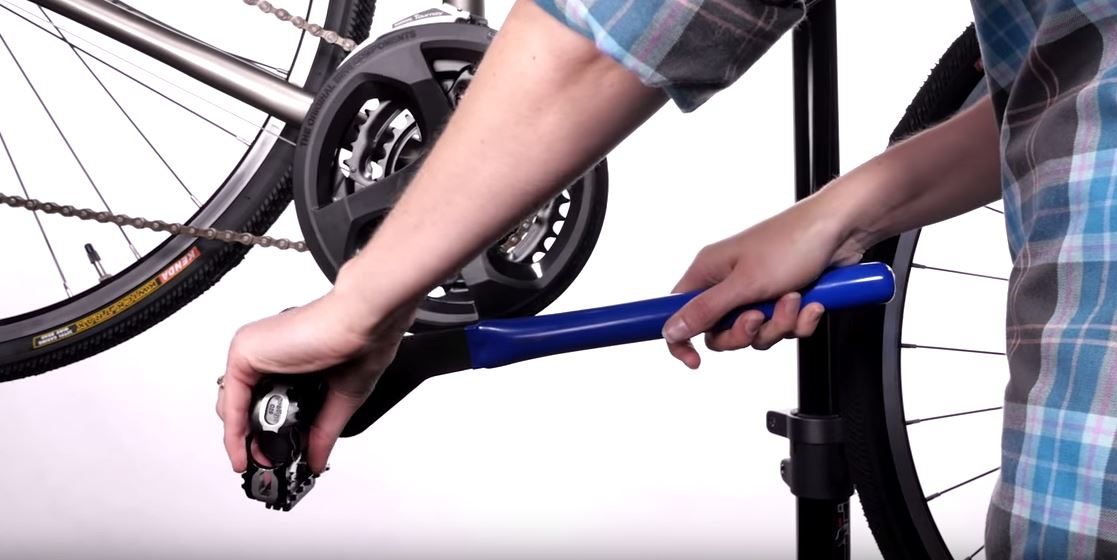
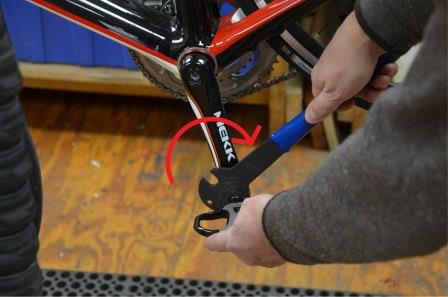
It’s best for your bike to be upright, on the ground, with the pedals in the 3 and 9 o’clock position, to removing pedals. Before attempting to remove the right side pedal, place the chain on the largest chainring. That way, if the wrench slips, you’re less likely to shred skin on the sharp chainring teeth.

Removing Pedals – The Right Side

  1. Face the drivetrain side of the bike.  The drive side is the side with chain.
  2. Rotate the crank arm as close as possible to the 3 o’clock position.
  3. Check for the flat spot between the pedal and the crank arm. The flat spot is also referred to as a “wrench flat.” Many pedals have an “L” or “R” stamped on the flat spot.
  4. Place a 15mm wrench on the wrench flat with the “R” stamped on it with the wrench about even with the crank arm, or at the 9 o’clock position. This spot will give you the best leverage to remove a tight pedal.
  5. Push the wrench downward with a counterclockwise motion as you would any other bolt. Use your body weight to break it free. Be cautious of hitting your knuckles on the chain rings or chain guide as the pedal loosens. You may need to hold the left-side crank arm to get additional leverage and if it is super tight, placing a foot on the opposing pedal is a good option.
  6. Continue turning the wrench counterclockwise until the pedal loosens enough to remove it with your fingers.

Removing Pedals – The Left Side

  1. Face the non-drive side of the bike — the side without the chain.
  2. Rotate the crank arm so it is at the 9 o’clock or forward position.
  3. Fit the pedal wrench on the wrench flat with the “L” between the pedal and the crank arm ideally around the 3 o’clock position or in line with the crank arm.
  4. Push the wrench downward in a clockwise motion to loosen it. You again may need to hold the opposing pedal with your hand or if it’s super tight, foot.
  5. Continue loosening the pedal with the wrench until it’s loose enough to remove with your fingers.

Clean and Grease

Use a stiff brush or cloth to clean any dirt out of both the crank and pedal threads. Apply a small amount of grease to the pedal threads before you reinstall the new pedals. Grease makes them easier to remove the next time you change or do maintenance on your pedals. It also minimizes the chances of creaks developing down the road.

Hex Wrench Type

Typical pedals have wrench flats, but in the event that your pedals do not have wrench flats, you will need to use a hex wrench. This time, since you’re working on the back side of the pedal, turn the right pedal clockwise to loosen it — which is the same as turning it counterclockwise with a pedal wrench when looking at it from the outside. Turn the hex wrench clockwise to loosen for the left pedal.

Think About It

Thread direction can be confusing, even when you know the ropes. Always double check and think about which direction you’re turning it. If it resists too much, you might be turning it the wrong way. And when installing pedals, always be sure you’re turning them the right way and not cross-threading them.

Stuck Pedals

It’s common for pedal axles to get dirty, gunky, or even rusted. They can be a pain to get off at times and you may need to resort to lubricants to get them off. Use a bit of penetrating spray at first such as WD-40. As the pedal turns a quarter turn at a time, add more spray, wait a bit for it to work it’s magic, and continue. If at any time, you begin to round off the flat spot, stop and consider that you might be turning it the wrong direction. If you’re removing pedals and they’re stuck, it’s sometimes necessary to allow the penetration oil to work overnight and then remove the pedal the next day. Good luck!

Winter Cycling Gloves; Which Ones are Best and Why

January 5, 2016 by Adam Farabaugh

winter cycling gloves

Keeping your hands warm in winter can be a challenge as they can get cold easily and still need to be functional to shift, brake, and handle your bike. Regular gloves or mittens that are made more just to keep warm are often times going to be too bulky along with other drawbacks that makes riding in the cold even more uncomfortable. Finding the right winter cycling gloves for the conditions you’re riding in will keep your paws toasty throughout the ride.

What to Look For in Winter Cycling Gloves

The first thing to determine in choosing winter cycling gloves is know what weather you are going to be wearing them in. Generally a glove has a window of ten or so degrees before it becomes uncomfortably warm or cold. You should have a glove for each of those ranges depending on where the majority of your riding falls within.

Lightweight Winter Cycling Gloves

winter cycling gloves

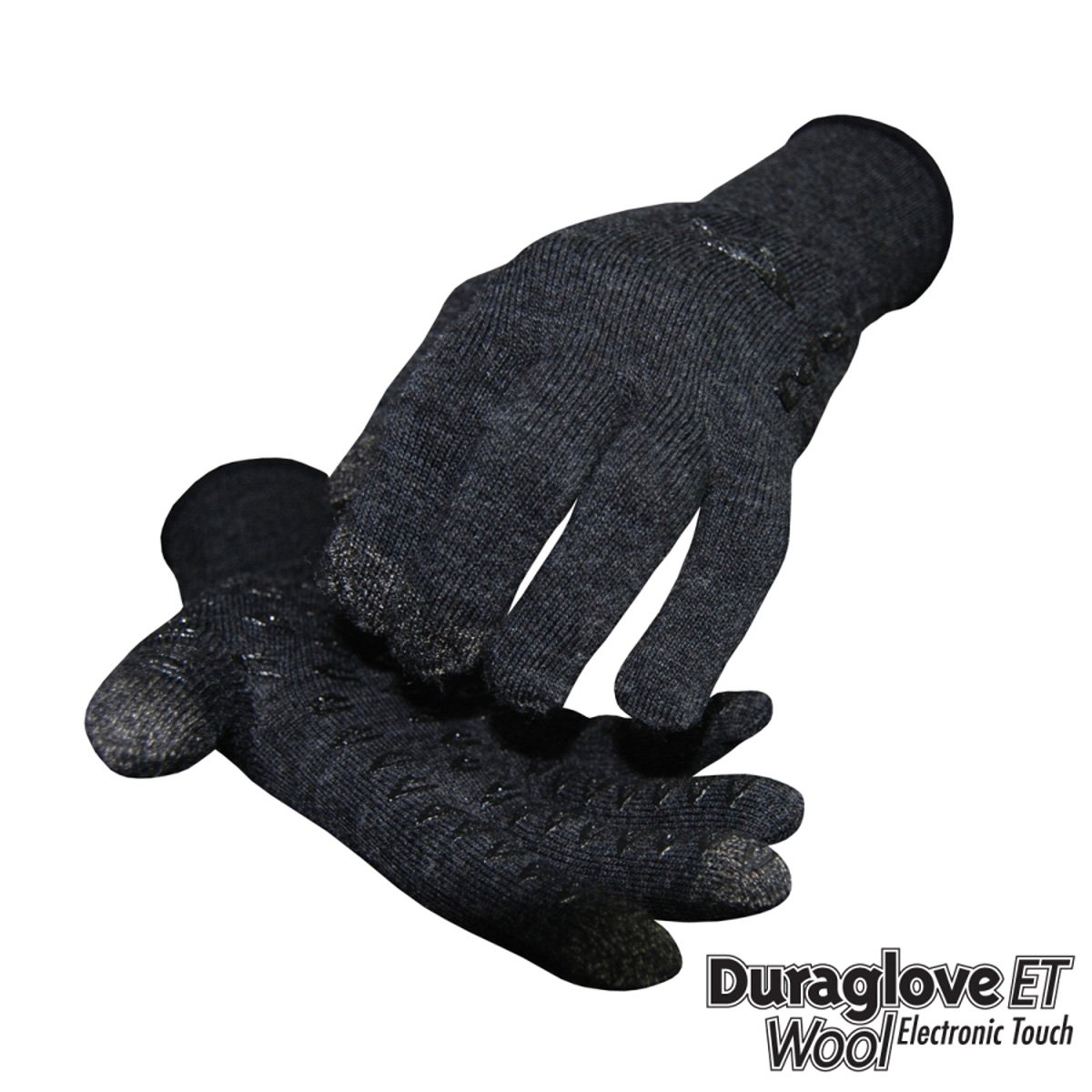
As you get into the fifties, if that’s winter in your area, you are going to want a thin knit glove such as the DeFeet Duraglove-Wool . This glove is tightly knit so is relatively small and can easily fit in your pockets when the temperature do rise but when it starts to dip they’ll keep your hands warm down to around fifty degrees and maybe a little less depending upon your individual blood flow levels.

Mid-Weight I Winter Cycling Gloves

winter cycling gloves

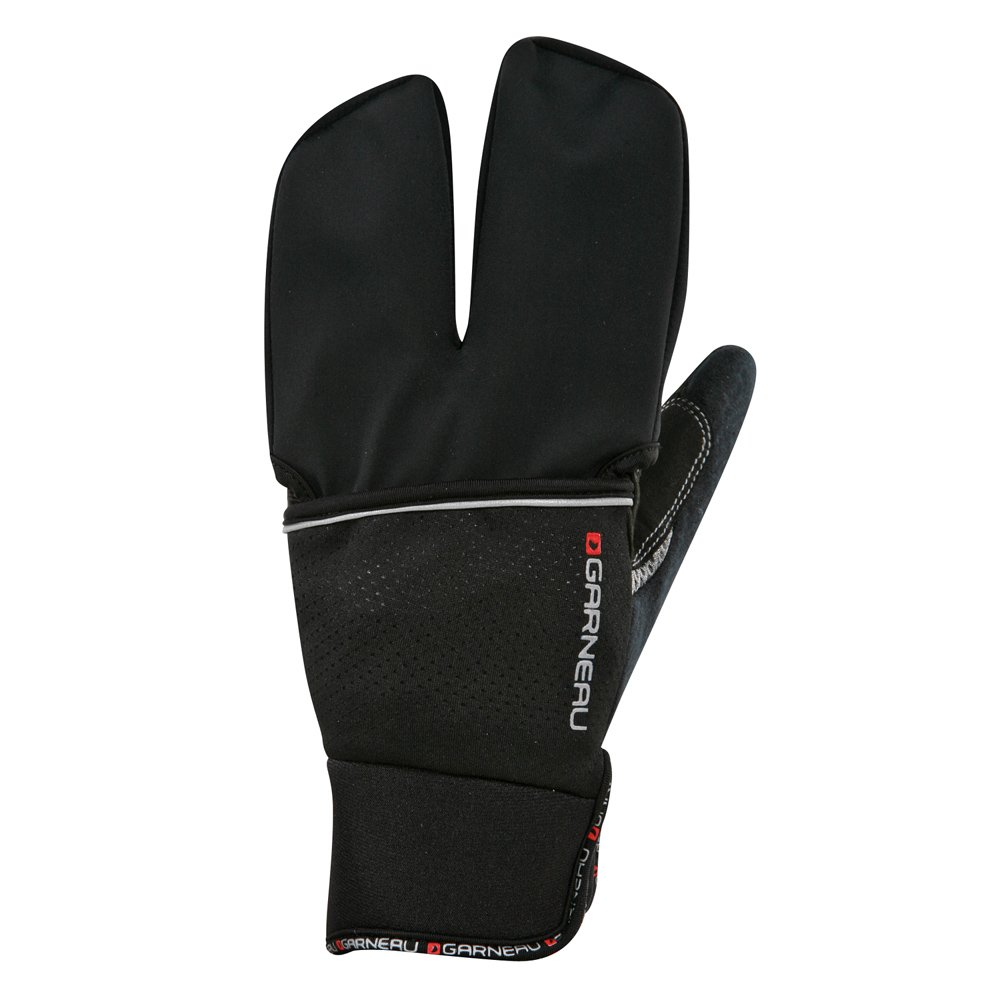
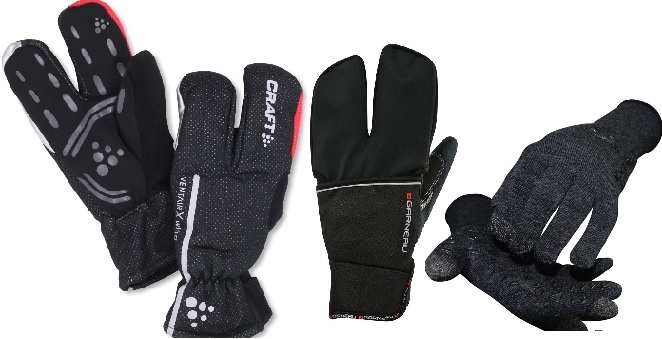
With temperatures firmly in the lower fifties and dipping into the forties, you are going to want a winter cycling glove that has a bit more insulation as well as wind protection. The insulation is going to provide a bit of warmth while the windproof outer is going to keep the wind from blowing through the glove to your hand robbing it of all its heat. A good option for this is the Garneau-Super Prestige Cycling Glove . This glove is nice because it has a windproof cover that pulls over your fingers in two parts to preserve functionality. As the temperature warms, this cover can be tucked back into a crafty little sleeve on the back of your hand allowing you to have all five fingers again. These are also still small enough to tuck in a pocket if needed.

Mid-Weight II Winter Cycling Gloves

winter cycling gloves

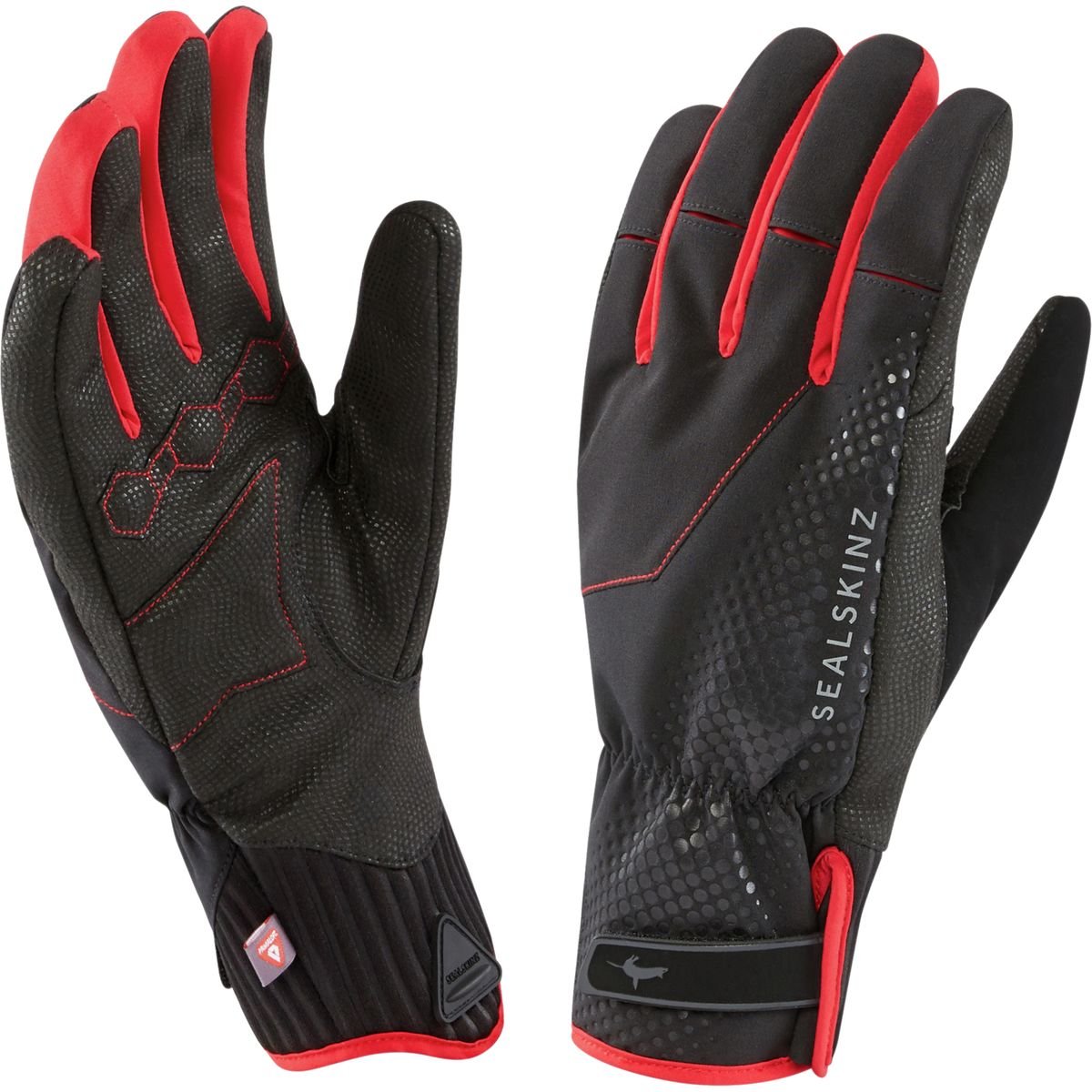
The second mid-weight category is lower forties into the thirties. This is an area where you’re positively going to need a good bit of insulation as well as windproof material to stay warm. As you get to this temperature also, any amount of rain is going to make you very cold so having a waterproof glove as well will give you some added warmth but with some drawbacks. With windproof material, the glove can still breathe enough to not cause your hands to become clammy. With a waterproof glove however, moisture cannot get in nor out. As your hands warm and start to sweat they can start to get a bit clammy and if you don’t have enough insulation, cold, if they are not breathable. Fortunately some gloves give you the best of both worlds, waterproof and breathable. The Sealskin Brecon XP Glove  gives you enough insulation to keep your hands warm while dry also if it does begin to rain.

Liner Winter Cycling Gloves

winter cycling gloves

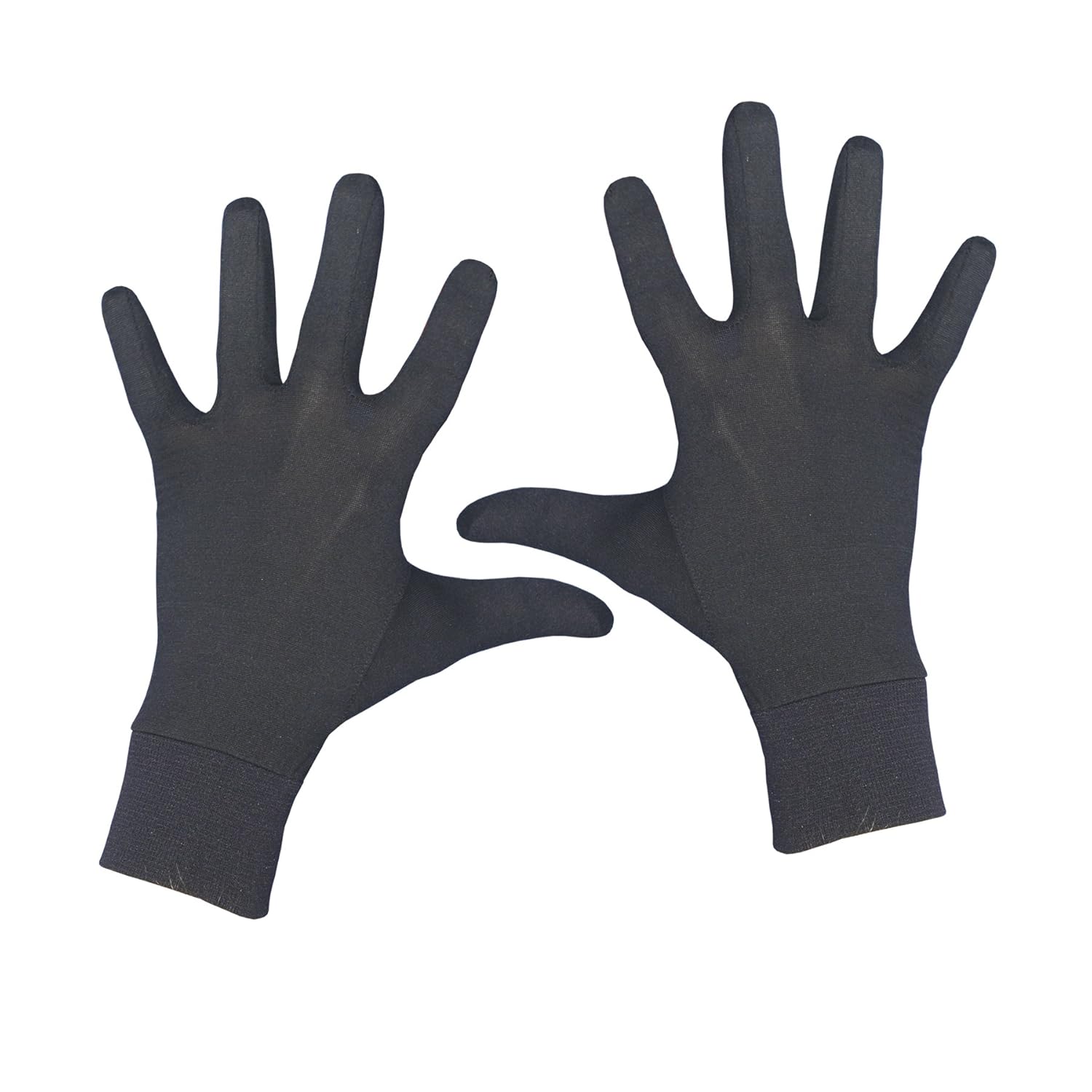
As the temperature dips to the freezing mark and below, you are going to need winter cycling gloves like the second mid-weight option just with more insulation. As you get to this temperature and below, changes in temperature throughout a ride are much more pronounced such as going up a climb or down a descent. With a heavy weight glove, a good option, especially if it is on the colder side of its range, is to wear a liner glove. A thin silk glove such as the Terramar Termalsilk Glove Liner will allow you to take your outer glove off and stuff it up the front or back or your jersey while going up a longer climb. This will still keep your hands warm but prevent them from overheating and sweating out your outer glove.

Heavy Weight I Winter Cycling Gloves

winter cycling gloves

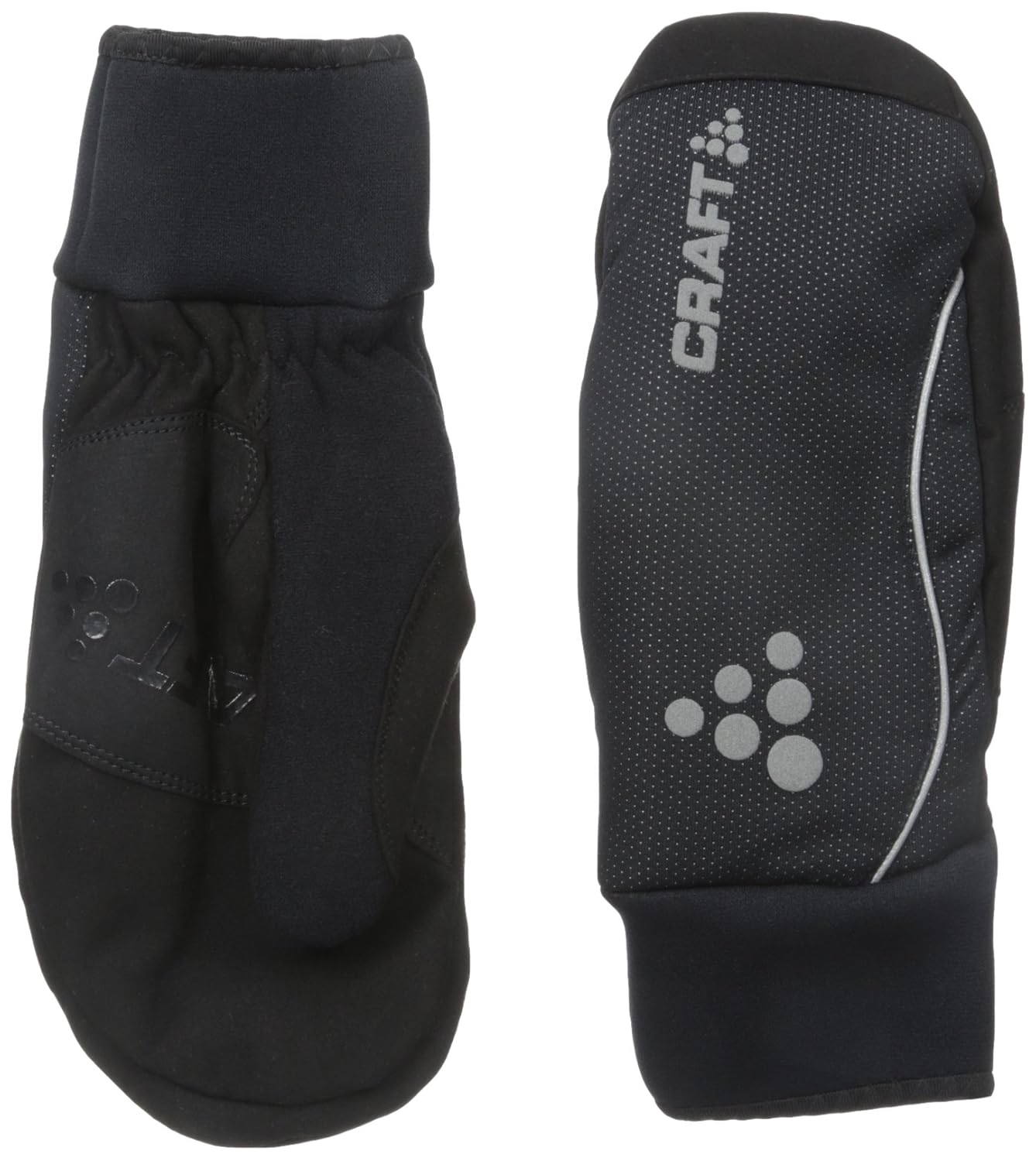
You will want a good mitten to wear over liner gloves when you hit the top of a climb to then stay warm on the chilly descent. (And a side note; keep stops at the top of a climb to a minimum as going down is going to chill you so you want as much heat as possible in you before you hit the descent, namely right after you finish climbing.) A good glove for temperatures below freezing but not absurdly cold is the Craft Touring Insulated Bike and Training Glove. This mitten also has the added benefit of neoprene on the cuff to keep warmth in.

Heavy Weight II Winter Cycling Gloves

winter cycling gloves

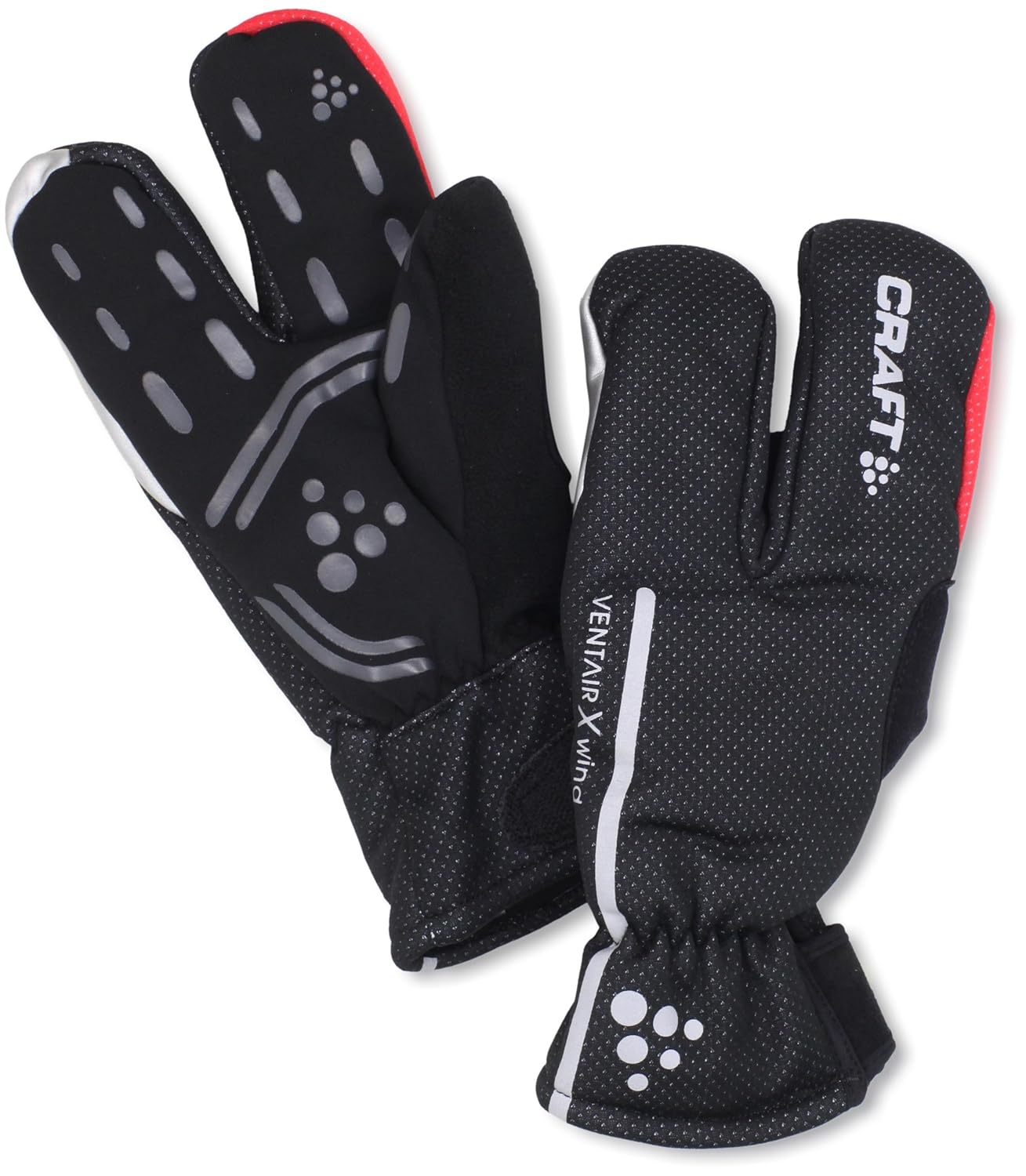
As the temperature dips to the lower twenties and teens you are going to need a substantial glove to keep you warm. At this temperature and lower, gloves have and increasingly difficult time of keeping your hands warm. The Craft Siberian Split Finger Wind and Waterproof Bike Glove will keep most of your hands warm. If you normally have cold hands or the temperature dips below this area, it’s going to be difficult to keep your hands warm with a cycling specific glove or mitten. You’re going to need a mitten more catered to skiing as the insulation and windproof material is what is going to keep you warm but it’s going to impact functionality a bit but that’s winter riding.

One thing that a lot of people don’t think you can do is shift an indexed shifter (Shimano or Sram) with large mittens. You can’t do it quite as quick but it’s still functional. Having a mitten that’s waterproof at this temperature is not needed as water isn’t water at this temperature, it’s snow and ice. One added feature to look for is a mitten that has cuffs that go up your arm a descent amount as this will add in keeping you warm as a whole.

Riding in winter is a different challenge and with the right preparation can be a season that is actually looked forward to. Having the right gear and good winter cycling gloves for the task at hand is going to not only make it more enjoyable but also pretty cool in that you’re doing something that’s normally reserved for the warmer months of the year in winter. It’s kind of like you’re getting away with something that you shouldn’t be doing. And with any slippery roads you have enough gear on so hopefully in the event of a fall, you just slide without injury, hopefully, if you do it right. Keep the rubber side down and stay warm this winter with the right winter cycling gloves for the weather at hand.

Best Ways to Sell a Bike

January 4, 2016 by Adam Farabaugh

sell a bike

Selling anything can be a hassle particularly if it’s something of significant value like a bike. The best way to sell a bike depends upon the bike and how much time you are willing to invest into getting the price you want for it. Typically the higher priced the bike, the more time you will want to spend selling it and getting the most out of it. For lower end bikes, it’s not always worth the trouble to get every last penny out of it. These few resources are the best ways to sell your used bike. Selling anything does takes a bit of luck; finding the right buyer at the right time, but if you do the right things ahead of time, know what you’re looking for, and use the resource to its highest degree, your bike will be sold for the price you want before you know it.

To Do Before you Sell a Bike

There are a few ‘must do’ things before you sell your bike. First you need to know what sort of price you are looking to get out of it. BicycleBlueBook.com is a good resource that can give you a rough estimate of what your bike is worth. Only you however will know how well it was taken care of and what works great and what doesn’t.

Also, a must is to clean the bike thoroughly so it’s as new looking as possible. Everything from the frame to the chain should be spotless. Also make sure everything works as it should such as the shifting, the brakes, as well as making sure that nothing is too worn out such as the tires or drive chain. Depending on how much you are looking to get from the bike, it might be a good idea to replace these things as it will be much more likely to sell as the buyer won’t have to make any improvements after they have purchased it.

Friends & Locals

Now that your bike is spotless and as new looking as possible, it’s time to see who wants it for the price you’re looking for. The absolute best way to sell a bike is to a friend or someone you know because you don’t have to jump through the hoops of the other resources. Ask your riding buddies if they know anyone that is interested and if you’re on a local group ride, pass the info. along. Many local areas have a group email list where people can post about rides, races, and other cycling related content. If you are not doing it on a regular basis, it is generally not frowned upon to mention that you are selling a bike as it is valuable information.

Craigslist

Craigslist is often thought of as a place where lower end local goods are bought and sold. At least in the bike world this is not the case. In some areas you can find high end bikes worth thousands of dollars. That said, it’s also a great place for lower end bikes as they are not worth it to pay shipping on. The best thing with listing a bike on Craigslist is that the person can see the bike in person and test ride it. When people can do this they are much more likely to pay top dollar for the bike because they have seen the bike and know exactly what they are getting. When the buyer is removed online, this is difficult to do.

Used Gear/Consignment Stores

If you don’t want to deal with the hassle of meeting people and negotiating on a price, a local used gear shop or consignment store can be a great option to sell a bike. These tend to be located in areas that are bike and outdoor gear heavy but you never know what’s in your neck of the woods. It largely depends on the place but they could pay you on the spot for your bike of which they will then resell it. If they’re a consignment shop, they will keep and display your bike and when someone buys it, they take a cut and pay you the rest.

Online Forums

To avoid added fees online forums have become popular which connect buyers directly with sellers in an open platform. Two good examples of this is the Facebook Group – Online Swap Meet and BikeRadar.com’s Second Hand Bike Forum. When taking these avenues make sure you use a form of payment such as Paypal that offers buyer and seller protection. It is a small fee but well worth it.

Online Classifieds

There are still a classified sections in local newspapers but these have become relatively dated. They may be a good option to get the word out to sell a bike that’s cheaper but otherwise might not be worth the listing fee. Online classifieds have the added benefit of a large viewership base. These often come with fees but are generally well worth it especially if your bike sells. Two good examples of this are pinkbike.com and the classified section of roadbikereview.com.

ebay

To get the most value for your bike you should start at the top of this list and work your way down. Once you get here to ebay, more fees are taken off the top of what you sell your bike for. A large benefit to ebay is that it has a large number of viewers and that it can be used as an auction which can fetch you a higher price for your bike. ebay also has good buyer and seller protection which is definitely something you want when selling online.

‘Do It For You’ Online Companies

A last great option to sell a bike is to use a company that takes your bike and sells it for you. This is much less time consuming and less of a hassle. It depends on the company but typically you contact them with your bike and what you’re looking for and then ship the bike to them where they then make sure it is legit and what you say it is. They then sell it for you on ebay or another venue and pay you once the bike sells after taking a fee. Two good examples of these are theproscloset.com and protestedgear.com.

Trying to sell a bike isn’t always a one and done endeavor but with the right know-how it doesn’t have to be stressful nor a money losing proposition. After all you are probably selling your bike to upgrade to another so you want it to happen quickly and make you money to put toward your next purchase. In any of the ways listed here, make sure the buyer is credible and that they either give you cash on the spot if in person, or that you use a pay service such as Paypal. With the right approach you will sell your bike before you know it for the price you want.

How to Make the Wrong Size Bike Fit

January 3, 2016 by Adam Farabaugh

How to Make the Wrong Size Bike Fit

In the ideal world you always get the exact size bike for your size and fit it properly. Unfortunately that doesn’t always happen as maybe a friend had a bike that they were getting rid of or the bike you have a deal on isn’t quite the right size.

It depends on how far off the size of the bike is if you can make the wrong size bike fit. If you should be on a large, 58cm road bike or 20 inch mountain bike, fitting a small 52 cm road bike or 15 inch mountain bike just isn’t going to happen and vice versa. If the bike is relatively close however, there are a number of changes that you might be able to make to get the bike to more closely fit you. If you can’t get the bike to your ideal position, it is not recommended to ride more than just around town as an improperly fitted bike can cause injury specifically to your knees and back but other areas as well.

Where Doesn’t the Wrong Size Bike Fit?

To determine what adjustments need to be made to the bike, you first need to get on it and see where everything falls. Consulting the article “How to Do a Proper Bike Fit” will help to show you where you should properly be positioned on the bike. In general, you will know right away if a bike is too short in the top tube or with the saddle height. Depending upon where your differences are, you may have to do one or all of the following if your bike is either too big or too small.

Too Small of a Bike

A wrong size bike that is too small can be easy to make fit if it only requires small changes but past that you may need different parts such as a stems or seat post. It is typically easier to fit a smaller bike than too large because simply it is easier to lengthen something on the bike as shortening something past the limits of the frame simply isn’t possible.

Longer Seat Post

The first thing that you should adjust on the bike is the height of the saddle. Seat posts typically have a fairly long length so can be extended quite far. On all seat posts, at least if it hasn’t worn off, there is a maximum extension mark. Never position the post past this point as there is not enough post in the frame to adequately support the weight. If you do, the frame can actually bend and break quite easily. The solution to raising the seat further is to get a longer seat post which can be found relatively easily at your well stocked local bike shop or online. A 350mm length post is about as long as you can easily find. Just make sure you get the right size diameter post as most bikes have different sizes.

Increased Saddle Set-Back

Having too small of a bike places you too far forward on the bike. Sliding your saddle back can help solve this. The first way to do this is to loosen the bolts on the rails of the saddle and slide it back as needed. If you find you can’t slide it back far enough, you can get a seat post that has increased set-back. Standard typically ranges from 10mm to 20mm. You can find however 30+mm setbacks but you’ll have to shop around. And if you find a post with the right set back but the diameter is too small you can use pre-made shims to make it fit properly.

Longer Stem

The next area of the bike that is probably going to be an issue is how close the handle bars are to your body. The solution to this is a longer stem which will push the bars further out in front of you. Depending upon how long the stem is now, you can get a stem around 140mm to 150mm in length. The thing to watch out for here however is with an increased stem length, the handling of the bike decreases because of how far the bars are from the pivot point, the steerer tube.

Raising the Bars

The last thing that you will probably have to do on a slightly small bike is to raise the bars. You can do this in two ways. The first is to make sure that the stem is placed at the very top of the steerer tube with no spacers above it. The second is to get a stem with a high angle which will raise your bars. Zero to seven degrees or so is typically average but you can find stems with angles above fifteen degrees.

Too Large of a Bike

A wrong size bike that is too large can be a challenge simply because you can’t lower a saddle past the frame along with the handle bars. If the bike’s not too small however these few techniques will get the position to where you need it.

Shorter Seat Post

The limit on how low the seat post can go is where the bend on the top of the seat post is. If you find that when you try and lower the post all the way to this point and it hits something, it’s typically the post bottoming out on the water bottle cage bolts. A simple solution to this is to cut the seat post shorter. Only cut off however the minimum that you need as if you raise it and don’t leave a corresponding amount of post in the frame, you can break the frame.

Sliding the Saddle Forward

Sliding a saddle forward on the bike can bring you forward enough to potentially fit the bike better. You can loosen the saddle bolts and slide the seat forward as far as it will go in the rails. Past this you will have to get a seat post that has a forward bend to it or a post that is designed to be able to flip around and still place the saddle at the correct angle.

Shorter Stem

A shorter stem can bring the bars closer to you. 50mm is about the shortest stem you can get. With excessively short stems, as with excessively long stems, the handling of the bike can be affected. Short stems give a bike more of a twitchy feel as the same degree of bar rotation turns the front wheel a greater degree than would a longer stem.

Lowering the Bars.

On a bike that’s too big you can lower the bars a fair amount by making sure the stem is at the lowest point on the steerer tube without any spacers underneath. If your bars are already at this point, the next way to lower the bars is to get a stem with a high angle such as 15 or so degrees. There are no negative angles as a stem can be placed right side up and right side down depending on the need. Just make sure you get the right size stem for the diameter of your bars.

As long as the wrong size bike isn’t too far off in size, it is relatively easy to make a bike fit with the right approaches. You may need a few different parts but the price of those parts is probably going to be much less than what you would otherwise spend on a bike that you don’t have a good deal on. The bike will ride different than a properly fitted bike but you can get used to it. Just make sure that the position isn’t too far off as if it is, you are only setting yourself up for injury and whatever savings you may have simply aren’t worth it. Take your time and past these suggestions don’t do anything extreme to make a bike fit as in general it probably isn’t going to be worth it.

Saddle Bag Essentials

December 30, 2015 by Wade Shaddy

Saddle Bag Essentials

It doesn’t take many tools, but having the right gear in your saddle bag is vital to your next ride. Essential saddle bag gear should include the tools to fix anything that might occur while riding a deserted stretch of blacktop, or a quick run to the nearest convenience store.

Saddle Bag Essentials – The Right Stuff

Without tools and supplies you’re walking, or calling for help. It’s not so much having a tool for each and every issue, it’s about having the right tools and supplies to get you back on the road again. Bike equipment manufactures have designed compact tools and gear that don’t take up a lot of extra space, and perform exactly what you want it to, when you want it to.

Spare Tubes

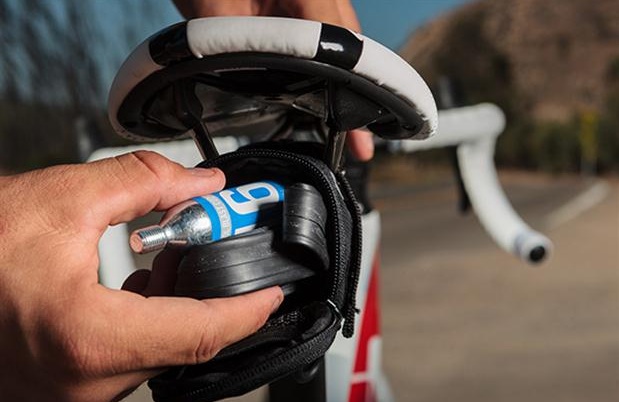
Nothing is more important than a spare tube. If you’re doing any serious distance, pack two tubes. Discard the box, but keep the rubber band. Take care to keep it as small and unrolled as possible. If you have any kind of baby powder available, sprinkle it on both sides of the tube, and slip it in a zip-lock bag. The zip-lock bag helps to protect the fresh tube against drying out and protects it from friction from the constant rubbing inside your pack. More than a few cyclists have pulled fresh tubes out of their pack, only to discover they won’t hold air because of a small hole caused from friction.

Tire Levers

Tire levers are vitally important. It’s possible fix a flat without any levers, but it’s tricky. You only need two levers, but three levers come in handy if you have the space. Don’t pack those flimsy, flat levers that snap off the first time you use them. Invest in some substantial levers that will get that tire off and on when you’re using those stiff all-weather, puncture-resistant, clincher tires.

Patch Kit

Modern patch kits are minimal, and worth packing, particularly if you’re doing long distances, and running the risk of using all your fresh tubes. There are several types available, but most cyclists agree that messing around with glue is time consuming, and glue takes up extra space. Get some of those glue-free patches that stick right over the hole without glue. This type of patch is actually flatter, and more minimal than bulky patches that require glue, and better for skinny road bike tubes.

Presta to Schrader Adapter

This one might not be essential, but it’s so small that it’s a no-brainer to include one in your saddle pack. The small adapter allows you to use any air compressor or air pump, anywhere, to fill your presta-equipped valves. You should already have a frame pump, or device to fill your tubes anywhere on the road, and most of them have adaptable heads for both Schrader and Presta. But if your pump, or another cyclists pump fails, you can get them back on the road again with this small adapter and any air pump you can find.

Multi-Tool

The addition of a multi-tool to your saddle bag is critical. The multi-tool has underwent many changes over the years, some include things that you may or may not need. Choose one with basic hex wrenches and screwdrivers to keep it minimal in size, or go all out with the Swiss Army knife type if you have the room for it. In most instances, the basics are all you need to fix just about anything that goes wrong with your bike, or make minor adjustments to cables, or anything that’s loose on your bike. Don’t leave home without it.

Chain Breaker

It’s not often that you break a chain, but when you do, you’re dead in the water without a chain breaker. The chain breaker allows you to remove broken pins from your broken chain. Even though you might not anticipate that you will break a chain, the chain breaker is so small that it doesn’t make sense to leave it at home. It is best to get a multi-tool that has a chain breaker on it.

Master Link

The master link goes hand in hand with the chain tool. After removing the broken pin from the chain, the master link snaps together to join the two ends of the chain together. Get on your bike, add some torque to the chain to finish the job. The master link is smaller and thinner than a matchbook. Sometimes referred to as a missing link, there are different sizes for some chains. Make room for it in your pack.

Practice Makes Perfect

Fixing a broken chain can be tricky if you don’t understand how to use the chain breaker and master link. It’s highly advisable to practice at home on a spare or discarded chain. Get one from a bike shop if you have to, and use the chain breaker to practice removing pins. Master-links are user friendly, and you should be able to figure it out without practicing with a new one.

Fix a Flat

If you’re not familiar with repair procedures, it’s smart to practice them at home before attempting to do it on the side of the road. Remove a wheel, tire and tube from a spare bike. Use your patch kit to patch a hole on a tube, air it up and replace everything. You should be able to do it in your sleep. It saves time and you’ll never be intimidated again.

Personal Items

Make room for medications and identification. Place your meds in a small, flat container, and don’t forget to add some cotton. The constant vibration can pulverize pills and other meds. Always keep some form of identification in your pack, with your credit card or cash. Lots of saddle bags have exterior pockets for this kind of thing. Add some type of ointment  — Neosporin is good — in case you go down. The spray type works better on grungy, dirty road rash. Add a few gauze pads.

Fast and Light

Road bikers travel fast and light, with minimalistic saddle bags. What you include in your underseat pack is up to you, and you can include anything you like, but your pack will only hold so much. The essentials of any pack should be there to get you back on the bike, without a lot of fuss and extra weight.

Bike Paths – To Use or Not to Use

December 29, 2015 by Adam Farabaugh

bike paths

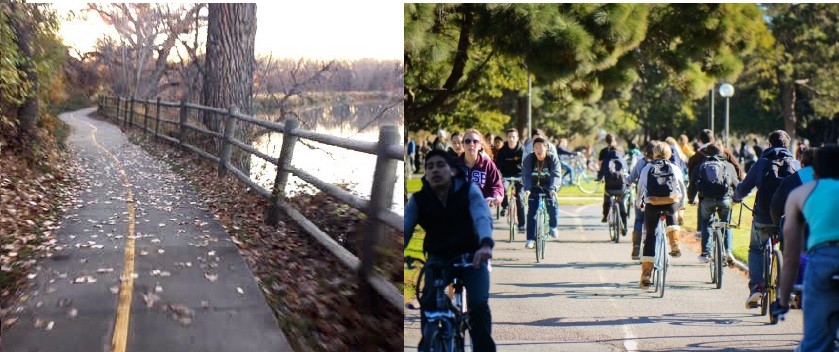
Bike paths around the country and world range in type, use, and functionality which dictates how often, if at all, you use them. Following up on the article “Bike Path Etiquette” which touches on what etiquette you should practice while riding them, this article is intended for if and when you should ride them. Unfortunately everyplace in the country and world doesn’t have elaborate bike path networks. The paths surrounding you, if any, are most likely intended for cyclists as well as walkers, runners, you name it; mixed use paths. With this knowledge on bike paths you can make an informed decision whether riding on the bike path is the better and safer option or if staying on the road is the better choice.

Types of Bike Paths

Bike paths come in every shape and size from a lane separated by a curb from the road to scenic, paved paths in remote areas snaking along a river bottom on an old rail bed. We would all love to ride those remote scenic paths all the time but unfortunately that’s generally not possible.

Rails-to-Trails

In recent years a lot of old rail beds have been converted to bike paths as they are no longer in active use and are already graded perfectly for a bike path. Some areas go all the way and make them paved paths while others, particularly in less populated areas, leave them as cinder paths. Depending on proximity to population centers, these paths can have a lot people who live close by riding casually and walking but in less populated areas, they can be utterly empty.

City Bike Paths

Some of the most widely used bike paths are city paths that are built almost exclusively to lessen the number of bikes on roadways while trying to make going from point A to point B on a bike safer. These paths often go over and under busy roadways and can also be good routes out of town to quieter roadways. These paths generally have few people other than cyclists except for areas along parks and where they’re the only option out of traffic. During “rush-hour” they can be filled with other commuting cyclist.

Commuter Bike Paths

In addition to city paths are paths that are built almost exclusively to connect outlying areas to city downtown areas or office parks where good, safe roads to ride are difficult to find. These paths often parallel highways or busy four-plus lane roads with traffic lights. Since these bike paths are often built for the purpose of connecting areas of greater distance, they are normally only going to see cycling traffic and people who are actually riding and not just out for a leisurely spin.

Neighborhood Bike Paths

New neighborhoods often have requirements to not only have “green space” or parks, but also bike paths to connect the neighborhood as well as to provide a place other than streets for kids to ride. These paths can be used to get out of a neighborhood to ride or to connect areas otherwise only connectable by busy roadways but they can often be busy with walkers, runners, and kids learning to ride.

Scenic Bike Paths

Bike paths are a great way to show people more of a cool area as a walking-only path only allows for so much distance to be covered in a certain amount of time. Bike paths along scenic rivers or scenic skylines have created more of a tourist type of path that is used mainly for enjoyment. How busy these paths are again depend on location but a lot of the time these paths are built and are not fully utilized so can remain relatively empty. They also have the added benefit of being picturesque.

Timing and Busy Bike Paths

As with vehicle traffic, the number of pedestrians along a bike path depends on time of day and what the path’s intended purpose is. If it is a path connecting people to and from work, you can expect them to be busy during weekday commute times however on the weekends and mid-day, can be relatively empty.

Neighborhood, scenic bike paths, and rails-to-trails, are often used when people aren’t working and have leisure time such as in the evenings or on the weekends. They can be good options in non-busy times where you don’t have to constantly slow for others.

Bike Paths Along Roads

Along busy roadways a bike path may be installed paralleling it to try and alleviate some of the road congestion. Utilizing these again depends on location as some may be heavily used by walkers, runners, and casual cyclists going slow with their kids. Others however may be empty but cross a lot of side roads which require you to stop for traffic. If the road the path is avoiding is exceptionally dangerous the path may be the better option even if it is busy as going slow around people and taking a little more time is better than getting hit by a vehicle in any circumstance. If both are excessively cumbersome, an alternate route should be sought out to avoid both. Be aware though riding on roadways where there is a paralleling bike path as in some countries and municipalities it is illegal to ride the roadway. Use your best judgement to gauge safety and practicality.

Bike Paths to “Train” On

In some places, particularly highly populated cities, getting on descent roadways to ride can be an issue so bike paths are where a majority of training takes place. This can be practical if there isn’t too much other slow traffic but as soon as you are constantly having to slow and go around people, you’re riding is not only suffering but it’s also starting to become more unsafe with the increased likelihood of hitting someone.

If a bike path of any sort is available to get you off of busy, dangerous roadways, it should be used. You don’t need to ride fast on it and make sure you use proper bike path etiquette to get from point A to B or to the actual roads that you are going to train on. Use common sense in selecting your routes and riding bike paths as you are never the only one using them. Keep yourself safe as well as others while getting the benefit of the bike path and your ride.

How to Get Better at Climbing

December 28, 2015 by Wade Shaddy

better at climbing

Becoming better at climbing is one of the more frustrating cycling skills to get good at. You may be the fastest off the line, out-sprinting everyone on flat ground, but when you hit the hills, you lose your hard-earned position. Climbing is routine in cycling, and there’s always room for improvement.

Better at Climbing – Don’t Be Intimidated

Getting better at climbing shouldn’t be intimidating. Almost anyone can do it with the right mindset, body position, gearing, cadence and pacing, and a bit of muscle at the right time. Never get intimidated. If you do, the hill will surely win before you even had a chance at getting over it intact. Confidence in cycling, not only hills, will take you further than you think giving you the will and drive to push through as you know you can do it.

Let the Hill Come to You

Never attack a hill. The hill will win. Even experienced riders are guilty of this common mistake. Don’t start climbing until you need to. Ride into the hill casually. Ignore the hill until it deserves your respect and then begin to climb by adjusting your gearing and attitude.

It’s Not a Competition

Climb in your own personal comfort zone. Ride at your own pace. Listen to what your body is trying to tell you. Know your limits, especially when you’re with other cyclists. If you become anaerobic, you won’t recover. Let faster riders pass you. If you’re nearing your red line slow down, breathe deep and continue at a speed within your ability. You’ll be sure that you will get better at climbing and will reach the top without having to take a breather with this approach.

Maintain Momentum

Maintain your momentum as long as possible. Momentum can be the difference between an easy climb and a gut-wrenching, heart pounding, vomiting one. Maintain a constant cadence in the right gear when you hit the hill. As the hill requires more effort and momentum drops, shift up as needed to easier gears, keeping it steady as long as you can. You will learn to recognize the point on a climb when forward momentum is gone. You’re in your smallest ring and the climb turns into a pedal mashing test of willpower. Prevent it from happening for as long as possible to get better at climbing.

Stay in the Saddle

It might seem like you develop more power standing by using your upper body weight. You do but it comes at a cost. It requires 10 to 12 percent more energy when your butt isn’t in the saddle. It means more work for your core and back muscles as you pull up on the unweighted pedal. The net effect is more energy used and you go into oxygen debt much quicker. It’s less efficient to climb standing versus seated. However, it is good to get out of the saddle to stretch it out a bit and to incorporate different muscles. Save it for the steeper parts. It can be good to stand though on steeper parts and if you’re a lighter climber and practice it. This article gets into the science of sitting versus standing.

The Advantage of Staying Seated

Sitting back in the saddle activates your glutes allowing the large muscles at the back of your thighs more efficient leverage to push the pedals. Standing up on the pedals might seem more powerful but wears you out quicker. Standing up increases your oxygen uptake at an alarming level, and you run the risk of blowing up or hitting the wall sooner.

Experienced Climbers

Experienced riders are likely to disagree with the advice to remain seated while climbing. It’s somewhat of a standard practice among advanced riders. It’s because they’ve developed the ability to climb efficiently while standing. It’s what separates the advanced rider from the novice. If you stick with it long enough, you may learn to climb standing up but when you’re just starting out, it’s better to stay in the saddle and learn to climb more efficiently until you’re better at climbing.

Rest Periods

On long, curvy climbs, it’s OK to take a break from sitting too. Look for a flatter portion where the road curves briefly and stand up to get the blood flowing and to employ different muscle groups. Take a few deep breaths and hit it again. Note that if you are going to stand, it’s fine to let the bike rock under you, but no more than about 6 inches side to side.

Gearing Tips

Is there a right gear for climbing? The short answer is no. With experience you’ll discover what gears work best for you, and you’ll be able to discern which one to drop into for the hill you are up against. A general rule of thumb is; if your bike resists shifting, it means that there’s too much tension on the chain, you’ve already waited too long to shift up.

Breathing Tips

If you start to gasp, pant or breathe irregularly, take a deep breath and hold it for a few pedal strokes. Synchronize your breathing with pedal strokes if possible. Start by taking a breath each time one pedal reaches the bottom of a stroke, and then increase the time by taking a breath every 1 1/2-strokes, and finally every two strokes if possible. Whatever the intervals between breaths, you will deliver more oxygen to your system with a consciously controlled breathing effort.

Summit in Sight

It’s OK to stand up at the last minute if you’re within striking distance of the summit and you’ve got some fuel left in your tank for a burst of power. Shift into a higher gear, stand up and use your body weight, mashing the pedals to propel yourself over the summit. You know your time to rest is coming soon so you can dig deep over the top. If you still have a long day however, don’t go to deep or you’ll be feeling it later.

Watch Your Weight

It’s been drilled into cyclists for years that to get better at climbing you and your bike must be light. Mind the overall weight though your own, the weight of the bike, and what you’re carrying on the bike. It costs money to reduce the weight of your bike by a pound, but an extra water bottle or weight in your fanny pack can add up, and that really adds up on a long ride with lots of hills.

Shout and Scream

All cyclists get defeated by hills at some point and none of them are created equal. Climbing hills is hard work. Sometimes it’s just too long or too steep. Sometimes you drop into the wrong gear and can’t keep up the momentum. Don’t be afraid to drop into your easiest gear and just keep mashing. Mental distractions are important. Don’t dwell on your pain. Think of anything that distracts you from the pain. Leave your mind elsewhere for a bit while the climb slogs on. Shout and scream out at the top of your lungs “I own this hill!” if you have to. And when you reach the summit, give yourself a pat on the back for a job well done. You’re on the right path to getting better at climbing.

Cycling as a Job

December 24, 2015 by Wade Shaddy

Cycling as a Job

Who wouldn’t want to ride bikes for a living. Cycling as a job isn’t isolated to trained professional riders making money winning races. Cycling can be a rewarding career in other aspects as well. If you love cycling you can do it as a job. The main thing to keep in mind is that you’re doing it because you love it and money isn’t at the top of your list of why you’re doing it. But when you’re doing something you love, it’s always worth it.

Cycling as a Job – Bike Messenger

Remember “Premium Rush,”  an awesome movie depicting a devil-may-care cyclist careening through traffic? Well it’s not just in the movies. If you’re an adrenaline junky who likes to race through traffic (who doesn’t) the bike messenger position might be right for you. A bike messenger basically delivers parcels, correspondence, or unknown packages faster than cars in big cities.

Traits of The Messenger

Not just any bike will do for city delivery service. Be prepared to drop between $500 and $1000 on a single-speed, which is what most good bike messengers prefer, but that’s up to you. Single-speed bikes are tricky to get used to, but they’re fast. You’d better be able to fix your own bike too. Generally speaking, if you can’t fix your bike, you shouldn’t be a bike messenger.

Messenger Pay

Companies vary per wages, but most pay on an hourly basis, the number of packages delivered, or both together. The everyday bike messenger brings home about $20 per hour give or take.

Benefits and Brotherhood

It stands to reason that you probably won’t get health insurance, considering the risky nature of your cycling job. Despite that though,  messengers love their jobs because they spend their time riding. Messengers are a band of brothers and sisters who ride together, hang out in bike shops together, and drink together. Don’t apply for it unless you love it.

Cycling as a Job – Bike Server

Maybe you’ve been served with a lawsuit at some point in your life but hopefully you haven’t had the pleasure of someone knocking at your door, making niceties to you and then shoving legal documents in your face. Some lawyers have taken advantage of the cyclist’s unpretentious attitude and stealth delivery by assigning them the job of bicycle legal server. Bicycle servers are hard to ignore, can track down defendants, and can get the job done when legal documents need to be served. The pay for a legal server depends on the company, but they usually per serve which might be as high as $50 or more.

Cycling as a Job – Bike Mechanic

A bike mechanic is the most likely job for a cyclist who loves bikes. If you spend time in your own garage tinkering with your own bikes, why not make a career out of it. As a bike mechanic you will eat and breathe bikes working on them the majority of your day. Some of the bigger bike shops have test tracks where they make sure the bike is in good working order, so you get to ride just about every day. Some shops allow you to take out their rental bikes as well as give you discounts on gear.

Bike Mechanic Pay

Don’t expect to make over about $30k a year as a bike mechanic, and that’s in a well-oiled big bike shop where bikes come in all year round. That’s the big benefit of mechanic in a big shop — you get a regular paycheck. If you’re really serious about working with bikes, there’s always the big bike companies like Specialized that need cyclist and cycling enthusiasts.

Cycling as a Job – Bicycle Guide

Travel to exotic locations, lead other cyclist down trails, city suburbs or even on long distance, overnight tours. The bicycle tour guide is one dream job. The ideal candidate for a bike tour guide is willing to travel, is physically fit, and knowledgeable about his or her surroundings. Bike maintenance should also be high on the list, because tourists don’t typically have the know how to fix things like flats and replace broken cables. It’s possible to average about $100 to upwards of $500 or more per day and if you’re a really good guide showing well-to-do tourists how and where to ride, the tips could be even higher.

Cycling as a Job – Event Management

Why not put on your own race or charity ride. This is a difficult one to get into, but if you’re good at planning, lots of red tape here, and have the diverse skill set of knowing the in’s and out’s of racing as well as being business savvy, yo can be a successful event planner. There’s money to be made in race and charity ride organizing if you can get a good location, theme, and the proper approvals.

Cycling as a Job – Bike Taxi

Bike taxis have been a mainstay worldwide for many years. It’s because they’re efficient. It might take some effort, but placing a small cart or enclosure on a trailer can give you a shot at being a bike taxi. But there is some red tape. Big cities may require clearance. Wages depend on area and your own requirements , ie. you’re the boss. Know your city, and all it’s short cuts, get liability insurance and permits, and start picking up rides.

Cycling as a Job – Billboard

Advertising billboards are everywhere. Why not get paid to ride in circles through your city’s downtown. Biking Billboards is an advertising agency that uses bicycles to get their billboards in front of more eyes. This job is relatively unknown by many consumers and businesses. If you’re interested in becoming a cycling billboard, try pitching it to forward-thinking businesses in your area.

If you love to ride your bike there are a lot of ways you can do cycling as a job other than riding professionally. The bottom line is you love bikes and if you are willing to do it for the passion and not the money then maybe cycling as a job in one of these professions can be your next gig. If cycling is your job but different than one of the ones listed here, let us know in the comments below and we can pass it along to others who might be interested in that same thing.

How to Buy a Used Bike

December 23, 2015 by Adam Farabaugh

How to Buy a Used Bike

Knowing how to buy a used bike can be a tricky endeavor particularly if you don’t know what to look for in a bike when analyzing it. One great thing with bikes is that you can generally see everything and how it works; as say, opposed to a car where you don’t really see anything that’s happening. If something is a bit off with a bike, you will be able to see it or feel it if you know what to look for. Asking the following questions to the owner and looking at some key points on the bike will help to ensure that you know how to buy a used bike and are making a good purchase.

How to Buy a Used Bike – Questions to Ask

  • How old is the bike?
  • Were they the original owner?
  • Were any parts replaced?
  • Were there any crashes on the bike and if so how bad? What was fixed?
  • Does everything work on the bike? Gears, brakes, etc.?

What to Look at Specifically in Person

If you have the chance to see the bike in person before you buy, you should definitely do so. You likely can return items on ebay and other online sites but it is a hassle and you probably don’t want to go through the process again to find another bike if the one you bought doesn’t meet your expectations. Before you ride the bike you are going to want to look it over, up close and in detail.

The Frame

With how to buy a used bike, start with the frame and ask if there are any spots that they would point out that may have been scratched or dinged. After that, look and make sure there are no deep scratches or cracks, especially on carbon, anywhere on the bike. Some key areas to look at are the joints, particularly under the down tube where it attaches to the head tube around the bottom bracket, as well as both the front and rear drop outs. (where the wheel attaches to the frame) If you do find any questionable cracks you are going to have to make sure they are just paint and not the frame itself. This can be tricky and requires a bit more knowhow but at least you know they’re there.

Shifter and Derailleur Scrapes

The next thing in how to buy a used bike is to look for scrapes on the shifter and brake levers as well as the end of the bars. Typically in the event of a fall this area is going to hit the ground and get scratched up. Also looking at the rear derailleur will indicate if it took a fall on that side. The outer face will be visibly scratched up and the derailleur could also be bent inward.

If any of these have scratches you will need to make sure that they all still work properly and are not compromised structurally. And if they do indicate a crash, you need to more thoroughly look over the rest of the bike to ensure that there is no other damage.

Handlebars

If the shift/brake levers are pretty banged up you need to make sure the handle bars are also still functional. Typically aluminum bars are pretty durable but give a good flex on both sides to make sure they are still good. If they are bent in any area then they will need to be replaced as they have been significantly weakened. If the bars are carbon, it is almost exclusively advised to replace them as even a small crash can compromise the integrity of the bars. This is especially so on a used bike since you don’t know how sever the crash was on it.

The Wheels

The first thing to check with the wheels is to spin them in the frame and see if they’re true. An easy way to do this is to hold a pen or other straight tool on the frame with the tip resting a millimeter or two from the rim. Spin the wheel and watch and see if the wheel has any wobbles in it. Anything more than a few millimeters left or right will require straightening and past that the rim may need replaced.

Also with the wheel, rock it from side to side toward the frame to feel if there is any play in the bearings. There should be some flex with the wheel but if you feel that it’s loose or you hear an abrupt hit or rocking in the bearings, it means that they are going to need to be replaced.

The Bottom Bracket and Crankset

The last thing to look at before you ride the bike is the bottom bracket and crankset. First, knock the chain off the gears to the inside so you can freely spin the cranks. If they don’t spin freely the bearings will need to be replaced. Also grab each crank arm and rock it from side to side to see if there is any play in the bearings. There should be no lateral movement past the flex of the frame and crankset.

How to Buy a Used Bike – Before you Test Ride It

After you have gone through the bike and have looked at the details of each part you want to make sure that it is safe to ride. Hopefully you caught anything that may fail when you ride such as a compromised frame or wheel. Also check the following.

Check the Brakes

Grab hold of both brakes and make sure they engage properly and stop the wheel. Pull tight on both levers as often the thing that is going to slip is the bolt that clamps down on the cable. This will test to see if it’s tight enough. If they need adjusting this article will help; “How To Adjust Your Brakes”

Check Bolt Tightness

The next thing to check is that the handlebars and stem are properly tightened. Take an allen key and make sure the bolts holding the handle bar to the stem are tight. Then make sure the bolt on the top of the steerer tube is tight along with the, typically two, bolts on the side of the stem that clamp down onto the steerer tube.

When Test Riding

Now you’re ready to test ride the bike. Go slow and easy at first getting a feel for everything and making sure the bike works properly.

Check the Brakes

Before you go too far, make sure the brakes stop you. Take note on how they are. Do they grab quick? Do they squeak? How hard are they to pull? Make a mental note of each.

Check the Gears

Now you’re probably riding a bit faster. Shift through the gears and make sure they all work. Also, make sure you pedal a bit in each one. If any of them slip, particularly the smaller ones toward the frame while pedaling a bit harder, the chain and cassette could be old and no longer match up. Measuring the length of the chain, which can be found under “Measuring Chain Wear” in the article”Bike Chain Maintenance“, will quickly show you if it is going to need replaced or not.

Check the Steering

Take a few turns on the bike and see how the steering feels. It should be smooth without any points that are harder than the other. If it isn’t smooth, either the headset could be overly tightened or the bearings in the headset need replaced.

Check the Feel

Overall how does the bike feel? Now the bike probably won’t be perfectly positioned to you but does it feel comfortable and work easily? Is it a bike that you would want to ride? You can make some changes after you buy it, such as a new saddle or doing a proper bike fit, but it should all be pretty close to what you are expecting.

Knowing how to buy a used bike can be a hassle in a few ways particularly dealing with another individual and not a business like a bike shop. Make sure you know why they are selling the bike and if you believe their story or not. If they just don’t ride it and want to get rid of it, then it’s probably a descent bike but it probably wasn’t maintained well so you may have to improve a few things on it.

If the person is upgrading to a new bike, it is likely that they rode it a descent amount and maintained it. The biggest thing here is to see if it has been crashed badly. If someone is just looking to get rid of the bike for no real reason, pay extra attention. There could be something wrong with the bike and they just want the problem off their hands. You don’t want to be stuck with a bike like this where you’re then left fixing all of its flaws. Do your homework on what to look for in how to buy a used bike and pay attention to the details when you’re inquiring and analyzing the bike.

Most of all make sure you enjoy the bike that you purchase, used or not.

« Previous Page
Next Page »
  • Facebook
  • Tumblr
  • Twitter

Latest Articles

JOIN Cycling: A New Training Platform for Cyclists

May 27, 2024 By Eric Lister

cold exposure

The Benefits of Cold Exposure for Cycling & Life

June 13, 2023 By Eric Lister

hill climb

The Ultimate Hill Climb Training Guide

May 31, 2023 By Eric Lister

shoulder pain cycling

How to Treat & Avoid Shoulder Pain While Cycling

April 12, 2023 By Eric Lister

psoas stretch

The Importance of the Psoas Stretch for Cyclists

April 6, 2023 By Eric Lister

cycling neck pain

The Ultimate Guide to Cycling Neck Pain: Causes and Solutions

March 21, 2023 By Eric Lister

Useful Info

  • Contact
  • Finally, A Global Cycling Club That Is Focused On Community And Love Of Cycling!
  • Privacy Policy
  • Share Your Story!
  • Terms And Conditions Of Use
  • Welcome to I Love Bicycling
  • What Happened When I Stretched Every Day For a Month

Recent Posts

  • JOIN Cycling: A New Training Platform for Cyclists
  • How to Hang Bikes in Your Garage: 4 Inexpensive Options
  • Gravel Bike Vs. Road Bike: Which One Is Better For You?
  • The 6 Types of Mountain Bikes & How to Choose the Best One for You
  • What Is a Touring Bike Good For? 5 Benefits We Know You’ll Love

Search I Love Bicycling

Connect with Us

  • Facebook
  • RSS
  • Tumblr
  • Twitter

Copyright © 2026 · Magazine Pro Theme on Genesis Framework · WordPress · Log in