• Training
    • Injury Prevention
    • Training Tips
  • How To
    • Bike Fit
    • Gear
  • Nutrition
    • Nutrition Tips
    • Weight Loss
  • Repair
  • Reviews
  • Stories
    • Funny Stories
    • Jokes
    • Quotes
    • Videos
    • Funny Videos

I Love Bicycling

I Love Bicycling is a website that is geared towards cycling for beginners with road cycling tips, training articles, nutrition tips, weight loss, how to’s and bike repair articles.

How To

  • Bike Fit
  • Gear

So You’re Going To Get Into Cycling…

May 10, 2016 by Adam Farabaugh

get into cycling

So you want to get into cycling? You found the itch and maybe have an idea of the benefits riding can bring. Starting out and having a good time from the get go without a lot of trial, fails, and errors will help to ensure that you have a pleasant entry into riding whatever style that constitutes: road, trails, city-paths, around-town, whatever your desires. We want you to try and stick with the sport and experience all its benefits. Ask other riders around and you’ll find that they have been riding for sometime and wish they had found the sport earlier. So don’t wait, get into cycling now. You’re future self will thank you.

First Up – Do You Have a Bike Yet?

To get into cycling you first need a bike. What you don’t need however is a high-end, expensive bike which can be a large barrier to entry. Any bike at the start will do just fine. A few things you want to make sure of though is that it is functional and safe to ride. This means that everything works on it; ie. the wheels turn and are true, the gears work, the brakes work, and it’s something that fits you well and is not a struggle to ride. It can be a hybrid bike, mountain bike, or road bike. After starting out and getting a few rides in, you’ll find what you like and don’t like and can begin the process of choosing a more appropriate bike for you.

Do You Have Any Cycling Clothes?

When you first get into cycling, wear what you have. A t-shirt and gym shorts work just fine but as your rides begin to increase in length and frequency you’ll want to upgrade your shorts first to skin tight, padded shorts specific to cycling and then to a cycling jersey. Prior to this, men should try and wear tighter and more supportive athletic underwear to keep things in place. Women will want to wear an athletic type of underwear. For socks you will also want to wear something more athletic and not made of cotton.

How About Cycling Shoes?

Starting out, you can wear sneakers when you ride with platform pedals or pedals with straps to hold your feet in place. This will allow you to be able to focus on the riding and not have to worry about clipping in and out…yet at least.

Starting On Your Own

Depending on how much experience you have on a bike, you will want to start out getting the basics down. Turning, braking effectively, and then shifting. Then graduate to going up and down hills and through corners. Getting the feel for the bike and being able to ride on your own will then allow you to ride safely around other people and in the road and traffic where your attention needs to be on the cars around you and not just riding the bike. Safety is number one.

Finding Someone To Teach You A Thing Or Two

After you can safely and effectively ride, finding someone to ride with who is an experienced rider will help you improve tremendously in all things cycling not to mention give you company to ride with. Maybe someone you already know rides and you can ask them if they can take you on a ride or two. If you don’t know anyone who rides, ask around at your local bike shop or put an email out to your local cycling club, if you have one in your area. If you still can’t find someone, keep improving your riding on your own and with cycling “how-to’s” such as this and then see if you can find a local group ride.

Finding A Local Group To Ride With

With riding in a group you will want to be extremely comfortable on the bike and not have any issues cornering, riding a straight line, shifting, braking, et cetera. Searching online for local rides is a good first option and then hitting up your local bike shop can give you the inside scoop on local rides. Here you will be able to learn a lot from other riders just by watching and doing what they do along with them being able to give you advice on your riding.

How To Improve Your Riding

One thing with getting into riding is that whether you are just starting out or have been riding for decades, there is always something to improve upon. It’s a sport that’s never “learned” and done. Keep riding more and more and you will not only get better physically but in all things cycling related. You will have blunders as you go but you will learn from them and correct them. Reading up on all things cycling will continue to develop your knowledge base. (It’s been said that ILoveBicycling.com has nearly everything you need to know to be a better rider.)

The Most Important Part When You Get Into Cycling?

And of course the most important part when you get into cycling is to have fun. Cycling is going to give you an endless amount of new experiences, new friends, a great body, and a fantastic time all in all for the rest of your life. Embrace it, share it, and enjoy it.
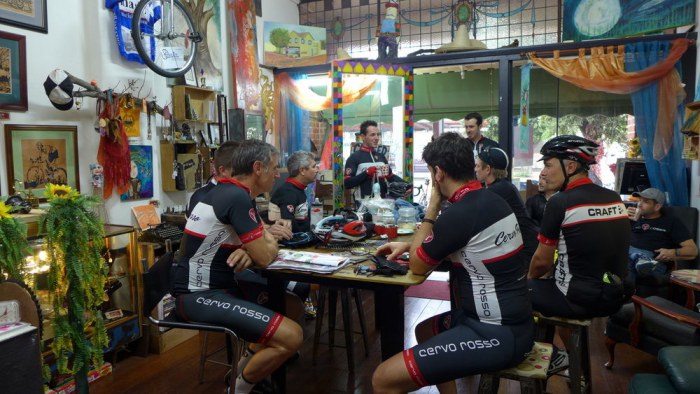

Coffee Shop Ride – How and When To Do It

May 7, 2016 by Adam Farabaugh

coffee shop ride

Why do cycling and coffee go so well hand in hand? Perhaps because one fuels the other, and that goes both ways. Both bring people together for great conversation while enjoying something they love. Both bring a connection whether between long time buddies, significant others, or someone you just met. Yet why do so many people forgo the coffee shop ride? The most likely culprit is not enough time for both but the basis of the ride is for enjoyment. The coffee shop stop just adds to it.

How To Have A Great Coffee Shop Ride

Of course what encompasses a great coffee shop ride can vary greatly from one rider to the next but there are a few similarities that go with any. The first is that it should fit within your ride plans. If you’re busy doing intervals up a climb all ride, stopping part way through for a nice coffee probably isn’t going to be the most relaxed and enjoyable. After however is another story. Also, if you’re trying to knock out a century or long ride in a descent amount of time, stopping for an enjoyable cup of joe with nice conversation also probably isn’t the most efficient way to have a nice stop.

Pick a Good Mellow Route

The best coffee shop rides are the ones where you’re just riding to ride; to enjoy the company your in, the roads you’re on, and the places you’re seeing. Then stopping for a little while is a great way to continue those thoughts and engage in even more conversation. The epitome of this is when you’re stopped at a coffee shop for longer than your total ride time. You’re not out for a big hammer day, you’re out for the enjoyment on all ends.

Find a Good Shop to Frequent

Finding a good coffee shop can be a challenge in some places. Either there are too many to choose from or hardly any. A few prerequisites are:

  • They have coffee (or any drink) up to your standards of taste.
  • They have a seating area that can be thoroughly enjoyed. (Drive-thru’s or tiny coffee shops that never have any seating aren’t going to cut it.)
  • If it’s a nice day, they have quality outdoor seating to enjoy the day.
  • They have, at a minimum, an okay selection of pastries and other goodies to be enjoyed if desired.

How To Look Like a Natural in a Coffee Shop – Coffee Shop Etiquette

Whether you live in an area where there aren’t many cyclists around or the coffee shops are already full of them, you want to have proper etiquette while there. If not, you will stand out and look out of place as well as potentially embarrassed. The key is no matter what, act like you belong. This is easier in some places than others but regardless, do it with authority.

Where To Park Your Bike

Your first hurdle at a coffee shop is where to park your bike. You want it in a visible place to people in general as well as in a location where you can see it from where you are sitting. Some shops that are frequented by cyclists have “bike parking stands” which can be super useful. If not, the best place is probably against a window along the front of the building. Make sure it’s not in the way of the doors or people walking in and out.

Where To Put Your Helmet

After you park your bike, take your helmet off, buckle it and hook it on the stem and drape it over the handle bars. This looks good and will keep it from falling or getting caught on anyone walking by. Additionally this leaves your hands free to carry a coffee, pastry, etc. and removes the situation of having your helmet on inside where you look goofy. Under no circumstances should you place your helmet on the table, face up or down. You sweat in that thing and it’s nasty. No one wants it on the table that they eat off of.

What To Be Careful Of

The biggest thing to be careful of while stopping at a coffee shop is slipping in your cycling shoes on the tile, wood, whatever slippery surface of a floor the shop has. This is very easy to do depending upon your shoes, cleats, and any spilled coffee potentially already on the floor. Take shorter steps and never make any sudden turns. You’re not playing football after all.

The Dreaded Ride Home

Depending upon your ride and how long you’ve been stopped, getting moving again to ride back home can be a struggle. Your legs will likely have tightened up and particularly if it’s chilly out, you will want another cup of something to just sit and relax some more. When you do finally get out the door, start slow as if it were the beginning of your ride. Warm up for a few minutes and then ease back into your normal pace.

How Often Should You Go On A Coffee Shop Ride

Obviously this is personal preference. Some would say daily, others weekly, others monthly. Coffee shop stops are a way to continue the pleasures you get from riding through a different medium while adding a few. If you never really have time for a coffee shop stop you should maybe slow down a bit and take a day just to enjoy the ride and company. It’s what cycling is all about anyway. Let us know in the comments below what your favorite coffee shop ride is and how you enjoy it.

How To Wash Cycling Clothes

May 6, 2016 by Adam Farabaugh

how to wash cycling clothes

You paid a lot of money for your cycling shorts, jersey, and other apparel. You want to get the most out of it and have it fit comfortably every time you wear it. There are two sure-fire ways to shorten the life of your cycling clothes; crashing and washing them improperly. Knowing how to wash cycling clothes will help ensure you get your money’s worth out of them. Not crashing in them… that’s another article.

Why Different Than Regular Clothes

Cycling clothes are different than your regular clothes because they are made of lighter weight, more delicate materials along with having many more seems that receive a higher stress load. Regular clothes aren’t built for performance so can take a beating but washing your cycling kits with a bit of a different approach will help to keep the materials in their original state along with keeping all the stitched seems together.

Why You Don’t Need To Go The Whole 9 Yards

Some companies recommend a specific way to wash your kit but these recommendations generally error on the side of caution and were catered toward the older Lycra materials which were more prone to stretching and coming apart. Some would say to wash them in a mesh laundry bag along with the zippers zipped up and with no other clothes on a delicate cycle and to hang dry them. You can do this to have the utmost certainty that they won’t degrade wash after wash but this is a lot of effort for marginal gains. The newer materials and stitched seems are durable enough to handle more of a beating than that and with much less effort.

So How To Wash Cycling Clothes

First, before your cycling clothes ever make it to the wash, you should have them in an airtight bag or container to avoid stinking up the whole place until you wash them. Then when you’re ready to wash, you can do them in with your regular cold water clothes (you don’t want to do it on warm or hot because colors can leach and the heat can be hard on the clothes.) on a delicate cycle. The delicate cycle will keep the machine from spinning them excessively but if you forget every once in awhile, it’s not the end of the clothes. You don’t need to zip up the jerseys nor do you need to wash them in a mesh bag. They will last just fine. You can use regular detergent but use slightly less or use a lighter detergent. Also don’t use fabric softeners.

How To Dry Your Cycling Clothes

Drying your clothes can be just as hard as washing if you do it wrong. The safest option is to hang dry them but that’s not always feasible. If you have to use a dryer to dry them, use it on a low heat and tumble setting. Because of the quick drying material of cycling kits, they shouldn’t take long to dry.

How To Wash Cycling Clothes By Hand

Sometimes if you’re on a trip or are racing day after day and only have one kit, you need to wash it by hand. Never wear a kit more than once without washing it. Put everything that you’re washing, shorts, jersey, socks, gloves, etc. into a sink and first rinse them with cold to lukewarm water. Then use laundry soap if you have it available or any hand/body soap will work just fine. Just don’t use too much of it. Scrub the clothes in the sink against each other to get out all the grit and grime. Then rinse each piece of clothing a few times on its own to get all the soap out and give it a good squeeze but not wring as this can stretch the fabrics.

How To Dry Cycling Clothes By Hand

drying cycling clothes

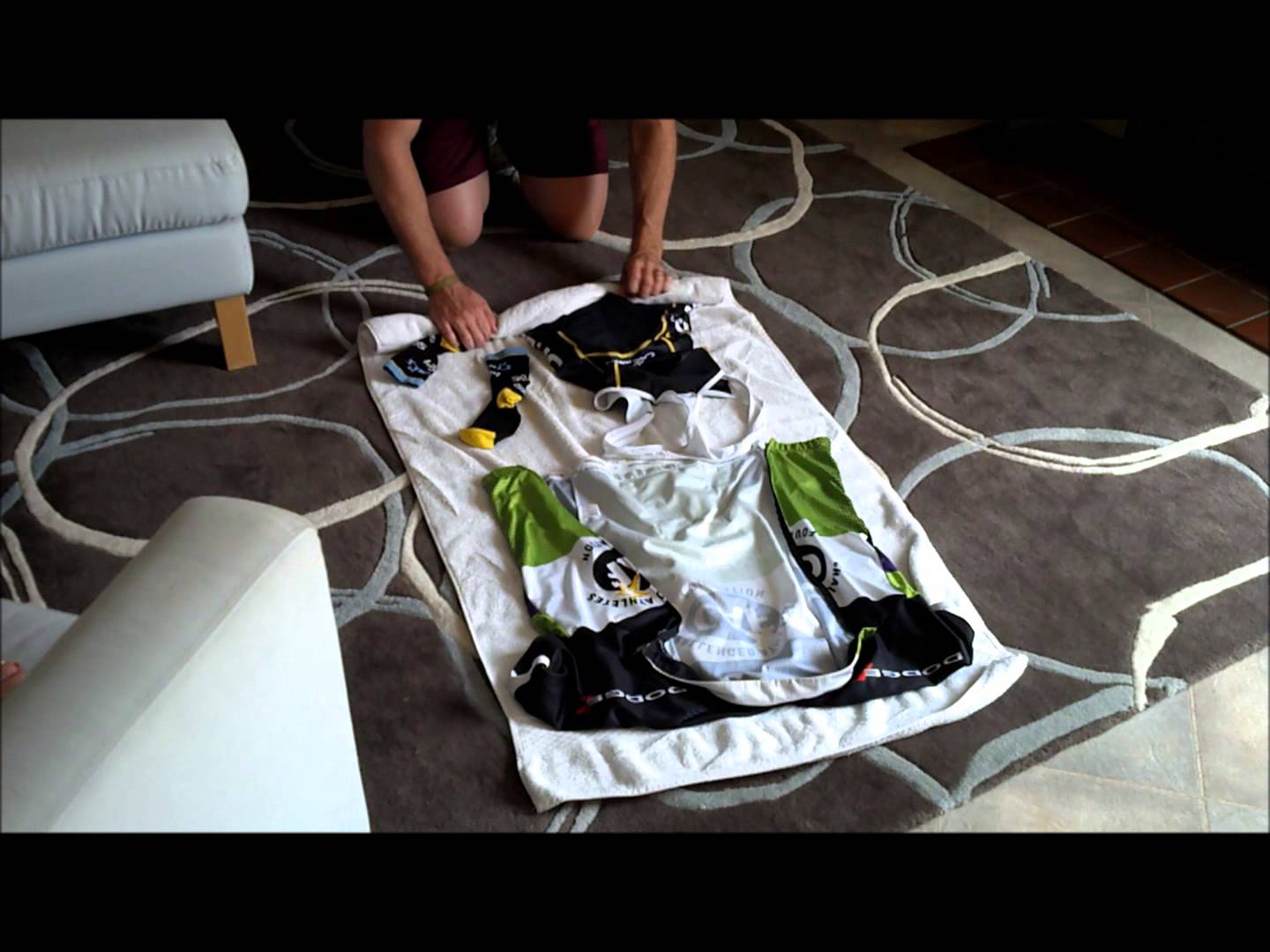
Now with your clean, wet clothes take a large, dry, and CLEAN towel and lay it out flat. Place all of your clothes on it so nothing is overlapping. Then starting at one of the short ends of the towel, roll it up all the way. Then twist either end in opposite directions to give it a slight wring. Don’t over-do it as this can also stretch the clothes excessively. A lot of the moisture will be absorbed by the towel. Then un-roll it and hang the clothes to finish drying completely. A coat hanger works well placed next to an air vent.

Race Day Strategy To Have The Perfect Time Trial

May 5, 2016 by Josh Friedman

time trial

A key time trial is approaching. You want to have a great race but have the jitters. Get over them with a good plan starting with the day before the race up until you cross the finish line. Make the most of the many hours of training with a detailed approach to the race.

Two Nights Out

Make sure you get great sleep two nights out. Sometimes it is difficult to do it the night before a race, but two nights out is much easier. If you get a chance the day before the time trial, take a nap.

The Night Before

Pack everything you think you might need, even if it is a small possibility. Check the weather and bring appropriate kit (do not forget your shoes and helmet!). Bring all of your nutrition and hydration essentials. A small tool kit may come in handy if something needs a quick adjustment. All of your inflation tools – pump, right angle adapter for a disc wheel, spare tubes – are mandatory. Bring your trainer or rollers to have an effective warm up. Pack everything the night before and have it ready to go so you have piece of mind when you go to bed.

Morning Preparation

How much to eat for breakfast before a time trial depends on how much time there is before the race. If you have three hours, a full breakfast may suit you. If there is less time, trim down how much food you eat. This will take some experimentation. Make sure it agrees with you.

Arrive Early

Get to the venue early enough so that there is time to pre-ride the course. It will allow you to see the best lines on the road and give you an idea of where you need to put the power down and where you can recover some. If you do not have time to pre-ride but the road is still open, drive the course; it is better than going into it blind.

Pair Your Clock

Check your start time for the time trial. Compare your own reliable clock with the official race clock. Make sure they are close enough that you will know exactly when you need to start based on your own clock.

Warm Up

The longer the time trial, the shorter the warm up. First, you want to save your effort for out on the course and second, you have a little time at the beginning to ease into your pace. You want to ease into your pace so you do not blow up and have more left for later in the time trial. For a shorter time trial, you should do a longer warm up because there is not as much time to differentiate yourself from the rest of the riders. You set a pace that is nearly full gas from the start.

Start your warm up easy and work your way up to harder efforts. Do some time in each zone up to zone 4; the duration of the time trial will determine how long you will spend in each zone. Include some high cadence around 120rpm for short bursts to loosen up your legs. Do not overdo it zone 4 – you only need to activate your metabolic systems, not win the warm up.

Time Trial Start

Get to the start line for the time trial with about five minutes to go. That means you have to be done with your warm up, have gone to the bathroom, made final adjustments to your kit, and taken care of anything else that needs to be done.

You are all ready to go. All of the preparation lead you hear. Do not blow it by going way too hard off the line. On go, do a few decently hard pedal strokes to get the bike going, but then get into the aerobars on your time trial bike or low aerodynamic position on your road bike as quickly as possible. You will gain more by being aerodynamic than by sprinting and it will keep you from blowing up. If the time trial is longer than fifteen minutes or so, ease into your pace over the first two or so minutes. You should not be going easy but at a sustainable pace below your target. Shorter than fifteen minutes and you need to be ready at the line to go straight to your target pace.

The Middle

The coefficient of drag versus velocity is a cubed relationship, while the gravity versus velocity is linear. This dictates that you get more bang for your buck with extra effort on climbs rather than descents. This should also inform your time trial pacing. Think of your ideal pace on the flats to be a 100% effort. On a climb, do 110% of the flat effort, and a descent, do 90% of the flat effort. These numbers are relative to illustrate pacing ideas and only applies to flatter or rolling time trials. If the time trial has longer climbs, or is a hill climb time trial you will want to stick to your target pace so you do not blow up.

Standing On Climbs

Sometimes you will see riders come out of their aerobars for a hill. This is only worthwhile if your speed drops below twenty kilometers per hour or so. Otherwise aerodynamics are more beneficial than the additional force of standing on the pedals.

Staying Aero

Through the middle and end of the time trial it is important to maintain a good aerodynamic profile. It pays to think about it because as you tire it will become more difficult to keep low, narrow, and stable. It is worthwhile to expend a little energy to ensure that you keep the good form that you worked on leading to the time trial. The less the air sees of you, the more the effort from your legs will count.

The End

Your lungs are burning and your legs ache en route to a great time. Do not give up now. Really empty the tank for this last section. If you can stand up and sprint at the end of a time trial you did not leave enough of yourself on the course. Relief will come soon enough when you cross the finish line. In the meantime, stay in a very aerodynamic position and meter out your final effort to carry you across the line on empty.

After you cross the line, catch your breath, clean the salt and snot off of your face, get some water and recovery food and get yourself to the podium.

Cycling Time Trials – What Are They?

May 3, 2016 by Josh Friedman

cycling time trials

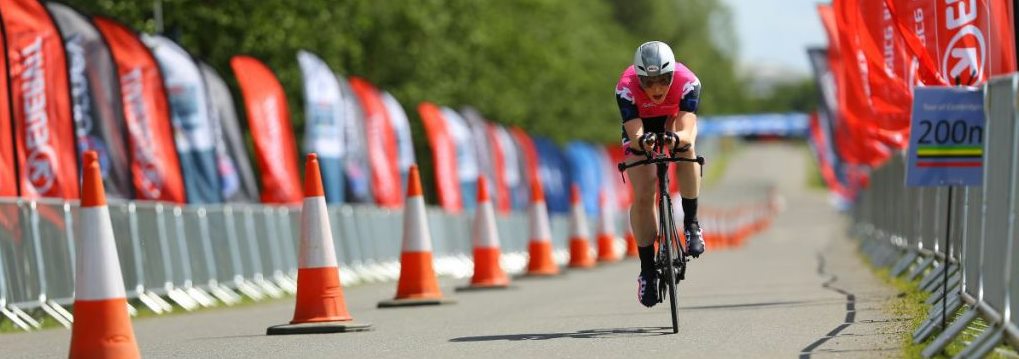
Cycling time trials are the race of truth; they are humans pushing themselves to the limit to go as fast as possible over a given course. There is no peloton to dictate tactics. The rider must meter out their effort perfectly for the duration of the race to ensure victory. It is the most simple form of racing – rider against clock. Lowest time wins.

Cycling Time Trials – Straight Forward But Different 

But in reality, it is not so easy to nail down what the discipline is. There are many types of cycling time trials. There are flat time trials suited to bigger riders with very big engines. There are hilly time trials for the punchier riders. There are hill climb time trials, where the rider with the highest power to weight ratio (and generally very low overall weight) wins. And team time trials emphasize excellent teamwork and smoothness to clock in the quickest time.

Shorter time trials (less than ten kilometers or so), often at the beginning of a stage race, are called prologues. It allows officials to sort out the classification before the first road stage along with featuring each individual rider to the fans. If there’s a time trial in the middle of a stage race of a similar distance, it is just a time trial. Forty kilometer time trials are often a benchmark of time trial ability. Crack an hour and you are pretty good. Go a bit faster and you are really flying. Most time trials will fall in between ten and forty kilometers.

The Equipment

Equipment for cycling time trials often seems exotic. The bike is not your ordinary road bike. You race it much less frequently than your road bike. It has different angles to allow for a more aerodynamic position. Everything on the bike is aerodynamically optimized. The position is different. Your road bike might be comfortable for a six hour ride but your time trial bike setup for forty kilometers at a time would be uncomfortable for the same six hour ride. There are aerobars out front, allowing you to get narrow and low, which are illegal for mass start races and even in some time trials.

Eddy Merckx Time Trials

A recent trend to level the playing field at smaller races demands that riders use the same equipment they would use in a mass start road race. Also known as Eddy Merckx style. It lowers the investment level required to be competitive in the sport and some argue that it levels the playing field to allow the best rider to come through, not just the rider with the best investment in equipment.

Equipment Obsession

Cyclists will obsess over equipment. This tire paired with that tube will provide the lower rolling resistance. That skinsuit is faster than this skinsuit. These wheels are the fastest ever made… Cycling time trials are where that equipment obsession comes to its climax. It gives every opportunity to either believe in your gear or second guess it. That can certainly lead to riders pushing themselves differently based on how they feel about their setup.

How to Get Into Cycling Time Trials

Many, many local clubs run time trials. They are relatively easy to set up, provide good training, and are a competitive and fun atmosphere. The bar to entry is very low – you do not need to have any experience riding in a pack, registrations fees are minuscule compared to big road events, and they are close to home. They give a nice target to train for and provide good tests of fitness along the way. Search out your local club to see if they have cycling time trials to push your limits.

Try Them All

Despite the fact that some cycling time trials suit a more particular rider, you should try them all. If you do not succeed like you would like, at least you had a good, hard training day on the bike. And if you do have a very fast day, tick that type of time trial off as one that suits you.

You Don’t Need All The Aero Equipment to Get Started

You can even show up to your local time trials on your current road setup. Be consistent about your setup, train well, and you will see improvements in time. Then maybe return next season with an improved bike setup and see how much you gained compared to your old setup. It is not necessary to sink money into your equipment to get the most out of time trialing but if you want to be competitive at the top level, eventually you will need to drop some money on your gear.

Your Own Personal Time Trial

To set an even lower bar, find an uninterrupted course where you can smash the pedals without interuption. Then time trial on it periodically. You do not even need to tell anyone about it; it can be your own time trial where the only person you are competing against is yourself. It does remove the social aspect of competition and the opportunity to learn from others but it will certainly increase your fitness.

A Gateway to Mass Start Races

Now that you are hooked on competition and pushing your limits, you may want to branch out into mass start races – criteriums, road races, circuit races, and multi-day stage races even. Hopefully through your local club cycling time trials you have made a network of friends and mentors that can guide you on a successful path to wider racing opportunities. You already have the foundational fitness from all the cycling time trials, so why not give it a try?

How To Tuck On A Road Bike Effectively

April 27, 2016 by Josh Friedman

The greatest force to overcome on a bicycle is wind resistance. The greatest source of wind resistance is your body (despite what the equipment companies would lead you to believe). What do you do when you have spun out of all your gears but you are still frantically trying to catch the pack? The answer is knowing how to tuck on a road bike effectively. There are all sorts of ways to do it wrong. Here you will learn how to do it correctly.

how to tuck on a road bike

Taking In The Scenery – Or Not

You see pros on TV do it all the time; the aero tuck. It is a sacrifice of a bit of agility and control to go as fast as possible. It also provides a dramatic and exciting visual; riders pushing themselves to the physical limits of speed with a backdrop of beautiful vistas. But those riders have no time to take in the scenery and you don’t either if you try this. It requires the utmost focus on the road unfurling itself before you at ever increasing speeds. Your focus will have to move further and further up the road as speeds increase. It will allow you to have ample reaction time to changes in the road as you go hurtling towards them.

Safety and Starting Out

The most important aspect of the aero tuck on a road bike is SAFETY. Do not try to do anything you are uncomfortable with or puts you in unnecessary risk. There are a few steps to ensure that you get comfortable along the way. The first few times, practice on a straight road that is not too steep to get a feel for it. As you become more experienced, you can graduate to more challenging situations.

Staying Loose

Because of reduced reaction time and agility while you are tucked on a road bike, you have to be able to handle imperfections in the road. Keep your grip loose on the handlebars yet tight enough that your hands won’t slide off and absorb any impacts in your already flexed joints. It will keep your bike tracking straight and safely over any holes or bumps.

Reducing Drag

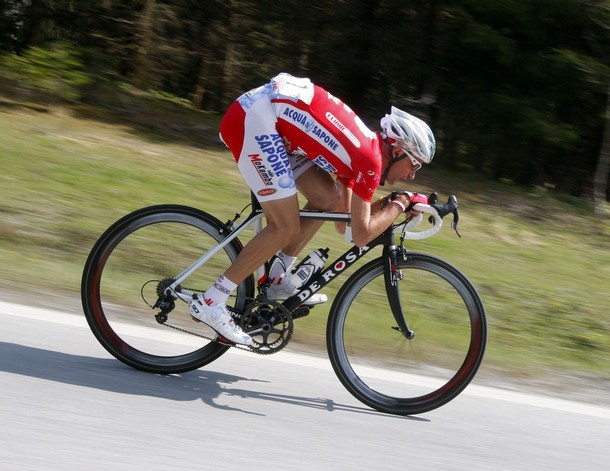
Think about reducing your frontal area, which is also known as the surfaces that the wind will hit, when you go into the aero tuck. Bring your head down as low as it will go and still allow you to see the road. Never look down to get more aero; always look at where you’re going. Bring your arms and legs in as close to your frame and torso as they will go. To start, put your hands in the drops and bring your elbows in. As you get more comfortable, you can move your hands to the tops of the bars right next to the stem. This is a move that sacrifices a little control because it’s harder to maintain stability if you hit a bump and you’re also away from your brake levers but when your goal is maximum speed, you are not thinking of slowing down at all. It is also a bit harder to steer with your hands so close to the stem, although at the speeds you are hoping for, most of the steering comes from your body.

Where to Sit on the Seat

While learning how to tuck on a road bike, you should make sure that you are sitting on the nose of your saddle, much like a time trial position. It will allow your body to rotate forward easier than if you’re positioned on the back of the saddle. This is because it opens your hip angle and moves your thighs down out of the way.

Additional Stability

For additional stability, grab the top tube with your knees. This is also a great tactic to counter any speed wobbles you may get at any time at high speed. It gives you another point of contact and control while you are descending at blinding speed.

How To Tuck on a Road Bike With The Super Tuck

The final addition to knowing how to tuck on a road bike is the super tuck. For the fastest version of the aero tuck, you move from sitting on the saddle to sitting on the top tube in front of the saddle. This is a last ditch attempt at additional speed. It further reduces your frontal area but it also reduces your control of the bike dramatically if you need to brake, turn, accelerate, or absorb a bump or pothole. Some riders are able to pedal while sitting on the top tube but it’s doubtful that it will add any speed. If you are going fast enough to require any form of aero tuck, you are likely going to spin out the biggest gear you have. It has to be a very high stakes situation for you to go into a super tuck. Think staying away to win a race. Otherwise it is not worth the risk in most situations.

Recovery While Tucked

An additional benefit of aero tucking is that it you gives you a chance for complete recovery while achieving maximum velocity. Opportunities like this are rare in a competitive environment. When you reach the bottom of the descent you will be ready to start smashing again, whether it is to bridge back to a group up the road or to keep building a gap to the riders behind you.

The Take Away

Like any skill that you would like to master, the key is practice. It is especially important with learning how to tuck on a road bike because it is a high-stakes activity; one small error can lead to catastrophic results. But once you master the aero tuck you will be hooked. Every descent will become a challenge to break your all-time speed record. Go and try it. You will have some exhilarating results but always make sure to stay safe. 

What Are Oval Chainrings? Should You Use Them?

April 26, 2016 by Josh Friedman

oval chainrings

Oval chainrings have been around since nearly the advent of chain driven bicycles. The concept is simple; the chainring is at a larger radius when you are at a stronger portion of your pedal stroke and at a lower radius at a weaker portion. But does it actually make a rider faster or more efficient? Or is this another gadget designed to separate you from your money?

Myriad of Claims with Oval Chainrings

The claims are myriad with oval chainrings: it’s easier to turn over a higher cadence, your lactic acid production will be lower, you will access your stronger pedaling muscles while resting your weaker muscles, your overall power will increase (7-10% according to Osymetrics!). If it sounds too good to be true, it usually is.

Notable Results on Oval Chainrings

There have been a few notable results on oval chainrings in the last few years. The two biggest results to date are Bradley Wiggins winning the Tour de France in 2012 and Chris Froome winning in 2013 and 2015. Both rode for Team Sky, a team that is known for its search for marginal gains. Since that Tour victory, Wiggins has switched back to round chainrings. The truth is that people have won all sorts of races on all sorts of equipment with dubious benefits. There is a psychological edge if someone believes in the equipment they are on. If a rider believes that oval chainrings give a boost in performance, they may ride with a bit more confidence in their abilities. People have lucky socks. Why not have lucky chainrings too?

“These are people that are racing for their income. Teams would be clamoring for them because they need to get the best results possible for their programs to continue.”

An argument from some proponents of oval chainrings is that it is much easier to manufacture round chainrings and that is why we don’t see more oval chainrings on bikes. This isn’t the case anymore, though. Oval chainrings are readily available. If the benefits are what they claim to be, we would see many more professionals on oval chainrings. These are people that are racing for their income. Teams would be clamoring for them because they need to get the best results possible for their programs to continue. This is not the case; a few riders are riding oval chainrings because they feel that it’s what’s best for them. There is plenty of off-label equipment in the peloton but there are not a lot of oval chainrings out there.

Research on Oval Chainrings

There have been few peer reviewed research studies on oval chainrings. The Journal of Sports Science and Medicine published an article in May 2014 with the results of a test on twelve elite male cyclists. They tested for blood lactate, power output, and oxygen consumption with no discernible differences. The oval chainrings did not produce a scientifically significant enough difference over the round chainrings in a maximal sprint test to put the results outside the margin of error. Another claim is that oval chainrings allow for a lower metabolic cost than round chainrings which the study also found not to be true.

Another peer reviewed study from December 2010 tested cyclists in a 10 kilometer time trial. This study also found similar power output and rate of perceived exertion between round and oval chainrings. It also found that heart rate was statistically significantly higher with the oval chainring versus the round chainring which is contrary to the claimed benefits of oval chainrings.

Additional Research

This January 2004 test also did not find conclusive benefits to oval chainrings. They measured ventilation, oxygen uptake, carbon dioxide output, respiratory exchange ratio, and heart rate with no statistically significant differences between round and oval chainrings.

Installing Oval Chainrings On A Bike

The first hurdle to trying out oval chainrings is to get them working properly on a bike. Every front derailleur on the market is optimized to work with round chainrings. Some oval chainring manufacturers provide shims to move the front derailleur rearward to match the derailleur cage with the curve of the chainring. It will help with shifting but the chainrings themselves are optimized for their bio-mechanical claims, not shifting performance. Furthermore, there should also be a chain catcher on the front derailleur to keep the chain from dropping off the inside.

Shifting Performance Compromised

Thinking about your shifting performance in the heat of a critical moment is not ideal. Will the chain flawlessly go up to the big ring right at the crest of the hill? Will the chain fall off to the inside just as the big climb starts? Couple that with the cost of an oval chainring being on par with the best shifting round chainrings and the benefits become negligible. Nobody ever blamed losing a race on chainring shape but they certainly have on poor shifting performance.

Power Data Discrepancies

A lot of riders have a lot of data from their crank-based power meters. Oval chainrings change the angular velocity of the crankarms, thus changing the power transmitted to the strain gauges, yielding different power numbers than if the same person was pedaling round chainrings. All of that accumulated data (which is very useful for long-term training) is rendered useless. It’s almost as if the data is from two different people; one on round chainrings, one on oval chainrings.

The Take Away

Oval chainrings are a divisive subject. Supporters point to physics to support their claims of greater power through lower effort. Peer reviewed experiments show the opposite and that the benefits are negligible at best. There is no question that the mechanical operation of the bike will suffer. A finely tuned bicycle with round chainrings will always shift better than the same bicycle with oval chainrings. Switching round for oval chainrings will also make years of power data useless for comparison. But if it gives a rider a mental edge, it all may be worth it.

Freewheel vs Freehub

April 23, 2016 by Wade Shaddy


There’s always been controversy and confusion about the difference between a freewheel and a cassette. It’s because the two terms are often used interchangeably, causing cyclists to waste time and effort when attempting to order parts or perform work on the bike. Knowing the difference from a  freewheel vs freehub or cassette is also knowledge you should know if you’re into older bikes.

freewheel or freehubFreewheel vs Freehub – Thread Differences

One of the main difference is that freewheels typically have a threaded hub. Bikes equipped with cassettes do not have a threaded hub, but instead, slip onto the hub with splines. But the differences, without getting too technical — go deeper than that.

The Freehub

Around 1980, the cassette replaced the conventional threaded rear hub. Not to be too confusing, but cassettes run what is referred to as  a freehub. This newer style hub works so well that they have  replaced the traditional freewheel and have become the new standard for contemporary road bikes. One of the major differences between a freewheel and a freehub is the location of the coasting mechanism.

Inside a Freewheel

On a freewheel, the coasting mechanism is built into the gears or cogset. “Freewheel” refers to the gear cluster as a whole, with the coasting mechanism inside.

Inside a Freehub

On a freehub, the coasting mechanism is part of the wheel’s hub. The gear cluster is a unit with non-moving parts, and is referred to as a cassette. The cassette slides into place onto the freehub body and is held in position by a series of ridges, or splines, and locked in place using a cassette lockring.

Installing a Freewheel

Installing a freewheel is simple, because you don’t need any tools.  Just use your fingers to screw the freewheel on the hub, as if you were screwing on any type of lid. The tightening happens when you ride the bike up a short hill. You can feel the freewheel slip forward slightly as it tightens. A strong rider pushing a freewheel mile after mile can tighten threads to such a high degree that the freewheel can be difficult to remove.

Tandem Bikes

If freewheels are used on a tandem bike, the combined power of two riders makes freewheels extremely tight. This is where grease is so important when installing a freewheel on any bike. Always apply it to prevent the freewheel from over-tightening to such an extent that you can’t get it off eventually.

Freewheel Gears

The majority of older freewheels have replaceable, interchangeable sprockets that come off in one piece. Newer freewheels use splined sprockets and you need only unscrew one or two outer sprockets, and slip the others off. In the old days it was a common bike-shop service to replace or add custom gearing to freewheels with any desired combination of sprockets.

The Ratchet

The ratchet mechanism — the thing that allows you to pedal backwards — is located on the cogset with freewheels. The ratchet mechanism on a cassette is located in the freehub.

Cassette and Freehub

One big advantage of the cassette and freehub design is that when you wear out your sprockets, or want to use different gear ratios, you can unscrew the cluster or cassette, and replace it with a different one.

Cassette Replacement

The sprockets, cluster, cogset or cassette are commonly sold as a set. The gears in cassettes are held together by three small rivets, making it easy to install. These bolts or rivets are there to aid with installation and make it easier to keep the sprockets and spacers in the correct order and position when they are removed from the freehub ratchet body.

How it Stays Put

The majority of cassettes use a threaded lockring to hold the sprockets onto the Freehub body via the splines; a special splined tool fits the notched hole in the lockring. The lockring has a normal right-hand thread; turn clockwise to tighten it. To remove the lockring, you need to turn it counterclockwise, but due to the ratchet, the cassette will freewheel, so you need a chain whip to hold the cassette while you loosen the lockring.

Identify It

It’s a safe bet that if you’re using a bike made after about 1980, that your running a cassette, freehub design. Older bikes with 7 gears or less typically use a freewheel; most contemporary bikes with 8 gears or more use a cassette and freehub, although there are some 7-speed systems in use. The different appearance of a freewheel and a freehub is not completely noticeable to the average cyclist when comparing Shimano systems, which are in the majority.

Subtle Differences in Appearance

If you’re still not sure what you have on your bike, it’s somewhat possible to ID it by how it looks. Freewheel axles are typically recessed slightly into the axle. Cassettes are typically flush with the face of the gears, and you can see the splines, appearing as the rays of the sun around the perimeter. Freewheel axles may also show splines, but not as many as a cassette, and are recessed into the body deeper, around the axle itself, not the gear like a cassette.

Where Freewheels are Used

Freewheels are still in use on kid’s bikes and some department store bikes. You might still find freewheels on adult bikes under about $500 and single-speed bikes. Freewheels are also used on BMX and single-speed mountain bikes, both high and low-end. The quality level of most replacement freewheels is for the most part equivalent and they are considered somewhat generic.

Older Bikes

You might think twice about trying to update an older freewheel-equipped bike with a cassette. The best advice is to stick with the freewheel. It’s much easier to find older freewheel assemblies than it is to find dated cassettes that work with your older bike.

How To Remove A Cassette

April 22, 2016 by Adam Farabaugh

remove a cassette

Changing a cassette can be daunting. There’s only one way to remove it and it requires two, sometimes three, tools working in unison to successfully remove a cassette. Once you know how to do it though, it’s easy. Hopefully you don’t have to remove a cassette too often but when you do, you’ll be able to do it with ease.

How a Cassette Works

From the outside, a cassette just looks like a cluster of gears sandwiched together as one piece and that it’s just part of the wheel. The typical cassette however is made of a number of cogs that have key cutouts on them which line up and engage the underlying “freewheel” on the hub of the wheel. These cogs are then held in place by a threaded lockring that tightens down onto the smallest cog holding everything in place. Removing this lockring is how you remove a cassette.

When Do You Need to Remove A Cassette?

You shouldn’t have to remove a cassette very often but if you are racing or riding over vastly different terrain such as steep hills followed by a day of mostly flat, you will want to change the size cassette you are using for optimal gearing. Also, depending on how much you ride and how often you change your chain, you may need to replace your cassette from time to time.

Tools You Need

The first tool you are going to need is a Cassette Lockring Remover Tool. This engages the lockring on the cassette which must be turned counter-clockwise to loosen.


PARK TOOL FR-5 Cassette Lockring Remover Tool
Cassette Lockring Remover Tool


The second tool you will need is a Chain Whip or Sprocket Remover Tool which holds the cassette in place while you turn the cassette remover tool otherwise the cassette will just spin backwards.

Chain Whip/ Sprocket Remover

The third tool you will need is a wrench to turn the cassette remover tool. They also make an All In One Cassette Remover Tool which can be handy.

All in one Cassette Remover Tool

How To Remove a Cassette

  • Now that you have all the tools you need, first remove the skewer from the wheel.
  • Second, take the wheel and while standing, place it in front of you so the cassette is pointed out, away from you.
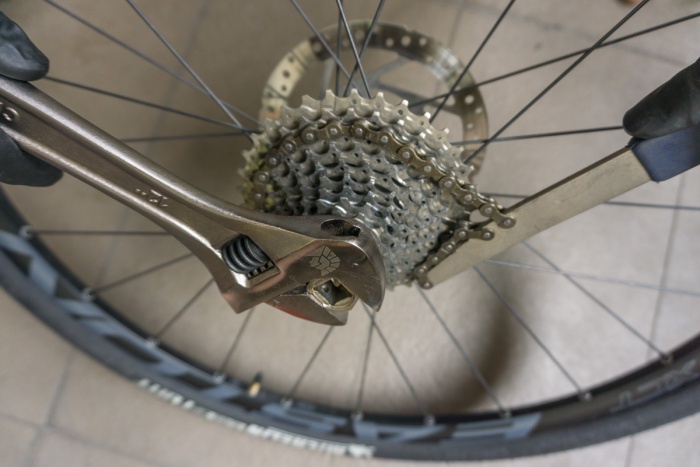
  • Thirdly, insert the cassette remover tool into the groves on the end of the cassette. Make sure the groves are fully engaged otherwise you can strip it. If you have the all in one Remover, place the handle so it’s at the 9’o’clock position if you’re looking at the wheel from straight on, or your right as you look down. If you’re using a wrench, place it on the Cassette Remover Tool in this position as well.
  • Fourth, place the Chain Whip so the loose chain end is drapped over the gears with the hanlde at the 2’o’clock position, your left as you look down. This will then hold the cassette in place when you turn the lockring otherwise it will just spin.
  • Finally now that you have everything engaged and in the correct position, press both handles down. This will turn the lockring counter-clockwise while holding the cassette in place.
  • Doing it this way gives you the greatest mechanical advantage in case of an extremely tight lockring.
  • Once the lockring is removed you can simply slide the cogs off from the freewheel.
  • Note: if any of the cogs become stuck, you can use a straight-bladed screw driver to insert between the cogs and rotate slightly to loosen it. Do it gently however and rotate around the cog if needed to avoid bending any teeth. Be advised on some cassettes as some of the cogs, if not all on newer ones, are once piece meaning it won’t slide off with the twist of a screwdriver. You’ll have to do it behind the next cog or whole cassette even.
  • And make sure you don’t loose the spacer behind the cogset if your wheel has one. If it does, use it behind the new cassette as well.
removing a cassette
You would be standing on the opposite side of this wheel looking down at it with the tools in these positions. Then just press both down to loosen and remove the lockring.

How To Install A Cassette

  • When installing a cassette, first make sure the spacer behind the cassette is installed if there was one when you removed it.
  • After that, take the cassette and line up the keys on the inside of the cassette with the groves on the freewheel of the hub. There is one larger one that makes it easy to line up. If you’re not sure which way is forward for the individual cogs, try it one way and if it doesn’t go on, flip it around. It will only go on one way. With the individual cogs also, make sure there is a spacer in-between each one.
  • Once you have all of the cogs on, double check that the last cog is lined up and engaged with the groves. It’s easy to have this one a bit off. It needs to be fully engaged and lined up with the other cogs.
  • Now take your cassette remover tool and insert it into the lockring. Add a dab of grease to the threads on the lockring to ensure it doesn’t seize. Now thread the lockring onto the end of the cassette by hand being sure not to cross-thread it. It should go on smoothly and straight. If it doesn’t, take it back off and try again. Turn it down snug by hand to avoid cross-threading.
  • Now take your wrench and put it on the Cassette Remover Tool, or if you have the All In One Tool, simply turn the handle clockwise to tighten down the lockring. It doesn’t need to be overly tight, just snug enough that it’s not going to come loose. If you over tighten this, it is easy to strip the threads.
  • Re-install the skewer and you’re good to go.

Things to Watch Out For When You Remove a Cassette

  • Stripping the grooves on the cassette lockring that the Cassette Remover Tool is engaged with.
    • Make sure the Remover Tool is pressed in all the way while turning.
  • Having the Chain Whip slip off the gears.
    • Place the loose end of the chain on a larger cog to engage more teeth.
  • The cogs are stuck after the lockring is completely removed.
    • Insert a screwdriver in-between the cogs and twist gently.
  • The cogs not reaching all  the way out to where the lockring can engage.
    • You forgot a cog or spacer or even the spacer behind the cassette close to the spokes if your wheel had one when you first removed the cassette.
  • The cogs reach too far over the end of the freewheel and the lockring won’t engage.
    • All of the cogs may not be properly aligned and pressed together or you took an extra spacer or cog from the cassette you just removed and accidentally installed it.
  • Cross threading the lockring when re-installing it.
    • Install it by hand first to make sure it’s lined up properly before tightening it with a wrench.

Cycling With A Baby – Safe Options

April 16, 2016 by Wade Shaddy

cycling with a baby1
Strangely enough, online research is relatively scarce on cycling with a baby because in the United States it’s not that common when compared with the rest of the world. In the US, it seems that what research there is, is focused mostly on negative assumption. Most of the good information comes from international sources where cycling with babies is widespread. While child carrying devices for cars are heavily regulated and tested, the bicycling industry is a whole different animal in the US. With that being said, cycling with a baby can be done safely when common sense is applied.

Cycling With a Baby

The Dutch point of view is that cycling with a baby is safe and it’s perfectly natural to cycle with a newborn. Brits are more likely to cycle with a baby at nine months old. Americans tend to wait until their baby is at least one year old. Bike shops and cycling organizations typically advise you not to cycle with a baby until they are nine months old and are able to sit up. One year old is better but it is generally agreed that nine months is a safe age to start cycling. The the BSHI recommends not putting a child in a helmet before the age of one year.

Do You Feel Safe

But if you cycle with a baby before these recommendations, are you a bad parent? — Absolutely not. Look at bicycle commuters, women, and men who travel only by bike. It’s going to be fine, and sometimes necessary. Regardless of what your friends, family, bike shops, and helmet manufacture’s advise, the most important thing is that you believe your baby is old enough and that you feel safe with them on board. If you don’t feel safe or sure, then it’s definitely too soon to go cycling with a baby. But if you’re desperate to cycle with your baby and feel that it would be safe to do so, then there’s no reason why you shouldn’t.

What Officials Say

Chris Juden, senior technical officer at the CTC, the national cycling organization, who was also on the committee responsible for the European Standard on bicycle child seats (EN14344), sums up cycling with a baby like this:

“It’s not so much a question of age, but of physical development. Infants vary a lot as to the age at which they are able to sit up unaided (as in sitting in the middle of the carpet, playing with toys etc), which is when they are ready to ride in the usual sort of a bicycle child seat. Usually this is about nine months. And the length of your cycling with a baby between stops, should not exceed the length of time they are content to do that.”

Pediatrician Advice

If you are unsure if you should be cycling with a baby yet, ask your pediatrician if your child is ready.

Fear of Falling

One of the most obvious worries of cycling with a baby is the possibility of falling. Many parents may argue that they rarely fall off of their bike. The probability of having a fall while cycling with a baby on board is low – much lower than falling down the stairs while having a baby in your arms.

Three Options

Three types of baby carriers typify whats out there; rear-mount seats, front-mount seats, and trailers.

Rear Mount rear mounted baby seat

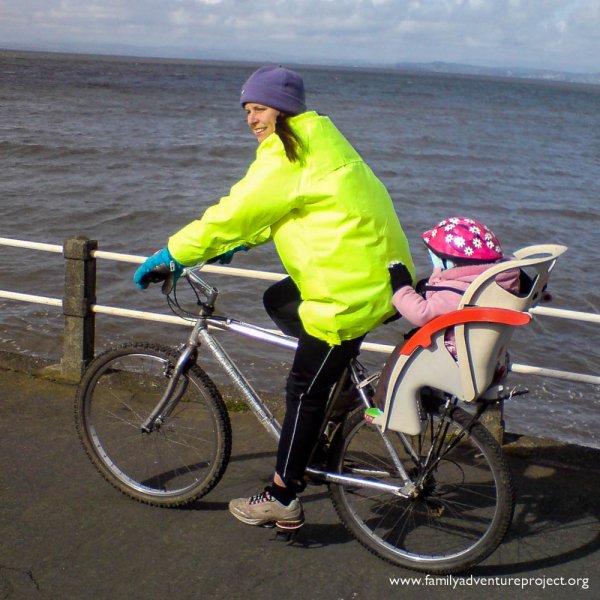
Back or rear-mounted seats are the most widely used bike seats for cycling with a baby. They fit over the back wheel and usually have a high back and raised sides, leg guards, and a harness. Here’s a few characteristics:

  • Pro: Babies are well supported if they want to sleep.
  • Pro: You can use the seat to carry shopping items when you don’t have your baby on board.
  • Con: Carrying extra weight on the back of the bike at this height can make your bike top heavy.
  • Con: You can’t see what your child is up to while you’re cycling and your baby can’t see much.

Front-Mount front mount baby seat

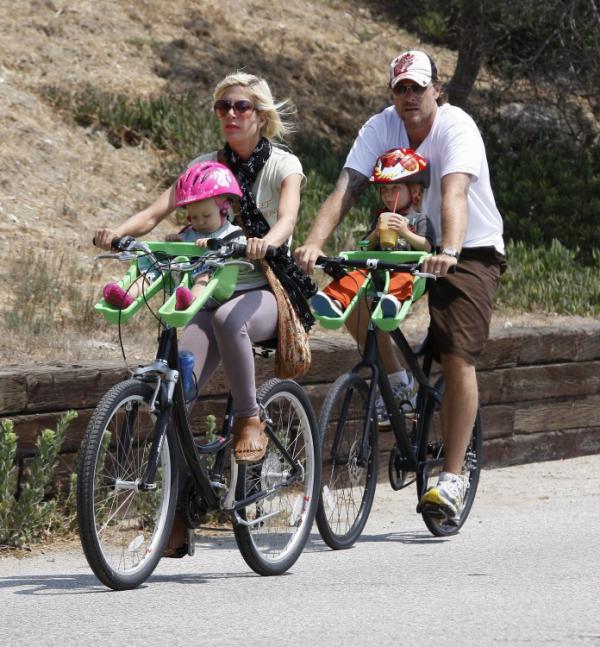
Your baby sits in front of you. You place your arms around the seat to steer. Because your arms have to go around the seat and your vision of the road needs to be clear, front-mounted seats are more minimalist than rear-mounted seats.

  • Pro: Closer contact with your child and your child is always visible to you.
  • Pro: More fun for the baby.
  • Con: Can affect the bike’s maneuverability with the weight on the handlebars.
  • Con: Although popular in mainland Europe, front-mount seats can be hard to find.

Trailers to Tow child bike trailer

Trailers behind your bike are often attached to your bike via the rear axle and skewer. The are better as your child grows older as there is less support for a baby.

  • Pro: Lower to the ground, safer in a falling accident.
  • Pro: Easier to handle, more maneuverable as it doesn’t affect the steering or leaning of the bike.
  • Lots of cargo space when carrying or not carrying a baby.
  • Con: Difficult to see for motorists.
  • Con: Wider, can hook on objects, stick out into traffic.
  • Con: Heavier, harder to stop.

The Verdict on Safety

All types of bicycle carriers have safety issues. The American Academy of Pediatric’s position is that it’s preferable for a child to ride in a bicycle trailer rather than a front or rear-mounted bicycle seat. The reasoning: “because a young passenger on an adult’s bike makes the bike unstable and increases braking time.” The AAP says that a mishap at any speed on a bicycle-mounted seat could cause significant injury to a child.

One More Option

The Taga 3 in 1 Baby Stroller Bike 3 Wheel 16” Pushchair Carrier Folding Mother’s Bicycle is yet another option to take a look at. This version of a bike with carrier is genius and should be considered for cycling with a baby.

Tips For Cycling With a Baby

  • It’s not recommended taking a baby for a ride who can’t support his or her own head – or until the time he or she can wear a cycling helmet. Your baby should also be able to sit well unaided.
  • Wearing a cycle helmet reduces the risk of head and brain injury. You and your child should always wear a helmet when on a bike.
  • Check with the bike retailer that your bike is suitable for use with a particular type of child seat or trailer as not all bike designs are suitable with baby seats.
  • Make sure your seat has footrests to prevent your child’s feet from becoming caught in the spokes of the wheel.
  • Child seats for cycles should carry BSI number BS EN 14344:2004 to comply with required safety standards.

Weight, Safety, and Bike Integrity

The added weight factor can also cause parts on your bike to fail or come loose. More than one headset, stem, or handlebar fitting has come loose under this kind of load. It will cause you to go down hard should this occur. Always, always double check critical bolts before cycling with a baby on board your bike. Practice getting on and off the bike and riding with the carrier before heading out into traffic with your baby.

Choices and Choices

The type of carrier you choose also depends on where you live. Do you live in a small town?  A city with lots of hills?  Miles from your daily destinations? Lots of traffic? Having an idea of how far you will ride on a typical day, on what routes, and over what terrain will help you decide on the right bike set-up and route that keeps you safe and out of traffic. Rural roads, country roads, bike paths, and designated bike lanes are all good choices from a safety standpoint. Try to avoid rugged or torn up potholed road surfaces.

Never Trust Anyone

Never place your trust in other vehicles. Never trust that a vehicle sees you. You never have to be hit by a car when cycling with a baby. Practice and think about riding defensively. Always have a plan B or a way out of any dangerous situation. Think.

An Extensive Safety List

Accidents or incidences where your baby is hurt because you go cycling with a baby does not have to happen. The Royal Society for the Prevention of Accidents has prepared this extensive list to help keep you safe when cycling with a baby on board.

Future Cyclists

Cycling with a baby introduces your child to the joys of cycling at an early age while you also get to get out and ride where you otherwise might not be able to. What more could you ask for.
« Previous Page
Next Page »
  • Facebook
  • Tumblr
  • Twitter

Latest Articles

JOIN Cycling: A New Training Platform for Cyclists

May 27, 2024 By Eric Lister

cold exposure

The Benefits of Cold Exposure for Cycling & Life

June 13, 2023 By Eric Lister

hill climb

The Ultimate Hill Climb Training Guide

May 31, 2023 By Eric Lister

shoulder pain cycling

How to Treat & Avoid Shoulder Pain While Cycling

April 12, 2023 By Eric Lister

psoas stretch

The Importance of the Psoas Stretch for Cyclists

April 6, 2023 By Eric Lister

cycling neck pain

The Ultimate Guide to Cycling Neck Pain: Causes and Solutions

March 21, 2023 By Eric Lister

Useful Info

  • Contact
  • Finally, A Global Cycling Club That Is Focused On Community And Love Of Cycling!
  • Privacy Policy
  • Share Your Story!
  • Terms And Conditions Of Use
  • Welcome to I Love Bicycling
  • What Happened When I Stretched Every Day For a Month

Recent Posts

  • JOIN Cycling: A New Training Platform for Cyclists
  • How to Hang Bikes in Your Garage: 4 Inexpensive Options
  • Gravel Bike Vs. Road Bike: Which One Is Better For You?
  • The 6 Types of Mountain Bikes & How to Choose the Best One for You
  • What Is a Touring Bike Good For? 5 Benefits We Know You’ll Love

Search I Love Bicycling

Connect with Us

  • Facebook
  • RSS
  • Tumblr
  • Twitter

Copyright © 2026 · Magazine Pro Theme on Genesis Framework · WordPress · Log in