• Training
    • Injury Prevention
    • Training Tips
  • How To
    • Bike Fit
    • Gear
  • Nutrition
    • Nutrition Tips
    • Weight Loss
  • Repair
  • Reviews
  • Stories
    • Funny Stories
    • Jokes
    • Quotes
    • Videos
    • Funny Videos

I Love Bicycling

I Love Bicycling is a website that is geared towards cycling for beginners with road cycling tips, training articles, nutrition tips, weight loss, how to’s and bike repair articles.

How To

  • Bike Fit
  • Gear

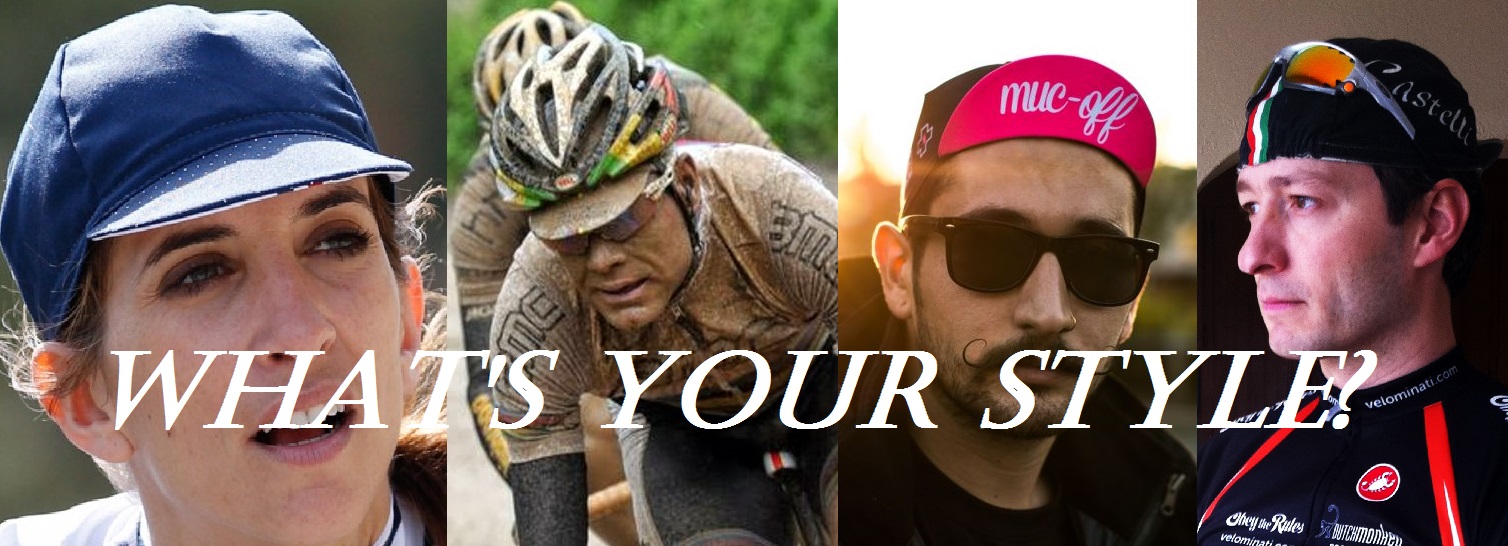
How To Wear A Cycling Cap – Silly Look Or Pro

June 12, 2016 by Adam Farabaugh

cycling cap

A cycling cap is for both function and style. It keeps the sun out of your eyes as well as the rain, keeps your balding head from baking, and keeps you warm on a chilly day. It can complete the look to a cyclist particularly when wearing other cycling gear and are involved in a cycling related activity. There are a host of ways to wear a cycling cap both with a helmet and without. Wearing it at inopportune times or wearing one the wrong way leaves you looking silly and potentially not getting the best benefit from one.

First – When Is It Appropriate To Wear a Cycling Cap?

The first thing to know about wearing a cycling cap is that it’s not always appropriate to wear one. If you are riding, are about to embark upon a ride, are mid-ride, say at a coffee shop, or have just finished a ride, then it is appropriate to wear one. Away from cycling you should never wear one. The best style is the one that both looks good and is functional. A cycling cap away from the bike is not functional and you’re just trying to look the look. Also, if you are riding and it’s hot out, you should not be wearing a cycling cap. For one it will be too hot and two it’s not functional unless it is to keep the sun off your balding head or out of your eyes.

Getting The Right Fit

The second thing you need to know about wearing a cycling cap is that you need to get the size right. It is not one size fits all even though a lot of hats say that. The cap should not be sitting high up on your head nor all the way down to your ears. It should sit slightly above your ears and have a small bit of loft above your head but not too much. Additionally, you will want a brim size that correlates with the size of your hat; not too big but not too small either. And make sure it’s flat or has a slight curve when you wear it. It should not have any folds or creases in it and it should always, always sit straight on your head whether forward or backwards.

Styles Without a Helmet (When NOT Riding)

When you’re not riding, say you just stopped at a coffee shop or are stepping onto the podium, there are a number of ways to wear a cycling cap. Again, this is when you’re not riding. While riding you should always have a helmet on regardless of if you think it’s stylish or not. In some countries in particular (Belgium for example) cycling caps are worn a lot as a style while riding instead of a helmet. Don’t do this. You don’t want to pay for it with your life.

Forward-Brim Down

cycling cap forward brim down

This first style is largely the original and intended way to wear a cycling cap. It has the brim over your eyes which is what the cap is made for. If the cycling cap doesn’t sit straight on your head, it will be pretty apparent in this position so make sure it’s straight.

Forward-Brim Up

cycling cap forward brim up

This is the more hipster/I’m cool look. There is no real reason for the brim to be flipped up unless you’re riding, but you wear a helmet while riding so this is a non-issue. This look can also be used while riding with a cycling cap under your helmet and when you stop and take your helmet of, at a coffee shop for example, you flip it up.

Backward-Brim Down
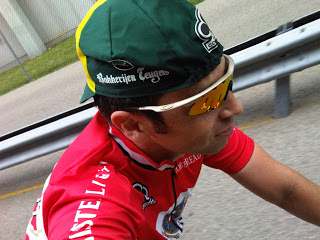
cycling caps backwards down

The guy in the photo above is riding with a cycling cap and no helmet. This is a no go but he has the backward-brim down look down to a T. This is the I’m cool look but not too cool, just out doing my thing the way I want. With a backwards hat, one thing to make sure of is that the hat isn’t to high up on your forehead or too far down over your eyebrows. Again, having the right size hat will help to get the fit right.

Backward-Brim Up
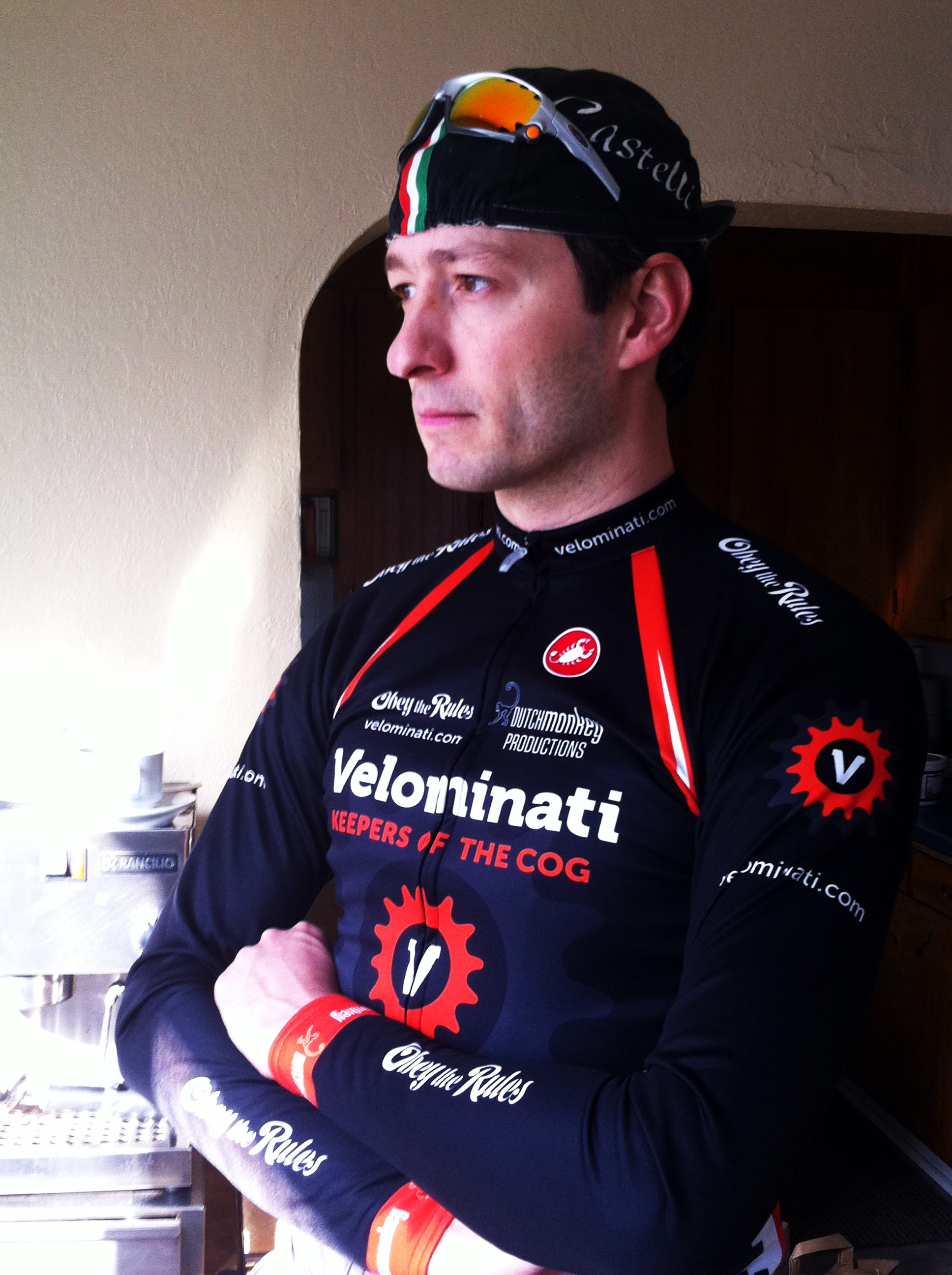
cycling cap backwards brim up

Velominati is the maker of the cyclist’s Rules. This is a list of 95 rules for a cyclist to follow and properly wearing a cycling cap is one of them (Rule # 22). Wearing a cycling cap backwards with the brim tipped up is an I’m cool and serious look. Again, make sure the cap is at the proper spot on your forehead and make sure it’s straight.

Wearing a Cycling Cap With a Helmet

The above ways to wear a cap are for function since you’re cool and only wear a cap without a helmet when your’re not riding. The function of the cycling cap comes into play (besides of course to keep the low hanging sun out of your eyes while enjoying an espresso or beer) while riding. The first thing with wearing a cap under your helmet is that it will keep your head warmer. A perfect addition to your kit when it’s around forty to sixty degrees F (4.5-15.5 degrees C). Outside of this you’re going to be either too cold or warm with one.

Forward-Brim Down
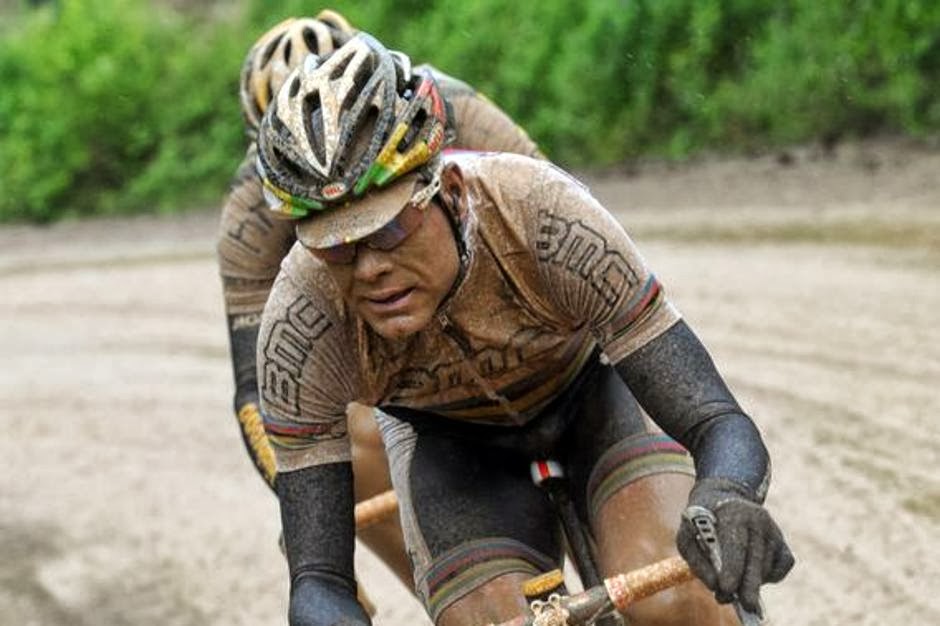
cycling cap forward down with helmet

The forward-brim down look while riding is the most functional style on the bike. It will keep the rain (or mud in this case in the photo above) and wind out of your eyes as well as bugs if you are riding into the evening. Also, if you’re riding at night, it is a great way to keep the blinding headlights from the other direction out of your eyes.

Forward-Brim Up
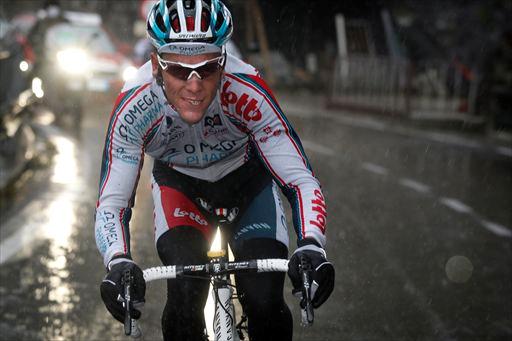
cycling cap forward up with helmet

With the brim-down style above, if you wear the cap too low or you’re head is tucked down to stay more aero, you are likely going to have a difficult time seeing the road ahead. When this happens, flipping the brim up will give you the sight you need while keeping the brim right there to flip back down when needed. This style can also be used when wearing a cap to keep your head warm.

There Are No Other Ways

The above ways are the only way you should ever wear a cycling cap. It should never be worn sideways or partially crooked on your head. It should only be worn while cycling or around a cycling situation such as before, after, or during a ride but off the bike.

The Fall of The Cycling Cap

Cycling caps used to be the thing you would wear while cycling because at first, helmets didn’t yet exist and weren’t worn like they are today. Today, cycling caps are much less popular and tend to be worn by the more serious cyclist and the ones attempting to capture the style while getting function out of them. Cycling caps are worn less all the way up to the professional ranks even. Podiums are often outfitted with riders wearing baseball caps with their sponsors on it instead of cycling caps. However, there are some that try and preserve tradition and keep wearing them.

cycling caps downfall
Most professional podiums have gone the way of the baseball cap. However, some try to preserve the tradition and the look.

A Few Cycling Caps to Consider

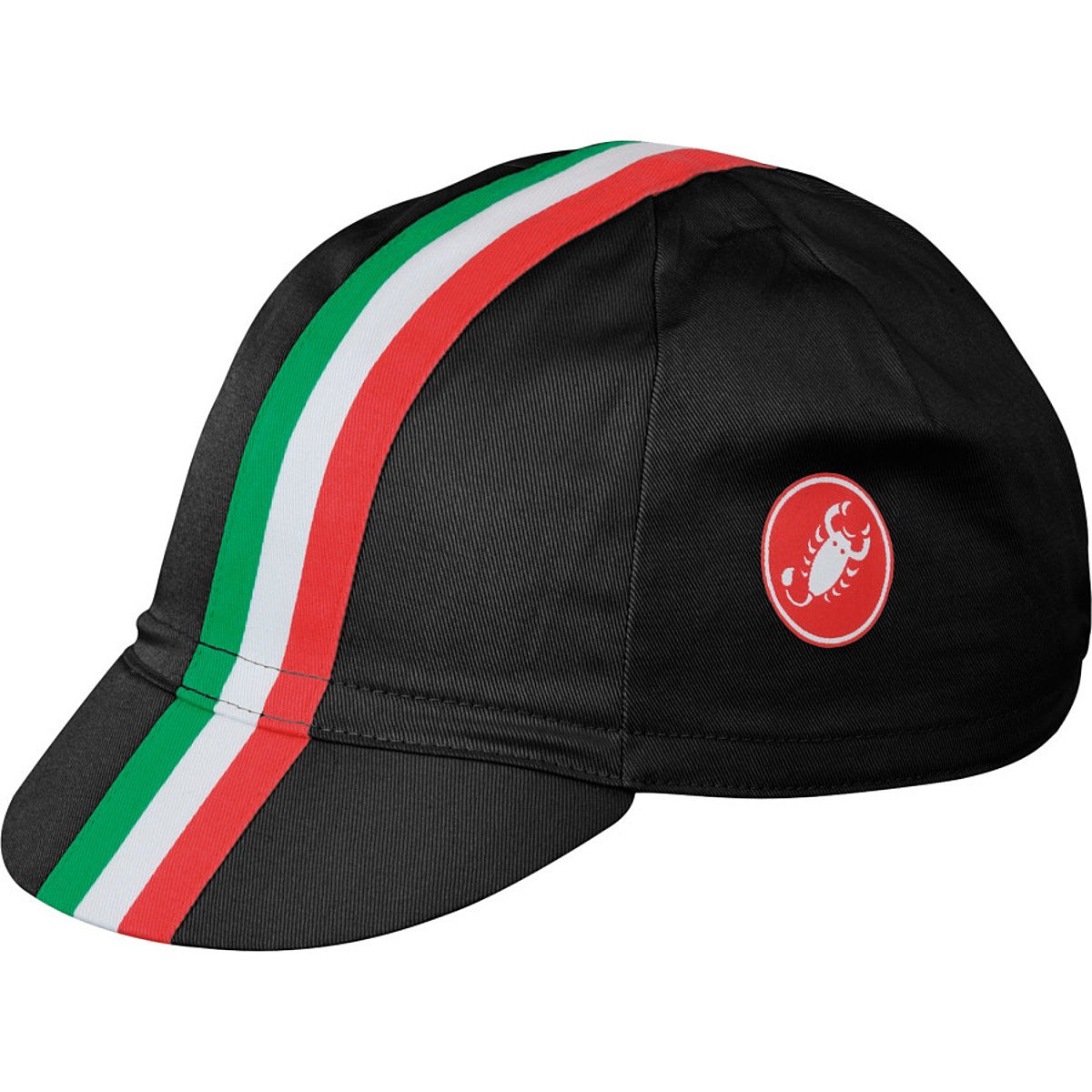
Castelli Retro Cap -$14.99
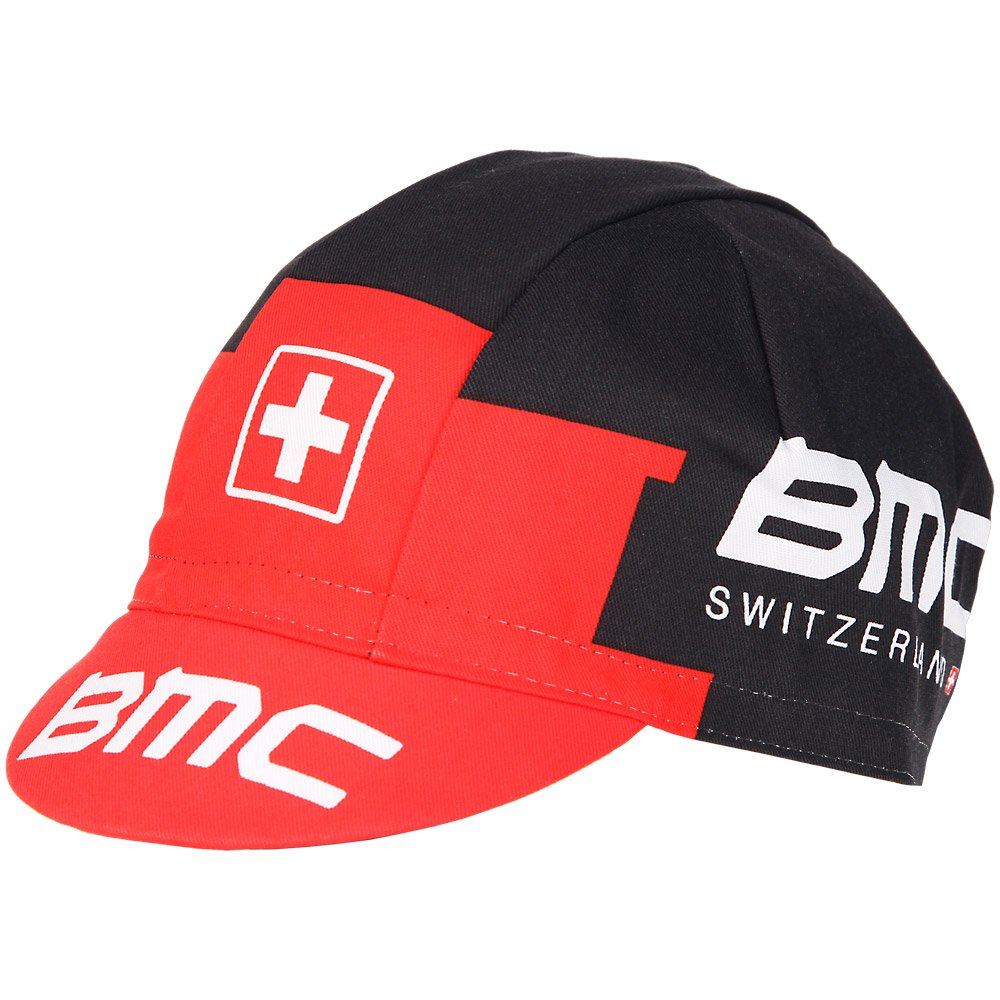
Prestige Team Cycling Caps – $15.99
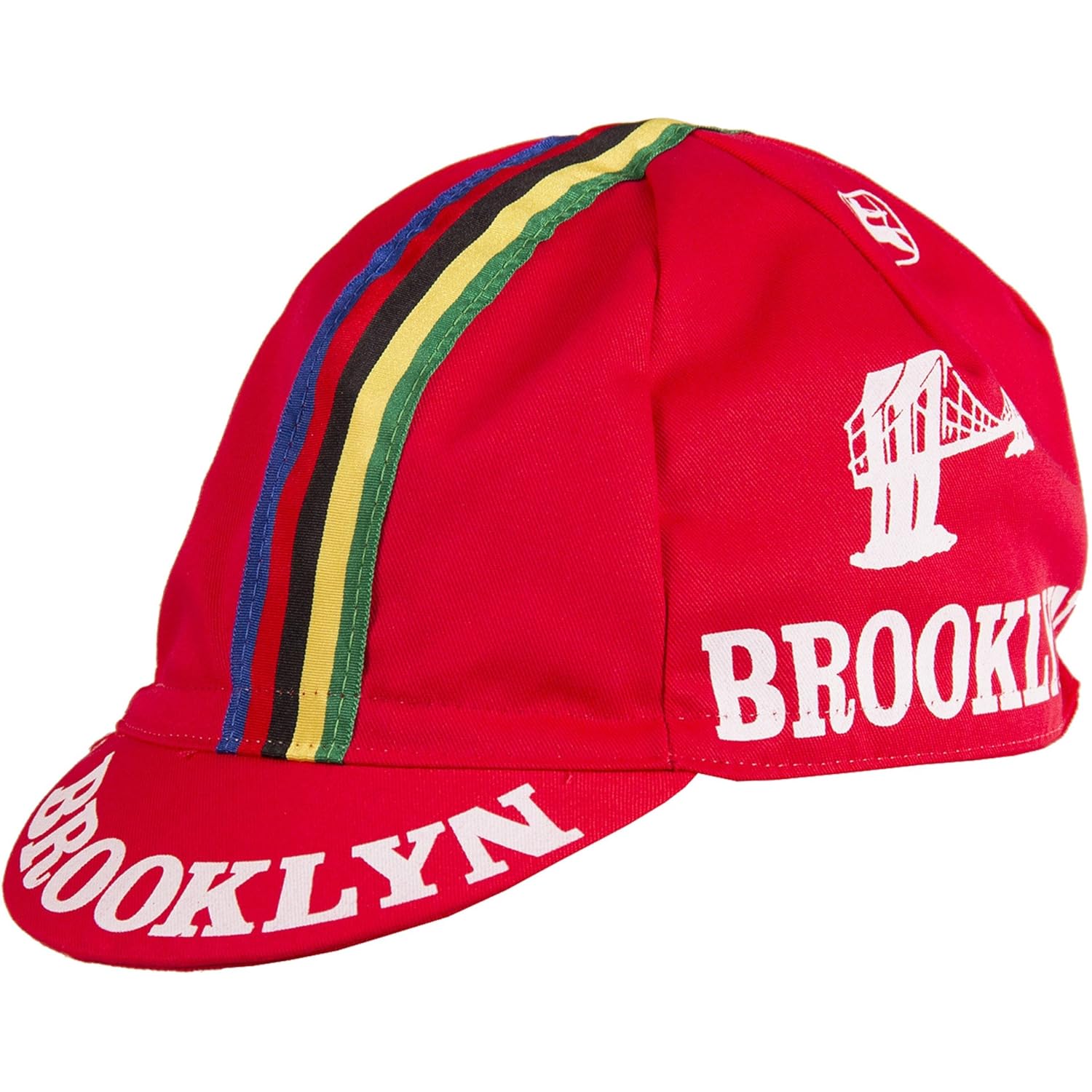
Girodana Brooklyn Cycling Cap – $12.80

How To Cycle Better-10 Tips For Improved Riding

June 6, 2016 by Adam Farabaugh

how to cycle

Learning how to cycle better will come with time and trial and error but who wants to go through all of that. These 10 tips will improve your riding whether you just climbed on a bike or have been riding for years. If you’re an expert at them all, then go teach them to someone new to riding. I’m sure you learned some of these things from someone like yourself.

1 – Practice Your Skills:

In an empty parking lot or grassy field set up a course that has you making tight turns as well as turns at speed. In a parking lot, use the lines to set the inside and outside of the turn so if you miss-judge the turn you can simply ride over the lines. Feel your tires grip the ground and how you’re leaning to the inside. Remember to keep your inside pedal up so it doesn’t hit the ground. Also, practice braking. Pick a point, such as a parking line, and approach it with speed and see how quickly you can stop in front of it.

2 – Improve Your Bike Fit

Whether you’re cruising around town or out on a long weekend ride, having a good fit on the bike will make a huge difference in how you ride. You won’t be avoiding a ride on your bike or causing yourself an injury from say, a miss-aligned saddle. Make sure the big things are right such as your saddle and handlebar height along with the little things like how your feet are positioned on the pedals.

3 – Get More Comfortable

Having a sore butt riding is a very common thing when first starting to ride or coming back from some time off even if you have a good fitting saddle. After a few rides however getting your butt gets used to the seat, you should no longer have any discomfort. If you are still, make sure you have the right size saddle for yourself as well as style. Also, make sure your hands and feet are also comfortable while riding. Nothing should be uncomfortable as if it is, riding won’t be as enjoyable.

4 – Ride Up Hills

Many riders avoid hills at all costs. Don’t be one of them. Riding up hills gives you, your legs, as well as cardiovascular system a good stress. It will make you a stronger rider not only on the hills but the flat also. Also, if you’re pressed for time, riding uphill gives you more bang for your buck for a workout.

5 – Upgrade To Clipless Pedals

Riding around town the grocery store or to work a short distance away on platforms pedals won’t give you much of an issue. However, if you’re riding more than this, upgrading to clipless pedals will give you greater efficiency as well as ease of riding along with ensuring that your foot is always properly positioned on the pedal. Hills will also become much easier because you can fully engage the pedal all the way around.

6 – Achieve Your Optimal Cadence

Newer riders often tend to pedal at low cadences. This is inefficient as well as hard on your joints and muscles. Pedal at a higher cadence of around 90 rpms to place less load per pedal stroke on your legs. You will also be able to ride longer with ease.

7 – Shift With Grace

Poor shifting is the result of two things; misaligned components or a rider with a lack of know-how. If it’s the former, you might be able to fix it yourself or if not, take it in to your local bike shop. With the latter, it’s an easy fix, just practice. You will want to shift one gear at a time and when you do shift, take a little bit of pressure off the pedals so the chain moves smoothly. Also shift before you need to. If you’re going into a steep hill, shift before you’re on it otherwise it’s going to be difficult to do so. Also remember not to cross chain; when you’re in a small gear up front and a small gear in the back or a big gear up front and a big gear in the back. Try and keep the chain running in a straight line by using the big gears closet to the rear wheel when in a smaller ring in the front and when going faster and using a larger gear in the front, use the smaller cogs in the back.

8 – Improve Your Level Of Comfort In Traffic

Bike riding often involves riding on roads for many which involves traffic. It can be nervous-some and stressful if you don’t know what to do. Find a friend if you can who is an adept bike rider and learn how to do it properly. Also, always be aware of what’s going on around you and ride like you’re invisible.

9 – Properly Hydrating and Fueling

Cycling takes a lot of energy and if you don’t eat and drink properly before and during a ride you’re going to pay for it. Plan ahead and eat before you’re hungry and drink before your thirsty.

10 – Ride More!

The single best tip to getting better at cycling is simply to ride more. The more you ride the more you will learn and adapt. You will get better at handling your bike, your fitness will improve, hills will become easier, and you’ll simply be more comfortable on the bike.

Knowing How To Cycle Better Will Improve Your Enjoyment On A Bike

If you can improve in these ten areas, your riding will be significantly more enjoyable. You won’t have the pains-in-the-butt (pun intended) hassles that can encompass riding, or at least as many of them. Riding in any regard still has its hurdles but that’s part of the draw.

How To Get Your Spouse Into Cycling

June 1, 2016 by Josh Friedman

how to get your spouse into cycling

Your spouse has expressed interest in your hobby; cycling. Or maybe you think it’s a good idea to introduce your spouse to cycling so you can spend more time together and stay in shape together. You want to make it as smooth as possible to ensure that they will like riding almost as much as you do. Knowing how to get your spouse into cycling will help to give you the best shot at getting them to ride.

How to Get Your Spouse Into Cycling

Think about what made you love cycling. Was it the freedom of exploring new places? An interesting way to get exercise? The challenge of cresting a big climb or the thrill of a screaming descent? Share your own excitement with your spouse. It could be contagious.

Giving practical reasons for cycling may be an additional avenue of encouragement. You can spend more time together, get more exercise, and save on gas money if you commute around town together. There are a lot of reasons why you think cycling is a good idea. Explain them patiently to your spouse. A few of them may stick.

No Pressure

Nobody likes pressure, especially if the person is hesitant to do something. Try to make your spouse’s introduction to cycling as pressure free as possible. Just because you like cycling does not mean your spouse will as well. Only encourage riding if your spouse is showing an interest. Cycling has a steep learning curve, especially if the new rider does not have a lot of fitness coming from another activity.

Do Not Smash

When you finally do get your spouse on the bike, do not smash the pedals and show off. Chances are your spouse already knows that you ride a lot and are fit. You do not need to show them by leaving them in the dust. Ride next to them and let them set the pace. You keep an eye on traffic and other potential dangerous situations so they can just focus on riding and enjoying it.

Functioning Bike and Kit

Before investing in a nice bike, perhaps borrow or rent one that fits your spouse properly to make sure your spouse likes riding. Once your spouse shows enthusiasm and is ready to have their own bike, make sure they have a bike that fits properly and is in good working order. Nothing can ruin an experience like bad equipment that is uncomfortable or prone to failure. The same goes for clothing. For short rides early in their experience, regular gym clothes can be fine, but once they start riding more than a short jaunt, they will need at least cycling shorts to keep their sit bones happy.

When they really get into cycling, they will have earned everything you have already earned; a full cycling kit and a bike fit. It will only add to their enjoyment.

This Should be Fun

You ride for fun. So should your spouse. Think of ways to make it fun for them; remember also that what is fun for you might not be fun for them. The opposite may be true, but you are the one that needs to be patient while introducing the sport.

Being Right is not Always Right

It will not help your cause to argue over small points, unless they are safety related. Let your spouse explore the sport and make mistakes if they insist. They will ask you for help when the time comes. You do not need to be there for every hiccup along the way trying to save them or point out their errors when they are not asking for your advice. Give them a few pointers starting out and then let them find their way.

Find a Good Route/Destination

To give the full cycling experience, don’t just take your spouse on any old ride. Plan your route and pick one that isn’t too long, is scenic, doesn’t have many climbs, and isn’t too technical of a trail if you’re mountain biking. Also, a great option is to include a stop at someplace they like such as a coffee shop, a cafe for lunch, perhaps a farmers market. It will help to make it not just about riding but enjoying the time together going places.

Different Interests is OK

If getting your spouse into cycling fails, it’s okay. You gave it a shot. Don’t push it again. Maybe they’ll come back around in the future to try it again on their own. It’s okay to have different things you are excited about. There is room for both of you to do various activities and meet back in the middle to share your lives together.

Let us and the I Love Bicycling community know in the comments below how you got your spouse into cycling and how you maintain it.

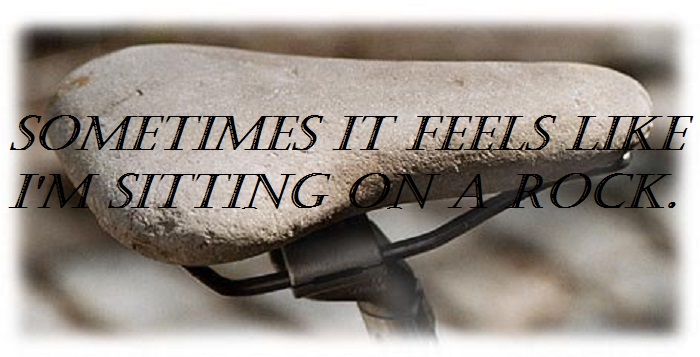
Why Do You Get A Sore Butt Biking?

May 31, 2016 by Adam Farabaugh


You went out for your first ride in quite awhile this past weekend. It was great. You enjoyed the ride and the places you went except for one thing; you had a sore butt while you were riding and then after as well.

sore butt

Getting a sore butt while riding can be a barrier that keeps you from riding more. Beginner cyclists all the way to experienced riders will get a sore butt from time to time. There are a few different factors that contribute to it and with the right know how, you can be riding without your butt hurting at all before you know it.

Why You Get A Sore Butt When You First Start Riding

When you first start anything new that is physical, your body takes some time to adapt to it and before it’s fully adapted, you might be a little sore in areas. The same premise applies to riding and sitting on a bike seat. Your butt wasn’t made to sit exclusively on a bike seat but the human body is pretty adept at adapting to things.

Getting Your Muscles And Tendons Used To A Bike Seat

When you first start riding and sitting on a bike seat, your muscles and tendons within your butt won’t be used to the pressure. This will happen regardless of if you have the right fitting seat or not. This can even happen if you have been a regular rider in the past but took some time off. Everything will take a ride or two to tighten up and get used to the demands of supporting your body weight on a bike seat.

Why Your Butt Hurts Cycling Even After You Have Been Riding

After a few rides, if your butt is still hurting, you likely have something wrong with the bike seat. It would be wise to make sure these things are correct before you suffer through a few rides to see if your butt will just adapt to the seat.

Saddle Width

When you sit on a bike seat your sit bones are what supports you. These are the two bony knobs that you can feel on the bottom of your rump. You want these to be firmly positioned on the saddle so they can support your weight. Some people have sit bones that are narrower together while some have wider sit bones, particularly women. If the sit bones are off the sides of the saddle, you are going to have a very uncomfortable ride as your sensitive area between your sit bones will be taking all of your weight. You need to find the width of your sit bones and find a correlating saddle. Your local bike shop will likely have an assortment to try.

Saddle Softness

In addition to having the right width saddle, you will also want a saddle with the correct hardness. It is a bit contrary to what you might think, but a super soft saddle is going to be uncomfortable. This is because your sit bones press down into the foam allowing the sensitive area between your sit bones to receive a lot more pressure. You want a saddle that is soft enough for your sit bones to be comfortable when absorbing your weight but not too soft that they press down into the saddle displacing your weight to other more sensitive areas.

Saddle Shape

The shape of your saddle can also influence how sore your butt gets while riding. Some are longer and thinner while others are shorter and fatter. Typically, the wider your sit bones, the more you will want to go with the latter. In addition, saddles can come with cut outs that relieve even more pressure off your sensitive areas. Some people like these and can’t ride anything else while some riders prefer not to use them. Try them out and see what works best for you.

Saddle Position

Another factor that can contribute to a sore butt while cycling is how your saddle is positioned. If it’s too far forward or backwards, you might be sitting on the wrong part of the saddle. You should be sitting on it where your sit bones firmly come into contact with it. Getting a bike fit can be a good idea to ensure this if you are riding long distances. Additionally, if your saddle is tilted to far forward or back, you can experience a sore butt. Typically you want to start with a level seat and see how it is. If you need to, you can adjust it a degree or two up or down but ideally you shouldn’t have to.

How To Prevent A Sore Butt Biking

So now that you know what causes a sore butt, how do you prevent getting one? For the first few rides after not riding for awhile, you will probably have one. But after that you should make sure you don’t so you can keep riding ’till your hearts content.

The Right Saddle

Getting the right saddle for you, as outlined above, is the most important part of not getting a sore butt while biking. If you don’t have the right saddle for you, you simply are never going to be comfortable on the bike and aren’t going to fully enjoy the ride.

Cycling Shorts

If you are riding longer distances, you should most definitely have a pair of cycling shorts. These are skin tight shorts that have a chamois, or padded material, in them to give you a softer, more comfortable ride.

Chamois Cream

If you experience chaffing, using chamois cream will help alleviate as well as prevent your discomfort. If it’s super hot out and you are going to be sweaty or if it’s raining, chamois cream is a very good option.

Standing Frequently

Regardless of if you’re riding around town or out for a long ride, you should stand and take some pressure off your butt every now and again. This will help ensure that there’s a constant blood flow and that your butt muscles don’t get too tight. Any time the road goes uphill is a good time to get out of the saddle. If you live in a flat area, you will have to make a conscious effort to get out of the saddle on a regular basis.

Glasses Fogging Up? – Here’s How To Fix It

May 29, 2016 by Adam Farabaugh

glasses fogging up

You’re about a minute or two into a climb and you’re just starting to get uncomfortable. You unzip your jersey a bit to get a bit more air. Your glasses then start to fog up allowing you to see basically nothing. You’re focused on the effort and now you’re irritated with your glasses. You try wiping them with a finger and now you can’t see anything. With your glasses fogging up it can be irritating as well as dangerous. Keeping them from fogging up in the first place can save you a lot of hassle.

Reasons For Glasses Fogging Up

Glasses fog up because they are at a lower temperature than the heat emitted by your face. When the air from your face hits your glasses, the lower temperature causes the air to condensate, or in simpler terms, the moisture in the air turns to a liquid on your glasses. This is physics and the amount at which it occurs is determined by temperature differences and how much moisture is in the air which is also increased because of the moisture coming off your face as well.

Cold Outside

The colder the temperature outside, the easier it will be for your glasses to fog up. The large temperature difference can cause your glasses to fog up even if there is a lower amount of moisture in the air.

Humid Outside

A high humidity, such as when it’s foggy, causes droplets of water to form at lower temperature differences which is why your glasses almost always fog up in this scenario.

Raining

When it’s raining is similar to when it’s humid out. There is a lot of moisture in the air and the rain on the glasses themselves can also cool them down slightly upping the temperature difference.

Glasses Too Close To Your Face

In combination with all of the factors above, having your glasses too close to your face decreases the amount of air flowing through to dissipate the heat thus resulting in a higher likelihood of you glasses fogging up.

How To Stop Your Glasses From Fogging Up

Unfortunately with cycling you are always going to run the risk of fogging up your glasses. It’s simple physics but there are things you can do and use to lower the likelihood that they fog up.

Using Your Breath or Saliva and Wipe

The simplest and easiest way to lower the amount that your glasses fog up is to fog them up with your breath and then wipe them clean with a clean fabric such as your shirt. (Jersey material is often a poor choice but t-shirt material, cotton, works well.) If your glasses tend to fog up a lot you can take this one step further and spit on them, mainly the inside of the lenses. Wipe them with your finger to evenly disperse the saliva and then wipe them clean.

Anti-Fog Wipes or Spray

Another solution to glasses fogging up is to use anti-fog wipes  or spray. These use compounds that prevent the forming of water droplets on a surface. They are easy to use as long as you have them readily available. Chances are you won’t have them in your jersey pocket should you need them mid-ride.

Shaving Cream

A home remedy to glasses fogging up is to use shaving cream. Simply put a light dab on your finger and rub the lenses and then wipe clean with a clean fabric.

Positioning Them Further From Your Face

In addition to the above fogging solutions, you should also position the glasses so they sit a bit further away from your face. This will allow air to flow more easily between your lenses and skin to lower the heat difference. Some glasses are better for preventing fogging while some are worse. When looking for a pair of glasses, make sure they fit your face well and aren’t too close. A good option is to get a pair with an adjustable nose piece to position them where you want them.

Taking Them Off

In some conditions keeping your glasses from fogging simply isn’t going to happen. The best solution here is to simply take them off as they start to fog. This will keep them from completely fogging over as well as you wiping them to keep them clear which then leaves marks for you to look through the rest of the day. Then when you’re done with the climb, just put them back on.

Having glasses fogging up can be a real pain but with these solutions you should be riding with much better vision whether prescription glasses or just sunglasses.

Kids Bike Sizing – How To Get The Right One

May 26, 2016 by Josh Friedman

kids bike sizing

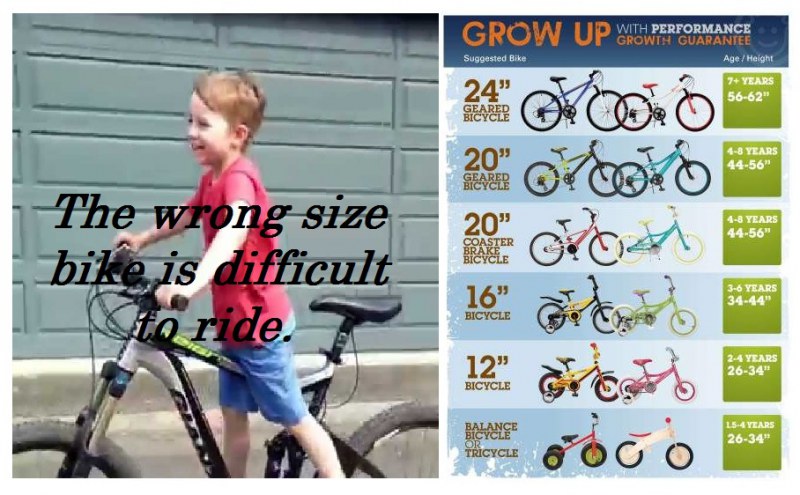
A well-fitting bike for a kid is critical for them to enjoy the ride. The right bike will let them pedal easy, start and stop effectively, control the bike, and be confident putting their feet down. Just like a bike for adults, the bike should be an extension of the kid where riding becomes second nature. But kids bike sizing can be tricky – there are so many sizes. Here is a breakdown.

Kids Bike Sizing

If you have not started your kid on a balance bike, read this. It covers balance bikes and how you should set them up. Once your kid is ready for a bike with pedals, this is what is available in kids bike sizing:

Bike Size Age Height
12 inch 2-4 26-34 inches
16 inch 3-6 34-44 inches
20 inch 4-8 44-56 inches
24 inch 7+ 56-62 inches

The measurement refers to the diameter of the wheel as opposed to the size of the frame with adult bikes. Generally, frames are similarly sized within a wheel size, but there is no standardization. This range will cover your kid’s growth and is available from nearly every major brand. There are bikes that exist outside of those sizes, say fourteen and eighteen inch, but they are uncommon. It is best to avoid them because of the difficulty you may find trying to get a spare tube or tire.

Age Ranges

The age ranges are approximate. The best way to get kids bike sizing right is to get them on the bike. Their confidence and ability are more important factors than their chronological age. For a novice rider, choosing a slightly smaller bike will benefit them more than going to the next size up because it will allow them to have more control over the bike and give them the security of putting their feet on the ground easily. For a more experienced rider, you can get a bike that is slightly larger as they will have the skills to ride it.

Kids Grow Quickly!

If you are a parent reading this, you already know how quickly kids grow. They will grow out of their bikes quickly – even as quickly as once per year with some. If you have a few kids, it is easy to pass down the bikes. Getting a new bike for each size can turn into an expensive proposition especially if you factor in the years of use and then the resale value after they are all done. Another great avenue is to get a used bike. It is very rare that a kid will ride a bike into the ground so used bikes are often great deals.

Bike Shop Bikes

It is worth it to get a brand name bike that was originally sold in a bike shop. It will be of higher quality and designed by a person that understands human dimensions, making it easier for your kid to ride. While wheel sizes might be the same, the difference between a bike shop bike and a department store bike can be staggering. The bike shop bike will have a frame that is appropriately sized to the wheels while the department store bike will have whatever was the cheapest way to get the bike out for sale, even it does not appropriately fit anyone. In addition, things can and will break on any kids bike but they will be sure to happen much quicker on a department store bike.

Gears or No Gears For a Kids Bike

Smaller kids bike will come with one gear as kids need to be more focused just on the riding and not yet have to worry about shifting. On 20-inch bikes you will start to find gears, often with a grip-shift. If a kid is just learning to ride while on a 20-inch bike, make sure the bike is in a good, easy gear and don’t have them shift. Once they are comfortable riding, then teach them how to shift.

When To Graduate From Coaster Brakes

Smaller kids bikes will come with coaster brakes which is where you pedal backwards to stop. This is used because of the simplicity for kids and the difficulty in pulling a brake lever with smaller hands. As you get to 20-inch bikes, they will switch to standard hand brakes as kids hands will be of sufficient size to safely operate a brake.

Doing the Best for Kids

Give them the bike that will allow them to control the bike like a natural. It will increase their love of riding and increase their skills and confidence. Kids bike sizing is relatively simple when you realize there are only four sizes and that you need to get them on the one they can control the best.

Steps To Take When Getting Kids Into Bike Riding

May 21, 2016 by Josh Friedman

getting kids into bike riding

Give a kid a balance bike and the kid will take care of the rest. That is all you need to do when getting kids into bike riding. But you came for an article, so you will find the nuances below.

Steps To Take When Getting Kids Into Bike Riding

Just like any other situation in life, you try to give your kids the best opportunity you can. Fortunately here, the best thing you can do, the balance bike, is also the easiest thing you can do when getting kids into bike riding. Kids will take it upon themselves to learn, with their own motivation. Additionally, it will save your back. There is no bending over holding your kid up.

Start with the balance bike as early as your kid shows interest. Put a helmet on their head and give them a flat place to start out. They will take it from there.

The Balance Bike

The bike does not need to be complicated. There are purpose built balance bikes on the market made out of all sorts of exotic materials – wood, light alloys – but they’re not necessary. Kids will not ride the balance bike for very long. If they are motivated, they will be riding a bike with pedals quicker than you think so spending a lot of money on a balance bike isn’t worth it.

An economical option is to take a full kids bike with gears and remove some or all of the drivetrain (the crankarms, chainrings, chain, and cassette on the rear wheel) to make it into a balance bike. It saves you from getting a separate balance bike and regular bike later. The easiest way is to remove only the pedals. Remember that the non-drive side (left-side) pedal is reverse threaded.

If you are mechanically inclined, you can remove the entire drivetrain – the bottom bracket, the crankarms, and the chain. Put them away (where you will remember them). Once your kid is ready to ride, put the drivetrain back on the bike.

Self Motivating and Self Teaching

Kids figure things out. Give them the opportunity to do something and they will get to it when they are excited about it. This is a key to remember when you are getting kids into bike riding. The first steps of using a balance bike are as easy as walking and holding on to the handlebars. There is nothing beyond providing the bike and space necessary from you.

Once they get used to walking around with the bike, they will start moving faster. Eventually they will glide; that is picking up one or both feet and moving further with each step than they would have if they were walking or running. Finally, when the gliding is so good that they can cruise without putting feet on the ground for longer stretches, they are ready for a bike with pedals. That was easy, right?

Adults Put the Limitations on Kids

Kids come mostly inhibition-free. Let them explore and experiment with the balance bike. Try not to put your own preconceived ideas of what riding is or how to do it on them. It will muddle the learning process. That said, be available when they have questions and the occasional scrape. In riding, it is not if you will fall, but when you will fall.

Training Wheels Are A Hindrance

Pedaling a bike is straightforward. Steering a bike is relatively straightforward. They are both very easy to learn. Relying on the rotation of the wheels to keep you upright is not straightforward and it is the hardest component of learning to ride a bike. Training wheels on a kids bike keeps them from learning and trusting the physics of the bike. They also complicate steering because it does not allow them to lean to steer the bike. Leave the training wheels off the pedal bike. They will already have the balance down from the balance bike and will likely take off on the pedal bike.

Remember, it is Easy

Getting kids into bike riding is easy. Give them a balance bike and let them figure it out. Once they do and are flying around, graduate them to a pedal bike. They will take off with this as well and your job, at least with learning to ride, is done.

How to Wear Cycling Sunglasses

May 14, 2016 by Adam Farabaugh

how to wear cycling sunglasses

Are you wearing your cycling sunglasses the correct way? Or do you just put them on whichever way and go? Knowing how to wear cycling sunglasses properly will prevent your from looking like a noob and look like an experienced cyclist. Functionally is there much difference? Not really but ease of use and style are two big sticking points as a cyclist.

The Wrong Way to Wear Cycling Sunglasses

Putting your sunglasses on the inside of your helmet straps is incorrect. This often happens if you put your glasses on before your helmet or if you slide them on close to your head, typically with two hands. Wearing sunglasses this way looks goofy along with being more difficult to take them off when needed, say going up a long climb.

The Correct Way to Wear Cycling Sunglasses

The correct way to wear sunglasses while riding is to strap your helmet on and then put your sunglasses on over the outside of the straps. This looks best as you can see the outside of the glasses. You can also put them on and take them off much easier and with one hand as they won’t be constrained by the helmet straps depending on how tight you have them.

How to Wear Cycling Sunglasses – Some Exceptions

There are some exceptions to this rule however. If you are wearing prescription glasses that rest more snugly to your head and wrap around the back of your ear, you should wear them on the inside of your helmet straps. Wearing them on the outside could flex them and break them not to mention look funny. Also if you have sunglasses that have thin temples (the frame arms) such as a pair of glasses like Aviators, you should wear these on the inside or your helmet straps.

Visualizing and Mental Training For Cycling

May 13, 2016 by Josh Friedman

visualizing and mental training

Your heart pounds, your palms are getting sweaty. The strange thing is that you are not even on your bike. You are sitting at your desk daydreaming. Or you might be laying in bed at night and staring blankly at a newspaper in front of you. In each instance you are scheming how you will win the big race. And in each instance you feel a physiological response to the images in your mind. Visualizing and mental training for cycling is a powerful tool to prepare your mind for the task ahead. Cycling is mostly mental as its your brain that’s telling your body what to do. Preparing every aspect of yourself for a race will help you to achieve maximum results.

See Your Success

There is a connection between your mental preparedness and physical success. By visualizing critical moments in a race and how you will react to them, you are visualizing and mentally training an important component of your cycling repertoire. While a race will often not play out exactly as you had envisioned it, it is still important to see yourself succeeding, making the winning attack, reacting to the big attack, dropping everyone on the big climb or taking the best lines in a time trial. Your brain will have felt the feeling once before so it then knows how to react in the critical moment.

Clinical Trials

There have been many clinical trials on visualizing and mental training in sports. A few are cycling specific, but there are lessons for cyclists in all of them. Most come to the conclusion that the brain thrives on envisioning physical tasks that are then put into practice with great success.

There is some great stuff from David Henderson’s Blog on some studies with athletes and their performances. One study broke down mental training versus physical training with Soviet Olympic athletes to find that the a 75%/25% mental to physical training yielded the best results. That’s quite surprising considering how much time athletes put into physical training. Another study showed on electromyography scans that the brain does not differentiate between visualization and physical training; if you see it in your mind your brain thinks it is doing the action. There is a payoff to daydreaming about your push to success.

Start Small

Practice visualizing and mental training with a segment of road that you already know. See it in your mind. Take the best lines through the segment. Put the power down where you really require it and recover when it is possible. Imagine yourself going faster than you ever have before on this familiar road . Then go out and ride that road. Did you feel the difference?

Time Trial as Laboratory

In a time trial, there are far fewer variables than a road race. It is rider versus the road and clock. It is also a perfect place to hone your visualizing and mental training skills. Pre-ride or drive the course so you are familiar with the turns and undulations. If you have a day or two to ponder it before the actual race, all the better. Take some quiet time to rehearse the race in your mind – again, taking the best lines, putting the power down and recovering in the appropriate sections. With the other racers removed from the equation, you only have to rely on your mind and the positive thoughts you put in place to ride a great race.

Mass Start Races

It takes some mental flexibility to visualize what is going to happen in a mass start race. Break the course into important segments – a tough climb, a tricky technical section, the finishing sprint – and imagine what it will be like in the thick of the race. Remember that you have to stay alert to the other racers around you; you may have to alter plans based on them. It is important to stay calm in that situation and rethink what the best course of action is at that given moment. It may even be helpful to visualize a situation that does not go your way which you then overcome – maybe a crash in front of you that you avoid or a field split that you must jump across. It will prepare your mind for unseen adversity.

Avoid Negative Thoughts

Keeping your thoughts positive will aid your visualizing and mental training. You do not want to envision failure; it will only lead to actual failure. Make an effort to keep your thoughts positive at all times to allow your visualizing and mental training to flourish. Look at adversity as an opportunity to overcome. Remember that if you are suffering, so is everyone else. That is a great time to put in the winning move. See the perfect race in your head, all the details, and how you execute everything perfectly.

How Often Visualizing and Mental Training Should Be A Part Of Your Preparation

There is a balancing point in visualizing and mental training for cycling as if you are constantly thinking about a race, it becomes a stressor and something you worry about. In the days leading into a race, take the time once or twice a day to visualize the race. Do it for anywhere from one to ten minutes. Some top-level athletes my say to do it even longer but once you are done thinking about it, stop thinking about it, especially if you are laying in bed trying to go to sleep.

Sleep!

The brain is a very powerful but also very energy intensive organ. Just like your muscles need recovery, so does the brain. This happens during sleep when the brain makes sense of what it experienced the previous day and rests active centers that it used during the day. A fresh and recovered brain in the morning will be ready to tackle the day’s challenges ahead – training sessions, visualization, racing, and everything else that comes your way.

Make the Effort

Cyclists put a lot of time and money into equipment and physiological training, but there are great gains available with mental training. Drawing a positive image of competition will allow you to reach and break barriers that were unimaginable before you started visualizing and mental training.

Cycling Field Test – Why and How

May 11, 2016 by Josh Friedman

cycling field test

Cycling field tests are a great way to track progress. Power numbers are great in a race but there are a lot of external factors that can influence how much the rider puts into the pedals. A cycling field test removes those factors; it is only the rider versus the road. The data that results is easily comparable with later tests with similar conditions.

Replicate the Situation

The most important component of a field test is that it is the same situation each time – the same road, the same terrain, the same time of day and weather (if you can control it), the same bike, and the same warm up. This way the only data points that change from the cycling field test are time, power, and heart rate. What you will use depends on the equipment available to you.

Setting Your Zones

Besides tracking the progress of your fitness, cycling field tests will give you data to adjust your training zones. If your zones are too low, training is too easy and you will not get stronger. If they are too hard, you will not achieve your training goals and have the potential for discouragement and burnout from pushing too hard. Appropriate zones will challenge you enough that it is hard but achievable.

Where to Test

The most important part of the location you choose is that you have at least twenty minutes of uninterrupted riding at high speed. It would be easy to do it indoors on the trainer, but then you may end up with zones that may not be a true reflection of what you are doing outdoors. Keep this in mind if you do decide to use a trainer.

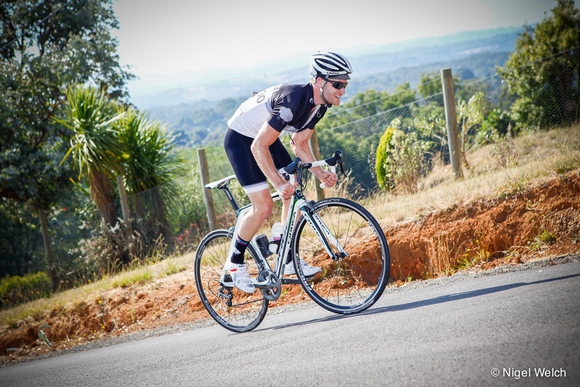
The second most important factor of location is that you can keep up a consistent effort. A big descent in the middle of an effort does not make for consistent power numbers. If you are lucky enough to live near a long climb, use it. It’s the best way to control external factors such as wind and it’s easier to maintain a maximal effort.

Warm Up!

Get in a good warm up. Starting a test on cold muscles and an un-primed cardiovascular system will only lead to misery and poor data from your cycling field test. Find a good warm up routine and stick to it before each test. It should be hard enough that you feel like you are working during the warm up but have plenty of energy left to tackle the test.

The Simple Test

The first of three cycling field tests is the easiest. All you need is that stretch of road, your warmed-up body, your bi,e and a stopwatch. Pick a favorite stretch of road and attack it, timing yourself each effort. Track your progress over time and see if your training is paying off.

The Heart Rate Test

If you have a heart rate monitor, this is the cycling field test for you. The only caveat is that you will need thirty minutes of open road, not twenty. Warm up well. At the start of the test, go into time trial mode. Do not go full gas from the start, but ease into the effort. After the first ten minutes, you should have reached your target pace and effort, which should be blindingly hard, but not so hard that you cannot finish off the twenty minutes.

The data collection comes from the last twenty minutes; you want your average heart rate only for that section of the test. That number is a very, very close approximation of your lactate threshold heart rate without getting blood drawn. Put it into a calculator and you will get your training zones.

The Power Test

The cycling field test with power is the most involved but it gives very interesting and comprehensive data. You must do each of the following efforts at full gas, with ten minutes rest in between: five minutes, 5 seconds, twenty minutes and one minute. The test will give you a normalized power that you can expect from a race effort. It will also show you where your strengths and weakness lie, especially when you track the data on this chart.

Keep in mind that the one minute power might be a bit lower than if you went out fresh and cracked off a huge one minute effort. In this order it simulates the finish of the race – you put in your time in the breakaway, now it is time to attack for the win. You will not set any power records in that situation, but you do need to do the best that you can.

To really get into the data, use a program like Golden Cheetah for analysis. It will also give you your zones, anaerobic capacity and whole host of other useful data. If you manage to track every ride with a power meter, Golden Cheetah or another similar program will be indispensable.

Putting the Cycling Field Test to Use

Try to test every six weeks or so during the training season. Your training zones will stay up to date and you will get the most out of your time on the bike. Track your progress and watch as you make big gains with more precise training!

« Previous Page
Next Page »
  • Facebook
  • Tumblr
  • Twitter

Latest Articles

JOIN Cycling: A New Training Platform for Cyclists

May 27, 2024 By Eric Lister

cold exposure

The Benefits of Cold Exposure for Cycling & Life

June 13, 2023 By Eric Lister

hill climb

The Ultimate Hill Climb Training Guide

May 31, 2023 By Eric Lister

shoulder pain cycling

How to Treat & Avoid Shoulder Pain While Cycling

April 12, 2023 By Eric Lister

psoas stretch

The Importance of the Psoas Stretch for Cyclists

April 6, 2023 By Eric Lister

cycling neck pain

The Ultimate Guide to Cycling Neck Pain: Causes and Solutions

March 21, 2023 By Eric Lister

Useful Info

  • Contact
  • Finally, A Global Cycling Club That Is Focused On Community And Love Of Cycling!
  • Privacy Policy
  • Share Your Story!
  • Terms And Conditions Of Use
  • Welcome to I Love Bicycling
  • What Happened When I Stretched Every Day For a Month

Recent Posts

  • JOIN Cycling: A New Training Platform for Cyclists
  • How to Hang Bikes in Your Garage: 4 Inexpensive Options
  • Gravel Bike Vs. Road Bike: Which One Is Better For You?
  • The 6 Types of Mountain Bikes & How to Choose the Best One for You
  • What Is a Touring Bike Good For? 5 Benefits We Know You’ll Love

Search I Love Bicycling

Connect with Us

  • Facebook
  • RSS
  • Tumblr
  • Twitter

Copyright © 2026 · Magazine Pro Theme on Genesis Framework · WordPress · Log in