• Training
    • Injury Prevention
    • Training Tips
  • How To
    • Bike Fit
    • Gear
  • Nutrition
    • Nutrition Tips
    • Weight Loss
  • Repair
  • Reviews
  • Stories
    • Funny Stories
    • Jokes
    • Quotes
    • Videos
    • Funny Videos

I Love Bicycling

I Love Bicycling is a website that is geared towards cycling for beginners with road cycling tips, training articles, nutrition tips, weight loss, how to’s and bike repair articles.

Training

  • Injury Prevention
  • Training Tips
  • Training Camps

6 Tips To Speed Up Post Ride Recovery

May 2, 2020 by Sarah Lauzé

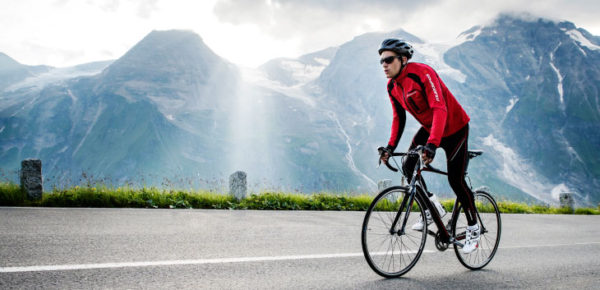
We get it, when you get home after a long ride all you want to do is collapse on the couch with a beer. There may not be anything wrong with that, but what you do after your ride can be just as important as the ride itself. If you miss the opportunity to give your body what it needs to recover, it can have negative effects in the long run. So here’s what you need to know about post ride recovery to bounce back from a hard ride feeling even stronger and faster.
6 Tips To Speed Up Post Ride Recovery

Cool Down

You may want to do a final sprint on your final segment home, but it’s important to take some time for a cool down. Stopping abruptly can cause blood to actually pool in your legs, so you’ll want to gently spin your legs and lower your heart rate for at least 5 minutes at the end of each ride.
Stretch & Roll

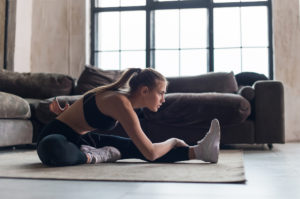
You may not have access to a massage therapist after every ride, but massaging your legs after a ride encourages blood flow to the muscle, pushing out waste products of muscle breakdown and aiding muscle recovery. Using a roam roller is like having your own personal massage therapist, as painful as it can be. Stretching your muscles in a way that returns them to their natural state of balance is also important to recovery. If you want to learn more about the best stretches for cyclists, check out Dynamic Cyclist for more information.

Hydrate 
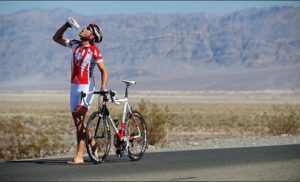
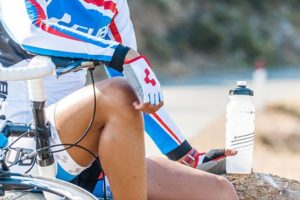
Dehydration can slow the recovery process, so be sure to drink up after a ride. Whether it be water or an electrolyte drink, be sure to replenish your body before reaching for that beer.

Have a Nap

A long ride is the perfect excuse to go for that afternoon nap. Sleep is one of the most important parts of recovery, as your body enters full relaxation mode. Whether it be having a 30 minute nap, or going to bed a little earlier that night, getting plenty of sleep will help boost your recovery.

Have a Meal 

Hard rides can eat through your carbohydrate stores pretty quick, so it’s important to replenish within an hour after your ride. A meal that is both carb-rich and high in protein is ideal to restock glycogen and speed up muscle recovery.

Hot/Cold Shower

Contrast water therapy (a fancy name for alternating between hot and cold) can help reduce inflammation and increase blood circulation to the areas that need it. Although the science hasn’t fully backed the method, there’s a reason why many professional athletes and coaches still swear by it.
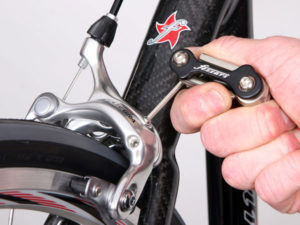
Routine Bike Maintenance: Make your bike last longer

April 29, 2020 by Sarah Lauzé

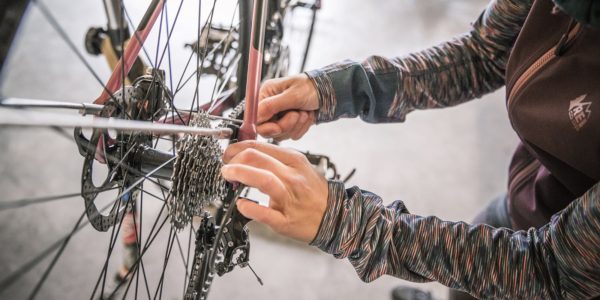
We all want our bikes to last us a lifetime, but we do have to give them a little love and attention to prolong their lifespan. Staring at your bike lovingly or tucking it into your bed at night may be tempting, but it won’t do much in making it last longer. Routine bike maintenance is the easiest way to ensure the financial and emotional investment you’ve put into your bike doesn’t go to waste.

Routine bike maintenance isn’t complicated, but it can take some dedication. When you’ve finished a long ride, you may want to just lean up your bike and go have a nap, but it’s better if you establish a post-ride routine that includes a little bit of TLC.

Routine Bike Maintenance

1. Keep it clean

It’s simple, but so important. Keeping your bike clean ensures your bike not only looks great, but also keeps all it’s part working flawlessly. Obviously you aren’t going to clean your bike meticulously after every ride, make sure you do whenever you ride in the rain or mud.

In addition to that, but put your bike on a regular cleaning schedule. At the very least clean it once per month. It obviously depends on how often you ride, but if you want to keep your bike in smooth working condition, once a month is a bare minimum. For some tips on how to clean your bike, check out “How To Clean Your Bike in 5 Minutes or Less.”

2. Lubrication and Grease

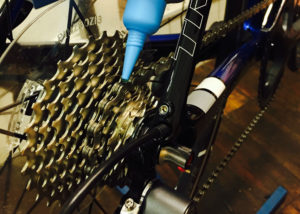
Make sure your bike is lubricated properly as it protects moving parts from excessive wear and tear (choose an appropriate lube for the riding conditions you’re in). On the other hand, make sure not to go nuts as too much lubrication will attract dirt and cause just as much damage. Allow the lube to soak in and then wipe any excess off with a clean rag.

Most importantly you want to lube the chain, but also all the other moving parts including brake and derailleur levers, and cables. You’ll also want to grease any threaded bolts such as the stem, derailleurs, and pedals. If you have any bearings apart, make they are all well greased.

3. Regularly Replace the Chain

Chains travel countless times over sharp gears, often under a heavy load. They wear out and stretch over time because of dirt, gunk and attrition. A little bit of chain stretch over time is ok and will always occur. The problem becomes when it stretches too far and the teeth on the cassette begin to wear out as well. Before long you will not only have to replace the chain but the cassette as well.

You’ll want to replace your chain every 1,000 – 2,000 miles, once a year, or whenever the chain is starting to show signs of wear. It’s a simple task that any cyclist can accomplish on their own with the right tools and know-how.

4. Inspect Your Bike

Inspect the frame for cracks or serious dents that are more than just cosmetic. Specific areas to look at are the joints particularly around the head tube and bottom bracket. If there are any cracks, even if it looks like it’s just paint, take the bike to your local bike shop to be looked at by an expert. For this reason (and a lot of others) it’s a good idea to take you bike in for a yearly tune up and checkover at your LBS.

5. Ride Clean Roads

Okay, that may not be possible, but riding in the rain and mud is going to wear out your bike and components more quickly. If you can be strategic with your route to avoid areas with a lot of mud and gravel it can go a long way. That being said, this is why many cyclists have a more budget friendly bike to ride in such conditions, and keep their more expensive bike out of the elements.

6. Cover it up or keep it inside.

Leaving your bike open to the elements will speed up the aging process. The sun, water and dirt will end up causing damage to your bike and cost you in repairs. If you’re in a humid climate, rust on certain metal components can also develop quicker. If possible, keep your bike inside. However, if you live in an apartment building or do not have adequate space, you will want to at least keep it covered.

4 Ways Cycling Makes You a Stronger Runner

April 26, 2020 by Sarah Lauzé

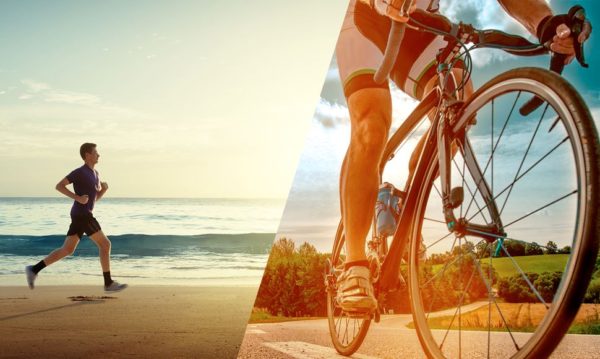
Some runners like to poke fun at us cyclists, with our padded shorts and funny looking shoes. Yes, we spend hours out on roads pretending we’re in the Tour De France, but cycling is one of the best forms of cardio for all athletes. If you both run and ride, then you already know that cycling is key to making your running game a whole lot stronger. Here are just some of the ways cycling makes you a stronger runner.

Cycling Makes You a Stronger Runner

How Cycling Makes You a Stronger Runner

Active Recovery

Many runners will turn to cycling after an injury. Stress fractures and joint pain are common to running, and cycling offers a great low-impact solution to keep you moving. It’s also a great means of active recovery. After a long run, it’s tough to find the motivation to get back out the next day for some active recovery. Hopping on your bike will help increase your blood flow, flush out lactate acids, and get your muscles loosened up and ready to run again.

Strengthen Complimentary Muscles

It’s easy to get into a routine with a single activity. If you find yourself exclusively running, you are strengthening certain muscles within a specific range of motion, while others are left underdeveloped. It’s easy to hit a plateau with your training, as doing the same thing every day will eventually stop yielding results. This is why cross training within any sport is so important. When you start cycling, you’ll be using those same muscles, but in a different and new way. You’ll find your legs and core will thank you, and yes, will make you a faster and more efficient runner.

Leg Speed

Cadence is a huge part of cycling, but the same idea applies to running. Both cycling and running require a consistent and steady motion, cadence for cyclists and leg turnover for runners. The more you ride and work on having a cadence of 90-100 rpm, the more your legs will be able to mirror that quick turnover while your running.

Give Your Joints a Break

You can work on your running mechanics all you want, but the truth of it is, running will inevitably put a pounding on your body. Especially for marathon and ultra runners, it can become hard to maintain high milage without injury. Cycling can provide you the workout you need, without the impact. If you don’t won’t to replace a whole run with a ride, try switching half way through. It can be a great way to train running on tired legs without putting your ankles, knees, and hips through a beating first.

If you’re not convinced, give it a try and experience the benefits for yourself. Both your body and your mind will thank you. For more on starting cycling, check out our complete guide for beginners. The added benefit to adding cycling to your running training is– you only have to start swimming and you can tackle a triathlon!

6 On-the-Bike Snacks For Your Jersey Pocket

April 22, 2020 by Sarah Lauzé

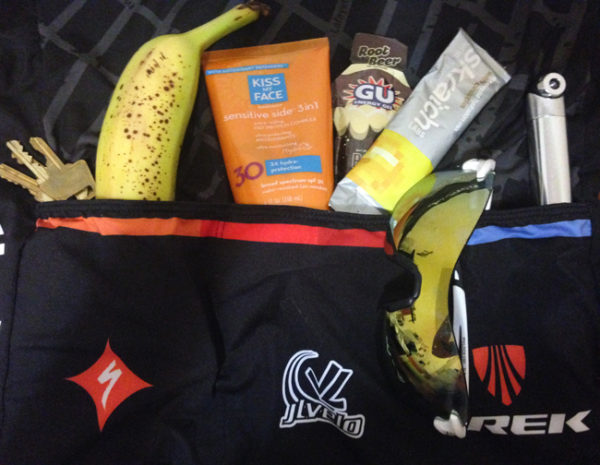
If you’re out on a ride when hunger strikes, there’s nothing worse than empty jersey pockets. On the bike snacks allow you the right food at the right time, not only keeping the hunger pains away, but also feeding your muscles and fighting off fatigue. A great guideline is that if you’re going to be out for anything over an hour, then take some snacks along.

That being said, as much as the right foods can have a positive effect on your ride, the wrong foods can have the same amount of impact. Sweet snacks may be tempting when the blood sugar is beginning to drop, but it will just cause a bigger crash later. Having the right snacks with you, stashed in your jersey pocket, will set you up for a great ride.

The Best On-The-Bike Snacks

What makes a good bike snack? It’s not just about giving you energy, but also its portability and durability. Things that will get squished or even melt will not be the most appetizing when you’re out on a ride. Here are some the best on the bike snacks:

Bananas

Bananas are nature’s energy bars, already wrapped and ready to go. Packed full of potassium and carbohydrates, you really can’t beat it for a mid-ride snack.

Energy Bars

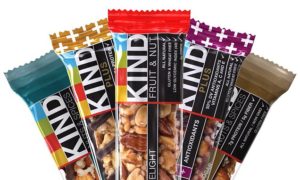
You’ll want to be picky with which energy bars you take with you on your ride as so many are packed full of sugar they can have as much nutritional value as a chocolate bar. Check out the ingredients and go for ones with more whole grains, dried fruits and nuts as opposed to processed sugars. Even better you could make your own!

PB & J

The classic peanut butter and jelly (or honey) sandwich is a standby for a reason. Not only is it delicious, but it provides a great boost of lasting energy. Substitute the bread for a wrap so it doesn’t get squished and you’re on your way!

Trail Mix

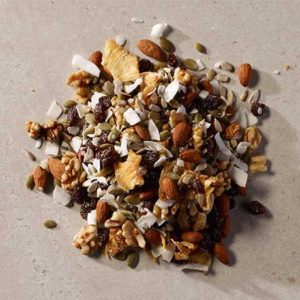
Dried fruit and nuts are a great source of concentrated carbohydrates and potassium. Trail mix is also a great thing that you can make just the way you like. Head to the bulk food section of your grocery store and buy the mixins! (Maybe take it easy on the chocolate though).

Dried Fruit

If the idea of nuts and seeds is a little dry, go for some dried fruit. It’s sweeter alternative, and is convenient to carry around. Most dried fruits retain their nutritious content, so feel free to snack away!

Cycling Uphill: Common Climbing Mistakes

April 17, 2020 by Sarah Lauzé

Love them or hate them, cycling uphill is an inevitable part of cycling (unless you somehow map out perfectly flat routes). So, when you’re sitting at the bottom of a daunting climb what is your go-to game plan? When you’re pushing your muscles to edge of their ability, you can only tell them to “shut up” so many times – no matter how tough you are they are going to win that conversation.

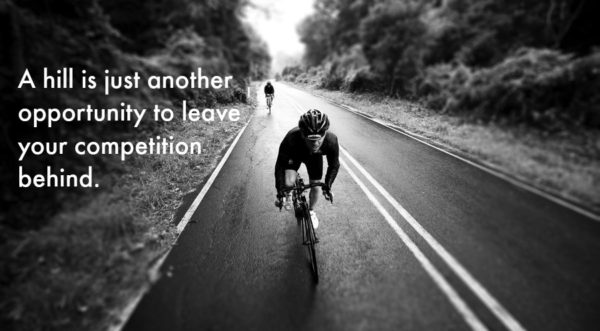
A common inner monologue when approaching a hill is to start telling yourself to “Attack the hill!” Although this mantra may be effective in keeping your mental toughness up, the overall technique doesn’t work. Here are some of the most common mistakes cyclists make on climbs, and how to hit those hills with confidence.

Pacing

Attacking the hill may work if it is small climb with the crest in view from the bottom. However, if you go in too aggressively, sure you’ll feel strong at the bottom, but once you hit a certain point it’s easy to hit a wall. You overexert your muscles and skyrocket your heart rate rather than pacing yourself for the long game. If you find yourself often slowing to a crawl halfway through a climb, think about gearing down earlier and keep those legs spinning. You will then have the energy to “attack the hill” when you reach the final push over the top.

Using Too High A Gear

It may sound obvious, but many cyclists are guilty of heading into hills in a high gear because of that fresh leg feeling. As mentioned above, it may feel great at the start of the hill, but soon you’ll be grinding that gear and giving your all just to stay upright. Gear down before hitting the hill, keeping your legs spinning at 70 rpm or more. If you find your legs slowing down, gear down to keep your rpm in that range.

Stress and Improper Breathing

Not everyone is a natural climber, and looking up at a tough climb can be stressful mentally. If you find yourself gripping your handlebars with a vice grip, it’s a sign that you need to work on relaxing your body. Instead of wondering if you’re going to make it and letting the panic settle in, break the hill into segments in your mind. Starting easy, keep your body relaxed and breathing as deep and slow as possible.

As it starts to get tougher, think about engaging your core, flattening your back and powering each pedal stroke through your core. Pick a landmark up ahead and ‘real it in.’ Once you’ve reached it, pick another. Giving yourself these small victories can help keep you positive and focused, no matter what your legs are saying.

Standing Up

Standing up can cause you to blow up sooner as it puts more load on your legs resulting in an increased need in oxygen to be delivered. Contrarily, staying in the saddle keeps your heart rate down. Of course, if you are a lighter rider and have practiced standing and climbing, then there’s nothing wrong with using it as a time to stretch your legs and put down some extra power, just use it sparingly.

Under Fueling

If you’re approaching a tough climb, you want to be well-fueled. This doesn’t mean chowing down an energy bar right before hitting a hill, that will sit like a rock in your stomach. Instead, work on having a bite and some sips of water every 20 minutes or so on a ride with a lot of climbing. If you start feeling lightheaded and weak, this could be a sign that you haven’t fueled your body properly.

Not Riding Enough Hills!

You’re not going to get better at anything by wishing it into reality. Climbing is tough, and it’s never going to get easier, but the more you challenge yourself the stronger you’ll get. Half the battle is finding your rhythm with climbing. Once you do, you may find yourself even looking forward to the hills!

What Muscles Do You Use When Cycling?

April 15, 2020 by Josh Friedman

With cycling’s focus on aerobic capacity, metabolic capabilities, and ability to suffer, it can be easy to forget that all of these important aspects are what drive your muscles that power the bike. Boiled down, that is all pedaling a bike is – recruiting your body to produce energy to move muscles to move the bike forward. What muscles do you you use when cycling though? And in which part of the pedal stroke do you use each one? Read on and you’ll know.

what muscles do you use when cycling

What Muscles Do You Use When Cycling?

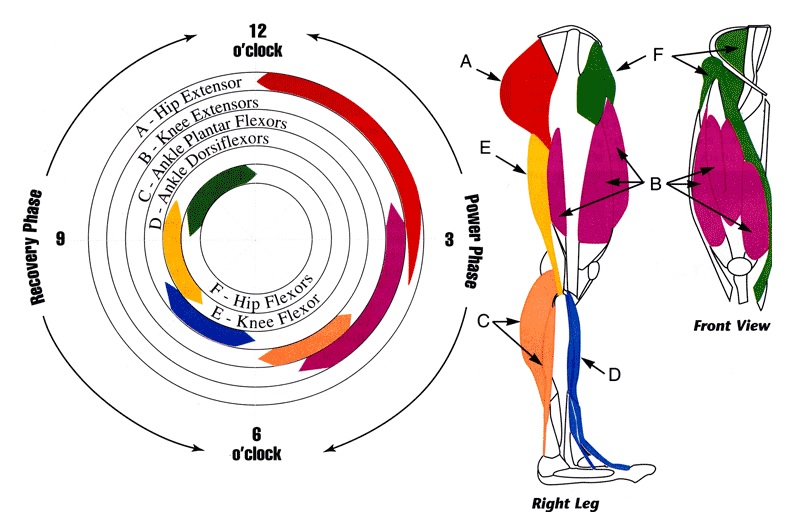
The short answer is a lot. Many of your leg muscles drive the pedals, but you also use core muscles to push those legs muscles off of and hold you semi-upright on the bike (for the sake of this article, hip flexors are part of your core). You use your arms in a supporting role. But mostly, it is your legs that do the work. The other muscles only need enough conditioning and strengthening to allow your legs to do their work without distraction. Do not be fooled; enough conditioning and strengthening for core and arms is more than just riding.

The Cyclist’s Main Attraction

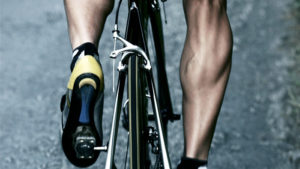
Looking at a group of cyclists standing around, their most prominent feature is their calves – the gastrocnemius. They are chiseled and defined and often quite a bit larger than the average person’s calves. What role do they play in the pedal stroke and power production? The answer is that they only transmit the force of power produced in the quadraceps for most of pedal stroke.

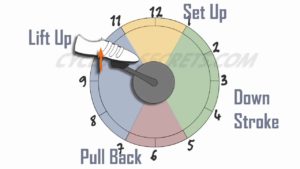
In the dead spot of the pedal stroke, from six to nine o’clock, the calves provide a little force to get over the top of the pedal stroke. The front side of the lower leg, the tibialis anterior, for a moment becomes a star in that six to nine o’clock range when it is the only muscle working to get that leg over the dead spot.

The lower leg can be impressive in appearance, but in reality, it provides little of the force from a cyclist’s legs. The size and shape is not an indicator of a rider’s strength. At a given level, most of those factors are genetic. Calves will tell you nothing of a rider’s ability. No need to be intimidated by chiseled calves.

The Meat and Potatoes

Between the knees and the hips is the seat of a cyclist’s power. That seat of power is most productive on the down stroke of the pedal stroke – from twelve to six o’clock. This is when your knee is extending and larger muscles put their effort into the pedals. This is different from six to twelve o’clock, when smaller muscles bring the pedals back up and around, providing little else other than reloading the crank for another go-around.

The muscles that keep you moving (in order of power produced) are the quadraceps at the front of your thighs, gluteals in your behind and hamstrings at the backs of your thighs. The quadraceps and gluteals extend your knee from its most bent to about four o’clock. Once the pedals get there, hamstrings take of the bulk of the workload bringing your pedals back towards six o’clock.

Implications for Your Pedal Stroke

Lots of people say you should have a round pedal stroke. Knowing what you know now of the muscles involved, you know that it is impossible to produce even power throughout the pedal stroke from one leg. The muscles you recruit between six and twelve o’clock are not powerful enough to make an impact on overall force. Almost all of your forward motion on a bicycle comes from pressing down on the pedals.

This is different from having a smooth pedal stroke, which is probably what most people mean but have not articulated properly. Smoothly transitioning from each phase of the pedal stroke will avoid jerky motions and add to efficiency. Pro cyclists look like they have round pedal strokes, but that comes from smoothness and hours upon hours of perfecting muscle memory. Guaranteed they are producing far more power in the front end of their pedaling.

Follow the Pain

Now that you know what muscles you use when cycling, you can use that to understand proper seat height and use it to help diagnose knee pain. Hamstrings pull on the knee and quadraceps push on the knee. If the outside or back of your knee hurts, it could be the hamstrings pulling too much on your knee. Try lowering your saddle to lessen the strain on your hamstrings. If your knee hurts on the inside or front, your quadraceps are pushing on your knee too much. Try raising your saddle to lessen the strain on your quadraceps.

Change your seat height in small increments. Big changes pull other variables into the mix and are harder to get used to.

Muscles Make the Pedals Go Around

Having a well-rounded understanding of “what muscles do you use when cycling” can help you focus on a better pedal stroke, strengthen comparatively weak muscles and diagnose problems. A little foundational knowledge can make you a better cyclist because you know what your body is doing and how it makes your bike go. That’s why we’re excited to introduce Dynamic Cyclist, the program that offers daily stretching and strength training video routines designed specifically for cyclists. Created by industry professionals, these programs will take your cycling to the next level and help you reach your full potential. So, whether you’re a beginner or an experienced rider, Dynamic Cyclist has everything you need to improve your performance and keep riding for years to come. Experience the results for yourself, click here to try 7 days free.

10 Reasons to Start Early Morning Cycling Right Now!

April 11, 2020 by Sarah Lauzé

Picture this: open roads, golden light, just you and your bike conquering a climb or ripping down a descent. Sounds pretty great, right? Early morning rides may seem daunting, especially if you tend to wake up with a snarl on your face, head foggy, reaching for the nearest cup of coffee. Mornings may not come naturally to all of us, but there are a lot of things that make grinning and bearing the early morning alarm worth it. Here are just 10 reasons to start early morning cycling.

10 Reasons to Start Early Morning Cycling RIGHT NOW!

You’re a morning person.

If you are a shiny-eyed unicorn of a person that feels alive at 5am, then why aren’t you already doing this? If morning is your prime time, then get on your bike and make the most of it. It’ll be easier for you then it will be for the rest of us.

You’re NOT a morning person.

Seems counterintuitive, but here we are. Mornings may hit some of us like a brick to the head, but that’s actually a great reason to embrace the early morning ride. There’s no better way to make mornings suck less then doing what you love to do most: ride your bike. The first few weeks may be rough, but stick to a schedule and you may just find yourself starting to look forward to those early mornings.

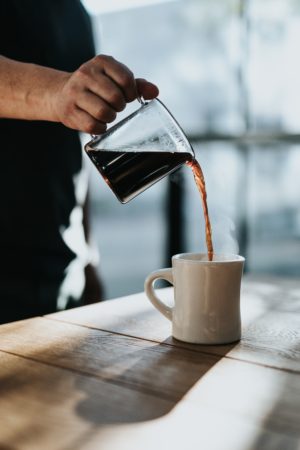
Replace your coffee habit 

You’ve probably heard of magical endorphins. These little guys make us feel all sorts of great, and early morning workouts are known to get them going and give you that natural high (which is way better than coffee). Rather than relying on caffeine to do the trick, you will naturally get the blood pumping, waking you up and boosting your energy levels. Another bonus? You won’t experience the same crash that comes after caffeine, but you’ll find your mood and energy remain at higher levels for hours after your ride.

Quiet Roads

Less traffic means less stress out on your ride. The sense of isolation will allow you to enter a meditative state without the constant traffic noise or honking horns. You’ll also feel a lot safer with less cars on the road.

Cooler Temperatures

During the summer, riding in the heat can become almost unbearable. Early mornings are a great way to avoid the baking sun and heat stroke. Even if it’s still pretty warm, the sun will be less intense than it is later in the day.

Consistency

Over 90% of people that exercise consistently get it done in the morning. It makes sense, as it’s the one time of day that will remain largely untouched by other scheduled events and obligations (it’s not likely you’ll have a meeting scheduled for 5am). If you put it off until later, there’s a large chance it simply won’t happen.

Better Sleep

When you get out there and expose your body to those first few glimmers of morning sunshine, it can have an effect on your circadian rhythm (the internal cycle that governs sleep). Exercise combined with morning light can actually help you kick sleeping disorders such as insomnia. Getting up early will also help you reset your internal clock, making you more ready for sleep earlier at night.

Lose Weight

If you’re cycling to lose weight, the morning should be your time. Get out there before having breakfast, and you will have the added benefit of fasted cycling, which helps your body burn more of its fat stores. It also elevates your metabolism rate for the rest of the day, helping you continue to burn calories through the rest of the day. Keep in mind these should be shorter rides, as your body will not have the fuel for a long jaunt.

Sunrises are pretty

Sunsets are one thing, but sunrises are arguably more beautiful. Those first few rays of golden light are a sight to behold, and will do wonders for your mood for the rest of the day.

Set the tone for your day 

Have you ever noticed that if you start your day off with good decisions, those carry through into the rest of your day? We won’t go into the science, but making those first few disciplined decisions can make the rest of the decisions throughout your day easier. Getting your exercise done first thing can make eating healthy easier for the rest of the day, because the hardest part is already done. It’s a domino effect, and pretty soon you’ll feel like you can conquer just about anything!

Are you convinced to give it a try? Check out “How to get the best morning ride in” on how to plan for those first few early mornings!

How To Brake Efficiently on a Road Bike

April 10, 2020 by Sarah Lauzé

When you’re starting out cycling, the first thing you need to do is master the basics. You may watch pro riders that make everything look effortless, but unfortunately there’s a lot more to it than may meet the eye. Once you’ve got the basics down, then it’s time to start getting specific. Although your fitness level will remain your most powerful weapon, don’t underestimate the gains from focusing and developing aspects of your bike handling skills. Learning how to brake efficiently on a road bike can not only make you faster, but it will make you feel more comfortable and confident on your bike.

Brake Efficiently

How To Brake Efficiently on a Road Bike

Step 1: Beware of the Front Brake!

Tip: Don’t do this.

You’re front brake may be there to stop you, but your back brake is there to shave off speed. Roughly 70% of your stopping power comes from the front, which is why you never want to slam on just the front brake (pitching you over the handlebars). The best way to get the hang of how much to use each break is to go to a quiet section of road and practice. If you are skidding out, then you are putting too much pressure on the back brake. However, if you’re back wheel is lifting off the ground altogether, then you need to ease of that front brake.

Step 2: Get the Timing Right

When you’re wanting to come to a stop on your bike, you want to start slowing you speed by pulling the back brake. Look up at the spot you want to stop at rather than your front wheel. Slowly start to ease the front brake to further reduce your speed. Keep your shoulders relaxed and arms slightly bend, while focusing on that same stopping spot. Release the front break once you’re going slow enough and use the back brake to bring yourself to a complete stop.

Step 3: Master the Weight Shift

One of the most common beginner mistakes is distributing body weight incorrectly. This will not only effect your braking efficiency, but also your bike response and handling. If you’re on the drops, your center of gravity will be lower than if you’re on the hoods. The hoods feel safer, as you can brake harder with your weight shifting towards the rear of the back.

Being able to pedal through corners may be the most efficient, but it will also take some time and practice to master. You want to do all of you slowing down BEFORE the corner, and you should be able to to leave your brakes untouched through the corner. If you find yourself skidding, shift your weight as far back on the bike as you can.

Step 4: Adapt to the Road Conditions

If the roads are wet and slick, you’ll want to reduce the amount of pressure you put on the breaks. Your technique should be a lot softer then it is on dry roads, and you need to remain especially aware of obstacles. Road markings and manhole covers become very slippery, and you won’t be able to stop as quickly.

Step 5: Give Your Brakes a Little Love

Before heading out on a ride, make sure your brakes are clean, dry and well adjusted. If your brakes are too loose, and you have to squeeze the levers all the way to the handlebar to get any kind of stopping power, you’ll want to loosen your barrel adjusters a few turns. This actually tightens the brake cables and therefore tightens the brakes. If your brakes are so tight that they don’t let your wheels turn, then you can tighten the barrel adjusters back down and make some room.

Step 6: Practice, Practice, Practice

Mastering certain techniques will take time, and braking is no different. Find a quiet area or section of road that you can use to practice your braking technique. Start by building up speed, then stop yourself with the brakes. See how long it takes you to stop, and pay attention to the feedback from the tires. Are they skidding? Are you loosing grip? You will have to experiment to find what works best for you, and to get a feel for how your bike handles when braking.

Recovery for Cyclists: The Importance of Rest Days

April 7, 2020 by Sarah Lauzé

Exercise can be addictive, whether it’s training for a race or an outlet to clear your head. Once you get into a training schedule and it becomes a part of your everyday routine, it can be hard to take a day off. However, rest days are just as important as training days, and need to be part of recovery for cyclists.

You can come to crave the rush of feel-good endorphins that the brain releases during exercise. That combined with feeling the physical benefits of exercise can make you feel like a day off would be a step backwards, but that’s not the case. Giving your body time to recover will make you stronger in the long run, and overtraining does nothing but harm.

Why you need recovery days

When you’re training on a consistent basis, you actually put stress on your body and breakdown your muscles. Over time, and through combination of training and rest (periodization), your muscles are repaired to be stronger than before. This is when you begin to feel more fit and you can produce more power for longer on your bike.

Without adequate rest, you can experience burnout, a lack of energy, and decreased motivation. Scheduling rest days, and ensuring you take them, is equally as important as time on your bike.

How much is enough

How much rest needed will be different for everyone, so you have to learn what your body needs. A general rule is to ensure that at least one day a week is a rest day. However, this doesn’t mean you have to spend the day on the couch. All it means is you need to give your body time to recover and rebuild for the next week.

What you can do to aid your recovery

Fuel

No, this doesn’t mean carb loading. Of course you want to ensure you have enough carbohydrates to replace glycogen stores from training, but there’s more to it than that. Make sure you have protein to repair damaged muscles as well as fruits and vegetables to get a dose of vitamins and minerals. This isn’t just true of rest days, but recovery should start right after your rides with plenty of water and a recovery drink.

Stretch & Roll

Although it’s not typically a recovery technique, stretching and rolling your muscles on rest days is one of the most effective ways to prevent injury. Be sure to focus on the muscles that are shortened by the posture on a bike, like the hamstrings. For more information, check out the “10 Best Stretches for Cyclists.”

Sleep

Sleep is important for even the most basic functions of the body. It’s also the prime time to undergo protein synthesis, which is the process that makes your muscles stronger. Eight hours is widely recognized as the magic number, but if get a little more it won’t be a bad thing. If you simply can’t get eight hours at once, then a nap is a great way to make up for lost time.

Active Recovery

As mentioned previously rest days don’t have to be days spent on the couch. In fact, active recovery can be a great way to get the mental release you need, while not taking a toll on your body. A walk, swim, or other easy activity will get your body moving and your muscles loosened up, but won’t be too strenuous on your tired muscles.

There can be recovery rides as well, but you have to be disciplined not to push yourself too hard or go for too long. You should remain in zone 1 or 2 for the duration of the ride, and focus on just spinning your legs.

When you’re on a training schedule, it can be discouraging to miss a few days when life gets crazy, or you get sick. Let’s just say right now, it’s going to happen. Life gets chaotic, and when it does, just make the most of the recovery time, both physically and mentally.

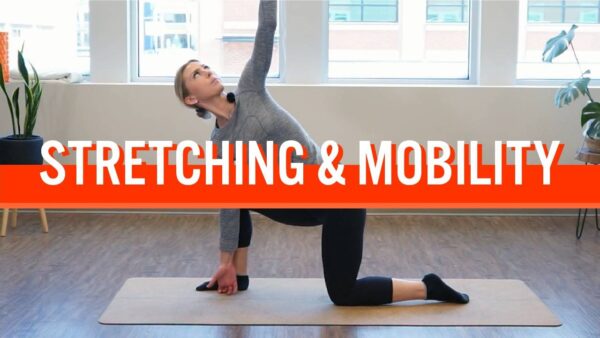
Balance Your Training With A Stretching & Mobility Program

Are you tired of suffering from pain and discomfort while cycling? Look no further than Dynamic Cyclist This comprehensive resource addresses the most common muscle imbalances and adaptive muscle shortening that lead to pain and reduced performance on the bike. With just 15 minutes a day, you can follow along with the video programs to alleviate tension and improve posture, so you can ride pain free and reach your full potential on the bike. Don’t let muscle imbalances hold you back – click here to try 7 days free! 

Why Strength Training is Important for Cyclists

April 5, 2020 by Sarah Lauzé

You may think strength training is meant for bodybuilders and gym buffs, but it is now almost universally accepted as a vital training component for all athletes. Not only that, but as we age, resistance training becomes increasingly important for overall health and quality of life. So why do so many cyclists avoid it? It may be the thought of spending time at the gym when you could be out on your bike. Here’s why strength training for cyclists is important.


Why Strength Training is Important for Cyclists

We all know that leading an active life is the best thing you can do for your long-term health. As cyclists, we may be more active than most, but it is a mistake to just focus on cardiovascular exercise and exclude everything else. Cycling is a low impact activity, which means it’s great for your joints, but not so great for supporting your bone density and postural deficits. Strength training can help fill the gaps left by pure cardio exercise and build stronger bones, improve coordination, prevent injury, and give you more power on the bike.

Retain Muscle Mass & Correct Imbalances
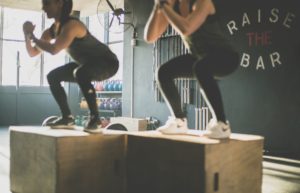
Depending on where you live, you may have to take a few months off cycling during the dead of winter. Whether you take your training indoors or not, this is a great time to incorporate a strength training circuit into your routine. You don’t have to lose the muscle mass you’ve working so hard for over the cycling season, and you can work opposing muscle groups to bring muscle balance. Cycling is a repetitive motion, often overdeveloping the quads and glutes while the hamstrings and hip flexors lag behind. A good strength training program will take this into account and work on creating muscle balance.

Enhance Balance & Coordination

There is no doubt that cycling itself requires coordination and balance, but through the years it can become so second nature that it no longer challenges our intramuscular systems. Strength training with things like free weights, bosu balls, and resistance bands can help improve your balance and coordination. Again, this is particularly important as we age as it keeps the connections within the nervous system strong.

Improve Bone Density

As mentioned previously, this one is especially important for cyclists. Past studies have shown that the bone density of some competitive riders is lower than their sedentary controls. Unlike running or walking, cycling is a non-weight bearing activity, which is why it is so great for people with orthopedic injuries. However, this means you have to be doing something else, like strength training, to maintain healthy bone density and combat things like osteoporosis.

More Power on the Bike

Who doesn’t want more power on the bike? This is a bit of a no brainer, as the stronger your muscles are, the more power you’ll be able to exert within the cycling motion. It can be a difficult thing to develop on your bike, so using strength training is actually one of the best ways to become a stronger climber and overall rider.

Injury Prevention

Some of the most common injuries for cyclists include ITB syndrome, neck pain, low back pain, and knee pain. Some of these may be unavoidable, but most are caused by muscle imbalances. A combination of strength training and routine stretching can  strengthen your muscles and connective tissues to help prevent these injuries.

Although strength training my not make your faster in a direct sense, there are plenty of reasons to get into a strength training plan, whether it be in a gym or your living room. Check out “4 Of The Best Strength Training Exercises for Cyclists” for some exercises to get you started.

« Previous Page
Next Page »
  • Facebook
  • Tumblr
  • Twitter

Latest Articles

JOIN Cycling: A New Training Platform for Cyclists

May 27, 2024 By Eric Lister

cold exposure

The Benefits of Cold Exposure for Cycling & Life

June 13, 2023 By Eric Lister

hill climb

The Ultimate Hill Climb Training Guide

May 31, 2023 By Eric Lister

shoulder pain cycling

How to Treat & Avoid Shoulder Pain While Cycling

April 12, 2023 By Eric Lister

psoas stretch

The Importance of the Psoas Stretch for Cyclists

April 6, 2023 By Eric Lister

cycling neck pain

The Ultimate Guide to Cycling Neck Pain: Causes and Solutions

March 21, 2023 By Eric Lister

Useful Info

  • Contact
  • Finally, A Global Cycling Club That Is Focused On Community And Love Of Cycling!
  • Privacy Policy
  • Share Your Story!
  • Terms And Conditions Of Use
  • Welcome to I Love Bicycling
  • What Happened When I Stretched Every Day For a Month

Recent Posts

  • JOIN Cycling: A New Training Platform for Cyclists
  • How to Hang Bikes in Your Garage: 4 Inexpensive Options
  • Gravel Bike Vs. Road Bike: Which One Is Better For You?
  • The 6 Types of Mountain Bikes & How to Choose the Best One for You
  • What Is a Touring Bike Good For? 5 Benefits We Know You’ll Love

Search I Love Bicycling

Connect with Us

  • Facebook
  • RSS
  • Tumblr
  • Twitter

Copyright © 2026 · Magazine Pro Theme on Genesis Framework · WordPress · Log in