• Training
    • Injury Prevention
    • Training Tips
  • How To
    • Bike Fit
    • Gear
  • Nutrition
    • Nutrition Tips
    • Weight Loss
  • Repair
  • Reviews
  • Stories
    • Funny Stories
    • Jokes
    • Quotes
    • Videos
    • Funny Videos

I Love Bicycling

I Love Bicycling is a website that is geared towards cycling for beginners with road cycling tips, training articles, nutrition tips, weight loss, how to’s and bike repair articles.

How To

  • Bike Fit
  • Gear

The Best Flat Mountain Bike Pedals

October 14, 2019 by Sarah Lauzé

If you’re a dedicated road cyclist branching out into some mountain biking, you may choose to go directly to clipless mountain bike pedals. Although there are plenty of advantages to riding with the clipless system, starting out on flat mountain bike pedals will help build your technical foundation. Riding on flat pedals keeps you from cheating, and will teach you to move your body and your bike efficiently. It may be frightening to take a break from obsessive wattage and tracking and instead work on some basic skills, but it’s worth it in the long run!

Flat Mountain Bike Pedals
It happens to the best of us.

The Balancing Act

When you’re first starting out, it’s common to balance by shifting your weight too far back. Although this is great to keep you from going over the handlebars, it can make it difficult to maneuver. Riding flat pedals encourages you to shift the weight by dropping your heels, keeping the bike steady and giving you a great platform to stand on.

While being clipped in can be great for forcing you to stay on your bike on technical trails, it can also be intimating when you’re first starting out. Flat pedals give you the peace of mind and confidence to tackle some tough trails knowing that you can easily drop a foot and aren’t at risk of the slow tip-over.

The Best Flat Mountain Bike Pedals

Spank Oozy Trail Platform Pedals
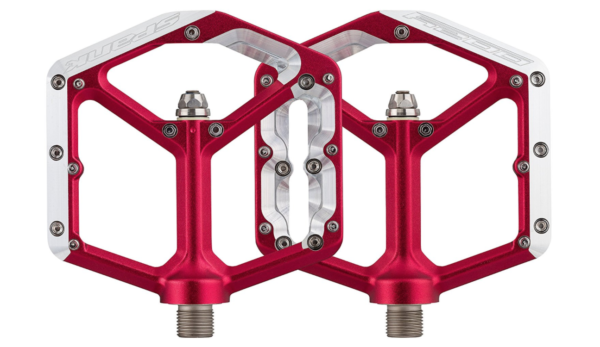


Price: $119

Extremely lightweight, the Spank Oozy Trail Platform Pedals have more than just great looks and a fun name. At just 12mm thin, they offer incredible ground clearance when pedaling in rough terrain. This exceptional thinness also improves stability and pedaling efficiency by bringing your foot almost flush with the pedal axle, drastically reducing dreaded “pedal flip.” Available in four colours, they all have the chamfered edges to keep the pedals from getting that trached look that most colored pedals get after a couple rides.  


Crank Brother’s 50/50
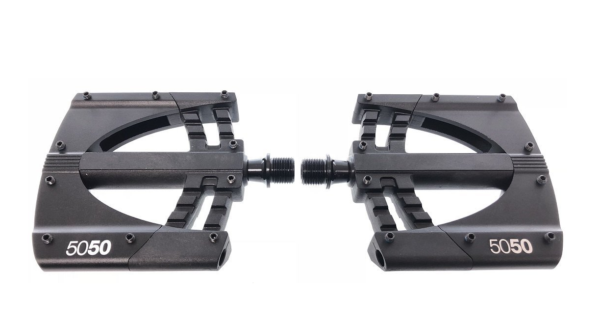
Price: $54

The CrankBrother 5050 their classic platform pedal for adventures of any type. Ten adjustable pins per side deliver a degree of grip and customization sure to keep your feet exactly where you want them. The medium-sized platform and thin profile that make them all-around performers, and the huge openings keep the mud-compacting to a minimum.

Race Face Aeffect Bike Pedal
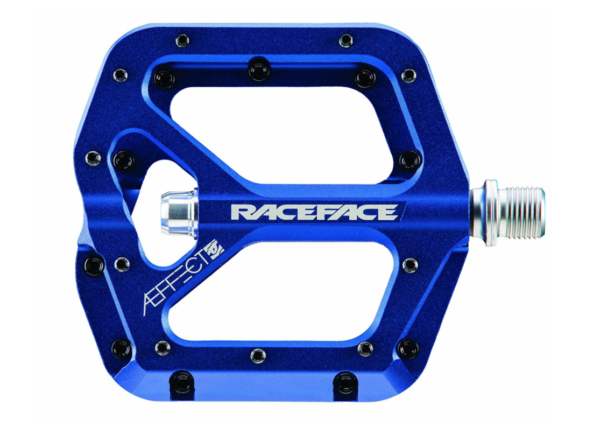
Price: $100

The Race Face AEffect Pedals are strong, light and offer the best of both looks and performance. The chromyl axle and bottom loading hex traction pins can take a beating, making them perfect for trail and downhill riders alike.

Shimano PD-MX80 Saint Pedals
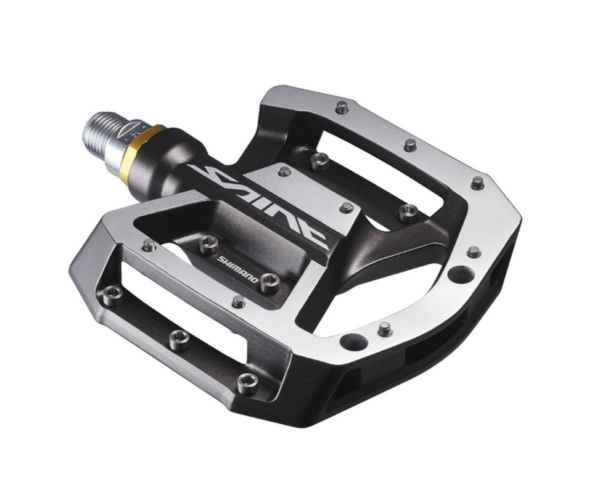
Price: $65

Developed and dedicated to downhill riding, the Shimano Saint MX80 have a unique shape and concave platform for better control and efficiency. The previous MX30s were popular for their durable, smooth rotating axle, and the MX80 carry this over with some added features. They are now slightly wider and lower, allowing for responsive levels of acceleration and deceleration.

Fyxation Gates Slim Platform Pedal
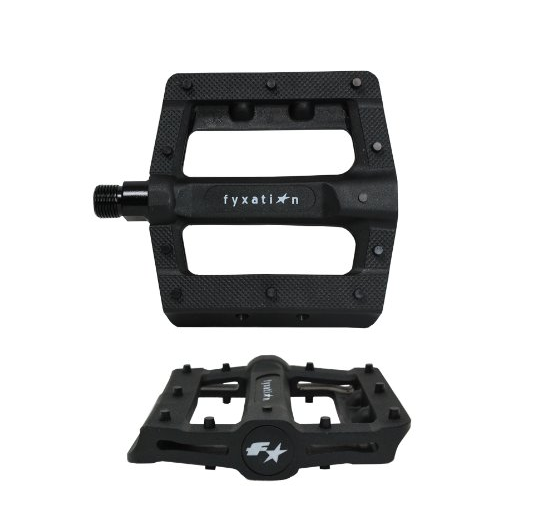
Price: $29

If you’re looking for an entry level flat pedal, then the Fyxation Gates Pedal is a great option. Designed as a BMX pedal, it is made of durable nylon and will work on the trails with ease. Thin bodied with loose ball bearings they can work great for casual mountain bikers and urban riders.
 

7 Essential Bike Tools Every Cyclist Should Have

October 10, 2019 by Sarah Lauzé

Working on your own bike can be satisfying, plus it can save you a bunch of money and trips to the bike shop. Having the essential bike tools for the job is necessary on both accounts. Seeing as you are the one who rides your bike all the time, only you really know what’s going on with it. If it’s making a certain noise, or feeling weird in a way, it can be tough to describe those smaller issues to a bike mechanic. With the right tools and general know-how, you can diagnose and fix the problems– and even have fun doing it!

That being said, botching a quick repair or making it worse because you’re trying to get through it with some multi-tools you had lying around can make for an embarrassing trip to the bike shop. Make sure the tools you have are up to the task, and ensure your also know how to use them. Seek out someone to teach you, watch videos online, read articles and practice on an old beater in a low-stakes repair before moving on to your top bike.

7 Essential Bike Tools

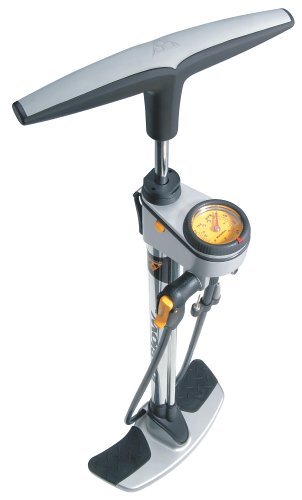
1. Floor Pump

While a floor pump is not the most exciting bike tool, proper and regular use can avoid the most common bicycle repair: a flat tire. Correct inflation pressure for the rider/tire/rim/surface condition combination can lead to fewer flats, along with better handling for your bike. Pressure that is too low risks pinch flats and pressure that is too high can lead to more puncture flats. Finding the right pressure will keep your bike rolling, keep you more comfortable on the bike, and more confident in your bike handling.

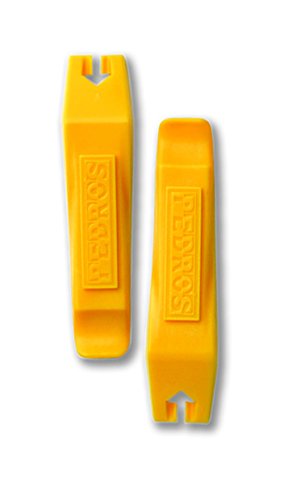
2. Tire Levers

Bad tire levers are really frustrating. If you’re out on a ride and get a flat, struggling to get your tire off with your bare hands can be tough, so you reach for your tire levers. If they proceed to break, then you’ll most likely be ready to pull your hair out. Good tire levers are the difference between a simple fix and the above situation. It is not a huge investment, so get the good ones and they will last you.

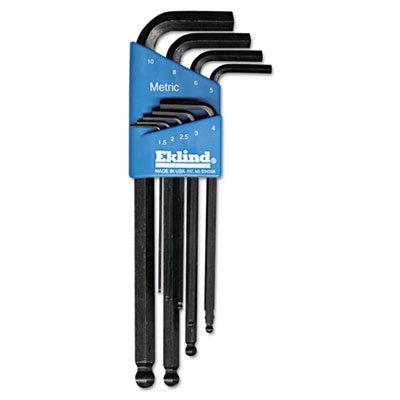
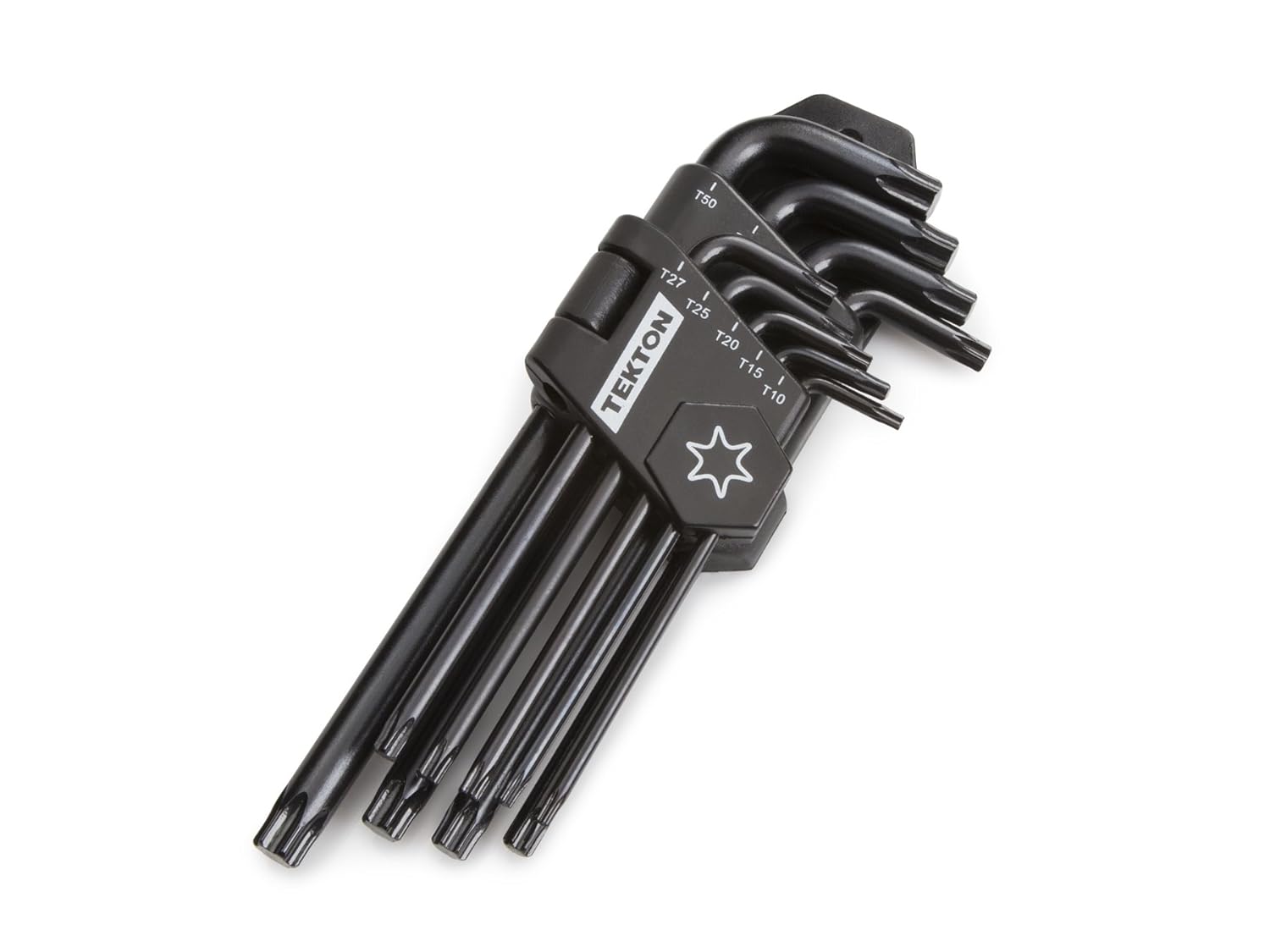
3. Hex Keys/Torx Keys

Most bolts on bicycles have metric hex bolts, so a good set of hex keys with ball-end drivers will make repairs a breeze. They will fit in your bolts securely, minimizing the chance of stripping the bolts. The ball end allows you to tighten and loosen hard to reach bolts at angles other then perpendicular. The set should have a full range of sizes to accommodate all of the bolts you will work on. Again, this is not a huge investment.

More and more bike parts have Torx bolts, six pointed star heads that give their wrenches more surface area, reducing the chance of stripping them. The same rules that apply to hex keys apply to Torx keys, except that they cannot accommodate ball-ends.

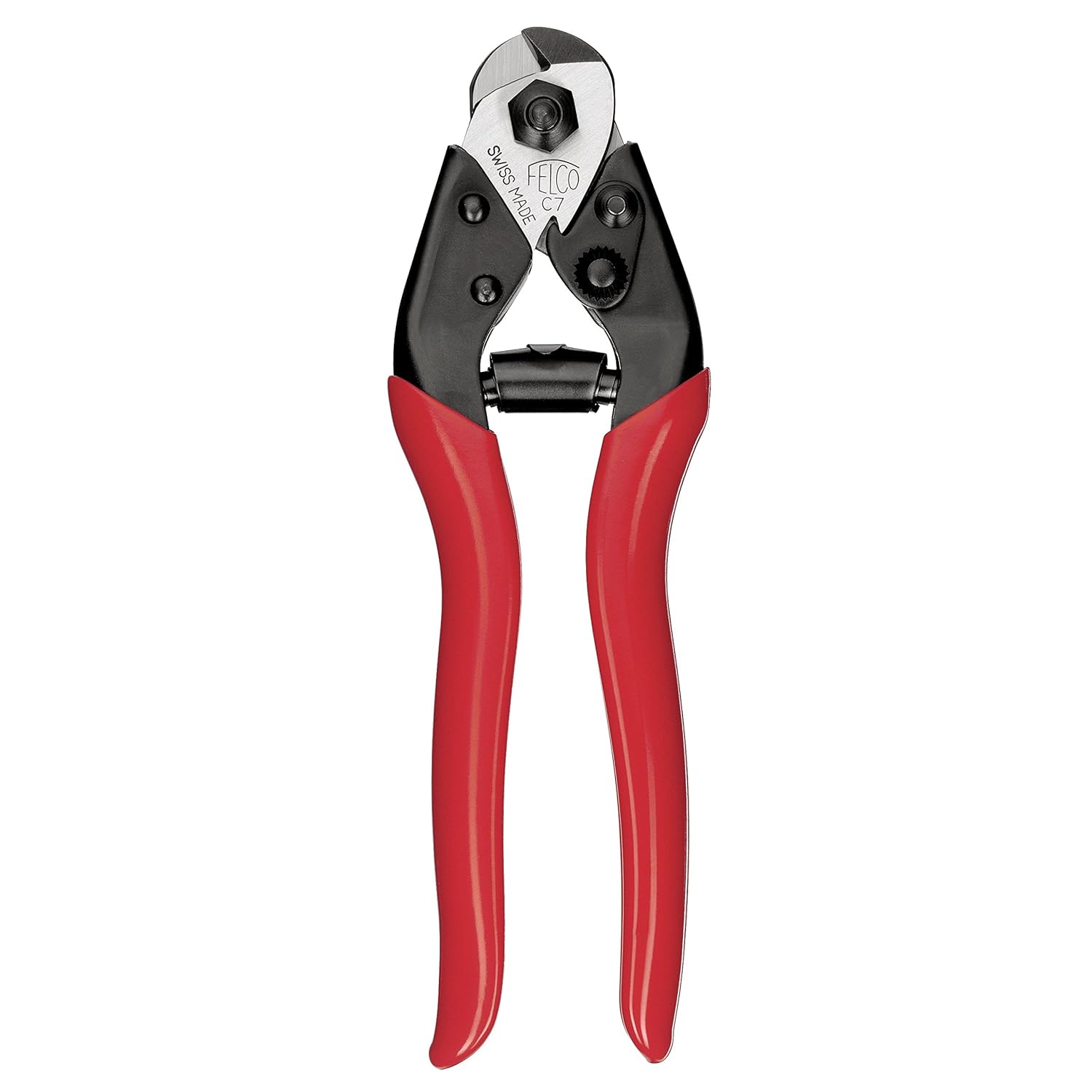
4. Cable Cutters

Replacing cables is not a complicated job with the right cable cutters. And there is only really one right cable cutter, which is often copied. With the wrong cable cutter, you risk fraying the cable or housing you are working with. A frayed cable is useless as the frayed section can spread and will not go cleaning through the housing, compromising its function.

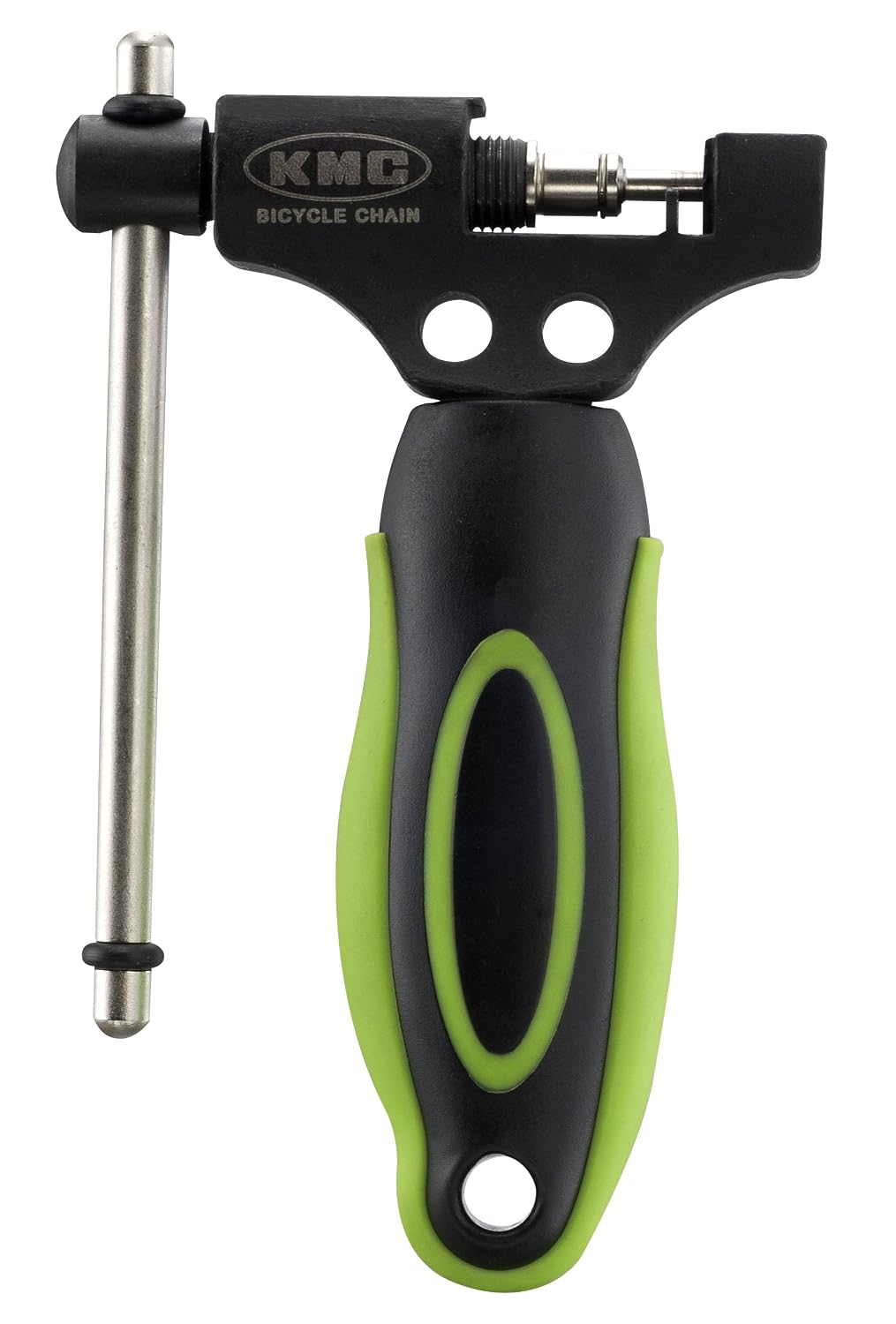
5. Chain Tool

Cutting your a new chain to the correct length and installing it is one of the most satisfying repairs to do. It increases the longevity of your drivetrain if done at the correct intervals and makes it more efficient with crisper shifting. The only way to push the pins through a chain is with a chain tool.

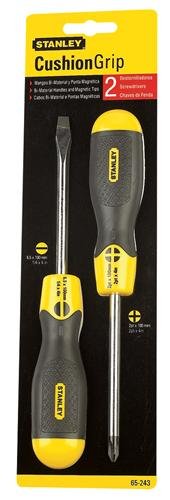
6. Screwdrivers

There are a few adjustment screws on bikes, usually for derailleur limits (although some have moved to small hex heads) and usually number two Philips heads. But not all screwdrivers are equal, a good fit goes a long way to preserving your screws. Additionally, you should have a flat head screwdriver around, but this is mostly for scraping clean derailleur pulleys and other hard to reach places.

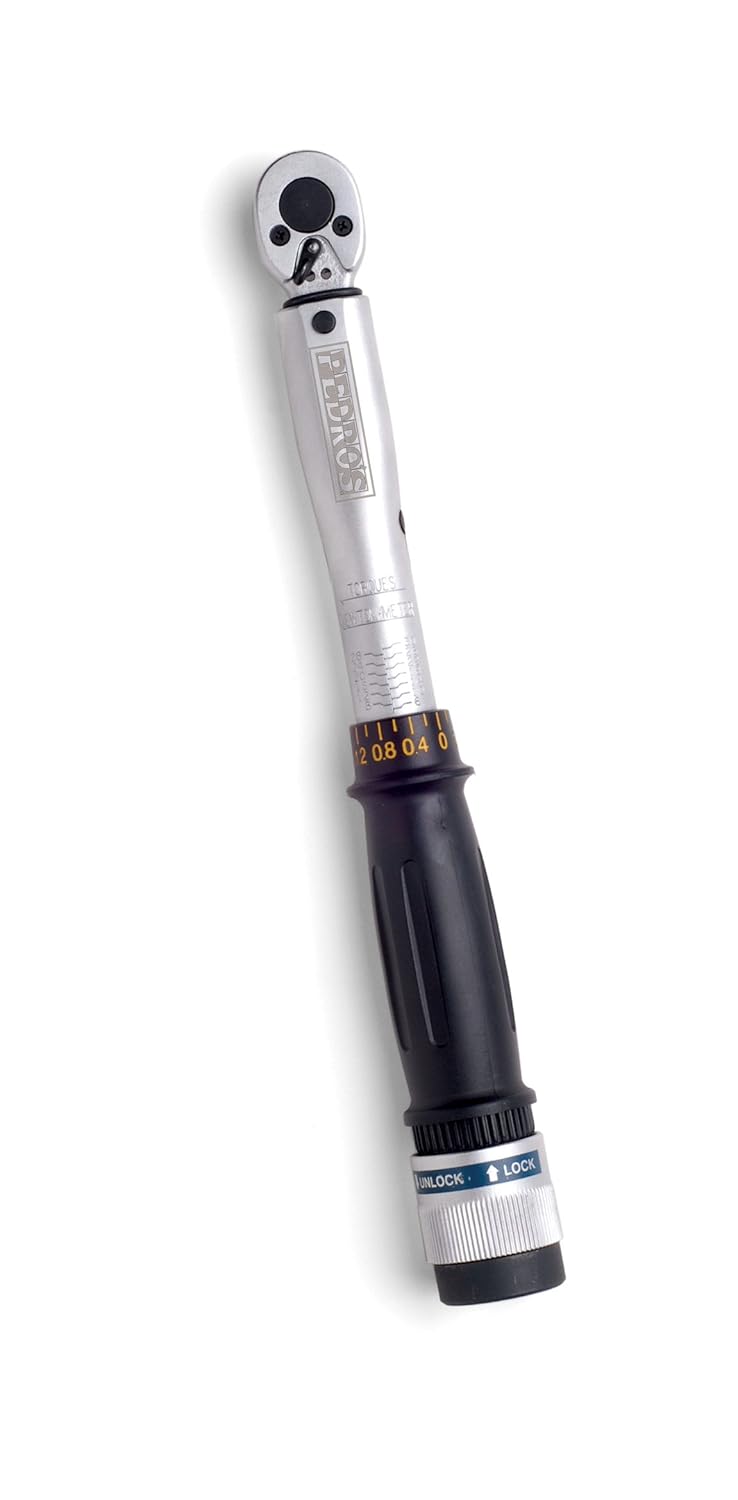
7. Torque Wrench

The last tool, the torque wrench, is a recent necessity. With the explosion of lightweight parts that require a certain torque to both hold fast and not fatigue prematurely, a torque wrench is the only tool for the job. Fortunately, most bike parts that require a certain torque have it printed right on them. Make sure you get the right bits for your bikes. Lots of people say they can do it by feel, but that has been proven wrong time and again.

Your own work is always more satisfying than relying on someone else’s, and it can also give you a sense of ownership of your bike. These bike tools should get you on your way to mastering most basic repairs. Remember to learn how to use a tool properly before attempting any repairs.

Get Your Bike Ready For Winter

October 3, 2019 by Adam Farabaugh

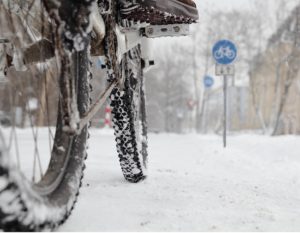
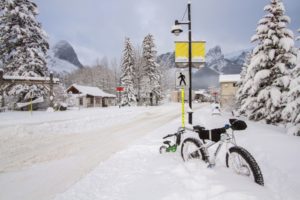
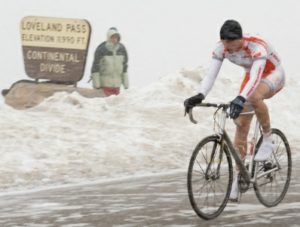
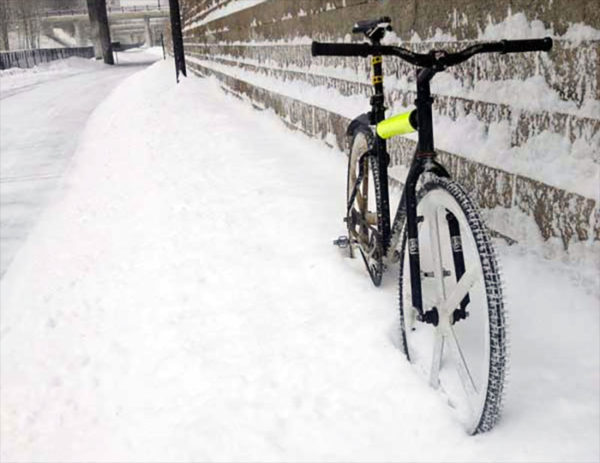
With the days getting shorter and the temperature dropping, winter is fast approaching. Riding in the winter not only requires a little bit of extra prep in the clothing department, but also for your bike to keep running smooth and minimize breakdowns.

Having a mechanical issue in the warmer months of the year can be inconvenient, but during the winter months it can spell disaster. Avoiding situations before they arise is the best solution, but mechanicals do happen, so being prepared to fix them quickly will ensure you’re not in a bad situation for long. Other measures for the bike can also be taken to keep you warmer as well as safer with the waning light.

Getting Your Bike Winter Ready

Winter Maintenance – Fix it Before it Breaks!

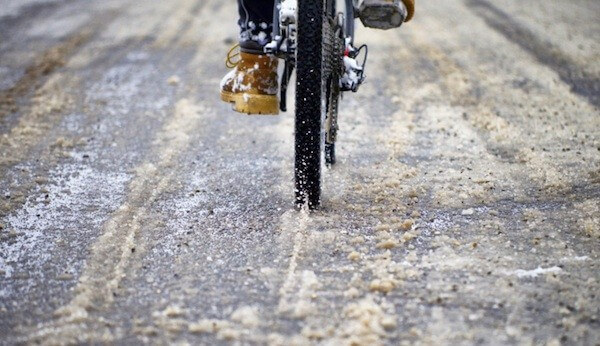
The biggest reason things break on a bike are due to over wear. Newer, well-functioning parts are very rarely going to fail unless due to a crash or some other catastrophic event. Cold temperatures, snow, ice, and grit can quickly deteriorate parts, but starting winter with a few fresh additions will help ensure that they last until spring and beyond.

Chain

With the possibility of snow as well as water spraying up and freezing in your chain along with added road grit, the chain takes a lot more stress in winter months. Start the season with a new one to minimize the risk of it breaking.

Brake Pads

In a lot of areas winter brings with it wet roads which wear down your brake pads much more quickly. This combined with the possibility of roads being slippery due to snow as well as loose sand, cinders, and grit means that you have to brake harder to slow your speed to safely navigate corners, thus further wearing down your brake pads. Start winter with a set that is dedicated to moist conditions.

Cables/Housing

With the grit of salt, cinders, sand, and who knows what else in winter, anything that moves is going to start to experience more drag and friction. Derailleur and brake cables in particular are going to take a lot of abuse and will snap if not properly looked after. Don’t only get new cables on your bike before winter starts, but also new housing if they look worn.

Tires

The dirt and grit on the roads is the biggest factor in what can cause breakdowns. Flats will be much more frequent with this unless you get a more durable tire as well as bigger. A good tire is going to be the biggest deterrent to flats along with keeping enough air in your tires to help prevent pinch flats. Two potential additions to new tires to further help prevent flats are tubeless tires with sealant and thorn proof tubes which are tubes with thicker rubber.

Winter Additions For You Bike

During the summer months the bike is generally stripped down to be the lightest and fastest possible. During the winter, however, it’s highly unnecessary as well as much less functional. Having a few add-ons to the bike will keep you more comfortable, safer, as well as get you out of a situation you would otherwise be stuck on the side of the road with.

Fenders

Even on warmer days as the snow melts, if that’s a thing in your area, the roads are probably still going to be wet. Having fenders will not only keep you dry but will also keep your bike cleaner. In many areas around the country you not only need fenders on group rides, but also a “buddy flap” which is essentially a mud flap that hangs off your rear fender preventing wheel spray into the rider behind you.

Lights

With the shorter amount of daylight, having lights permanently mounted on your bike for when it does in fact get dark or even if it’s just starting to, is more than a good idea and could potentially be a lifesaving decision. In winter in a lot of areas, drivers aren’t always looking for cyclists so even if it’s just starting to get dark, it’s a good idea to turn them on.

Chain Tool

Even with a new chain, they can still break, particularly if you get snow packed into your cassette. Many multi-tools come with a chain-tool that can be used to take out the broken link and shorten the chain to make it home.

Pump

Another valuable addition to your winter setup is a pump instead of CO2 cartridges. With CO2 you only get one try with each and ifit doesn’t work, that’s it. During winter especially, the valve can become frozen while open, letting out all the air you just put into the tire.

Extra Tube

With all the grit on the roads, flatting is an increased possibility and thus having one extra tube might not be enough. Bringing a second or third one can give you piece of mind to keep riding longer on your original route instead of just looking to make it home.

Insulated Bottles

Although separate from your bike, having insulated water bottles will keep you warmer on the road by keeping your liquids from freezing solid as quickly. Put warm water in them when you start and make sure you close the top to push any liquid out that can get trapped in the opening to keep it from freezing shut.

Riding in winter does require more dedication and planning, but if you take the necessary steps to make sure you’re prepared along with your bike, it will keep it fun and enjoyable like every ride should be. Stay ahead of the curve on winter and your rides will stay pleasant and enjoyable all the way until spring.

The Best Waterproof Bike Covers

October 1, 2019 by Sarah Lauzé

A bike cover is one of the most simple and effective ways to protect your bike. A bike can be considered an investment, so it’s worth doing what you can to protect that investment and make it last as long as possible. A quality waterproof bike cover can protect your bike from the elements and ensure it lasts for years to come.

Ideally you want to keep your bike inside, but depending on your living situation this is not always possible. If bringing one more bike into the house is going to be the last straw for your significant other, then you need to take advantage of other options.

Leaving your bike open to the elements will speed up the aging process. The sun, water and dirt will end up causing damage to your bike and cost you in repairs. If you’re in a humid climate, rust on certain metal components can also develop quicker.

When you are choosing a bike cover, first thing to look at is what material it is made from. You want to ensure that it is, in fact, waterproof and that it will not snag when you’re taking it on and off. Next you will want to try it on your bike to make sure it fits and covers the entirety of the bike, including the wheels.

Here are some of the best waterproof bike covers to ensure you do all you can to protect your bike.

5 Of the Best Waterproof Bike Covers

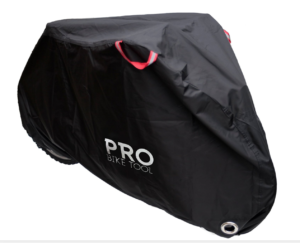
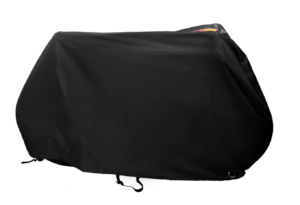
Pro Bike Tool Cover

Price: $30 – $40

The Pro Bike Tool Cover is on the more pricey end of the the spectrum, but it does offer high performance protection. Made from Ripstop Oxford Fabric and with heat sealed seams, it really does keep out the snow, ice, wind, dust, sun, and pretty much anything else you throw at it. With a variety of sizes, you can get one to fit over your road bike, mountain bike (even with 29ers), or multiple bikes.

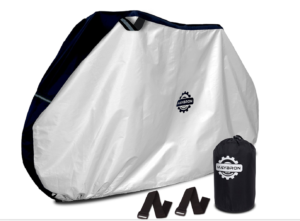
MayBron Gear Bike Cover

Price: $27

This heavy duty MayBron Gear bike cover is also made from durable Oxford fabric, which is not only heavy-duty but also relatively lightweight. Be sure to measure your bike before purchasing as there isn’t much wiggle room when it comes to the cover fitting snugly over your tires. This cinching bottom works great, and it includes holes for your bike lock.

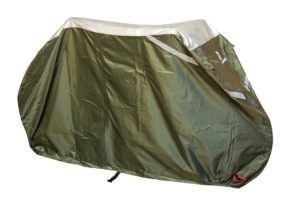
YardStash Bicycle Cover

Price: $30

The YardStash bike cover is designed to offer ground up coverage, made from durable 210D Polyester. It has an elastic bottom, and also includes a middle buckle making it a good choice if it will be exposed to a lot of wind. There are two vents in the front of the cover that aim to eliminate condensation and corrosion if you live in a humid environment.

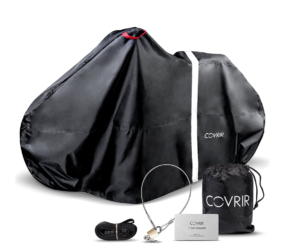
COVRIR Ultra-Tech Waterproof Bike Cover

Price: $20

The COVRIR Ultra-Tech bike cover was designed to offer lasting quality at a affordable price in an attempt to eliminate waste created by replacing a bike cover every year. Using a three strap system, this cover is “hurricane proof” while made from breathable fabric to prevent condensation. It also comes with a lock and cable, although you may want to invest in a secondary lock to ensure your bike’s security.

Kotivie Waterproof Sun Protective Bike Cover

Price: $26

The Kotivie bike cover is double sided, so black on one side and reflective on the other for UV protection. It is made from durable Polyester Oxford fabric, with a Silver PU coating to keep it from breaking down in extended sunlight. It is large enough to fit 1-3 bikes, with straps to pull it snug.

Why your next trip should include your bike

September 19, 2019 by Sarah Lauzé

Two of the greatest things in life are cycling and traveling, so why not combine the two? Choosing to plan your next holiday around your bicycle doesn’t necessarily mean strapping on panniers and riding for 8 hours a day. Although bike touring is an adventure all its own, it’s not for everyone or for every trip. Instead, choose a bike friendly location and use your wheels to experience it like a local.

Whether you’re driving or flying, taking your bike along isn’t actually all that difficult. If you want to skip the hassle altogether, bike rentals or shares, and overall cycling infrastructure has become increasingly popular. Many hotels even have loaner bikes that you can use to cruise around the city or countryside, although it probably won’t be as light or nice as the bicycle you’re used to.

Planning your trip around certain rides you want to do, or corners of the city to explore, can greatly widen your horizons. By skipping the typical bus tour and planning out your own routes ahead of time can get you onto the backroads and experiencing the culture like a local. If you need more convincing, here are some of the top reasons to include cycling as a cornerstone of your next trip.

6 Reasons to plan your trip around cycling

  1. Eat whatever you want

    Okay, maybe not whatever you want, but while travelling it’s nice to be able to partake in the local delicacies guilt-free. If you’ve already put in an hour’s ride up and down the winding streets of a city, you can sit back and enjoy that latte and croissant.

  2. Meet people

    When you’re on your bike, there’s no barrier between you and the outside world. You can easily stop and talk to people, ask directions, or simply smile at those you pass. Plus, you’ll have the opportunity to connect with other cyclists that may cross your path.

  3. Save money

    With no rental car fees or bus passes, you are powering your own way around. Not only does it save you money, but it’s also a whole lot easier. You won’t have to worry about parking, or figuring out what stop to get off at.

  4. Freedom

    Have you ever been on a bus or in a taxi and passed a beautiful building or natural scene? You can only catch a glimpse before it’s gone. If you’re on a bike, then you’re free to stop whenever and wherever you want. With no strict timeline, you can get off the beaten path and experience some of the hidden gems away from the main tourist attractions.

  5. Get the experience of a local

    Not only are you sightseeing from your bike saddle, but you’re also hearing, smelling, and even tasting everything around you. Cycling really is one of the best ways to take in a place, and you get a more authentic experience than if you were driving.

  6. It’s faster

    If you’re in a busy city, cycling is often faster than driving. You can cruise by traffic jams and sometimes avoid the chaos of busy streets altogether by taking bike paths or trails.

While walking is also a great way to explore new places, cycling can be even more freeing as you can cover so much more ground. Start planning your next trip around an area you want to cycle, and then build out from there. There’s no better way to start checking things off your “bike-it” list!

The Best Mudguards to Get You Through Winter Riding

September 6, 2019 by Sarah Lauzé

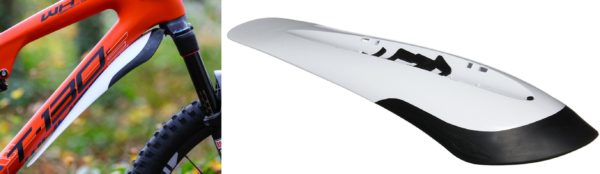
Many cyclists think slapping mudguards on a carbon fiber bike is a little daft, but once you try them you will realize just how useful they can be. Unless it’s pouring rain, it’s the spray from the wheels that most often get you wet, so mudguards are your first line of defence. Not only do they keep spray from flying into your face and going up your back, but they are also a common courtesy on group rides.

Winter riding can be a ton of fun, but it also makes for some tough riding conditions. Between the sudden changes in weather and wet roads with muddy shoulders, mudguards can make all the difference. For commuters, fenders are a no brainer, but for cyclists heading out on training rides, they also have the advantage of keeping your feet and legs from getting soaked and chilled. That means you’ll be able to ride longer (also a no brainer).

Best Mudguards

Types of Mudguards

Full Length

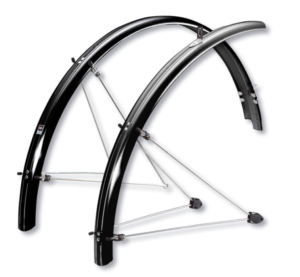
Full length, bolted mudguards are most commonly seen on touring bikes. These obviously provide the best coverage and protect the rider behind you, but they do have limited clearance and won’t fit all bikes. Some have a large rubber flap on the end of the front of the mudguard as well. The longer the front mudguard, the better chance that you feet will stay dry as they are in the firing line for water kicked up from the front wheel. For a bike to accommodate full length mudguards, you’ll want to make sure you have enough clearance under the brakes and behind the seat tube. You also want to make sure it has mudguard mounts.

Plastic Clip-On Guards

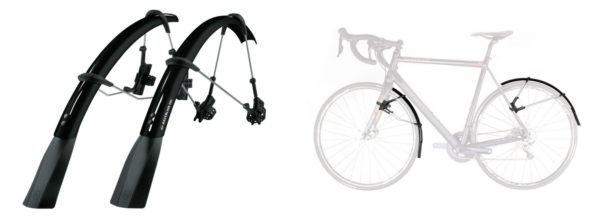
Plastic clip-on guards will attach to most road bikes. Clip-on guards are great for bikes without mudguard eyelets, but they typically provide less coverage.

Mountain Bike Style

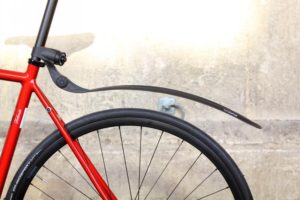
Mountain bike style mudguards attach to the downtube and seatpost. These will fit on almost any bike, and provide a ton of clearance, but provide the least amount of coverage.

The Best Mudguards

Full Length: Portland Design Works Full Metal Fenders

Price: $118

Made of anodized aluminum and adorned with laser graphics and an embossed alloy head badge, the Full Metal Fenders look great. They provide full-wrap coverage, even shielding your shoes and riders on your rear wheel thanks to sturdy rubber mudflaps. Safety release tabs ensure your wheels keep turning even if debris gets lodged between the fender and tire. The mounting system has a creative workaround for forks that do not have a center mounting hole through the use of zip ties. They have two sizes: “The Road” and “The City” that cater to road or commuter bikes.

Full Length: SKS Chromoplastic

Price: $115

The SKS Chromoplastic are a great full length option that have stood the test of time. Made by sandwiching aluminum strips inside plastic housing, they are durable and provide great coverage. They feature stainless steel stays and hardware, with a front fork crown fitting and secu-clip to lock it in place. The Chromoplastic also include a mudflap on the front and a reflector on the rear. They’re available in a variety of sized to fit tires from 20 – 45mm.

Full Length: Velo Orange Hammered Alloy Fender

Price: $65

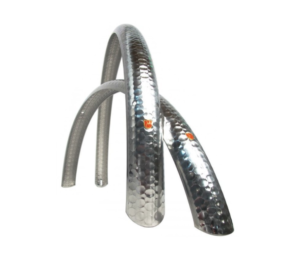
These fenders feature a classic hammered pattern and include a hardware kit to work with almost any type of mounting in the same finish as the fenders. Made from aluminum alloy for strength while staying lightweight, they come in a variety of sizes to ensure a good fit. They can be a pain to install, but they are built to last.

Clip On: SKS RaceBlade Pro XL 

Price: $60

These easy to install clip on plastic mudguards are designed for 700c tires up to 32mm in width. They can adapt to the radius of the wheel by adjusting the length of the stays. Each mudguard consists of two parts that join together with steel brackets, held by the brake caliper bolt. They do a great job of keeping both your feet and your bottom dry, and protecting the rider behind you from getting sprayed in the face.

Mountain-Bike Style: Zefal Swan Road

Price: $15

If you don’t have mudguard mounts and are looking for some protection from road spray from your rear wheel, then the Zefal Swam Road is a great option. It includes a simple but sturdy bracket that attaches to the seatpost, making it super easy to take on and off.

Mountain-Bike Style: Crud Catcher

Price: $15

The Crud Catcher fits on your downtube to catch any loose mud being flicked up from your front wheel. Mostly used on mountain bikes, you can use it on your road bike as a means of keeping mud and spray out of your face. It’s easy to mount with the supplied fittings, and gets the job done with little fuss.

Stay Visible: The Best Use of Bike Reflectors

August 27, 2019 by Sarah Lauzé

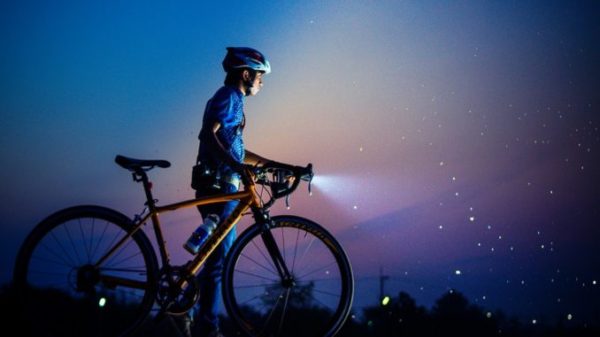
Riding at night can be a ton of fun, and it’s unavoidable if you commute on your bike early in the morning or later at night. Ensuring that drivers can see you in tough lighting conditions is the first step in staying safe on your rides. This includes bike lights, reflective gear, and making use of bike reflectors.

Bike Reflectors

Bike Reflectors as a Supplement to Lights

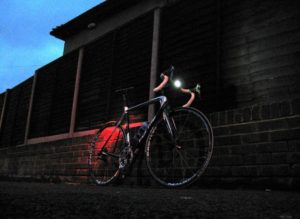
First things first, you’ll want to have a front-facing white light and a rear facing red light (one solid and one blinking is best). These are legally required in many places, and are a very good idea. Reflectors can be used to supplement bike lights, not replace them.

Fortunately, new LED lights are both affordable and long-lasting for those longer rides. Drivers have to be able to see you to have enough time to react, so better to have too many lights than not enough.
If you’re planning on heading down any low light or country roads, you’ll want to ensure your front light is bright enough to light your path. Be sure that all your lights are fully charged before heading out with more than enough battery life for the duration of your ride, and it’s a good idea to have an extra backup light as well.

The Best Use of Bike Reflectors

Bike reflectors work to bounce light back in the direction of it’s source, in this case a car’s headlights. Depending on your bike, it may already have some reflectors. Most new bikes come with a set of reflectors, but are rarely installed by the bike shop before sale. The most common places will be on the back of the pedals, the fork, handlebars, seat post, and rear rack if you have one.

Front and Back Reflectors

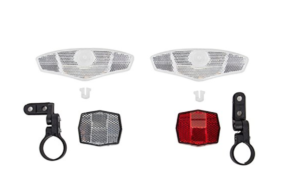
Front and back reflectors usually have a bracket that fits around the stem or handlebar. These will either snap shut, or have small screws that hold it in place. Back reflectors will go on the stem below the seat, but make sure it isn’t so high that the seat or your jacket will block it. Front reflectors will go right on the handlebars, or the front stem. If you don’t want to attach reflectors on your bike, strips of reflective tape can be used instead.

Pedal Strips

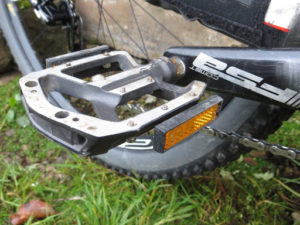
It’s been proven that drivers will notice the up and down movement of pedaling before the smoother movement of the whole bike, so it’s important to get something reflective on your pedals or feet. For pedals that don’t have built-in reflectors, you can get a reflector attachment that will bolt into your pedals. Or you can use strips of reflective tape on your pedals and wear reflective ankle bands to ensure you are visible.

Tire Spoke Reflectors

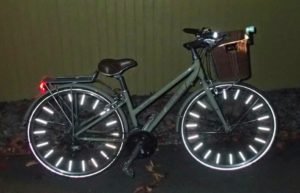
You may not want to have tire spoke reflectors on your favourite road bike or mountain bike, but they are a great idea. The rotation of the wheel will make sure you are seen from the sides as well as the front and rear. Basic plastic tire reflectors will snap on and off easily, so you could just put them on for those rides at dust or in the dark.

Cycling at night doesn’t have to be dangerous and can open up a whole new world of riding, not to mention the additional time available to actually do it. Be prepared and stay smart and you’ll reap the benefits of cycling at night be it commuting or getting some extra training in.

The Perfect Yoga Sequence for Cyclists

August 25, 2019 by Sarah Lauzé

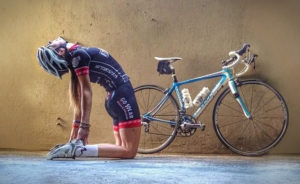
After putting miles in on your bike, it’s important to give your body some relief. Not only does this mean adequate rest days to give yourself time to recover, but a specific yoga sequence for cyclists can help those muscles out a little. Luckily, yoga has your back (and hamstrings and hips).

The key to yoga is to give yourself the adequate amount of time to relax into each pose. Whether you’re a yogi or not, taking time to reach those deep stretch targets and work on your breathing can help you become a more efficient cyclist. Anything less than 30 seconds won’t make a significant difference in lengthening the muscle fibers and tissue, but holding too long too soon can put you at risk of injury.

The Benefits of Yoga for Cyclists

Core Strength

A strong core is vital for cycling power, posture, and injury prevention, especially in your lower back region. As a result of the bent over position on your bike, many cyclists have highly developed back muscles, with comparatively weaker abdominal muscles.

This muscular imbalance is normal, but can cause issues in the long run. If you’re tired at the end of a long ride and have poor core strength, you will be more likely to slump in the saddle. This will place undue pressure on your shoulders and wrists, as well as cause lower back pain once off your bike.

Flexibility & Posture

Much in line with your core strength, maintaining proper posture on your bike will prevent injury. The natural inclination is to round your back as you crane your head to look forward. Not only does this create drag, but it will eventually cause pain in your lower and upper back and neck.

Everything in your body is connected. So, to maintain proper bike posture you have to have adequate flexibility in your lower back, hips, glutes, and hamstrings. The flatter your back can be, the less issues you’ll come up against in your training. Yoga can help you not only build the strength and flexibility to hold your posture, but also help you become constantly aware of how your body is feeling.

Breathing

You may not put much thought into your breathing when you’re attacking a hill. The pressing thought for most is to simply keep breathing, even if it looks more like panting. However, when transformed from an automatic function, it can be great training tool.

Yoga can help you learn how to monitor your breathing, making the most of each breath. It can train your body to take slower and deeper breaths to maximize your oxygen intake.

Injury Prevention

Yoga is ideally injury prevention rather than treatment, but it can help on both ends of the spectrum. Regular stretchingand yoga will reduce your risk of suffering from the typical overuse injuries that plague cyclists. These include IT band syndrome, tight hamstrings, back pain, and knee problems.

Because your legs never fully extend on the bike, your muscles get little chance to fully lengthy. There is also an imbalance of strength, with so much power coming from certain muscles, while others remain underdeveloped. Ensuring you are working and stretching these muscles off the bike will go a long way to keep things balanced.

What a Yoga Sequence for Cyclists Should Look Like

Although we’d all rather be out on our bikes than cross training, given everything listed above taking 20 minutes our of your day to practice yoga can keep you feeling your best while you are out on the road. If you’re not ready to go to an hour long yoga class, whether it be the time or financial commitment, you can piece together your own routines to do at home. Here’s what you should know before getting started.

Same time, same place.

Starting around the same time every time is the best way to turn good intention into a habit. Starting you day off with yoga can be one of the best ways to wake up y our body and mind and get you ready for the day.

From the ground up.

A great rule is to start on your mat, with poses that have your body on the ground, and work your way up. This gives your body time to work up to the more active standing poses.

Be focused.

Remove all distractions if you can. Leave your cellphone in a different room and set aside the time to just stretch. Be patient with yourself in the beginning, as it may take time to quiet your mind.

Keep it simple.

Practicing at home is a wonderful thing, but you’ll want to keep it simple. Start out by following along with the video routine below, or just begin with just these 4 poses. If you want more routines like this one, check out Dynamic Cyclist for more stretching routines for cyclists.

Should You Sit or Stand While Climbing

August 12, 2019 by Josh Friedman

Your bike has a supportive saddle to rest your body weight on your sit bones. Why would you ever want to rise up from the saddle to go uphill? You just have to put more weight on your legs… It turns out there are some compelling reasons why you would want to either sit or stand while climbing.

Sit or Stand While Climbing?

Everyone has a different riding style. Even when choosing between whether to sit or stand while climbing, riding style comes into play. It may be how you grew up riding, maybe there was an influential coach that pushed you one way or the other, or maybe there was a pro rider you tried to emulate. Regardless of which it is, there’s likely a way  you inherently prefer to climb. But science can also help to determine whether you should sit or stand while climbing.

Higher Heart Rate and Oxygen Consumption While Standing

Standing while climbing is much more similar to running than turning over the pedals while sitting. A more vertical position on the bike results in higher heart rate and higher oxygen consumption, but not greater energy expenditure according to this detailed study. Running uses more energy and is less efficient than riding, but the energy expenditure is different in cycling; standing versus sitting uses the same energy.

Lower Body Mass = More Time Standing

Larger riders will use more energy proportionally while standing. There is more weight to support along with more weight to bring up the hill. The loose formula to figure out climbing style is to divide weight in pounds by height in inches.

A 2 to 1 ratio or lower is usually a pure climber who can ride out of the saddle for long periods of time. A 2.1-2.5 to 1 ratio can benefit from switching between styles. A ratio of 2.5 to 1 or greater should probably stay seated to benefit from the bike supporting the rider’s weight.

Perceived Exertion

According to this study on whether to sit or stand while climbing, the subjects experienced a significantly lower perceived exertion on a ten percent grade while standing versus sitting. This is despite a much higher heart rate and oxygen uptake. Good sensations in the legs do not always tell the whole story. In fact, they may even lead you astray of the most efficient method of cresting a climb.

A Definitive Study

Ernst Hansen’s 2008 Study of ten well-trained male cyclists is likely the most definitive study on whether to sit or stand while climbing. The subjects were tested on a ten percent climb at four levels of power. There was no difference between standing and sitting at the lowest level; eighty-six percent of VO2 Max power. It is still an intense effort, but it allows for a rider to make a choice whether to sit or stand while climbing. The study found that ninety-four percent of VO2 Max power is the tipping point where climbing while standing versus sitting becomes more efficient. At the two upper levels tested, up to a maximum of 165 percent of VO2 Max power, standing was far more efficient.

You must remember that this efficiency holds true only if it is a skill that you have honed and allowed your muscles to adapt to. It will be highly inefficient to climb out of the saddle if you have not trained this skill.

Consider the Gradient

Some hills do not give you a choice of whether you can sit or stand while climbing. Some hills are so steep (or perhaps your bike is wildly over-geared for steep hills) that to get over them you must climb out of the saddle. This is a consideration of your threshold and how low you will let your cadence go. You may be able to grind out a twenty percent climb in a 39/25 at 38rpm, but it probably is not the most efficient way to make it to the top. Engaging your arm muscles to rock the bike is the order of the day when the climbs get really steep.

A corrollary to being over-geared or under-cadenced is whenever cadence becomes uncomfortably low, stand up and climb, even if it is not necessarily based on the gradient.

Comfort

Research likely does not consider comfort regardless of the efficiency that it may find. Riding out of the saddle opens your hips to recruit your calves and glutes, which likely remain fresher than your tired quads. Sometimes you want to give a muscle group or your sit bones a rest. Shifting from standing to sitting or vice versa can help keep your body fresher for longer, especially on a really long climb.

Traction

When roads or trails get wet, traction changes. A climb that may be perfectly fine to ride out of the saddle in the dry may now spin your rear wheel out when wet. An additional consideration is whether the road surface changes. Perhaps it is asphalt but has a lot of tar patches covering cracks. Maybe there is a lot of paint on the road. Both tar and paint become very slippery when wet, forcing you to stay in the saddle to maintain traction. It is also very important to remember tar and paint’s additional slickness when cornering. Another traction consideration is loose dirt roads. You will be forced to sit  just to make it over a climb that has a lot of dirt and gravel.

Making Sense of All the Data

All of the data can make for some confusing choices. Here are some good rules of thumb to help you decide whether to sit or stand while climbing:

  • If the grade is too steep, likely over 10%, stand.
  • If you can maintain a cadence while climbing near what you maintain on flats, sit.
  • If your muscles or sit bones need a break, stand.

In the end, climbing while standing is not less efficient if you have trained it. Get out there and practice. At the very least it will give your muscles a break on longer climbs.

4 Ways To Protect Your Bike While Traveling

July 31, 2019 by Sarah Lauzé

Strapping your bike on your car and heading out on an adventure can be a great way to expand your cycling experience. You can find quiet roads or some new new single track and get away from your go-to routes. The only issue can be figuring out how to best protect your bike while travelling from one place to another.

There are quite a few options when it comes to transporting your bike, and you have to find what will work best for you. This will also be determined by what kind of vehicle you have. Here are some of the best ways to protect your bike and ensure your adventure isn’t tainted by a damaged or stolen bike.

Protect Your Bike

Pick the Right Carrier

  • Rear Mounted Carriers

Rear mounted carried are easy to use, but can have some drawbacks to consider. In most cases they limit access to the trunk or back of the vehicle, which can become an issue when it comes to gear. They are also more susceptible to damage, whether it be from dirt and rocks or an accident. You also need to ensure your plates and lights remain visible, as this can be cause for a road fine in many countries.

  • Roof Racks

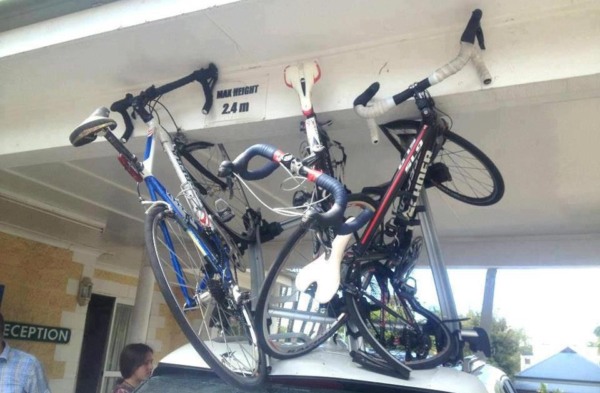
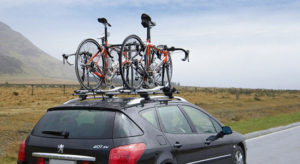
Not only does a roof rack tell the world that you are a fun Protect Your Bikeoutdoorsy person, but the it is a great option when it comes to transporting your bike. You can either keep your front wheel on, or some require you remove the front wheel and include a fork grabber that can be locked for extra security. Although roof racks generally keep your bike a lot cleaner, it increases your wind resistance and can affect how your car handles. It can also be difficult to get your bike on and off the roof depending on the height. Plus, there is the added risk of forgetting it’s up there and driving under something (like a garage) and hearing that sickening crunch.
  • In your car

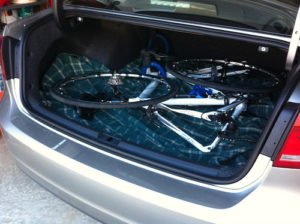
Protect Your BikeSome choose to remove the front wheel and transport their bike in the vehicle for piece of mind. Yes, this is the cheapest and perhaps the most secure method, but it does have its drawbacks. Not only can it be awkward to get your bike in and out, but it can damage your vehicle through catching material or bike grease and dirt. Also, it doesn’t leave much room for anything else if you are heading out with some friends or need other gear.
Position the Bike Correctly

Almost all bike carriers will hold the bike frame somewhere for stability. You’ll want to make sure to place the clamp as close as possible to the frame joint as that’s where the frame will be strongest. This is particularly important for carbon frame bikes.

Lock it up

If you are going to leave your bike unsupervised on your car for any amount of time then you’re going to want to lock it up. Many bike racks include a locking mechanism, but an additional lock is always a good idea. Not only does it make thieft more difficult, but it a visual deterrent to bike thieves in the first place. Whenever possible be sure to leave your car and bike in a well lit and populated area.

Keep it clean

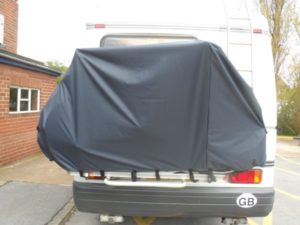
To help avoid scratches while transporting your bike, give it a wipe down before popping it on or in your Protect Your Bikecar. This is especially important for carbon bikes. Likewise, you’ll want to keep your bike rack nice and clean to keep dirt from getting trapped between your bike and the rack. If you’re using a rear mounted bike you can also use a bike cover to keep your bike clean and protect it from incoming rocks and dust.

No matter how far you are transporting it, make sure you take the necessary things with you to protect your bike. Always take a bike lock, at rag or wipe to give your bike a quick clean, and a bike cover if you are going to be leaving your bike out in the elements for any period of time.

« Previous Page
Next Page »
  • Facebook
  • Tumblr
  • Twitter

Latest Articles

JOIN Cycling: A New Training Platform for Cyclists

May 27, 2024 By Eric Lister

cold exposure

The Benefits of Cold Exposure for Cycling & Life

June 13, 2023 By Eric Lister

hill climb

The Ultimate Hill Climb Training Guide

May 31, 2023 By Eric Lister

shoulder pain cycling

How to Treat & Avoid Shoulder Pain While Cycling

April 12, 2023 By Eric Lister

psoas stretch

The Importance of the Psoas Stretch for Cyclists

April 6, 2023 By Eric Lister

cycling neck pain

The Ultimate Guide to Cycling Neck Pain: Causes and Solutions

March 21, 2023 By Eric Lister

Useful Info

  • Contact
  • Finally, A Global Cycling Club That Is Focused On Community And Love Of Cycling!
  • Privacy Policy
  • Share Your Story!
  • Terms And Conditions Of Use
  • Welcome to I Love Bicycling
  • What Happened When I Stretched Every Day For a Month

Recent Posts

  • JOIN Cycling: A New Training Platform for Cyclists
  • How to Hang Bikes in Your Garage: 4 Inexpensive Options
  • Gravel Bike Vs. Road Bike: Which One Is Better For You?
  • The 6 Types of Mountain Bikes & How to Choose the Best One for You
  • What Is a Touring Bike Good For? 5 Benefits We Know You’ll Love

Search I Love Bicycling

Connect with Us

  • Facebook
  • RSS
  • Tumblr
  • Twitter

Copyright © 2026 · Magazine Pro Theme on Genesis Framework · WordPress · Log in