• Training
    • Injury Prevention
    • Training Tips
  • How To
    • Bike Fit
    • Gear
  • Nutrition
    • Nutrition Tips
    • Weight Loss
  • Repair
  • Reviews
  • Stories
    • Funny Stories
    • Jokes
    • Quotes
    • Videos
    • Funny Videos

I Love Bicycling

I Love Bicycling is a website that is geared towards cycling for beginners with road cycling tips, training articles, nutrition tips, weight loss, how to’s and bike repair articles.

How To

  • Bike Fit
  • Gear

Riding Alone: Make the Most of Cycling Solo

April 3, 2020 by Sarah Lauzé

With half of humanity now on some sort of lock down, social isolation and otherwise, more and more of us are riding alone. Of course, we’re lucky to live in an area where we can still ride at all, but for those more social types, taking to the roads solo can seem daunting.

Once you get used to the thought, riding alone can actually be a great chance to get in touch with with where you’re at with your cycling fitness. Although riding with a partner or group is a great way to push yourself, often you’ll end up taking more breaks and sticking to the same routes that everyone knows and is comfortable with. Take this opportunity to try out some new routes, work on your mental toughness and focus, and just let your mind wander as you ride.

Make the Most of Cycling Solo

Be Prepared

You should always be properly prepared for a ride, but even more so when going alone. Check the weather forecast ahead of time, and especially with spring weather, ensure you have proper layers in case of rain. Make sure your phone is fully charged, and carry a battery pack if you’re going for a long ride. If there’s a chance of heading home at dusk, ensure you have proper reflective gear and lights for your bike. Always carry ID and some cash just in case, and take plenty of water and snacks!
Plan Your Route – but stay flexible

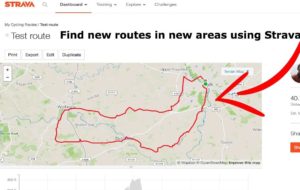
Having a rough estimate of where you’re going is always the best plan, and letting someone know the area you’re going. That being said, riding alone can be a great chance to explore a new area, adapt to the weather or change course depending on how you’re feeling. So feel free to check out some new roads, just make sure you let someone know whereabouts your going, or if your plans change on the fly.

Make Sure Your Bike Is Ready

A well packed saddle bag, and the knowledge on how to use those tools, can be the difference between a slight hiccup on your ride, and having to phone for a ride. If you usually rely on your riding partners for help with a flat tire, now might be the time to learn. Practice changing out a tube at home until you are confident you could do it on the road.

Make the Most of It
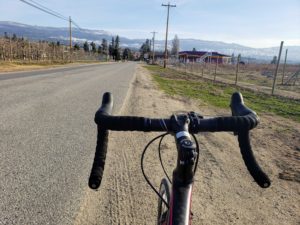
I know I’m not alone in finding solo exercise, especially cycling, somewhat therapeutic. You can let your mind wander, you don’t have to worry about keeping pace or making group decision. I quite often find I even talk to myself, working through problems, coming up with creative solutions, I am my most inspired while on my own on the road. So, don’t let the idea of solo riding keep you inside, get out on your bike and you may just find you like it more than you think.
Everything You Need To Know When Riding Gravel

March 26, 2020 by Adam Farabaugh

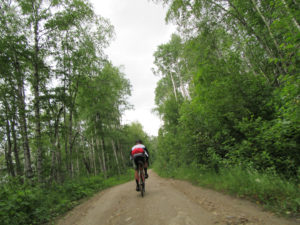
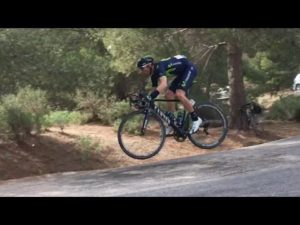
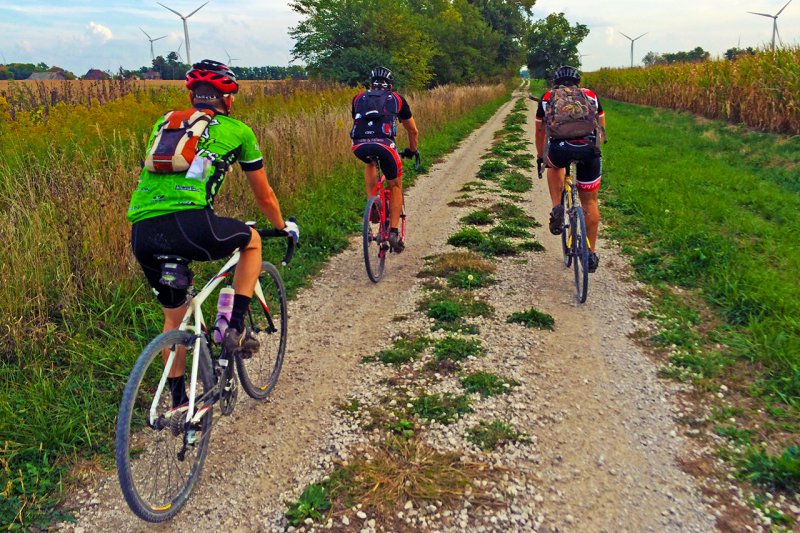
Riding gravel can be one of the best ways to have fun on the bike. It can also be one of the worst experiences on the bike if you don’t know how to ride a dirt or gravel road with grace. Riding down a paved road is relatively simple and straight forward whereas riding a gravel road requires a bit of preparation and know-how. Some stuff is common sense, like riding the smoothest line on the road, but is not always employed in the heat of the moment for one reason or another. We give you the tools you need below to not only have the skills to successfully ride a gravel road but to ride them excellently and seek them out every chance you get.

riding gravel

Equipment Setup for Riding Gravel

You could go down a mountain bike trail on a road bike but just because you can doesn’t mean you should. If you know ahead of time that you are going to be hitting a gravel road or twenty there are few things you should do prior to leaving home. One large consideration also is what the condition of the road is in. Is it going to be a farm country road that ranges from hard packed dirt to small, loose gravel? Or is it more of a jeep road that will be full of large rocks and other obstacles? For the former, a standard road bike will do but as you approach the later, a full cyclocross bike or gravel bike is a necessity.

Being Prepared For Flats

Regardless of the condition of the dirt road you must be prepared to flat. The best preventative is riding tubeless where there’s no risk of pinch flatting and the sealant inside the tire quickly fills any small punctures. And then if you flat you simply install a traditional tube. If you are running a tube, make sure you put an extra five or so psi in the tire to help prevent pinch flats. This will make your ride a bit more rough; another advantage to tubeless as you can run a lower, more comfortable pressure. With riding gravel you should also bring two tubes as well as a patch kit. If you are really going to be out there you can even strap an extra tire onto your saddlebag.

Securing Your Bottlesriding gravel

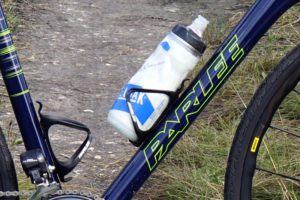
One thing that is not often thought about when riding gravel is that it is much more likely for your water bottles to eject from your cages. If you haven’t planned ahead, take a big swig out of both bottles so they are not full as well as leaving the pop-up top open. This will cause the bottle to become slightly less rigid and have a lower chance of flying out. If you plan on riding dirt on a regular basis, invest in a few water bottles that are softer and easier to squeeze. The cheap, hard bottles are easily ejected. If you have standard metal cages you should bend them in slightly. You will have to pull a bit harder to get the bottle out when you want a drink but it will keep your bottles firmly secure.

If you have carbon or composite cages there are a few different approaches. The first is to wrap a few layers of electrical tape around the tab of the cage that juts out into the indent of the bottle. Once you have a few layers, twist the roll of tape so the sticky side is out and keep wrapping for the last outer layer. The stickyness along with the increased depth will help secure your bottles. The second approach is to get grip tape much like you would find for a skateboard. Place this on the inside contact points of the bottle cage.

Lubing Your Chain

Depending on the road chances are good that dirt is going to fly up and get on your chain. Using a stickier wet lube will cause the dirt to stick to your chain and thus take it’s toll on your drive train. Use a lighter lube and make sure you wipe the chain clean after applying.

Hand Position And How To Absorb the Bumps

There are three main hand positions on standard road or cyclocross bars. They are the hoods, the drops, and the tops (the flat part of the bars closer to the stem). Each one is ideal for different scenarios. In each position you should be holding the bars tight enough for them not to bounce out of your hands but not so tight that your clenching. You want your body to be loose and absorb the bumps as you ride. One of the largest mistakes for new gravel riders is riding too rigidly. This is often because they are nervous and scared of crashing. The bike should be bouncing around underneath you while your body stays relatively stable with your arms and legs doing the majority of the shock absorbing. Although it’s on cobbles the premise is the same in the video below. You can see just how bumpy it is with their arms shaking.

The Tops

The tops are great for straight, flat roads as you can sit more upright and can easily absorb all the bumps. The tops are also great for going uphill as long as it’s not too steep.

The Hoods

The hoods are good where the tops are but when you might need to brake more quickly whether for curves or other riders. The hoods are also good for when you have to get out of the saddle as well as for going down relatively mellow descents.

The Drops

The drops should only really be used on dirt when you are going super fast on a flat section or down a descent. This position gives you the best access to braking quickly and forcefully as well as positions you to handle whatever a descent throws at you be it corners, rocks to bunny hop, or potholes to absorb.

The Physics of Gravel

The physics of gravel you might ask? Yeah. The key characteristic of a gravel road is that it is essentially a surface on top of a surface. The interaction with your tire to the top loose surface and how it adheres to the surface beneath it is what makes it different and challenging. Say you were to have a small rock on a table in front of you. If you push straight down on it with one finger, it’s not going to go anywhere. If you push down from an angle, any angle, front, back, the sides, it’s going to slide across the table. The same premise applies with your tires contacting the loose gravel surface. This means you always want to keep your bike as upright as possible.

Riding Through Corners

So now that you know why you would slide out in a gravel corner if you approached it the same way you did on a paved road, you need to know what that alternative approach is aside from just not leaning your bike. First you want to steer your bike through the gravel corner, not lean it through. This means keeping it upright but still keeping some extra weight on that outside pedal. You will want to equally balance your weight between your front and rear tire as if you over weight the front tire, like you do on a paved surface, it will likely slide out. You have to finesse the bike through the corner. As you get better and better both of your wheels will be sliding slightly laterally but this is just that first surface sliding over the underlying. You kept the bike upright and under you so it doesn’t slide out from underneath you.

Additionally when riding gravel, choosing the best line through the corner is key. This is a combination of starting wide, cutting to the apex, and finishing wide making a graceful arc along with seeing where the most stable surface resides. This will depend on the road but a lot of the time it is in the vehicle tire tracks as the loose rocks are kicked up out of it. You may have to just stay in the tire track through the turn or if you’re good, you can straighten it out on the loose parts and then cut tighter on the more stable parts to hit the apex.

riding gravel

Riding Up Steep Climbs

Going uphill on dirt can be challenging for a number of reasons. The first is that simply, it’s hard. The rough road slows you down so you have to overcome that as well as gravity. As the climb steepens, particularly on looser surfaces, your rear wheel will begin to spin out. This will happen even easier if you try and get out of the saddle. The trick here is to keep your rear wheel weighted by staying in the saddle and even sliding back on it slightly if you can’t get grip. If you are on a super steep gravel climb and have to get out of the saddle, the only way to do it is to drive the rear wheel into the ground almost like you’re trying to ride a wheelie. Even then your wheel still may slip out so it’s best just to stay seated and grind it out.

Riding Descents

Aside from going through corners, described above, there are a few other elements descending on gravel throws at you. The first and probably most important, is that you can’t stop as quick. This means that you have to approach corners with a bit less speed as you would on a paved road. Also, on descents you are going to be bounced around a bit more simply because you are hitting that many more rocks and bumps per second. You will float over more of them but your bike will bounce underneath you at a higher frequency. It’s important that you stay in the drops as you are least likely to have the bars bounced out of your hands here. You also can brake as needed. Also, when going downhill, especially on rougher roads, take your butt slightly off the saddle. This will allow the rear wheel to bounce up over a rock as it hits instead of forcing the tire to absorb the impact, which has a much higher likelihood of causing a flat.

Riding Muddy Roads

Muddy roads can be a ton of fun to ride. It’s like you’re a little kid again out getting dirty in the rain. They do have to be approached with more caution however as on top of the gravel already being a loose surface, the moisture can make them even more slick. Additionally, when descending, your rims are going to be covered in mud so it will take a bit longer for your brakes to engage and when they do, expect a longer stopping time.

Riding With Others on Gravel Roadsriding gravel

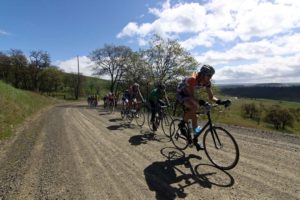
Riding with others on gravel roads can be a lot of fun but it means you not only have to watch out for yourself but everyone else too. When riding through corners or down descents, leave a little bit of extra space just in case they crash. You don’t want to be plowing into the back of them. It will depend on the road but sometimes you will be looking for a wheel to follow out of the wind. Dirt will likely fly up into your face especially if it’s wet. You will want a good pair of sunglasses to keep debris out of your eyes. Additionally, you can ride slightly to the left or right of the wheel in front of you and can cock your head a bit further to get even more out of the debris spray. Doing this also is advised when riding on someones wheel so you can see what’s coming up. You never know when there’s going to be a pothole or rock that comes up.

Finding the Good Line

It will depend on the road but normally there is one or a few good lines compared to the rest of the road. This is part of the fun of riding gravel because it’s not just ride straight ahead. Sometimes the tire track on the right will be the smoothest, sometimes it will be the center of the road, while yet other times it will be closer to the ditch. Don’t be afraid to change lines but when doing so, ride lightly over the rougher parts to avoid flatting or sliding out. And also if riding with others, make sure no one is to the side or just behind you that you will take out.

Keeping It Safe

Riding gravel roads can be a lot of fun but at the same time they can also be more dangerous. There’s an increased risk of crashing, especially when descending. Keep your speed within you skill set and as you get better and more comfortable, you can ride faster and faster. Seek out the gravel roads in your area and even take a weekend trip to someplace that has exceptional gravel roads. And if you’re up for it, check out a gravel event. There are more and more of them popping up all over the country and world.

How To Tackle Tough Road Conditions and Start Spring Cycling

March 12, 2020 by Sarah Lauzé

If you live somewhere snow has plagued the roads for the past eternity (months), then you may be getting excited to get out for some spring rides. There’s nothing better then hopping on your bike and making the most of the longer, brighter, warmer days. However, road conditions are a huge problem with spring cycling.

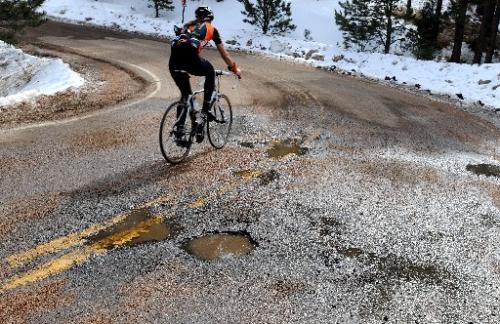
During the winter, a ton of grit and salt gets dumped on roads to keep them grippy and snow-free. Come spring time, all of that stuff ends up in one place – the shoulder where you want to ride. Spring is also pothole season, as water seeps into cracks in the road and freezes overnight, threatening to open up holes the size of the Grand Canyon on your favourite roads. There are a few easy things you can do to beat these obstacles, and stay safe during the spring cycling season.

Spring Cycling

Making the Most of Spring Cycling

Avoid Flats with Tough Tires

Nobody likes to change a flat tire, and the side of a road in a spring downpour is about the worst time to have to do it. It doesn’t help that this time of year seems to produce an abnormal number of frustrating flats. The culprit? Road grit. As it builds up on the side of the road, it collects all the little bits of stuff that would normally get blown off into the ditch – pieces of glass, metal shards, nails, etc. Normal, lightweight road tires get torn up in these conditions.

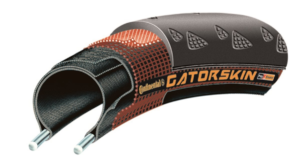
To keep you riding, a durable, puncture-resistant tire is essential. These tires have Kevlar fabric, or something like it integrated into the casing of the tire to strengthen it. Most major tire manufacturers offer at least one model like this. They won’t be the lightest, or the smoothest rolling tires, but they will take a beating. Check out Continental Gatorskins for a nice balance of performance and protection. The same company also makes even more durable (and heavier) tires – the GatorHardShell and the Grand Prix 4-Season. Other options include the Specialized Armadillo and Schwalbe Marathon Plus.

Look Out for Potholes

Weaving your way through the obstacle course that some spring roads tend to turn into can be a daunting task, but there are a couple of tricks that will help you out. The simplest is to look where you want to go, rather than looking at all the things you want to avoid. If you have ever managed to hit the only rock or hole on a nice smooth stretch of road, it’s probably because you were staring straight at it. Look ahead, pick your path through the debris, and then follow that path with your eyes. Your body will guide your bike there without you having to think about it.

As skillful a bike slalomer as you might be, occasionally there will be times that you can’t go around something. Maybe you are on a shoulder with cars to your right, or you might be in a group with other riders. Whatever the situation, you need to take alternative action. Enter the bunny hop. If you haven’t heard the term before, the general idea is to ‘jump’ your bike with both wheels leave the ground for an instant. This isn’t something that you want to try out for the first time at 25 mph on pavement, so find a grass field to practice on. Make sure you have mastered the movement before trying it on out on the road, especially when adding speed to the equation. Thankfully, with clipless pedals, the task is considerably easier. There are countless YouTube tutorials out there, but in short, you are going to ‘hop off’ your pedals (not literally, since your feet are clipped in) and then bring the bike up along with you.

Wear Layers

Spring can be a time of quick weather changes, so while you may head out on a ride in the sunshine, it’s always a good idea to be prepared for rain and wind. As far as clothing goes, that means layers, layers, and more layers. You want a warm base layer as well as a waterproof shell, gloves, and even waterproof pants if necessary.

Embrace the Fender

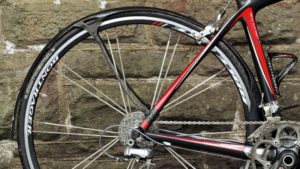
Grit and water aren’t much fun to ride through, and they are even less fun when it’s spraying up into your face as you’re riding. For this reason, fenders are your best friend for spring riding. They keep you (relatively) dry, grit-free as well as keeping all that same junk from getting into your drivetrain. This can reduce maintenance and keep your bike running smoothly. The type of bike you have will determine what your fender options are. For full-fledged race bikes, choices are limited since attachment points and tire clearance are minimal. In this case, the SKS Race Blade fender is one of the best options.

With lower-end road bikes, touring and commuter bikes you have many more options. Some people like clip-on fenders, since you can take them off at the end of the season to keep your bike looking slick. The downside to these are they won’t offer the same coverage and performance as a dedicated bolt-on fender set. Whatever you choose, it will be much better than going without fenders!

Clean Your Bike

Although fenders can help a ton to keep some of the dirt and grime off you and your bike, you should still give your bike a quick clean after every spring ride. It’s inevitable that it will cause wear and tear to your bike, which is why many cyclists have spring specific “beater” bikes, but this isn’t always an option. Check out this quick guide to a bike cleaning to keep your bike running smoothly.

Ensuring you are prepared both technically and mentally will have you jumping into the cycling season in no time. Spring riding can be some of the best rides, so don’t let the conditions deter you from getting out there!

How To Find the Best Bike Saddle For You

March 11, 2020 by Sarah Lauzé

An uncomfortable bike saddle can quickly turn your bike from an instrument of joy to one of torture. Not only can it be extremely painful, but it can also lead to long term injuries or saddle sores as you contort your position on the bike trying to lessen the discomfort. There are a number of factors that contribute to how  comfortable bike saddle is, but the most important one is you.

We are all built differently, so there is no “one size fits all” when it comes to a perch for your unique bottom. What feels comfortable to one person, will feel like torture to another. So, we will outline some things to look into before starting the search for you dream saddle, but keep in mind that it will likely come down to trial and error.

Saddle Features

Width

You may think that the wider the saddle, the more comfortable it would be, but this is not the case. Neither are narrow saddles the be all end all when it comes to finding the best fit. The first step towards finding the most comfortable bike saddle is to measure the distance between your sit bones. This can be done with an “Assometer” at your local bike shop, or at home with a piece of paper and a pencil. Once you know the distance between your sit bones you will want to add 2 cm, 1 cm past the sit bones on each side.

If a saddle is too wide, the nose of it can start to rub on the inside of your quads. If it is too narrow then you sit bones will not be your main point of support for your weight. The pressure will then come down onto soft tissue, which can be extremely painful over any amount of time or distance.

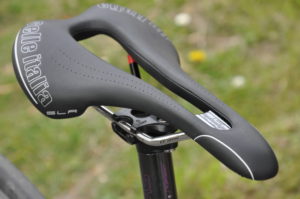
Cut outs

The popularity of cut outs largely came from a 1997 study. It claimed that reduced blood flow caused by saddle pressure could potentially lead to erectile dysfunction and permanent reproductive failure in men. Although this has since been disproved, the concern is still there. It comes down to personal preference and what feels most comfortable to you.

A test to see if you might benefit from a center cut-out is to sit on a hard wooden chair or bench and lean forward without arching your back to where you can rest your elbows on your knees. Sit like this for a few minutes and if you find that there is adverse pressure and discomfort on the soft tissue being pressured then you will most likely benefit from a cut-out in your saddle.

Softness / Firmness

It’s easy to think that the more padding a saddle has the more comfortable it will be, but it actually puts more pressure on sensitive areas. It can pinch and chafe rather than support your sit bones. The ideal firmness will put enough weight on your sit bones, while still providing enough padding to be comfortable. Some riders prefer no padding at all as it puts the pressure exactly where they want it, but that isn’t the case for everyone.

Shape

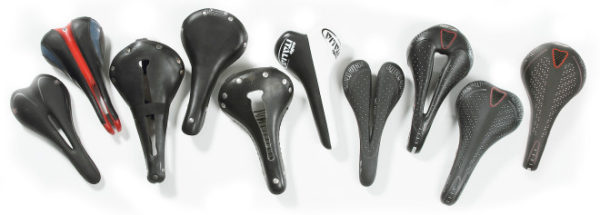
There are two general shapes for saddles when viewed from above: T-shaped and pear-shaped. If you have issue with chafing or your quads rubbing together, then T-shaped will be the better option for you. A pear-shaped saddle can be good fit if you shift your position a lot while riding, as there will be more evenly dispersed support.

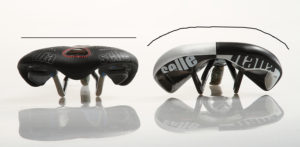
The second aspect of saddle shape if how flat or rounded the surface it. When viewed from the back, how much curvature does the saddle have? You want it to be slightly curved to keep you centered on the saddle, but not so curved that there is pressure on the central areas between your sit bones.

Gender Specific

Looking at saddles designed specifically for men or women may be a good place to start, but don’t let it dictate your decision. Women typically have wider set sit bones, and therefore require slightly wider saddles. That being said, many women find mens saddles that work perfect for them, just as many men ride on womens saddles.

Comfortable Bike Saddles

Touring Saddles

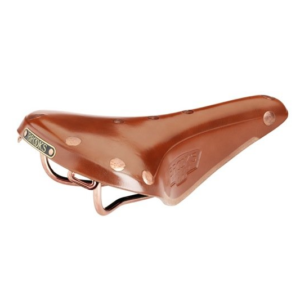
Brooks B17

$120

The B17 design was first introduce in 1910, so it may seem odd to be highlighting it here. However, the fact that this saddle has changed very little over the past century speaks to “if it’s not broke, don’t fix it.” It was made for those long distance tours, with a wider shape and a slim, short nose making it ideal for a more upright position on the bike. Handmade in Birmingham, this leather saddle molds to your bottom over time, giving you the ultimate personalized support.

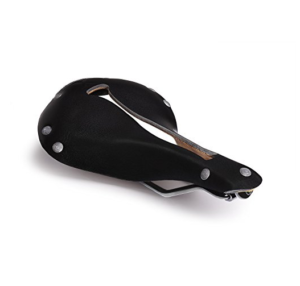
Selle Anatomica X Series

$150

Unlike the Brook saddle, the X series has no break in period, and is quite comfortable for most riders right from the start. The leather top is supported by a stiffer laminate layer glues to the underside, striking the balance between comfort and durability. The slot shape is meant to eliminate perineal pressure, sit bone pain, and saddle sores.

All-Rounder Saddles

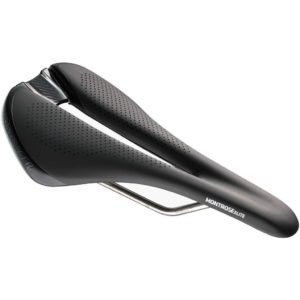
Bontrager Montrose Elite Saddle

$130

Intended to be one of the more all-purpose saddles on the market, the Bontrager Montrose Saddle has been perfected year after year. It uses something called inForm BioDynamics to optimize your natural movement on the bike. This helps eliminate any restrictions on your legs or power output, whether racing or heading out for a group ride.

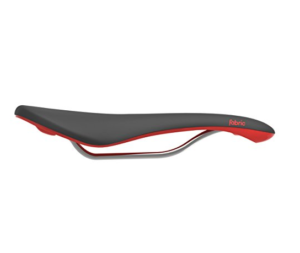
Fabric Scoop Pro Saddle

$170

It may not look like much, but this simple design is one of the more popular in recent years. Available in three shapes to suit your position on the bike, you can find a specific fit to your riding style. It brings together the perfect combination of comfort, performance, and unique construction. Plus, with the waterproof microfiber, the Fabric Scoop is durable and will stand up to years of use.

Racing Saddles

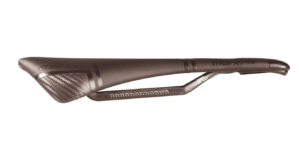
Selle San Marco Mantra

$214

Weighing in at just 122.1g, this saddle is for racers who are worried about adding any weight to their bike. The stiff design allows for an efficient transfer of power, and is made for those who ride in an aggressive position.

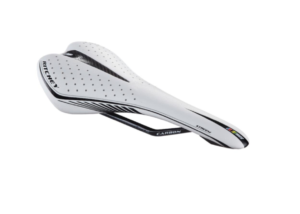
Ritchey WCS Carbon Streem

$144

This light (155g), low-profile design and narrow carbon fibre injected shell is built for the faster riders who prize long-term support. The comfort comes from the shock-absorbing ‘Vector Wing’ rather than padding, so the flat profile will suit hardened racers, but can seem harsh for casual riders.

It is extremely important to find a saddle that not only fits your contour, but is also comfortable. Your saddle is the most important comfort piece on the bike as it holds the majority of your weight, so don’t rush into it. Even with the right size saddle, flat-ness, firmness, and cut-out preference, you may have to adjust your saddle further through minor tilt adjustments.

The Best Waterproof Panniers

March 4, 2020 by Sarah Lauzé

If you’ve ever been on a bike touring trip (or bikepacking) you know how important it is to keep your gear dry. There’s nothing worse than crawling into a damp sleeping bag after spending all day out in the elements. So, before heading out on the trip of a lifetime, be sure to invest in the best waterproof panniers to keep you dry no matter what.

The Best Waterproof Panniers

The Best Pannier Brands

Over the years there have some brands that have stood above the rest when it comes to pannier design and quality. Preparing for a bike tour is exciting, but can also be overwhelming with the amount of gear available. Going with one of the trusted names will ensure you don’t arrive at your campsite with soggy gear, can keep everything organized with a streamlined design, and will keep you gear from spilling all over the road without you noticing (yes, that has happened).

Some of the best pannier brands are as follows: Ortlieb, Vaude, Arkel, Carradice, Altura, Hyalite, Axium, Overboard, Thule, and Brooks.

Features To Look For

Panniers are the core of your touring setup as they will hold everything you need to survive days, weeks, or months on your bike. You will want a bag that can easily fit all of your camping gear, clothes, food, and bike tools for any technical bike issues that may come up.

Size

If you’re looking for a quality pannier for a weekend trip or for commuting to and from work, then you’ll want up to a 20 liter set of waterproof panniers (10L each). If you’re planning on setting out on a multi-day or week tour, then you may want up to 40 liters (20L each) of space.

Weight

Waterproof panniers are usually one large compartment with a roll top, making them relatively light. Bags designed from canvas or leather tend to be heavier due to more pockets and a fold over top.

Attachment system

For bicycling touring, you will want to make sure the attachment system is simple enough to easily remove, but will also remain secure over hours of riding and bumpy roads. Most panniers have a universal mount, but some require a brand specific rack.

The Top 5 Waterproof Panniers

Ortlieb Back-Roller Classic Panniers

The Best Waterproof Panniers

Price: $260 (for pair)

Size: 20 liters each

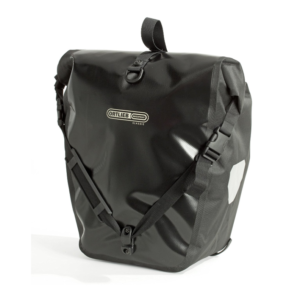
At the top of the list is the classic Ortlieb Back-Roller waterproof panniers. These bags are popular for both commuting and touring thanks to their capacity, durability, and completely waterproof design. Made from polyester with a double coated construction and a thermoplastic waterproof coating, these bags have earned their 5-star rating.

The price may seem daunting, but this includes a set of two bags, and they will last you a lifetime. The only downside is that the one large compartment design can be tough to organize, but there is now an inner pouch for a laptop or tablet. Most people use plastic bags or stuff sacks within the bag to keep their gear organized.

Thule Shield Pannier

The Best Waterproof Panniers

Price: $149 (for pair)

Size: 14 + 24 liters each

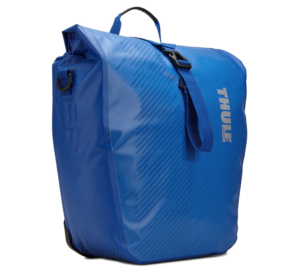
The Pack ‘n Pedal series from Thule is known for its budget friendly waterproof options for both commuting and epic bike tours. The price includes both rear bags, and includes a detachable shoulder strap for removing and carrying the bag if necessary. For cycling into the night, the Thule Shield is highly reflective, with attachments for further bike lights. There is a lower magnetic clip connection for a secure fit, but it can come lose on really bumpy dirt roads or trails, so this bag is better for smoother roads. There are 14 and 24 liter options available.

OverBoard Waterproof Classic Pannier

The Best Waterproof Panniers

Price: $179 (for pair)

Size: 17 liters each

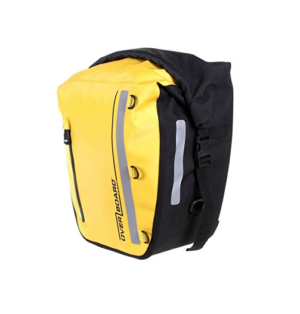
OverBoard is known for being virtually ‘bombproof,’ and these bags live up to the reputation. Their classic pannier is 100% waterproof (feel free to ride through all the puddles) while remaining cost effective. The universal rack attachment will secure to any rack, and the inner lining gives shape to the bag, so you know just how much room you’re working with when you go to pack. There is also an outside compartment that is great for storing a phone or notebook.

Dry-Lites Waterproof Pannier

The Best Waterproof Panniers

Price: $100

Size: 14.5 liters each

If you’re looking for a lightweight waterproof solution, this is it. Dry-Lites Waterproof Panniers are featherlight and perfect for lite touring. If more room is needed for gear, these bags are compatible with a trunk bag for a little extra room and accessibility.

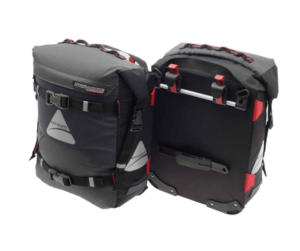
Axiom Tempest Hydracore P35 Plus Panniers

The Best Waterproof Panniers

Price: $147

Size: 13.5 liters each

Modern features without sacrificing a waterproof seal, the Axiom Tempest Hydracore P35 brings you the best of both worlds. Used by commuters and touring cyclists alike, these bags offer the pockets that the other bags don’t. However, these can actually make packing a little tougher on longer trips, so you’ll want to make sure all your gear fits in the space adequately. The bags can removed easily from the rack, and there is even a removable laptop sleeve included.

The Best Biking Multi-Tools

February 27, 2020 by Sarah Lauzé

A good multi-tool can be the difference between a minor roadblock in your ride or a long walk home. If your chain breaks mid-ride and you don’t have a multi-tool with you, then you better hope it’s not getting dark.

There are a ton of great multi-tools out there, with pretty much every major cycling brand bringing something to the table. So what makes one better than the other? Let’s start with some features to look for in a tool, and why you need them.

Features to look for in a multi-tool

  • Allen keys – At the core of most multi-tools is the allen key. You’ll want a wide range included, from 4-8mm sizes.
  • Screwdrivers – Most bikes still include a mix of flathead and Phillips screws, so these remain essential. Take a look at the adjustment screws on your derailleur to make sure you have the right fit for your bike.
  • Torx drivers – Torx screws are becoming increasingly popular, and more and more screws on your bike will most likely have a Torx head. The Torx 25 is the standard size that will work for most parts, so make sure there’s one included.
  • Chain splitter – You probably won’t be doing an extensive chain repairs or sizing out on a ride, but if your chain breaks you’ll need a chain tool to dismantle the old broken link. Always carry a joining link for a quick fix.
  • Tire levers – Your best friend when you get a flat, tire levers may or may not be included in a multi-tool. Some include them in the body of the tool itself, or as separate pieces. Regardless, they’re always a good staple to carry in your bag.
  • Spoke keys – Spokes can break and bike wheels can buckle due to a crash while out on a ride. Although this can be a tough fix, you can correct it enough to get you home by tightening various spokes to pull the wheel back into shape with spoke keys.

5 of the best biking multi-tools

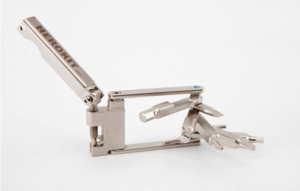
Hero Kit – 12 in 1 Cycling Multi Tool

Price: $19

Great for both road and mountain bikes, this multi tool by Hero Kit has 12 features in one lightweight, compact package. Made of stainless steel it’s tough, if not a little on the heavy side, but a great product for the price.

Tools: A chain tool, 6 sizes of allen wrenches, 2 spoke wrenches, T25 Torx bit, and both phillips and flathead screwdrivers.

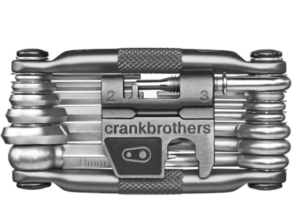
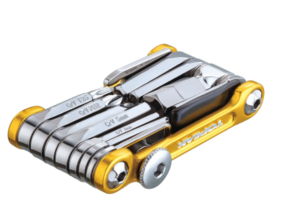
Crank Brothers M19 Multi Bicycle Tool

Price: $24

The Crank Brothers M19 has all the features you would expect in a multi tool, minus tire levers. A little on the heavier side, the M19 is a mix of tensile steel tools and stainless steel. The stainless steel case included is impossibly hard to open, but the tool itself seals up tight and the case is unnecessary.

Tools: Seven sizes of Allen wrenches, four spoke wrenches, small and large Phillips and flathead screwdrivers, T-25 Torx driver, universal chain tool, and 8- and 10-millimeter open wrenches.

Topeak Mini-20 Pro

Price: $39

This multi tool is perfect for those rides where you’re not carrying a whole lot of gear. It has a compact design, is lightweight, and the 20 tools is a feat in design alone. However, as it’s so compact, it can be tough to get each of the tools out, and the short reach can make getting into certain parts of the bike a challenge.

Tools: 9 sizes of Allen wrenches, T25 Torx wrench, spoke wrenches,  tire lever, steel chain hook, chain tool,  chain pin tool, Phillips and flathead screwdrivers, bottle opener and a spoke holder.

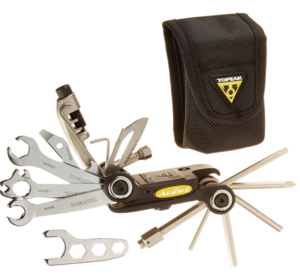
Topeak Alien II 26-Function Bicycle Tool

Price: $49

The Topeak Alien II is the big brother to the Mini-20 with a two piece body and a tool count of 26. As the tool separates in half, you can use both simultaneously and with more ease. With the wide range of tools, it’s perfect for use at home or on the trail, and remains one of the most popular multi tools out there.

Tools: 14g and 15g spoke wrenches, two integrated tire levers, a T25 Torx wrench, Phillips and flathead screwdrivers, a mini pedal wrench for field repairs, eight sizes of Allen wrenches (2 through 10mm), six box wrenches (two 8, 9, and 10mm sizes), a steel wire chain hook, a stainless-steel knife, a chain tool, and compartments for two chain pins.

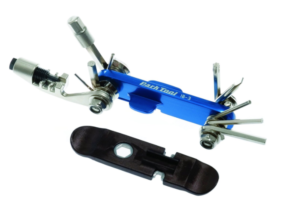
Park Tool, IB-3, I-Beam 3, Multi-tool, 13 functions

Price: $24

Very similar to the Crank Brothers M19 multi-tool, the IB-3 by Park Tool is just 2 grams heavier with the addition of a 1.5mm Allen key and a tire lever. It’s compact design gives you everything you need for minor repairs out on the road.

Tools: 7 sizes of Allen wrench, straight blade screwdriver, T-25 Torx, tire lever, two spoke wrenches, and a 10-speed compatible chain tool.

What To Look for in a Cycling Training Plan

February 21, 2020 by Sarah Lauzé

What is the purpose of a cycling training plan? When you boil it down, it comes down to setting goals and measuring progress. A training plan serves as your road map to get you to a certain place, but what are some important things to look for? Just as you wouldn’t start trying to navigate the streets of a foreign city without a detailed map, you want to establish what aspects you need included to see success.

There are a lot of options when it comes to training plans, and also the means to how you access them. Some will choose to spend a little more and hire a personal coach to build their plan for them. Others will use online resources or join a certain challenge. The issue here is that these are not personalized to you. What happens when the timeline set up in a certain plan doesn’t match your life in a realistic way? You need to be able to understand the basics, so that you can take certain aspects of a cycling training plan into your hands.

Cycling Training Plan

Why You Need a Training Plan

Establishing a cycling training plan eliminates the danger of becoming complacent or falling into the “I will do it tomorrow” thought pattern. It makes you accountable as you follow the plan. It motivates you to change your habits and manage your time more efficiently to finish your first century ride or sign your name to that first Gran Fondo event.

Another great aspect of a training plan is to avoid the dreaded ‘plateau’ that is so common with athletes. As an active lifestyle becomes part of who you are, it’s easy to reach a certain point and stay there. There’s nothing wrong with maintaining a healthy fitness level, but if you want to continue to see changes, then you have to keep pushing yourself.

Cycling Training Plan Options

  • Personal Coach – A personal coach will not only create a training plan tailored to you and your goals, but they will also help keep you accountable. They will be checking in on your progress, and have the knowledge to make necessary changes to get you to where you want to be as quickly as possible. The downside? They are, in most cases, the most expensive option.
  • Pre-Prepared Training Plans – There are a ton of resources available online that can serve as a general outline or starting point for your training plan. In some cases they can be difficult to follow because it will not take into account your lifestyle, starting point, or your specific goals.
  • Build your own – It’s always better to understand why you’re doing something, rather than simply doing it because someone tells you to. So, if you have the time to do the research and put together a comprehensive training plan for yourself, by all means do it! This can not only work well, but it help you come to understand your own body a whole lot better.

Start at the end

No matter what option you go with for coming up with a training plan, you will need to define your goals. It may sound counterintuitive, but starting from your overarching goal and working backwards is actually a great idea. This may be weight loss, completing a century ride, or doing a multi-day Gran Fondo. Once you’ve defined this goal, you can break it down into tangible “check points.” These could be  various distances, target weights, or a certain number of hours spent on the bike.

Measure your progress

Now you need to take a look at where you are right now. This may include testing yourself to find your mental and physical limits. What can your body handle? This can be done a number of ways.

  • Power Meter – A power meter is a great tool as it make comparisons easy. It can give consistent feedback on your effectiveness, and is a great training tool. Power is ultimately a measure of how hard you are working, and by using a power meter on your bike, you can more precisely monitor your effort. That being said, it’s not a must-have.
  • Heart Rate – Using a heart rate monitor is a great way to structure workouts, and a lot of training plans include heart rate zone training. Heart rate training is a valuable tool for all athletes, as it helps bypass your brain to listen directly to what your body is telling you.
  • Your Brain! –  You don’t really need anything but a bike to complete a cycling training plan. You can make your own intensity scale (as long as you’re honest with yourself) from 1 – 10. 1 would be “I could do this all day,” and 10 would be “this is everything I’ve got in me.” The issue, of course, is that it takes a special kind of person to be that disciplined with themselves.

One of the greatest things about a training plan is being able to track your progress in a tangible way. Once you sign up for a cycling training plan you will see your body, mind, and outlook improve over the next few days, weeks, and months. You will continuously break your own personal records and the records of your friends, as you monitor your own fitness. Keep track of each ride you do, even if you just write down the basics like distance and time. Keeping a food diary can also be a great way to look at why you may feel great some rides, and then not so much on others.

Not only will this show you how much you can achieve, but it also gives you some serious bragging rights. There’s nothing more satisfying than looking at your year end totals, whether it be distance or time in the saddle, and seeing some huge numbers.

Off the Bike

A good cycling training plan helps you to keep track of less-obvious issues of fitness such as sleep and recovery, nutrition and hydration, and strength and stretching. You’re more likely to meet your fitness and weight loss goals if you’re looking after every one of these aspect. A detailed cycling training plan helps you keep track of these small details and makes you more conscious of them on a day-to-day basis.

  • Strength / Cross Training – Strength training for cyclists further develops tendons and supporting muscles which can help treat and prevent overuse injuries. Your training plan should include some strength training, whether through some basic weight training or cross training.
  • Stretching – Stretching can aid in aligning the thick and thin muscles back into their ordered state after rides, as well as remove the lactic acid buildup that causes soreness. Maintaining flexibility will also help you stay in the correct posture while riding, which can prevent injury.
  • Nutrition & Hydration – Eating right can be hard at the best of times, especially for those of us who like to exercise as a hobby. With a passion for cycling often comes a need for a balanced diet – and this is even more true when you opt to cycle for long periods of time, or working towards a goal. Having a cycling training plan that includes a detailed nutrition plan can make sure you are properly fuelled for each ride, and will help you get to those goals faster.

Stay Flexible and Adapt

As with mapping out anything, whether it be a road trip or your cycling training plan to success, you need to remain flexible. If you have a rough night’s sleep, or feel like you’re coming down with a cold, then ignore what your plan says and take a rest day. There’s no point in half-hearted training, and at that point taking a rest day is probably more important. You have to be able to have the freedom to switch around training days, because things will come up. Having structure to your training is important to ensure it happens, but you also need to remain flexible enough to have a life!

8 On-the-Road Bike Repairs You Need to Know

February 20, 2020 by Sarah Lauzé

Cycling is beautiful for its simplicity, but that doesn’t mean things don’t go wrong. When you’re out on a ride and you get a flat or your chain breaks, it shouldn’t mean the end of your ride. Although these things can be fixed with ease back in your garage with all the right tools (or at your local bike shop), it’s important to learn some of the most common on-the-road bike repairs that will come up. Being stranded miles from home is no fun, and although it may be easier to call for a ride home, you’ve got what it takes to do a quick fix and keep riding!

On-the-Road Bike Repairs

Tools to Bring

You should be prepared with the right tools on the road or trail and know how to use them should a mechanical or flat tire occur. The tools to bring are:

  • Spare Tube
  • Pump or CO2 Inflator with an extra cartridge just in case.
  • Tire Levers
  • Patch Kit
  • Multi-tool with a chain tool on it

8 On-the-Road Bike Repairs

1. Fixing a Flat

If you ride a bike more than just around town you should know how to fix a flat. Fortunately it’s pretty easy:

2. Broken Chain

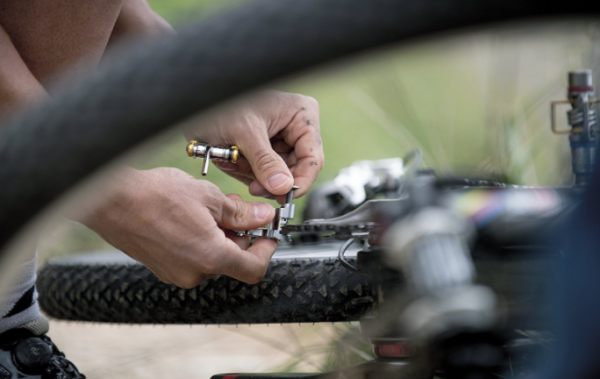
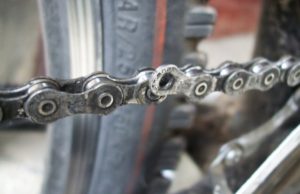
Broken chains don’t happen too often when riding but when they do, you’re not going very far until you fix it. A chain will either break completely or a link will become kinked. To fix it, all you need to do is to remove that link.

  1. First locate the broken link. There should be two plates that are loose, and flapping around or a link that has a bend in it. These are the ones that get removed. You do not need to remove the chain from the bike. Keep the chain threaded through the derailleurs if you can as it will save you time.
  2. Examine the chain breaker tool. You’ll notice a circular cradle that the push-pin moves through. Rest the link in this cradle where the pin lines up with the push-pin of the link you’re removing.
  3. Turn the push-pin to push the pin through and out the other side. If you’re using a master link, you will need to have both ends of the chain an inner link as the master link is an outer link. If you don’t have a master link or another connector pin, do not push the pin all the way out the other side of the chain. Leave it so the pin is over enough to remove the inner link but not so far that it falls out. This will be important in the next step. Now do the same one full link removed, one inner link followed by one outer link or vice-versa, from the pin you just pressed out with the broken link being in-between.
  4. If you removed the chain from the derailleurs, thread it back through being sure that it’s going the right way. Then place the chain in the smallest gear in the back and rest the chain to the inside of the chain rings on the front against the bottom bracket to give enough slack.
  5. Now install the master link if using one through both the inner links and lock into place. If you have a connector pin, line up the ends of the chain and press that through breaking off guide end with your chain tool. If using the same pin that you just pushed out and left on the outer link, line the end up and push the pin back in. You want it so both sides of the pin are flush with the outer plate of the chain. If you pushed the pin too far through when you were removing it, line the chain up in the chain tool and set the pin on the resting plate to then press the pin in. It may be a bit off at first but it should line up as you continue to push it through the hole.
  6. That’s it. The link with the pin you just installed may be a bit stiff but if you bend it laterally slightly with your fingers, it should loosen up to where you can’t even tell which link it was. The chain is now one link shorter, unless using a master link, but will still be good to go.
  7. One note is that reinserting a pin is now the week point of the chain. When you do make it home, take out that pin and put in a connecting pin which will better strengthen the chain. The problem is you may not be able to tell which link it was so it’s recommended that you replace the entire chain.

3. Tire Tear

A tear in a tire can end your ride. If it’s not extremely big however, you can fix it with a few little tricks. The first is the dollar bill trick where you fold up a dollar bill and place it between the tube and the tire where the hole is. This will only work if the hole is small enough. Once the hole is past a few millimeters in size, you are going to need a tire boot which should also be carried in your saddle bag. This rubber strip will be large enough to place over the hole and not allow the tube to poke out. The problem with both the dollar bill trick and the tire boot is that the tire can continue to split particularly if you’re on rough roads or terrain. Adding a piece of electrical tape in place of or in conjunction with, will help to hold the tire in place and not have the hole continue to grow.

4. Broken Spoke

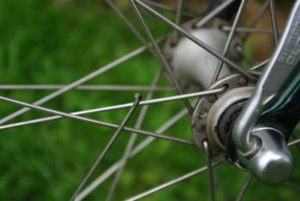
First, you need to get the spoke out of the way so that it doesn’t interfere with your wheel turning. If you have a broken spoke on the front wheel, you should be able to just slide it out of the hub. If it’s on the rear wheel, bend the broken spoke around one of the spokes adjacent to it. Then you can adjust the tension on the rest of the spokes in your wheel.

To adjust the other spokes to accommodate for one missing spoke, you’ll need a spoke wrench, conveniently on many multi-tools, to tighten or loosen them by turning their nipples at the rim. Turn each spoke on either side of the one that just broke clockwise as if you’re looking from the hub of the wheel toward the rim. This will loosen those spokes. If this doesn’t move the rim back to center enough, ie. it’s still bouncing off the brake pads, go one more spoke in either direction and turn them counter-clockwise. This will tighten the spokes pulling the rim back toward the side of the broken spoke.  fIf the rim is moving too far to the right, you’ll want to either tighten the spokes that attach to the left side of the hub or loosen the spokes that attach to the right side of the hub. You’ll make this decision by testing the spokes and determining whether they feel too loose or too tight.

Never make drastic changes to the tension of a spoke at any one time. Just make half-turns with the spoke wrench each time and check and see how true the wheel is. It is easy to go too far. Once you get it roughly straight, you can ride the wheel. If the rim is still slightly touching the brake pads, open the brake quick-release to allow for more space. Once you get home, check out this article on how to finish up the repair.

5. Broken Front Derailleur Cable

With a broken front derailleur cable you are going to be stuck in the little ring for the rest of the ride. With a triple chain ring, you might be able to turn the limit screws enough to line up the derailleur up with the middle chain ring but it depends on your derailleur and set-up.

6. Broken Rear Derailleur Cable

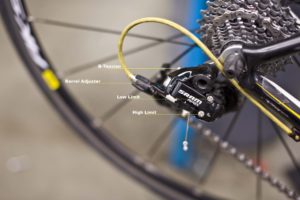
With a broken rear derailleur cable you are going to be stuck in your smallest gear, normally an 11 or 12 tooth. To get the chain up to a bigger, easier gear, turn the H or high speed limit screw in as far as it can go. This should push the derailleur up at least a cog or two. You may have to back it back out a tad if it doesn’t line up well.

7. Broken Brake Cable

It’s going to be rare that you have a broken brake cable as they’re made not to fail. If you’re riding anything other than perfectly flat roads without many intersections or traffic you might be able to gingerly make it home otherwise it’s best to get a ride and not risk needing to stop quickly and not being able to.

8. Shifting Becomes Off

A lot of times, particularly after a new cable is installed, your rear derailleur shifting will become slightly off. This is because the cable stretched ever so slightly. To tighten it, simply turn the barrel adjuster on your derailleur counter-clockwise a quarter turn until the pulley wheel lines up exactly with the gear. You won’t have to turn it much unless it’s way off.

Cycling Terms for Beginners

February 16, 2020 by Sarah Lauzé

Riding a bike is simple right? It’s something most of us learn to do when we’re children, but all the cycling terms may not come as easily. When you’re first getting into cycling as an adult, you may think you know all there is to know. Swing your leg over the seat and start pedaling. Easy peasey.

However, the problem will arise when you start heading out on group rides, or have to take your bike into the shop. You can only refer to your sprockets as “thingamajigs” so many times before someone shakes their head at you. It may be time to learn the talk if you’re going to walk the walk, so here is your guide to cycling terms for beginners.

The Bike Basics

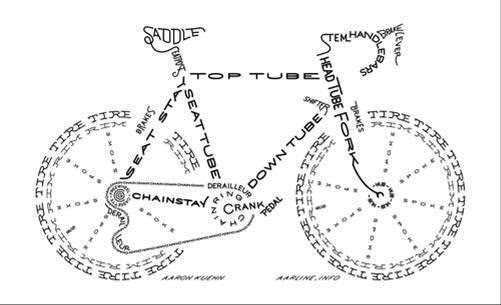
Brakes – They may come in a variety of styles, but the main idea is to keep you from running into cars or other harmful objects. As your one and only stopping force, your brakes are important to your safety on the bike. The left brake typically slows the front tire, so be careful not to just hit that one or you may do an endo (see below).

Chain – The bike chain is the main mechanical driving force of your bike. It is made up of chain links that encircle the gears and make the wheels spin.

Crankset – A part of the larger drivetrain, the crankset is the front set of sprockets closest to the pedals. It is the crank arms (attached to the pedals) that rotate them.

Cassette – The cassette is the set of sprockets on the rear wheel, driven around by the bike chain. The chain moves up and down the cassette as the rider changes gears.

Gears – Ah yes, the magical gears. Most bikes have two sets of gears, one at the rear of the bike (the cassette) and one at the front (crankset). These are what adjust how hard you have to pedal to cross the terrain (smaller gears for climbing and bigger gears for flats).

Cog – As one of the rings in the cassette, a cog is also known as a sprocket or gear. The whole set is called a cassette or cogset.

Fork – The split part of the bicycle that holds the front wheel in place.

Frame – Also known as the backbone of the bicycle, the frame is what brings all the parts together. Usually hollow and made from lightweight material, it is the most important feature to finding the right bike. Ensure the frame fits you properly as it plays into your riding efficiency, posture, and overall comfort on the bike.

Hub – Where the rotation happens. The hub is the center of a bike wheel that allows you to roll smoothly along your way.

Lube – Lube is what keeps the moving parts of a bicycle, well, moving. Don’t leave home without the lube!

Granny Gear – No offence to your Granny, but this is her go-to gear. As the lowest gear ratio possible, this will be easy spinning on flats, but comes in real handy when it comes to those climbs.

Spokes – You know those metal toothpicks that go from the center of the wheel (or hub) to the edge of your wheel rim? Those are spokes! They are small but mighty, and provide strength and support for your weight on the wheel.

Saddle – No, you’re not going horseback riding (if you are, you’re on the wrong website). The bike saddle, aka the beat seat, is one of the most important factors in your overall comfort on the bike, so choose wisely!

Beater – It may have seen better days, but that doesn’t mean it’s seen its last mile. Beater bikes are often used for commuting, or when you need an excuse on Strava for your embarrassingly slow time. “I was on my beater!”

Fixie – Aka fixed gear, a fixie is a bike with just one gear. That’s right, one gear. Oh, and they often don’t have brakes or the ability to freewheel, which means whenever the bike is moving, so are the pedals.

The Tire Basics

Tubeless – The name pretty much spells it out for you. Tubeless tires don’t have the inner tube that the clincher set up has, and instead the tire is mounted tightly to the rim using the combination of pressure and liquid sealant. The plus side is – no pinch flats!

Tubular – An almost entirely race specific tire option, tubular tires are glued to a V-shaped rim. They are ultra light, but a absolute pain to fix. Most racers choose to replace the entire wheel rather than attempt mending.

Clincher – The classic tire design that consists of a U-shaped rim and open tire casing with a replaceable inner tube inside.

Presta – A style of valve often referred to as the “French valve” that is most common on high pressure road bike inner tubes. It’s made up of an outer valve stem and an inner valve body.

Schrader – Presta’s arch nemesis, the Schrader or “American valve” is a pneumatic tire valve that’s found on most tires (including cars).

PSI – Pounds per square inch, PSI is the amount of air pressure in the tire. Be sure to check out the manufacturer’s suggested PSI before pumping up your tires!

Flat – A good way to ruin a ride if you aren’t prepared, a flat is usually a relatively easy fix. They happen to the best of us, so be sure to have an extra tube (if you have clincher tires) and a hand pump with you at all times.

Pinch Flat – The bane of clincher tires, pinch flats happen when the tube inside the tire gets stuck between the outer rubber tire and the rim. These punctures happen most often when running lower tire pressure.

The Gear Basics

Clipless – Counterintuitive to their name, clipless pedals consist of a cycling shoe with a cleat that “clicks” into the pedal. The name comes from the older toe clip model, which had a little cage that went over your toes, so compared to that, they are clipless. They allow for better power transfer and pedaling efficiency.
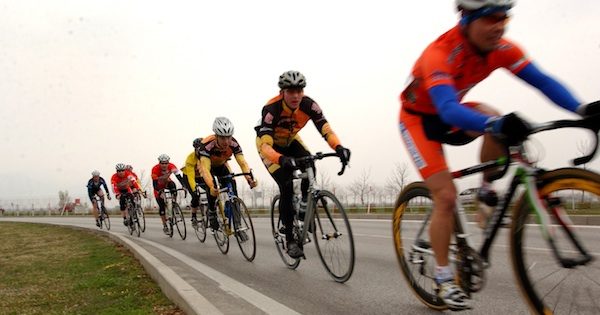
Kit – The whole cycling outfit, a kit consists of the jersey, shorts, bib, and the socks in some cases. The more you match, the faster you are…right?

Jersey – Cycling specific jerseys are usually made from a sweat wicking material, have a zip up front, and pockets in the back for all your energy gels.

Pannier – A pannier is a bag that you attach to your bike to carry your gear while commuting or bike touring.

Bibs – Suspenders never went away in the cycling world. Bibs are cycling shorts that have a bib (like overalls) rather than a waistband. The appeal – look awesome and eliminate the chance of waistband chaffing in the bent over cycling position.

Chamois (or shammy) – You’re going to want to practice the pronunciation here, because you definitely don’t want to say it wrong (rooky mistake). It’s said “sham-wah,” and refers to the lovely pad in the seat of cycling shorts that literally saves your ass. It may sounds gross, but you also don’t want to wear underwear with a chamois as they can cause chafing.

Lid – Your most important piece of gear, don’t leave home without your lid (aka helmet).

The Rider Basics

Attack – Sounds aggressive, and it usually is. Attacking it a sudden attempt to pull away from a rider or group. If you go for it, you better mean it.

Bonk – We’ve all heard of hitting the wall, when you have no energy left due to a very real glycogen depletion. The dreaded bonk comes in the form of muscle cramping, mental fogginess, or the physical inability to go any further.

Cadence – You’re going to hear this one a lot. Cadence refers to the number of revolutions per minute or pedal rate. There’s no magical number (the jury is still out), but generally speaking stronger riders will be more efficient at a higher cadence.

Roadie – Your new nickname! A roadie refers to a dedicated and awesome road cyclist.

Bikepacking – Bikepacking is a way of long distance bicycling that includes strapping all necessary supplies right on your bike frame (rather than over-rack panniers). Bikepacking allows riders to tackle more diverse terrain, largely cross country trails,

Chasers – We’re not talking about the chaser you’ll find at a bar. Chasers are riders in a race that sprint away in pursuit of the lead rider.

Drafting – Cycling close behind the rider ahead of you to block the wind, reducing your energy output by up to 30 percent. Just be sure to take your turn in the front.

Endo – That moment when you flip over your handlebars. Ouch.

LSD – Not the drug! LSD stands for “long slow distance” and accounts for those endurance building rides where you spend hours in the saddle at a consistent aerobic pace.

Hammer – Hammer hard! Hammering is pedaling hard on the big gears, offering the greatest resistance and packing the most power. Get ready for the burn.

Road rash – Unfortunately, skin + road = road rash. It is the scrapes and bruises that you get from a tumble onto a paved or dirt road. Yes, you’ll look hardcore, but it’s also extremely painful.

RPM – Rotations per minute, your RPMs measure your pedaling rate (aka cadence).

Pull – Taking your turn at the front of a line of riders so they can draft behind you is to “take a pull.” It is a tactic used by groups for each rider to take a turn, switching out often for maximum efficiency, especially when there’s a strong headwind.

Watt – The unit of measurement for power, this is how much strength your putting into every part of a pedal rotation. The more efficient your pedaling and the stronger your are, the greater the power or wattage.

Bunnyhop – Probably the first trick you learned on your bike, the bunny hop is the classic jump and lift with your bike to hop an obstacle or curb.

Century – A 100 mile (or kilometer) race or ride that are very popular in the cycling world.

Grand Tour – Have you heard of the Tour de France? Well, the epic race through France is one of three Grand Tours, the other two being the Giro d’Italia and Vuelta a España. They are all three weeks in length, and involve back-to-back days totalling over 2,000 miles or 3,000 kms.

Time Trial – A race against the clock, a time trial is often a staggered sprint race.

How to Choose Your First Road Bike

February 11, 2020 by Sarah Lauzé

Are you ready to take the leap and buy your first road bike? You won’t regret it. Cycling is not just a sport, but a lifestyle as well. However, the idea of getting a bike, finding all the right gear, and riding for the first time can be intimidating. With the rise of cycling has come endless options when it comes to manufacturers and components, making it overwhelming the first time you walk into a bike shop.

Don’t be discouraged! Having a ton of options is actually a great thing, as it increases your chances of finding just the right bike for you. You just have to know a little about what you’re looking for.

How to Choose Your First Road Bike


Where to start

Rather than walking into a bike shop with no idea what you’re looking for, let’s start with you. Sit down and make a list beforehand: What features are important to you? What type of riding will you be doing most? Are you looking for a commuter bike? Could you use this bike for a race one day? Are you interested in bike touring? What is your price range?

It’s important to get the right bike as it has the potential to determine whether your fall in love with cycling, or deter you from it altogether. That being said, you also need to be honest with yourself. You may regret investing thousands into a bike that you only ride once a week, so map out how many miles you think you’ll be putting in, and also what your destination is at the end of those miles.

The Bike Frame

Material

The frame should be the first part of the bike you look at. There are four main materials from which frames are constructed: carbon fiber, aluminum, steel, or titanium. For a beginner bike, aluminum is the best bang for your buck because of its lightness as well as durability without the fragility and added cost of carbon fiber.

Steel bikes can give a good ride, as they’re not too stiff, but they can be heavy and are a bit dated. Carbon bikes are becoming much cheaper, but for a beginner bike they are a bit overkill as you don’t need the performance advantages of weight nor the detailed feel of how it rides. It’s easy to spot which frame types are which with a little practice and if you don’t know, ask.

Frame Size

How to Choose Your First Road Bike

Just because you are a certain height does not mean you can look at a chart and determine your ideal frame size. There are a lot of variables when selecting the proper frame, the most important being your reach which is affected by the length of the top tube. Your reach can only be adjusted slightly by different stem lengths so there is generally only a few centimetres of adjustability, whereas there is several inches of adjustability in the seat height or seat tube. For more information, check out “What size bike do I need.”

Components

After finding the frame that suits you, you will want to look at the components it comes with.

Chainrings and Cogs

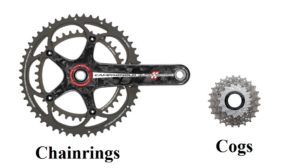
How to Choose Your First Road BikeThere are two sets of sprockets on a bike, one at the front and one at the back. The front sprockets are called chainrings, and they’re located at the front on the crankset (the part that the pedals attach to). Typically, an entry level road bike will have a triple crankset (three chainrings), but some may have a double (two chainrings).
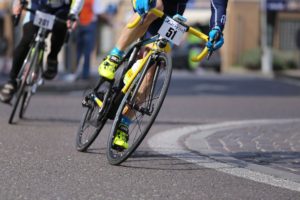
The sprockets at the rear of the bike are called cogs individually, or a cassette when referring to the whole cluster of gears. Most bikes will have 8-10 gears.

Now, don’t let the numbers scare you, but the key thing is to understand how gearing works. Chainrings and cogs are referred to by the number of teeth they have, which you can either count or look for the manufacturer’s number. For chain rings, the higher the number the easier it will be to pedal, but for cogs it’s just the opposite – the larger the number the easier it will be to pedal. So, for example, a 30/42/52 triple crankset and a 12-30 cassette will offer an easier gear than a 39/53 double crankset with a 12-23 cassette. Starting out you will want those easier climbing gears to build up strength and endurance.

The Best Brands

The two main brands of components that are descent, even at their lower end, are Shimano and Sram. Both of these then have upgrade capabilities which gives you a variety of options down the line. The best way to see how each level feels is to test ride them and then compare them to a model both up and down from it.

Wheels

With a beginner road bike, the wheels that come with the bike are typically going to be what you take home as it’s difficult to swap out wheelsets at a shop or on an online distributor. Things to look for are the spoke count in both the front and back, as well as the weight of the wheel. Depending on your weight and your use of the bike, the wheels will most likely have a spoke count of 32. They may be a little heavier than racing wheel, but they are also a lot more durable.

TiresHow to Choose Your First Road Bike

There are three main types of road bike tire setups: clincher, tubular, or tubeless. The most practical choice will be the classic clincher tire setup for its simplicity and ease of use. This does make you susceptible to pinch flats, but changing out a tube on the road is simple once you’ve done it a few times, it can even be done without tools!

This is just the base of what you’ll need to think about before buying your first road bike, and you will also have to consider the essentials (other than the bike) that you will need. For more information, check out our “Complete Guide to Cycling for Beginners.”

« Previous Page
Next Page »
  • Facebook
  • Tumblr
  • Twitter

Latest Articles

JOIN Cycling: A New Training Platform for Cyclists

May 27, 2024 By Eric Lister

cold exposure

The Benefits of Cold Exposure for Cycling & Life

June 13, 2023 By Eric Lister

hill climb

The Ultimate Hill Climb Training Guide

May 31, 2023 By Eric Lister

shoulder pain cycling

How to Treat & Avoid Shoulder Pain While Cycling

April 12, 2023 By Eric Lister

psoas stretch

The Importance of the Psoas Stretch for Cyclists

April 6, 2023 By Eric Lister

cycling neck pain

The Ultimate Guide to Cycling Neck Pain: Causes and Solutions

March 21, 2023 By Eric Lister

Useful Info

  • Contact
  • Finally, A Global Cycling Club That Is Focused On Community And Love Of Cycling!
  • Privacy Policy
  • Share Your Story!
  • Terms And Conditions Of Use
  • Welcome to I Love Bicycling
  • What Happened When I Stretched Every Day For a Month

Recent Posts

  • JOIN Cycling: A New Training Platform for Cyclists
  • How to Hang Bikes in Your Garage: 4 Inexpensive Options
  • Gravel Bike Vs. Road Bike: Which One Is Better For You?
  • The 6 Types of Mountain Bikes & How to Choose the Best One for You
  • What Is a Touring Bike Good For? 5 Benefits We Know You’ll Love

Search I Love Bicycling

Connect with Us

  • Facebook
  • RSS
  • Tumblr
  • Twitter

Copyright © 2026 · Magazine Pro Theme on Genesis Framework · WordPress · Log in