• Training
    • Injury Prevention
    • Training Tips
  • How To
    • Bike Fit
    • Gear
  • Nutrition
    • Nutrition Tips
    • Weight Loss
  • Repair
  • Reviews
  • Stories
    • Funny Stories
    • Jokes
    • Quotes
    • Videos
    • Funny Videos

I Love Bicycling

I Love Bicycling is a website that is geared towards cycling for beginners with road cycling tips, training articles, nutrition tips, weight loss, how to’s and bike repair articles.

How To

  • Bike Fit
  • Gear

Bike Fitting Tools – What They Are and How to Use Them

December 2, 2015 by Adam Farabaugh

Bike Fitting Tools - What They Are and How to Use ThemA bike fit is a game of millimeters and half angles with the objective of lining everything up perfectly for your body to achieve its optimal position on the bike. These bike fitting tools will help you get those millimeters and half angles. There are a lot of approaches to getting the best bike fit, one being an expert looking at your fit and from their years of experience they can accurately say if something is off.

Unfortunately these individuals are harder and harder to come by and even if they are right our faith in them being right has diminished. Using accurate bike fitting tools is one way that the individual or less experienced bike fitter can get an accurate fit. These bike fitting tools can range from a simple tape measure to a fit specific bike costing thousands of dollars. As with any tool, knowing how to use it properly is where its real value lies. These few tools can give you an accurate set up in determining your perfect position on the bike.

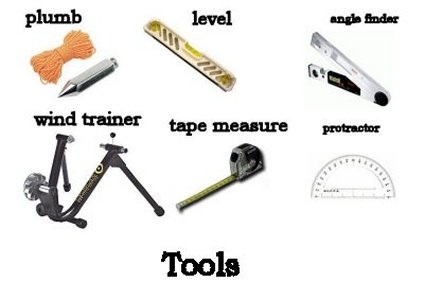
Tape Measure

The first bike fit tool to have whether a professional bike fitter or do it yourselfer in the basement, is the tape measure. You can get by with any old tape measure but having a good one will help ensure accuracy and consistency. The best tape measure for bike fitting is a metric flexible cloth or plastic one that does not stretch whatsoever.

The flexibility is key as it is easy to work with and can be placed very accurately instead of having a big hook on the end of a conventional tape measure. Also, using metric is much easier to read, write down, and duplicate with less chance for error.

The big draw to a flexible tape measure is that you can easily take it wherever you go so if you need to rebuild your bike or even ride a different one, you can easily measure it to your exact specifications.

Find a tape measure.

Level

Part of having an accurate bike fit is starting with a bike that is positioned perfectly level. If your front wheel is slightly higher or lower than level, when you ride on the road everything is going to be tilted a little bit forward or back. If you have a short level, get a long, perfectly straight piece of wood or even a string to lie exactly across the skewers at the exact same point to make sure the bike is level.

A second great thing to measure with a level is your saddle tilt. It’s generally ideal to start with a perfectly level saddle and go from there based upon comfort. The trick here is that saddles are almost never perfectly flat so make your best guess on where you sit on the saddle and position it so it’s perfectly level.

A final area that a level can be helpful with is measuring saddle set back. Saddle set back is measured from the center of the bottom bracket. Getting an accurate straight line up to measure back from is key and is where having a level is ideal. If you don’t have a level for this however, lining up your bottom bracket with a door frame can be beneficial because the majority of the time they are constructed to be exactly vertical. Unless you live in an old house, then you might need that level to straighten your door frame.

Find a level.

Plumb Bob

A plumb bob is a simple contraption but is highly useful in creating an exactly vertical line. The key area that this is used in is seeing where the front of the knee falls relative to the spindle of the pedal. It can also be used in place of a level to determine saddle set back. Due to its simplicity, it is easy to make but high end ones have a pointy bottom to mark exactly where the center lies.

Find a plumb bob.

Goniometer

Probably the most well-known tool with bike fits is the goniometer (or g-meter or even angle finder) as it’s big and looks precise and professional. This tool measures angles to accurately position knee, hip, and ankle angles as well as other key areas.

What an experienced bike fitter has a knack for without any tools is the angle which is created particularly by the knee. There are exact measurements which your knee angle should fall between which can be found under the “Holmes Approach” in “How to Do a Proper Bike Fit”. The key to using a goniometer is to find the exact position of the joint and measure consistently from the same exact point every time an adjustment is made on the bike.

Find a goniometer.

Body Targets

An easy way to ensure that you’re measuring from the exact same point is to use markings placed on the joint so you can measure precisely from the same exact point. You can make your own or use pre-made ones which stick in place where you want them. The key here again is to make sure they are placed in the correct position on the joint not only to measure from the same point but to make sure your measurement is the same measure that you are comparing your angles to.

Find body targets.

Forefoot Measuring Device

Another cool angle measuring device measures the angle at which your foot naturally tilts. Everyone is different and feet almost never fall exactly flat. The average shoe and pedal system position the foot so it’s exactly level with some minor accounting for arch support with foot beds. A Foot Measuring Device is placed on the bottom of your foot while it is in its natural position and measures how much tilt it has. This can then be accounted for in your fit with cleat wedges which are wedges that raise one side or the other of your cleat to angle your foot to its natural position.

Find a foot measuring device.

Bike Fitting Tools

There are a lot of tools that can be used to achieve a perfect fit on the bike but having these few can give you the accuracy and consistency in determining your fit as well as replicating it on other bikes. With these bike fitting tools, be sure you know how to use them properly as without the proper know how they can create other issues which will then need to be corrected for.
How to Prevent Cramps Cycling

November 30, 2015 by Adam Farabaugh

Preventing cramps in cycling can be a challenge as there is no definitive “do this and you’ll be cured”. Cramps are an interesting issue as given the fact that nearly everyone has had them at some point in some way or another, scientific research has not directly pinpointed a cause and effect to them. There are factors that make their occurrence more likely as well as things you can do to help avoid them and to deal with them.

How to Prevent Cramps Cycling

What is a Cramp

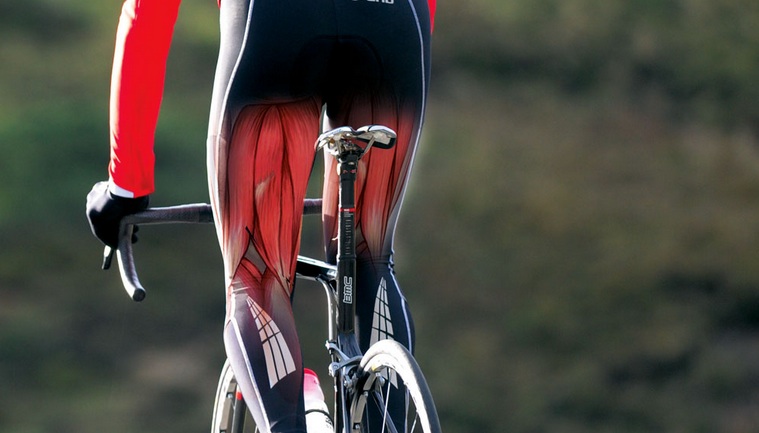
Exercise Associated Muscle Cramps (EAMC) are involuntary contractions of the muscle that can range from slight spasms to severe. The range as to which these can occur range from slight where you can ride through them, to severe where you can no longer pedal. They can be an individual muscle or a group of muscles and are typically the ones that are weaker and not ready for the effort that they are put under.

What Causes Cramps

The exact cause of cramping is not known but varying factors can increase their likelihood. Often times a combination of factors can cause a higher severity of cramps.

  • One of the factors that can increase the likelihood of cramping is dehydration as well as low electrolyte levels. Electrolytes are what transmit the signals from your brain to your muscles telling them to fire. Having imbalanced levels of hydration and electrolytes at the cellular level can play a role in why your muscle spasms.
  • A second factor to cramping is how the muscle is utilized. If the muscle is not in its ideal position to contract and relax it can be overstressed resulting in cramping. This often results when the position on the bike puts added stress on your quads, hamstrings or calves.
  • The biggest contributor to muscle cramping while cycling is riding at an intensity or duration that your body is not yet ready for. In the simplest sense, your muscle fatigues and can no longer properly fire and thus cramping results. The above two factors, hydration and fit, directly influence how quickly a muscle fatigues.

How to Prevent Cramps

Once you get a muscle cramp they’re difficult to come back from. The key is to try and avoid them in the first place. Based on what can contribute to them, fixing those issues is going to bring the biggest relief.

  • Before you can start riding more or hydrating better, you need to make sure that you have a good fit on the bike and are getting what you should out of each and every muscle. If you’ve had cramps in the past, take note of where they occurred. This is likely the result of your position on the bike being a little bit off which puts added stress on that area. Stretching that area can help, but the majority of the time that is just trying to fix the symptoms, not addressing the original cause of the cramp in the first place. For example, if you get cramps in your quads your saddle could be a bit low or your hamstrings may be a bit week thus placing more stress on your quads. Stretching the quad can help it but the cause of the problem isn’t necessarily in the quad. Getting an expert fit can help ensure that you’re getting the most out of your position or you can do it yourself with some expert guidance: (“How to Do a Proper Bike Fit“)
  • The biggest influence on when cramps occur in a ride and the severity is how fit you are for the riding that you’re doing. The stronger you are and the more endurance you have, the less likely you will be to cramp. The muscle simply doesn’t reach its point of failure and can keep firing as it normally would. The best way to increase overall fitness is to simply ride more. On top of this, riding at higher intensities, particularly up climbs where you are using slightly different muscles, can put added stress on your muscles which in conjunction with recovery produces stronger muscles with increased endurance.
  • Now that you have a proper fit on the bike and have the fitness level for the rides and races you are looking to do, you need to make sure you hydrate well with liquids and make sure that there are adequate levels of electrolytes in your drink for the conditions that you are riding in. In addition to having the right levels of hydration and electrolytes, consume enough carbohydrates before and during the ride. With most other areas of scientific research surrounding cramping, there is not a definitive study that says that adequate carbohydrate intake reduces or eliminates cramping. Cramping most often occurs as a result of muscle fatigue which can be exacerbated by not having enough energy supplied to the muscle. Having an adequate amount of carbs, in theory and seemingly practice, allows the muscle to continue firing as it should without cramping.

Cramping is a big issue that nearly all cyclists experience but is still not fully understood. As with a lot of things in cycling, everyone is different so you may find that some things cause you to cramp while other help cramping.

Follow these general approaches to solving your cramping issues in conjunction with your own trial and error. When you do in fact cramp, make a note of it, where in your leg you cramp as well as the factors surrounding it such as ride length, conditions, what you ate or didn’t eat before and during your ride. This will help to better understand your body and how it reacts to certain things. In addition to this, by simply riding more and/or with more quality riding, meaning focused climbs or intervals at higher intensities, the occurrence of cramps should diminish.

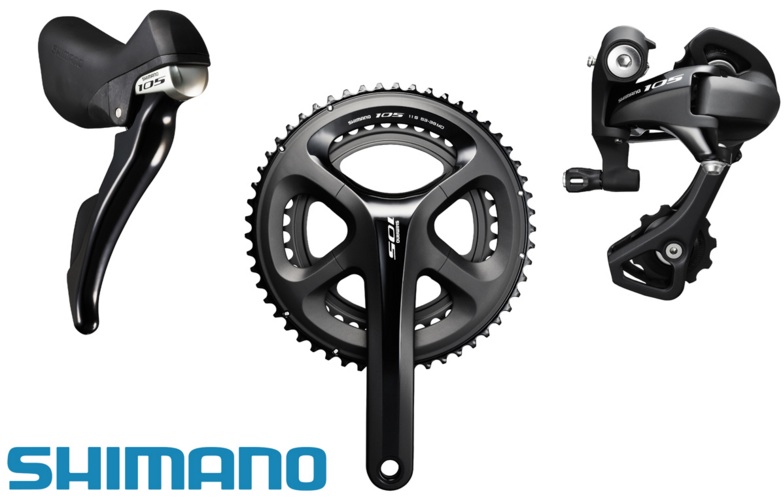
105 Versus Ultegra – What’s The Deal?

November 29, 2015 by Wade Shaddy

105 Versus Ultegra

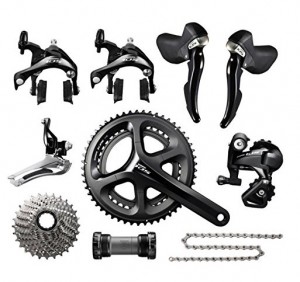
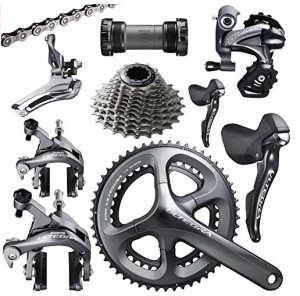
There’s lots of bike components out there, but walk into an average bike shop, and you’ll likely be offered a choice between two groups, the 105 and Ultegra, both of which are manufactured by Shimano. Bike shops often carry a majority of these two because they’re mid-range in price and entry-level, but still offer the status needed to compete and are reliable recreation riding.

Shimano is Everywhere

Shimano product sales constitute about 50 percent of the global bicycle component market. It’s the most prevalent supplier of bike components worldwide, but there are others. The hierarchy of brand names include SRAM, based in the United States, and Campagnolo, based in Italy.

It’s a Price Thing

Price is the biggest decision maker when choosing a bike. It’s one thing to say that you want the best. But the reasons to compare 105 and Ultegra go beyond that. The price difference between 105 and Ultegra is about $300 dollars. The price jump from the mid-range Ultegra to the high dollar Dura Ace is a whopping $700 or more.

Full Groups

You’ve probably heard bike shop salesmen state that a given bike is full Ultegra, or full 105. This means that the bike has been priced accordingly, and contains all the components from the stated group. In this case, a full 105 bike should be priced lower than a full Ultegra.

Recreational 105

Think of the 105 group as an entry-level component.  It’s capable of racing, but cheaper. Lots of first-time racers run their first races using 105. If they like racing, and plan on doing more of it, then moving up to Ultegra is the next step up. If racing was a one-time fling, the purchase of 105 was the right move.

What 105 is Not

The 105 group is not a department store component. Shimano produces cheaper components for department store bikes. Sora and Tiagra, both lower on the tier than 105, are targeted more for entry level bikes or even department store bikes.

Ultegra Character

Ultegra has the status and performance required to be on a racers list, but not so spendy that it’s not appropriate for recreational riding as well. It’s not the high-priced racing gear of the professionals, who might go with Shimano Dura-Ace, SRAM red or Campagnolo super record, but it’s still got what it takes to win races.

Differences are Valid

The performance differences between 105 and Ultegra might seem subtle to the average cyclist, but they’re valid. It comes down to weight, engineering, performance and maybe a bit of cosmetics.

Shifter Handles

Cosmetically, Ultegra boasts a carbon shifter blade, while the 105 sports an aluminum blade. On the inside, Ultegra’s lighter, harder parts, higher quality bushings and springs make for overall better feel when operating the brakes or shifting the bike.

Subtle Shifting

If you’re new to cycling, you might not notice the differences in shifting. Even though subtle, Ultegra shifts with a slightly cleaner feel than 105, which can seem to have a robotic click, instead of a smooth transition. Again, it’s subtle, and virtually unnoticeable to the untrained cyclist.

Brakes

Braking power on both models is more than enough to get you stopped fast. Neither one claims the top spot for reliability, but 105 may be noisier than Ultegra. Better quality springs on the Ultegra, and in this case, pivots, allow for more braking power than 105. Brake pad quality is another significant factor in the performance of Ultegra brakes over 105.

Drivetrain Specs

With chains and cassettes, the differences between 105 and Ultegra are slight but still affect performance. Ultegra has a nickel-like finish on the chain, and a stronger riveting process that allows for a stiffer chain. The chain on a 105 chains has a duller finish, and due to a different riveting process, are more stretchy than Ultegra. An Ultegra cassette substitutes the aluminum lock ring for the steel one found on a 105. The machining on the aluminum cogs of an Ultegra cassette are held to tighter tolerances than 105.

Up Front

The Ultegra crankset is hollow.  The Ultegra chainring shape blends nicely into the body of the Ultegra crankarm. The overbuilt structure of the crankset coupled with the chainring has better power transfer over the 105, which doesn’t sport a hollow outer chainring.

Trickle Down

It’s common for Shimano to introduce new engineering every few years. The previous years engineering advancements trickle down to the lower tier, meaning that the Dura Ace from last year, is now identified as a contemporary Ultegra. The trickle down engineering advantage is more likely to be found on Ultegra, than 105.

Basic Machining

New engineering means that Ultegra, for example, is machined to a higher degree than 105. The same goes for the brakes, shifters and drivetrain.

Stiffer

New designs and finer machining typically go hand in hand with new alloys that are stiffer, meaning that the parts on an Ultegra are lighter than the parts on a 105.

Lighter Not Always Better

It’s not always best to go with the lightest components. The lighter they get, the more delicate they are. In some instances, such as in dirty conditions, the 105 may be able to withstand more punishment, just because it’s heavier, and more substantial.

The Breakdown

105 vs ultegra105

  • Complete group weighs just under 6 lbs.
  • Entry level, recreational, but is race capable.
  • Reliable, maybe even more so when dirty or wet
  • Cheaper to repair or replace
  • Available in 11 speed, but more likely only 10.


ultegra vs 105Ultegra

  • Weighs in over a 1/2 pound less than 105 at 5.38 lbs.
  • Race level performance
  • Cleaner shifting and braking, subtle but noticeable.
  • 11 speed more likely than 105

Wheel Advantage

It’s already been established that that spending $300 dollars more for Utegra saves weight, and theoretically makes your bike faster and more efficient. But there’s another way to accomplish the same thing, and some cyclists say with better results. Cyclists on a budget can often save more weight on wheels.

It can make sense to purchase 105, and invest the $300 in racing wheels. It might even be possible to talk the bike shop owner into swapping out the wheels on the 105 before purchase. It’s an option worth considering.

How To Do a Proper Bike Fit

November 29, 2015 by Adam Farabaugh

How to do a proper bike fit addresses what you require to do a bike fit: a self assessment of your body, and outlines a step by step guide on how to get a perfect bike fit.

If you’re not riding too long nor hard you might be able to get away with a poor bike fit as your tendons and muscles can handle a certain amount of stress. The problem however resides when you start to ride longer and harder especially without increasing that intensity gradually.

Having a proper bike position will help to prevent injuries and improve performance. There is a lot to know to get your position dialed on your own, and we will briefly discuss some key factors so you do not have to spend hundreds of dollars on a professional fit. The professional fits however are worth it but aren’t always warranted by everyone so this is intended to touch on what a professional fitter would do despite the number of varying approaches to bike fitting. If you have questions or are uncertain on anything, seek out someone who knows as having a bad bike fit is just as bad as not having one at all.

How to Do a Proper Bike Fit

What You Need

First you are going to need a few things more than your bike and shoes to do a quality fit on your own. You are going to need:

  1. Stationary trainer – so you can get on and ride in place to see how all the incremental changes feel.
  2. Tape Measure – ideally in centimeters as it’s easier to work with.
  3. Plumb Bob – a string with a weight attached to the bottom to create a straight vertical line.
  4. Level – can be helpful to make sure the bike is level in the stand as well as to measure saddle set-back. You can get by without one if you don’t have one however.

Self-Assessment

When going to a professional fitter the first thing that they are going to do before you even get on the bike is to ask you a few questions along with doing a few flexibility and discrepancy tests. This is difficult to do on your own but if you know of any muscle inflexibility or leg length discrepancies, you are going to have to correct for them.

For Example – If you know you have tight hamstrings, you are going to have to have a more relaxed (less aero) position on the bike.

Making the Adjustments

The adjustments you are going to make on the bike need to be in the order described here as when you move one thing, it results in changes to the other measurements.

Cleat Position

Cleat position is the first thing we are going to address as moving this later after you get your saddle height and set-back dialed will change. If you have already been riding your specific shoes and pedals, leave the cleats where they are if you haven’t had any issues.

If your cleats are new, you first need to estimate your natural foot position. Stand barefoot or in your socks on a hard surface naturally and see how your feet are positioned. Are they pointed straight ahead, pointed out, or pointed in? You want your foot position on the pedal to replicate this as if you just try and set it straight, it will go against how your muscles and tendons naturally align your foot.

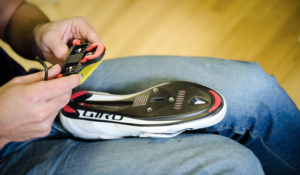
After this you will want to put your cycling shoes on and determine where the bone on the outside of your foot protrudes. This bone is where your pinky toe connects to the rest of your foot, also known as the ball of your foot.

For a starting point, this is where you want the center of the pedal to fall. Mark on both shoes where this point is with something that comes off so you don’t mark up your shoes. Then position your cleat in the center of your shoe, from side to side, and line up the center as well with where the mark on the side of your shoe is. Then make sure the cleat is angled to account for your natural foot alignment. Yes, this is a lot of steps and when you start riding you may need to stop and adjust them a few times to get it positioned perfectly.

Saddle Height

A bike fit encompasses the details of many areas of the bike but the one that is the most influential is the saddle height. Finding the proper saddle height has a number of varying approaches to get just right. A few of the approaches will be touched on, but the best approach is a combination of them in a certain order to get an exact height.

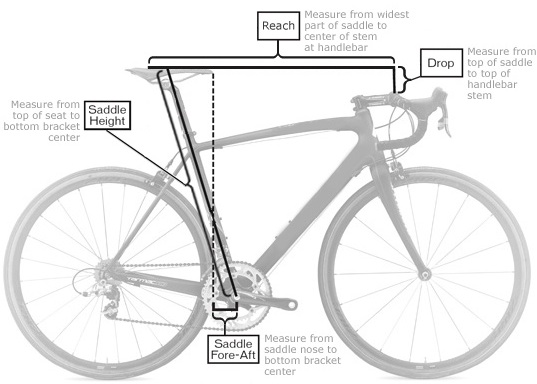
To get the same measurements you need to make sure that you are measuring from consistent points. This can be difficult on a saddle because they are always different and almost never completely flat. A good way to measure from the same point is measure 155mm back from the tip of the saddle (the nose) and make a mark. This is generally where the center of your pelvis will sit on the saddle. Any measurements that you make, make to this point except for when measuring the 109% and LeMond Approaches described below.

Heel Approach

The heel approach is the easiest and probably most widely used to get a rough estimate on saddle height. On the bike with your cycling shoes on, spin your pedals backwards with your right heel on the base of the pedal making sure that you keep your hips level and that they don’t rock from side to side. With your leg straight, you want your heel to be about a half to one centimeter from touching the pedal. No more, no less. You will probably have to get off and adjust your seat post a couple times.

109% Approach

The 109% approach takes the measurement of your inseam and multiplies it by 1.09. This is then the length from your saddle to the spindle of your pedal at the bottom of your pedal stroke. To get your exact inseam length, get a large hard cover book and a pencil. Stand with your back against a wall in your bare feet or socks with your legs straight. Place the binding side snuggly up between your legs and make sure it is level. With the book positioned close to the wall, level, and at the upper-most part of your crotch, place a light mark on the wall at the top of the book. Now with your tape measure, measure from the mark to the floor. This is your inseam.

Now doing some quick math in your head, alright probably with a calculator, multiply it by 1.09. With the pedal at slightly before the 6 o’clock position, (you want it to make a straight line with the seat tube coming down) measure from the spindle up the length of the seat tube and seat post to the top of your saddle. Now depending upon your frame geometry and current saddle set-up, this length is not going to be to the point you previously marked on the saddle. That’s ok; that mark is so you can get an exact measure of your set-up regardless of what bike or saddle you ride.

LeMond Approach

The LeMond method is a derivation of the 109% approach in that it uses the same inseam measure except is just multiplied by a different number and to a different point on the bike. This approach is better than the 109% approach as it’s easier to measure to a stationary point, the center of the bottom bracket. The variable here is going to be crank-arm length. It depends on riding style but typically shorter riders want crank lengths around 170mm or less. Medium sized riders, 5’6 or so to 6’-ish, 172.5mm and 175mm, heights above that. This is a very rough estimate so determine your riding style and what will work best for you.

Back to the inseam. Take your inseam measurement and multiply it by .883. This is the length from the center of your bottom bracket to the top of your saddle along your seat tube. Again, like above, the mark you put on your saddle won’t be used for this but is rather just a good way to get consistent measurements for your position when set.

Holmes Approach

Now that you got your saddle height to a pretty good height with the heel method and backed it up or adjusted it with the LeMond approach, you should have a height that is pretty close to where it should be. The goal of the above approaches is to get your knee angle within a certain degree. Instead of measuring other variables, why not just measure the exact variable that you are trying to get dialed in. Well because it’s more difficult. You need a goniometer which measures angles but with some improvisation you can probably come up with something similar on your own. The difficulty then becomes measuring your knee angle precisely. Getting someone to help you will be a big help.

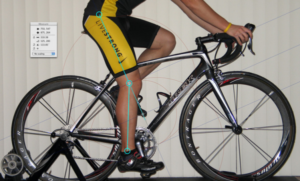
With your foot at the bottom of the pedal stroke, slightly in front of 6 o’clock on your right leg, you want to measure the back angle that the femur (thigh bone) creates with the tibia (shin bone). The back angle isn’t the angle of your bent knee but rather the angle from if you would continue a straight line from your femur and measure the angle down to your tibia. You want an angle between 25 and 35 degrees and falling closer to 25 than 35 if possible.

If you don’t have someone who can help you, and even if you do, another way to do this is to record a video from the side of yourself pedaling and pausing the footage when your leg is at the bottom of the pedal stroke and measuring the angle with a protractor or other improvised device. Whether measuring the actual angle on your body or on a screen, make sure you are lining up with the bones precisely. Use the hip and ankle as reference points.

Seat Set-back

Now that you have your saddle height figured out, you may have to alter it a bit but that’s OK since you know how to measure it back to the proper height.

Moving the saddle back is going to effectively raise your saddle while moving it forward is going to do the opposite. The degree to which your saddle is positioned behind your bottom bracket is going to depend on the type of riding that you are doing. A position that is further forward, such as that for triathlon or time trials, will rotate your hips forward on the saddle while a mountain bike and largely road position will be further back with less forward rotation. Generally in the middle is ideal to start off with.

A good starting point is to set the nose of the saddle 6 to 8cm behind the bottom bracket. If you have a level this is where it can come in handy, otherwise take your plumb bob and position it so it falls at the center of the bottom bracket. Now measure from the tip of the saddle to this point directly above the center of the bottom bracket; it should be around 6 to 8cm.

Now that you have a ball park estimate, get on the bike and clip in. Having someone help you in this next part can be beneficial but is doable on your own as well. Stop your right leg at the 3 o’clock position with the crank arm level. Now position the string of the plumb bob not on your knee cap but rather the little boney bulge just below and in front of it. Now see where the plumb bob falls relative to the spindle of the pedal.

Ideally in a neutral position, you want it to line up directly with the spindle of the pedal. If it falls more than a centimeter in front of the spindle, you need to move your saddle back roughly that same amount and vice versa. This position in the center is a neutral position that you can change depending upon the type of riding that you are doing.

Going Back to Saddle Height

Now that you have the set-back correct you are going to have to go back to whichever method you used to find your saddle height as depending on how far you moved your saddle, your height is going to be off. As stated above, if you moved your saddle back you are going to have to lower your saddle a little and vice versa.

Once you get this properly adjusted again, double check where the plumb bob falls again and make adjustments as needed. Every time you move one thing it is going to impact the others so you need to check and make sure it didn’t throw the others too far off. Bike fits aren’t one and done but rather a good amount of try and try again and before long you will have it where you want it.

Handlebar Set-Up

The core of a bike fit is your seat position relative to your bottom bracket but where your upper body falls can have a big impact on comfort as well as overall performance.

The first thing is to determine your flexibility and what type of riding you are doing. If you have tight hamstrings as well as back muscles you simply aren’t going to be able to ride with super low handle bars. The handlebar set-up determines how far stretched out, or scrunched up you are on the bike. You want to be in a natural neutral position with not too much of either.

A good gauge is with your hands on the hoods, or whichever position you will be riding in the most, look down at the axle of the front wheel. Where does it fall relative to the handle bars? If the handlebars are behind the axle you are probably too scrunched up. If the handlebars are in front of the axle you are probably too stretched out. Leeway of a centimeter or two in either direction is OK but past that you will need a different size stem.  If it’s too much in either direction you are probably on the wrong size bike and may need a different frame size to get to that ideal position.

Raising or lowering the bars is going to depend on how much room you have on either side of your stem on the steerer tube. You can take spacers from below the stem and put them on top to lower your bars or vice versa. Be sure you properly tighten the head-set and stem bolts when you put it back together.

Adjusting to Your New Bike Fit

Now you’re all set. Your cleats, saddle height, saddle set-back, and handle bars are in an ideal position to ride comfortably with less chance of injury. Since your original bike fit probably wasn’t exactly what it is now you need to make sure you ease into riding in this position as your muscles and tendons won’t be used to it.

Depending on how far off your previous position was, you should ride for no more than an hour the first few days. Remember to increase intensity gradually and address any pains immediately. Riding at a lower volume and intensity will give your body time to adjust and get used to the position. If you feel something is off, stop and make adjustments as needed while on a ride. Only make small adjustments of about a millimeter or less each time.

As you can now see, there is a lot that goes into a proper bike fit and this doesn’t even include everything. You can go to the n-th degree when doing a bike fit, measuring angles and determining optimal power in varying positions among other things. This guide is intended to give you a basic idea of how to get your position as close to your ideal position without having to get an expert fit.

A professional fit is always advisable however as depending on your body and specific conditions, an expert is going to be able to make adjustments to correct for things that you may not even know are an issue for you. You can do it on your own, just make sure you pay attention to detail and are smart about the changes you are making. The above will get you close to where you should be and should help prevent overuse injuries as well as help you to ride faster and longer, after you ease into your new position.

At Home Bike Fit

MyVeloFit is a revolutionary new app that combines the powers of computer vision and artificial intelligence to help you do your very own bike fitting at home in a matter of minutes. Whether you’re an individual or a business that specializes in bike fitting, they have a subscription model that works for you. Everything from free to a fraction of the cost of an in-person fitting! Check them out today to start feeling better on your rides!

Tips For Riding in Gravel

November 28, 2015 by Wade Shaddy

Tips For Riding in Gravel

Road bikes are specialized for speed and hard pavement. Skinny, high-pressure tires are skittish, unstable and can be dangerous in gravel. But it’s a sure bet you’ll encounter gravel from a detour, road construction or a stretch of gravel on your planned route. Prepare yourself for the inevitable by following a few time-tested tips for getting through that rough patch. Your road bike is capable of much more than you think.

Gravel Upsides

Don’t be intimidated by gravel, it has it’s upside, there’s almost no traffic. Gravel roads are twisty, turny, and they often follow natural and beautiful landscapes that make cycling so much fun. You get to visit river beds, ghost towns, campsites and follow links allowing you to access stretches of pavement that you’ve always avoided. Gravel roads are often the best choices for cyclists in the need of a short cut.

Gravel Grinders

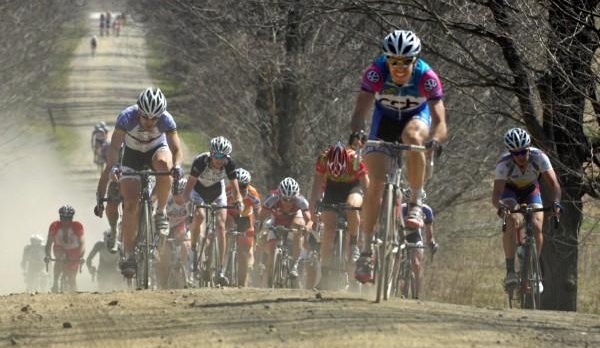
Every so often a movement arises in the bike world. While road racing on asphalt has been a seriously competitive sport for nearly a century, some cyclists have discovered that riding bikes on gravel might be fun. As a testament to gravel riding, races and ralleys in certain parts of the country have been springing up. The Grasshopper and Gravel Grinder series are two of them. Some of them are completely on gravel roads, others link asphalt and gravel roads together. It’s a given that you’re probably better off with a gravel-specific bike, gravel grinder participants use nearly every kind of bike, from full-suspension mountain bikes to cyclocross, and full-on road racing feather-weights.

Tire Concerns

Road bikes are made for hard surfaces such as asphalt and concrete. But road bikes are fully capable of riding in gravel. Tires are often the biggest issue. Some cyclists argue that road bike tires can’t handle gravel, that they pinch flat, tear or otherwise go flat. But unless you’re running the lightest, most minimalist racing tires, they hold up to gravel.

Size of Gravel

Generally speaking, when individual pebbles or rocks are smaller, or near the width of your tires, you can still ride. But take note when rocks are bigger than your tires. Riding in this type of gravel is not recommended. You run the risk of cutting your road tires —  they’re just not designed for it.

No Float

Mountain bikes or other bikes with fat tires float on gravel. But road bikes don’t float on gravel, they cut into it. More momentum helps you to float to a certain extent, but too much speed can cause you to lose control, hit deep patches, or follow a line in the gravel that you don’t want to follow. Approach a new patch of gravel cautiously, and try to maintain a constant speed.

Gear Down

Most riders will need to gear down to ride gravel. A high cadence with lots of torque is your best bet in situations where the gravel or dirt gets loose. Higher cadence allows you to power through situations where you lose traction, and allows you to stay on top of the gear without having to resort to standing up—which is bad news on gravel.

Scan Ahead

Scan ahead, particularly if you’re descending. Pick a line that you can live with, and stay aware. Gravel can be deceiving, with patches and holes over 6-inches deep. It’s not easy to read gravel surfaces, but scanning ahead gives you the benefit of the doubt, and can make all the difference. Skinny road bike tires sink fast in deep gravel. If that happens, you get an up close, personal look at the gravel.

Thin Layers

Thin layers of gravel might be the most dangerous. Especially if they’re located on hard pack. If you’ve done any serious miles, you’ve probably already hit gravel on pavement. The smallest pebble can cause the front end to wash out on corners. Road bikes on pavement typically lean into corners. On gravel, it’s best to steer into the corner, and try to keep the bike as close to 90-degrees as possible to prevent washing out your front tire.

Relax

Don’t be afraid and become tense. The most important technique is the simplest. When riding on gravel or dirt you’ll likely experience some lateral movement, and feel your bike wander from side to side. This is completely normal. The easiest way to control lateral flow is to relax and ride with it. Make sure to keep your shoulders, arms and hands loose and maintain a normal grip on your bars. Your bike will lose the centrifugal balance from the wheels that you’re so comfortable with on pavement, so use your core strength to maneuver the bike.

Turns and Curves

Avoid sharp turns: the deeper the gravel, the more your front wheel digs in and accentuates any sudden steering movements you might make. This is the one single mistake that causes the most falls in gravel. Consistent, smooth lines, and avoiding sudden movements, keeps you and your bike upright, particularity at higher speeds.

Don’t Be Afraid

There’s no need to avoid riding in gravel. If you do any long distance riding, adventure touring or participate in any overnight cycle events such as Cycle Oregon, the Seattle to Portland, the Alpine loop on the East Coast, or other similar rides, gravel riding is a great skill to have, and a necessary one. Don’ be intimidated by it. Learn to conquer it first, enjoy it and have fun.

If You Get Serious

If you get bit by the gravel riding bug, there’s options for doing it even more enthusiastically. In the last few years, bike builders have introduced gravel-specific models that have the toughness of a mountain bike, the geometry of a road bike and the clearance for big tires. Sometimes also referred to as adventure bikes, they’re better suited to the demands of on and off-road riding, splitting the difference between the two disciplines. Check them out if you get the chance. What have you got to lose.

Bike Cleaning 101 –The Dry Wash

November 27, 2015 by Wade Shaddy

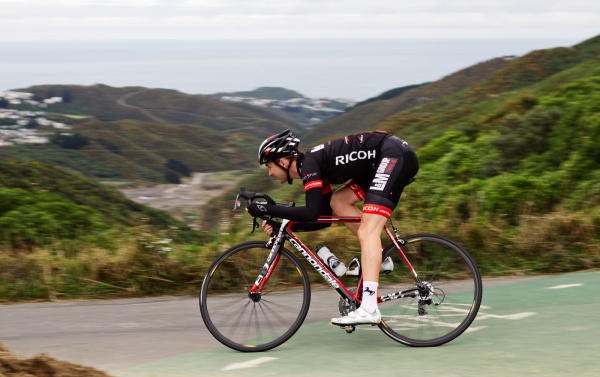
Bike Cleaning 101 --The Dry WashIt’s partly psychological, but a clean bike just seems to ride better. Some cyclists clean their bikes after every ride. Some clean their bike only when it’s dirty. It’s a given that, if you can see dirt and gunk on your bike, it needs to be cleaned. But too much water is not a good thing. And with the onset of winter, it’s almost impossible to wash your bike with soap and water, and then expect it to dry instead of freeze. Maybe a dry wash is all it needs.
Delicate Machine

Road bikes are delicate, complex machines. The lighter they get, the more delicate they are. Washing them with a hose is sometimes necessary, but the less water on your bike the better. Water won’t hurt your bike, but constant immersion in water should be avoided when unnecessary.

Bike Shops

You might have noticed that bike shops have spotlessly clean, shiny bikes. They don’t wash each and every one with soap and water. They use ordinary household products to dry wash their bikes when needed, without soaking them.

Rust Forms

Water seeps into cable housings and between moving parts. Rims can rust, especially where brake pads wear them down. The chain is another steel part, if it’s wet, and you don’t have sufficient lube, it can rust overnight.

Don’t Blast It

Mountain bikes are one thing. They get caked with dirt and mud, and there’s nothing you can do but hit them with everything you’ve got. But unless you’ve been caught in the rain or rode a stretch of dirt covered pavement, your expensive road bike collects nothing in the way of dirt and grime that requires you to blast it with a garden hose.

Furniture Polish

Motorcycles really have little to offer cyclists, but borrowing a few secrets from them can’t hurt. Motorcycles collect bugs like you wouldn’t believe. Motorcycles have complicated electronics that shouldn’t get wet over and over again. Dealers sell expensive products that are specifically designed to remove bugs and road grime without spraying the motorcycle with water. But guess what, it’s more like common furniture polish. Some bicycle shops also sell bike-specific dry wash to customers, but when it comes down to polishing their own bikes, they often use common furniture polish instead.

Abrasive Particles

Wiping your bike with a dry cloth is not a good idea. Sand, grit and debris attached to the bike surface can scratch paint. By spraying the bike first with furniture polish, it helps to lift abrasive particles onto the cloth, and prevents them from scratching.

Clear Coat

Even though most household furniture polish works just fine to dry wash your bike, it’s always wise to read the instructions printed on the can. If it prohibits using it on leather, cloth or other components on your bike don’t use it. Get something else. Note that if the product can be used on delicate furniture finishes, it’s not likely going to hurt the clear coat on your bike.

Citrus Scent

Dry washing your bike is almost as easy as it sounds. Work in manageable sections by spraying it with furniture polish — after vetting it of course. Lemon-scented is nice, it gives your bike the pleasant citrus scent of summer.

Foam it Up

Spray the frame until it’s foamy. Allow the foam to soften bugs, dirt and grime for a few minutes and then wipe it off with a soft cloth. If the foam begins to deteriorate and disappear before you can wipe it off, work in smaller areas.

Repeat as Needed

Don’t scrub hard initially, it’s still possible to scratch your paint or clear coat with abrasive grit that your rag has picked up. If you feel that the rag has particles, shake it out or use a different rag. It’s fine to go over the top tube, down tube or steering tube individually, and then repeat if needed until it gleams.

Polish to Shine

Hit the grips, seat and handlebars with the furniture polish if you desire. But be aware that furniture polish will make things slick; don’t use it on your rims where they contact the brake pads. Slick brakes are dangerous — it feels nice on the seat though. Allow the bike to dry for about 15 minutes, and then bring out the luster by polishing it shiny with a soft, dry cloth.

Pedal Power

Don’t forget your clipless pedals. Foam them up. Use a toothbrush or other small brush to get the sand out of them. Furniture polish has just the right amount of lubricant for these delicate parts. If you’ve ever hit them with oil, you know that they can release when you don’t want them to. Furniture polish has just enough slick stuff to keep them working like they should.

Handy Wipes

Car detailing products are other options to furniture polish. They come in handy wipes, similar children-safe baby wipes, but they have a silicone protectant that provides a bit of armour to your bike’s finish. Keep a container of these handy, they’re good for quick touch ups right before or right after you ride. Just wipe the bike with them and it shines, it’s almost too easy.

The Last Resort

If you’ve hit a patch of mud, ridden on soft dirt or wet gravel, dirt and gunk can get into the brakes, collect on the chainstays, splatter the down tube or pack into the derailleur. A dry wash isn’t going to do it in this instance. A garden hose and bucket of soapy water is in order.

Soap and Water

Tutorials for washing a bike are all over the internet. It’s just like washing a car, with a few exceptions: Remove your saddle bag and computer for starters. Washing it is easy enough, but make sure it’s dry. Air compressors are handy if you have one, they can dry your bike in minutes.

Lube Tips

One of the big issues with soap and water is that it removes lubricants, and then they need to be replaced. Some cyclists tend to over-lubricate. It leads to poor performance and excessive component wear when dirt and grime attach to the extra lube. Go easy on the lube.

Ride It

Under normal riding conditions, your bike will remain cleaner longer if you ride it. Dust from your garage is a common reason bikes need to be cleaned in the first place.

The Descent, Don’t Let it Get You Down

November 20, 2015 by Wade Shaddy

descending

Road bikes are capable of hitting 40, 50 mph or more when descending. It’s like flying, and one of the most adrenaline pumping, heart stopping experiences of your life. But it’s one thrill ride to take seriously. Men are more likely than women to push the limits, mostly because of machismo that should be reeled in. But descending can be done safely if you use your head.

Bike Safety

Your bike is the most important aspect of descending. Even the most insignificant issue can spell disaster at high speed. Everything should be checked before you cross the line and pick up serious speed. Most of the checkup can be done before you leave home, but if you’re going down a long, steep hill, it’s advisable to check things at the top, and hold on for dear life, with the knowledge that if something goes wrong, it won’t be because you didn’t check your bike first.

Tires

Checking your tires is a no-brainer. If you’re at the top of a hill, pick up the bike and give the wheels a spin. If there’s a wobble or bulge in the tire you’re already in trouble. If you have no other choice, and depending on the severity of the issue, ride it down, but slowly. In the event your tire fails you can stop in time.

Wheels

Wheels are another thing that can disintegrate before your eyes. If they swerve back and forth your wheel is out-of-true. The severity of swerve in the wheel — it happens all the time to road bike wheels — is not that much of an issue, and will not necessarily cause you to go down, but should result in slowing down considerably on your descent.

Spokes

Run you hand over the spokes. If any are loose, rattly or you might have noticed a “ping,”  your wheel could be in danger of coming apart at high speed. Keep the speed down.

Quick Release

Always check the quick-release before descending. This one is so simple, that further explanation should not be necessary. Loose wheels cause accidents.

Handlebars, and Brake Levers

Do a quick check of your brake handles and handlebars. Place both hands on the brakes, squeeze them and twist the handlebars from side to side. If anything is loose, get out your tools and tighten it. Briefly check the position of your brake pads. If one of them is tilted, it can rub a hole in the tire.

Body and Hand Position

The jury is still out on the proper body and hand position for descending. Pro cyclists prefer to go downhill with their hands in the drops. The reasoning is that it makes you more aerodynamic, and it does, but if you’re uncomfortable down there, it’s a drawback to safety, and can make the bike feel twitchy at high speeds. It’s fine to descend with your hands on grips or hoods, hunched forward slightly to gain the aerodynamic approach. The best position is one that you’re most comfortable with personally. Try different positions before hitting high speeds, use the position that fits you, and then stick with it — it’s not a good idea to change hand positions at 40 mph.

The Aero Tuck

One thing you should avoid — at first anyway — when learning to descend, is the aero tuck. You’ve probably seen it many times if you’ve watched any pro cycling; experts with their hands close together, practically kissing the stem, head super-low in front. This position may win races, but makes the bike hard to control for beginners, and even the slightest problem causing you to brake is risky. The aero tuck is somewhat dangerous and not worth the risk.

Two Up Two Down

Never take your fingers off the brake levers. Most cyclists prefer to have two fingers on the bars, and two fingers on the levers, or “two up and two down.” Get used to riding this way all the time, and you’ll be prepared for any downhill.

Braking at 90-Degrees

It’s natural to see a curve and brake for it, but there are right and wrong ways to go about it. Apply brakes before the turn. Try not to brake after you enter the turn, if you’ve carried too much speed into the curve, you’re already in trouble. Brakes are most effective when your bike is upright, at 90-degrees. Braking in a curve means the bike is tilted at an angle, you have less traction, and can throw the bike into a skid. If you’ve misjudged your speed and need to brake, apply them only gently, feathering them if possible, to avoid washing out your front end, skidding and crashing.

Don’t Steer

Speeds above about 10 mph is where you begin to lean instead of steer. The faster you go, the less you steer. Focus on leaning into curves instead of turning the handlebars. When leaning into curves, the pedal on the low side of the bike should always be in the 12-oclock position. If you’re swerving into tight corners in both directions, alternate the pedal to keep the inside pedal up, away from the pavement.

Don’t Tense Up

Many riders tense up when descending, but it compromises your control. If you feel yourself getting intimidated by a hill, stop at the top. Try shaking out your arms and shrugging your shoulders to loosen your arm, shoulder and neck muscles. Touch your toes and reach for the sky to loosen your back and legs. Breath deep to get some fresh air in your lungs and calm yourself.

The Descent

When you’re ready, roll off the summit and begin the descent. If you feel yourself getting tense again try to control it. Bend your elbows, relax your neck and shoulders, keep breathing and hold the bars firmly but not too tightly. Keep your eyes focused 20 to 30 feet down the road so you can anticipate your next move.

Things to Watch For

Several factors can influence speed on a descent. Among the most dangerous is debris, sand or gravel. Stay away from the side, riding nearer the center of the road, traffic permitting. Cross-wind can also be tricky. A sudden blast of cross-wind at 40 mph can spell disaster, be aware of it, and always be ready for the unexpected,  things happen fast at 40 or 50 mph. Bikes are quiet. Riders have crashed because birds or wildlife have been scared up, right in front of them.

Have Fun

It takes time to become confident, to relax and make descending fun. Practice your technique by riding down familiar hills a few times to get the feel for it, it’s a great way to improve your downhill skills and build confidence. Always ride within your limits, wear a helmet, and keep it fun and safe.

Winter Cycling Shoes – Choosing the Best

November 15, 2015 by Adam Farabaugh

The worst part about winter riding is being cold. The things that get cold the easiest are the extremities; your head, hands, and feet. Fortunately getting a thick hat and pair of mittens is relatively easy. Keeping your feet warm on the bike while still being functional is more of a challenge. In general, cycling shoes are designed to be lightweight and to keep your feet cool during the warmer months of the year. In the cold, wet, and snow, those attributes aren’t so beneficial. Luckily to keep all your paws warm there are shoes specifically made for cycling in winter as well as ways to make your current shoes useable in winter.

Winter Specific Cycling Shoes

The warmest and most functional option to keeping your toes warm in winter is to get a pair of winter cycling shoes. These cycling shoes are built specifically to keep your feet warm and dry with insulation, higher ankles, and thicker material. Choosing any one depends on your budget and what you’re looking for in a winter shoe. One sure thing to look for in a winter shoe is mounting for mountain bike cleats. Being winter you will probably walk in snow a time or two which can get caked and then frozen in the cleat rendering, them unclip-able. Road cleats are easily prone to this while mountain bike cleats are a much better option for traipsing around in the snow.

Louis Garneau – 0° LS-100

Garneau Winter Shoe


Price: $150 – 200

Louis Garneau always makes quality shoes at a solid price and their winter shoe is no different. Not only do you have to worry about cold toes in winter, but you also have to worry about how functional the shoes is when you have cold finers. The 0° LS-100 has a BOA tightening system keeping everything functional even with cold fingers.

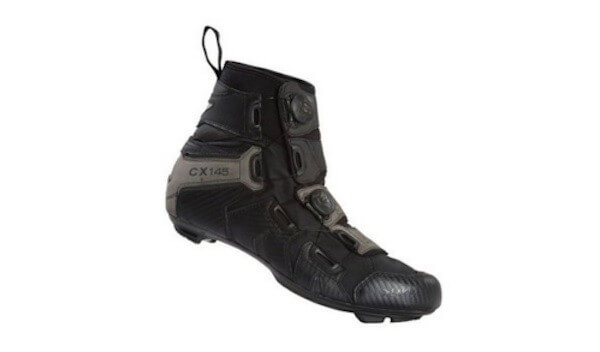
Lake CX 145

winter cycling shoes

Price: $200 – $250

If your riding includes a lot more wet riding and not so much cold, the Lake CX 145 will help keep your feet dry. They don’t have as much insulation as a normal winter shoe but can keep out the elements when needed.

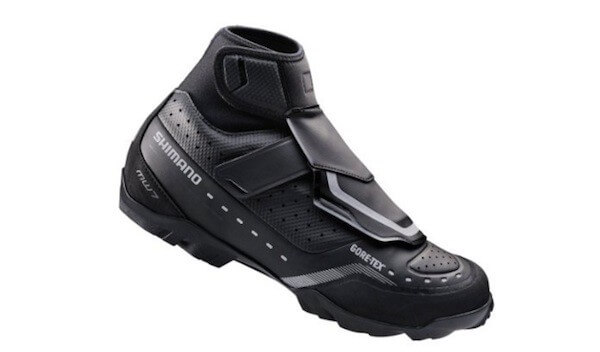
Shimano SH-MW7 Winter Shoe

winter cycling shoes

Price: $250

Shimano is, well Shimano. They make anything from top of the line fishing gear to your Dura-Ace Electronic shifter. Their shoes are in a similar category especially their winter shoe which they partnered with Gore-Tex to create a waterproof and insulated riding shoe.

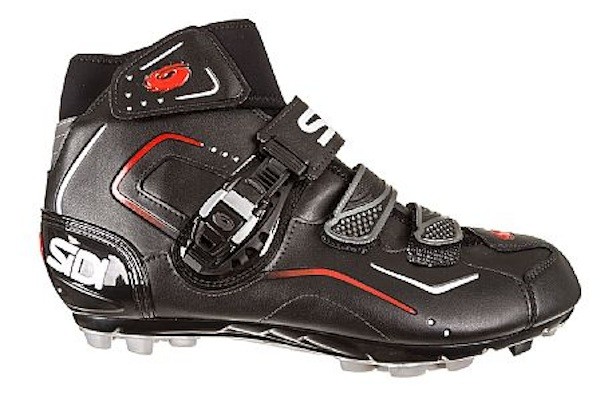
Sidi MTB Ghibli Cycling Shoes

winter cycling shoes

Price: $250

Sidi has a few different shoes for winter and one of their solid ones are the Ghibli’s. They have a durable sole for when you’re off the bike as well as use neoprene to insulate the upper part of the shoe.

Using your Current Cycling Shoes

Buying a second pair of shoes for only one time of the year can seem a bit much so if you’re looking to save and work a little harder to keep your feet warm, you can do it with your current shoes. Since it is winter and the shoes will take a bit of a beating, using an old pair of shoes is recommended and if you can get a used pair from someone who is a size larger, even better. You’ll start with wearing a thicker wool sock and your normal sized cycling shoe will scrunch your toes limiting blood flow which is what makes your feet cold.

The first thing to do is cover all those vents to prevent air from just billowing through. Although rudimentary, the best way to do this is with duct tape as it will stay sticking overtime. And don’t forget the hole on the sole of the shoe if there is one. After this you’ll need to find insulated as well as waterproof shoe covers. Instead of the insulation being in the shoe, it’s over the shoe. If it’s not enough insulation add a second shoe cover. It’s not the most functional, especially putting on and taking off but it gets the job done on the cheap.

Riding in winter can be quite fun but that fun can be short lived with getting cold. Getting the right gear for the task is the best way to keep it enjoyable. Since they’re only going to be worn part of the year, winter cycling shoes will last you many years. They’re a worthwhile investment. And if that investment’s not yet in your wallet you can still ride all winter by making some additions to your current shoe. Keep the toes warm and see how low the mercury can go before they start to get cold. You’ll be surprised at just how cold of weather you can comfortably ride in.

How to Fix a Flat With No Tools

October 29, 2015 by Wade Shaddy

Flat tires are part of cycling, and most cyclists know how to deal with them. But there are options for changing tires without tools, and tricks that can help you get back on the road faster.

Pro cyclist get back on the road faster without using tools.
Experienced cyclist sometimes skip the tools when changing tires.

What if you’re caught in the middle of nowhere with a flat clincher? Or you might have already broken both your levers, without getting that damn tire off. Don’t lose hope, you can change that tire without any tools whatsoever if you go about it right.

Steps to fix a flat without tools

1. Remove the Tire

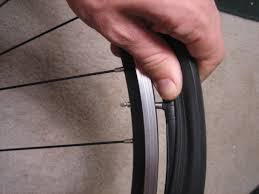
Focus on completely removing the tire from the wheel. Don’t attempt to pull it loose only on one side, you’ll need both hands pulling at the same time from one side, which results in the complete removal of the tire from the wheel.

2. Break the Bead

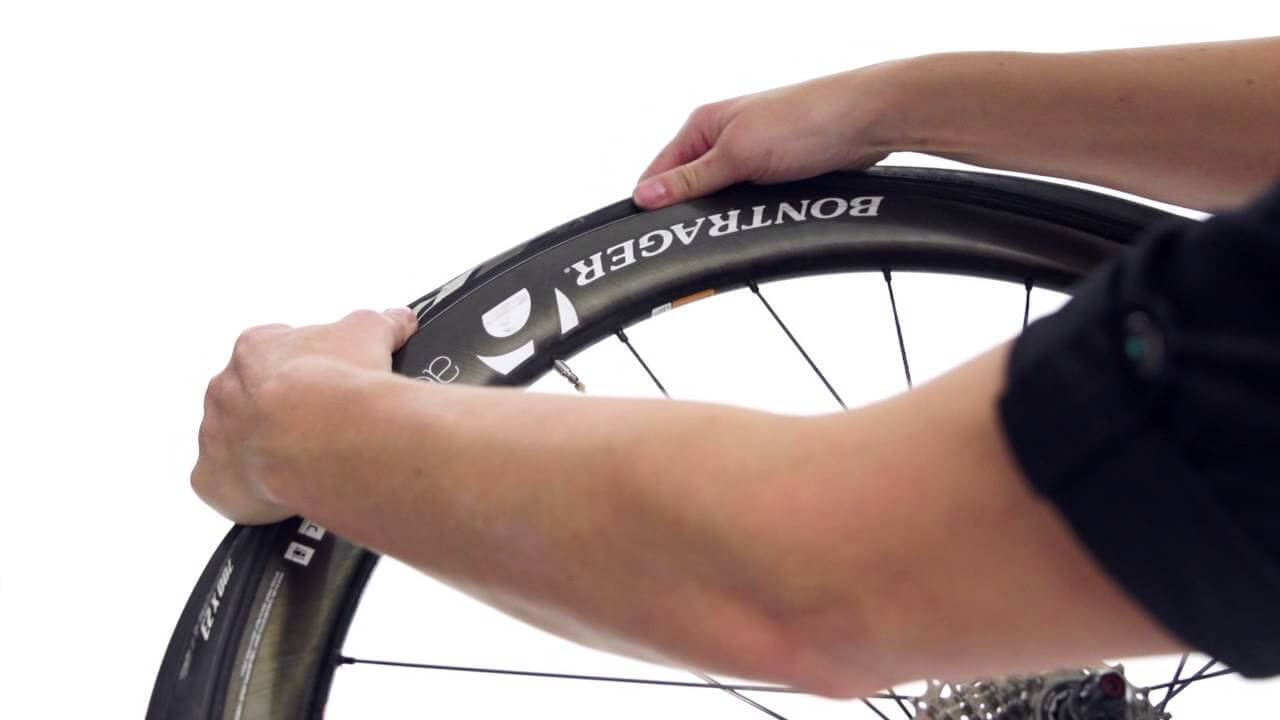
Clinchers work when pressure from the inflated tube seats the bead of the tire inside the rim. It can be tricky to get loose initially, but once it starts it becomes easier. Crouch down and place the wheel in front of your knees. Grasp the tire and pinch it from both directions to break the bead on both sides, rolling it as you work around the circumference.

break bead two

3. Pull it Off

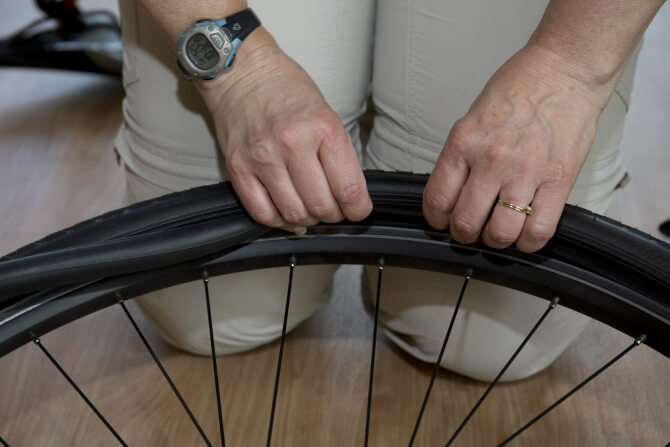
Place both hands at the top, with your thumbs on the rim. Pull the tire and tube together, toward your body, using your thumbs on the rim to add opposing pressure. Once it starts to come off, it gets easier. When it’s off, inspect it inside and out to find the source of the flat and remove it. Slip the tire back on the rim, seating the tire on the rim, only on one side.

together
Pull the tire and tube off together.

4. Impress Your Friends

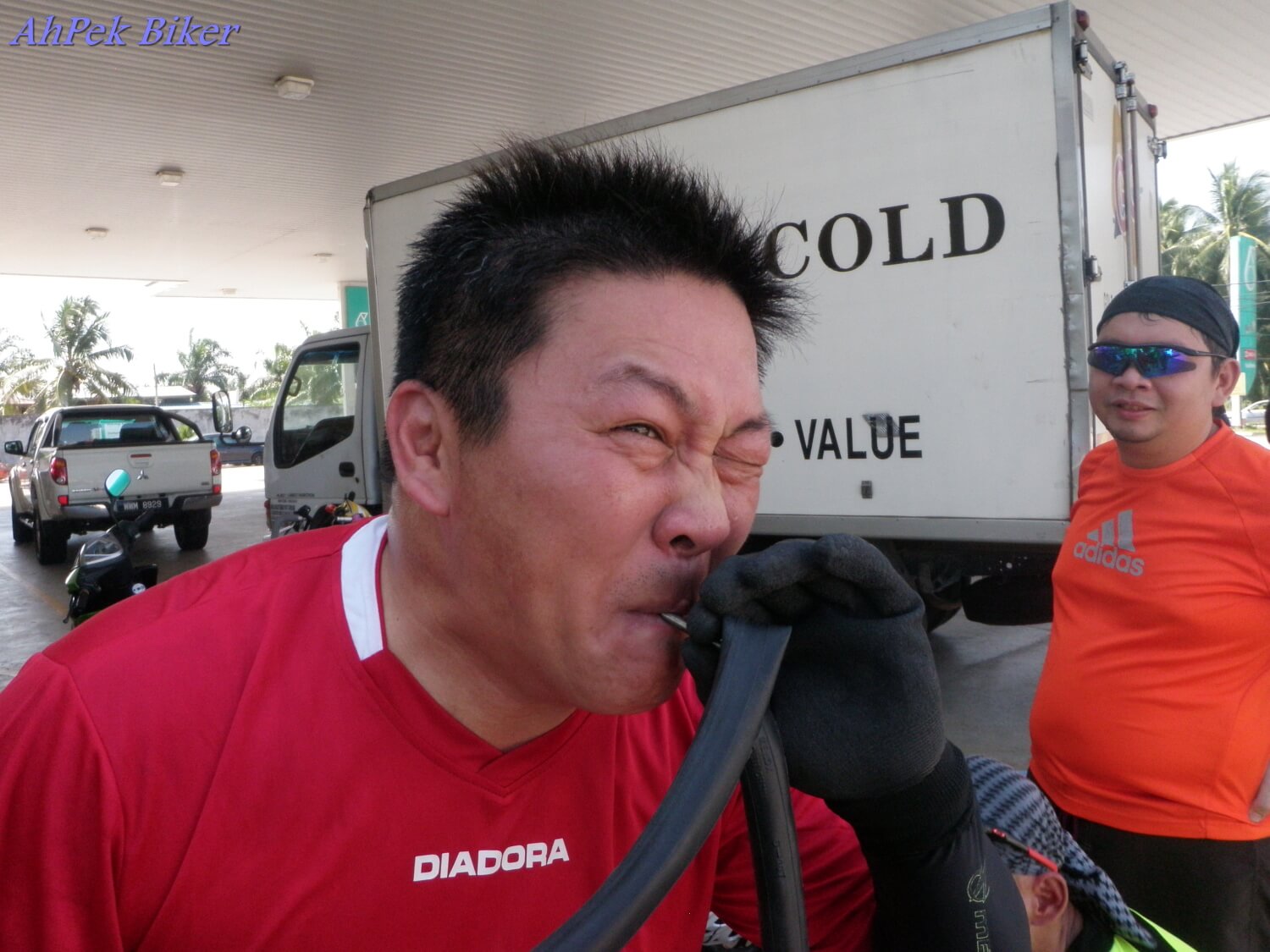
If you’re on a group ride, nothing will impress your friends more than what you do next: Get out the new tube, open the Presta valve and use your cheeks to blow air into the tube. If there’s a Superman on this ride, it’s you. But seriously, it’s easier than it sounds, and only takes a bit of air to inflate the tube enough to stuff it back into the tire.

It's much easier than you think.
It’s much easier than you think.

5. Reverse the Procedure

Push the tire back over the rim using your thumbs. It’s easy enough until you get to the last few inches. If it gets too tough, its fine to roll the last few inches of tire over the rim, it will pop back into the bead as it when it passes over the tight edge. Use your frame pump to fill it the rest of the way, even Superman would have trouble filling it up to 100 lbs using only his cheeks.

stuff the tube

Old Versus New

Once you’ve accomplished the no-tools procedure, you might even find that it’s quicker and easier to fix a flat without tools. One thing comes into play though; if you’re working with brand-new tires, it is more difficult to accomplish. Tires with more than a few miles on them are easier, and some brands are just easier than others.

The Route of the Hiawatha

October 27, 2015 by Wade Shaddy

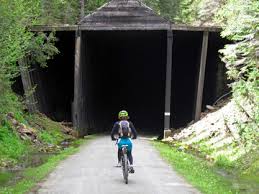
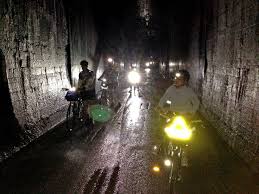
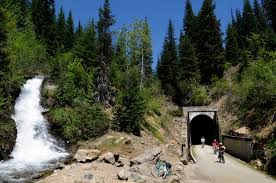
Imagine riding your mountain bike into a dark, cavernous tunnel in a remote forest in Montana, only your headlight guides the way.

enter tunnel - The Route of the Hiawatha
Into the darkness.

You continue riding, and after a few minutes, all traces of civilization disappear. Pay no attention to the dripping or rushing water, you’re perfectly safe. If you’re not claustrophobic, and continue riding for almost two miles, the darkness yields to the light at the end of the tunnel. When you emerge slightly damp, you’re in Idaho.

lights - The Route of the Hiawatha
Don’t forget your headlight.

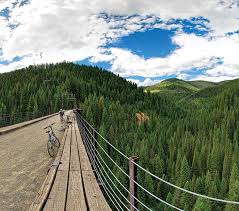
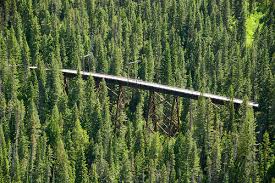
The path continues, giving way to a 300-foot bridge trestle over a deep gorge. The journey continues down a 2-percent grade descending 1000-feet over the next 17 miles, passing through eight more tunnels and across seven high steel trestles.

bike tressel - The Route of the Hiawatha
Don’t look down.

The Route of the Hiawatha is like no other trail, anywhere on earth. Built by the railroad at great expense circa 1910 and abandoned in 1961, travelers lavished in fancy train cars on a scenic voyage through the Bitteroot mountains. The long gone opulence is now a well-maintained bike trail.

long shot - The Route of the Hiawatha
A feat of engineering.

Depending on your fitness and determination, it’s possible to ride down to the bottom, and back to the top again in a day. The 2-percent grade is not that bad, but can take a toll if you’re already tired. Get started early in the day if you choose this option. Another option is to take your time, take pictures, and grab the shuttle bus back to the top. Allow yourself about 2 1/2-to-3 hours to ride down at a leisurely pace.

final - The Route of the Hiawatha
Singing in the tunnels is encouraged.

Because of the remoteness, a trail Marshall, also a cyclist, is somewhere along the trail at all times, ready to assist. But remember, the Marshall leaves at dusk. If you don’t make it back to the top by sundown, you’re on your own. There is a minimal charge to get on the trail, but it’s well-spent.

Itinerary

The Route of the Hiawatha is remote. The nearest town is Mullan Idaho, it’s small and without adequate facilities. Plan to stay in Wallace Idaho. It’s a trendy, yet antiquated town snuggled between steep hills on the interstate. Wallace is an experience in itself, plan on spending some time there. If you have the time, ride the infamous Coeur D’Alene bike path, a 72-mile long bike trail that passes through the center of town.

They filmed the movie, "Dantes Peak," in Wallace. Check it out. The Route of the Hiawatha
The movie, “Dante’s Peak,” was filmed in Wallace. Rent it for a preview of Wallace.

From Wallace, take interstate 90 for 11 miles to the Lookout Pass Ski area to rent a mountain bike. If you already have a bike, proceed directly to the trailhead, 2 miles south of the ski area. But remember, you’re not allowed on the trail without a headlight.

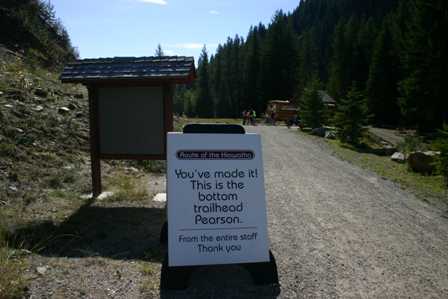
you made it

Young and old, fit or not, roadie or weekend cruiser only, the Hiawatha Trail is doable for almost anyone with an adventuresome spirit. Check it out if you get the chance.

« Previous Page
Next Page »
  • Facebook
  • Tumblr
  • Twitter

Latest Articles

JOIN Cycling: A New Training Platform for Cyclists

May 27, 2024 By Eric Lister

cold exposure

The Benefits of Cold Exposure for Cycling & Life

June 13, 2023 By Eric Lister

hill climb

The Ultimate Hill Climb Training Guide

May 31, 2023 By Eric Lister

shoulder pain cycling

How to Treat & Avoid Shoulder Pain While Cycling

April 12, 2023 By Eric Lister

psoas stretch

The Importance of the Psoas Stretch for Cyclists

April 6, 2023 By Eric Lister

cycling neck pain

The Ultimate Guide to Cycling Neck Pain: Causes and Solutions

March 21, 2023 By Eric Lister

Useful Info

  • Contact
  • Finally, A Global Cycling Club That Is Focused On Community And Love Of Cycling!
  • Privacy Policy
  • Share Your Story!
  • Terms And Conditions Of Use
  • Welcome to I Love Bicycling
  • What Happened When I Stretched Every Day For a Month

Recent Posts

  • JOIN Cycling: A New Training Platform for Cyclists
  • How to Hang Bikes in Your Garage: 4 Inexpensive Options
  • Gravel Bike Vs. Road Bike: Which One Is Better For You?
  • The 6 Types of Mountain Bikes & How to Choose the Best One for You
  • What Is a Touring Bike Good For? 5 Benefits We Know You’ll Love

Search I Love Bicycling

Connect with Us

  • Facebook
  • RSS
  • Tumblr
  • Twitter

Copyright © 2026 · Magazine Pro Theme on Genesis Framework · WordPress · Log in