• Training
    • Injury Prevention
    • Training Tips
  • How To
    • Bike Fit
    • Gear
  • Nutrition
    • Nutrition Tips
    • Weight Loss
  • Repair
  • Reviews
  • Stories
    • Funny Stories
    • Jokes
    • Quotes
    • Videos
    • Funny Videos

I Love Bicycling

I Love Bicycling is a website that is geared towards cycling for beginners with road cycling tips, training articles, nutrition tips, weight loss, how to’s and bike repair articles.

How To

  • Bike Fit
  • Gear

How To Keep Bugs Out Of Your Eyes While Cycling

July 13, 2016 by Adam Farabaugh

keep bugs out of your eyes while cycling

It’s a balmy summer evening. The sun is just starting to set over your right shoulder while you’re making your way back home for dinner. It has been an awesome day and it was just topped off with a nice evening ride. Then it hits you. Square in the eye. A bug. It hurts and you try and get it out. You maybe did but it feels like it’s still in there. Maybe now down in one of your eye corners waiting to be taken out when you get home with a mirror. There are a few ways to keep bugs out of your eyes while cycling but the trick is to employ one of them before a bug actually hits you in the eye.

Times of Day

Mid-day you probably don’t have to worry too much about bugs. You may get the random insect or bee but you probably already have your sunglasses on since it’s bright out. The mornings however and definitely evenings are the times when you have to watch out. Never leave home without one of the below preventatives otherwise you’ll be squinting your way home.

Ways to Keep Bugs Out of Your Eyes While Cycling

Sunglasses

There are a few different ways to keep bugs out of your eyes while cycling. Chances are good that you will always be riding with sunglasses so this will be a big help especially if you leave on a ride in the afternoon and don’t plan for a buggy return. Make sure you have a pair that covers your eyes enough however so they can’t find their way behind the lenses.

Clear Sunglasses

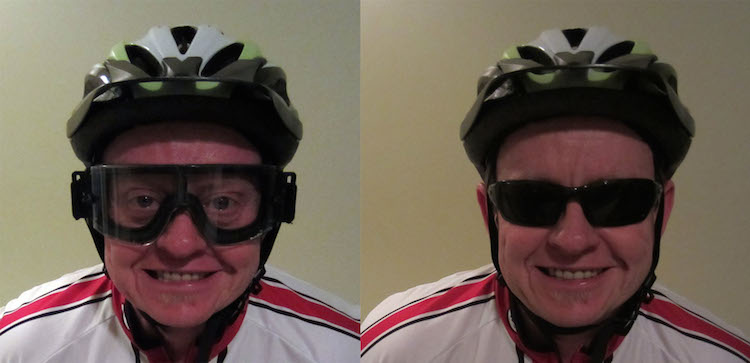
If the sun’s already starting to set and you’re just heading out for a quick ride, you probably won’t be wearing sunglasses. Clear glasses are your ticket on a ride like this. They will keep bugs out of your eyes while still letting you see normally. A good option is to get a pair of sunglasses with different lenses. Three different ones is fairly standard so look for at least that in your next pair. They’re also a good option in the rain.

Sunglasses in Your Helmet

If you’re out riding before it gets buggy with regular sunglasses and then need to take off your glasses to see as it’s getting dark, you will probably get a bug in your eye. There are two solutions here. The first is to see if your glasses can fit into the front of your helmet but protrude out above your eyes. You will need to tilt your head down but this will act as a shield against them. If your helmet doesn’t allow for your glasses to be inserted into the vents, you can place them on your forehead, slightly above your eyes. It won’t be super effective but it will be better than nothing.

Cycling Cap

If you don’t want to wear glasses the next best option is to wear a cycling cap. You however need to make sure it is pulled down with the brim just above your eyes. You will tilt your head slightly forward but will still be able to see. As with rain, bugs will hit the brim and not go into your eyes.

Should You Descend Like Chris Froome?

July 11, 2016 by Adam Farabaugh

should you descend like Chris Froome

If you’re following the Tour de France or happened to tune in Saturday, you may have seen Chris Froome’s descending style. It is known as the super-tuck where you sit on the top tube to get the least amount of aerodynamic drag. Froome also takes it to another level where he pedals while in this position. This gives a little bit of extra forward propulsion while still staying aero. But should you descend like Chris Froome?

The Details of the Super-Tuck

The normal tuck down a descent on a road bike is to place your hands in the drops, slide your butt back a little, and lower your chest down toward your handlebars. This position gives you an aerodynamic position while being able to corner, brake, and handle your bike as needed. Taking this position one step further brings your hands from the drops to just next to the stem on the tops. This position brings your arms in giving you a bit more of an aerodynamic advantage. Taking the tuck one step further brings you to the super-tuck. There are two ways to do this. The first is how Chris Froome does it which is by sitting on the top tube and putting your hands in the drops. This gives you a bit more stability and ability to brake should you need to quickly. The second, and more dangerous way, is to sit on the top tube and place your hands next to the stem. This is the fastest way to go down a descent but also the most dangerous.

What Speeds Can the Super-Tuck Take You To?

The speed you can hit on a descent largely depends upon the road and whether it’s twisty, rough pavement, or windy. Each more aerodynamic position will up your speed by a few miles per hour. Froome was probably touching speeds of close to 60 mph but not more since he was still able to pedal a little without being completely spun out.

When To Use The Super-Tuck

The super-tuck is ideal when there is a long, straight, as well as smooth section of road. If there are any turns or bumps in the road, descending in this style is a sure way to crash and at these speeds is definitely something you do not want to even come close to doing. Additionally, even if all the conditions above are met, you should only use the position if you have a really good reason for going fast. Something like getting Yellow in the Tour de France, or maybe a big local race if you are confident in your abilities.

Should You Descend Like Chris Froome?

The short answer is no. 99 out of 100 times you should never descend like Chris Froome. The position is incredibly unstable because it places so much weight on the front wheel. If you want to test it out just to see what it feels like, find an open, smooth, traffic-free section of road that is not very steep so you are going slow and gently slide your butt forward from your seat to the top tube. Make sure you have a good grip on the bars in the drops. Be careful though when you go back to the saddle as you will have to slide your butt slightly forward to not catch it on the nose of the saddle. You’ll see how this happens very easily. Now that you know how it feels, never do it unless you are in a position where it is well worth it. Getting a Strava segment, a new top speed, or out-doing your buddies are not reasons that are worth it. Stay safe, and have fun descending in the drops.

5 Best Bike Computers from $17-$500

July 7, 2016 by Josh Friedman

best cycling computers

Quantifying your riding is a great way to track progress, fitness, and satisfy your curiosity for statistics. It is always fun to be able to say that you rode ten, twenty-five, fifty, or even 100 miles. A bike computer will track your ride metrics, from time and distance on the most simple computer to location, power, and far more on the most powerful and best bike computers. This review is of some of the best bike computers around will help you choose what is right for you.

Best Bike Computers – Keep it Simple

A simple bike computer  should be just that; easy to use without too many functions to complicate its operation. Look for a sturdy cable between the sensor at the wheel and the computer itself. A big display that is easy to read is a necessity.

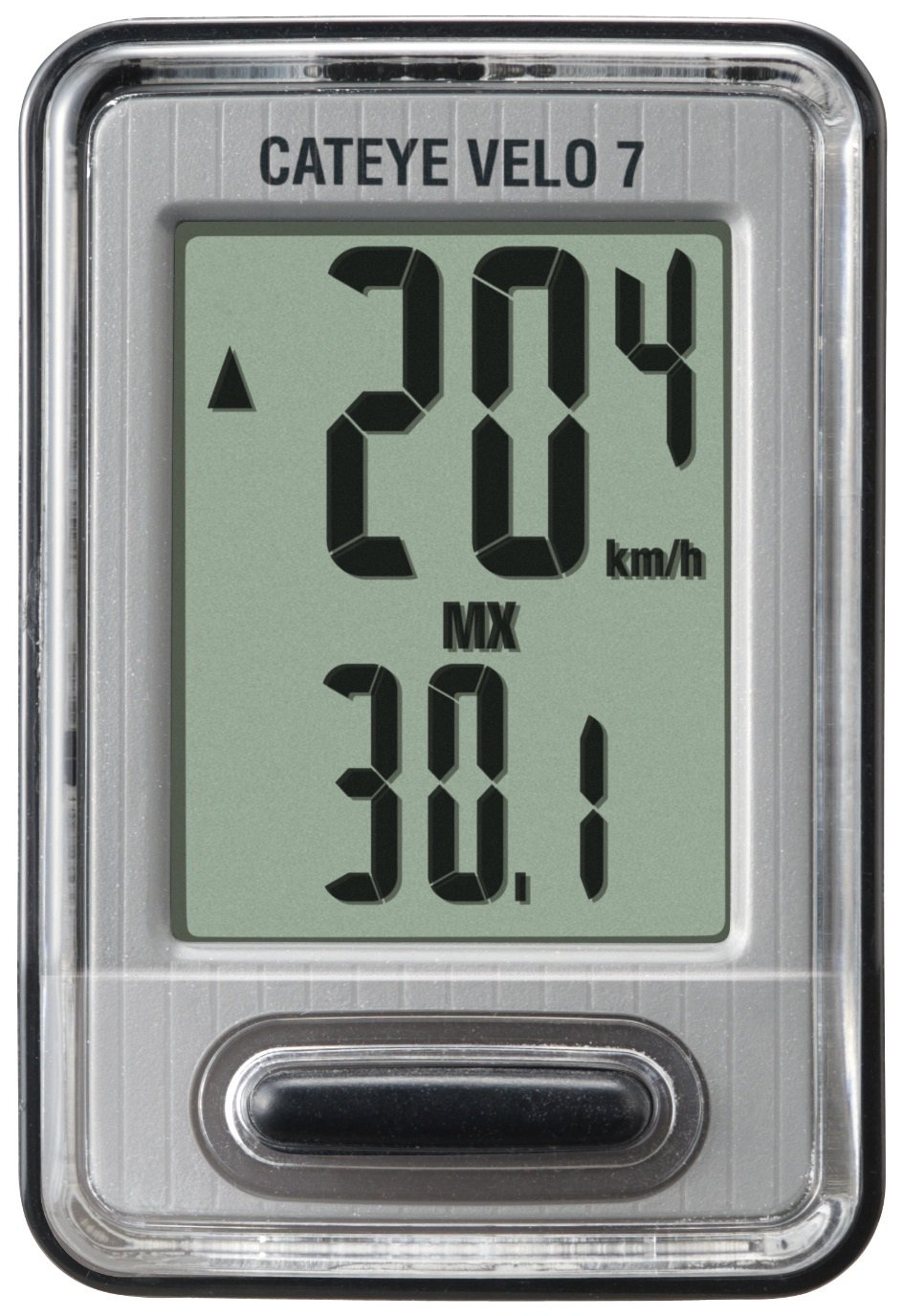
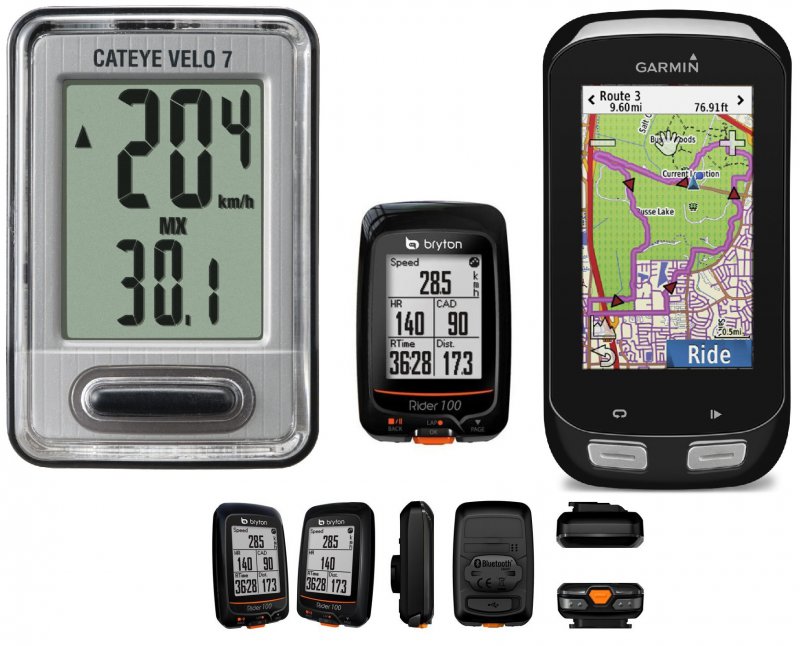
The Cateye Velo 7 is the most basic bike computer from a venerable manufacturer. Cateye has been making computers since 1981 and their reputation shows in their products. They are easy to use and functional. The Velo 7 has one button operation with current, average and maximum speed, trip and total distance, clock and elapsed time. It covers all of the basic functions a simple computer should without the clutter of additional metrics. And the best part of it is that you can find it for less than $25.

Cateye Velo 7

Price: $17

BPMs – Heart Rate Cycling Computer

Gauging your effort beyond time, distance, and speed requires physiological metrics. The most simple way to do that is with heart rate. Of course you will want all the other functions of a cycling computer too. Time will be the most important feature so you can track your time in a given heart rate zone for your workout. Along with that, you will get a wider range of functions from a computer that receives heart rate.

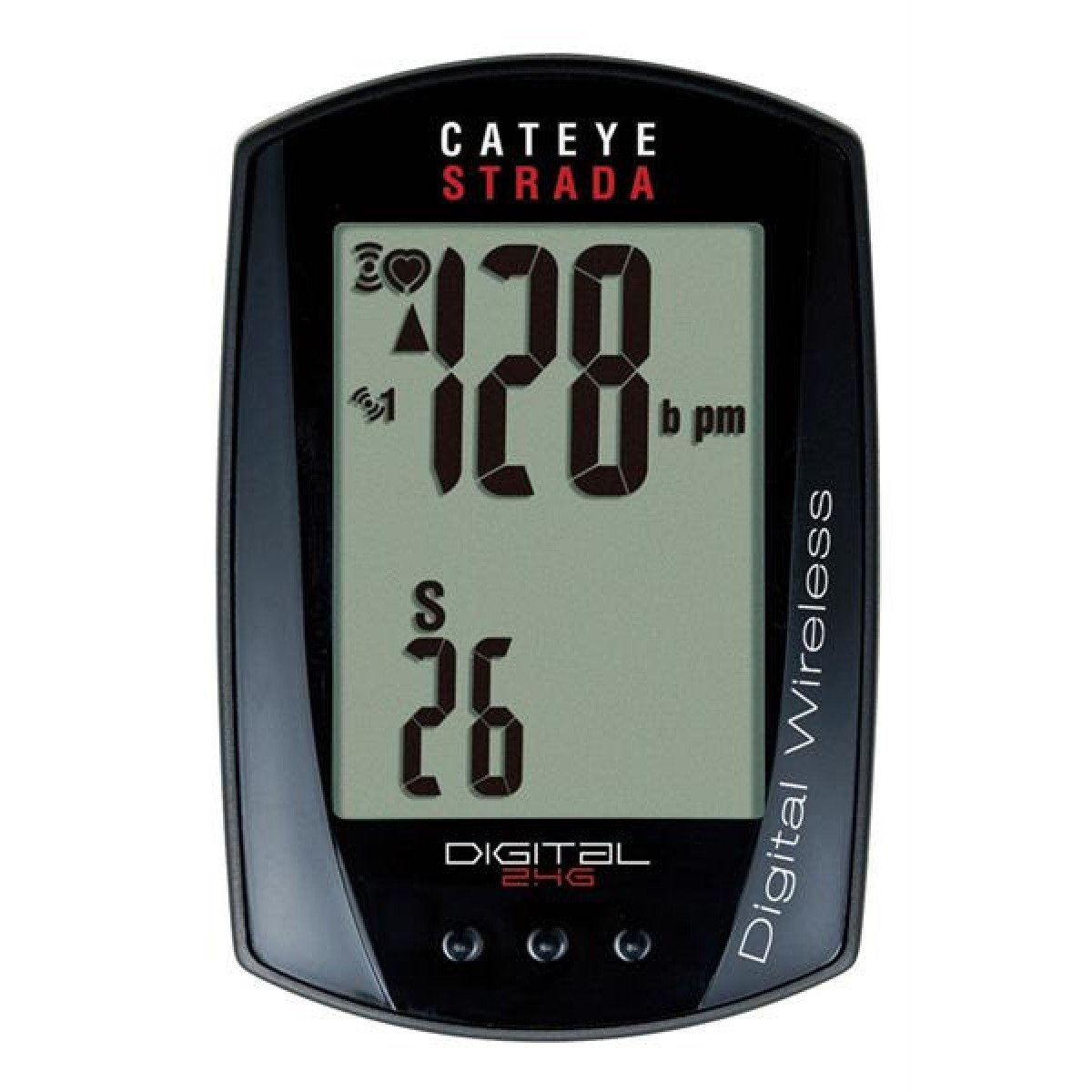
The Cateye Strada Wireless with Heart Rate has all of the features of a basic computer plus heart rate functions and wireless sensors and set up. Wireless speed sensors mean no wires to attach to the frame or fork of your bike, leaving a cleaner and easier set up. Heart rate is always wireless and the computer comes with an upgraded cloth strap that is more comfortable. Additionally, the sensors and computer are coded to avoid interference in transmission. For $100, this is a good deal for a reliable computer plus heart rate package.

Cateye Strada Wireless with Heart Rate

Price: $100

Easy GPS Cycling Computer

A computer with GPS will both give you directions so you can follow a route on a ride and give you a map upon return so you can see where you have been. If you often get lost or like to explore new places, this is a powerful function on a bike computer. Additionally if you like to Strava  your rides, this is the simple way to do it without using your phone.

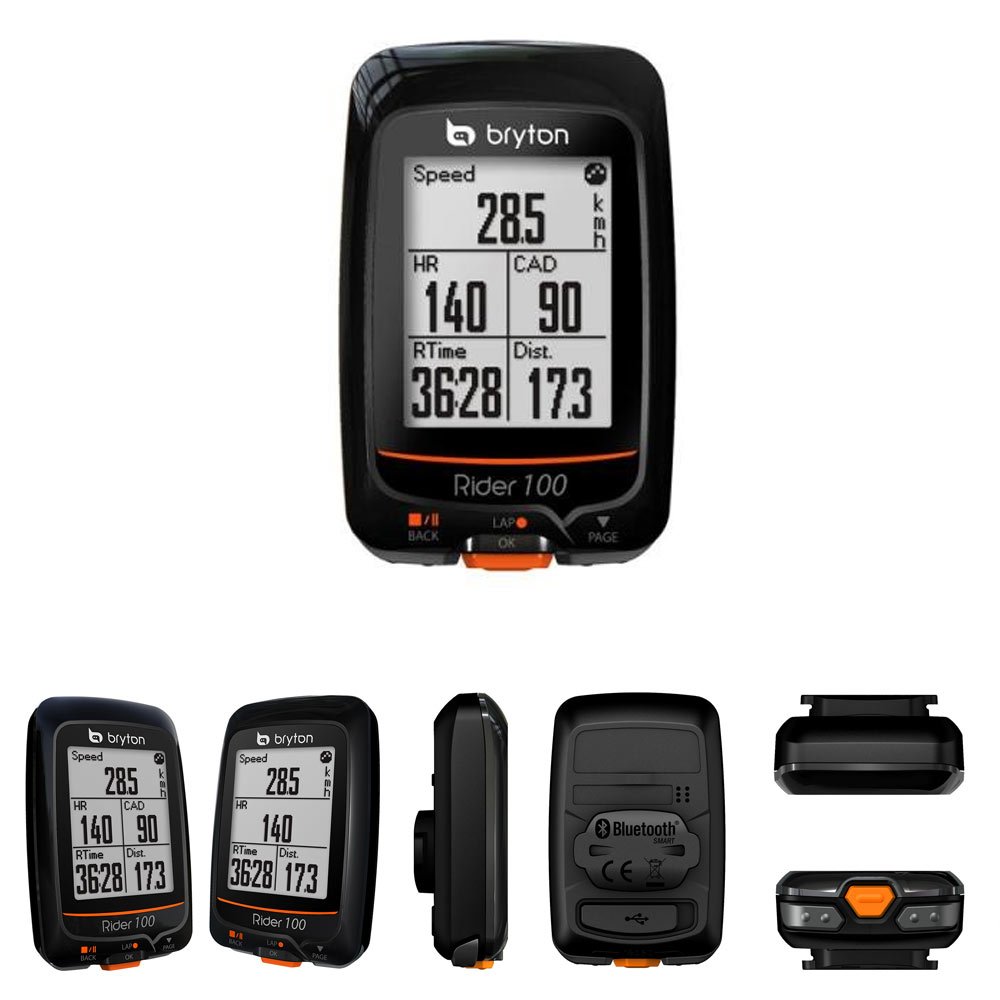
The Bryton Sports Rider 100 is a simple and affordable GPS cycling computer. Bryton Sports is a newer company in the cycling world but has long been in the automotive world so knows its stuff. The computer also has the handy feature of automatically detecting heart rate and configures the screen for easy viewing. Bryton Sports also has their own platform to upload your rides to as well as to map future rides. At a price of $66 it can’t be beat.

Bryton Sports Rider 100

Price: $66

Cycling Computer with Power

If you have a power meter, you will want to pair it with a bike computer that will display all of the metrics you find useful. Multiple customizable display screens give you flexibility with the data you want to see at a given point in your ride. The ability to recognize both ANT+ and Bluetooth protocols gives you flexibility with the devices you pair with the computer – power meters, heart rate monitors, speed sensors, your phone, etc.

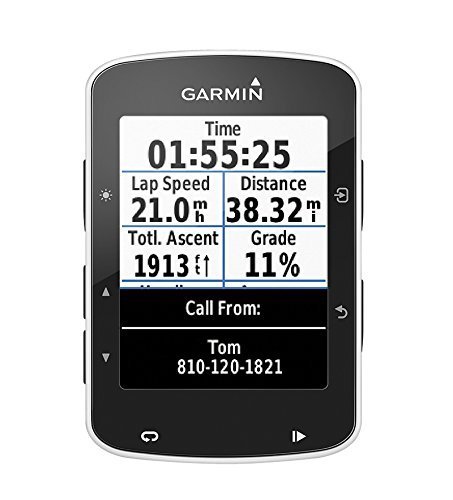
Garmin cycling computers are the gold standard for full functions cycling computers. The Garmin 520 is the latest version of their compact full function cycling computer. The display is upgraded for easy viewing in all light conditions. There are many new advanced functions that go beyond basic metrics that were once only available with analysis software upon return home from a ride. It also pairs with your phone to give notifications on the computer screen, along with potential Strava segment notifications. All of this can be yours for a touch under $300.

Garmin 520

Price: $300

All the Bells and Whistles

The most complex cycling computers are nearly as powerful as a smartphone, with device pairing, diverse metrics, easy to read screens, and detailed mapping. The mapping features are what sets a full function, full size computer apart from a computer focused on displaying ride metrics.

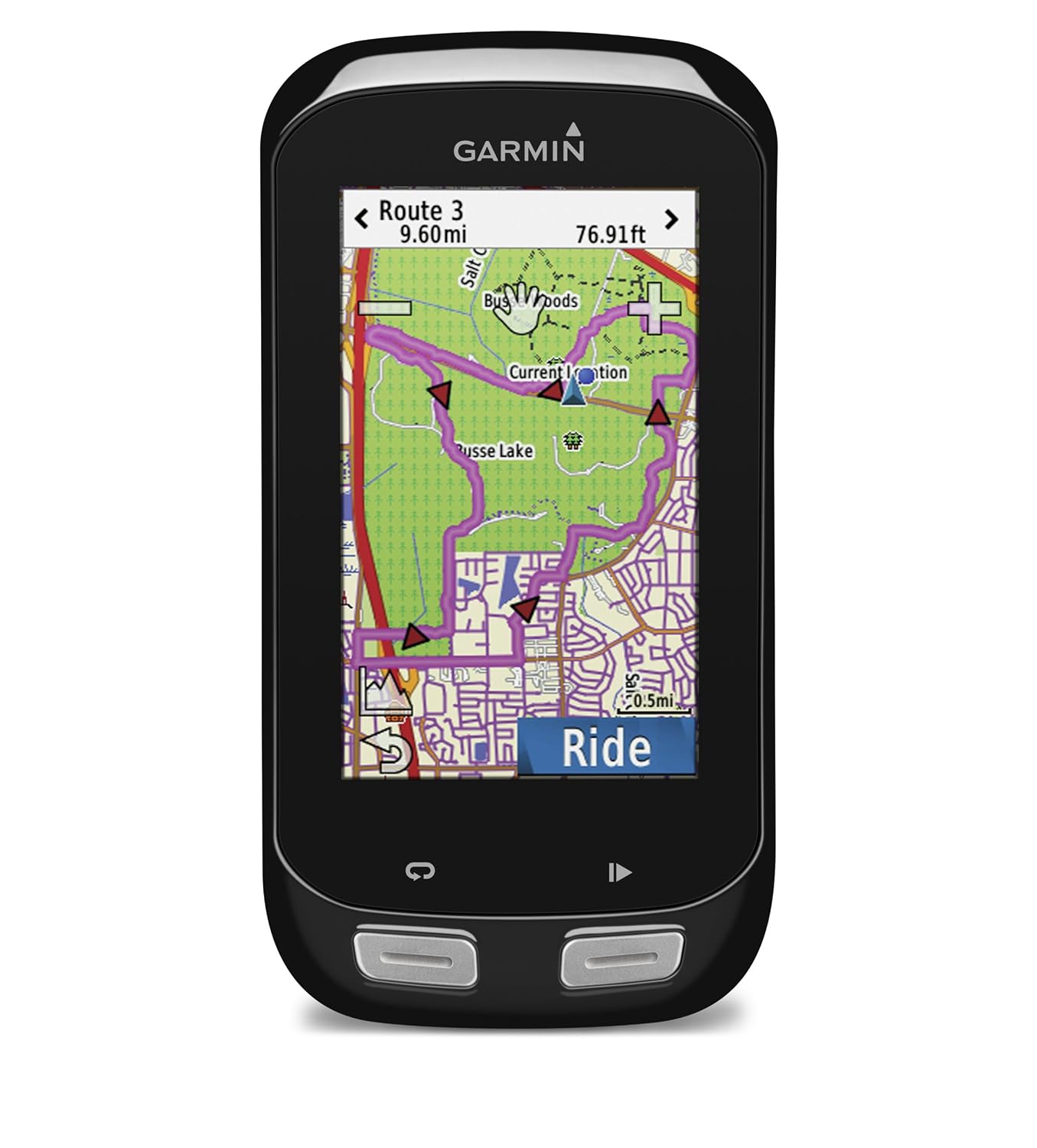
The Garmin 1000 has a large display and fully detailed maps along with all of the features of the 520. The mapping is tuned to bike specific routes to keep your riding safe. It has a three inch screen to make sure the powerful maps are easy to see while you are riding. If you need detailed navigation with every possible metric, this is the computer for you. It costs a bit under $500.

Garmin 1000

Price: $475


5 Best Cycling Water Bottles and How To Clean Them

June 29, 2016 by Sarah Lauzé

Cycling requires you to drink water. All of that aerobic (and anaerobic) activity will elevate your core temperature, causing you to sweat. You need to replace that sweat with water. The good news is that bikes are cleverly equipped to carry cycling water bottles in cages. Those cycling water bottles are often an afterthought, but like anything else, can be optimized to perform well.

Shape of Cycling Water Bottles

The shape of cycling water bottles is critical to ensure that it remains in your water bottle cage. An ejected bottle can spell doom for a ride; you could be out of water sooner than you thought. Make sure your bottle and cage have a deep enough indentation and tab to retain your bottle well. The shape will also affect how easy it is to return the bottle to the cage. There should be a little bit of taper on the bottom to ease entry. Shape also determines volume. Carrying more water is great, but if a bottle gets too big it can be cumbersome. Carrying less water can be fine if you do not need so much and it could make the bottle easier to handle for shorter rides.

Material of Bottles

Material affects two aspects of cycling water bottles – how easy it is to squeeze and what chemicals it exposes you to. A very stiff bottle will make it harder to squeeze when you need it most along with making the bottle more brittle, possibly affecting its durability.

Science has exposed more and more chemicals recently that detrimentally affect the body. This is after years of use when no one knew what the effects were. Some cycling water bottles tout their lack of certain chemicals in the hope that they will be safer. The most common chemical to drop is BPA, a known endocrine disruptor.

The Nozzle is Key

The nozzle where the water comes out is your closest contact point with cycling water bottles. It can color your entire experience. If the nozzle is hard with a small opening, it will be uncomfortable and will make it difficult to drink. Try a few different bottles to find a nozzle that works for you.

A newer feature of some cycling water bottle nozzles is that they lock. If they end up in the bottom of a bag, they should not leak. When they are unlocked, they are always ready to squirt water with a squeeze.

The top of your cycling water bottle should be a screw-on cap. A pop-on top is asking for it to pull off when you open the nozzle, dumping the contents all of over you.

Cleaning Water Bottles

Cleaning cycling water bottles is critical. If a bottle sits around long enough with water inside it, it will grow all sorts of organisms – bacteria, mold, and mildew, especially if it has left over sports drink mix. How quickly those things grow depend on a few factors: temperature, amount of water, how many organisms were in there to start and what you add to the bottle. The best idea is to clean more often than you think.

The best tool to use is a conical brush. It will be able to reach all of the interior surfaces of the bottle so organisms cannot hide. Use regular dish soap and water. A trick to keep mildew at bay is to use translucent bottles – mildew does not like light.

5 of the Best Cycling Water Bottles

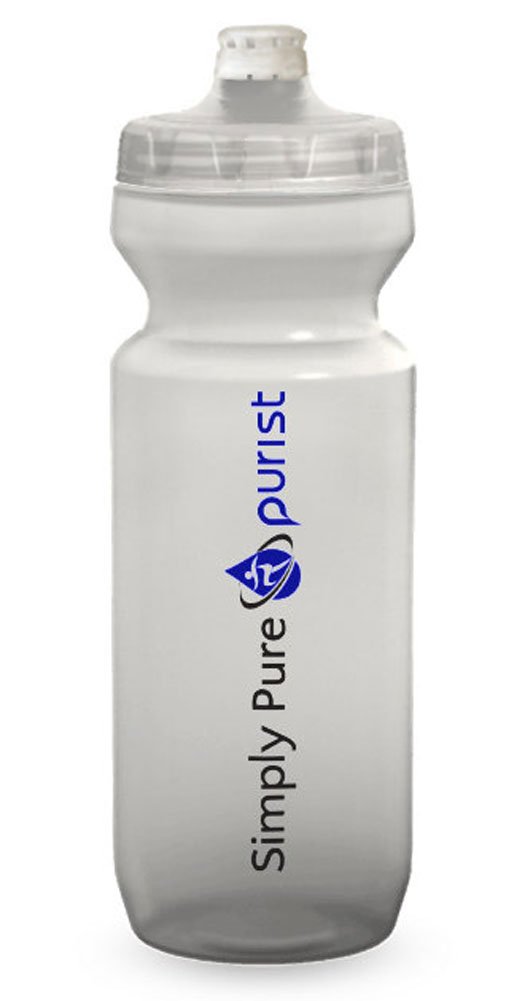
Purist 22 oz Water Bottle by Specialized Bikes

This bottle is the newest gold standard in bottles, after Specialized held the crown for years with their Big Mouth bottles. It has all of the highest tech features: a locking nozzle, BPA free, and a slick surface inside that does not allow organisms to grow and makes it easier to clean.

Price: $16

Gemful Bottle With Dust Cap 

best cycling water bottle

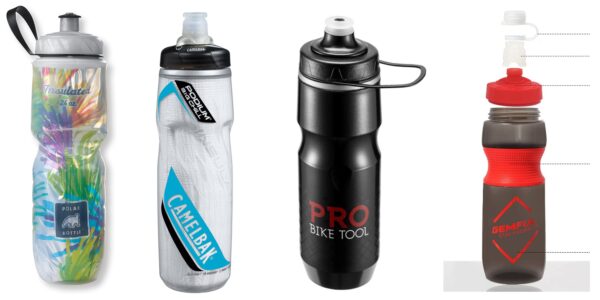
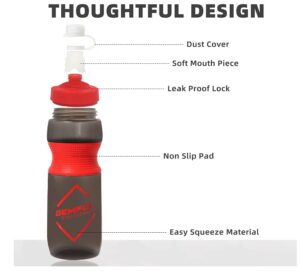
Gemful are one of the few bottles that consider the dust and mud that can collect on the nozzle. They include an attach dust cover that is easy to remove while riding. This one is the perfect water bottle for mountain bikers.

Price: $17

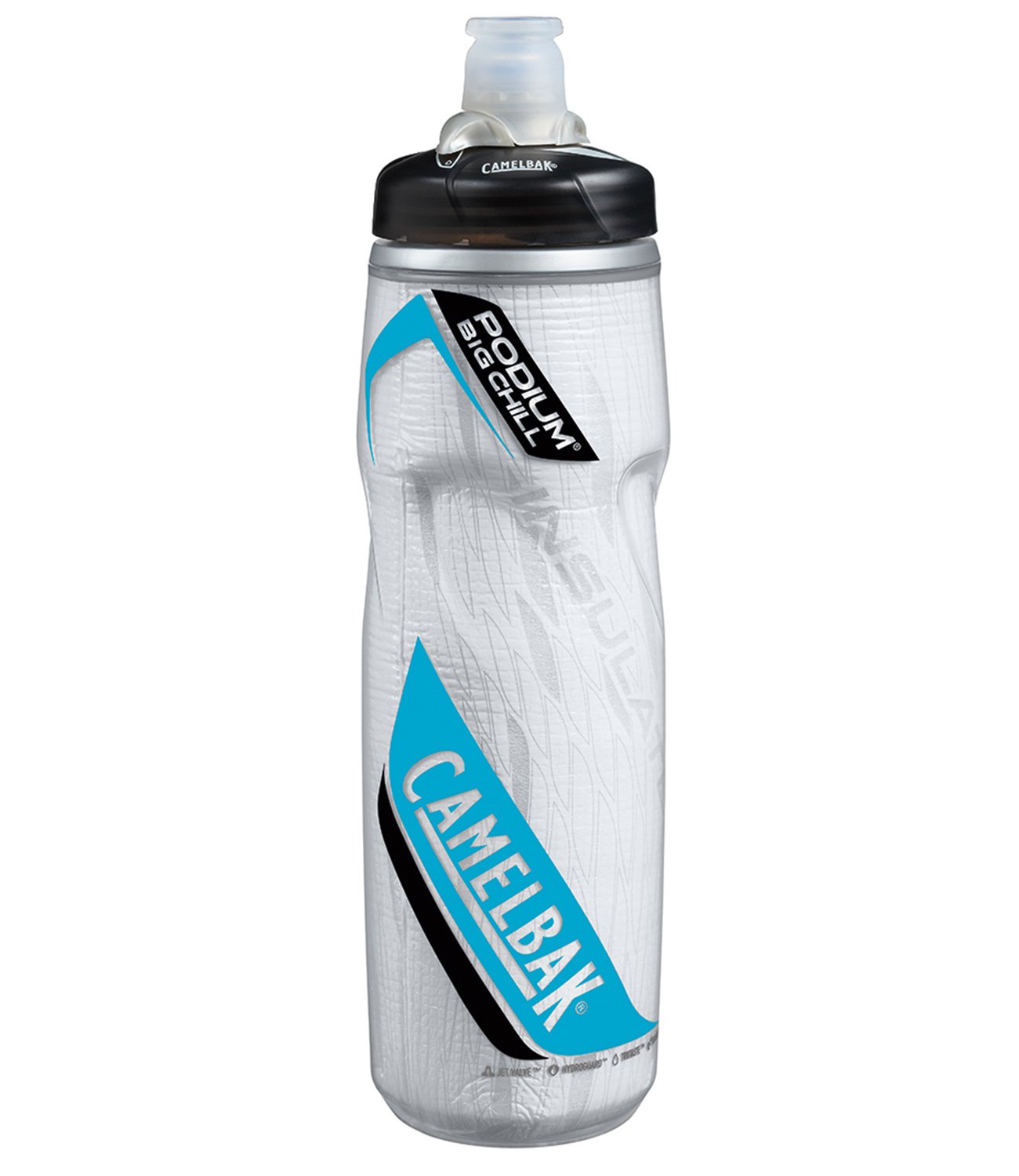
CamelBak Podium Big Chill

CamelBak were the originators of the locking nozzle. The design still works well. An insulated bottle like this will keep your water cooler and more refreshing deeper into your ride. Conversely, if it’s cold out, adding warm water will keep from freezing for longer.

Price: $29

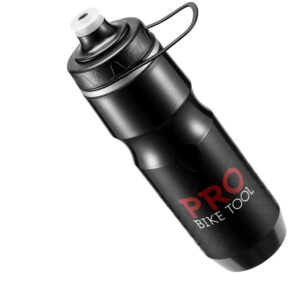
Pro Bike Tool Soft Bottle

Pro Bike Tool bottles use flexible HET (High Elastic Technology) material which delivers ‘More Fluid with Less Effort. BPA free and dishwash-safe – this is a great go-to for most rides.

Price: $19

Polar Insulated Bottle

These Polar Bottles are the most popular insulated bottle. They are also BPA and Pthalate free to keep you from ingesting unhealthy chemicals. They can keep contents both cold and warm. They also come in a huge variety of colors as you can see above. Their are over 30 options for you to choose from.

Price: $10-30 on average.

Bottles Matter

By thinking a little about the cycling water bottles you use, you can optimize your riding a little bit more. It may mean being able to drink more, carrying more, or being more comfortable.

How To Watch The Tour de France

June 27, 2016 by Adam Farabaugh

how to watch the tour de france

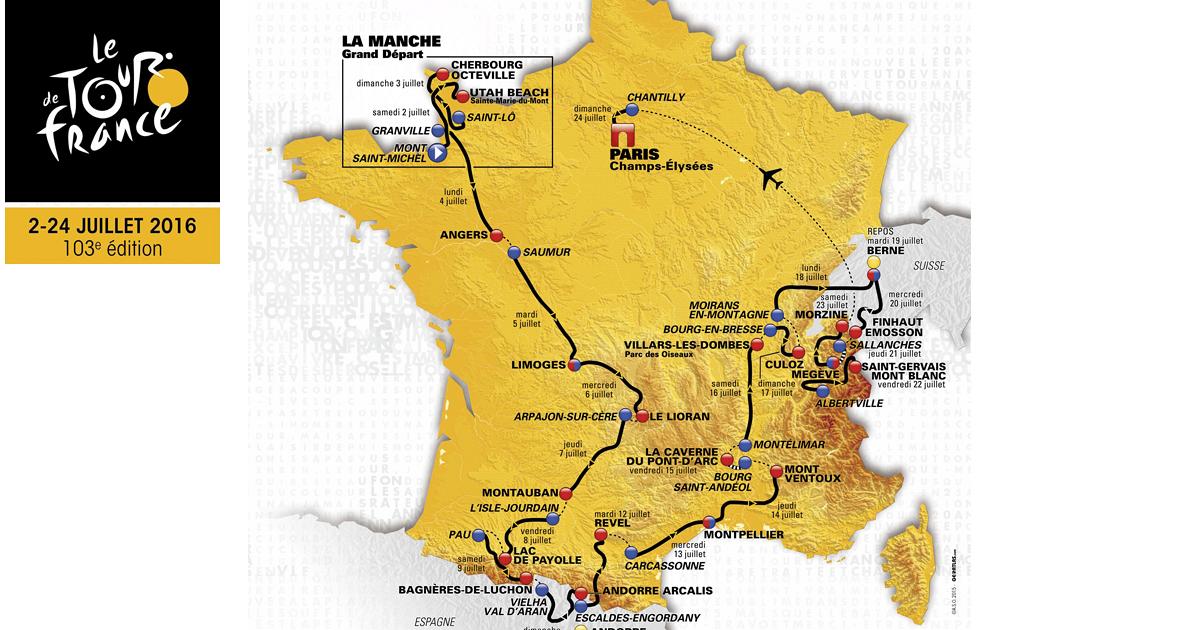
The Tour de France starts on Saturday, July 2nd in the Northern part of France in Normandy on the island of Mont Saint Michel with a 188 kilometer (117 mile) flat opening road stage. The first week starts with flat to medium mountain stages but ends with two mountain days before the race’s first rest day. Riders will traverse the eastern and central part of the country on their way south to the Pyrenees and into Spain for a day. The race heads into Andorra, a tiny country nestled between Spain and France in the heart of the Pyrenees. The race then travels across the south of France toward the Alps with a mix of flat days, medium mountain days, and mountain days along with the first individual time trial. The race then heads into Switzerland with the second rest day in Bern. The final week of racing stays in the same area of the country in the Alps with three mountain days and an individual time trial plus the last flat stage into Paris.

The tour is always an incredible spectacle to watch whether you’re lucky enough to be in France or watching from half a world away. There are a number of ways to catch highlights or to see every minute of the race. Knowing how to watch the Tour de France before it starts will help to make sure you don’t miss any of the action.

In Person Of Course

What better way is there to watch a sport? In person of course. If you ever get the chance to go and watch a race such as the Tour, do it. It will be amazing and something you remember the rest of your life. When you’re not in France however there are still a host of ways to watch.

How To Watch the Tour De France on TV

The oldest way to watch a sporting event without actually being there is via the television of course. Due to the length of time its been around, sports coverage on television tends to be the best way to take in a race because they know the ins and outs of what’s going on and often have exclusive interviews with key people in the race, both riders and team directors.

In the US – NBC Sports – In the US, NBC has exclusive rights to the race so you won’t find it on any other sports network. The channel is not the standard NBC channel but rather their NBCSN channel. They may have abbreviated coverage or highlights on their main channel which is much more readily available than the sports channel. If you have a subscription you can also watch the race again on-demand online if you miss it during the day.

In Canada – SportsNet1 – If you’re in Canada you can watch the Tour de France live on SportsNet1.

In Europe – EuroSport – If you’re in Europe, coverage is always provided by EuroSport which is much more standard than NBC Sports is in the US.

In the UK – EuroSport and ITV4 – In the UK you have two coverage options to watch on TV: EuroSport and ITV4.

Online – Paid

In addition to NBC’s television coverage, they also have a tour tracker app that allows you to watch via the internet. The pricing and details will come out just before the race starts but in 2015 in was $19.99 for the whole race. In addition to the desktop app they also have a mobile app.

Online – Free

As with any TV show or event, you can find pirated feeds of the race whether it’s the EuroSport broadcast, which is very popular, or the NBC Sports feed. With these however, the quality is often times much less than the above options and typically has a lot of pop-up ads not to mention the issue of legality. Three popular websites are: CyclingHub.tv, steephill.tv, and cyclingfans.com.

A Local Establishment

Because of the popularity of the race and the general camaraderie the sport brings, many places such as bike shops, fitness studios, bars, and restaurants, will show the race. At these place you won’t only be able to watch the race but also mingle with other like-minded fans.

A Friends Place

Like going to a local establishment, going to a friends place to watch the race is also a great option as watching a race with someone is always a lot more fun. A good option for this is to watch the prime-time replay in the evening as in North America the coverage is always during the morning.

Lantern Light – An Innovative Multifunctional Light With Bike Capabilities

June 22, 2016 by Adam Farabaugh

lantern light

Ever wish you could have one light that does it all? A light you could use like a flashlight, one you could take camping to light up an area, and one you could put on your bike and have a strong beam for the road or trail. If you happen to find a light like this it probably can do all of those things but not at the greatest of abilities. That’s why you probably have a light for each discipline. With a Lantern Light you can get strong lighting capabilities in each realm, particularly with riding.

What is the Lantern Light?

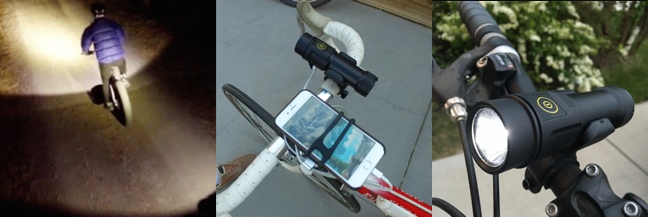
The Lantern Light is a multifunctional flashlight that has a removable diffuser on it to disperse light evenly and brightly over an area. The diffuser can then be removed which focuses the light into a beam that can reach 785 feet (240m) with the 1000 lumen output setting. The Lantern Light uses a recharcheable battery via a USB and can also be used to charge other devices such as your phone. The Lantern Light is also water proof and impact resistant as well as features a strobe light setting for emergencies.

Bike Function

The Lantern Light comes with an adjustable handlebar mount that can be rotated 360 degrees. The mount gives it great functionality on the bike along with its four settings of brightness: 1000, 400, 180, and 90 lumens. If you’re going camping with your bike you would be hard pressed to find a more suitable light. You could use this and only this light for your entire trip.

How You Can Get One

The Lantern Light is in its final two days of funding on Kickstarter (ends on June 24th) to help fund the initial order of lights as well as the moulds and tooling of the lantern diffuser. You can help back the light on their Kickstarter Page and get a light for doing so. Otherwise after August when they ship the initial batch to Kickstarter backers, they will be available. We will also have them available in The I Love Bicycling Shop when they are ready.

5 Great Women’s Cycling Rain Jackets

June 18, 2016 by Adam Farabaugh

women's cycling rain jacket

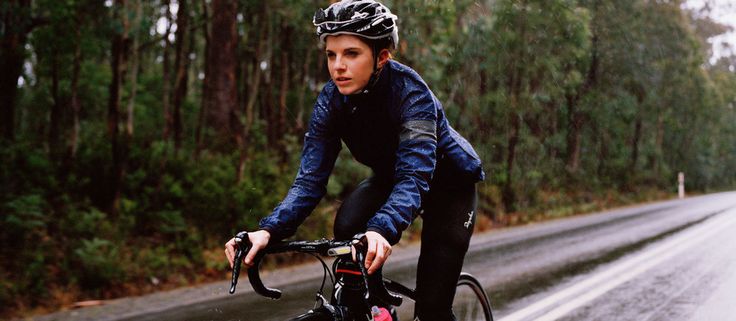
A great cycling rain jacket is hard to come by especially for a descent price. Finding one specific for women can be even more of a challenge. Women’s cycling rain jackets are similar to that of men’s but are typically cut to better fit a woman and are typically colored or accented with a purple, pink, light green, or baby blue to some rider’s like and others dislike. Regardless, finding a good jacket is key for staying comfortable when the weather turns bad.

Changing Weather Conditions

If you are heading out in variable weather you should carry a women’s cycling rain jacket in your pocket. Variable weather covers not only rain moving in where you are now, but also elevation changes along with riding at dusk when the temperature drops quickly.

Riding in the mountains where temperature can fluctuate greatly and weather can move quickly requires a cycling rain jacket almost every day. Climb to the summit and you will be overheating but on the way down you are likely to get chilled to the bone because you are covered in sweat and not working very hard while coasting.

Heading out for a ride that will go past dusk is also a great time to have a cycling rain jacket. Once the sun moves below the horizon, expect temperature to drop, especially if you live somewhere that does not retain heat, like the desert or coast. You will be glad you packed it for the ride home.

A cycling rain jacket will also prove useful if you have to stop to change a flat or for some other unforeseen circumstance. Standing on the side of road and shivering is no way to quickly change a flat. Put on your jacket and you can stay comfortable until it’s changed or your ride arrives.

Necessary Features In A Women’s Cycling Rain Jacket

Needless to say, the most important feature of a women’s cycling rain jacket is that it is waterproof. If it is not waterproof, it is a mislabeled wind jacket. Read reviews and talk with people that are familiar with a specific cycling rain jacket to determine how waterproof it is. Many are water resistant which can get you by depending upon the severity of the rain and temperature drops you experience.

When riding in the rain and other low light conditions, it is nice to have extra visibility for drivers. A cycling rain jacket should have reflective patches to make you more visible to traffic. This does not replace having good lights but additional help is always a plus as if it’s raining, visibility is also reduced for drivers.

The rear of a cycling rain jacket should extend down past where a normal jacket would to cover your backside from road spray. You will still get wet because your bibs are not waterproof; the tail is there to protect you from direct spray from your rear wheel.

A quality zipper goes a long way to making your cycling rain jacket easy to use. When the rain comes pouring down or you are wearing full finger gloves, a good zipper will make it easier to get your jacket on quickly and easily.

Storing your cycling rain jacket in a jersey pocket is a must. The jacket has to compress down and be light enough that it is not cumbersome otherwise you won’t want to take it with you on a regular basis. Bonus points to the jacket if it is small enough to go in your pocket and still fit other essentials in the same pocket.

A Note On Breathability

Cycling is an energy intensive activity; ideally your cycling rain jacket will allow your sweat to evaporate so you can stay dry inside. It is a tough balance to strike. Your expectations are too high if you expect to be perfectly dry and cool inside your jacket while keeping the precipitation at bay. Claims of cycling rain jackets (or any rain jacket) being waterproof and breathable are usually overblown.

The bottom line is expect to get clammy inside your women’s cycling rain jacket, but remember that it will not be nearly as bad as if you were riding without a jacket at all.

5 Great Women’s Cycling Rain Jackets

Here are a range of 5 women’s cycling rain jackets that may work for your needs and budget.

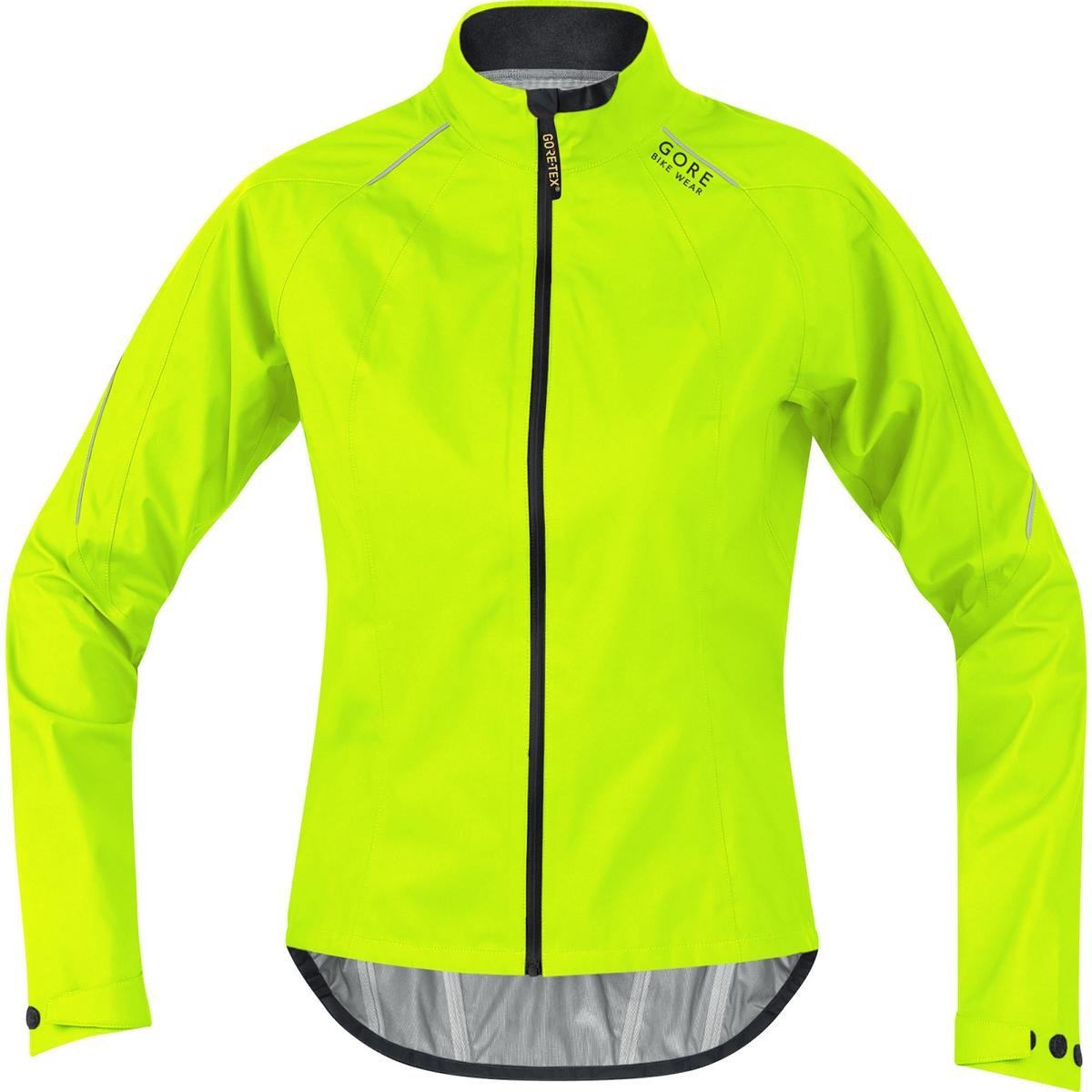
GORE BIKE WEAR Power Lady Gore-Tex Active Jacket

Price: $113 to $357 depending on supply but mostly about $113

This Gore Bike Wear Active Jacket  is great for those days where it’s going to rain all day and be slightly chilly. It’s a little bit thicker so is one you wouldn’t want to try and stuff into a jersey pocket. It’s Gore-Tex material is both wind and waterproof yet the jacket is still breathable which is nice when riding harder, say up a climb.

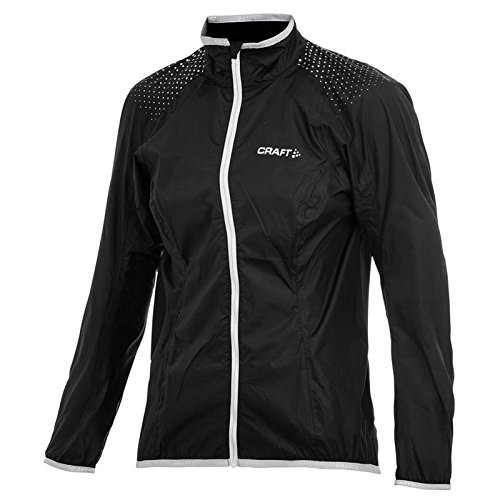
Craft Women’s Active Bike Light Rain Jacket

Price: $95.35

The Craft Bike Light Rain Jacket doubles as both a wind and waterproof jacket. It has a flap over the zipper as well as fleece on the collar to keep you warmer as well. An intermediate jacket indeed with an intermediate price.

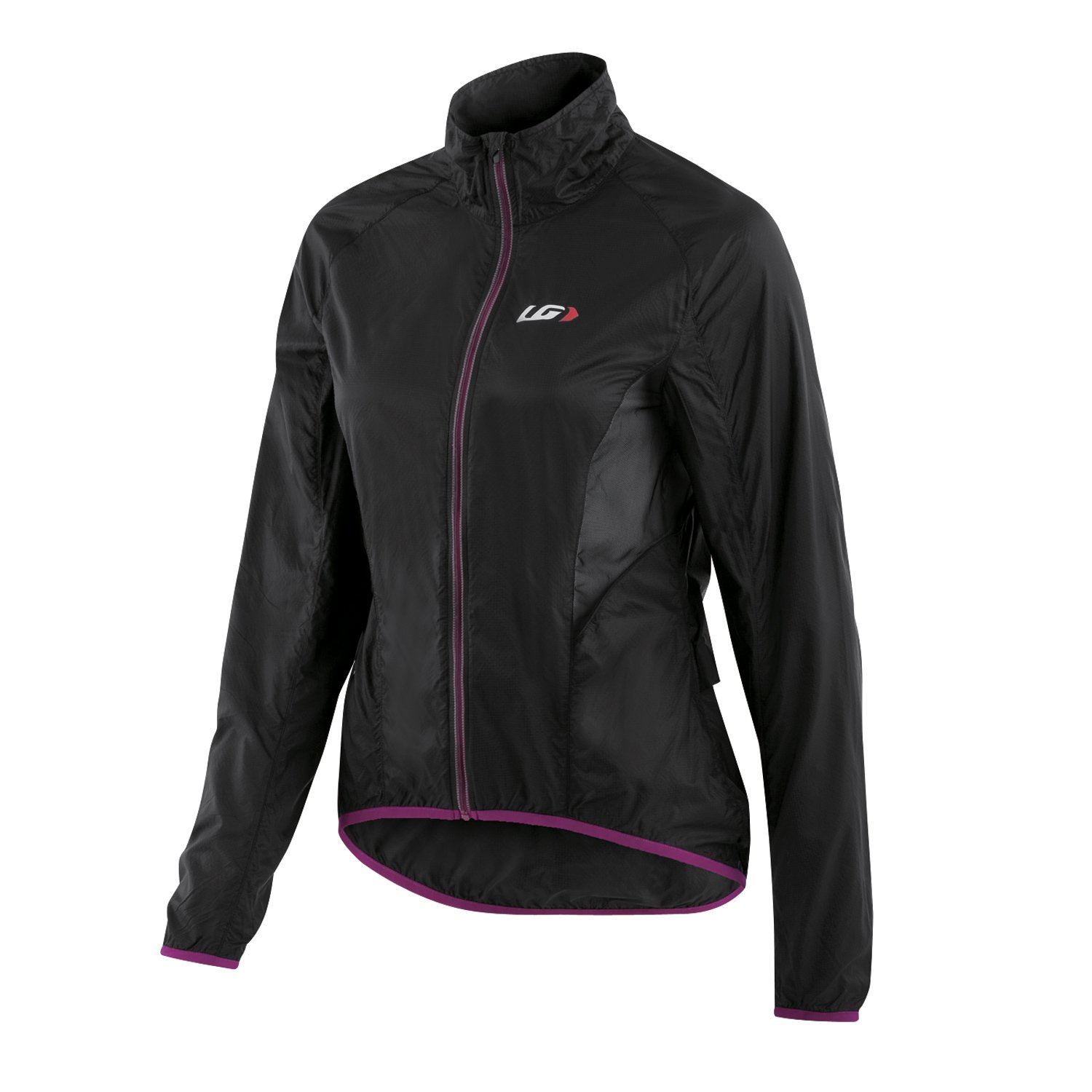
Louis Garneau X-Lite Jacket – Women’s

Price: $71.00

This jacket is incredibly versatile as well as small enough to fit into your jersey pocket. It can be used as a rain jacket or wind breaker without leaving you clammy underneath. It does this with high-tech fabric under the sleeves. It also has more of a race cut so it doesn’t flap in the wind.

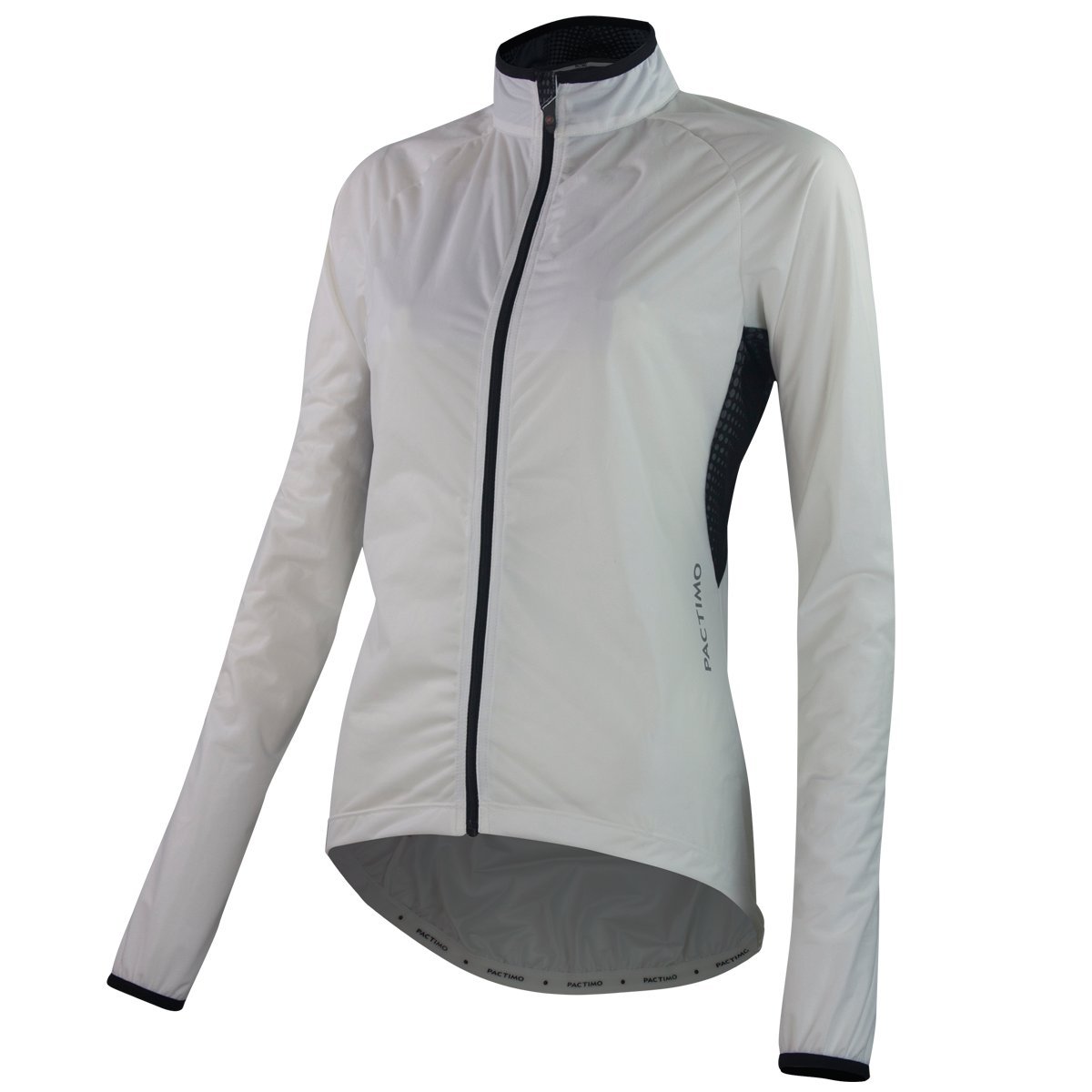
Pactimo Women’s Ultra-Lite Breathable, Packable Cycling, Bike Rain Jacket

Price:$60-$70

This jacket covers it all for a descent price. It’s wind and water resistant and even though it’s not fully waterproof, it will do the job when you need it and it’s stuffed in your jersey pocket. It is also breathable and also has reflective accents to help keep you safe and visible.

Canari Women’s Microlyte Shell Jacket

Price: About $15. Depends on color and size.

This is your cheap, simple jacket that will keep the wind out and rain to a limited extent. The fabric is water-resistant, not water proof, but would be suitable as a jacket to carry with you if you think it might rain or get a little chilly. It’s a price you simply can’t beat despite not having some of the qualities of the higher end jackets.

5 Types & 13 Destinations For A Cycling Vacation

June 16, 2016 by Josh Friedman

cycling vacation

You’re tired of the roads that you ride on every day and you have vacation time you would like to use. What better way is there to combine two of your needs than going on a cycling vacation? There are a number of different approaches so depending upon your style and preferences you can find your perfect bliss.

What to Look for in a Cycling Vacation Destination

It is likely that when you are planning a cycling vacation you are looking for something that will be a change of pace from your everyday riding and life. That could mean anything, as long as it is different from your regular grind. Beyond that, what should you look for?

  • Friendly Roads – Taking the time to travel somewhere and then finding out the roads are filled with belligerent drivers, no shoulders, and bad pavement will be a colossal mistake. Research where you would like to go ahead of time and make sure the infrastructure supports your goals.
  • Terrain You’re Looking For – After finding good roads, you want to make sure that your cycling vacation destination has the terrain you’re looking for. If you’re a more fit rider and want a challenge seek out someplace with long mountain climbs. If you don’t want to ride uphill for an hour or more, find someplace with smaller climbs and rolling terrain but lots of roads to choose from. If you want flatter rides, seek out the coast, deserts, or scenic farm roads somewhere in the middle of the US.
  • Cycling Infrastructure – Knowing that there are cycling amenities at your destination can make packing and traveling easy. You will not have to pack extra tubes, tires, energy bars, or other cycling needs. There will also be plenty of cycling specific roads and paths to explore along with people to ride with if you want company on your rides. A place with a built up cycling community will also have shops with quality bikes to rent, meaning you can leave your bike at home and travel lightly.
  • Good Food – A cyclist runs on his or her belly. Finding a place that will fit your culinary desires is a huge bonus. You will have a good meal to look forward to after every ride.
  • Culture – You cannot ride your bike the entire day (right?). You are going to need other things to do once you are done for the day. Find some interesting things to do and see in the place you are visiting. The culture is what makes a place and experiencing it by bike is one of the best ways to do so.

Where to Go On A Cycling Vacation

#1 – Someplace You Dream Of

It’s your vacation away from home and your day to day life. Go someplace you dream of riding. Everyone dreams differently but a few awesome places follow.

California is a place many dream of living in or visiting. It has great weather and miles of beautiful roads. For a complete vacation that includes the full cultural experience, stay in one of the three main cities – San Diego in the south, Los Angeles just up the coast or San Francisco in the north.

San Diego is known for Mt. Palomar, a long, challenging climb and Fiesta Island, a flat and safe route that cyclists flock to. Los Angeles has great riding both east up through the Angeles National Forest to Mt. Wilson and Dawson’s Saddle and to the north into the canyons above Malibu. San Francisco may have the most picturesque views of all with rides in the Marin Headlands and Mt. Diablo. All three cities have bustling cycling scenes and cultural amenities to fit every taste.

Colorado is another place that people travel to and wish they lived. There is an incredible amount of variety from flat, ranch land in the east, to 14,000 foot peaks that hold snow virtually year round, to sand dunes in the south, and an endless amount of everything else west all the way into Utah including Zion National Park. You will find breathtaking (literally, you’ll be at altitude) roads and views around every corner. You can stop in little old mining towns that dot the mountains, some barely still there while others are bustling with excitement such as Georgetown. The best time of the year to go is June through the early fall as if you’re looking to get up into the mountains, snow storms can be a regular occurrence during the cooler months.

North Carolina is chock full of exciting things both on the bike and off. The Blue Ridge mountains form an incredible backdrop in the west of the state with Asheville being the mountain town hub of outdoor pursuits. The riding is endless with gazillions of rolling country roads and long climbs up to the Blue Ridge Parkway. The Parkway is an incredible ride but beware of traffic as in the summer months it can be a zoo. Hit it in the off-season if you can otherwise try and ride it mid-week when there are fewer people. The mountain biking is also incredible in this neck of the woods, particularly Pisgah. Off the bike there are endless options from hiking to rafting, to brewery tours, to checking out the sites at the Biltmore Estate.

#2 – Go Watch a Race (in North America)

Here are three options for a cycling vacation to watch races as well as to ride. The first is attend the Tour of Utah in the beginning of August. It is a week long stage race with world class teams over beautiful terrain. Either before or after each stage, you can ride on the roads that the race uses to get the full perspective of what the pros experience. The crowds at the race are tremendous. It is some of the top racing in the US and the weather should be excellent.

The second race is the Philadelphia International Cycling Classic held in the beginning of June. Watching the races are a huge party, especially at the Manyunk Wall. There is a full day of racing to watch with the women’s race part of the UCI World Tour, the top level of racing following the men’s race. There are amateur time trials to compete in the day before if you want to test yourself and the day before you can ride the course and the infamous Wall. Philadelphia is a historic and fun city that will leave you many options from good food to country roads outside the city to interesting cultural sites to check out off the bike. The Liberty Bell, Reading Terminal, and the Art Museum are three must sees.

The third race is the Tour of Alberta held in the beginning of September in Canada. The race course changes year to year but generally starts or ends in Calgary or Edmonton, both cool cities to check out with a cycling scene. The race also heads into the mountains, the Canadian Rockies to be exact, which are some of the most picturesque mountains in the world. There are a few cool rides to do and a lot to do and check out off the bike as well.

#3 – Visit Cycling’s Motherland

An article on taking a cycling vacation would not be complete without a section on visiting the low countries of northern Europe: Belgium, the Netherlands, and Denmark. The cycling infrastructure will blow you mind; it is a way of life. Bikes are a viable and accepted form of transportation. If desired, you could do all of your travel by bike – go to dinner, visit a museum, go sightseeing, whatever you choose.

Cycling is also one of the top sports in these countries so there is no shortage of riding for fun either. There are endless kilometers of cycling routes to take you away from the urban centers to get in an awesome ride. Check out the cobbled climbs of Belgium and the Spring Classics if you’re keen.

#4 – Major US Cities

Many major US cities are making big headway in the acceptance of cycling. Bring your road bike to roll out of the city for a proper ride but use one of the bike share programs to get around town such as Citi Bike in New York City. A large city also doubles as a popular place for the rest of your family to have plenty to do if they’re not riding also.

New York City has made major changes to infrastructure to encourage cycling. It is also relatively easy to get out and go for a ride. Check out Central Park or roll across the George Washington Bridge to jump on the tried and true training routes many New Yorkers use. And there is a never ending list of interesting things to do in New York. You cannot lose.

Another great city to check out is Pittsburgh. The city’s bike share is new and expanding. Be aware that it is built on the hills and valleys of three rivers, so the terrain is very steep. That can be an attraction too. It is a breeze to get out and roll into farm land. There is great food and a thriving cultural community so you will not have a shortage of things to do off of the bike.

Minneapolis, Minnesota is also a cycling heavy city with infrastructure everywhere and plenty of cyclists using it. Check out the rides along the river along with farm roads outside of the city. If you’re looking for gravel roads there’s a lot of that there as well.

#5 – The Local Option

There is probably someplace relatively close to where you live that you have never explored by bike. Chances are that it will be fun and interesting too. It is easy to jump in the car and drive a few hours to explore new roads close to home on a weekend even. You can even camp and keep it cheap. Take a look at a map and see what is in your own region a few hours from home. You may be surprised at just what you can get to and you’ll be wanting to head there every weekend to ride.

Make it a Cycling Vacation

Shake up your routine with a cycling vacation. Visiting new places can wake you to experience everything fully with all of your senses. It can also reopen your mind to what great cycling you have at home and what you would like to improve upon.

What’s A Recovery Ride And How It Can Make You Faster

June 15, 2016 by Adam Farabaugh

recovery ride

It’s a beautiful day and your legs are spinning easily and effortless underneath you. You’re not out for a land speed record and can enjoy the sights. You don’t run out of energy or water because you’re not riding long enough to do so. Why not do a ride like this everyday? It sounds like bliss. For some, this is every ride but for others the draw to ride harder and farther is always there so day in and day out they dig themselves into a deeper hole. They may find that it takes a little bit for their legs to come around and feel good. If this is you, you’re in desperate need of a recovery ride. This can be a challenge if you’re always trying to go hard so knowing when to do one and how to do one right will help to ensure that you get the most out of your recovery ride, and not just in the recovery department but in enjoyment factor as well.

What Is a Recovery Ride?

A recovery ride is a ride dedicated to riding easy and just spinning the legs to get the blood flowing. The increased blood flow without the higher stress on the muscles from riding hard will help to enhance and speed recovery. If you’re particularly tired from a day or three of hard riding, you will probably feel like crap at the beginning and not want to do anything but by the end of the ride you will feel great. It is a boost for the muscles as well as the mind.

The Importance of a Recovery Ride

If you’re looking to recover, why not just stay planted on the couch? The couch is good, particularly if you’re horizontal on it, but it doesn’t get your blood flowing. Doing a recovery ride after lying on the couch will get your blood flowing along with loosening up your muscles. Muscles at rest will tighten if they’re not used or stretched properly. A recovery ride will also keep your legs from feeling stale the following day. Ever take a day off and get back on the bike a day later only to find that you feel tired and unmotivated to ride? This falls within the premise of a body in motion stays in motion while a body at rest stays at rest. When you try and go against what your body is used to, it resists. A recovery ride keeps you riding but at a level that is low enough to not cause increased strain.

When to do a Recovery Ride

You should do a recovery ride about two times a week depending upon how much you’re riding and/or training. It should follow two to three days of harder riding and a single day even if it is a much larger ride than you would normally do. Think century, race, a ride you would maybe only do two or three times a month. You should also do a recovery ride when you set out on a harder ride but simply are too tired to keep going at the same pace. Sometimes it’s good to push through this with “overreaching” training. Other times it just digs you a deeper hole and doesn’t make you any stronger or faster. Simply spin easy for a much shorter duration instead of flipping it and heading straight home.

How to do a Recovery Ride

A recovery ride sounds easy; just ride easy right? Well yes but there’s more to it than that. You should make a concerted effort to spin your legs more than you normally would. Also, when going up any climbs, go extra slow and again, spin as easy as you can up it. If you have to get out of the saddle, do it gingerly and keep your heart rate and/or power down if you’re measuring it. Your recovery ride should range in length from 30 minutes to one and a half hours if you ride more than fifteen hours per week. Also, since you need to go so easy on climbs, seek out the flattest route you can find. In conjunction with this, you want the roads or trails to be mellow with few cars or other riders to avoid. Going slow isn’t fun when it’s on a main road. Find the nice country road or scenic bike path and enjoy.

Also a great way to ensure that you ride slow and resist the urge to go a bit harder is to ride with someone else who is also doing a recovery ride. Include a stop at a coffee shop too. This will help the ride to be focused around conversation and enjoyment, not going hard. Another great option for a recovery ride is to ride with someone who doesn’t ride as much and couldn’t keep up with you otherwise. Someone such as your significant other or friend who you have been trying to get into cycling. Ride slow and next to them. This will keep you at a mellow pace until they try and drop you up a climb; then let them do it. You’re on a recovery ride.

Cycling Rain Jacket – The Best 5

June 14, 2016 by Josh Friedman

cycling rain jacket

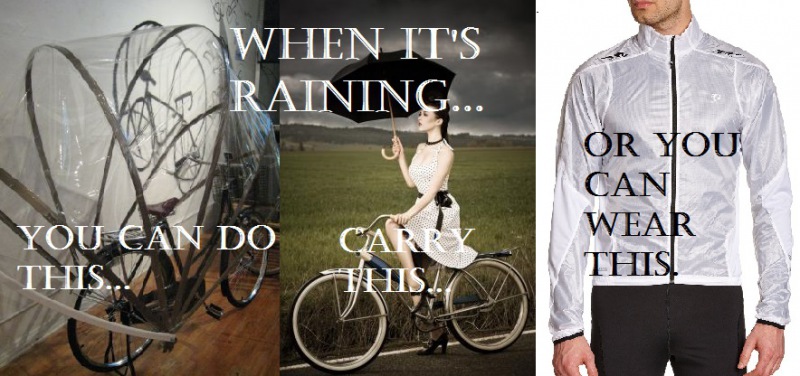
A cycling rain jacket is an indispensable garment that will keep you comfortable and on your bike when the weather goes bad. It is not only rain that a cycling rain jacket can protect you from, but wind and cold too. It is a convenient garment that you can slip into a jersey pocket and keep there in case of emergency.

Changing Weather Conditions

If you are heading out in variable weather you should carry a cycling rain jacket in your pocket. Variable weather covers not only rain moving in where you are now, but also elevation changes along with riding at dusk when the temperature drops quickly.

Riding in the mountains where temperature can fluctuate greatly and weather can move quickly requires a cycling rain jacket almost every day. Climb to the summit and you will be overheating but on the way down you are likely to get chilled to the bone because you are covered in sweat and not working very hard while coasting.

Heading out for a ride that will go past dusk is also a great time to have a cycling rain jacket. Once the sun moves below the horizon, expect temperature to drop, especially if you live somewhere that does not retain heat, like the desert or coast. You will be glad you packed it for the ride home.

A cycling rain jacket will also prove useful if you have to stop to change a flat or for some other unforeseen circumstance. Standing on the side of road and shivering is no way to quickly change a flat. Put on your jacket and you can stay comfortable until it’s changed or your ride arrives.

Necessary Features In A Cycling Rain Jacket

Needless to say, the most important feature of a cycling rain jacket is that it is waterproof. If it is not waterproof, it is a mislabeled wind jacket. Read reviews and talk with people that are familiar with a specific cycling rain jacket to determine how waterproof it is.

When riding in the rain and other low light conditions, it is nice to have extra visibility for drivers. A cycling rain jacket should have reflective patches to make you more visible to traffic. This does not replace having good lights but additional help is always a plus as if it’s raining, visibility is also reduced for drivers.

The rear of a cycling rain jacket should extend down past where a normal jacket would to cover your backside from road spray. You will still get wet because your bibs are not waterproof; the tail is there to protect you from direct spray from your rear wheel.

A quality zipper goes a long way to making your cycling rain jacket easy to use. When the rain comes pouring down or you are wearing full finger gloves, a good zipper will make it easier to get your jacket on quickly and easily.

Storing your cycling rain jacket in a jersey pocket is a must. The jacket has to compress down and be light enough that it is not cumbersome otherwise you won’t want to take it with you on a regular basis. Bonus points to the jacket if it is small enough to go in your pocket and still fit other essentials in the same pocket.

A Note On Breathability

Cycling is an energy intensive activity; ideally your cycling rain jacket will allow your sweat to evaporate so you can stay dry inside. It is a tough balance to strike. Your expectations are too high if you expect to be perfectly dry and cool inside your jacket while keeping the precipitation at bay. Claims of cycling rain jackets (or any rain jacket) being waterproof and breathable are usually overblown.

The bottom line is expect to get clammy inside your cycling rain jacket, but remember that it will not be nearly as bad as if you were riding without a jacket at all.

The 5 Best Cycling Rain Jackets

Here are a range of 5 cycling rain jackets that may work for your needs and budget.

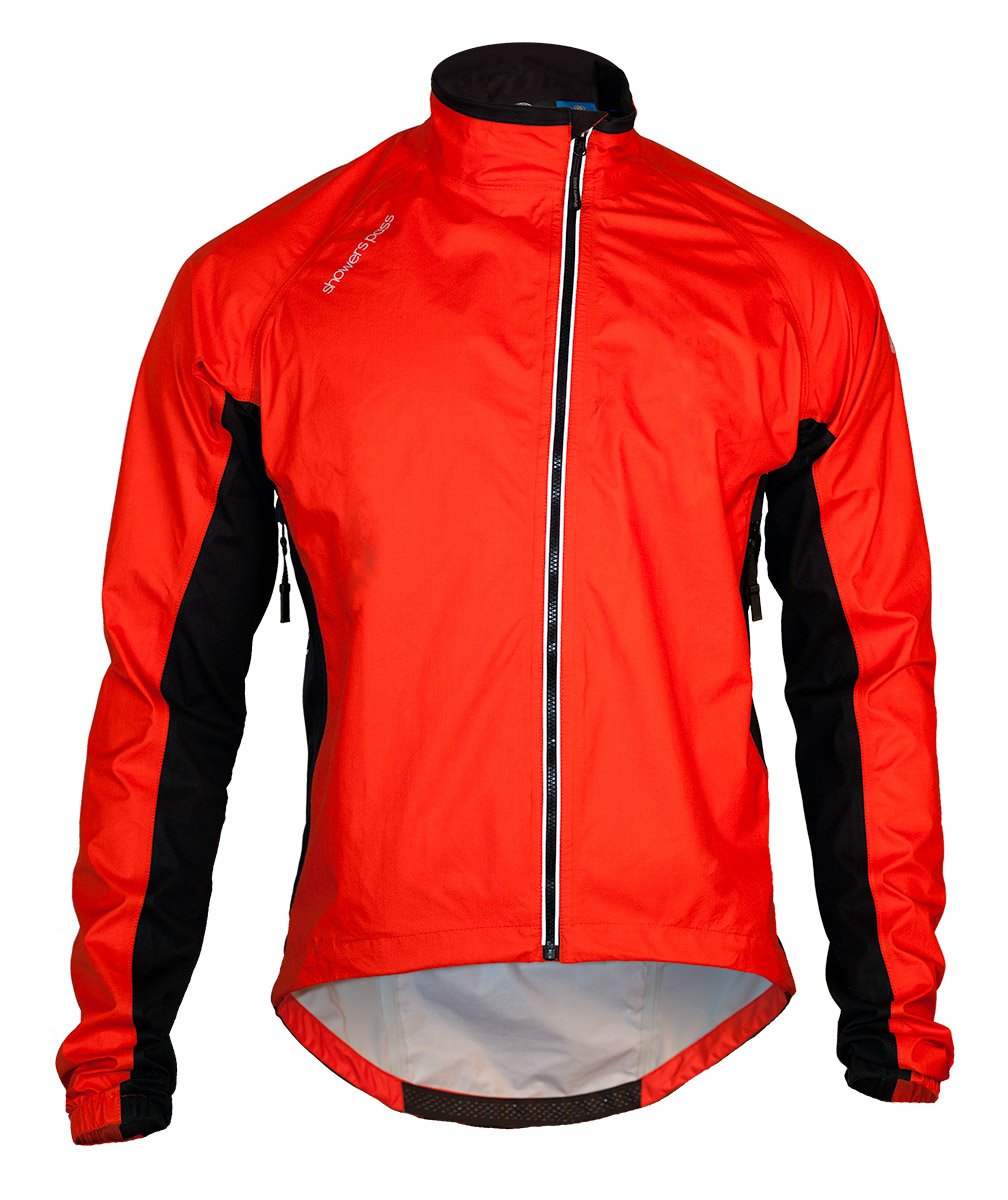
Showers Pass Men’s Spring Classic Jacket

Price: $289

Showers Pass is a relatively recent arrival on the cycling scene but they have made a great impression with their rain gear. Their Spring Classic Jacket sets a high bar that other cycling rain jackets should aspire to. It has all of the necessary features mentioned above packed into a well tailored cut. As you would expect from a nearly perfect jacket, this is the top end of the price range.

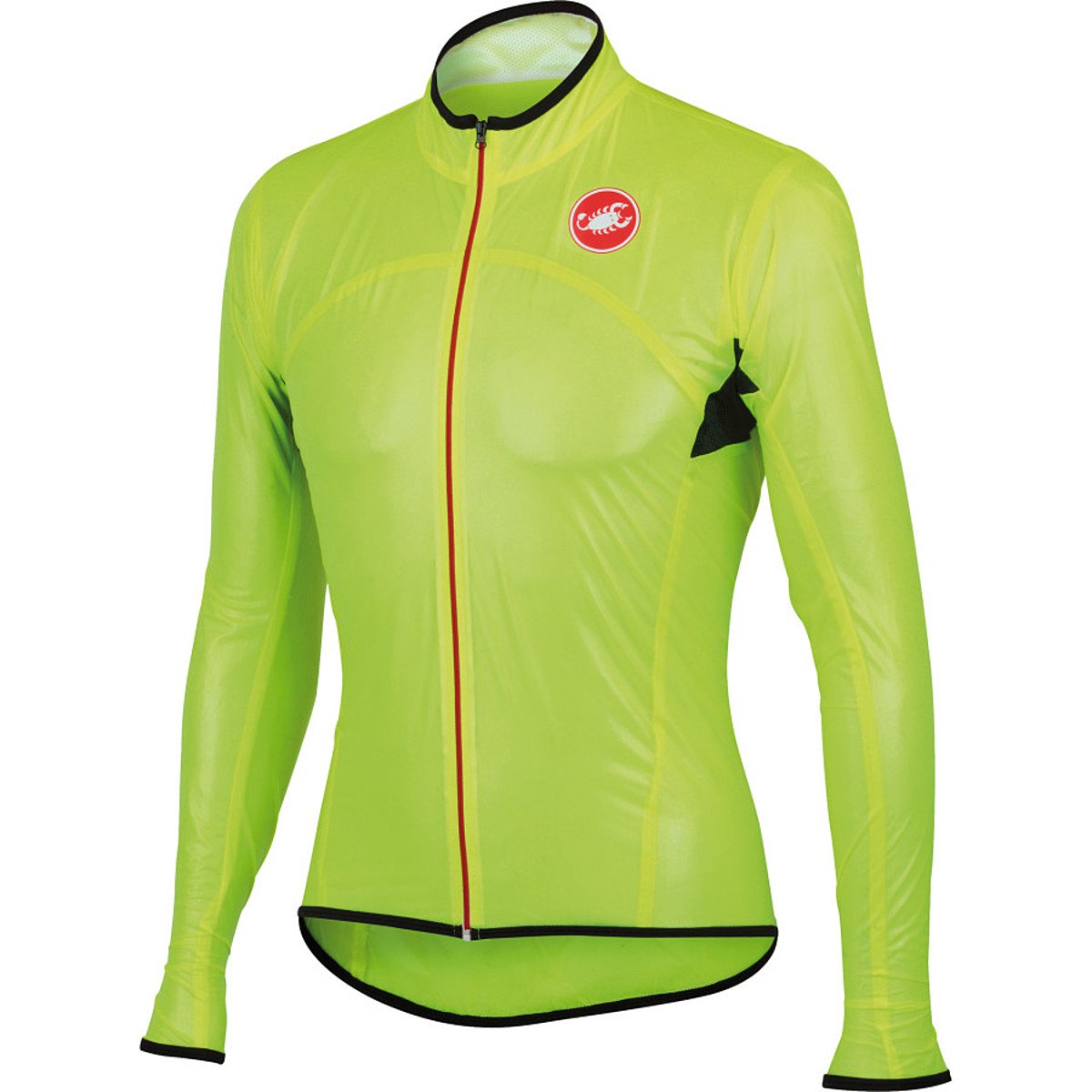
Castelli Sottile Due Jacket – Men’s

Price: $38 (sale item) – $90

The Castelli Sottile Due Jacket is a very lightweight package that will prove itself useful while allowing you to forget it’s even there with its small size. At just under six ounces, it is easy to tuck in your pocket in case of bad conditions. An bonus feature of the jacket is a zipper at the back so you can access your jersey pockets.

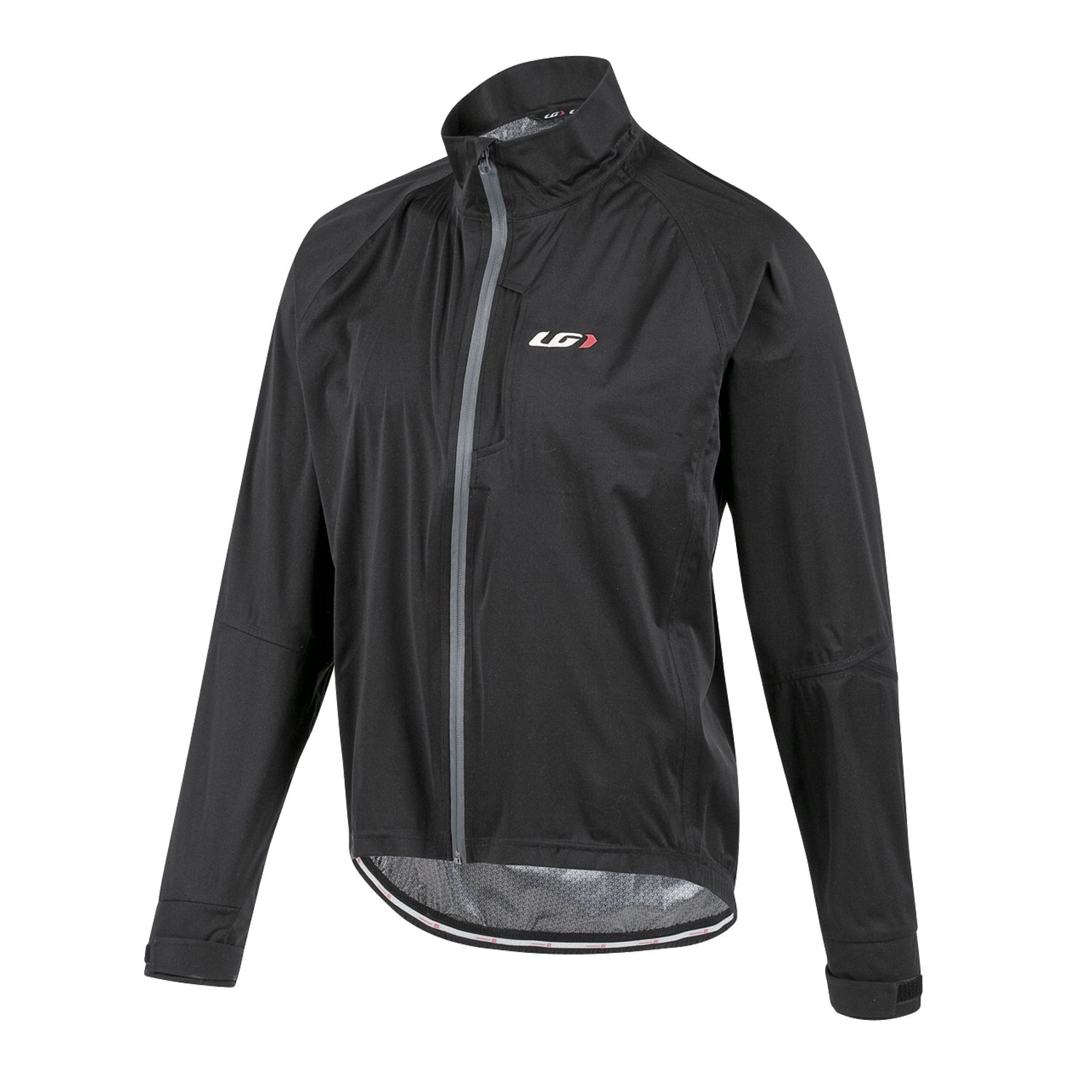
Louis Garneau Men’s Commit Waterproof Cycling Jacket

Price: $85 – $150 depending upon size/color

Louis Garneau’s Commit Waterproof Cycling Jacket has more features than the average cycling rain jacket. It has additional pockets and adjustment points to tailor the jacket to your needs. It will not pack down as tightly as the previous two jackets, but if you are going to spend a lot of time in the rain, this is a good choice.

Pearl Izumi Men’s Pro Barrier Lite Jacket

Price: $65 – $125 depending upon size/color

Pearl Izumi’s Pro Barrier Lite Jacket is what you expect when you think of a cycling rain jacket – translucent, lightweight and not quite waterproof. It will keep you warm and dry under light precipitation, but once it starts pouring, you are going to get wet. It has a race inspired cut to keep the jacket from flapping while you are ripping down the mountain. 

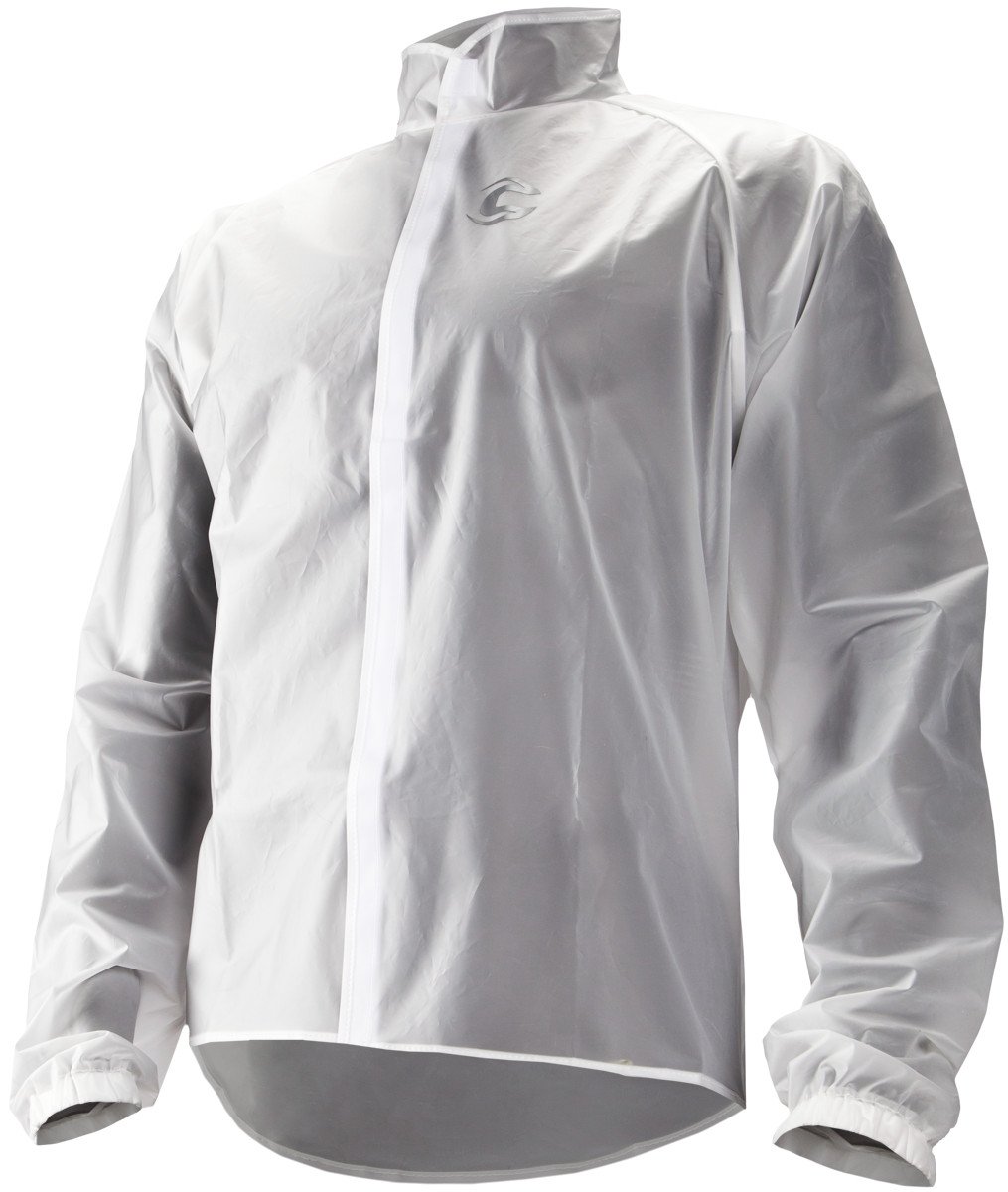
Cannondale Men’s Clear Rain Shell

Price: $15

Cannondale’s Clear Rain Shell is about as basic as a cycling rain jacket gets. Until recently, jackets like this were all that existed. It makes no claims of breathability but it will shed the rain. A nice feature to keep the bulk down along with making it easier to put on is instead of using a zipper it has a velcro strip.

Now that you know a bit more about cycling rain jackets, you can head out in less than ideal conditions and still have a comfortable ride.

If you’re looking for Women’s Specific Cycling Rain Jackets check out our article – 5 Great Women’s Cycling Rain Jackets

« Previous Page
Next Page »
  • Facebook
  • Tumblr
  • Twitter

Latest Articles

JOIN Cycling: A New Training Platform for Cyclists

May 27, 2024 By Eric Lister

cold exposure

The Benefits of Cold Exposure for Cycling & Life

June 13, 2023 By Eric Lister

hill climb

The Ultimate Hill Climb Training Guide

May 31, 2023 By Eric Lister

shoulder pain cycling

How to Treat & Avoid Shoulder Pain While Cycling

April 12, 2023 By Eric Lister

psoas stretch

The Importance of the Psoas Stretch for Cyclists

April 6, 2023 By Eric Lister

cycling neck pain

The Ultimate Guide to Cycling Neck Pain: Causes and Solutions

March 21, 2023 By Eric Lister

Useful Info

  • Contact
  • Finally, A Global Cycling Club That Is Focused On Community And Love Of Cycling!
  • Privacy Policy
  • Share Your Story!
  • Terms And Conditions Of Use
  • Welcome to I Love Bicycling
  • What Happened When I Stretched Every Day For a Month

Recent Posts

  • JOIN Cycling: A New Training Platform for Cyclists
  • How to Hang Bikes in Your Garage: 4 Inexpensive Options
  • Gravel Bike Vs. Road Bike: Which One Is Better For You?
  • The 6 Types of Mountain Bikes & How to Choose the Best One for You
  • What Is a Touring Bike Good For? 5 Benefits We Know You’ll Love

Search I Love Bicycling

Connect with Us

  • Facebook
  • RSS
  • Tumblr
  • Twitter

Copyright © 2026 · Magazine Pro Theme on Genesis Framework · WordPress · Log in