• Training
    • Injury Prevention
    • Training Tips
  • How To
    • Bike Fit
    • Gear
  • Nutrition
    • Nutrition Tips
    • Weight Loss
  • Repair
  • Reviews
  • Stories
    • Funny Stories
    • Jokes
    • Quotes
    • Videos
    • Funny Videos

I Love Bicycling

I Love Bicycling is a website that is geared towards cycling for beginners with road cycling tips, training articles, nutrition tips, weight loss, how to’s and bike repair articles.

How To

  • Bike Fit
  • Gear

The Best Cycling Backpacks for Commuters

November 27, 2018 by Sarah Lauzé

If you don’t want to go for a full pannier set up, a backpack can be a great way to carry your things while out riding. Most commuters opt for a cycling backpack, as you can also use it as a daypack, rather than just on your bike. However, some backpacks can be uncomfortable while you’re in the riding position on your bike, so you want to get one that doesn’t get in your way while you ride.
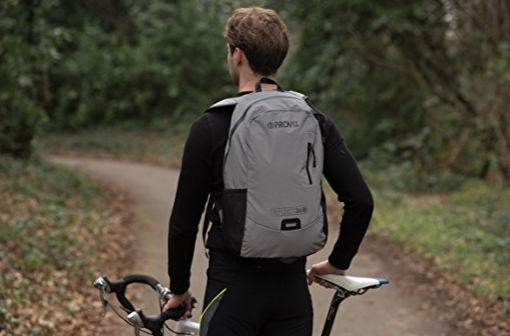
Backpack or Panniers

The main appeal for panniers is that there is no pressure put on the riders bike. Especially during the summer, if you’re riding with something heavy in your bag, having it weighing on your back can make for a sweaty ride. However, pannier racks and bags can be a nuisance to transfer between bikes, whereas a backpack can be worn no matter what bike you’re on. The best cycling backpacks will use lightweight materials and include a venting system to help avoid the awkward ‘t-shaped’ sweat mark that can come from riding with a backpack. You will also want to ensure the bag is water resistant or comes with a waterproof cover.

The Best Cycling Backpacks

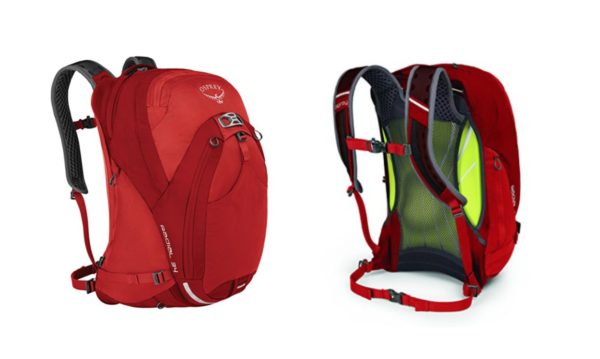
Osprey Packs Radial 26 Daypack
Best Cycling Backpacks

Price: $162

This cycling specific backpack from Osprey is one of the best out there. The harness and suspension system moves with you to provide incredible ventilation and comfort with heavy loads. There is also a helmet attachment to keep you hands free while you’re walking around. There is an integrated kickstand so the bag stay upright while you dig through your stiff, and the multitude of compartments make for easy organization. It’s hard to find a part of this bag that isn’t well designed, and it comes in both 26 and 34 liter versions.

Ortlieb Velocity Backpack
Best Cycling Backpacks

Price: $156

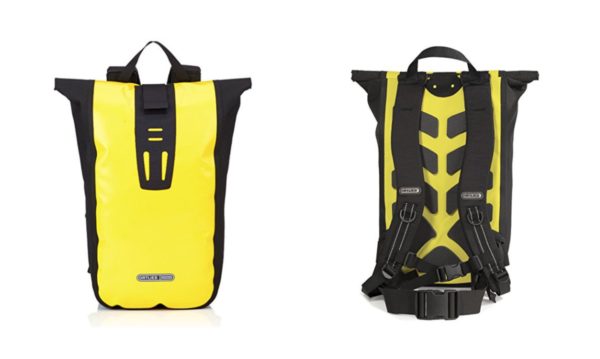
The Velocity Backpack from Ortlieb is the perfect bag for commuters who ride rain or shine. The design is simple, and with 20L you don’t have a ton of room, but it also fits snugly so you don’t have to worry about it flopping around as you ride. The foam backing and adjustable straps make for both ventilation and enhanced stability. The main compartment features a roll top with Velcro closure for easy access, and you can rest assured that your things will remain dry no matter what. There is a removable inner pocket for your smaller items like phone and wallet.

Deuter Race EXP Air Backpack
Best Cycling Backpacks

Price: $120

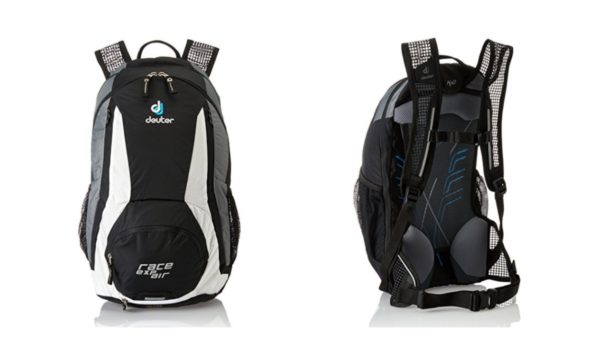
For those who struggle to find a pack that is long enough and fits just right, the Deuter Race Backpack is the answer. It’s long, sleek design features a flexible frame and three-sided ventilation to keep your back nice and cool. The mesh hip fins add stability, but are breathable and lightweight. There’s also a fold-away helmet flap, a wet laundry compartment, a rain cover, and reflectors on the front sides and back.


Proviz Reflect360
Price: $79 – $130

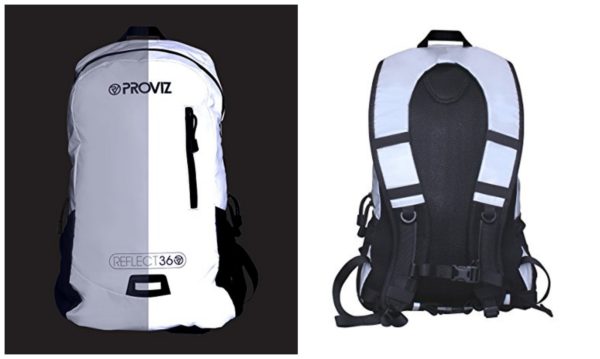
The Proviz Reflect360 rucksack is designed to keep you as visible as possible on the roads, no matter how dark it gets. Even the smallest amount of light will create a light bright enough to see a quarter of a mile away, giving drivers more time to react accordingly. The bag is completely waterproof, with aquaguard zippers, and has comfortable mesh backing.


Chrome Citizen Messenger Bag
 
Price: $140
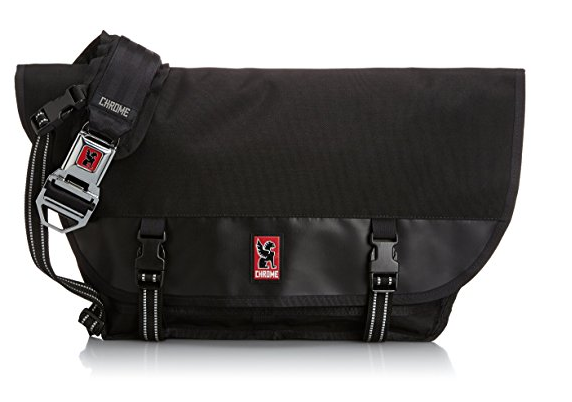
Okay, so this one isn’t a backpack, but it’s a go-to for a lot of commuters. The classic looking messenger bag can fit a 17 inch laptop, is fully waterproof, and will last through years of use. Although it goes over only one shoulder, it fits snugly into your bag and won’t swing around as your ride. The Chrome Citizen bags are known for being almost indestructible.

Best of Both Worlds: The Best Hybrid Bikes

October 1, 2018 by Sarah Lauzé

A hybrid bike is just what it sounds like – a cross between a road and a mountain bike. Versatile in nature, the best hybrid bikes can be used over a variety of terrain and are popular with commuters and casual cyclists. The flat handlebars on a hybrid bike offer a more upright position that can minimize the strain that can come from the more aerodynamic position on a road bike.

Not all hybrid bikes are created equal, and there is a lot of variety within the hybrid category. Some are designed more as a road / cruiser hybrid, whereas other are mountain / touring hybrids. So, you need to define what kind of riding you’re looking to do, and decide the best hybrid for your needs from there.

The Best Hybrid Bikes

The Benefits of a Hybrid Bike

  • More terrain – Most hybrids are suited to go off or on road, so this gives you more options for your weekend adventure or daily commute.
  • Wide tires – A hybrid can have a selection of fairly wide tires, which aids comfort and allows for various levels of off-road riding.
  • Comfortable fit – A hybrid’s horizontal bars provide a more relaxed, upright, and comfortable riding posture.
  • More gears – Hybrids typically have gears similar to a mountain bike, so riding hills shouldn’t be a struggle.
  • Easy to customize for commuters – Most standard hybrids are fitted for racks and mudguards, making it a popular choice for commuters.
  • Overall flexibility – Hybrids package quality and a variety of features at an affordable price. For a cyclist who rides slightly rough trails, flat city roads, bike paths, and the occasional sidewalk, the hybrid meets most purposes halfway.

The Best Hybrid Bikes


Mountain / Touring Hybrid

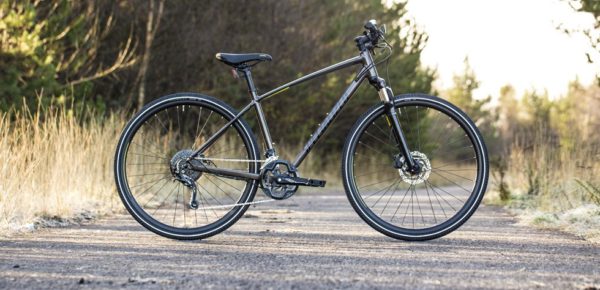
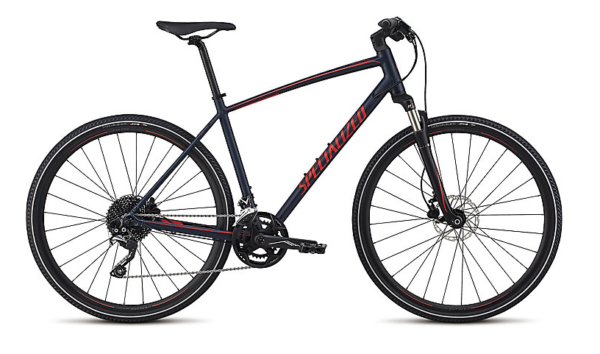
Specialized – CrossTrail Elite Alloy

The Best Hybrid Bikes

Price: $1000

The CrossTrail features an aluminum frame, plenty of tire clearance, a 60mm travel suspension fork, hydraulic disk brakes, and wheels and tires that are on the heavy-duty end of the road spectrum. It’s a perfect fit for commuting, light touring, urban and rural riding, and even light trail riding. Although the fork may not be on par with the average mountain bike, it certainly takes the edge off on rough terrain.

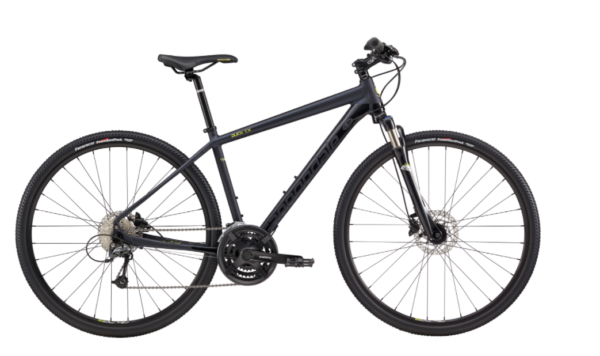
Cannondale Quick CX 3

The Best Hybrid Bikes

Price: $870

Built for pavement one day and dirt the next, the Cannondale Quick series features tough frames and quality components. The CX 3 is the middle of the road option, with a 50mm fork with lockout. Overall it handles well and is durable, but is quite heavy for the commuter or urban adventurer.

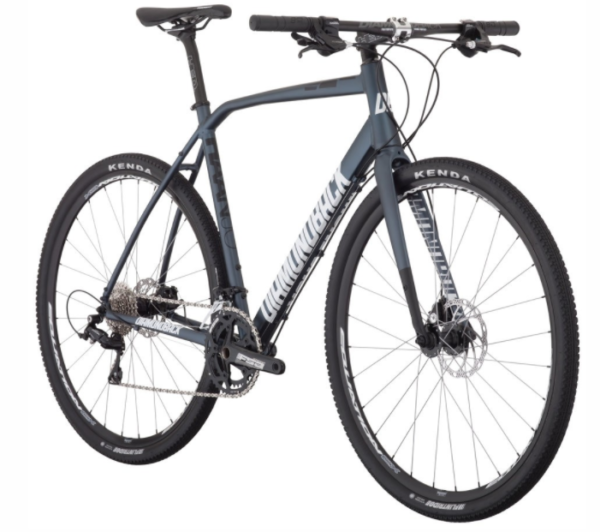
Diamondback Haanjo

The Best Hybrid Bikes

Price: $899

Part mountain bike, part road bike, the Haanjo is designed to leave to choice up to you. Although it may not be ready to hit any technical trails, the Gravel Disc alloy fork will have you easily tackling gravel roads and dirt paths. The Haanjo features butted and formed aluminum tubing to bring together a combination of light weight, strength, and durability. The mechanical disc brakes offer some serious stopping power, and the big tires will have you rolling through the rough patches.

Road / Commuter Hybrid

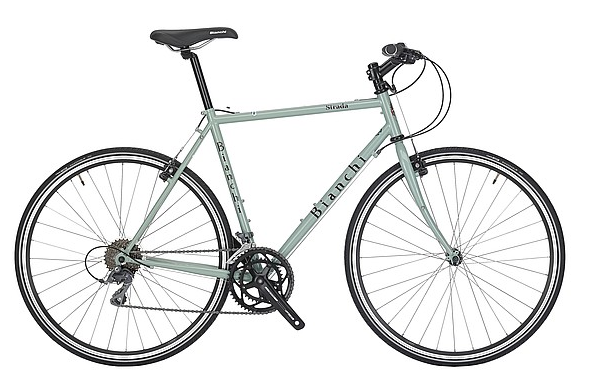
Bianchi Strada

The Best Hybrid Bikes

Price: $800

Based off the popular steel frame cyclocross bike, The Volpe, the Bianchi Strada is one of the smoothest hybrids out there. With a classic design and all steel frame, there is tire clearance for a up to a 38c tire (a great option for bad weather riding). The Strada has cantilever brakes which are less powerful than disc brakes, but are much easier to maintain. Like most hybrids, there are mounts for racks and fenders, but there are also mounts for front panniers.

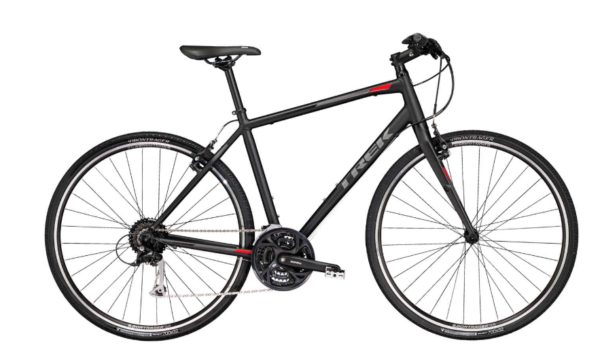
Trek FX 3

The Best Hybrid Bikes

Price: $819

The Trek FX brings together the speed of a road bike with the comfort of a city commuter. Also known as a fitness bike, the FX is lightweight, fast, fun, and agile. The aluminum frame comes rack and fender ready, with the added DuoTrap S, which integrates a Bluetooth sensor into the frame. You can easily log routes and track your progress with a computer or smartphone, with no external sensor.

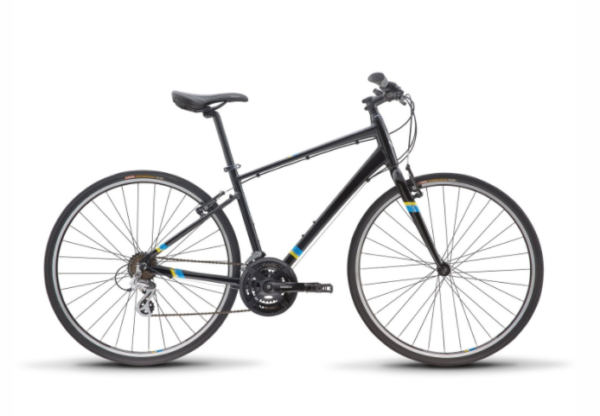
Diamondback Insight 1

The Best Hybrid Bikes

Price: $449

Uncomplicated comfort and easy on the budget, the Insight series is a perfect entry in the hybrid world. The aluminum frame is lightweight and durable, and will hold up on winding urban streets and rougher roads alike.

Carbon Hybrids

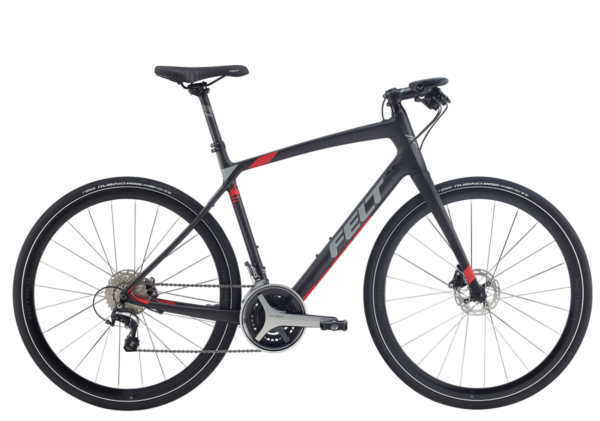
Felt Verza

The Best Hybrid Bikes

Price: $1599

With a lightweight carbon frame inspired by Felt’s line of road racing bikes, the Verza Speed 3 comes complete with Shimano’s Metrea group for smooth shifting and modern aesthetics. It is capable as a commuter, a weekend cruiser, or a workhorse for group rides, giving you the freedom to define what kind of rider you want to be.

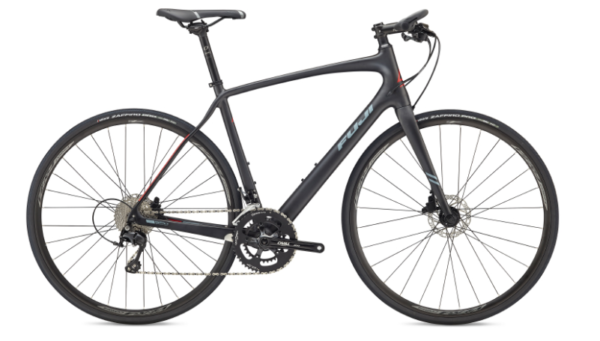
Fuji Absolute Carbon

The Best Hybrid Bikes

Price: $1699

This C5 carbon frame provides incredible light weight and efficiency with VRTech built in to reduce road vibration. Its full-carbon fork keeps you on locked on track and includes hidden fender mounts, while the aluminum wheels keep the rolling weight low and easily handle rough roads. You pay the price for the carbon frame, but it could be worth it if you are a serious cyclist looking for something a bit more flexible than your road racing bike.

How to Dry Your Cycling Shoes Quickly

September 3, 2018 by Josh Friedman

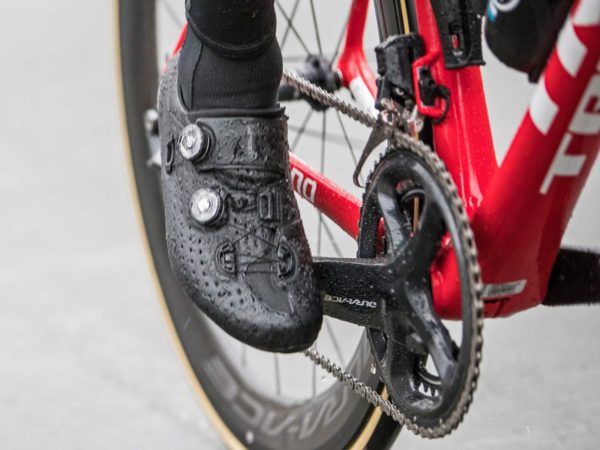
You just got in from a ride in a surprise rain storm. Fortunately, your upper body is relatively dry because you packed your rain jacket, but your feet are totally soaked and you plan on riding tomorrow. What you need to know is how to dry your shoes quickly. You can just hope they dry in time but chances are that you’ll be slipping into cold, wet shoes which feels, oh so good. Additionally, if you are riding for performance, having wet shoes simply adds more rotational weight that you have to move around each pedal stroke.

First – Remove Everything You Can

If your shoes are so soaked that there are puddles in them, dump them out. Then take out the footbeds and set them aside to dry. They should dry out pretty quickly but just to be safe place them on newspaper in front of some sort of vent, whether it’s the heater, ac, or dehumidifier. Open up all of the buckles, straps, and tongues to expose as much of the shoe as possible.

Keep Some Old Newspapers Around

Old newspapers are great for drying out your shoes. You should have a bunch on hand because you will change the newspaper a few times. If you’re cheap and lazy you can dry out the newspapers and use them again. Once everything on the shoe is open, shove as much newspaper in as you can. It will soak up water very quickly. The first round of newspaper should only last twenty to thirty minutes. If the shoes are really wet, the newspaper will already have soaked through. After that, you can space out the fresh newspaper intervals. Try an hour, then two hours, then the overnight shift. By the time you wake up in the morning your shoes will be completely dry and ready to ride.

Accelerate the Drying

Do not keep your shoes in a moist basement or garage when they are drying. Bring them upstairs into a well ventilated and dryer area to maximize drying potential. If you have a fan, heat or AC vent, dehumidifier, or breezy window,  that is a bonus. Make sure you still place the newspapers in them however. You will get the drying benefits from the inside and out.

Clean Your Shoes

After a wet and sloppy ride, chances are your shoes got dirty with road grime. Be sure to clean them both for appearance and functionality. Do this in a sink while they are still wet with a scrub brush. It’s alright if you use a little water; they are already wet. All of that grime gets in the buckles and strap and can make them work poorly and not last as long. Then dry your shoes after they’re cleaned.

How to Dry Your Shoes Quickly

If you know how to dry your shoes quickly, it does not take a lot of effort. The only supplies you need are old newspapers that would go in the recycling anyway. You will run into adverse weather eventually, so it pays to prepare the equipment ahead of time as well as the knowledge to deal with it beforehand. Keep your feet dry and cozy!

The Best Step Through Bikes for City Riders

August 28, 2018 by Sarah Lauzé

If you’ve ever struggled to get your leg up and over your bike, then you understand the reason for step through bikes. More and more manufacturers are coming to realize that there is huge market potential for easy to board bikes. Typically, even the best step through bikes suffered from weight bearing limitations, but with recent design breakthrough, they can make cycling more accessible to a lot of people.

What Are Step Through Bikes?

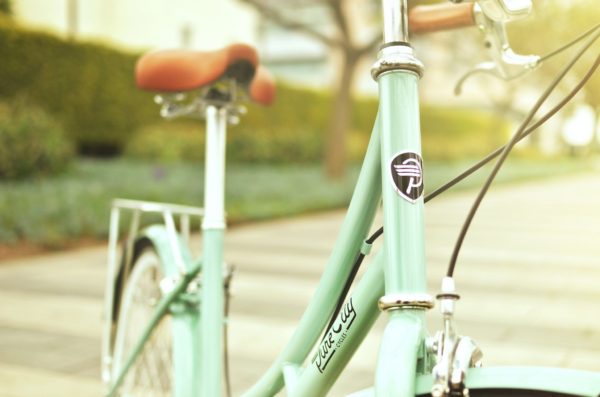
Step through bikes are pretty self explanatory. They are bikes with no top tube, making them easy to “step through” to mount. They often use a pedal forward design, with the pedals slightly forward of the seat tube. This makes it easier to maintain the proper seat to pedal distance, while also being able to put their feet flat on the ground while remain seated. The wheelbase will be a bit longer, which can effect handling, but it enhances the overall comfort.

Pro and Cons of Step Through Bikes

Historically, step through bikes have been regarded as women’s bikes as they allow the rider to wear a dress or skirt. However, more and more seniors, commuters, and heavier riders are opting for the easy to mount option. If you’re not quite as flexible and limber as you once were, then it’s a great option to keep you riding.

The biggest disadvantage of a step through frame is the weight, strength and stiffness. The regular diamond shaped design of most bikes is so widely used because it is the better design. The top tube gives the frame strength and stability, while allowing for the use of lightweight materials. To achieve the same strength, step through bikes have had to use heavier materials.

For city cruisers and commuters, the step through design can actually make the most sense. Stopping at stop lights and being able to remain seated while placing you feet on the ground can be plus for a lot of riders. Much more common in Europe, finding a step through bike can be a little tough depending on where you live. However, a lot of manufacturers will ship, so here are some of the best step through bikes.

The Best Step Through Bikes

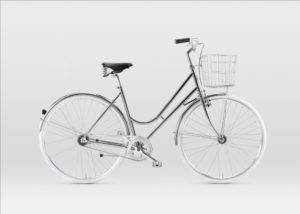
Public C1

$395

If you live in a relatively flat area, the single speed Public C1 can be a great affordable option. Under $400, it has the iconic European style perfect for comfortable cruising.

Bike ID Step Through

$800

The Bike ID Step Through is made of Hi-Ten steel tubing, weighing in at 15.5kg or 34 lbs. It’s equipped with both a hand brake and a foot brake. Both brake and lever is made of aluminum, and due to a smart quick-release you can remove and replace the wheel without having to change the break settings. It is strong and durable, and will last through years of city cruising!

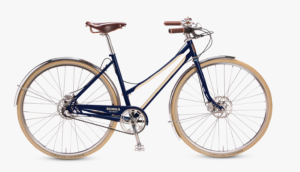
Shinola Bixby

$1950

The Bixby is offered in both a classic men’s and women’s frame design, with thoughtful touches like gender-specific saddle design and proportional geometry. The Bixby riffs off the fun look of the curved top tube, but improves on the fit and function with nimble frame geometry, a Shimano 3-speed internal hub and disc brakes. The Bixby is more of a hybrid between the step through and diamond design, giving the rider the best of both worlds.

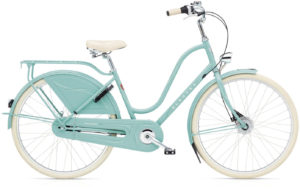
Electra Amsterdam Royal 8i

$1400

The Royal 8i is a lightweight aluminum premium-edition Dutch bike: well-bred for stylish luxury and yet practical everyday cycling. Top-of-the-line Shimano Nexus 8-speed internal hub, smooth and powerful front and rear roller brakes and durable tires with Kevlar puncture-resistant casing are a few of the special upgraded features that make the Royal 8i worth every penny.


How To Remove Bike Grease From Your Clothes

July 4, 2018 by Sarah Lauzé

It may be one of life’s mysteries, but no matter how careful you are, bike grease somehow seems to make it onto your clothes. Whether it’s your prized lycra or commuting attire, finding that little dark smudge can be a bummer. The truth is, it’s tough to remove bike grease from clothes, but luckily it’s not impossible!

Changing a flat or performing mid-ride drivetrain surgery can leave your hands a grimy mess. If you don’t have anything with you to take care of it, that grease is going to end up all over your bar tape or grips, and most likely make it onto your clothes. It also feels nasty on your hands. To avoid this, and in turn save your clothes, be sure to head out on every ride or commute prepared for the worst.

Step 1: Degreaser Wipes

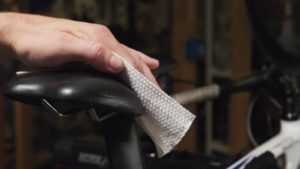
You may not think of bringing degreaser wipes with you on every ride, but they definitely come in handy! They are an easy way to quickly clean grease off your bike and hands if you’ve had to do any roadside fixes, but they can also be the first stage of attack on grease spots on your clothes. Simply give the grease spot a quick wipe, as the longer it sits on the material the harder it will be to get out. You can then tackle it full force once you get home. You can get single serve packs that you can easily fit in your saddlebag, or use a ziplock bag to bring a couple from a larger container.

Step 2: Wash the Spot(s)

Option 1 – Use Dishwashing Liquid

Remove Bike Grease From Clothes

Once you get home, you can further remove bike grease from clothes with dishwashing liquid. This works best on recent stains on synthetic fabrics and cotton. Dish soap is great at fighting grease and breaking down oil, so it’s naturally up for the task. Put a small amount directly on the spot and rub it into the fabric with your fingers or an old toothbrush. For tougher stains, combine dish soap and a little of baking soda and stir it into a paste, then apply.

Once you’ve let this sit for a minute or two, rinse the area with cold water. Place the fabric under the tap, with the stain side down so the water is running through to the front of the stain. Hang it to dry, keeping an eye on the stain. If it’s gone, then you can wash and dry the garment as usual. If it reappears, repeat the process above. Make sure you never tumble dry an item of clothing with bike grease on it, as it well set the stain and make it almost impossible to remove.

Option 2 – Use Baking Soda

If you happen to ride your bike in your finest silk, wool, or another delicate cloth, then you’ll want to give these item a little extra love when the grease hits it. Cover the stain with dry baking soda and leave overnight. The powder should absorb the grease, making it easy to brush off in the morning. Wash as usual and hang to dry to ensure the stain does not reappear.

Best Road Bike Pedals

July 2, 2018 by Sarah Lauzé

When you’re riding your bike, you make contact with it at three main points: the handlebars, the saddle, and the pedals. As your legs are working to drive the bike forward, the road bike pedals are arguably one of the most important components on a bicycle.

When we talk about road bike pedals, we are generally talking about the clipless cleat and shoe system. There are over the toe straps that can work great for some, but for the purposes of this article we are referring to the clipless (or strapless) system.

What are Clipless Pedals

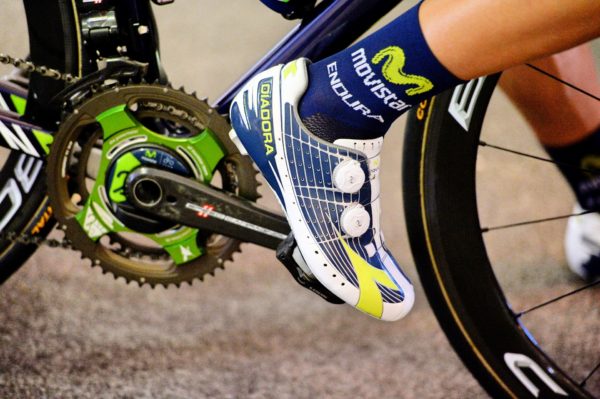
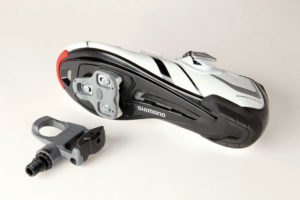
Clipless pedals have a spindle just like a normal platform pedal, but the plastic or metal platform is shaped in a way to allow the second part of the system, a matching cleat, to snap into it. A spring-loaded mechanism then secures the cleat in place so it doesn’t slide around or release. A cleat is then attached to the cycling shoe, made specifically for these cleats to be attached to the bottom via bolts.

How they work

On the pedal there is a spring mechanism that holds the cleat to the pedal. To clip in, line the cleat up with the pedal and then push down, just like a ski binding. To release the shoe from the pedal, a simple twist of the heal outward releases the cleat.

Why go clipless?

Why go clipless? Clipless pedals with cycling shoes is the most efficient and comfortable system out there when it comes to road biking. The stiff sole of the cycling shoe provides a rigid platform to transfer power from your legs to the drivetrain and propel the bike forward. Softer shoes lose some of that power as the flexible sole deforms around the pedal (and also makes your feet sore).

As well as having stiff soles, being clipped in encourages proper pedalling technique, using power through every part of the pedal stroke. Not only are you pushing down, but you are also pulling up to complete the 360 degree motion, making the switch to clipless pedals well worth it.

What to look for when buying pedals

  • Cleats – The majority of  road cycling cleats are three bolt (SPD-L), with two bolt (SPD) being more appealing for commuting, touring, and mountain biking. Some cleats are a compatible with both.
  • Tension Adjustment – When you’re first switching to clipless pedals, the most intimidating thing is not being able to get unclipped quickly when you need to stop. The slow motion topple over is almost a right of passage, but it can be lessened by decreasing the tension. Be sure to get pedals that allow you to adjust this tension, starting low and increasing the tension as you become more confident.
  • Float – Float refers to the wiggle room you have while clipped into the pedal to get into the most comfortable position for your legs. Most pedals have about 3-9° of float, but keep in mind the more float you have the more you will have to twist your foot to release. Some pedals are zero float, but you will want to make sure you’ve had a detailed bike fitting before locking in with zero wiggle room.
  • Stack height – Stack height is the measurement from the middle of the pedal axle to the bottom surface of the shoe. The smaller the stack height, the more efficient your pedaling will be as your foot is closer to the axle.

The Best Road Bike Pedals

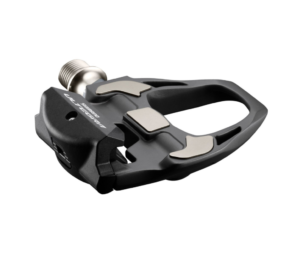
Best All-Round Pedal: Shimano Ultegra PD-R8000 SPD-SL Pedals

Price: $120

Before going into any of the features that make this pedal great, the ease of use is its greatest selling point. They require little to no maintenance, are durable,  and remain easy to clip in and out of even when mud and snow is involved. They also hang well when unclipped to make for a quick and easy clip in.

With a carbon composite body, these pedals are a great choice for competitive and casual cyclists alike. Evolved from the Pd-6800, the R-8000 has a 0.7mm lower stack height and a lighter weight at just 248g.

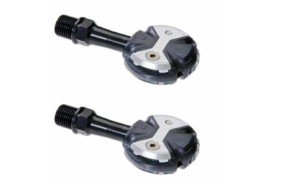
Most Adjustable Pedal: Speedplay Zero Pedals

Price: $189

If you struggle with knee pain, then these are the pedals for you. The twisting motion to release the pedal can be painful on the knee joint, so the Speedplay Zero allows the widest range of tension adjustment to ensure this isn’t a problem. All three foot-axis adjustments can be set independently of each other for a precise and comfortable fit. The locking mechanism does not rely on spring tension for security, so entering and exiting Zero pedals is easy, and they are dual-sided entry to allow for an easy clip in.

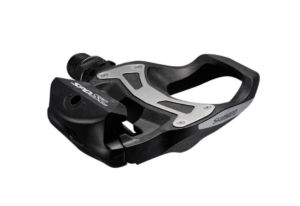
Most Budget-Friendly Pedal: Shimano PD-R550

Price: $56

The Shimano PD-R550 are the perfect pedal for cyclists looking to transition to the clipless system. Not only are they extremely affordable, but that have a wide platform that feels more like a traditional platform pedal while giving you the efficiency of being clipped in. There is a wide range of tension adjustments so you can start with a lower tension and build up your confidence. Made from a resin body with a stainless steel cover, they are durable and have a large entry point to keep from struggling to get your foot in just the right position.

How To Get The Best Morning Ride In

June 20, 2018 by Josh Friedman

A great way to start your day is with a morning ride. It could change your perspective for the rest of the day and you will feel great while everyone else is slowly waking up at their jobs.

morning ride

Benefits of the Morning Ride

Starting your day with exercise is a great practice. The easiest reason is that you get your ride in before you start the rest of your day. There will not be anything to sidetrack you from your ride later in the day: low energy, extra work, lack of motivation, enticing last minute plans. Life throws all sorts of roadblocks at you as your day progresses. It benefits you to get a jump on the day and avoid the roadblocks altogether.

Waking up early to exercise helps you sleep at night. Early morning exercise, when there is a rush of hormones from waking, lowers blood pressure. The lower blood pressure carries throughout the day, in turn resulting in better sleep (lower blood pressure and better sleep are linked). Once you get this cycle going, you will feel great.

Getting out before rush hour is the easiest way to have the roads mostly to yourself. Most people are still sleeping or getting ready for their day while you are in the thick of yours, doing something immensely enjoyable.

You will benefit longer from the release of hormones related to exercise. The “runner’s high” feeling will jump start your day. Even after the hormones have subsided, your mind will already be used to the good feelings that started your day, continuing on that trajectory. This, along with knowing that you are more in shape already is a great way to start a day.

Plan Ahead

Riding first thing requires planning. You have to have everything ready to go so you can maximize your time on the bike and minimize your time searching in the dark for everything you need while trying to stay quiet so you don’t wake anyone else up.

Lay Out Your Gear

Do this the night before you ride. You do not want to scramble in the dark, post sleep haze and forget something. Put all of the riding clothes you think you might need in one place. The bathroom is convenient so you can do your business, get dressed and brush your teeth all in one fell swoop. Have your food ready to go. Bottles should be full and on the bike. Make sure your bike is dialed and functioning perfectly with a fully charged light if you’re leaving in the dark.

Food

Figure out what you can stomach quickly and comfortably. On rides of an hour or less, you probably do not need anything unless your ride will be very intense. Another possibility is to prepare food that you can bring on the ride and eat it during the beginning of the ride. Some people need coffee to wake up. If that is the case, then have some coffee ready to go. An even better plan is to ween yourself off of coffee so your body can wake up naturally, removing another step in your wake up routine.

If one of your goals is to lose weight, then exercising before eating is most effective. This study shows that even with a terrible diet, participants gained no weight when they fasted before exercise. The other two groups gained significant weight and developed insulin resistance.

If you are looking to boost performance in your ride as opposed to losing weight, then eating is best. You will get the most out of each pedal stroke.

Sleep!

Ensure that you get enough sleep the night before. It is not worth compromising a good night’s sleep to get up early and ride. You will not feel great and it may dissuade you from trying more morning rides. A good tip to ensure good sleep is to turn off electronics about an hour before bed. The blue wavelength that their screens emit cause an alert state in the brain by suppressing melatonin production, a hormone that induces sleep.

Wake Up!

People have different amounts of time they need between waking up and being functional humans. Some can jump out of bed and straight onto the bike. Others need lots of time. Figure out what works for you so you can be fully awake and pedal effectively. You want to feel good on the bike so you can get used to getting the morning ride in.

Standardize Routes

Settle on a route before going to bed. The routes you choose should be familiar; limited duration morning rides are generally not for exploring. You should also know how long you will be out on each one. If you have an hour to ride on a given morning, you take your hour long route. An additional thought is to have a route that has a few escape paths in case you have a flat or other mechanical. It will allow you to fix the mechanical and still get to your first morning destination on time.

Morning Rides are the Best

There are a few challenges to getting out for a morning ride, but they are easy to overcome. A little planning and preparation goes a long way to starting a successful morning ride routine. Once you get the ball rolling it becomes easy, sometimes even necessary when your body is accustomed to the the morning ride.

Cycling Hand Signals

May 16, 2018 by Sarah Lauzé

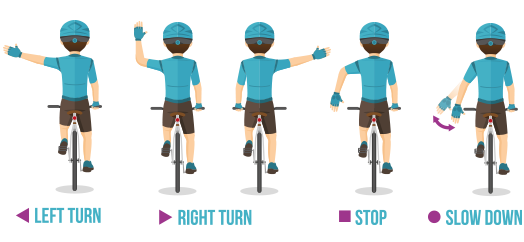
Whether you’re riding solo or in a group, you need to alert those around you of your intended movements. Like when you’re driving a car and use lights to communicate, cycling hand signals serve as your turn indicators and brake lights. It’s important to know the proper hand signals to ensure both cars and other riders can understand what it is you’re going to do.

Many accidents occur from misunderstandings between cyclists and drivers, and either side can be quick to point a finger of blame. However, it is up to both to know and understand cycling hand signals and the overarching rules of cycling.

Cycling Hand Signals

Stop

The most common hand signal to indicate you are slowing to a stop is to extend your left arm out to the left and angle the forearm vertically down from the elbow. There is some controversy around this, as if you are coming to a sudden stop, it means taking one hand off your brake and handlebar, which could actually prove more dangerous. If you are riding in a group and don’t feel comfortable taking your hand off your bike, yell a courteous “stopping” over your shoulder to warn those riding behind you.

Left Turn

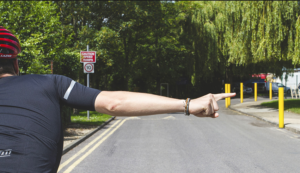
Almost intuitive, to signal a left turn simply extend your left arm out horizontally. Be sure to do to the signal in advance to the turn (like you would in a car), not just when you are actively making the turn.

Right Turn

Cycling Hand Signals

Historically, to signal a right turn you would extend the left arm out, and then up at the elbow. This practice is no longer in use to cyclists, and has been replaced with the simpler right arm straight out horizontally. The Uniform Vehicle Code in the U.S. recognizes both, although it recommends the right arm out approach. State traffic laws generally conform to the UVC, but exceptions may exist.

Passing on the Right

Quite often cyclists will be moving fast than traffic in dense areas, so be sure to stay about a meter from the curb or well within the bike lane where applicable. Although you do not signal passing on the right, always be alert. This is an issue that can still come to debate in court. Look out for cars backing out of parking spots and driveways, turning left across the road toward you, or turning right into you. The truth is, they probably don’t see you. Never ride on the left side of the road or on sidewalks, as this is both illegal and increases the risk of a collision.

Take a lane

If you are moving a similar speed to traffic, or need to make a left turn in the near future, then be sure to signal and get into a lane. This will put you in the position to properly navigate the intersection with the rest of traffic. Always remember, the same rules apply to cyclists as cars.

Commuting can be the best part of your work day, but make sure you get there and back safely by using these hand signals and staying alert. Never listen to headphones in traffic, and give plenty of warning for each action. For more information on riding safely in a group, check out “Group Ride Etiquette.”

Pros and Cons of Tubeless Tires for Road Cyclists

May 14, 2018 by Sarah Lauzé

Tubeless tires have been a mainstay of the mountain biking world for years, and have inevitably made their way into road cycling as well. With mountain biking, tubeless tires allow riders to run their pressure much lower, providing enhanced surface area and grip without the risk of pinch flats. Road tires, however, are more efficient when run at a higher pressure, so what is the benefit of going tubeless?

Traditionally there have been two main options for road cycling tires: clincher and tubular. Clinchers are the best option for the majority of riders, as they are easy to use and fix by swapping out or repairing the inner tube. Tubular tires are lighter and are used by a lot of racers, but unless you have a support vehicle following you on every ride, then replacing a tire is a painfully long and technical process.

Now there is a third option with tubeless tires, but are they worth the leap?

Pros and Cons of Tubeless Tires for Road Cyclists

How do tubeless tires work?

Pros and Cons of Tubeless Tires for Road Cyclists

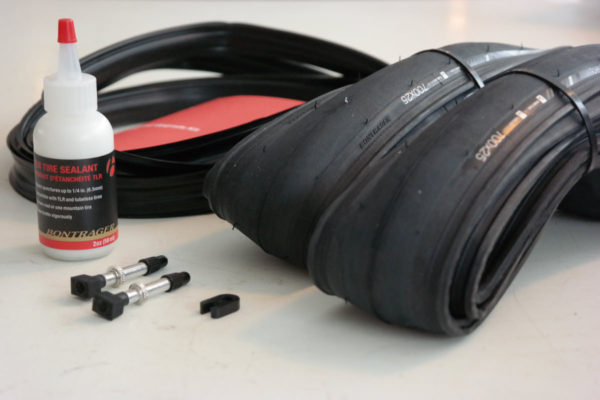
As the name suggests, tubeless tires do not have an inner tube, and are setup similar to a car tire. The open rubber tie sits firmly on the wheel’s rim, with the air sitting in the cavity between the rim and inside of the tire. In addition, a liquid sealant is used inside the tire to preemptively plug any small cuts in the tire without losing pressure at all.

Tubeless wheel setup

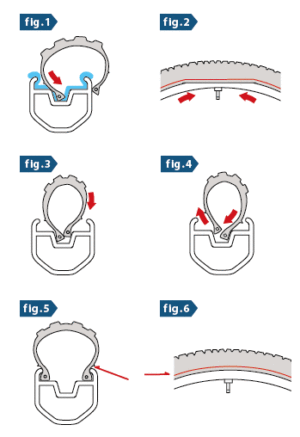
The nice thing about tubeless wheels is that they can be used with both a tubeless tire and the typical clincher (inner tube) setup. The shoulder in the inner rim will have a much more pronounced recess that the tire bead fits securely into (see diagram), rather than the traditional U-shaped rim bed on clincher wheels.

Tubeless tires themselves are designed with a tougher bead to provide an immediate seal with as perfect airtight fit. If you try to fit a tubeless tire on a clinched rim, it will come off as you add pressure.

Are tubeless tires worth it?

Pros

  • Speed – clincher tires have a level of friction between the tube and the tire that tubeless tires eliminate, lessening rolling resistance and making them faster.
  • Less flats – The tubeless setup rules out pinch flats completely, and dramatically lessens the danger of blowouts with the liquid sealant. This has a huge impact on the number of flats you’re likely to experience. Plus, if you do have a flat out on a ride that the sealant can’t handle, you can use a tube to get you home.
  • Comfort – Tubeless tires can be run at a lower pressure (dropping about 15-20 psi) without sacrificing performance. This can enhance your corner grip, traction, and overall comfort. You can even venture off road with the tires being a lot more forgiving than if they were running at full pressure.

Cons

  • Difficulty in fitting – As a system that depends on tight seals and high pressure, installing or removing the tire can be a difficult and frustrating job. So, while the likelihood of flats may be reduced, the process to fix it in the case of total failure can leave you swearing on the side of the road. You may even need an air compressor to get a proper seal.
  • Weight – Tubeless tires are largely heavier than a clincher setup, with thicker sidewalls that add weight.
  • Racers don’t use them – This may or may not matter to you, but racer’s do not use tubeless because of the added weight with minimal gain. However, for the recreational cyclist, the lower risk of flatting may be worth the sacrifice.

Tubeless tires are by no means taking over the roading cycling world (as they have with mountain biking), but as technology advances we may see them grow in popularity. Having tubeless-ready wheels is a great way to go, as it leaves the choice up to you whether you want to stick with clinchers or give tubeless a try.

The Difference Between Freewheel and Cassette

April 21, 2018 by Sarah Lauzé

If you’ve been using the two terms (freewheel and cassette) interchangeably, don’t worry because you’re not alone. If you don’t know which you have on your bike, you can end up wasting a lot of money due to the error. We’re going to help remove some of the confusion by explaining the difference between freewheel and cassette freehubs.

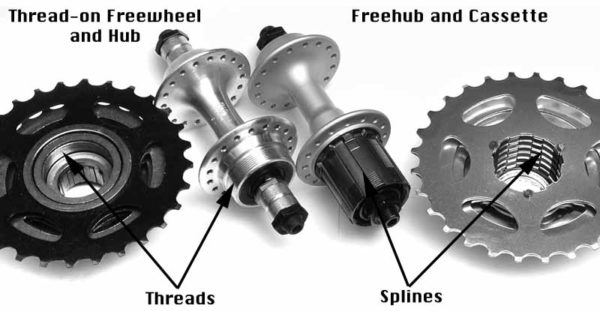
freewheel and cassette

Freewheels (for Threaded Hubs)

Traditional rear hubs have a standardized set of threads that a freewheel or sprocket cluster can be screwed onto. This meant any brand of freewheel could be mounted on any brand of hub. The extractor splines do not turn when the sprockets are spun backwards.Freewheels come with sprockets bolted together, without possibility of swapping them. Pretty much all bikes made through the late 80s used this system.

Cassettes & Freehubs

Over the past few decades, the cassette replaced the conventional threaded rear hub. This newer style hub works so well that they have replaced the traditional freewheel and have become the new standard for contemporary road bikes. One of the major differences between a freewheel and a freehub is the location of the coasting mechanism

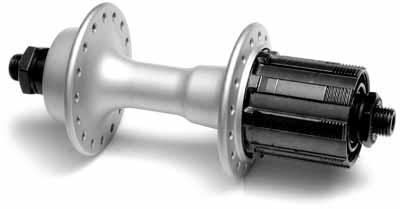
It incorporates the ratchet mechanism into the hub body, so you can replace the sprockets only, rather than the ratchet mechanism. Unlike the freewheel and threaded hub system, the lockring splines will turn with sprockets when spun backwards. Additionally, many  freehubs will have a distinctive bulge on the right end of the hub barrel.


freewheel and cassette

Whereas freewheels come with sprockets bolted together, without possibility of swapping them, cassettes come with loose sprockets that have spacing between them. Some cassettes do come with sprockets held together with bolts or rivets, but these are just for easier mounting – they can be removed without affecting functionality, so that individual sprockets can be swapped.

Which One Do I Have?

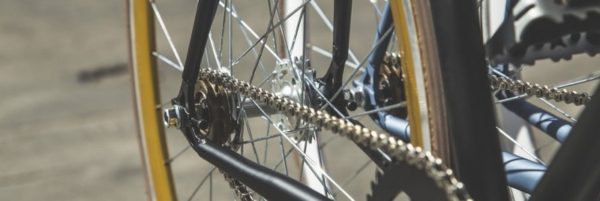
If you’re still not sure what you have on your bike, it’s possible to ID it by how it looks. Freewheel axles are typically recessed slightly into the axle. Cassettes are typically flush with the face of the gears, and you can see the splines, appearing as the rays of the sun around the perimeter. Freewheel axles may also show splines, but not as many as a cassette, and are recessed into the body deeper, around the axle itself, not the gear like a cassette.

Not all Freehubs have this bulge, but whenever you see it, you can be sure that it is, in fact, a cassette Freehub.

Buying and Changing Sprockets

Attention should be paid to this when buying and changing sprockets, so that the right ones are used. Freewheel is screwed onto the rear hub, while cassette is just slid onto the hub splines, held in place with a special lockring. The very end of the (rear) hub differs for each type, so it is easy to identify the standard, even before removing sprockets.

« Previous Page
Next Page »
  • Facebook
  • Tumblr
  • Twitter

Latest Articles

JOIN Cycling: A New Training Platform for Cyclists

May 27, 2024 By Eric Lister

cold exposure

The Benefits of Cold Exposure for Cycling & Life

June 13, 2023 By Eric Lister

hill climb

The Ultimate Hill Climb Training Guide

May 31, 2023 By Eric Lister

shoulder pain cycling

How to Treat & Avoid Shoulder Pain While Cycling

April 12, 2023 By Eric Lister

psoas stretch

The Importance of the Psoas Stretch for Cyclists

April 6, 2023 By Eric Lister

cycling neck pain

The Ultimate Guide to Cycling Neck Pain: Causes and Solutions

March 21, 2023 By Eric Lister

Useful Info

  • Contact
  • Finally, A Global Cycling Club That Is Focused On Community And Love Of Cycling!
  • Privacy Policy
  • Share Your Story!
  • Terms And Conditions Of Use
  • Welcome to I Love Bicycling
  • What Happened When I Stretched Every Day For a Month

Recent Posts

  • JOIN Cycling: A New Training Platform for Cyclists
  • How to Hang Bikes in Your Garage: 4 Inexpensive Options
  • Gravel Bike Vs. Road Bike: Which One Is Better For You?
  • The 6 Types of Mountain Bikes & How to Choose the Best One for You
  • What Is a Touring Bike Good For? 5 Benefits We Know You’ll Love

Search I Love Bicycling

Connect with Us

  • Facebook
  • RSS
  • Tumblr
  • Twitter

Copyright © 2026 · Magazine Pro Theme on Genesis Framework · WordPress · Log in