• Training
    • Injury Prevention
    • Training Tips
  • How To
    • Bike Fit
    • Gear
  • Nutrition
    • Nutrition Tips
    • Weight Loss
  • Repair
  • Reviews
  • Stories
    • Funny Stories
    • Jokes
    • Quotes
    • Videos
    • Funny Videos

I Love Bicycling

I Love Bicycling is a website that is geared towards cycling for beginners with road cycling tips, training articles, nutrition tips, weight loss, how to’s and bike repair articles.

Gear

  • Bike Fit

How To Wash Cycling Clothes

May 6, 2016 by Adam Farabaugh

how to wash cycling clothes

You paid a lot of money for your cycling shorts, jersey, and other apparel. You want to get the most out of it and have it fit comfortably every time you wear it. There are two sure-fire ways to shorten the life of your cycling clothes; crashing and washing them improperly. Knowing how to wash cycling clothes will help ensure you get your money’s worth out of them. Not crashing in them… that’s another article.

Why Different Than Regular Clothes

Cycling clothes are different than your regular clothes because they are made of lighter weight, more delicate materials along with having many more seems that receive a higher stress load. Regular clothes aren’t built for performance so can take a beating but washing your cycling kits with a bit of a different approach will help to keep the materials in their original state along with keeping all the stitched seems together.

Why You Don’t Need To Go The Whole 9 Yards

Some companies recommend a specific way to wash your kit but these recommendations generally error on the side of caution and were catered toward the older Lycra materials which were more prone to stretching and coming apart. Some would say to wash them in a mesh laundry bag along with the zippers zipped up and with no other clothes on a delicate cycle and to hang dry them. You can do this to have the utmost certainty that they won’t degrade wash after wash but this is a lot of effort for marginal gains. The newer materials and stitched seems are durable enough to handle more of a beating than that and with much less effort.

So How To Wash Cycling Clothes

First, before your cycling clothes ever make it to the wash, you should have them in an airtight bag or container to avoid stinking up the whole place until you wash them. Then when you’re ready to wash, you can do them in with your regular cold water clothes (you don’t want to do it on warm or hot because colors can leach and the heat can be hard on the clothes.) on a delicate cycle. The delicate cycle will keep the machine from spinning them excessively but if you forget every once in awhile, it’s not the end of the clothes. You don’t need to zip up the jerseys nor do you need to wash them in a mesh bag. They will last just fine. You can use regular detergent but use slightly less or use a lighter detergent. Also don’t use fabric softeners.

How To Dry Your Cycling Clothes

Drying your clothes can be just as hard as washing if you do it wrong. The safest option is to hang dry them but that’s not always feasible. If you have to use a dryer to dry them, use it on a low heat and tumble setting. Because of the quick drying material of cycling kits, they shouldn’t take long to dry.

How To Wash Cycling Clothes By Hand

Sometimes if you’re on a trip or are racing day after day and only have one kit, you need to wash it by hand. Never wear a kit more than once without washing it. Put everything that you’re washing, shorts, jersey, socks, gloves, etc. into a sink and first rinse them with cold to lukewarm water. Then use laundry soap if you have it available or any hand/body soap will work just fine. Just don’t use too much of it. Scrub the clothes in the sink against each other to get out all the grit and grime. Then rinse each piece of clothing a few times on its own to get all the soap out and give it a good squeeze but not wring as this can stretch the fabrics.

How To Dry Cycling Clothes By Hand
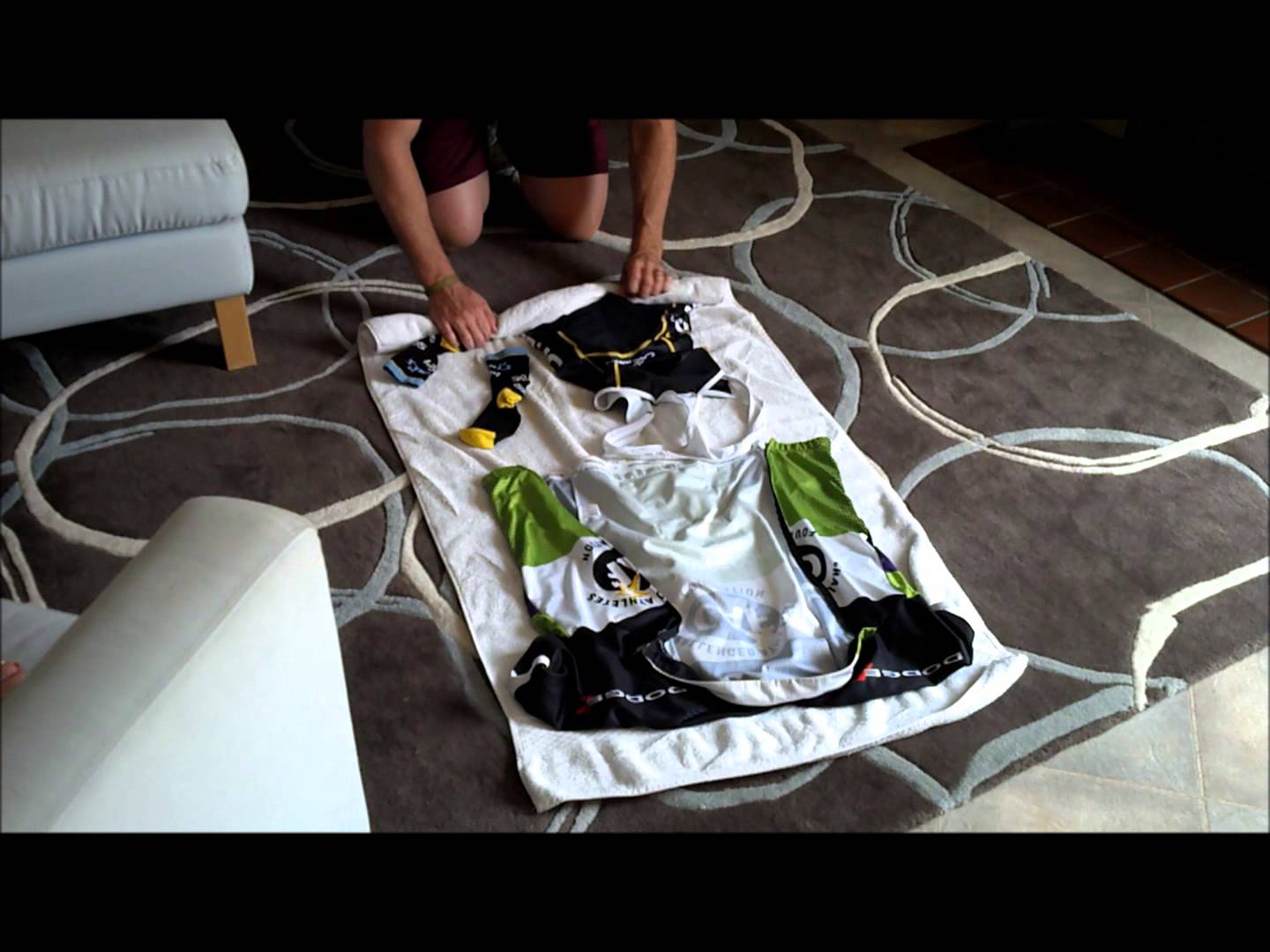
drying cycling clothes

Now with your clean, wet clothes take a large, dry, and CLEAN towel and lay it out flat. Place all of your clothes on it so nothing is overlapping. Then starting at one of the short ends of the towel, roll it up all the way. Then twist either end in opposite directions to give it a slight wring. Don’t over-do it as this can also stretch the clothes excessively. A lot of the moisture will be absorbed by the towel. Then un-roll it and hang the clothes to finish drying completely. A coat hanger works well placed next to an air vent.

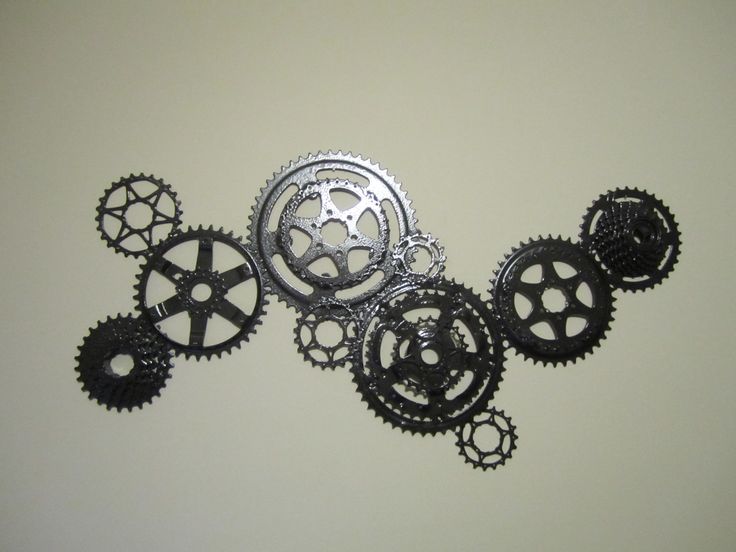
What Are Oval Chainrings? Should You Use Them?

April 26, 2016 by Josh Friedman

oval chainrings

Oval chainrings have been around since nearly the advent of chain driven bicycles. The concept is simple; the chainring is at a larger radius when you are at a stronger portion of your pedal stroke and at a lower radius at a weaker portion. But does it actually make a rider faster or more efficient? Or is this another gadget designed to separate you from your money?

Myriad of Claims with Oval Chainrings

The claims are myriad with oval chainrings: it’s easier to turn over a higher cadence, your lactic acid production will be lower, you will access your stronger pedaling muscles while resting your weaker muscles, your overall power will increase (7-10% according to Osymetrics!). If it sounds too good to be true, it usually is.

Notable Results on Oval Chainrings

There have been a few notable results on oval chainrings in the last few years. The two biggest results to date are Bradley Wiggins winning the Tour de France in 2012 and Chris Froome winning in 2013 and 2015. Both rode for Team Sky, a team that is known for its search for marginal gains. Since that Tour victory, Wiggins has switched back to round chainrings. The truth is that people have won all sorts of races on all sorts of equipment with dubious benefits. There is a psychological edge if someone believes in the equipment they are on. If a rider believes that oval chainrings give a boost in performance, they may ride with a bit more confidence in their abilities. People have lucky socks. Why not have lucky chainrings too?

“These are people that are racing for their income. Teams would be clamoring for them because they need to get the best results possible for their programs to continue.”

An argument from some proponents of oval chainrings is that it is much easier to manufacture round chainrings and that is why we don’t see more oval chainrings on bikes. This isn’t the case anymore, though. Oval chainrings are readily available. If the benefits are what they claim to be, we would see many more professionals on oval chainrings. These are people that are racing for their income. Teams would be clamoring for them because they need to get the best results possible for their programs to continue. This is not the case; a few riders are riding oval chainrings because they feel that it’s what’s best for them. There is plenty of off-label equipment in the peloton but there are not a lot of oval chainrings out there.

Research on Oval Chainrings

There have been few peer reviewed research studies on oval chainrings. The Journal of Sports Science and Medicine published an article in May 2014 with the results of a test on twelve elite male cyclists. They tested for blood lactate, power output, and oxygen consumption with no discernible differences. The oval chainrings did not produce a scientifically significant enough difference over the round chainrings in a maximal sprint test to put the results outside the margin of error. Another claim is that oval chainrings allow for a lower metabolic cost than round chainrings which the study also found not to be true.

Another peer reviewed study from December 2010 tested cyclists in a 10 kilometer time trial. This study also found similar power output and rate of perceived exertion between round and oval chainrings. It also found that heart rate was statistically significantly higher with the oval chainring versus the round chainring which is contrary to the claimed benefits of oval chainrings.

Additional Research

This January 2004 test also did not find conclusive benefits to oval chainrings. They measured ventilation, oxygen uptake, carbon dioxide output, respiratory exchange ratio, and heart rate with no statistically significant differences between round and oval chainrings.

Installing Oval Chainrings On A Bike

The first hurdle to trying out oval chainrings is to get them working properly on a bike. Every front derailleur on the market is optimized to work with round chainrings. Some oval chainring manufacturers provide shims to move the front derailleur rearward to match the derailleur cage with the curve of the chainring. It will help with shifting but the chainrings themselves are optimized for their bio-mechanical claims, not shifting performance. Furthermore, there should also be a chain catcher on the front derailleur to keep the chain from dropping off the inside.

Shifting Performance Compromised

Thinking about your shifting performance in the heat of a critical moment is not ideal. Will the chain flawlessly go up to the big ring right at the crest of the hill? Will the chain fall off to the inside just as the big climb starts? Couple that with the cost of an oval chainring being on par with the best shifting round chainrings and the benefits become negligible. Nobody ever blamed losing a race on chainring shape but they certainly have on poor shifting performance.

Power Data Discrepancies

A lot of riders have a lot of data from their crank-based power meters. Oval chainrings change the angular velocity of the crankarms, thus changing the power transmitted to the strain gauges, yielding different power numbers than if the same person was pedaling round chainrings. All of that accumulated data (which is very useful for long-term training) is rendered useless. It’s almost as if the data is from two different people; one on round chainrings, one on oval chainrings.

The Take Away

Oval chainrings are a divisive subject. Supporters point to physics to support their claims of greater power through lower effort. Peer reviewed experiments show the opposite and that the benefits are negligible at best. There is no question that the mechanical operation of the bike will suffer. A finely tuned bicycle with round chainrings will always shift better than the same bicycle with oval chainrings. Switching round for oval chainrings will also make years of power data useless for comparison. But if it gives a rider a mental edge, it all may be worth it.

Bicycle Chainrings – A Guide

March 29, 2016 by Wade Shaddy

bicycle chainrings

Chain ring, or chainring, is cyclist lingo for front gears. Bicycle chainrings optimize your power by utilizing gear ratios for different output on different terrain. Gear ratios are complicated and even engineers using complicated formulas don’t always agree on proper application of the chainring. For the average rider, it’s for the most part personal preference — within reason of course, cross-chaining is a no no and what works or doesn’t work for you is what’s really important.

Big Ring

Some cyclists like to push the big ring all the time but it’s often more an exhibit of bravado than its efficiency. If you have the muscle and power to cruise all day in your big ring, that’s your business and you have every right to do it.

Small Ring

On the other end of the scale, some riders scoff at the small ring, believing it’s there only to climb the steepest of hills. But there’s no reason why you shouldn’t use it whenever you feel like it, that’s what it’s there for.

Same Ratio

Pushing the big ring on a given gear in the back can have exactly the same ratio and effect as riding in a smaller ring on a different gear in back. It’s been proven by engineers and physics. So what’s the difference?

They Feel Different

Some cyclist contend that bigger gears just feel better. It could be that it’s spreading the chain load, thus reducing friction. However, spinning at a more moderate pace in smaller gears is probably done by the majority of cyclists and produces a better chain line that will invariably be nicer to your drivetrain, your legs, and prolong your bikes longevity, not to mention your own.

Leverage Ratio

Bicycle gears work on leverage ratios, pairing a chainring at the front with a cog in the cassette at the back. The wider the ratio, the more speed you can achieve at a given pedaling cadence. A smaller ratio means less leverage on the rear wheel and thus easier pedaling.

Obvious Differences

Its obvious to all cyclists that using different diameter gears results in a higher speed, lower speed, or a more pronounced effort from an inefficient cadence. Most cyclists don’t put a lot of thought into why this is so, probably because it’s so obvious when you switch gears.

It’s Reversed

Chainrings are bolted to your crankset, and the pedals attach at the end of the crank arms. The more teeth, the harder it is to pedal. All cyclists should know by now that smaller gears in the back allow the bike to go faster and larger gears make it to go slower with more power. It’s reversed for chainrings — bigger gears make you go faster, smaller gears make you go slower, with more power.

The Math

If you want to get techy about it, use this chart for fun a guide but be forewarned, it will likely make your eyes glaze over and be of no real practical use to you unless you’re an engineer, or good with algebra. Before cyclocomputers existed, the way to calculate your speed was to count the number of times you pedaled in a given period of time to determine your cadence. You then needed to know what gear you were in which you could then roughly calculate how fast you were going. You would need to memorize parts of this table first however.

Three Choices in Bicycle Chainrings

Today’s road bike typically has a choice of three chainring set-ups, with two of them dominating — the standard double and the compact-double. The third choice however — the triple — also has a very special place in the cycling world for those who wouldn’t ride with anything less.

The Double

Standard double chainrings usually come with 53 teeth on the big ring and 39 teeth on the small ring. The double has been used for years before anyone even thought of anything else.

Compact Chainrings

The compact is exactly what the name implies. The gear ratios have been compacted from a standard double. One of the most common chainring sizes for compacts are 50-tooth for the large ring and 34-tooth for the small ring. Other combinations are 50-36, 52-36 and 48-34 but these are less common.

The Triple

The triple generally has the benefit of lower gearing for more efficient climbing. Standard gearing for a triple might be 50-39-30.

Bottom Line

The bottom line is that compact cranks climb steeper hills better than standard double chainring configurations. Taking it a step further, triples offer even lower gears for climbing. However, compact chainrings are the lightest in weight of the three choices.

Can I Change Rings?

Can you change rings for personalized riding — yes and no. Crank arms have specific bolt circle diameters, or BCD, which must be matched up with the corresponding chainring BCD. Standard double cranks usually have a 130mm BCD and typically won’t work with anything smaller than a 38 small ring. Compact cranks on the other hand, have a 110mm BCD which can accommodate chainrings as small as 33-tooth.

The 52-36 Combination

You can put slightly larger chainrings on a compact crank. A 52-36 combination is particularly popular choice among some cyclists who want a happy medium between top-end speed and climbing ease.

Oval Chainrings

Recent bicycle chainring designers have brought back the oval-shaped chainring, that was thought to have been discredited. The studies are mixed to say the least, but recent testing by professionals have revived the odd-shaped rings. Oval chainrings have been reported to improve the feel and smoothness of your pedaling action, reduce dead-spots, and improve the activation of your glutes and hamstrings. Claims were also made that non-round rings help to delay the onset of muscle fatigue in the quads. Experts agree that when set up properly, you can’t feel the oval shape. Aside from a tendency to drop the chain, oval-shaped chainrings may just be one of the next innovations in chainring technology.

Go For It

So the answer is yes, you can personalize your bicycle chainrings if the bolt patterns fit and the chain and derailleur will accommodate it. In most cases, if your chosen chainring combination won’t work, there’s always an alternative to it that will probably work just as well. Don’t be afraid to experiment with it. Changing bicycle chainrings is one of the easiest ways to change the performance, comfort, or efficiency of your bike. Go for it.

Road Bike Gear Speed Chart

March 29, 2016 by Adam Farabaugh

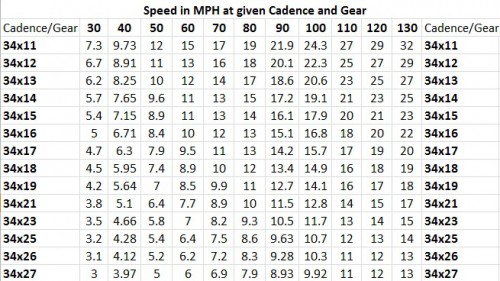
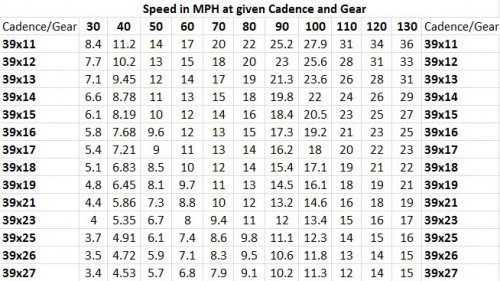
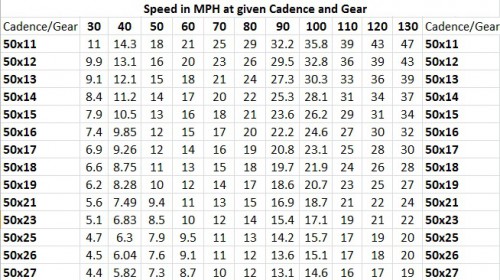
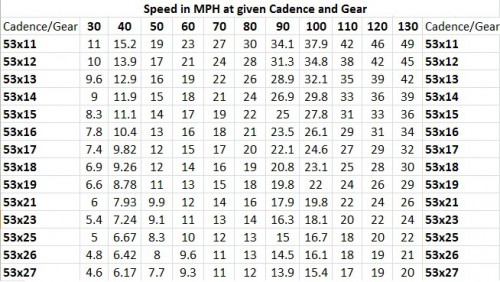
Seeing how fast you can go in a given gear at a given cadence on this road bike gear speed chart can show you what speeds you are capable of on the high end and low end. Going up a climb you may need a smaller ratio while on a flat section or downhill, you may need a larger gear ratio.

Road Bike Gear Speed Chart

The following speeds are calculated using a wheel size of 700c and a tire diameter of 25mm. If your tire size is slightly smaller, the speeds will be ever so slightly lower while the larger the tire, the speed will be ever so slightly higher.

speed chart 34 tooth chainring

Speed chart 39 tooth chainring

speed chart 50 tooth chainring

speed chart 53 tooth chainring

Bike Gear Ratio Chart

March 29, 2016 by Adam Farabaugh


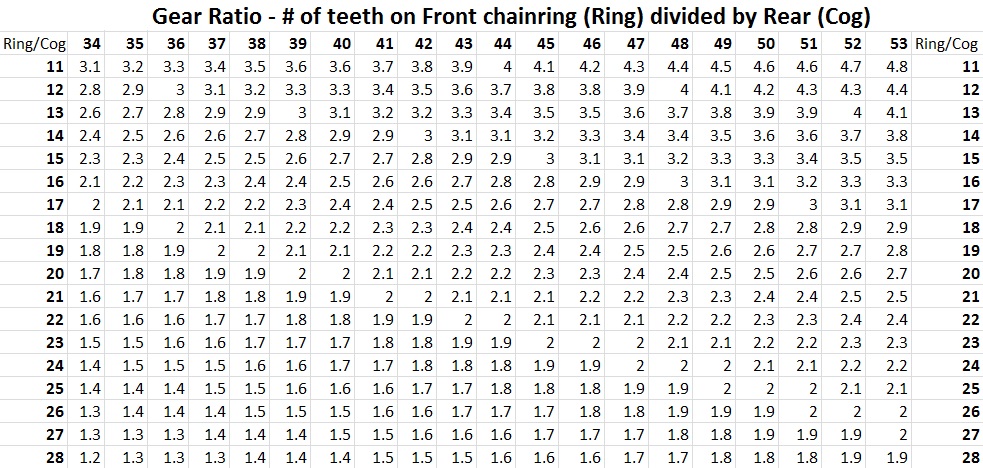
Gear ratio’s in the bike gear ratio chart are determined by dividing the number of teeth on the front chainring by the number of teeth on the rear cog. A larger number indicates a large gear that is harder to turn over and is used for higher speed. A smaller number is easier to accelerate and can still be pushed on steep climbs. As you can see, the same ratio can be achieved whether you are riding in the large chain ring or small by altering the cog in the rear.

Bike Gear Ratio Chart

bike gear ratio chart

What are Bicycle Disc Brakes

March 2, 2016 by Wade Shaddy

bicycle disc brakes

Friction has always been the best way to stop a moving object. Brakes create that friction. Today’s bicycle disc brakes are a modern marvel of refined, contemporary engineering. It provides cyclists with confidence and reliability. Is it for everyone? The answer lies in what you expect from a disc brake and how well you maintain it.

History of the Bicycle Disc Brake

It was the mid 1970’s; the mountain bike had not yet reached any kind of popularity and almost every bike was a road bike with rim brakes. Disc brakes were nothing new though, as they had been on cars for many years. In about 1975, the first disc brakes were placed on a road bike — but it didn’t stay there long.

Sacrifice and Benefit

Rim brakes worked just fine. They were lighter, less expensive, easier to work on and bike shops or sporting goods stores had parts for them. In short, the benefits of the disc brake were outweighed by sacrifices as far as road bikes of the 70’s were concerned. The real need for a disc brake didn’t exist until the introduction of the mountain bike a decade later.

Application of the Disc Brake

The difference is in the application. Mountain bikes rely on disc brakes not because they work better — but because they work better on mountain bikes. Mountain bikers prefer disc brakes for obvious reasons. They can bash their rims out of true and the brakes don’t rub. They can ride through mud, sand or grime and the brakes don’t clog up. There’s no issues with pebbles getting stuck in brake pads and damaging the rims. When it’s wet, the pads still grab almost as if it were dry.

More Stopping Power

Disc brakes, and especially hydraulic disc brakes, do provide more stopping power than rim brakes. However, a feather-light rim brake has more than enough stopping power for a typical rider on a road bike and disc brakes add weight. Most road riders want to go faster, not stop better.

Bicycle Rim Brakes

Rim brakes work by means of generally a rubber compound brake pad, attached to the bike’s frame, positioned directly over the rim of the wheel. When the brake lever is squeezed, the pad pushes against both sides of the rim generating friction to slow the bike down and bring it to a stop.

Bicycle Disc Brakes

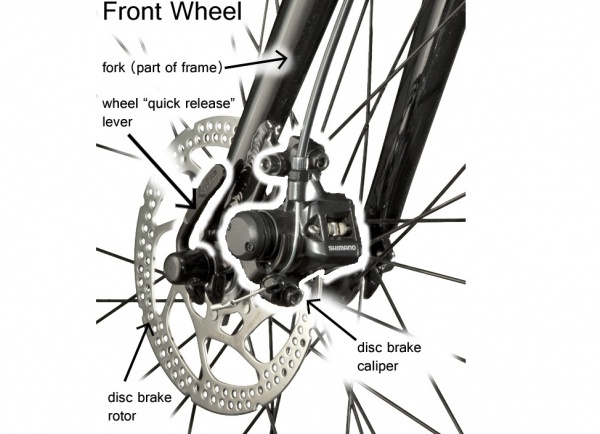
The  rotor — the shiny disc on a disc brake setup — spins with the wheel. Calipers are attached to the fork and rear stays of the bike and are equipped with the brake pads. When the brakes are applied, the calipers squeeze the pads against the disc instead of the rim.

Disc Brake Advantages

  • Work if your rim is bent or damaged
  • Don’t wear rims out
  • Work better in wet, dirty, and muddy conditions
  • Rotor is easy to replace when worn or damaged
  • More stopping power
  • Look cool

Rim Brake Advantages

  • Weigh less than rim brakes
  • Lower cost
  • Longer pad wear, more pad options, easy to replace
  • Parts are cheap and available everywhere
  • Offer better finesse in stopping particularly advantageous in cyclocross

Cable Actuated versus Hydraulic Disc Brakes

Disc brakes come in two varieties; cable actuated or mechanical,  and hydraulic.

Cable Actuated

Mechanical disc brakes rely on cables and housing like a traditional rim brake. Bike companies often use cable actuated disc brakes for simplicity and serviceability. Mechanical disc brakes are much less expensive than hydraulic brakes. The biggest downside is how hard you have to pull the brake lever compared to a hydraulic lever for the same amount of stopping power.

Hydraulic Disc Brakes

Hydraulic disc brakes don’t use cables but instead use fluid-filled chambers and tubing — similar to the brakes on your car — to push brake fluid. Brake pads are housed in the caliper and are forced into the rotor by hydraulic fluid. Because hydraulic fluid does not compress or flex like a cable, hydraulic systems are considered higher performance than mechanical systems and offer better, seamless stopping power.

Cable vs. Hydraulic Servicing

Hydraulic disc brakes are more difficult to service than cable actuated disc brakes. If you develop a fluid leak in a hydraulic line or fluid chamber out on a ride, brakes can begin to fade and at some point fail. There’s no way to fix them on the road or trail. Servicing hydraulic brakes can be an expensive procedure that can require a professional if you’re not mechanically inclined to do it yourself.

Disc Brake Maintenance

There are too many varieties of disc brakes for a single generic maintenance chapter — but they all require similar maintenance procedures. Consult your manufacturer’s suggested maintenance procedures for your specific disc brake.

Warped Rotor

The disc brake rotor is a crucial part of the system. It must be perfectly flat and straight to work properly. If it’s bent or warped it either will need straightened to not rub on the pads or will need replaced altogether.

Bleeding Lines

When hydraulic brakes feel soft or spongy, it’s usually the result of air in the hydraulic lines. An easy way to test if your lines need bled is to stand your bike upright on the rear wheel and pump the brake levers five to ten times. If the lever starts to pull all the way to the bar, it means that there is air in the line and needs bled. Bleeding a hydraulic system is a routine procedure for removing trapped air from the lines and calipers.

Replacing Fluid

Fluid replacement is required when hydraulic fluid becomes contaminated with dirt and moisture. The fluid might be mineral oil or standard brake fluid; check with the manufacturer for the specific type of fluid to be used. Different types of brake fluid should never be mixed.

DIY Bleeding or Replacement

Bleeding lines and fluid replacement can be done at home with the proper equipment and know-how. If you’re unsure about it, take it to a professional.

Caliper and Pad Adjustment

Uneven pad wear is a common reason why you need to adjust your disc brake calipers. It can be done two different ways or a combination of both. If the caliper is obviously crooked, it’s possible to nudge it a bit in either direction by simply loosening the two bolts that hold the caliper to the frame or fork and centering it on the rotor. As your pads wear down, pad adjuster bolts on the caliper move the pads closer to the rotor as needed or at regular intervals.

Pad Replacement

Bicycle disc brake pads are a consumable item.  They wear out and require replacement. They may last a few seasons or only a few months depending on how you ride and how much. Some mechanics recommend replacing pads when the exposed surface of the pad is thinner than a dime. If pads are allowed to wear too thin they will damage the rotor and it can put you in danger. It can take only a few minutes of exposure from a worn out pad to completely destroy a rotor. In short, inspect your brake pads often and replace when necessary for better performance to save money in the long run and to prevent injury.

Generic Pad Removal

To change brake pads, it’s first necessary to remove pressure on hydraulic systems. It’s done on hydraulic brakes by removing the reservoir cap first. Depending on models, a cotter pin is then typically removed from mechanical and hydraulic alike. Some models have additional bolts to loosen. The pads may pop out of the caliper from the top or bottom, and they slip back in the same way.

Additional Cable Adjustment

Mechanical disc brakes have additional barrel adjusters on the cables themselves to take up slack from the cable. Giving them a few turns counterclockwise tightens the cable moving the pads closer to the rotor for better braking.

Give it a Checkup

Proper function of bicycle disc brakes relies on basic things that work together and must be properly adjusted. Have a look at them visually. Spin the wheel. Check the rotor itself for warp and damage. Look for side-to-side wobble. Check to see if the caliper is centered on the rotor. Check pad thickness and caliper position. Sight along the rotor to see how much brake pad you have left. Note how much daylight you have between rotor and pad, and note the thickness of each pad.
  • The rotor must be straight and smooth
  • The caliper mechanism must be properly aligned with the rotor
  • Pads must be positioned correctly in the caliper
  • There must be enough “pad” left to adequately stop the rotor before any damage occurs
  • The lever mechanism– cable or hydraulic — must push the pads tightly against the rotor with “lever” to spare, ie. the lever doesn’t pull all the way to the handlebars

Take Your Time

Don’t do anything half-assed when working on your bicycle disc brakes. If you decide to tackle it yourself, take your time and do it right. If you don’t feel up to it, get your local shop to do the job for you whether it be bleeding your brakes, adjusting them, or changing pads or cables.

What is a Hybrid Bike?

February 26, 2016 by Wade Shaddy

what is a hybrid bike

It seems that hybrid machines are everywhere. If you’re new to cycling, you may have heard the term “hybrid”, associated with bicycles. But what is a hybrid bike? Is it better than a road or mountain bike? Something to try out for fun? Is it one you might want to add to your growing collection of bikes? It might be.

The All-Purpose Bike

Bike-shop owners face this problem on a daily basis; someone wanders in without a clue as to what type of bike they are looking for. The answer depends on what kind of biking you do — long-distance, trail riding, road riding, cruising or all of them put together. Generally speaking, a hybrid is an all-purpose bike that can do a little bit of everything.

What is a Hybrid Bike

A hybrid bike is a blend of a standard road bike and a mountain bike, taking the bits of both types to create a machine that can adapt to different terrains and surfaces. The hybrid is a casual approach to almost any terrain.

Geometry of a Hybrid Bike

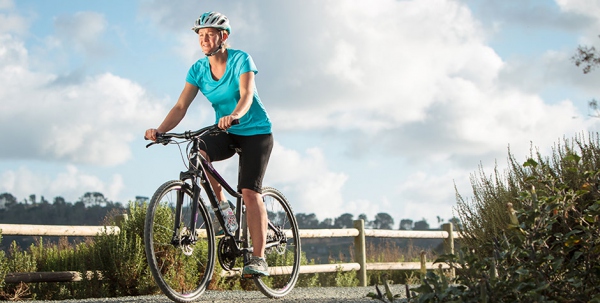
Unlike road bikes with aggressive, strict geometry made for speed, lightness, and aerodynamics, hybrid bikes have a more relaxed design. A hybrid is designed to relieve stress on your shoulders and neck with a more upright position. This means a shorter top tube with a taller head tube to give a more upright riding posture. Some hybrids also feature a top tube that slopes downward from front to rear, which makes it easier to get on and off, no matter what kind of gear you’re wearing.

Handlebar and Shifters

Road bikes have drop bars that make you reach relatively far forward. Hybrid bikes have flat handlebars similar to mountain bikes. This type of handlebar adds to the upright riding position. It also means that hybrids are equipped with mountain-bike style shifters and brake levers, which are easier reach and operate.

Wheel Size

Hybrid bikes often give you a choice in wheel size. Larger 700c size wheels found on road bikes give the hybrid more of a road bike feel. Traditional 26-inch mountain bike wheels offer a lower center of gravity that might be more appropriate for a mountain bike trail. But both sizes can adapt to both disciplines, due in part to the differences in tires.

Tread Design

Hybrid tires are designed with a rough tread on the outside, and a smooth parallel tread on the inside to deal with varying terrain while offering lower rolling resistance.

Tire Width

The most common width for road bike tires is 23mm. A much wider tire between 2.0 to 2.5-inches is typically used for mountain biking, Hybrid bike tires are somewhere in the middle. Hybird tire width typically runs between 28mm on the narrow side, to the much wider 47mm– which is just under 2-inches. Generally speaking, the wider the tire, the cushier the ride. Narrower tires give you less rolling resistance. Wider tires allow for better handling in gravel or dirt and lessen the likelihood of getting a flat. The main disadvantage to wider tires is weight, which most hybrids are not overly concerned about.

Suspension Options

Unlike road bikes, which now almost all come with a carbon fork, the hybrid bike offers choices. Go with a carbon fork for more road applications. Go with a steel or aluminum fork like the rest of the frame for more traditional all-purpose riding. Suspension forks are available if you plan on using the hybrid off-road. The choice is yours.

Gearing Options

Hybrids don’t follow strict guidelines for gearing options. If you primarily want your hybrid for road riding, select a gearing option like a road bike with higher gears in back. If you plan on using your hybrid for gravel paths or the occasional hill climb on dirt, look for lower gearing. If you plan on touring with a heavy pack or panniers low gearing is also a big plus. Hybrid bikes are available with a triple chainring up front for some seriously easy gears for climbing hills, or a compact double like traditional road bikes. Most often, the gearing tends to lean more toward a mountain-bike set-up.

Who Can Benefit From a Hybrid

Aches and pains commonly associated with road bikes can go away on a hybrid. Common complaints such as neck, shoulder, and backache can benefit from the upright position on a hybrid. This makes hybrids a good choice for seniors, those who might have injuries, or other health related issues.

Summing up the Hybrid

Here’s a quick summation to “What is a hybrid bike?” and the benefits of one:

  • A hybrid can go off and on road, expanding your choice of weekend riding and commuting routes.
  • A hybrid can have a selection of fairly wide tires, which aids comfort and allows for various levels of off-road riding.
  • A hybrid’s horizontal bars provide a more upright riding posture.
  • Hybrids typically have gears more similar to a mountain bike, so riding hills shouldn’t be a struggle.
  • A Hybrid’s shifters and brake levers on horizontal bars are easy to reach.
  • Most standard hybrids are fitted for racks and mudguards, making it a popular choice for commuters.
  • Hybrids package quality and a variety of features at an affordable price. For a cyclist who rides slightly rough trails, flat city roads, bike paths, and the occasional sidewalk, the hybrid meets most purposes halfway.

New to Cycling

If you’re new to cycling, and not sure exactly what you want from a bike, a hybrid can help you decide. For the most part they are affordable options to full-on mountain or road bikes and they give you the option of trying out both disciplines. After you’ve ridden for a few months, you’ll likely know what you like, and then you can target your next bike purchase accordingly.

Game Changing Cycling Gadgets

February 4, 2016 by Wade Shaddy

The cool thing about cycling gadgets, is that they come from the innovative minds of cyclists. And who knows better what a cyclist needs — or doesn’t need for that matter. Some cycling gadgets are are purely whimsical, while others are game changing.

Hidden Tools cycling gadgets

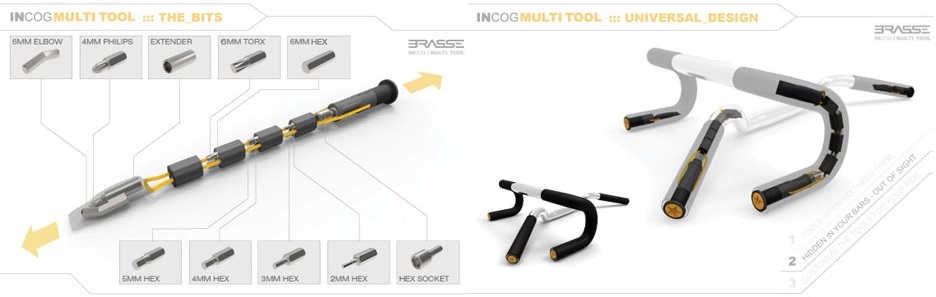
It’s a never a good feeling to reach for your tools in your saddle bag when you have a repair on the lonely highway, only to find that something missing from your tool kit. What if you had backup tools? This cycling gadget, the Incog Bike Multitool, is designed to fit the majority of handlebars. The entire tool bends like a snake so it can be pushed in past any curves in the bar. The InCOG retails for $60 and is currently in its pre-order stage.

Mini-Mini Air Pump Mobo Pocket 4" Air Pump

All cyclists face flat tires, it’s a given. Have you ever reached for your air pump, only to find it’s been damaged, missing the collar,  jammed full of dirt, or otherwise doesn’t work? A Mobo Pocket 4″ Air Pump will get you back on the road. It’s so small it fits inside  saddle bags, pants, or jersey pockets. The sleek, lightweight aluminum design, can even deliver 100 psi. It weighs only two ounces and is compatible with Presta and Schrader valves. It also has a mounting rack.

On The Bike Flat Fix patch and ride

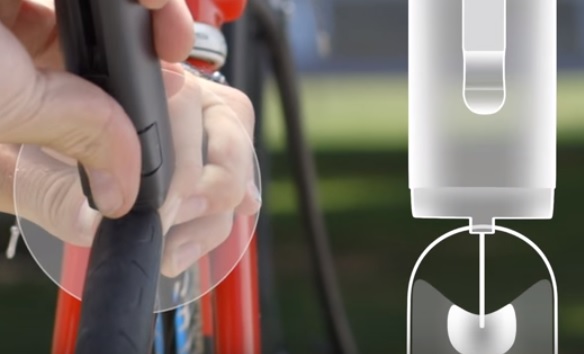
This simple tool may revolutionize flat fixing on the road. It’s pure genius. The Patchnride hand-held tool is not much bigger than a tire lever. It works by inserting a small plug in the puncture while the tire is still on the bike. Air up the tire with your mini pump and you’re on the road again in minutes — or less. It’s so new, that you may have to pre-order it.

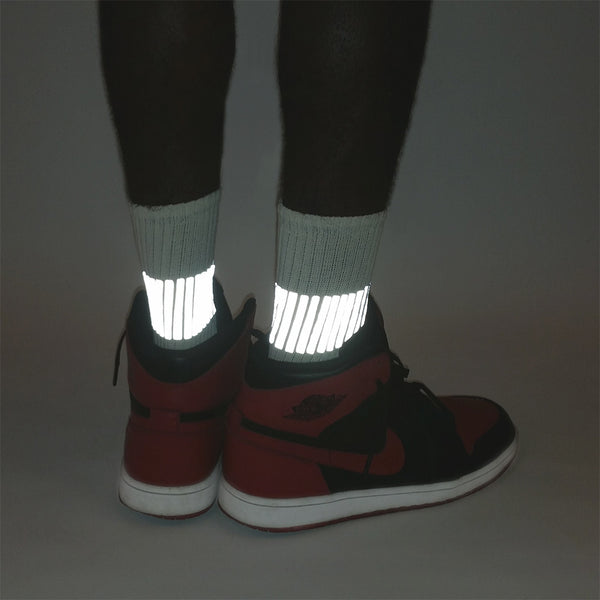
Reflective Socks Rock GEAR-017 BAND socks w/3M reflective - HEISEL - 1

It’s official, cyclists love socks. Reflective socks are not exactly cycling gadgets, but they’re still a cool innovative design that aids a cyclist. If for no reason other than they’re cool, and oh, yea, make you safer on the road, reflective socks just rock.

Jacket With Turn Signals visijax jacket

While we’re on the subject of game saving gadgets that make you safer, how about a jacket that has motion-activated turn signals. The Visijax smart jackets are perfect for commuting, road riding in inclement weather, or anytime during the day or night. The very fact that they light up can save your life.

Solar Powered Tail Lights 

Why didn’t someone think of this one before. Maybe it’s because modern technology has actually made one that works the way it’s supposed to. Requiring no batteries, one full charge from the sun will give the Solar Energy Bike Tail Light Solar four to eight hours of light time. Using two bright LED bulbs, this light has three modes for safety. Never allow your batteries to run down again. It’s waterproof so you can use it in even the worst weather.

Light Speaker cycling gadgets

No cycling gadget list would be complete without delving into the whimsical. The Buckshot Pro is a bomb-proof light that also serves as a speaker. It mounts to your handlebars, can really take a hit or deal with water. With wireless connectivity to almost any Bluetooth device, it charges at home via your computer, or any other device with USB.

High-Performance Saddle Infinity N-Series Bike Seat

The N-Series seat by Infinity is gorgeous. This is probably one of the most serious gadgets — if you can call it a cycling gadget — that has been introduced regarding saddles in years. It looks like a skeleton. This no-frills saddle weighs in at just 210 grams. The N-Series Seat is made of injection-molded nylon. It has two purposes — comfort and performance.  Don’t let its looks fool you, it’s at home on the 3000-mile RAM for example —  but equally at home on a ride across town.

Airbag Helmet cycling gadgets

Borrowing technology from vehicle air bag systems. The Hövding AirBag For Cyclists is one of the most innovative safety devices ever conceived for cyclists.You’ve just have to see this one for yourself.

It’s a Hood

The airbag is designed like a hood. It’s made with nylon fabric that won’t rip when scraped against the ground. The hood protects nearly all of the head when inflated, while leaving the field of vision open. The airbag uses accelerometers to detect that a fall is occurring and quickly inflates the airbag before impact with the ground.

Soft and Gentle

The inflated airbag covers a much larger area than a traditional cycle helmet and is designed in consultation with current accident statistics. The protective airbag provides extremely soft and gentle shock absorption. The pressure remains constant long enough to  withstand multiple head impacts during the same accident. After that, the airbag deflates slowly.

Cold Inflation

The gas inflator that inflates the airbag is placed in a holder in the collar on the cyclist’s back. The gas inflator is “cold inflation”, meaning that it uses helium.

Cycling Gadgets Going too Far?

Has cycling innovation gone too far? Would you discard your traditional helmet for an airbag? Do you need a solar powered tail light or a jacket that lights up? Maybe yes, maybe not. The important thing is, you have the choice. The innovators and inventors of cycling gadgets keep pushing the limits. They should be applauded and supported whenever possible for making cycling safer and more fun. Keep the gadgets coming.

Bike Packing List for a Bike Tour

January 30, 2016 by Wade Shaddy

bike packing list

A bike packing list can be minimal or extensive. It should take into account days in the saddle, miles between stops, and possible combinations of weather. It should include items for the level of comfort you expect and all the tools needed to repair your bike. A bike packing list will also vary depending on what type of bike tour you’re planning. You can’t take everything but it’s a good idea to be as self-sufficient as possible on a bicycle tour.

Two  Types of Touring

Some people plan to spend nights in the comfort of hotels or bed and breakfast, with actual beds. Other cyclists plan to sleep in a tent on the ground, and prepare their own food.

Light and Fast Bike Packing List

Basic items are all you need to travel light and fast. All you really need is a credit card. The major advantage of traveling with little or almost no gear, is that you can take your carbon-fiber, or otherwise lightweight road bike and rack up the miles fast. It’s not uncommon to travel 500 miles in a single week traveling light and fast. But there are a few items you need on your bike when traveling light and fast.

  • Smaller, nylon bags designed to fit on your handlebars, under your top tube, or behind your saddle are great at holding the essentials on a light and fast tour.
  • Credit cards and personal Identification
  • Deodorant, soap and shampoo (in case your hotel doesn’t have it), toothbrush and toothpaste
  • Warm, lightweight gloves, foldable rain gear and nylon shell or windbreaker
  • Leg Warmers: These are good to keep you warm on cooler days without adding bulk
  • Extra socks, shorts and jerseys (optional depending on your tour, and if you have room for them)
  • Medical kit that includes your prescription meds, along with aspirin, antacids etc. Gauze and items to deal with minor accidents.
  • Water-proof maps if not relying on a phone or gps
  • Sunscreen
  • TP (toilet paper) or tissues — you never know how much you might need it

On The Road Washing

Light and fast means you cant take much in the way of extra clothing. Small towns across the country often have facilities where you can wash your shorts, jerseys and bodies. Truck stops are good for this, they have showers. Hotels often have laundry facilities also. Utilize them. You can also wash your kit in the sink. To do this, simple body wash or bar soap works fine. Scrub and wring out as good as you can. Then lay out a towel and lay your kit on it minimizing overlap. Then roll it up from one end, like a pumpkin roll. and twist both ends in opposite directions as far as you can go. Then use coat hangers to hang in front of a window or fan ven

Self-Contained Touring Bike Packing List

Self-contained touring includes everything from the fast and light list, but you’ll need considerable more gear.  Self-contained, self-sufficient bike touring is a different animal. You need to pack for every imaginable situation, plus all the gear needed to camp.

Start With Panniers

First of all, you’ll need panniers. These additions to your touring bike should be pretty much impervious to rain, snow or mud. The choices in sizes and types are varied, but your panniers should give you the piece of mind that your possessions will be be dry and clean for the duration of your tour. Along with everything you need for camping and day to day life, don’t forget the things you would need on a regular bike ride. Things like:

  • Water Bottles or Hydration Pack (Camelbak )
  • Lights: LED tail Light and headlight, detachable is nice in campsites
  • Frame mount air Pump. Don’t skimp on pumps, get a beefy one that won’t let you down
  • Patch kit and tire Levers
  • At least two spare tubes
  • Presta to Schrader valve adapter. You might not appreciate these until you really need them
  • Bicycle multi tool
  • Spoke wrench

Spare Parts

Depending on how serious your tour is or how much room you have, you can include spare parts to repair your bike on the road. Things that might come in handy include:

  • Extra spokes and cables
  • Electrical tape
  • Chain lube
  • Brake pads
  • Spare tire
  • Zip-ties
  • Spare nuts and bolts
  • Chain tool and master links

Camping Gear

The bike pacing list for camping gear can be extensive and you should know what works or what you prefer to prepare for your type of touring. Try to get stuff that will stuff into a stuff sack. Here are a few things you will probably need to camp.

  • Tent, including all the stuff needed to set it up.
  • Poly Ground Sheet — this might double as a rain protector on the road.
  • Air Mattress/Sleeping pad
  • Air Pillow-optional. You can use clothes in stuff sack as a pillow.
  • Lightweight Backpacking Stove
  • Fuel Bottle
  • Cook pot set
  • Utensils: Spork, or spoon, fork and knife set
  • Other options for weather-related issues might include plastic tarps and bungee cords.

Off-Bike Clothes and Foul Weather Gear

You may be doing extended stays at campsites or towns. The choices of off-bike clothing are up to you, but you can’t really walk around all the time in your cycling gear. Foul weather gear should include rain jackets and pants, long-sleeved jerseys and thin layer underwear. Again, it depends on your tour, time of year, and climate.

Additions For Her

It’s widely accepted that females aren’t comfortable with a level of cleanliness that most guys adhere to. Guys are more likely to leave certain items out of a bike packing list that may make a tour more comfortable for women. But most items are unisex, and there’s really no reason for guys not to use at least some of them. If you’ve ever traveled by bike with a woman, you’ll recognize some of the items.

  • Tank tops and T-shirts: Don’t get anything skin tight, you’ll appreciate the ventilation when it gets hot. Some women prefer cotton, while others hate it. It’s your choice.
  • Flip flops or Crocs: Good to have so you can get out of your shoes and wear in showers at campgrounds, laundry rooms, etc.
  • Personal hygiene ( not sure if this one even needs mentioned)
  • Hand wipes: Again unisex maybe, but women are typically cleaner than guys
  • Hand Sanitizer: Again, should be a must in any tour
  • Skin lotion: Women just appreciate it more than guys
  • Insect Repellent: This one is also unisex, but guys typically forget it
  • Extra sports bras and underwear.

A Typical Day

The bike packing list for a bike tour is somewhat personal. Only you know for sure what you need for your individual taste and style. It helps to visualize a typical day on the road and add things to your own list. Start planning and packing ahead of time so you aren’t rushing around last minute; that’s when you forget something essential. A bike tour is super rewarding and allows you to see so much more from a differing perspective. Get out there and have fun.

How to Fix Road Bike Brakes

January 11, 2016 by Lee Agur

how to fix road bike brakes

When you’re riding your road bike, and you pull the brake levers, what happens? Well, if you apply the rear brake, first, you should slow down, and applying the front brake should bring you to a full stop. However, if your brakes aren’t working properly, you’ll squeeze the levers all the way to the handlebar, and you’ll barely get any stopping power. Worse yet, while you do it, you might also hear a terrible, loud squealing noise. What can you do when you don’t know how to fix road bike brakes? Just follow these steps, and you’ll have your brakes fixed in no time.

How to Fix Road Bike Brakes – Locate the Pinch Bolt

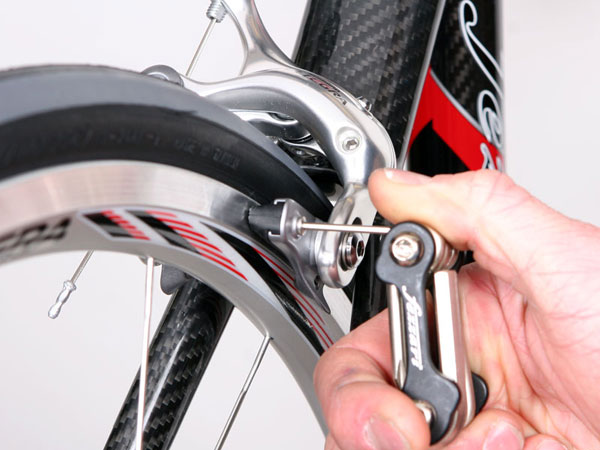
The pinch bolt holds tension on the brake cable. It should be on the brake itself, not on the brake lever. Depending on how old your bike is and what kind of head the bolt has, you’ll most likely need either a five-millimeter hex wrench or a ten-millimeter box-end or open-end wrench to loosen the pinch bolt. Loosening this will take all tension off of the cable and allow the brake to open up to its widest point.

Roll Out the Barrel Adjuster

On road brakes, your barrel adjuster will be located at the cable stop on the brake. This takes up or lets out tension on the cable when the pinch bolt is tight. If it’s not already loosened, go ahead and loosen it until about half of its threads are showing.

Take Up Tension in the Cable and Tighten the Pinch Bolt

Now, with a cable puller or with your hands, pull the brake cable tight and pull the brake closed so that the pads lightly touch the rim. Then, while holding tension on everything, tighten the pinch bolt onto the brake cable with enough torque that it’s not going to slide through under heavy braking.

Once you’ve done that, you can just tighten the barrel adjuster back down. That will release some tension from the cable and let the brake out a little bit. Try squeezing the brake lever now. Feels better, right? If it’s not quite right, you can continue playing with the tension on the cable using the barrel adjuster and/or by adjusting where you clamp the pinch bolt down on the cable.

For Squeaky Brakes

Finally, if the brake pads are squeaking, you most likely have an alignment issue, but you may also have an issue with worn out pads. Take a look at your pads. If they’re still good and not excessively worn down, just roll the barrel adjuster out until the pads are lightly touching the rim. Then make sure that they are perfectly symmetrical and that the front end of the pad is toed in and touches the rim just a hair before the back of the pad. You can slip a business card in between the back of the pad and the rim while you tighten the bolt holding the brake pad in place. If your pads are worn out, just replace them and use the same technique to line them up.

That’s it! Now you should have everything you need to know to fix your brakes. Good luck!

« Previous Page
Next Page »
  • Facebook
  • Tumblr
  • Twitter

Latest Articles

JOIN Cycling: A New Training Platform for Cyclists

May 27, 2024 By Eric Lister

cold exposure

The Benefits of Cold Exposure for Cycling & Life

June 13, 2023 By Eric Lister

hill climb

The Ultimate Hill Climb Training Guide

May 31, 2023 By Eric Lister

shoulder pain cycling

How to Treat & Avoid Shoulder Pain While Cycling

April 12, 2023 By Eric Lister

psoas stretch

The Importance of the Psoas Stretch for Cyclists

April 6, 2023 By Eric Lister

cycling neck pain

The Ultimate Guide to Cycling Neck Pain: Causes and Solutions

March 21, 2023 By Eric Lister

Useful Info

  • Contact
  • Finally, A Global Cycling Club That Is Focused On Community And Love Of Cycling!
  • Privacy Policy
  • Share Your Story!
  • Terms And Conditions Of Use
  • Welcome to I Love Bicycling
  • What Happened When I Stretched Every Day For a Month

Recent Posts

  • JOIN Cycling: A New Training Platform for Cyclists
  • How to Hang Bikes in Your Garage: 4 Inexpensive Options
  • Gravel Bike Vs. Road Bike: Which One Is Better For You?
  • The 6 Types of Mountain Bikes & How to Choose the Best One for You
  • What Is a Touring Bike Good For? 5 Benefits We Know You’ll Love

Search I Love Bicycling

Connect with Us

  • Facebook
  • RSS
  • Tumblr
  • Twitter

Copyright © 2026 · Magazine Pro Theme on Genesis Framework · WordPress · Log in