• Training
    • Injury Prevention
    • Training Tips
  • How To
    • Bike Fit
    • Gear
  • Nutrition
    • Nutrition Tips
    • Weight Loss
  • Repair
  • Reviews
  • Stories
    • Funny Stories
    • Jokes
    • Quotes
    • Videos
    • Funny Videos

I Love Bicycling

I Love Bicycling is a website that is geared towards cycling for beginners with road cycling tips, training articles, nutrition tips, weight loss, how to’s and bike repair articles.

Training

  • Injury Prevention
  • Training Tips
  • Training Camps

Riding Alone: Make the Most of Cycling Solo

April 3, 2020 by Sarah Lauzé

With half of humanity now on some sort of lock down, social isolation and otherwise, more and more of us are riding alone. Of course, we’re lucky to live in an area where we can still ride at all, but for those more social types, taking to the roads solo can seem daunting.

Once you get used to the thought, riding alone can actually be a great chance to get in touch with with where you’re at with your cycling fitness. Although riding with a partner or group is a great way to push yourself, often you’ll end up taking more breaks and sticking to the same routes that everyone knows and is comfortable with. Take this opportunity to try out some new routes, work on your mental toughness and focus, and just let your mind wander as you ride.
Make the Most of Cycling Solo

Be Prepared

You should always be properly prepared for a ride, but even more so when going alone. Check the weather forecast ahead of time, and especially with spring weather, ensure you have proper layers in case of rain. Make sure your phone is fully charged, and carry a battery pack if you’re going for a long ride. If there’s a chance of heading home at dusk, ensure you have proper reflective gear and lights for your bike. Always carry ID and some cash just in case, and take plenty of water and snacks!
Plan Your Route – but stay flexible

Having a rough estimate of where you’re going is always the best plan, and letting someone know the area you’re going. That being said, riding alone can be a great chance to explore a new area, adapt to the weather or change course depending on how you’re feeling. So feel free to check out some new roads, just make sure you let someone know whereabouts your going, or if your plans change on the fly.

Make Sure Your Bike Is Ready

A well packed saddle bag, and the knowledge on how to use those tools, can be the difference between a slight hiccup on your ride, and having to phone for a ride. If you usually rely on your riding partners for help with a flat tire, now might be the time to learn. Practice changing out a tube at home until you are confident you could do it on the road.

Make the Most of It
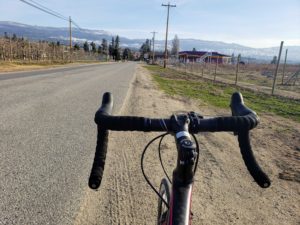
I know I’m not alone in finding solo exercise, especially cycling, somewhat therapeutic. You can let your mind wander, you don’t have to worry about keeping pace or making group decision. I quite often find I even talk to myself, working through problems, coming up with creative solutions, I am my most inspired while on my own on the road. So, don’t let the idea of solo riding keep you inside, get out on your bike and you may just find you like it more than you think.
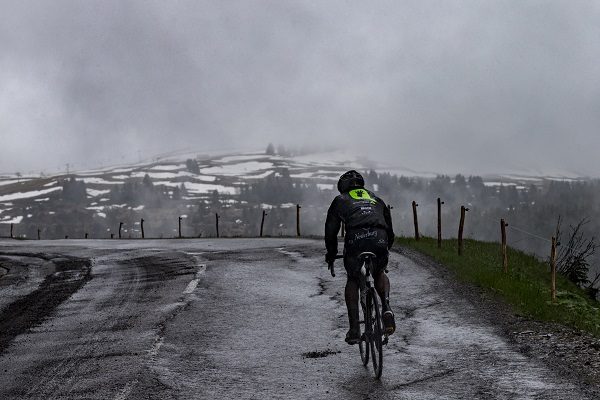

6 Ways to Boost Your Spring Training

March 28, 2020 by Sarah Lauzé

Cycling season can seem a long way off when you’re in the depths of winter, making it easy to postpone those goals. If you’re not emerging from winter in as good of shape as you may of hoped, don’t let it discourage you. What you do or don’t do at the beginning of the season will set the tone for the rest of the year. Here are some of the best ways to boost your spring training.

Spring Training

Stay Healthy

The last thing you want is to come down with a cold just as the sun is emerging and the roads are clearing. However, as frustrating as it is, the end of winter is quite often when people get colds or coughs. Take preventative measures by washing your hands frequently, and giving your diet an extra boost of nutrients. Don’t go too hard too soon, as you’ll deplete your immune system and make yourself vulnerable to whatever illness is going around the office.

You also want to avoid injury in the beginning of the season, as it can really set you back in your training. This means avoding overuse injuries, as well as watching for rough spring road conditions.

Clean up your diet

The days of Netflix and comfort food are coming to an end, so it’s time to clean up your diet. Over the winter it’s easy to fall into some bad habits, but now is the time to break them. Trade in the sugary carbohydrate dense foods for fresh fruit and vegetables. Simply cutting out as much of the processed food from your diet as you can will go a long way. Give meal prepping a try, or stock your kitchen with some energizing foods.

Get your bike ready

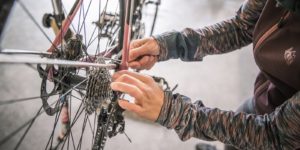
No judgements here, we know it’s tough to be diligent to clean your bike after winter rides. It’s cold, wet, and all out you want is a warm bath. Even if you didn’t ride over the winter, your bike will still need a little TLC. If you trust your abilities, carefully examine your bike and fix any issues well ahead of your first ride. Check your chain, cassette, cables or any other areas that might need attention. You don’t want to be doing a rushed job before meeting your cycling buddies. Better yet, take it to your local bike shop and have a mechanic do a tune up to ensure you’re ready for the season.

Get your body ready

Once you’re finally back on your bike, it can be easy to overdo it. You want to be fit right away, or start off right where you left off in the fall, but you have to ease your body into it. Take some time to build up your base before pushing yourself too hard. If you start to get nagging frontal knee pain, it’s almost always caused be too much too soon. Take time to rest up and do plenty of stretching and walking before heading out on the bike again.

Start Stretching

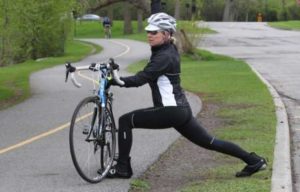
Hopping on the bike after a long winter feels great, but it can also come as a shock to your body. Your muscles and joints aren’t used to the cycling position anymore, and things may have tightened up over the past months. Taking just 10 minutes a day to do some targeted stretched will have you feeling more comfortable and stronger on your bike in no time. Here are 10 of the best stretches for cyclists to get you started.

Set Some Goals

When it comes to cycling, what do you want from yourself this year? Make a list of things, both large and small, that you want to achieve. Then go through and get specific. If you want to ride more, great, now define what that looks like. Be realistic and honest with yourself, and only plan for what you know you can logistically fit into your life and schedule. Sign up for your first race, or join a cycling group, whatever you need to do to break out of your comfort zone and challenge yourself!

Everything You Need To Know When Riding Gravel

March 26, 2020 by Adam Farabaugh

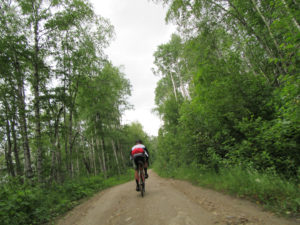
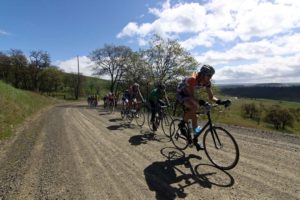
Riding gravel can be one of the best ways to have fun on the bike. It can also be one of the worst experiences on the bike if you don’t know how to ride a dirt or gravel road with grace. Riding down a paved road is relatively simple and straight forward whereas riding a gravel road requires a bit of preparation and know-how. Some stuff is common sense, like riding the smoothest line on the road, but is not always employed in the heat of the moment for one reason or another. We give you the tools you need below to not only have the skills to successfully ride a gravel road but to ride them excellently and seek them out every chance you get.

riding gravel

Equipment Setup for Riding Gravel

You could go down a mountain bike trail on a road bike but just because you can doesn’t mean you should. If you know ahead of time that you are going to be hitting a gravel road or twenty there are few things you should do prior to leaving home. One large consideration also is what the condition of the road is in. Is it going to be a farm country road that ranges from hard packed dirt to small, loose gravel? Or is it more of a jeep road that will be full of large rocks and other obstacles? For the former, a standard road bike will do but as you approach the later, a full cyclocross bike or gravel bike is a necessity.

Being Prepared For Flats

Regardless of the condition of the dirt road you must be prepared to flat. The best preventative is riding tubeless where there’s no risk of pinch flatting and the sealant inside the tire quickly fills any small punctures. And then if you flat you simply install a traditional tube. If you are running a tube, make sure you put an extra five or so psi in the tire to help prevent pinch flats. This will make your ride a bit more rough; another advantage to tubeless as you can run a lower, more comfortable pressure. With riding gravel you should also bring two tubes as well as a patch kit. If you are really going to be out there you can even strap an extra tire onto your saddlebag.

Securing Your Bottlesriding gravel

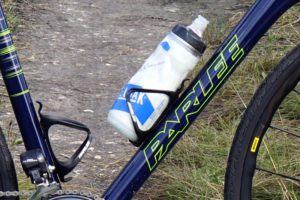
One thing that is not often thought about when riding gravel is that it is much more likely for your water bottles to eject from your cages. If you haven’t planned ahead, take a big swig out of both bottles so they are not full as well as leaving the pop-up top open. This will cause the bottle to become slightly less rigid and have a lower chance of flying out. If you plan on riding dirt on a regular basis, invest in a few water bottles that are softer and easier to squeeze. The cheap, hard bottles are easily ejected. If you have standard metal cages you should bend them in slightly. You will have to pull a bit harder to get the bottle out when you want a drink but it will keep your bottles firmly secure.

If you have carbon or composite cages there are a few different approaches. The first is to wrap a few layers of electrical tape around the tab of the cage that juts out into the indent of the bottle. Once you have a few layers, twist the roll of tape so the sticky side is out and keep wrapping for the last outer layer. The stickyness along with the increased depth will help secure your bottles. The second approach is to get grip tape much like you would find for a skateboard. Place this on the inside contact points of the bottle cage.

Lubing Your Chain

Depending on the road chances are good that dirt is going to fly up and get on your chain. Using a stickier wet lube will cause the dirt to stick to your chain and thus take it’s toll on your drive train. Use a lighter lube and make sure you wipe the chain clean after applying.

Hand Position And How To Absorb the Bumps

There are three main hand positions on standard road or cyclocross bars. They are the hoods, the drops, and the tops (the flat part of the bars closer to the stem). Each one is ideal for different scenarios. In each position you should be holding the bars tight enough for them not to bounce out of your hands but not so tight that your clenching. You want your body to be loose and absorb the bumps as you ride. One of the largest mistakes for new gravel riders is riding too rigidly. This is often because they are nervous and scared of crashing. The bike should be bouncing around underneath you while your body stays relatively stable with your arms and legs doing the majority of the shock absorbing. Although it’s on cobbles the premise is the same in the video below. You can see just how bumpy it is with their arms shaking.

The Tops

The tops are great for straight, flat roads as you can sit more upright and can easily absorb all the bumps. The tops are also great for going uphill as long as it’s not too steep.

The Hoods

The hoods are good where the tops are but when you might need to brake more quickly whether for curves or other riders. The hoods are also good for when you have to get out of the saddle as well as for going down relatively mellow descents.

The Drops

The drops should only really be used on dirt when you are going super fast on a flat section or down a descent. This position gives you the best access to braking quickly and forcefully as well as positions you to handle whatever a descent throws at you be it corners, rocks to bunny hop, or potholes to absorb.

The Physics of Gravel

The physics of gravel you might ask? Yeah. The key characteristic of a gravel road is that it is essentially a surface on top of a surface. The interaction with your tire to the top loose surface and how it adheres to the surface beneath it is what makes it different and challenging. Say you were to have a small rock on a table in front of you. If you push straight down on it with one finger, it’s not going to go anywhere. If you push down from an angle, any angle, front, back, the sides, it’s going to slide across the table. The same premise applies with your tires contacting the loose gravel surface. This means you always want to keep your bike as upright as possible.

Riding Through Corners

So now that you know why you would slide out in a gravel corner if you approached it the same way you did on a paved road, you need to know what that alternative approach is aside from just not leaning your bike. First you want to steer your bike through the gravel corner, not lean it through. This means keeping it upright but still keeping some extra weight on that outside pedal. You will want to equally balance your weight between your front and rear tire as if you over weight the front tire, like you do on a paved surface, it will likely slide out. You have to finesse the bike through the corner. As you get better and better both of your wheels will be sliding slightly laterally but this is just that first surface sliding over the underlying. You kept the bike upright and under you so it doesn’t slide out from underneath you.

Additionally when riding gravel, choosing the best line through the corner is key. This is a combination of starting wide, cutting to the apex, and finishing wide making a graceful arc along with seeing where the most stable surface resides. This will depend on the road but a lot of the time it is in the vehicle tire tracks as the loose rocks are kicked up out of it. You may have to just stay in the tire track through the turn or if you’re good, you can straighten it out on the loose parts and then cut tighter on the more stable parts to hit the apex.

riding gravel

Riding Up Steep Climbs

Going uphill on dirt can be challenging for a number of reasons. The first is that simply, it’s hard. The rough road slows you down so you have to overcome that as well as gravity. As the climb steepens, particularly on looser surfaces, your rear wheel will begin to spin out. This will happen even easier if you try and get out of the saddle. The trick here is to keep your rear wheel weighted by staying in the saddle and even sliding back on it slightly if you can’t get grip. If you are on a super steep gravel climb and have to get out of the saddle, the only way to do it is to drive the rear wheel into the ground almost like you’re trying to ride a wheelie. Even then your wheel still may slip out so it’s best just to stay seated and grind it out.

Riding Descents

Aside from going through corners, described above, there are a few other elements descending on gravel throws at you. The first and probably most important, is that you can’t stop as quick. This means that you have to approach corners with a bit less speed as you would on a paved road. Also, on descents you are going to be bounced around a bit more simply because you are hitting that many more rocks and bumps per second. You will float over more of them but your bike will bounce underneath you at a higher frequency. It’s important that you stay in the drops as you are least likely to have the bars bounced out of your hands here. You also can brake as needed. Also, when going downhill, especially on rougher roads, take your butt slightly off the saddle. This will allow the rear wheel to bounce up over a rock as it hits instead of forcing the tire to absorb the impact, which has a much higher likelihood of causing a flat.

Riding Muddy Roads

Muddy roads can be a ton of fun to ride. It’s like you’re a little kid again out getting dirty in the rain. They do have to be approached with more caution however as on top of the gravel already being a loose surface, the moisture can make them even more slick. Additionally, when descending, your rims are going to be covered in mud so it will take a bit longer for your brakes to engage and when they do, expect a longer stopping time.

Riding With Others on Gravel Roadsriding gravel

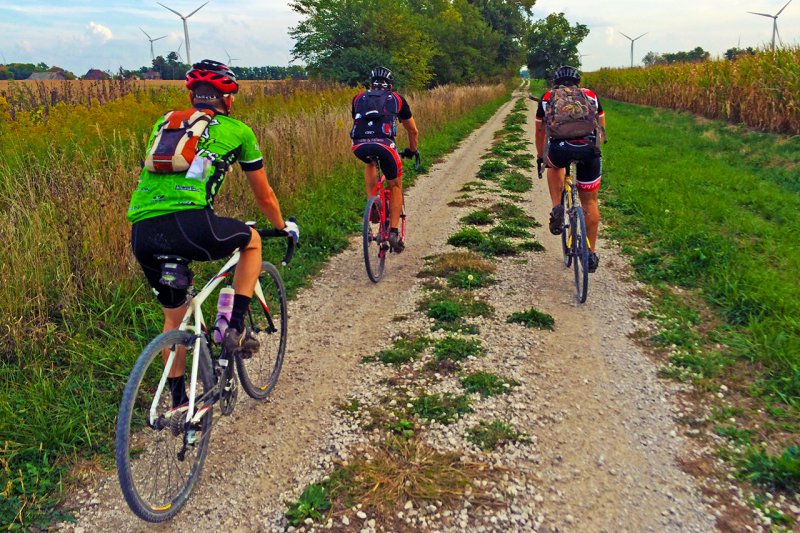
Riding with others on gravel roads can be a lot of fun but it means you not only have to watch out for yourself but everyone else too. When riding through corners or down descents, leave a little bit of extra space just in case they crash. You don’t want to be plowing into the back of them. It will depend on the road but sometimes you will be looking for a wheel to follow out of the wind. Dirt will likely fly up into your face especially if it’s wet. You will want a good pair of sunglasses to keep debris out of your eyes. Additionally, you can ride slightly to the left or right of the wheel in front of you and can cock your head a bit further to get even more out of the debris spray. Doing this also is advised when riding on someones wheel so you can see what’s coming up. You never know when there’s going to be a pothole or rock that comes up.

Finding the Good Line

It will depend on the road but normally there is one or a few good lines compared to the rest of the road. This is part of the fun of riding gravel because it’s not just ride straight ahead. Sometimes the tire track on the right will be the smoothest, sometimes it will be the center of the road, while yet other times it will be closer to the ditch. Don’t be afraid to change lines but when doing so, ride lightly over the rougher parts to avoid flatting or sliding out. And also if riding with others, make sure no one is to the side or just behind you that you will take out.

Keeping It Safe

Riding gravel roads can be a lot of fun but at the same time they can also be more dangerous. There’s an increased risk of crashing, especially when descending. Keep your speed within you skill set and as you get better and more comfortable, you can ride faster and faster. Seek out the gravel roads in your area and even take a weekend trip to someplace that has exceptional gravel roads. And if you’re up for it, check out a gravel event. There are more and more of them popping up all over the country and world.

How To Tackle Tough Road Conditions and Start Spring Cycling

March 12, 2020 by Sarah Lauzé

If you live somewhere snow has plagued the roads for the past eternity (months), then you may be getting excited to get out for some spring rides. There’s nothing better then hopping on your bike and making the most of the longer, brighter, warmer days. However, road conditions are a huge problem with spring cycling.

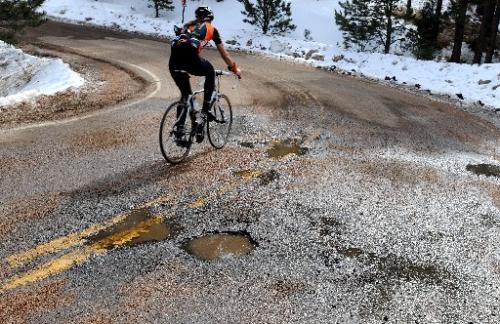
During the winter, a ton of grit and salt gets dumped on roads to keep them grippy and snow-free. Come spring time, all of that stuff ends up in one place – the shoulder where you want to ride. Spring is also pothole season, as water seeps into cracks in the road and freezes overnight, threatening to open up holes the size of the Grand Canyon on your favourite roads. There are a few easy things you can do to beat these obstacles, and stay safe during the spring cycling season.

Spring Cycling

Making the Most of Spring Cycling

Avoid Flats with Tough Tires

Nobody likes to change a flat tire, and the side of a road in a spring downpour is about the worst time to have to do it. It doesn’t help that this time of year seems to produce an abnormal number of frustrating flats. The culprit? Road grit. As it builds up on the side of the road, it collects all the little bits of stuff that would normally get blown off into the ditch – pieces of glass, metal shards, nails, etc. Normal, lightweight road tires get torn up in these conditions.

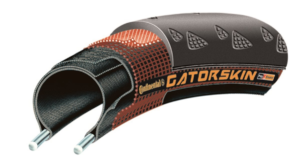
To keep you riding, a durable, puncture-resistant tire is essential. These tires have Kevlar fabric, or something like it integrated into the casing of the tire to strengthen it. Most major tire manufacturers offer at least one model like this. They won’t be the lightest, or the smoothest rolling tires, but they will take a beating. Check out Continental Gatorskins for a nice balance of performance and protection. The same company also makes even more durable (and heavier) tires – the GatorHardShell and the Grand Prix 4-Season. Other options include the Specialized Armadillo and Schwalbe Marathon Plus.

Look Out for Potholes

Weaving your way through the obstacle course that some spring roads tend to turn into can be a daunting task, but there are a couple of tricks that will help you out. The simplest is to look where you want to go, rather than looking at all the things you want to avoid. If you have ever managed to hit the only rock or hole on a nice smooth stretch of road, it’s probably because you were staring straight at it. Look ahead, pick your path through the debris, and then follow that path with your eyes. Your body will guide your bike there without you having to think about it.

As skillful a bike slalomer as you might be, occasionally there will be times that you can’t go around something. Maybe you are on a shoulder with cars to your right, or you might be in a group with other riders. Whatever the situation, you need to take alternative action. Enter the bunny hop. If you haven’t heard the term before, the general idea is to ‘jump’ your bike with both wheels leave the ground for an instant. This isn’t something that you want to try out for the first time at 25 mph on pavement, so find a grass field to practice on. Make sure you have mastered the movement before trying it on out on the road, especially when adding speed to the equation. Thankfully, with clipless pedals, the task is considerably easier. There are countless YouTube tutorials out there, but in short, you are going to ‘hop off’ your pedals (not literally, since your feet are clipped in) and then bring the bike up along with you.

Wear Layers

Spring can be a time of quick weather changes, so while you may head out on a ride in the sunshine, it’s always a good idea to be prepared for rain and wind. As far as clothing goes, that means layers, layers, and more layers. You want a warm base layer as well as a waterproof shell, gloves, and even waterproof pants if necessary.

Embrace the Fender

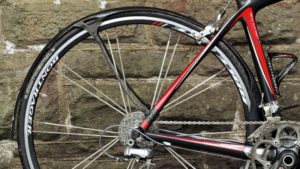
Grit and water aren’t much fun to ride through, and they are even less fun when it’s spraying up into your face as you’re riding. For this reason, fenders are your best friend for spring riding. They keep you (relatively) dry, grit-free as well as keeping all that same junk from getting into your drivetrain. This can reduce maintenance and keep your bike running smoothly. The type of bike you have will determine what your fender options are. For full-fledged race bikes, choices are limited since attachment points and tire clearance are minimal. In this case, the SKS Race Blade fender is one of the best options.

With lower-end road bikes, touring and commuter bikes you have many more options. Some people like clip-on fenders, since you can take them off at the end of the season to keep your bike looking slick. The downside to these are they won’t offer the same coverage and performance as a dedicated bolt-on fender set. Whatever you choose, it will be much better than going without fenders!

Clean Your Bike

Although fenders can help a ton to keep some of the dirt and grime off you and your bike, you should still give your bike a quick clean after every spring ride. It’s inevitable that it will cause wear and tear to your bike, which is why many cyclists have spring specific “beater” bikes, but this isn’t always an option. Check out this quick guide to a bike cleaning to keep your bike running smoothly.

Ensuring you are prepared both technically and mentally will have you jumping into the cycling season in no time. Spring riding can be some of the best rides, so don’t let the conditions deter you from getting out there!

Train Your Brain and Improve Your Mental Toughness

March 6, 2020 by Sarah Lauzé

Cyclists are known for being tough, both physically and mentally. So you put in the miles, you push yourself to the limits of what your body will put up with, and over time, you improve. This is what being a cyclist is all about, but one important factor is often left out of the average training plan – your mental toughness.

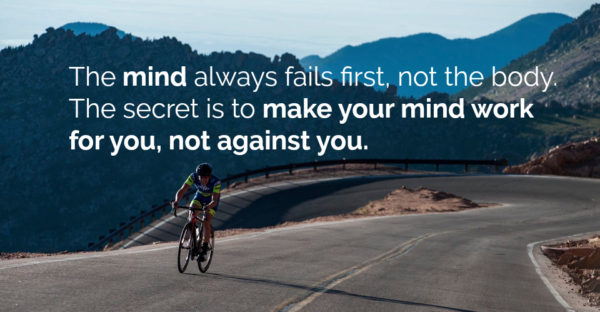
Mastery over the mind is essential in a tough, endurance sport like cycling. When your legs are screaming and lungs burning, your mind can quickly become your enemy. It all comes down to mental toughness, and luckily it can be learned, but it takes practice to tame the mind and turn it into a force that works for you rather than against.

Step 1: Tame Your Mind

You know when you’re on your bike, and you carry on a conversation with yourself throughout the entire ride?  The human mind is naturally restless and unsettled, so it’s perfectly normal that your thought process is jumping around.

The first step is taking control of that conversation and using it to your advantage. You’re never going to truly silence your mind (unless you’re a zen mater), so try to slow down the flow of thoughts to reduce any anxiety and help bring focus. Next, implant your ‘power thought.’ Okay, that may sound cheesy, but it works! It’s different for everyone, it could be a phrase, an image, an entire video sequence you play over and over. Just make sure it’s positive, focused, and loud enough to drown out any negativity.

Step 2: Change Up How You Measure Distance

Sometimes a mile can feel like an eternity, so try switching up your focus. Rides that include a lot of climbing can be daunting as you watch your distance creep along, so track time instead. Getting through it, minute by minute, can help you focus on what’s right in front of you rather than the long-term goal, which can seem daunting halfway through a ride.

Step 3: Breathe

Easy enough, right? We can all suffer from pre-race jitters or stress, but taking a few moments to practice just breathing can erase them almost entirely. A common practice for racers is ‘circle breathing,’ which is just very intentional and controlled breathing.

Take a deep breath in through your nose, feeling your chest expand to its capacity and pushing your abdomen outward, and hold. Then steadily exhale through your mouth, pushing every last bit of air out. Repeat this cycle 5-10 times and you will be able to feel both your body and mind relax. Ensure you are also using proper breathing techniques while you are on you bike.

Step 4: Mental Toughness

Mental toughness comes down to acknowledging pain or discomfort and moving past it. There are a lot of ways you can do this, so you’ll have to find what works for you. You can come up with your own fighting talk, like the classic “Shut up legs! Do what I tell you to do.” Or, you can visualize yourself winning the Tour de France to stay focused.

Personally, I use images or visual queues to tackle those tough moments. Reeling in the rider ahead is one of the most effective ways I’ve found to push myself. Picture a fishing line between the front of your bike and the back of theirs, then slowly reel them in. There’s nothing more rewording then when you finally do!

Step 5: Get Into The Zone

‘The zone’ is more often used to describe the state that runners enter in connection with the runner’s high, but it exists for cyclists as well. It can be described as the state of flow in which a rider is 100 percent absorbed in the task at hand, or pure concentration. Some descriptions of ‘the zone’ from various athletes are:

  • You can feel that you are being challenged, but you also know you have the skills to meet that challenge.
  • You can picture clearly what you need to do, and how you’re going to do it.
  • A feeling of being one with your actions.
  • A sense of being able to do anything without feeling like you have to try. You are in total control of your body and mind.
  • No worries, concerns, or fears of failure.
  • A feeling that time speeds up or slows down.

A technique to try and enter the zone is to bring your concentration down to a precise moment. Focus on your pedalling efficiency, the motion of pulling up and pushing down as seamlessly as you can. Concentrate on the sound of your bike, the wind, or your tires on the road.

At the beginning stages, it is definitely the total physical development that is important. Later on you develop more mental concentration, mental preparation to main maintain the physical capacity.” – Eddy Merckx

How To Improve Pedaling Efficiency

February 26, 2020 by Sarah Lauzé

Cycling is all about pedaling. No matter the bike, kit, and all the other bells and whistles, if you don’t start moving your legs you’re not going anywhere. In fact, the pedaling motion comes so naturally to most of us that we don’t even give it a second thought. With all the focus on cadence, a lot of times pedaling efficiency gets left behind.

Yes, cadence is important and has a large effect on how efficient your pedaling is, but it’s not the whole story. If you’re completing 90 revolutions a minute for a two hour ride, that’s over 10,000 revolutions. So, just think about the effect it could have on your riding if you made each one of those revolutions everything it could be.

Check Before You Start

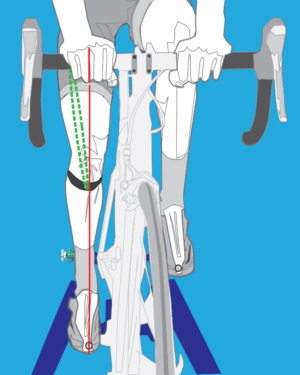
The hip, knee, and angle should all be in as straight of a line as possible when pedaling.

Before your start working on your pedaling technique you’ll want to ensure your bike is setup properly for you. The first thing to look at will be your saddle height. If the saddle is too low you’ll restrict the pedal stroke where you can produce the most power. If it’s too high your hips will start to rock side to side.

You may also want to take a look at crank arm length, as having the right fit for you can help improve your pedaling efficiency. The correct crank length puts your knee in the correct position at the top of the pedal stroke, and still leaves space between your knees and your stomach.

Watch Your Alignment

We’ve all seen bow-legged cyclists (or maybe you are one of them). Although it can be difficult to keep your hip, knee, and ankle in a straight line, this is the goal. Bowing your legs out is not only less efficient, but it can also lead to knee injuries.

Pedal in Circles

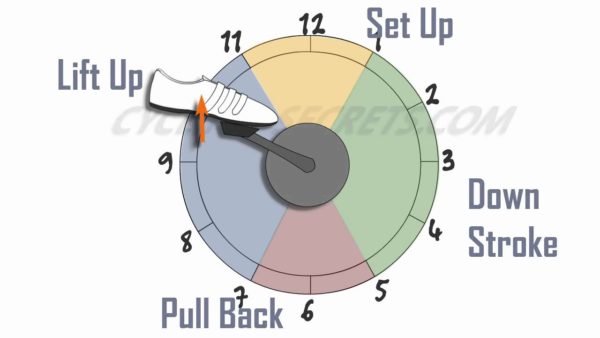
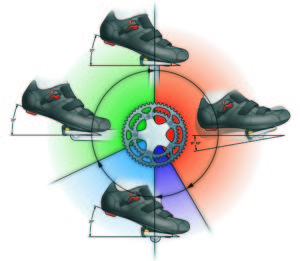
Running in circles may not be the way to go, but pedaling in circles definitely is. The first thing you need to do is start looking at pedaling as a complete revolution, made up of different angles, muscle groups, and power (much more than just the downstroke). Efficient pedaling technique is something that can come with time in the saddle, but you can speed up the process by focusing on each part of the movement and applying force around the pedal stroke.

1. The Down Stroke (1 – 5 o’clock)

This is the most natural feeling part of the pedal stroke, and where most of your power comes from. If you think of a single revolution as a clock face, the downstroke happens at about 1 to 5 o’clock. You are pushing down with your heel level to the ground or even about 20 degrees below your toe.

2. The Pull Back (5 – 6 o’clock)

This motion at the bottom of your pedal stroke should feel like scraping your foot back. You should feel the movement in your calf, with your heel lifting slightly. Imagine you have mud on the toe of your shoe that your are trying to scrape off on the pavement.

3. The Lift Up (7 – 11 o’clock)

The goal of the lift up is not so much to produce a ton of power, but to lift the weight of your leg so your opposing leg is not lifting it up with the downstroke (especially at a fast cadence). Your ankle should be at about a 20 degree angle with the movement, and be sure to keep your knee from bowing out. This is when you want to engage your core and glutes to stabilize your legs and make for a smooth motion.

4. The Set Up (11 – 1 o’clock)

The biggest mistake a lot of cyclists make is not initiating the downstroke early enough. The set up is a very short transition, with the feeling of lifting your knees, involving your hip flexors, and getting into the downstroke as soon as possible.

The Upper Body

While pedaling, the upper body should be as quiet (motionless) as possible. Upper body movement may make you feel like you’re putting a little something extra in, but it’s a complete waste of effort. Instead, you want to isolate the upper body from the motion of the legs. This will take a conscious effort at first, but will become second nature over time.

Exercises to Improve Your Pedaling Efficiency

Slow It Down

Find a hill and try climbing at a much higher gear and lower cadence (around 40 rpm) than you normally would. Focus on keeping your upper body still, while taking note of where your naturally strong surges and dead spots are. From there you can work on each aspect of the pedal stroke to get the feel of it being one smooth motion.

Mountain biking is also great for this. If you have large power surges on loose ground, you’ll lose traction, which teaches you pretty quickly not to stamp down on the pedals.

Try a Fixed Gear Bike

Fixed gear bikes force you to pedal in circle, or else you’ll be bouncing around and looking really awkward. This is why track cyclists have some of the most efficient pedaling technique out there. So, if you can get your hands on a fixed gear bike, take it for a spin and focus on making the pedaling as smooth as possible.

One Leg Pedaling

This is exercise is easier on a stationary bike or trainer then out on the road, but it can be done. Start by unclipping one foot from the pedals, while keeping both hips in the normal riding position. Pedal using the clipped in leg for 30 seconds, then clip the other one back in and spin for 15 seconds. Then repeat with the other leg.

This exercise will help you figure out the location of your stroke inefficiency. Pay attention to any part of the movement that is jerky or uneven, then you can start focusing on those areas and making them as smooth as possible.

Tips for Finding New Bike Routes

February 24, 2020 by Aaron Robson

Maybe you’ve just moved to a new city and have no idea where you can get a good ride in, or you might just be looking for a change of scenery from your tried and true routes. How do you go about finding suitable pavement? Anyone that has ever found themselves riding on a narrow highway with no shoulder and trucks passing you at 60 mph will know that it isn’t always as simple as checking out Google Maps.

Your LBS

If you are in a new area, probably your best resource for finding good routes will be the local bike shop (LBS). These guys have usually been a part of the local cycling scene for a while, and every one I’ve been in has been super helpful suggesting the best places for a ride. Many of them will even have maps that you can take with you, or rides posted on a bulletin board. Whenever I’m traveling and have just a couple days in an area, the LBS is my first stop.

The Guided Tour

finding new bike routes

However, for those of you who aren’t the best navigators, striking out on your own with a vague set of directions might not be your cup of tea. For a little bit more guidance, you will want to hook up with one of the local clubs. Many clubs will hold weekly group rides with a range of distances and paces to suit just about anyone. Our friendly LBS might be able to give you the contact info for some of the club, or a quick search on Google should bring up at least a couple clubs in your area. Once you’ve been to a couple rides, you can start asking around for other options – many of the riders will ride together informally in addition to the organized weekly rides.

Link Up

Sometimes, though, you just want to get out there on your own, without having to worry about group riding etiquette, or holding casual conversation. If you’ve exhausted the suggestions of the LBS and the club, where do you turn? The answer, of course, is the magical internet. There are a bunch of good websites out there for tracking, recording, and sharing cycling routes. The two biggest are Strava and MapMyRide. In a few clicks, you can be browsing through rides that other people have put up in your area. These sites generally allow users to rate routes, and tag them with various characteristics, like ‘gravel sections’ or ‘great pavement’.

Strava

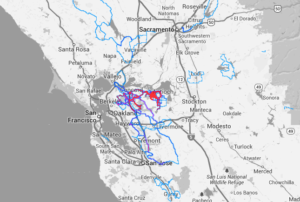
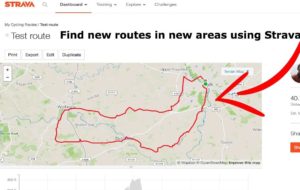
Here is a global heat map on strava, the more travelled that particular route is the more intense the colour becomes! Using the heat map feature, you can also plot where you typically ride and how many times you’ve ridden it. Take a look at all the areas you’re not riding and start taking in some new scenery. You can also check out other user’s heatmaps in your area. Using the Route Builder, you can piece together a new route from some popular roads and segments mapped by cyclists in your area.

Hopefully these suggestions will help you find some new routes if you’ve been looking to mix up your riding routine, or get you started in an unfamiliar area. Happy riding!

How to Lose Weight Cycling: The Essentials

February 23, 2020 by Sarah Lauzé

Your bike, when put to good use, may just be the best tool you have to lose weight. Whether you’re just starting out and looking to cycling as a means to a healthier lifestyle, or are a veteran cyclist, there are a lot of reasons you may be looking to lose weight cycling.

Shaving off the pounds can make you faster, boost your confidence, and impact almost every part of life. Just make sure you are putting your well-being first. If you are working towards a weight goal, ensure that is it one that will actually improve your overall health and fitness.

Why Cycling?

So, why chose to lose weight cycling over other means? Running is known for being on of the more effective way to burn calories, but is also a high impact sport. Especially if you live in a city and are running on roads, each step sends impact through your feet, ankles, calves, knees, and onward. This can make it a difficult activity to start if you have previous injuries, and you can be at risk of overuse injuries (which increases the heavier you are).

Cycling, on the other hand, is a low impact activity that like running, you can do almost anywhere. It’s also a ton of fun! Biking is all about the legs, but it’s also a cardiovascular exercise that burns a ton of calories. Weight loss comes down to burning more calories than you are taking in, causing your body to use energy stores. Plus, as you strengthen your muscles cycling, you’ll also be building up oxygen delivering capillaries. With oxygen running through your body at a faster rate, your metabolism will speed up and start to eat away at fat cells, resulting in weight loss.

Lose Weight Cycling

Steps to get started

Make a plan not a goal

Goals can be a great motivating tool, but without the plan to get there, they will remain out of reach. You need to get specific and lay it out in a way that makes sense to you. This could be a simple as riding your bike to work three days out of the week or putting in a couple hundred miles.

Be realistic with yourself and your schedule. If your plan is too demanding in the start, you probably won’t stick with it, but if it’s too easy you won’t see results. Can’t find time to commute or ride in the evenings? Try a lunch hour spin class. For more information check out this article: The Benefits Of Having A Cycling Training Plan.

Find your moderate base pace

Starting out you will want spend most of your time on the bike at 68-79 percent of your max heart rate. If you don’t want to fuss about measuring it with a heart rate monitor, then aim for a pace that leaves you out of breath, but still able to carry on a conversation (no gasping). Great, now hang out there.

You shouldn’t be so drained at the end of the ride that you won’t want to head out again, enjoy it! Once you’ve established your base, then you’ll want to introduce some variety to your rides in the form of intervals or high intensity sessions.

Lose Weight CyclingDiet

Your diet is the sum of the food you consume, and as you probably already know it is a huge factor in weight loss. Ignore what the latest fad is, it all comes down to nutrition and fueling your body with the right amounts of the right things. Just because you are going for ride after work does not mean you should carb load.

Carbohydrates need to support your cycling routines, not hinder them. The reality is that too large a portion can lead to peaks and dips in energy that can actually leave you feeling lethargic. A good rule of thumb is to aim to eat a fist-sized portion of low-glycaemic carbohydrates to ensure that you get a steadier release of energy as you ride.

Weight loss is a simple concept: More calories out than in. So, keep your diet simple. Eat a balanced, healthy diet, control your portion size, and cut out unnecessary snacking and you will be well on your way.

Don’t fear the hills

Going up a hill takes a lot more energy than riding on a flat surface. This will cause you to use up extra calories in a shorter period of time. So, hills are actually your friend!

Embrace the cycling communityLose Weight Cycling

Accountability is important for everyone, but it’s not something you should dread. Finding a cycling partner or joining a weekly group ride not only ensures you show up, but it’s also a great way to meet people. So, head down to your local bike shop and find out how you can get involved.

Enjoy it!

Cycling is fun above all else, so make sure you keep it that way! Think of it as a part of your day you’re looking forward to, rather than something you have to do to lose weight. The more you enjoy it, the more likely you’ll be to stick with it for the long haul.

What To Look for in a Cycling Training Plan

February 21, 2020 by Sarah Lauzé

What is the purpose of a cycling training plan? When you boil it down, it comes down to setting goals and measuring progress. A training plan serves as your road map to get you to a certain place, but what are some important things to look for? Just as you wouldn’t start trying to navigate the streets of a foreign city without a detailed map, you want to establish what aspects you need included to see success.

There are a lot of options when it comes to training plans, and also the means to how you access them. Some will choose to spend a little more and hire a personal coach to build their plan for them. Others will use online resources or join a certain challenge. The issue here is that these are not personalized to you. What happens when the timeline set up in a certain plan doesn’t match your life in a realistic way? You need to be able to understand the basics, so that you can take certain aspects of a cycling training plan into your hands.

Cycling Training Plan

Why You Need a Training Plan

Establishing a cycling training plan eliminates the danger of becoming complacent or falling into the “I will do it tomorrow” thought pattern. It makes you accountable as you follow the plan. It motivates you to change your habits and manage your time more efficiently to finish your first century ride or sign your name to that first Gran Fondo event.

Another great aspect of a training plan is to avoid the dreaded ‘plateau’ that is so common with athletes. As an active lifestyle becomes part of who you are, it’s easy to reach a certain point and stay there. There’s nothing wrong with maintaining a healthy fitness level, but if you want to continue to see changes, then you have to keep pushing yourself.

Cycling Training Plan Options

  • Personal Coach – A personal coach will not only create a training plan tailored to you and your goals, but they will also help keep you accountable. They will be checking in on your progress, and have the knowledge to make necessary changes to get you to where you want to be as quickly as possible. The downside? They are, in most cases, the most expensive option.
  • Pre-Prepared Training Plans – There are a ton of resources available online that can serve as a general outline or starting point for your training plan. In some cases they can be difficult to follow because it will not take into account your lifestyle, starting point, or your specific goals.
  • Build your own – It’s always better to understand why you’re doing something, rather than simply doing it because someone tells you to. So, if you have the time to do the research and put together a comprehensive training plan for yourself, by all means do it! This can not only work well, but it help you come to understand your own body a whole lot better.

Start at the end

No matter what option you go with for coming up with a training plan, you will need to define your goals. It may sound counterintuitive, but starting from your overarching goal and working backwards is actually a great idea. This may be weight loss, completing a century ride, or doing a multi-day Gran Fondo. Once you’ve defined this goal, you can break it down into tangible “check points.” These could be  various distances, target weights, or a certain number of hours spent on the bike.

Measure your progress

Now you need to take a look at where you are right now. This may include testing yourself to find your mental and physical limits. What can your body handle? This can be done a number of ways.

  • Power Meter – A power meter is a great tool as it make comparisons easy. It can give consistent feedback on your effectiveness, and is a great training tool. Power is ultimately a measure of how hard you are working, and by using a power meter on your bike, you can more precisely monitor your effort. That being said, it’s not a must-have.
  • Heart Rate – Using a heart rate monitor is a great way to structure workouts, and a lot of training plans include heart rate zone training. Heart rate training is a valuable tool for all athletes, as it helps bypass your brain to listen directly to what your body is telling you.
  • Your Brain! –  You don’t really need anything but a bike to complete a cycling training plan. You can make your own intensity scale (as long as you’re honest with yourself) from 1 – 10. 1 would be “I could do this all day,” and 10 would be “this is everything I’ve got in me.” The issue, of course, is that it takes a special kind of person to be that disciplined with themselves.

One of the greatest things about a training plan is being able to track your progress in a tangible way. Once you sign up for a cycling training plan you will see your body, mind, and outlook improve over the next few days, weeks, and months. You will continuously break your own personal records and the records of your friends, as you monitor your own fitness. Keep track of each ride you do, even if you just write down the basics like distance and time. Keeping a food diary can also be a great way to look at why you may feel great some rides, and then not so much on others.

Not only will this show you how much you can achieve, but it also gives you some serious bragging rights. There’s nothing more satisfying than looking at your year end totals, whether it be distance or time in the saddle, and seeing some huge numbers.

Off the Bike

A good cycling training plan helps you to keep track of less-obvious issues of fitness such as sleep and recovery, nutrition and hydration, and strength and stretching. You’re more likely to meet your fitness and weight loss goals if you’re looking after every one of these aspect. A detailed cycling training plan helps you keep track of these small details and makes you more conscious of them on a day-to-day basis.

  • Strength / Cross Training – Strength training for cyclists further develops tendons and supporting muscles which can help treat and prevent overuse injuries. Your training plan should include some strength training, whether through some basic weight training or cross training.
  • Stretching – Stretching can aid in aligning the thick and thin muscles back into their ordered state after rides, as well as remove the lactic acid buildup that causes soreness. Maintaining flexibility will also help you stay in the correct posture while riding, which can prevent injury.
  • Nutrition & Hydration – Eating right can be hard at the best of times, especially for those of us who like to exercise as a hobby. With a passion for cycling often comes a need for a balanced diet – and this is even more true when you opt to cycle for long periods of time, or working towards a goal. Having a cycling training plan that includes a detailed nutrition plan can make sure you are properly fuelled for each ride, and will help you get to those goals faster.

Stay Flexible and Adapt

As with mapping out anything, whether it be a road trip or your cycling training plan to success, you need to remain flexible. If you have a rough night’s sleep, or feel like you’re coming down with a cold, then ignore what your plan says and take a rest day. There’s no point in half-hearted training, and at that point taking a rest day is probably more important. You have to be able to have the freedom to switch around training days, because things will come up. Having structure to your training is important to ensure it happens, but you also need to remain flexible enough to have a life!

Cycling Terms for Beginners

February 16, 2020 by Sarah Lauzé

Riding a bike is simple right? It’s something most of us learn to do when we’re children, but all the cycling terms may not come as easily. When you’re first getting into cycling as an adult, you may think you know all there is to know. Swing your leg over the seat and start pedaling. Easy peasey.

However, the problem will arise when you start heading out on group rides, or have to take your bike into the shop. You can only refer to your sprockets as “thingamajigs” so many times before someone shakes their head at you. It may be time to learn the talk if you’re going to walk the walk, so here is your guide to cycling terms for beginners.

The Bike Basics

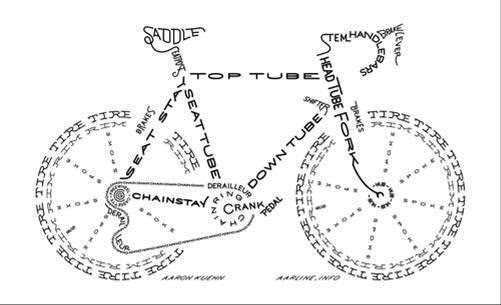
Brakes – They may come in a variety of styles, but the main idea is to keep you from running into cars or other harmful objects. As your one and only stopping force, your brakes are important to your safety on the bike. The left brake typically slows the front tire, so be careful not to just hit that one or you may do an endo (see below).

Chain – The bike chain is the main mechanical driving force of your bike. It is made up of chain links that encircle the gears and make the wheels spin.

Crankset – A part of the larger drivetrain, the crankset is the front set of sprockets closest to the pedals. It is the crank arms (attached to the pedals) that rotate them.

Cassette – The cassette is the set of sprockets on the rear wheel, driven around by the bike chain. The chain moves up and down the cassette as the rider changes gears.

Gears – Ah yes, the magical gears. Most bikes have two sets of gears, one at the rear of the bike (the cassette) and one at the front (crankset). These are what adjust how hard you have to pedal to cross the terrain (smaller gears for climbing and bigger gears for flats).

Cog – As one of the rings in the cassette, a cog is also known as a sprocket or gear. The whole set is called a cassette or cogset.

Fork – The split part of the bicycle that holds the front wheel in place.

Frame – Also known as the backbone of the bicycle, the frame is what brings all the parts together. Usually hollow and made from lightweight material, it is the most important feature to finding the right bike. Ensure the frame fits you properly as it plays into your riding efficiency, posture, and overall comfort on the bike.

Hub – Where the rotation happens. The hub is the center of a bike wheel that allows you to roll smoothly along your way.

Lube – Lube is what keeps the moving parts of a bicycle, well, moving. Don’t leave home without the lube!

Granny Gear – No offence to your Granny, but this is her go-to gear. As the lowest gear ratio possible, this will be easy spinning on flats, but comes in real handy when it comes to those climbs.

Spokes – You know those metal toothpicks that go from the center of the wheel (or hub) to the edge of your wheel rim? Those are spokes! They are small but mighty, and provide strength and support for your weight on the wheel.

Saddle – No, you’re not going horseback riding (if you are, you’re on the wrong website). The bike saddle, aka the beat seat, is one of the most important factors in your overall comfort on the bike, so choose wisely!

Beater – It may have seen better days, but that doesn’t mean it’s seen its last mile. Beater bikes are often used for commuting, or when you need an excuse on Strava for your embarrassingly slow time. “I was on my beater!”

Fixie – Aka fixed gear, a fixie is a bike with just one gear. That’s right, one gear. Oh, and they often don’t have brakes or the ability to freewheel, which means whenever the bike is moving, so are the pedals.

The Tire Basics

Tubeless – The name pretty much spells it out for you. Tubeless tires don’t have the inner tube that the clincher set up has, and instead the tire is mounted tightly to the rim using the combination of pressure and liquid sealant. The plus side is – no pinch flats!

Tubular – An almost entirely race specific tire option, tubular tires are glued to a V-shaped rim. They are ultra light, but a absolute pain to fix. Most racers choose to replace the entire wheel rather than attempt mending.

Clincher – The classic tire design that consists of a U-shaped rim and open tire casing with a replaceable inner tube inside.

Presta – A style of valve often referred to as the “French valve” that is most common on high pressure road bike inner tubes. It’s made up of an outer valve stem and an inner valve body.

Schrader – Presta’s arch nemesis, the Schrader or “American valve” is a pneumatic tire valve that’s found on most tires (including cars).

PSI – Pounds per square inch, PSI is the amount of air pressure in the tire. Be sure to check out the manufacturer’s suggested PSI before pumping up your tires!

Flat – A good way to ruin a ride if you aren’t prepared, a flat is usually a relatively easy fix. They happen to the best of us, so be sure to have an extra tube (if you have clincher tires) and a hand pump with you at all times.

Pinch Flat – The bane of clincher tires, pinch flats happen when the tube inside the tire gets stuck between the outer rubber tire and the rim. These punctures happen most often when running lower tire pressure.

The Gear Basics

Clipless – Counterintuitive to their name, clipless pedals consist of a cycling shoe with a cleat that “clicks” into the pedal. The name comes from the older toe clip model, which had a little cage that went over your toes, so compared to that, they are clipless. They allow for better power transfer and pedaling efficiency.
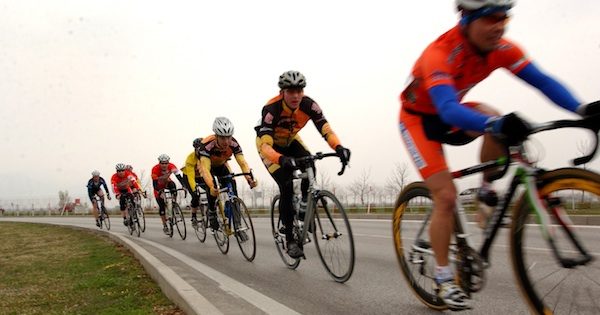
Kit – The whole cycling outfit, a kit consists of the jersey, shorts, bib, and the socks in some cases. The more you match, the faster you are…right?

Jersey – Cycling specific jerseys are usually made from a sweat wicking material, have a zip up front, and pockets in the back for all your energy gels.

Pannier – A pannier is a bag that you attach to your bike to carry your gear while commuting or bike touring.

Bibs – Suspenders never went away in the cycling world. Bibs are cycling shorts that have a bib (like overalls) rather than a waistband. The appeal – look awesome and eliminate the chance of waistband chaffing in the bent over cycling position.

Chamois (or shammy) – You’re going to want to practice the pronunciation here, because you definitely don’t want to say it wrong (rooky mistake). It’s said “sham-wah,” and refers to the lovely pad in the seat of cycling shorts that literally saves your ass. It may sounds gross, but you also don’t want to wear underwear with a chamois as they can cause chafing.

Lid – Your most important piece of gear, don’t leave home without your lid (aka helmet).

The Rider Basics

Attack – Sounds aggressive, and it usually is. Attacking it a sudden attempt to pull away from a rider or group. If you go for it, you better mean it.

Bonk – We’ve all heard of hitting the wall, when you have no energy left due to a very real glycogen depletion. The dreaded bonk comes in the form of muscle cramping, mental fogginess, or the physical inability to go any further.

Cadence – You’re going to hear this one a lot. Cadence refers to the number of revolutions per minute or pedal rate. There’s no magical number (the jury is still out), but generally speaking stronger riders will be more efficient at a higher cadence.

Roadie – Your new nickname! A roadie refers to a dedicated and awesome road cyclist.

Bikepacking – Bikepacking is a way of long distance bicycling that includes strapping all necessary supplies right on your bike frame (rather than over-rack panniers). Bikepacking allows riders to tackle more diverse terrain, largely cross country trails,

Chasers – We’re not talking about the chaser you’ll find at a bar. Chasers are riders in a race that sprint away in pursuit of the lead rider.

Drafting – Cycling close behind the rider ahead of you to block the wind, reducing your energy output by up to 30 percent. Just be sure to take your turn in the front.

Endo – That moment when you flip over your handlebars. Ouch.

LSD – Not the drug! LSD stands for “long slow distance” and accounts for those endurance building rides where you spend hours in the saddle at a consistent aerobic pace.

Hammer – Hammer hard! Hammering is pedaling hard on the big gears, offering the greatest resistance and packing the most power. Get ready for the burn.

Road rash – Unfortunately, skin + road = road rash. It is the scrapes and bruises that you get from a tumble onto a paved or dirt road. Yes, you’ll look hardcore, but it’s also extremely painful.

RPM – Rotations per minute, your RPMs measure your pedaling rate (aka cadence).

Pull – Taking your turn at the front of a line of riders so they can draft behind you is to “take a pull.” It is a tactic used by groups for each rider to take a turn, switching out often for maximum efficiency, especially when there’s a strong headwind.

Watt – The unit of measurement for power, this is how much strength your putting into every part of a pedal rotation. The more efficient your pedaling and the stronger your are, the greater the power or wattage.

Bunnyhop – Probably the first trick you learned on your bike, the bunny hop is the classic jump and lift with your bike to hop an obstacle or curb.

Century – A 100 mile (or kilometer) race or ride that are very popular in the cycling world.

Grand Tour – Have you heard of the Tour de France? Well, the epic race through France is one of three Grand Tours, the other two being the Giro d’Italia and Vuelta a España. They are all three weeks in length, and involve back-to-back days totalling over 2,000 miles or 3,000 kms.

Time Trial – A race against the clock, a time trial is often a staggered sprint race.

« Previous Page
Next Page »
  • Facebook
  • Tumblr
  • Twitter

Latest Articles

JOIN Cycling: A New Training Platform for Cyclists

May 27, 2024 By Eric Lister

cold exposure

The Benefits of Cold Exposure for Cycling & Life

June 13, 2023 By Eric Lister

hill climb

The Ultimate Hill Climb Training Guide

May 31, 2023 By Eric Lister

shoulder pain cycling

How to Treat & Avoid Shoulder Pain While Cycling

April 12, 2023 By Eric Lister

psoas stretch

The Importance of the Psoas Stretch for Cyclists

April 6, 2023 By Eric Lister

cycling neck pain

The Ultimate Guide to Cycling Neck Pain: Causes and Solutions

March 21, 2023 By Eric Lister

Useful Info

  • Contact
  • Finally, A Global Cycling Club That Is Focused On Community And Love Of Cycling!
  • Privacy Policy
  • Share Your Story!
  • Terms And Conditions Of Use
  • Welcome to I Love Bicycling
  • What Happened When I Stretched Every Day For a Month

Recent Posts

  • JOIN Cycling: A New Training Platform for Cyclists
  • How to Hang Bikes in Your Garage: 4 Inexpensive Options
  • Gravel Bike Vs. Road Bike: Which One Is Better For You?
  • The 6 Types of Mountain Bikes & How to Choose the Best One for You
  • What Is a Touring Bike Good For? 5 Benefits We Know You’ll Love

Search I Love Bicycling

Connect with Us

  • Facebook
  • RSS
  • Tumblr
  • Twitter

Copyright © 2026 · Magazine Pro Theme on Genesis Framework · WordPress · Log in