• Training
    • Injury Prevention
    • Training Tips
  • How To
    • Bike Fit
    • Gear
  • Nutrition
    • Nutrition Tips
    • Weight Loss
  • Repair
  • Reviews
  • Stories
    • Funny Stories
    • Jokes
    • Quotes
    • Videos
    • Funny Videos

I Love Bicycling

I Love Bicycling is a website that is geared towards cycling for beginners with road cycling tips, training articles, nutrition tips, weight loss, how to’s and bike repair articles.

Training

  • Injury Prevention
  • Training Tips
  • Training Camps

The Best Indoor Bike Trainers

November 26, 2019 by Sarah Lauzé

Depending on where you live, your rides outside may be numbered. As much as we may go in with the the intention to tackle winter riding with vigor, when it’s dark and cold it can be tough to bundle up and get out there. Riding inside is a great way to not only keep up your fitness level, but it’s a great opportunity to focus on specific aspects of your technique and push for some improvements. There are a lot of options out there when it comes to indoor bike trainers, so this guide will take you through the different options and some of the best of each category.
Types of Bike Trainers

Trainer
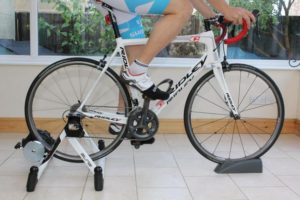
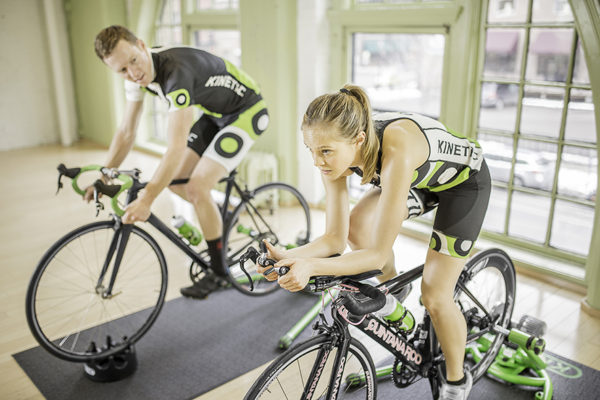
A trainer is a stand that holds your bike in one place via the rear axle and has a spindle that is pressed against the tire transferring resistance. With your bike locked in place you can easily look away from the bike to an entertainment device as opposed to rollers (discussed below). Trainers come in three main kinds that are differentiated by how they apply resistance to the wheel.

– Fluid Trainer

A fluid trainer uses, you guessed it, fluid inside a drum that is attached to a spindle that the tire rests on to create resistance. Fluid trainers apply the most even resistance to the wheel while also being relatively quiet. The resistance level in a fluid trainer goes up in an exponential fashion the harder you pedal.

– Wind Trainer

Wind trainers use a fan that is designed to catch wind as it turns to create resistance. This is then attached to a spindle which rests on your rear wheel like that of a fluid trainer. Because the fan is cutting through the air to create resistance, they are loud. With stationary riding however, it can be quite hot due to the lack of wind across your body but wind trainers often direct the breeze toward you creating a bit of a cooling effect. The resistance level with wind trainers does go up the harder you pedal but not to the extent of fluid trainers.

– Magnetic Trainer

Magnetic trainers use magnets to place resistance on the spindle. Most magnetic trainers have an adjustment that allows you to vary the resistance level while riding. Magnetic trainers can vary widely in the amount of resistance they can give but a decent one will give you plenty of leg searing resistance.

– Wheel-less

One drawback to all of the trainers above is that the resistance is placed on the tire which causes the tire to wear down rather quickly. Many riders use old tires that are only ridden on a trainer, but if you’re frequently switching between riding inside and out, changing a tire all the time can get old. Fortunately there is a new style of trainer out there that doesn’t use a rear wheel. The trainer has a cassette that is attached to the stand that your bike is locked into which provides the resistance. Many cyclocross riders opt for this one as it eliminates the need for a trainer-only wheel to warm up on.

Rollers
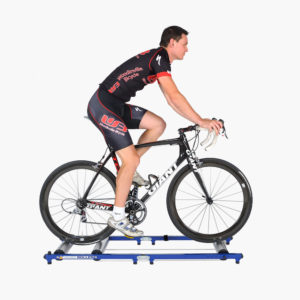
Another device for indoor riding is rollers. These use three drums, one under your front wheel and two under your rear which your wheels rest on and rotate while riding. The centrifugal force of the wheels rotating keeps you balanced much like riding down the road. Riding the rollers does take a bit of practice as it requires balance and focus to stay upright, but once you’ve adapted it’s quite easy and much more enjoyable than riding the trainer which requires pretty much no focus to ride.

– Resistance

Rollers come in a variety of sizes of drums which dictates how much resistance there is on the rear wheel. The smaller the drum, the higher the resistance. However, some rollers come with resistance that can be added, most often in the form of magnets on the side of one of the drums.

– Free Motion Rollers

By far the best indoor riding device are free motion rollers which are rollers that are attached to a stand which allows them to glide forward and back with your riding via bearings. Free motion rollers allow the bike to move not only side to side as you ride but also forward and back allowing you to get out of the saddle as well as making it feel like you are riding down the road. They also have variable resistance with a magnet attached to one of the drums.

Stationary Bikes
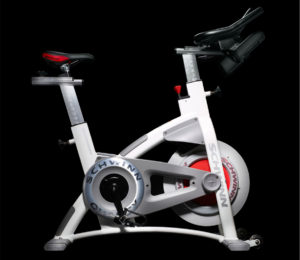
A final option for indoor riding is a stationary bike. These bikes are made to only be ridden in place. If you ride inside a lot and don’t move your setup, this can be a good option provided you place a similar saddle and the same pedals on it as well as have the position the same as your normal bike. These can save your bike from the stresses placed on your frame by a trainer as well as running through tires on both a trainer and road bike. The down side is it’s a bike only to be ridden indoors.

The Best Indoor Bike Trainers

Fluid Trainer – Kinetic Rock and Roll Trainer
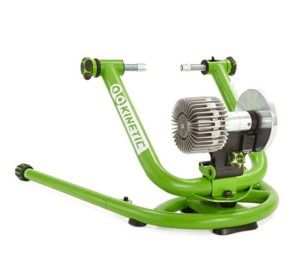
Price: $569

Kinetic is one of the most popular best sellers in the market, and with good reason. The cost upfront may seem daunting, but the high-quality and ease of use makes their trainers well worth the investment. The Rock and Roll trainer gives a more realistic ride than most others, making it unique, and it’s compatible with almost all bikes. It’s quiet, smooth, and features a fluid resistance unit. It also works with Bluetooth compatible smart phones, tablet, and laptops so you can use Kinetic Fit, Zwift or TrainerRoad.

Magnetic Trainer – Blackburn Tech Mag Race Trainer
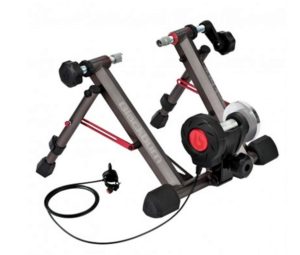
Price: $109

The Blackburn Tech Mag Race Trainer is the perfect example of a great tool for the job at an affordable price. It’s small foldable design makes it easy to transport and store, and it has a surprisingly smooth road-like feel. The magnetic resistance system is controlled via a handlebar- mounted lever, making it quick and convenient. The adjustable legs also make it so you don’t really need to raise the front wheel. This trainer will work for both road and mountain bikes.

Rollers – Tacx Antares Rollers
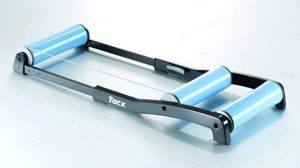
Price: $218

The Tacx Antares Rollers are loved for the conical shape of the drums, ensuring your bike always remains in the middle of the roller (making it both easier to ride and safer). They also sell a support stand that clasps your front wheel, and can be a great toll to get used to the feeling of riding on rollers.

Budget Friendly Trainer – Conquer Portable Bike Trainer
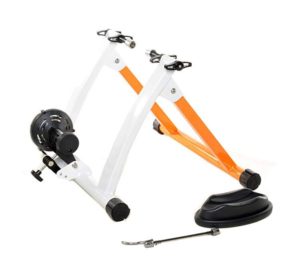
Price: $59

For the casual cyclist looking to keep up a base over the winter, the Conquer Portable Bike Trainer gives you a lot of bang for you buck. It’s simple to set up and operate, and takes up very little space (perfect for apartment dwellers). The heavy duty frame and overall stability of the ride makes it a great option for beginners. It features magnetic resistance, and requires a bike with a rear quick release wheel.
Tips for Cycling at Night

November 23, 2019 by Sarah Lauzé

It’s easy to become unmotivated when the sun goes down, and the natural instinct to settle inside often wins out over any ambitious plans you may have. However, when the days start getting shorter, it can become impossible to fit everything into those few hours of daylight.

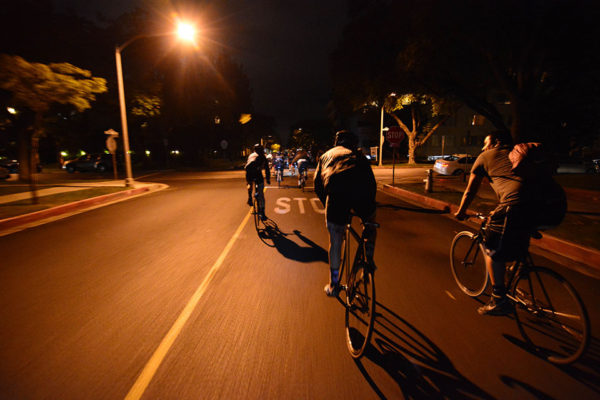
Cycling at night may seem daunting at first, but with the proper gear and research there’s no need to lock yourself in the basement with your wind trainer. In fact, it can be oddly addicting to whip through the night on your bike, and I want to help you get to that experience.

Why should I cycle at night?

Everyone has their own reasons for hopping on their bike in the dark, whether it be commuting to and from work or training for a big event. One of the main reasons I head out on dark cold nights is for the simple fact that it can be exhilarating and almost meditative. The roads are quieter, and with the absence of all the scenery you’d see during the day, you really focus in on your breathing and the sound of your wheels on the pavement. Plus, I find I feel like I’m going a whole lot faster in the dark!

Riding at night safely

Lights

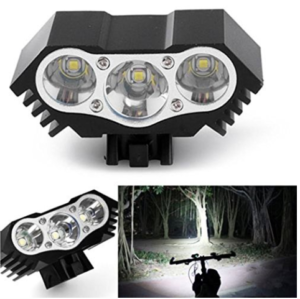
The first thing you’re going to need are some good lights for both the front and back of your bike. Fortunately, new LED lights are both affordable and long-lasting for those longer rides. Drivers have to be able to see you to have enough time to react, so better to have too many lights than not enough. I would suggest at least two lights on the back (one flashing red and one solid light), and one bright light on the front.

If you’re planning on heading down any low light or country roads, you’ll want to ensure your front light is bright enough to light your path. Be sure that all your lights are fully charged before heading out with more than enough battery life for the duration of your ride, and it’s a good idea to have an extra backup light as well.

Reflective gear

You’ll want to pick up some reflective gear for both you and your bike. Luckily, cycling gear has come a long way in the past few years and there are some great options other than your typical safety vest to make sure you light up the night. Many cycling jackets include reflective strips, with some including full 360 degree coverage.

It’s been proven that drivers will notice the up and down movement of pedaling before the smoother movement of the whole bike, so it’s important to get something reflective on your pedals or feet. Reflective pedals, tape, shoes, or ankle bands are all great options to achieve this.

Plan your route

Whether it’s night or day, it’s always a good idea to plan out your route, but this is especially important when cycling at night. I always want to ride routes I’m familiar with, and that I know have minimal hazards like potholes or small shoulders.

As it’s rare to head out on a 3-hour night ride (not that it can’t be done), it’s a good idea to plan a route that will challenge you the most in a short period of time. If I go for an hour ride, I plan to hit at least a couple good climbs to make the most of the time.

Obey the rules of the road

Obeying the rules of the road becomes especially important when riding at night. Even if the roads are quiet never run a stop sign or red light, and always assume motorists cannot see you. During the day you have the benefit of making eye contact with drivers before turning and making use of hand signals, but at night you always need to be on the defensive.

The right bike

It’s fair if you don’t want to cover your new carbon frame with light mounts and reflective tape, so many cyclists choose to have a second, cheaper bike that will serve as their night ride.

Getting started

For your first ride you want to set realistic goals. You’re going to be a lot slower than you are during the day as you adjust to the feel of riding at night. If you head off down a completely unlit road, it can seem overwhelming to have things appearing out of the darkness as you ride, so better to stick to a well-lit route for your first few rides. Try out a lit bike path or roads with a bike lane and plenty of street lights.

Don’t let the the shorter days get to you and try out a night ride instead! You may just find it’s a whole other cycling experience that you can’t get enough of. For more on this, check out “Biking at Night – Light Up!“

Your Guide to Winter Cycling

November 23, 2019 by Sarah Lauzé

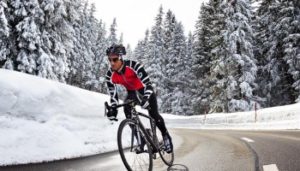
Unfortunately, it’s that time of year again (for those of us that live in the Northern Hemisphere anyways). The trees are bare, the temperature is dropping, and snow is already creeping down the mountains. Although this may spell the end of days spent on the beach, it doesn’t have to end your cycling season. Here’s what you need to know about winter cycling.

Your Guide to Winter Cycling

Set your goals now

Now is the best time to start setting some goals, and making a plan to get to those goals. Going into the dark, cold season without a plan is a sure way to default to hibernation and way too much Netflix. Think about your goals for next year, where do you want to be at the beginning of next season. Be realistic with what you can actually accomplish over the winter (maybe don’t commit to riding 5 days a week), and focus on some cross training that will, in turn, make you stronger on your bike. Think of winter cycling as your base training, which is general conditioning rather than working on things like speed or endurance.

Layers, layers, and more layers

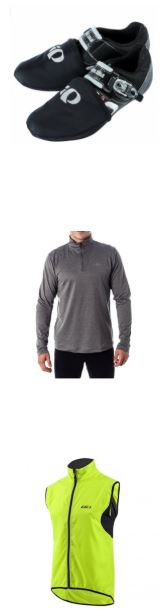
Staying warm on your bike is absolutely key to winter cycling. If you’re not dressed properly, not only are your muscles going to feel terrible, but it will make you never want to go outside again. In order of importance, think of your head, hands, feet and torso. Most heat escapes through your head, so wearing something like a balaclava under your helmet can be a great way to keep that heat in. Next, you’ll need proper winter cycling gloves that are warm enough, but also allow to steer and shift safely. Some thermal socks are great, as well as thermal shoe covers to keep your toes nice and cozy! Next up, keeping your torso warm is so important. The arms and legs don’t matter as much if your core temperature is nice and warm. Think lots of layers with a jacket that is both water and wind resistant.

Warm Up First

You never want to start your ride feeling chilled or cold. It will take a lot longer to raise your body temperature and get your blood pumping to your extremities. So, do a quick warm up inside before heading out, do some jumping jacks, burpees, or run in place.

Supplement with indoor riding or training

There will be some days that are just too ugly to ride outside, so no need to try be a hero. Having a setup with an indoor trainer can be great for those days. Almost all competitive cyclists will have an indoor setup to maintain high intensity workouts over the winter, as those can just be too tough to try to do out in the elements. If you’re a casual cyclist and don’t want to invest just yet, you can do some focused cross training in the form of swimming, cross country skiing, and strength training to keep up your fitness level.

Take care of your bike

Having a mechanical issue in the warmer months of the year can be inconvenient, but during the winter months it can spell disaster. Avoiding situations before they arise is the best solution, so getting your bike winter ready and starting with fresh parts will ensure they last until spring and beyond. This includes a thorough check over of the chain, brake pads, cables/housing, and tires. You may also want to make some additions in the form of fenders, lights and reflectors , and always carry a chain tool and spare tubes.

Plan your route (and be realistic)
It’s always a good idea to have at least a rough plan of your route no matter what the season, but it’s especially important in the winter. You don’t want to get stuck in an area there is construction or lots of debris on the road. You’ll also want to plan a shorter route than you may usually, that way you won’t get caught out of energy and cold too far from home. You can always add on depending on how you’re feeling.

Don’t try to be a hero

Some days are just no good to be out on your bike, and that’s okay. If you ride over the winter at all, then you’re already a hero, so you have nothing to prove. If it’s super windy, icy, or the middle of a blizzard, just don’t ride. Better to supplement with an indoor training day than risk riding in dangerous conditions.


Avoid Holiday Weight Gain With Cycling

November 20, 2019 by Sarah Lauzé

The holiday season brings family and friends together over meals and as cyclists we love to indulge in copious amounts of food, and treat ourselves to some (or lots) of festive drinks.  However with all the rum and eggnog, and mashed potatoes and gravy it is all to easy to pack on some unwanted weight in a short amount of time.  It is important to maintain some holiday cycling so you can treat yourself to your family’s traditions, but there are some ways to help make sure you aren’t overzealous and end up with weight gain you regret in the new year!

Avoid Holiday Weight Gain

OLYMPUS DIGITAL CAMERA

It can be easy to let your fitness and exercise regime go by the wayside when company arrives and you have to organize dinners and events.  However there are some tips to help you maintain some of you cycling fitness over the holidays.

Do Something Active Daily

Try to get in 30-60 minutes of activity each day.  This will keep your body used to the exercise stimulus.

Set your bike up on the trainer  downstairs or in a garage where it won’t bother your family and watch an episode of a show, or the news each morning.  That way your holiday cycling is done for the day while everyone else is slowly rising and you can spend the remainder of the day visiting with the family.

Be Flexible

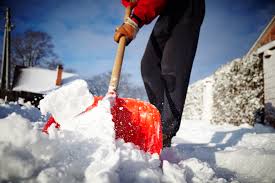
In all reality, you’re probably not going to get in a solid three hours of riding in every day, and that’s okay. Be realistic and flexible with your goals and expectations. Shoveling snow is a great strength workout and good for the upper body and core.  Offer to shovel your street for your neighbors as well!  They will appreciate it and you will get in a strength workout.

index

Go to the Gym or a Class

Hitting the gym is a convenient way to maintain fitness as well as bond with family members. Go as a group and get your sweat on together so you can enjoy the turkey later. Try out a spin class to get your legs  spinning.

Head out for an outdoor ride or commute to satisfy your holiday cycling.  If your town isn’t too covered in snow, it is a good option to commute for errands to maintain some cycling fitness.

Don’t Stress About Holiday Meals

Everything in moderation is usually the way to go at all times of the year, so keep it going through the holidays.  Treat yourself to that piece of pie, a beer and butter and gravy on your potatoes.  You deserve to participate in your family’s feast and not to feel guilty while doing it.

Avoid going for seconds.  Most often loading up the plate multiple times is the pitfall for weight gain.

Enjoy the desserts and rich drinks, but these are calorie dense so bare that in mind when going for drink number 4.

Eat and drink slowly.  This will fill you up, and allow you to properly taste and digest the food.

Enjoy it!  Don’t feel guilty, food is good for you and ultimately will be used for your holiday cycling fuel.

Try to relax and enjoy the holidays. Do not stress if you miss and training ride, or have one too many drinks.  Try to maintain some holiday cycling, and that way you can enjoy all of the delicious treats that come with this festive time of year!

Cross Training for Cycling: Skiing and How it Can Help You

November 12, 2019 by Adam Farabaugh

The snow’s blowing, it’s cold, the last thing you want to do is to go out and try and get a bike ride in and even lower on that list is riding the trainer. Winter can be the most challenging time of year to stay in shape and motivated. The best tactic is to embrace it with sports that go with it.

Nothing is as good as the actual discipline in which you’re training for but mixing it up with cross training for cycling in the winter months can not only keep you in shape but leave with you gains you otherwise would not have obtained from riding alone. Skiing can bring strength and endurance gains and can improve your balance and coordination to put toward better riding. Whether skiing downhill or Nordic (cross country), you’ll get the benefits while having fun braving the cold.

Cross Training for Cycling – Downhill Skiing: The Strength Benefits

The winter months are often a time when weightlifting is incorporated into cross training for cycling. The benefits of weight lifting include increased maximal output and development of supporting muscles to hinder the occurrence of injury. Skiing can be used in addition to or in place of weightlifting as it engages a lot of the same muscles.

Each turn in skiing, particularly when skiing hard, is essentially a squat. Your knees are forward and your butt is dropped while you’re in an athletic position. You flex your knees up absorbing bumps and impacts thus further flexing your legs along with your core. If you’re skiing hard down a steep slope, in the trees, through moguls, or on powder, you’ll be hard pressed to make it more than a couple of minutes without having to stop and rest. Squat after squat not only takes its toll on your legs but also your heart and lungs which makes it an even better activity to do for cross training for cycling.

Downhill Skiing: Balance and Coordination Improvement

In addition to the strength benefits downhill skiing brings, you’re constantly improving your balance and coordination which also improves your riding when on the bike. Keeping it upright on skis is no easy task especially when starting out. Also, balance isn’t just your brain telling your body which way to move its limbs to stay upright but also the quick firing of the muscles on those limbs to keep you balanced. You’re not only improving how well the brain sends those messages but also how strong and developed those muscles are.

Skiing also forces you to make quick decisions and react to upcoming obstacles such as bumps or trees. Particularly when skiing fast, your brain doesn’t have time to think and analyze every obstacle with great detail. It learns to read, quickly asses, and make a decision on what to do, say go right around a tree or left. The more you practice this, the better you will be at skiing as well as riding as that same thought process is used when riding down the road or trail.

Nordic Skiing: Strength and Endurance Gains

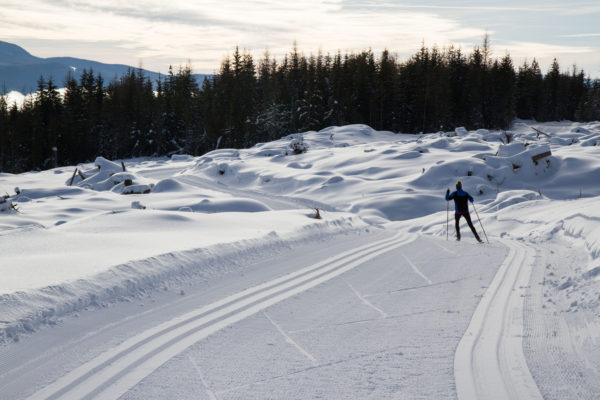
Nordic skiing, or cross country skiing, is also great cross training for cycling. While downhill skiing brings more strength gains than endurance, Nordic skiing brings more endurance gains along with the added development of supporting muscles.

Classic Skiing

Classic skiing is the traditional, kick-and-glide, type of skiing with either wax or fish scales on the center of the ski under your feet to push you forward. While downhill skiing engages primarily the legs and core, classic skiing utilizes the upper body as well for a full body workout. Because of the nature of cross country skiing, classic skiing uses a lot of heart and lungs to move you forward, particularly if you have bad technique because you are working that much harder to go the same distance.

Skate Skiing

Skate skiing, like classic skiing, also uses the full body to propel you forward. The difference is that the skis just have glide wax over the entire bottom and a skating motion moving the legs from side to side like ice skating is used to move forward. The big advantage to this type of skiing is that the muscles used are very similar to the ones used in the pedal stroke. You get the cardio and endurance benefit while getting the strength benefit to those cycling specific muscles.

The Risks

One deterrent to a lot of cyclists skiing is the risk factor. If they’re riding and training a lot, they don’t want to risk doing something that may injure them and take away from their riding, particularly if they’re racing. There are a multitude of factors to risk with skiing. Three of the big ones are personal ability, magnitude of events, and chance of a muscle injury. If you accurately assess each, your risk is no more than your typical bike ride.

Personal Ability: Knowing your limits and just how good of a skier you are, or rather aren’t, is going to have the largest impact on the level of risk you are actually taking on. If you can only ski a green circle or blue square, don’t attempt the black diamond until you are overly ready. In a normal “learn to ski” situation, you are constantly skiing above your ability in order to learn and improve. When being a risk-averse skier, the gap at which you’re skiing and the difficulty of terrain that you’re trying to improve on needs to be smaller.

Magnitude of Events: Typically as your skiing ability goes up, so does the degree of terrain that you’re riding. Just because you’re a really good skier doesn’t mean you have to do the big drops, or gnarly tree sections. Dial back the magnitude of high risk sections that you ski as it’s a probability game. The greater the number of times you ski something that pushes your limits, the greater the chance of something going wrong thus increasing your risk.

Chance of Muscle Injury: In both downhill and Nordic skiing you have an increased chance of injuring a muscle, tendon, or joint mainly because it is something you don’t do as mush of. Your muscles, tendons, and joints aren’t used to the kind of effort and strain placed on them and thus have a higher likelihood of becoming injured even under normal skiing conditions, ie. sans crashing. In order to lower the likelihood of injury, increasing the amount you’re skiing gradually along with how hard you are skiing will go a long way. After the first day of skiing after a long summer, you are probably going to be pretty sore. Take note of it and don’t try to push it again to soon, like the next day.

Cross training for cycling can be just as fun, if not more fun than the cycling itself especially if it’s in the form of skiing. You can get a lot of strength and endurance benefits by embracing winter and skiing more than riding and then come spring, make the switch back to the bike exclusively. While doing it though, taking note of your own ability and what you’re skiing along with assessing if your muscles and body are ready for it will lower your risk of injury. Stay safe with it and have fun. Just make sure you don’t start to love it more than cycling!

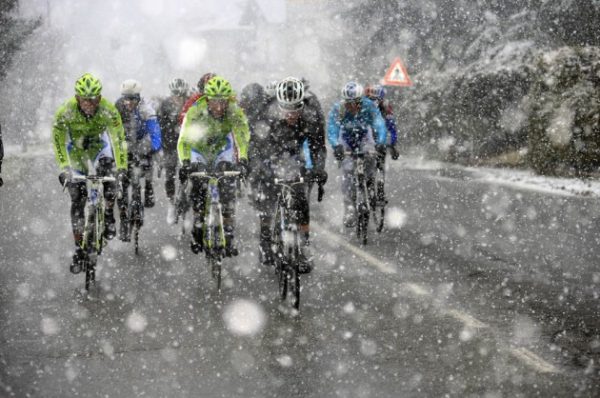
Tips for Cycling in Cold Weather

November 7, 2019 by Wade Shaddy

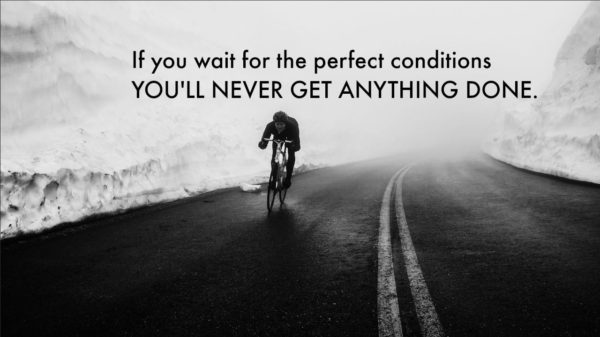
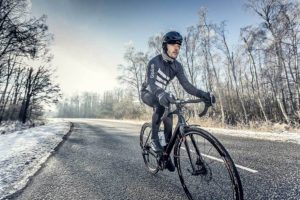
Pro cyclists know that the coming of winter is not the end of the cycling season — it’s the beginning. If you leave your bike in the garage all winter, say goodbye to hard-earned summer muscle. The riding you do between November and March preserves and builds both your fitness and mental toughness.

Some argue that stationary bikes keep you in shape, and that’s probably true, but they’re boring. Even if you manage to knock out a few sessions at first, it’s likely you’ll abandon it after the first few weeks anyway. Outdoor cycling is more fun (check out fat biking), and you’ll maintain your fitness both mentally and physically if you ride outside during cold weather.

Cycling in Cold Weather

Reasons to Cycle in Cold Weather

Reasons to cycle during cold winter months aren’t isolated to fitness. Cycling outside includes benefits that come from battling the elements. Cold weather cycling builds skills, toughens you up and offers peace and solitude, just to mention a few.

Skill BuilderCycling in Cold Weather

Navigating on ice, snow or water-soaked pavement requires more skill. High-pressure road bike tires have little or no tread — they’re not designed for slick conditions. Even the slightest wobble on wet pavement can cause you to go down. Skills you gain through the winter transfer to your bike handling skills during summer months.

Ice and Snow

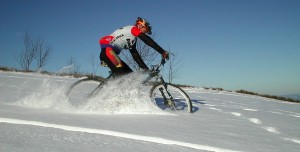
Riding road bikes on wet pavement is one thing, but leave your road bike in the garage if roads are snow covered or icy. Riding on snow and ice is just too dicey on a road bike. Get out your mountain bike. If you don’t have a mountain bike, get one. Mountain bikes are tougher and more stable than delicate road bikes, and can take more punishment. Riding on snow and ice can also be risky on a mountain bike, but the difference between a fat tire with knobs, and the slick minimalist road bike tire is infinitesimal. Mountain bike tires grip and hold where road bike tires spin and fail. You haven’t lived until you’ve left bicycle tracks on fresh snow with a mountain bike.

It’s Not as Bad as it Looks (with the right gear)

Sitting in the warm house with coffee or hot chocolate, looking out the window is a motivation killer. But the weather is never as bad as it looks from your easy chair. Most pros regard anything above 50 degrees as warm weather riding conditions. With all the cold weather riding gear available, there’s no excuse to not ride outside, keeping warm is easy, and not something you should be afraid of.

Sitting and thinking about what you might need to stay warm outside is another motivation killer. It takes time to find everything and put it on, get your bike ready and so-on. Place all your gear in a single location. Helmet, gloves, shoes, undergear and outergear. If you assemble everything, and keep it ready in one spot, the task is simple. You don’t have to go to the closet, find one thing, go to a different spot, find something else. It might seem insignificant, but it matters. Once you go through the procedure a few time, you’ll understand. And don’t worry about wearing the same outergear multiple times. If it’s not soaked with sweat, it’s good to go. Use your own personal hygiene routine as a guide, cyclists are all different. Some sweat profusely, others don’t.

Cycling in Cold Weather

A Look at Gear

It’s typical to overdress for a cold-weather ride. It feels good the first few miles, but once your core heats up, you’ll likely be too hot. You’re probably sick of hearing it, but layering is the key, light layers that you can vent or remove. In most instances a light, long-sleeved thermal, followed by a long-sleeved cycling jersey with a hood — you might have to look around for one of these — but they’re worth their weight in gold. Top the jersey off with a nylon or semi-waterproof windbreaker with a turtle neck — this too may be hard to find, but once you’ve went turtleneck in cold weather, you’ll never go back.

Skin Exposure

Riding gear should seal around the neck and sleeves. Before you buy it, make sure it’s long enough in the sleeve, so that when you get down in the drops, it doesn’t pull up and expose your wrists. Nothing is more annoying than a patch of open skin between your gloves and windbreaker.

Ears, Fingers and Toes

It’s relatively easy to keep your torso warm, but if your hands, fingers or feet get cold, you’ll want to abandon your ride. Almost any glove will do, but test fit and check out some of the best to make sure you can still brake and shift accurately. Ears are another issue. The hooded jersey is the answer. Never leave your ears without some type of cover. Stocking caps are doable, but they often prevent the proper fit of your helmet. The thin fabric of the hooded jersey fits nicely under your helmet.

Cycling in Cold Weather

Doing the miles in rain, cold, wind or snow toughens you up. You’ll experience colder tolerance levels each time you ride in weather below 50-degrees. If you need inspiration, cyclists who compete in the Iditarod race offer it. Billed as the Last Greatest Race on Earth, the Iditarod is a 1,000 miles over the rugged Alaska mountain range in temperatures exceeding minus 20-degrees Fahrenheit. Cyclists are out there 20 days or more, in the snow and ice, all by themselves. Just thinking about them should get you off the couch. The Iditarod isn’t for everybody, but it’s a perfect example of human endurance, and the fact that cold weather won’t kill you if you’re prepared for it.

Warm and cozy clothing, a deserted stretch of highway, the stillness of winter (especially if it’s snowing) add up to peace and quiet that you’ve never experienced before, it can do as much for your head as your heart. Winter cycling is a sport that the majority of weekend cyclists might not consider, but if you’re a true cyclist, you won’t let cold weather keep you from enjoying your sport.

Ride Like a Pro: Cycling Training Tips

November 5, 2019 by Sarah Lauzé

We don’t all have 20 hours a week to dedicate to training, but that doesn’t mean we can’t use some pro cycling training tips to up our game. In a lot of ways, what you do off the bike matters just as much as what you do when in the saddle. No matter what your goals are, whether you’re training for a race or want to hit a certain distance or time, these tips can help you get there.

6 Cycling Training Tips

Fight the Plateau

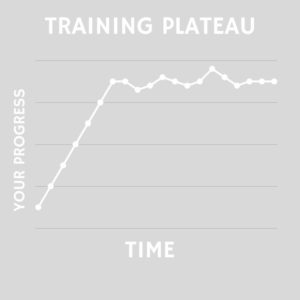
It’s easy to get stuck in a training rut, especially when you’re spinning along the same routes time and time again. Be wary of spending too much time at that pace right between easy and challenging. Of course, if you’re building up endurance, this is exactly where you want to be. However, once you hit a certain level of fitness you will not advance beyond it, nor will you give your body adequate time to recover. This is what we call a training plateau. On your easy days, take it really easy. Then, on your hard days you will have a some gas in the tank to really challenge yourself.

Don’t Skip Rest Days

You can come to crave the rush of feel-good endorphins that the brain releases during exercise, especially cycling. But, when you’re training on a consistent basis, you actually put stress on your body and breakdown your muscles. Over time, and through combination of training and rest (periodization), your muscles are repaired to be stronger than before. This is when you begin to feel more fit and you can produce more power for longer on your bike. Although taking rest days may feel like taking a step backwards, you will do more harm than good if you don’t.

Train Your Brain

There are some major differences between pros and recreational riders, but it’s not all in the legs. Part of what separates us from the pros is mental toughness. A lot of us are guilty of allowing negative self talk to take over our minds as we ride. We acknowledge the pain or when the going gets tough, but it’s moving past it that takes some practice. The first step is taking control of this inner monologue and using it to your advantage. Implant some ‘power thoughts’ that help you focus long enough to drown out the negativity.

Cross Train

It’s true that the only way to get better at cycling is to spend more time on the bike, but cross training is a tool that many pros use to better their riding. Focusing entirely on one thing, like endurance, isn’t healthy. Cycling needs to be accompanied by other activities to keep the muscles and joints balanced. Weight training, strength exercises, running, and swimming are great ways to improve your bone density and the strength of connective tissues. Regular stretching or yoga is also necessary to keep the body balanced with a healthy range of motion.

Properly Fuel Your Body

Eating right can be hard at the best of times. Add regular exercise into the mix and it can become a balancing act of replacing calories all the while making sure you’re consuming the right things. Nutrition is a sea of do’s and don’t, and not everyone agrees of what those are. As cyclists, we need a balanced diet to feel our best on the bike. The easiest way to do this is to stick to whole, real foods rather than processed. For more on nutrition for cyclists, check out “Nutrition for Cyclists: A Basis.”

Don’t Overeat

Okay, sounds obvious, but there are some easy ways to go about this. One of the most common times of day to overeat is at night. If you go to bed feeling full, then it is a sign that you’ve had a little too much. Instead, if you go to bed just a little hungry (not ravenous, just slightly hungry), it  can help you maintain your weight.


Cross Training for Cyclists: The Best Winter Activities

November 1, 2019 by Sarah Lauzé

One of the best things about cycling is the rush of fresh air and beautiful scenery one gets to experience while out on a ride. So, during the winter months it can be tough to get that same rush if you’re locked in your basement on an indoor set up. Don’t get us wrong, it’s better than spending the winter on the couch, but there are a lot of other great winter activities that can give you that dose of fresh air as well as build up transferable strength and skills that will directly translate into the start of your cycling season. Here are some of the best winter activities that are the best cross training for cyclists.

Why Cross Training?

It may be true that the only way to get better at cycling is to ride more, but research also shows that mixing up your training has a ton of benefits.

  • Motivation – As much fun as cycling is, mixing in other activities is a great way to keep up momentum and motivation.
  • Build strength – As good as cycling is for your health and overall cardiovascular strength, it is not a weight bearing activity. This may be great for the joints, but if cycling is your only activities it can have a negative effect on your bone density.
  • Injury Prevention – Cross training can build up supporting muscles that may not be targeted as much on the bike, but are important for overall stability and keeping muscles balanced.

Cross Training for Cyclists: The Best Winter Activities

Nordic Skiing

Classic Skiing

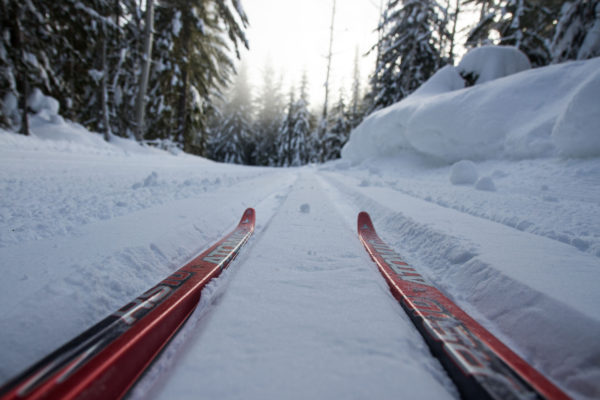
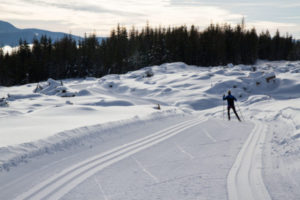
Classic skiing is the traditional, kick-and-glide, type of skiing with either wax or fish scales on the center of the ski under your feet to push you forward. While downhill skiing engages primarily the legs and core, classic skiing utilizes the upper body as well for a full body workout. Because of the nature of cross country skiing, classic skiing uses a lot of heart and lungs to move you forward, particularly if you have bad technique because you are working that much harder to go the same distance.

Skate Skiing

Skate skiing, like classic skiing, also uses the full body to propel you forward. The difference is that the skis just have glide wax over the entire bottom and a skating motion moving the legs from side to side like ice skating is used to move forward. The big advantage to this type of skiing is that the muscles used are very similar to the ones used in the pedal stroke. You get the cardio and endurance benefit while getting the strength benefit to those cycling specific muscles.

Downhill Skiing

In addition to the strength benefits downhill skiing brings, you’re constantly improving your balance and coordination which also improves your riding when on the bike. Keeping it upright on skis is no easy task especially when starting out. Also, balance isn’t just your brain telling your body which way to move its limbs to stay upright but also the quick firing of the muscles on those limbs to keep you balanced. You’re not only improving how well the brain sends those messages but also how strong and developed those muscles are.

Skiing also forces you to make quick decisions and react to upcoming obstacles such as bumps or trees. Particularly when skiing fast, your brain doesn’t have time to think and analyze every obstacle with great detail. It learns to read, quickly asses, and make a decision on what to do, say go right around a tree or left. The more you practice this, the better you will be at skiing as well as riding as that same thought process is used when riding down the road or trail.

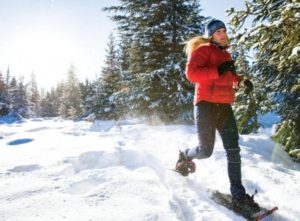
Snowshoeing

Snowshoeing is a great cardiovascular workout, with the added bonus of being low cost and easily mastered. As far as muscles go, snowshoeing utilizes all the major players, and is a much more efficient workout than just walking. Plus, you can explore uncharted territories and venture off the beaten path!

Running

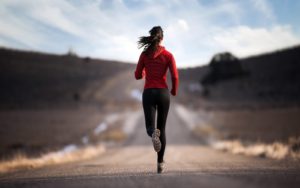
Running is a great option if you’re travelling without your bike, have limited time for a workout, or the roads are covered in snow. It is effective in maintaining the condition of your cardiovascular system and gives you some variety in your training. Running strengthens your bone density in a way that cycling doesn’t, and will keep you top climbing shape when you can’t put the time in on your bike.


4 Of The Best Strength Training Exercises for Cyclists

October 30, 2019 by Sarah Lauzé

Almost every cyclist wants to be able to produce more power and go faster on their bike. It’s a natural instinct, for amateur and professional cyclists alike. Strength training exercises for cyclists can help build up the muscles used on the bike, but it’s not a shortcut or a replacement. To increase the force of each of your pedal strokes and improve your technique you have to ride. A lot. However, strength training can be a great addition to your cycling training plan, or get you through the winter months when you can’t ride as much as you’d like.

We all know that cycling involves the legs in a big way, but having a strong core is also extremely important for cyclists. Your core acts to stabilize your body and help you control your bike. It also allows you to pedal with a smooth and powerful action, maintain a strong upper body position, and prevent lower back pain. Here are some of the best strength training exercises for cyclists that target areas that will make your stronger on your bike.

REMEMBER: The goal of strength training exercises for cyclists is to build strength to use on your bike, not to bulk up. This is especially important if you are training in a gym. Just keep in mind that you probably have different goals than the person next to you, so just focus on what you’re doing and how it can improve your cycling.

Strength Training Exercises for Cyclists

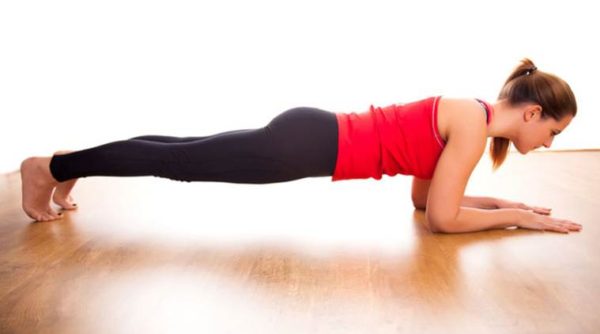
Plank

Planks are simple and effective when it comes to increasing your core strength. They can be done almost anywhere, so no need to hit the gym. When done correctly, planks will target your shoulders, abdomen, and lower back.

Strength Training Exercises for Cyclists

Place your forearms on the ground with your elbows directly below your shoulders and arms parallel to the body. Keeping your back straight and in line with your bum, resting on your toes. If you find yourself arching your back or sagging your hips toward the ground, try modifying by dropping from your toes to your knees. Start by holding for 30-60 seconds per round. Repeat 3-5 times.

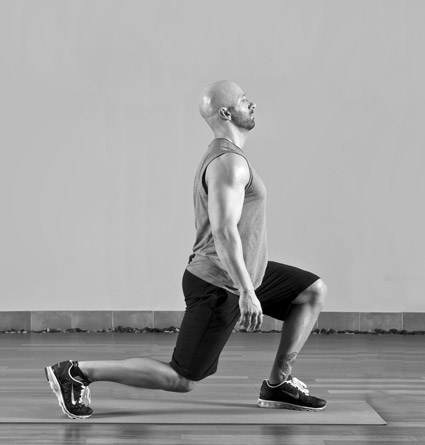
Lunges

Lunges are specifically great for cyclists because they work one leg at a time, just like pedaling. They target your quadriceps, hips, glutes, and hamstrings, which are the major players on your bike.

Strength Training Exercises for Cyclists

Keep your upper body straight with your shoulders back and head facing directly ahead of you (resist the urge to look down). Step forward with one leg and lower your leg until both knees are at a 90 degree angle. Make sure your front knee does not extend beyond your ankle, and keep the weight in your heels as you push back up. Start with 15-30 reps per set, or add weight and do less reps. Try for 3-5 sets.

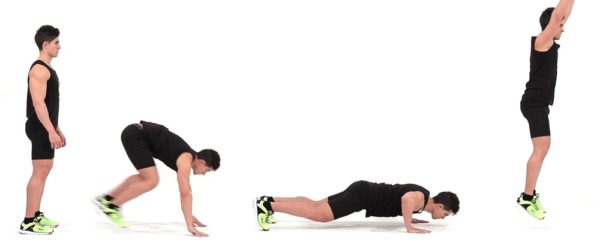
Burpees

Everyone’s favourite full body exercise! The burpee may be painful, but the movement involves all the major joints through explosive movements. Plus, there’s plenty of room to modify the movement to ensure you are getting all you can from it while maintaining proper form.

Strength Training Exercises for Cyclists

Stand with your feet shoulder width apart, focusing on placing the weight in your heels. Push your hips back, bend your knees and lower into a squat ensuring that your knees do not extend beyond you ankles. Place your hand on the floor in front of you, shift your weight onto them, and jump or step back your feet back into plank position. Keep your body straight as you would in a typical plank. Lower your chest and do a push up. Jump your feet back so they land just outside your hands. Stand up, raise your hands above your head, and jump up into the air. Start with 10 reps, working your way up to 20 per set. Complete 3-5 sets.

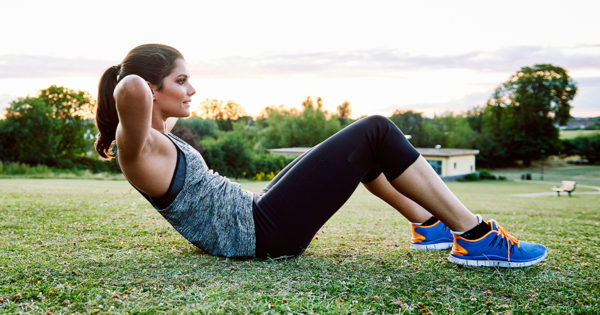
Crunches

Crunches are another classic, but effective exercise that you can do anywhere. They target the core like nothing else, so get ready to feel the burn.

Strength Training Exercises for Cyclists

Lie on your back on the floor with your knees bent and feet flat on the the floor. Place your hands behind your head so your fingers are just behind your ears. Tilt your chin slightly so it is off the ground, but leaving a few inches between your chin and chest. Pull your abdominals inward and curl forward so your head, neck, and shoulder blades lift off the ground. Hold, then lower slowly back down. Do 15-25 reps per set, completing 3-5 sets.

Knee Stretches for Cyclists

October 25, 2019 by Sarah Lauzé

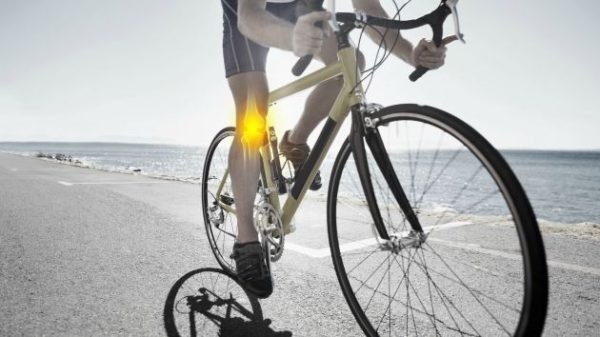
Knee pain is one of the most common injuries among athletes. In fact, a 2010 study of professional cyclists found that knee pain was the cause for over half of the time spent off the bike. As one of the most complex joints in the body, it makes sense that it’s often one of the first places we experience pain. That being said, it is always better to try and prevent a problem then it is to deal with it. Knee stretches for cyclists can help keep all the components in the knee remain flexible and in place.

Pedaling requires work from the quads to straighten the knee and push the pedal forward and downward with enough power to propel the bike forward. In addition, the IT band contributes to that same movement, although less intensively. These efforts, although low-impact, can lead to problems with knee pain. Tendinitis of the kneecap can be a painful condition, causing you to lose power in your pedal stroke and even keep you off your bike. Stretching these muscles can both prevent and treat these issues, resulting in a healthy, flexible range of motion.

Many cyclists think knee pain means taking time away from the bike and resting up, but that’s not necessarily true. It could be caused by something as simple as a saddle adjustment or new cleats. So, if you’re experiencing knee pain, figure out what it may be stemming from and adjust your training accordingly. To help in recovery, and to prevent further knee pain, try stretching the muscles surrounding the knee on a regular basis.

The Anatomy of the Knee

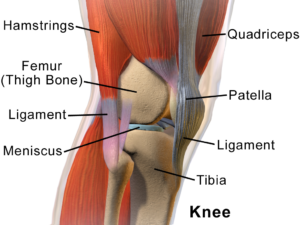
The first step to preventing knee pain is to understand how the joint works, and what can go wrong. In simplified terms, the knee is a hinge with the quadriceps pulling the knee straight, and the hamstrings bending it. The iliotibial band (ITB) runs down the outside of the thigh and into the outside of the knee, connected at the other end to the glutes and hip flexors. The patella (kneecap) acts as a hinge and a connection point between it all.

To understand knee pain it is helpful to have a basic idea of what lies beneath the skin. In simplistic terms, think of the knee joint as a hinge where the quadriceps muscles pull the knee straight and the hamstring muscles bend the knee. The quadriceps run from the front of the femur (thigh bone) to the patella (knee cap). The patella acts as a pulley to increase the force generated by quadriceps which creates a greater torque on the tibia (shin bone).

To make matters more complicated,  the ITB runs down the outside of the thigh and blends into the outside of the knee. ITB stands for iliotibial band and is a well known potential source of trouble for cyclists, runners and active people in general. The ITB is also attached to your gluteals (buttock muscles) and a hip flexors. Often when looking for the source of knee pain we have to pay close attention to hip flexibility and control.

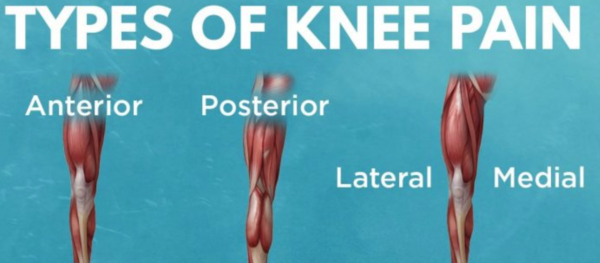
Types of Knee Pain

Knee pain can show up in a variety of forms and for different reasons. These are some of the main types and common causes:

1. Anterior Knee Pain

Anterior knee pain is at the front of the knee, on and around the kneecap (patella). It is most commonly caused by overuse. The quads are attached to the shin via the kneecap so each time you pedal, forces are transmitted across the joint, essentially squishing it against the thigh bone. The part of the tendon attached to the kneecap can become inflamed and sore to the touch. Often referred to as ‘runner’s knee,’ it can happen to cyclists as well.

2. Posterior Knee Pain

The fair less common posterior knee pain shows up behind the knee and is usually a more simple diagnosis. Overextending the knee, with a saddle that is too high or too far back, causes posterior knee pain in most cases, so make sure your saddle is the proper height and adjustment for you.

3. Medial & Lateral Knee Pain

Pain located at the sides of knee in the collateral ligaments is most commonly caused by the feet. In cycling, this would come down to your cycling shoes or the position of the cleat. How far apart your feet are positioned can stress one of the collaterals, causing medial or lateral knee pain during or after a ride.

4. Iliotibial Band (IT Band) Syndrome

The IT band, running along the outside of the thigh from the pelvis to just below the knee, is a thick strap of tissue that can often become tight or inflamed. This is usually caused by over use, weakness of the gluteus medius muscle, or cleat placement. If the IT band has become inflamed, then rest and ice are in order. If it is tight and sore, then regular stretching and rolling will be your best course of action.

What can cause knee pain?

Although cycling is a low impact sport, too much of anything can lead to stress and strain on the body. Pedalling is a repetitive motion with the constant bending and extending motions flexing the knees and hips. Naturally, with overuse these are the most common sites of chronic-use injury.

Too much too soon

The number one cause of knee pain with cyclists is going too hard or far too soon. It is great to challenge yourself, but going further than your ligaments and muscles can handle will only hinder you progress. Endurance is something that is built up over time, conditioning your muscles over miles and hours. Ligaments take even longer to develop than muscles, with issues often arising from tightness or inflamation.

Improper bike fitThe Types of Knee Pain from Cycling

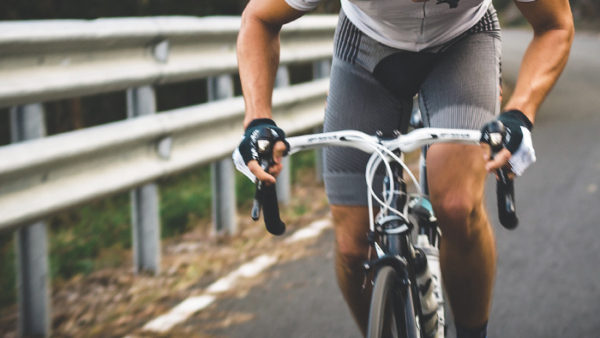
The little adjustments you can make to your bike can make all the difference when it comes to addressing or avoiding knee pain. The height and position of your saddle and the placement of cleats on the bottoms of your cycling shoes can cause or help avoid knee pain, depending on how well they are adjusted for you.

Not Enough Stretching

Flexibility or lack of, is a cyclists nemesis. Eventually if you do not stretch or roll your muscles will tighten so much that you will have difficulty walking never mind riding. Make sure to do stretches that especially focus on the muscles surrounding the knee (see below).

4 Best Stretches for Cyclists to Treat Knee Pain

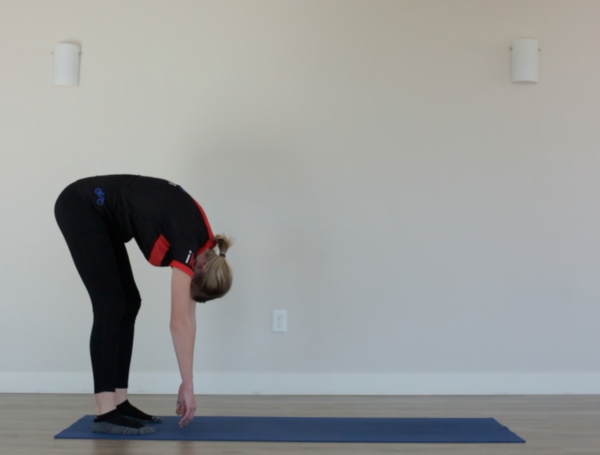
Bilateral Hamstring Stretch

This stretch is effective for all cyclists because of the involvement of the knee flexor muscles in the repetitive pedaling motion. It is also great for those who experience discomfort in the inner or outer face of the knee, which likely originates at the insertion of the hamstring.

Stand with you feet shoulder width apart and slowly bend at your hips towards the floor. Let your arms hang, or place them on the floor if you can. Your knees should be straight, but not overextended or locked  out. You should feel the stretch in your hamstrings and along the back of the knees.

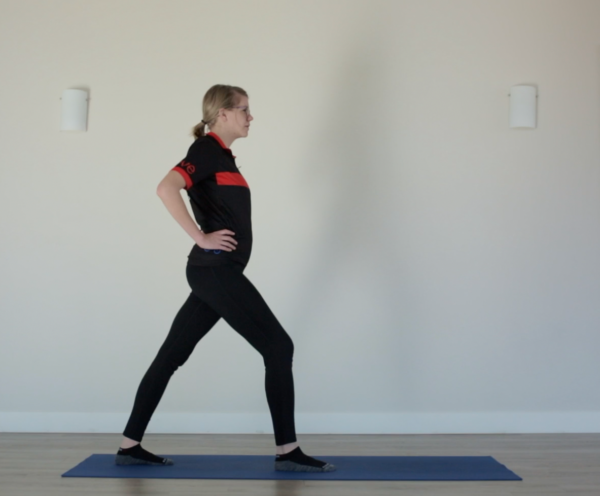
Lunge with Ankle Flex

If you feel tension or strain in your calves, Achilles tendon, or the back of the knee then this is an important stretch.

Stand with your hands on your waist, one leg slightly in front of the other, with your knees straight looking ahead. Slowly lunge forward with the front foot, keeping your rear foot in its original position. Both feet should be making full contact with the floor, including the heel. As your center of gravity moves forward and downward, the rear ankle will act as an anchor and increase the stretch.

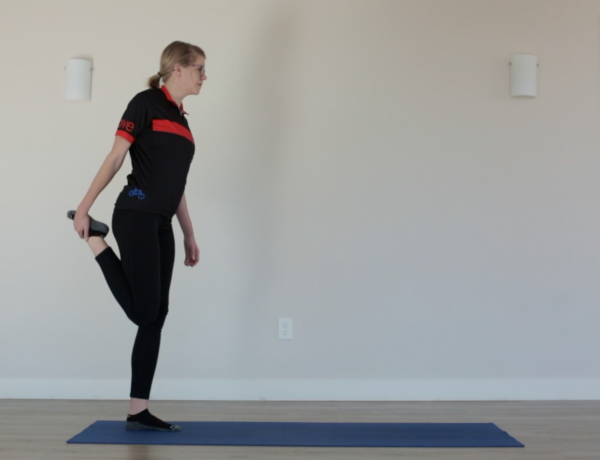
Flamingo Position

Because of the involvement of the knee extensor muscles in the pedaling motion, the flamingo position is a great stretch to relieve discomfort in the quads and patellar tendons.

Use a chair or wall the steady yourself, and raise one foot by bending your knee. As you hold the front of your ankle, slowly pull it upwards and gently push your hips forward. As the hip extension increases, you will feel the stretch in the front of the thigh.

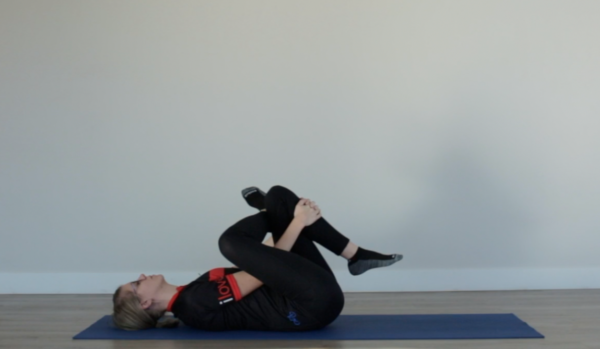
Figure Four

Stretching the muscles that rotate the hips, specifically the glutes and piriformis, can have a positive effect on the knees. As mentioned previously, each segment of the leg is connected, and each area can have a domino effect, especially through the knee.

Lie on your back with your neck relaxed and head resting on the floor. Cross your right ankle over the other and place your hands on your left thigh, pulling your legs towards you in a figure four position. Slowly pull on your leg to increase the stretch, feeling it in your glute and hip. Repeat with the left side.

As cyclists, we know how hard it is to stick to a stretching routine. We all want to spend more time on our bike, but maintaining a healthy range of motion and flexibility will, in the long run, keep you on the bike without injury. That’s why we’ve partnered with Dynamic Cyclist to bring you a stretching and strength program that is easy to follow, and is geared towards cyclists. They’re offering our readers a free 7 day trial, just click the link below to get started.


« Previous Page
Next Page »
  • Facebook
  • Tumblr
  • Twitter

Latest Articles

JOIN Cycling: A New Training Platform for Cyclists

May 27, 2024 By Eric Lister

cold exposure

The Benefits of Cold Exposure for Cycling & Life

June 13, 2023 By Eric Lister

hill climb

The Ultimate Hill Climb Training Guide

May 31, 2023 By Eric Lister

shoulder pain cycling

How to Treat & Avoid Shoulder Pain While Cycling

April 12, 2023 By Eric Lister

psoas stretch

The Importance of the Psoas Stretch for Cyclists

April 6, 2023 By Eric Lister

cycling neck pain

The Ultimate Guide to Cycling Neck Pain: Causes and Solutions

March 21, 2023 By Eric Lister

Useful Info

  • Contact
  • Finally, A Global Cycling Club That Is Focused On Community And Love Of Cycling!
  • Privacy Policy
  • Share Your Story!
  • Terms And Conditions Of Use
  • Welcome to I Love Bicycling
  • What Happened When I Stretched Every Day For a Month

Recent Posts

  • JOIN Cycling: A New Training Platform for Cyclists
  • How to Hang Bikes in Your Garage: 4 Inexpensive Options
  • Gravel Bike Vs. Road Bike: Which One Is Better For You?
  • The 6 Types of Mountain Bikes & How to Choose the Best One for You
  • What Is a Touring Bike Good For? 5 Benefits We Know You’ll Love

Search I Love Bicycling

Connect with Us

  • Facebook
  • RSS
  • Tumblr
  • Twitter

Copyright © 2026 · Magazine Pro Theme on Genesis Framework · WordPress · Log in