• Training
    • Injury Prevention
    • Training Tips
  • How To
    • Bike Fit
    • Gear
  • Nutrition
    • Nutrition Tips
    • Weight Loss
  • Repair
  • Reviews
  • Stories
    • Funny Stories
    • Jokes
    • Quotes
    • Videos
    • Funny Videos

I Love Bicycling

I Love Bicycling is a website that is geared towards cycling for beginners with road cycling tips, training articles, nutrition tips, weight loss, how to’s and bike repair articles.

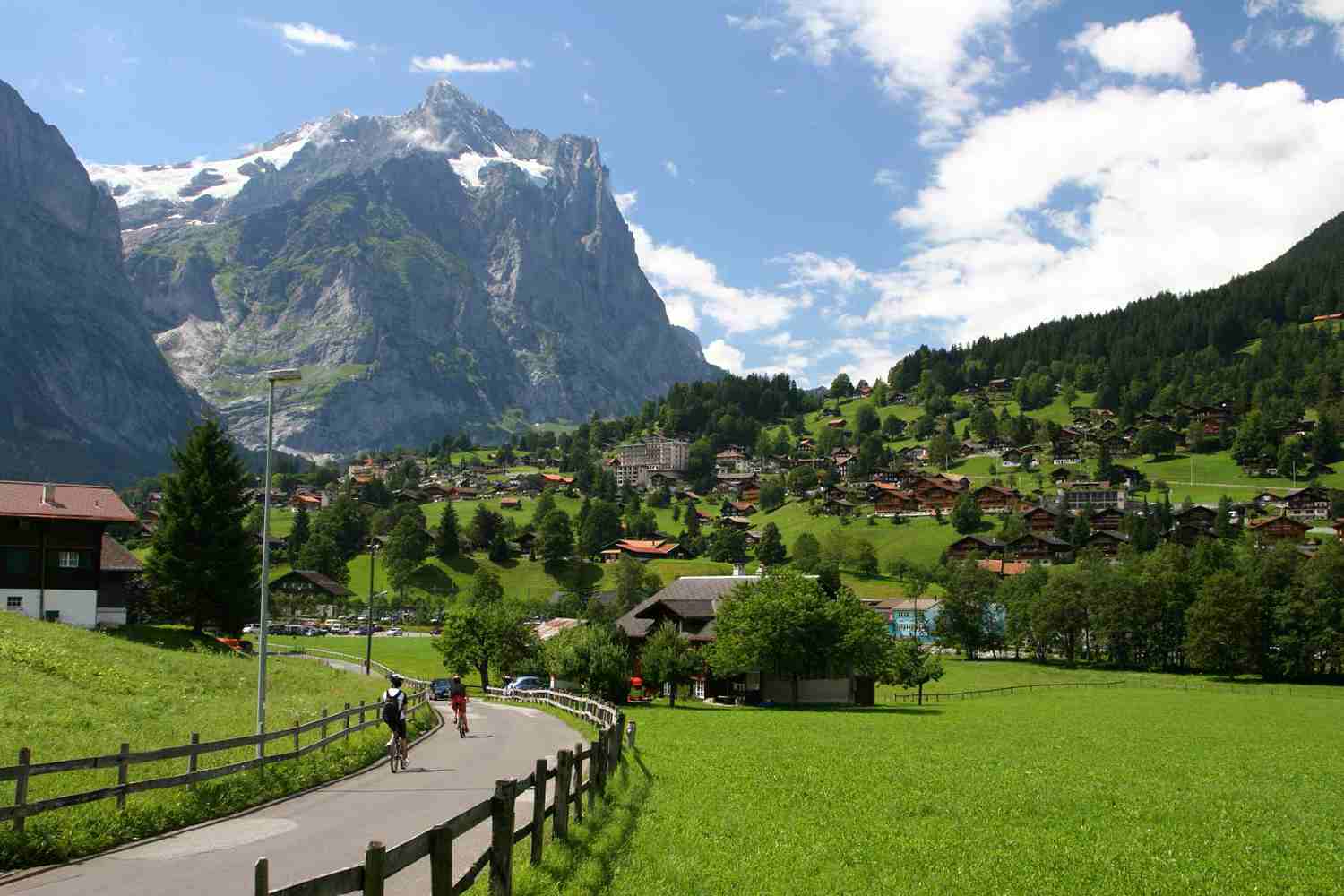
Ten Best Folding Bikes for Traveling

February 2, 2016 by Wade Shaddy

A folding bike is bicycle that can be compacted by folding or separating some of its components. Older designs were primarily for leisure, touring, and commuting. Contemporary folding bikes include sleek road bikes and mountain bikes. They are designed to be as lightweight as possible and can be folded easily without using tools. Are folding bikes something you can use? Here are the best folding bikes and a brief run down of what folding bikes are.

Old-School Folders

Early folding bikes were hard to ride, heavy, crude, slow to fold, and often collapsed in a heap. But the early ’90s changed all that when rail operators and airlines began to tighten restrictions on conventional bike transportation. The concept of a super-compact foldable bike caught on, partly because they could still travel for free, and they were lighter in design and materials.

New Designs Rule

Contemporary designers have developed at least 150 folding bike designs and thanks to developments in smaller tires, technology and frame materials, the ride quality, weight  and performance of the best folding bike is similar to that of their rigid cousins.

Some Distinct Advantages

Foldable bikes offer distinct advantages over conventional machines. It’s the freedom to travel anywhere with your folding bike that gives it a magic quality. A folding bike opens up entirely new ways of traveling.

Things to Consider in a Folding Bike

  • You’ll be carrying the bike by hand. The more you pay, the lighter the machine (typically). Generally speaking. folding bikes are more expensive than their non-folding counterparts.
  • Folded size is important too. If you expect to travel by air, the smaller the better.
  • Small wheels usually give lighter steering but a harder ride.
  • If you can’t live with small wheels, folding bikes are available with standard wheels, but they won’t fold as small.
  • Anything with a tire bigger than 20-inch will fold slowly, with more difficulty.
  • Bikes with 16 or 18-inch wheels have a limited range, but the best are still capable of 50-100 mile rides.
  • Avoid production or department store folding bikes. They tend to be heavy, with weird or clumbsy folding mechanisms and are just all-in-all a bad purchase.

The Ten Best Folding Bikes

In no particular order, here are ten different models to look at and consider.  Note that bicycle specifications, availability, and stated prices may vary without notice in different regions. Always check specifications with your local supplier.

The Montague Boston best folding bikes

Use this one for city touring, around town for errands, commuting or appointments.

  • Full size, 700c wheels
  • Folds in 20 seconds
  • Weighs in at 24 lbs
  • Single speed
  • 19 or 21 inch frame
  • $699.95
  • Buy Here

Pacific If Mode

Think of it as the Tesla of folding bikes, high-end and luxurious.

  • For city commuters who use public transport.
  • Looks at home folded up on a subway train or in an office.
  • Performs on the street like any full size bike.
  • Dual speed system
  • 14.7 kg
  • $2,850
  • Buy Here

Montague Swiss Bike X90 Mountain Folding Bike

This is your folding mountain bike option. Go anywhere, mud, dirt, and it climbs like crazy.

  • Front suspension
  • 26-inch all-terrain tires
  • Folded Size: 36-by-28-by-12
  • 32 lbs
  • Frame sizes 16, 18 and 20-inch
  • $629.95
  • Buy Here

The Ritchey Break-Away Steel Cross Frameset

Frameset only, but can be purchased fully built. Great for a cyclocross option. Rugged. It splits in half.


Break-Away Steel Cross Frameset


  • Full size bike can be split apart to fit into travel case
  • For serious roadies who travel by air
  • Add your own components and wheels
  • $1,499.95

Brompton M3L

This company has a long-standing reputation for quality and stability in compact folding bikes.Brompton ML3

  • Fold size 22.2-by-21.5-by-10.6 inches — one of the most compact among comparable folding bikes.
  • 16-inch wheels.
  • Three-speed gearing
  • 25.3 pounds
  • Retailing from $1,280

Dahon Speed D7

A good folding bike without breaking the bank. Provides a surprisingly smoothDahon Speed D7

and stable ride for a folding bike. A budget price that gets high marks for value.

  • Seven speeds
  • 20-inch wheels
  • 15 second fold down
  • 28 lbs
  • Folded size 11.7-by-25-by-25 inches
  • Retailing from $1,280
  • Buy Here

Bike Friday 1st Class tikit

Reported to be the fastest compact foldable bike on the market. Ggets high marks for its excellent ride quality and easy-to-use folding mechanism. reviewers say the bike is solidly built and has a comfortable ride. The quality of the ride defines the Tikit.
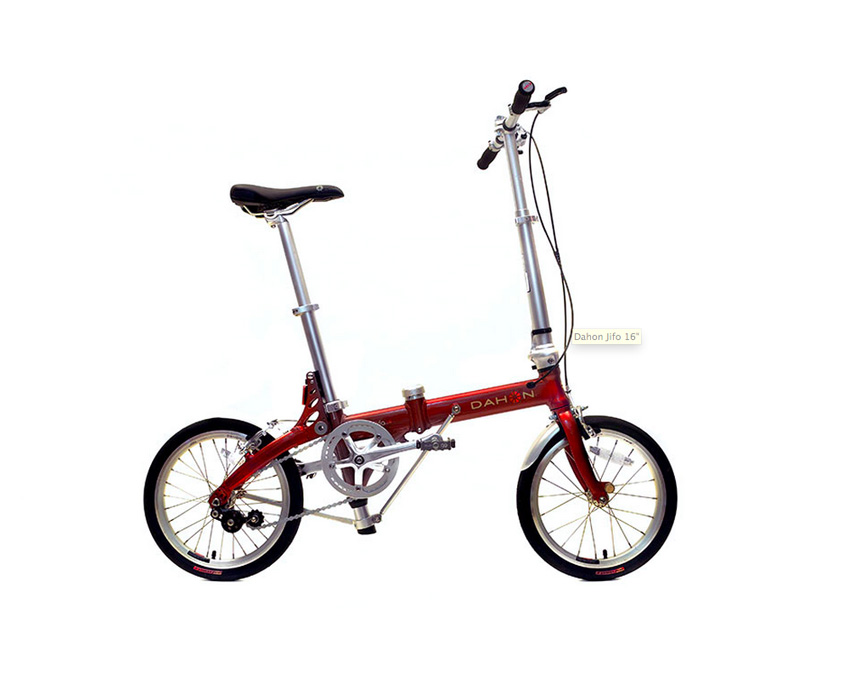
  • Folded dimensions: 35-by-24-by-15 inches
  • 16-inch wheels
  • 25.8 pounds
  • Shimano Nexus eight-speed internal hub (thus the speed)
  • $1,998

Dahon Tournado

Full-sized luxury in a folding road bike. A good choice for tourists and travelers who want a packable bike for touring or exploring. The frame comes apart into two pieces, so that after some additional disassembly the entire bike fits into an airline-legal suitcase

  • Full sized, 700c wheels
  • 24 pounds
  • Folded size of 11.7-by-29.3-25.7 inches.
  • 10 to 15 minutes to fold up
  • Comes with it’s own travel bag on wheels
  • Triple-ring drivetrain

Citizen Barcelona

Affordable, compact and reliable. Even BARCELONA Citizen Bike 20" 3-speed Folding Cruiser with Alloy Framethough the Citizen Bike Barcelona doesn’t have the smallest fold, reviewers say it is comfortable to ride and the price is hard to beat. If comfort and value trump speed and compactness, then you’ll appreciate this bike’s laid-back sensibility
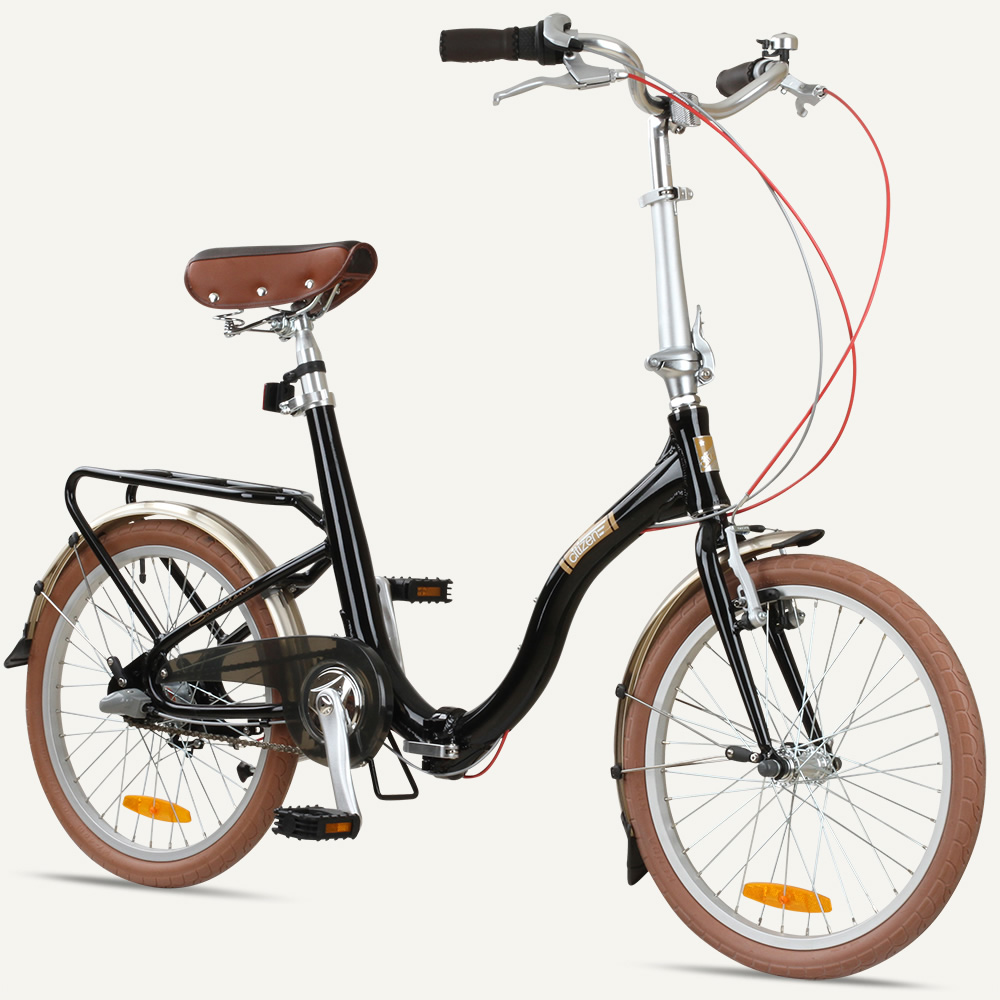
  • 20-inch wheels
  • Three speeds
  • 30 lbs
  • 30-by-27-by-15 inches
  • $399

Ravello Bikes – Modifying Your Current Bike Into a Folding Bike

Ravello Bikes takes your existing bike, aluminum or steel, cuts it in half at strategic points and travel bike couplersplaces flanges in place to disassemble and reassemble the bike. This is a great option if you already have a bike and want it smaller for travel. The flanges add some weight by functionality wise it is more or less the same.

Bike Packing List for a Bike Tour

January 30, 2016 by Wade Shaddy

bike packing list

A bike packing list can be minimal or extensive. It should take into account days in the saddle, miles between stops, and possible combinations of weather. It should include items for the level of comfort you expect and all the tools needed to repair your bike. A bike packing list will also vary depending on what type of bike tour you’re planning. You can’t take everything but it’s a good idea to be as self-sufficient as possible on a bicycle tour.

Two  Types of Touring

Some people plan to spend nights in the comfort of hotels or bed and breakfast, with actual beds. Other cyclists plan to sleep in a tent on the ground, and prepare their own food.

Light and Fast Bike Packing List

Basic items are all you need to travel light and fast. All you really need is a credit card. The major advantage of traveling with little or almost no gear, is that you can take your carbon-fiber, or otherwise lightweight road bike and rack up the miles fast. It’s not uncommon to travel 500 miles in a single week traveling light and fast. But there are a few items you need on your bike when traveling light and fast.

  • Smaller, nylon bags designed to fit on your handlebars, under your top tube, or behind your saddle are great at holding the essentials on a light and fast tour.
  • Credit cards and personal Identification
  • Deodorant, soap and shampoo (in case your hotel doesn’t have it), toothbrush and toothpaste
  • Warm, lightweight gloves, foldable rain gear and nylon shell or windbreaker
  • Leg Warmers: These are good to keep you warm on cooler days without adding bulk
  • Extra socks, shorts and jerseys (optional depending on your tour, and if you have room for them)
  • Medical kit that includes your prescription meds, along with aspirin, antacids etc. Gauze and items to deal with minor accidents.
  • Water-proof maps if not relying on a phone or gps
  • Sunscreen
  • TP (toilet paper) or tissues — you never know how much you might need it

On The Road Washing

Light and fast means you cant take much in the way of extra clothing. Small towns across the country often have facilities where you can wash your shorts, jerseys and bodies. Truck stops are good for this, they have showers. Hotels often have laundry facilities also. Utilize them. You can also wash your kit in the sink. To do this, simple body wash or bar soap works fine. Scrub and wring out as good as you can. Then lay out a towel and lay your kit on it minimizing overlap. Then roll it up from one end, like a pumpkin roll. and twist both ends in opposite directions as far as you can go. Then use coat hangers to hang in front of a window or fan ven

Self-Contained Touring Bike Packing List

Self-contained touring includes everything from the fast and light list, but you’ll need considerable more gear.  Self-contained, self-sufficient bike touring is a different animal. You need to pack for every imaginable situation, plus all the gear needed to camp.

Start With Panniers

First of all, you’ll need panniers. These additions to your touring bike should be pretty much impervious to rain, snow or mud. The choices in sizes and types are varied, but your panniers should give you the piece of mind that your possessions will be be dry and clean for the duration of your tour. Along with everything you need for camping and day to day life, don’t forget the things you would need on a regular bike ride. Things like:

  • Water Bottles or Hydration Pack (Camelbak )
  • Lights: LED tail Light and headlight, detachable is nice in campsites
  • Frame mount air Pump. Don’t skimp on pumps, get a beefy one that won’t let you down
  • Patch kit and tire Levers
  • At least two spare tubes
  • Presta to Schrader valve adapter. You might not appreciate these until you really need them
  • Bicycle multi tool
  • Spoke wrench

Spare Parts

Depending on how serious your tour is or how much room you have, you can include spare parts to repair your bike on the road. Things that might come in handy include:

  • Extra spokes and cables
  • Electrical tape
  • Chain lube
  • Brake pads
  • Spare tire
  • Zip-ties
  • Spare nuts and bolts
  • Chain tool and master links

Camping Gear

The bike pacing list for camping gear can be extensive and you should know what works or what you prefer to prepare for your type of touring. Try to get stuff that will stuff into a stuff sack. Here are a few things you will probably need to camp.

  • Tent, including all the stuff needed to set it up.
  • Poly Ground Sheet — this might double as a rain protector on the road.
  • Air Mattress/Sleeping pad
  • Air Pillow-optional. You can use clothes in stuff sack as a pillow.
  • Lightweight Backpacking Stove
  • Fuel Bottle
  • Cook pot set
  • Utensils: Spork, or spoon, fork and knife set
  • Other options for weather-related issues might include plastic tarps and bungee cords.

Off-Bike Clothes and Foul Weather Gear

You may be doing extended stays at campsites or towns. The choices of off-bike clothing are up to you, but you can’t really walk around all the time in your cycling gear. Foul weather gear should include rain jackets and pants, long-sleeved jerseys and thin layer underwear. Again, it depends on your tour, time of year, and climate.

Additions For Her

It’s widely accepted that females aren’t comfortable with a level of cleanliness that most guys adhere to. Guys are more likely to leave certain items out of a bike packing list that may make a tour more comfortable for women. But most items are unisex, and there’s really no reason for guys not to use at least some of them. If you’ve ever traveled by bike with a woman, you’ll recognize some of the items.

  • Tank tops and T-shirts: Don’t get anything skin tight, you’ll appreciate the ventilation when it gets hot. Some women prefer cotton, while others hate it. It’s your choice.
  • Flip flops or Crocs: Good to have so you can get out of your shoes and wear in showers at campgrounds, laundry rooms, etc.
  • Personal hygiene ( not sure if this one even needs mentioned)
  • Hand wipes: Again unisex maybe, but women are typically cleaner than guys
  • Hand Sanitizer: Again, should be a must in any tour
  • Skin lotion: Women just appreciate it more than guys
  • Insect Repellent: This one is also unisex, but guys typically forget it
  • Extra sports bras and underwear.

A Typical Day

The bike packing list for a bike tour is somewhat personal. Only you know for sure what you need for your individual taste and style. It helps to visualize a typical day on the road and add things to your own list. Start planning and packing ahead of time so you aren’t rushing around last minute; that’s when you forget something essential. A bike tour is super rewarding and allows you to see so much more from a differing perspective. Get out there and have fun.

Bike Travel – Tips to Traveling to Ride Your Bike

January 22, 2016 by Adam Farabaugh

bike travel

You’re exhausted after finishing a seemingly never ending day of travel but are now exploring the outskirts of a far off town with the feeling and excitement of a little kid who just got a new 10-speed. Nothing can take that smirky grin off your face as you try and explore as much as you can before it’s pitch black even though the coming days are going to be filled with incredible riding and experiences.

Bike travel anywhere away from home, it doesn’t have to be the epic roads of Europe, although that would be sweet, can give you that incredible feel of exploration along with being the trip of a lifetime. If you haven’t done it before, or even if you have, knowing a few good tips around bike travel will go a long way to ensure that your trip doesn’t have any major hiccups and leaves you wanting more before you’ve even returned home.

Bike Travel – Planning Your Trip

The basis of any great trip starts with the planning. Sure you can just go on a whim and it can be fantastic but that’s throwing a lot to luck. Some of the homework that you should do prior to a bike travel trip includes the following:

  • Where to go: You want to choose a location that has ample roads and the terrain you’re looking for whether it be mountains or coastal scenic roads. You will want to make sure that they are cycling friendly and that people go there to ride. There are a lot of cool places where people don’t ride but you’ll have to do extra work ahead of time to make sure that it meets your expectations.
  • What the weather is like: Make sure you check and see what the weather is like in the place you’re looking to go for the time of year you’re traveling. Don’t assume anything unless you’re prepared for it, a bike travel holiday in the cold and rain isn’t very pleasant.
  • The fitness level that you’ll have: Plan your trip along with the fitness level you will have at that time of year. You don’t want to be struggling through all your rides on your trip as you won’t enjoy it nearly as much. Make sure you have enough time to gain the fitness you need for your trip.
  • Look at what else you can do in the area: When considering destinations, think about what else you want to do on your trip aside from riding. Things like ample restaurants with good food, a beer and/or wine scene, hiking and other outdoor activities, and arts and entertainment are all things to consider when choosing where you want to go.
  • Where to stay: Depending on where you’re looking to go, there may be a lot of lodging options or relatively few. Considering price and quality as well as availability can be the deciding factor in where you end up going. A good thing to consider is to try and take advantage of the off-peak seasons of locations such as ski areas in summer and coastal locations in cooler months.
  • Important documents and credit card authorization: Depending on where you’re traveling, make sure you have the proper visas, identification, travel insurance declarations, and any other necessary documents before you leave. Also call your credit card company to notify them where and when you’re traveling if you’re headed out of the country so you can use your card abroad and not have it put on hold.

Bring Your Bike or Rent a Bike

Another difficult bike travel decision is if you want to bring your own bike or rent one when you get to your destination. This largely depends on how many days you will be riding at your destination and how in love you are with your own bike.

If you’re driving, bring your own bike. If you’re flying, bike fees can range from a normal bag fee of $25-ish to $300 round trip. Rental bikes typically cost anywhere from $100 per week to over $300 for a nicer bike. See what bike rentals are available in your destination and do the calculations to see how much you can save.

An expert bike travel tip is to get a small bike bag such as an Oru Case and bring your own bike which can get by the airline bike baggage fees. You’ll have to be a bit mechanically inclined to take apart and put your bike back together however, but that’s any easy skill to learn and a good one to have anyway. Another expert bike travel tip is to take a small carry-on and put the rest of you clothing and anything else you may need in with your bike to cut down on the number of bags you need to bring. Just make sure you don’t go over your airline weight limit, typically fifty pounds.

What to Bring

Riding compared to other sports always requires more gear but if you plan accordingly you can bring everything you need. This brief lists gets at the important bits that aren’t always thought about:

  • Extra Clothing: Even if you’re riding in the dead of summer you never know what the weather is going to do. Always bring: leg warmers, arm warmers, a base layer, a rain jacket, gloves, a vest, and a cycling cap; more if it’s going to be colder.
  • Spare parts and tools: If bringing your own bike, throw in two extra tubes, a spare tire, an extra derailleur cable, and the right size spokes and nipples for both your front and rear wheel and the tools to make use of them. These are items that have a higher tendency of breaking or can be hard to find, namely the right size spokes.
  • A dirty rag: Bring an old rag that you can use to wipe down your bike as when staying in accommodations you don’t want to bring in a dirty bike and make a mess. In addition, it’s always nice to ride a clean bike particularly if you’re on holiday.

Packing Ahead of Time

With any trip let alone a bike travel trip, you shouldn’t pack at the last minute as that leaves a pretty good chance that you’re going to forget something important. Start packing a few days ahead of time starting with a list of everything you’re going to want to bring down to how many pairs of underwear. Also, when packing, make an extra effort to have everything organized so you know exactly where it is and can easily access it when needed. Typically when traveling your suitcase goes from neat and organized to messy and cluttered as the trip goes on. Starting with it organized will help to keep it orderly throughout your trip.

When You Arrive

The hard part of traveling is getting everything organized and planned ahead of time. Once you arrive, hopefully you can do what you set out to do with minimal stress and maximal fun. These few bike travel tips will help you once you arrive at your destination:

  • If you’re in a foreign country the first thing you should do, at the airport or after you cross the border, is to obtain the local currency. Depending on how far money goes in the country you’re in, $100 is typically enough to get you started. Then any transactions you do, whether dinners or the hotel bill, should be on your credit card to minimize the amount of cash you have to take out, carry around, and use. Cash is basically your backup should you need it. And then any leftover at the end of your trip, you can just exchange back.
  • Talk to locals to find out the ins and outs of the local area. They don’t have to be bike riders but anyone as they will at least have an idea of the good roads to check out, the cool local sites to see, and restaurants and other local cultural things to explore and experience. A bike shop of course is always a good option for all of this as well.
  • The first day you arrive, ideally in the evening of the first day, you should try and do an easy ride to shake out the legs from the travel and get a feel for the local area. The best way to do this is to simply just go out and explore the town or city you’re staying in. The best way to check places out is by bike as you’re going slow enough to see and experience things but fast enough to see a good chunk of the area. Also keep an eye out for places you want to check out such as restaurants or coffee shops.

Traveling with your bike can be some of the greatest holidays you go on as the amount of things you can see and the experiences gained are unlike that of any other trip. Bike travel does take some planning and know-how particularly for everything to go off without a hitch but hopefully with these few tips you’re heading in the right direction for the trip of a lifetime on the bike.

Cycling in the UK – 10 Best Cycling Routes in England

January 14, 2016 by U.M.

cycling in the UK

As a cyclist, you will always be looking out for new routes to experience. After all, much of the fun of cycling is discovering new places and experiencing them in a way that wouldn’t be possible by any other means. For those who are interested in cycling in the UK and taking a cycling holiday in England, one of the key parts of planning should be finding routes that will offer the most enjoyment.

For those who don’t know where to start cycling in the UK, we have compiled a list of the best cycling routes in England.

  1. Forest of Dean, Gloucestershire (map link)

Gloucestershire is an absolutely beautiful area in its own right, but the stunning Forest of Dean truly has to be seen to be believed. Happily, the forest is also friendly to cyclists, so you could spend an entire day getting lost in nature and enjoying a good ride in the process.

  1. Hardknott Pass, Cumbria (map link)

A regular fixture in many competitive cycling races in England, Hardknott Pass is a challenging road for people who really want to push themselves. It’s extremely steep and has a number of hairpin bends, but the rewards for managing to successfully navigate it are immense.

  1. The Camel Trail, Cornwall (map link)

The Camel Trail is 17 miles of some of the most beautifully scenic views that England has to offer. It is one of the best cycling routes in England because it takes in the gorgeous views offered by the stunning River Camel.

  1. Bakewell, Calton Lees and Edensor circuit, Derbyshire (map link)

The Peak District is one of the most stunning areas of natural beauty in England and this 10 mile, dedicated trail will ensure you see the best of it. It’s a fairly easy route, outside of a couple of steep hills and a fairly difficult downhill section near the end.

  1. B3387, Dartmoor (to Haytor) (map link)

This is a road that has become a regular fixture of the Tour of Britain, so if you want to experience the thrills that professional cyclists enjoy there is simply no better cycling route in England. You’ll have to face up to some difficult climbs to get it done though.

  1. The Cuckoo Trail, Sussex (map link)

This 11 mile stretch of old, disused railway track will get you up close and personal with nature. It’s an easy ride, as you wouldn’t expect a railway track to have steep gradients, but you get to see plenty of woods and farmland as your ride.

  1. Cambridge to Wicken Fen, Cambridgeshire (map link)

This is a great ride for family cycling as it is long enough to make a day of the ride, while also being an easy enough ride to ensure that everybody enjoys themselves. You’ll ride plenty of traffic free paths and country lanes along the way.

  1. Putney Bridge, London to Weybridge (map link)

The Putney Bridge trail is one of the best cycling routes in England for people who want to take in a little bit of nature. It takes you through the heart of Richmond Park where you will see plenty of wildlife in addition to enjoying a nice, relaxing ride.

  1. Bath Two Tunnels circuit, Somerset (map link)

History fans will love this route, as it takes in a gorgeous castle, an aqueduct and a pair of tunnels that all hearken to England’s roots. It’s mostly made up of a riverside path and is a fairly easy ride to complete, so you don’t need to be at peak levels of fitness to take it all in.

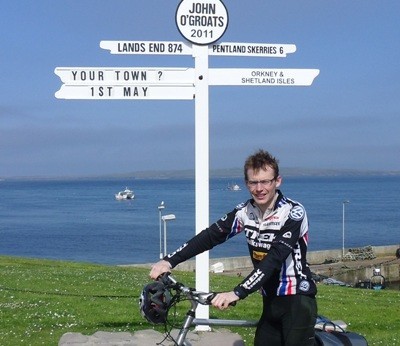
  1. Land’s End to John O’Groats (map link)

This is the ultimate cycling route in England and will see you trekking from one end of Britain to the other, completing the circuit in Scotland. You will need to dedicate time and energy to training for this one, as it is 1,000 miles of varied riding. If you do decide to take it on then you are going to need to dedicate your entire holiday to it.

Cycling in the UK offers some of the greatest riding to be had anywhere with it’s diversity and spectacular scenery. Hopefully you get the chance to take in some of these rides and a few of the amenities of the surrounding towns.

Cycling Abroad – The Ins and Outs to Having the Best Experience

January 13, 2016 by Lee Agur

cycling abroad

Vastly different roads, long expanses of countryside, differences in culture, a plethora of unique foods, and the potential for fewer vehicles on the roads are just some of the reasons that make cycling abroad such an appealing activity. Whether you’re training for a century ride, or just engaging in your hobby with a few friends, it’s important to get to know a little bit more about your destination and the ins and outs of cycling abroad before taking to the road.

Cycling Abroad – Why Do It?

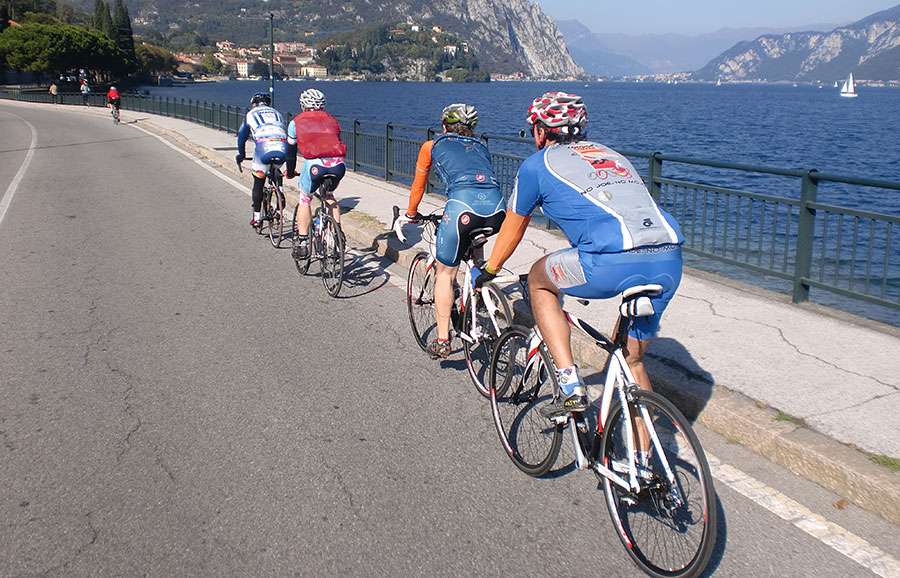
As fun as it is to traverse your local area on two wheels, it can be quite the exhilarating feel to explore an unknown location or journey down roads that go on for miles without knowing what’s around the next bend. One such location in the world is around the Mediterranean Sea which has an abundance of roads that run across the countryside, hills, and mountains not to mention snake their way through quaint old towns that have incredible food, coffee, wine, beer, and locals to accentuate your ride.

When compared to other locations around the world, the Mediterranean has far less cars on the road, meaning that cyclists can often go on for miles without bumping into a single vehicle. Even the smallest islands play host to some of the most extensive roads such as Mallorca or Sicily and this allows cyclists to travel from location to location unhindered.

Pushing the Limits

Most competitive cyclists are keen to enhance their endurance levels and what better way than by literally having to cycle across entire expanses of land? Your cardiovascular health will come in to play and if your body isn’t ready for a long ride, then it definitely won’t be prepared for consecutive days of long riding. That’s a major reason why cycling abroad has become such a popular pastime for cyclists everywhere as when doing a trip abroad you just want to see more, ride more, and experience more.

Dealing with the Change in Climate

If there’s one thing that’s guaranteed to cause a shock to the system, it’s the change in climate when you’re abroad. Whether you’re visiting Europe, Australia, Africa or Asia, the temperatures in the summer can reach incredible heights. If you’re traveling to the Northern Hemisphere, then a great time to cycle is between September and December, where the temperatures are cool enough to train in.

If you’re planning a trip to the Southern Hemisphere, then January to March is a better time to cycling abroad. Just be sure to take plenty of water and make frequent stops to recover unless you’re able to push further. Wherever you’re planning to ride, it’s a good idea to prepare a kit just in case you find yourself in need of assistance. The sparsely populated regions are often miles away from amenities!

  • Plenty of fresh water is vital. Drinking water isn’t always available, so stock up.
  • Repair kits are a must and although it’s unlikely that your tires will blow-out, they may still suffer punctures.
  • A working cell-phone can go a long way, so check your coverage in the country you’re in before setting out.

Training Routes

Most countries will feature routes for cyclists that may be marked with signs or shown in a local map. Popping in to the local authority to grab a few maps will go a long way and it’s always a good idea to stick to the routes as opposed to going off-road. If you’re training for a competition that involves off-road cycling however, then be extra safe since you’re in an unknown land potentially without the immediate access to help if needed.

If there’s one complaint to be had about cycling routes, particularly in remote areas, it’s that they can sometimes fall in to disrepair. Certain markings or signs can become hard to read especially if they are in another language, or they may have worn away entirely. If you’re ever unsure, you may have to seek advice or simply navigate with the logical due care and attention!

Making the Most of your Cycling Abroad

When cycling abroad, you want to make the most of your time there. To do so, you should make sure you’re in shape enough to enjoy the riding that you’re doing. If you’re planning on going someplace mountainous, make sure your weight is in check and that you incorporate some good training and mountain riding to prepare for it. There’s nothing worse than getting someplace and realizing that you don’t quite have the fitness to enjoy the riding and that you can’t do all that you want. In the weeks and months leading up to your trip cycling abroad, make sure you’re riding enough and at the proper intensities to be ready.

Tips on Traveling Abroad to Ride

  • Bring any tools and spare parts you may need on your trip as finding what you need to fix something in a foreign country can be a hassle.
  • Buying travel insurance before you go is not a bad idea as most will cover baggage damage or loss, flight interruptions, along with the hospital bills should you have an accident, along with other unforeseen circumstances.
  • Hit up a local if you can on where the good rides are along with good places to eat and check out. Inside knowledge will go a long way.
  • Be kind, courtesy, and respectful whether in traffic or at the local restaurant. You are the foreigner and most likely don’t know the local customs and standards. It will go a long way in your experience as people will be much more receptive to reaching out and elevating your travel experience.

STP – Seattle To Portland – The World’s Best Group Ride?

January 6, 2016 by Wade Shaddy

STP

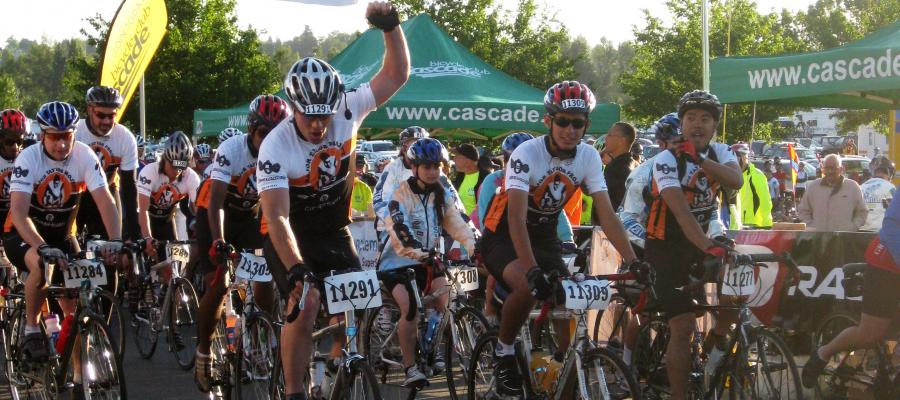
The STP – Seattle to Portland event has probably introduced more people to their first century ride than any single event. Experienced riders claim that the STP ride is the fastest they’ve ever completed a century. But it doesn’t stop there. After completing the first century you do another one, the next day. It might sound overwhelming but almost any cyclist with determination and a bit of preparation can do it. It’s easier than you think.

Biggest and Baddest

The 200-mile Seattle to Portland, or “STP,” bike ride is the largest bicycle event in the Northwest. The route takes you through the scenic valleys, forests, and farmlands of Washington and Oregon. Bicycling Magazine has listed the STP as one of the best cycling events in the nation. It’s not the toughest ride in the West or the most challenging, but it has plenty of rollers. It is missing the major climbs of similar rides — except for one big hill at the 45-mile mark. The lack of hills is what makes the STP so alluring to the average cyclist.

Bucket List

Even though it lacks the steep climbs of similar rides, it should be regarded as a physical and mental challenge for recreational riders and should be treated with respect, but it’s not a race. There’s no pressure to go fast. Put it on your bucket list if you haven’t already.

The Key to the STP

The key to the STP is that it’s implicit as a mostly flat route with temperate weather, aid stations, and a lot of camaraderie with other riders. Each and every rider has a blast that’s fueled by their abilities and drawing inspiration from those around them. The atmosphere of the STP is inspiring, and the miles drop behind you in a hurry.

Ten Thousand Riders

Cyclist participation in the STP is limited to 10,000 riders. Slots fill up fast. If you have any desire to participate, get online January 1st, the start date for open enrollment in the bicycle classic. Low license numbers are a badge of honor in the ride, if possible, get online when the ball drops on New Years Eve for the lowest of numbers. You’ll get recognized on the ride by fellow cyclists all along the route.

Sea Level

The elevation of the STP route is at, or just above sea-level, and the air is rich with oxygen. If your home town is higher than sea level, you’re accustomed to thinner air and you’ll be feeling super-charged, feeding on the oxygen-rich air along the STP Route. .

The Support

The STP is fully supported, with aid stations supplying food, water and sports drinks every 25 miles along the route. A typical line-up  handed out by volunteers might include more than 11,000 bananas, 4 tons of watermelon, 13,000 bagels and 18,000 sandwiches. There is some mechanical support at each rest stop, but if you have major mechanical issues, the halfway point supplies a mechanics who can deal with almost any bike issue that you might have, and it’s all included, free of charge.

Prepare Yourself

It’s not necessary to get a century under your belt before attempting the STP, but it’s advisable just to give yourself confidence. Prepare yourself mentally and physically. Realize it’s going to be somewhat tough. Your legs will get tired and your butt will get sore. If you come to grips with these vulnerabilities before they happen, you’ll be better prepared to overcome them. When you get tired, look at the riders around you, lots of them are in worse condition than you are. Look at the gray hair, middle-age bulge, or youthful exuberant riders on single-speeds, mountain bikes or cruisers. If that doesn’t give you the inspiration to keep pedaling, not much will.

The Launch

There’s a packet waiting for you after you register online. Find the location and pick it up the day before you launch. Bring your sleeping bag, and load it on a truck; they take it to your overnight stop for you. Start the ride as early as about 5 am if desired. Long distance riding is best accomplished with an early start, so get there, packet in hand, ready to launch. Starting before 5:30 am gives you the best chance to stay ahead of the masses, which is a bit safer, more enjoyable, and there’s smaller lines at the toilets and aid stations.  The launch site is at the Husky Stadium at the University of Washington. The launch consists of groups of 150-200 riders at a time, spaced a few minutes apart to keep everyone from bunching up.

Join a Paceline

It’s impossible to ride by yourself. There’s always going to be other cyclist around you. As the miles get longer, the pack thins out, and it’s a long, long line after that. If you’re invited into a paceline that’s fine, take it, but don’t assume it’s OK to suck the wheel of the rider in front of you. Get permission to join a paceline.  Meeting and riding with new people from around the world is one of the true joys of the STP.

Half Way Point

Centralia College is 99 miles into the ride and the most commonly used overnight spot for the ride. It’s a great scene with participant tents and vendor booths filling the college’s courtyard and it’s a perfect place to stop for a break. But if making this ride is a challenge for you, don’t overnight at Centralia. Continue on to Winlock or Longview. They have schools ready for you, and the gear that you have selected for the ride, sleeping bags primarily, will be there, waiting for you. The shower you get is a gift from heaven, followed by the traditional spaghetti dinner that’s the best one you’re ever going to have in your lifetime.

Not a Race

It’s not a race. Take your time and enjoy conversation with other riders, but don’t linger at aid stations. Too much time off the bike is counterproductive. Limit stops to no more than about 20 minutes or less if possible.

The Finish Line

The last few miles of the ride is punctuated with cheering spectators, all who want a piece of you. Picture yourself in the Tour de France. If you’ve ever wondered what it feels like to be a part of something this big, the STP is it. Cycling single-file down the last few blocks, through the colorful, narrow entry to the finish line with cheering people makes your heart race, and your adrenaline pound. You’ve done it. Expect to see tears of pure joy from other riders, and maybe even yourself, it’s infectious.

The Route of the Hiawatha

October 27, 2015 by Wade Shaddy

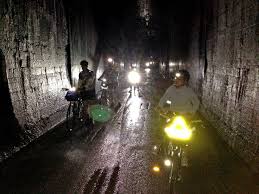
Imagine riding your mountain bike into a dark, cavernous tunnel in a remote forest in Montana, only your headlight guides the way.

enter tunnel - The Route of the Hiawatha
Into the darkness.

You continue riding, and after a few minutes, all traces of civilization disappear. Pay no attention to the dripping or rushing water, you’re perfectly safe. If you’re not claustrophobic, and continue riding for almost two miles, the darkness yields to the light at the end of the tunnel. When you emerge slightly damp, you’re in Idaho.

lights - The Route of the Hiawatha
Don’t forget your headlight.

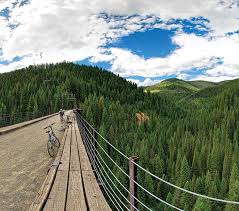
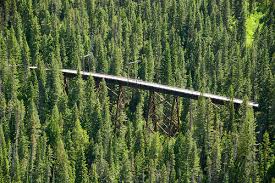
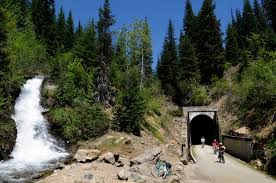
The path continues, giving way to a 300-foot bridge trestle over a deep gorge. The journey continues down a 2-percent grade descending 1000-feet over the next 17 miles, passing through eight more tunnels and across seven high steel trestles.

bike tressel - The Route of the Hiawatha
Don’t look down.

The Route of the Hiawatha is like no other trail, anywhere on earth. Built by the railroad at great expense circa 1910 and abandoned in 1961, travelers lavished in fancy train cars on a scenic voyage through the Bitteroot mountains. The long gone opulence is now a well-maintained bike trail.

long shot - The Route of the Hiawatha
A feat of engineering.

Depending on your fitness and determination, it’s possible to ride down to the bottom, and back to the top again in a day. The 2-percent grade is not that bad, but can take a toll if you’re already tired. Get started early in the day if you choose this option. Another option is to take your time, take pictures, and grab the shuttle bus back to the top. Allow yourself about 2 1/2-to-3 hours to ride down at a leisurely pace.

final - The Route of the Hiawatha
Singing in the tunnels is encouraged.

Because of the remoteness, a trail Marshall, also a cyclist, is somewhere along the trail at all times, ready to assist. But remember, the Marshall leaves at dusk. If you don’t make it back to the top by sundown, you’re on your own. There is a minimal charge to get on the trail, but it’s well-spent.

Itinerary

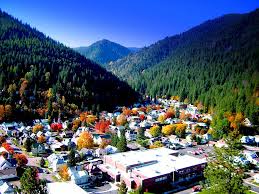
The Route of the Hiawatha is remote. The nearest town is Mullan Idaho, it’s small and without adequate facilities. Plan to stay in Wallace Idaho. It’s a trendy, yet antiquated town snuggled between steep hills on the interstate. Wallace is an experience in itself, plan on spending some time there. If you have the time, ride the infamous Coeur D’Alene bike path, a 72-mile long bike trail that passes through the center of town.

They filmed the movie, "Dantes Peak," in Wallace. Check it out. The Route of the Hiawatha
The movie, “Dante’s Peak,” was filmed in Wallace. Rent it for a preview of Wallace.

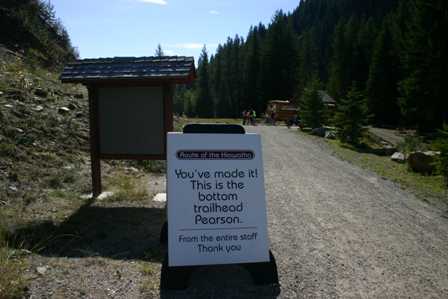
From Wallace, take interstate 90 for 11 miles to the Lookout Pass Ski area to rent a mountain bike. If you already have a bike, proceed directly to the trailhead, 2 miles south of the ski area. But remember, you’re not allowed on the trail without a headlight.

you made it

Young and old, fit or not, roadie or weekend cruiser only, the Hiawatha Trail is doable for almost anyone with an adventuresome spirit. Check it out if you get the chance.

Coeur D’Alene Bike Trail

October 18, 2015 by Wade Shaddy

Can a bike trail make you faster, with more endurance? Can you imagine riding 140 miles or more — in a single day?  A trail exists that can help you do that.

Coeur D'Alene Bike Trail

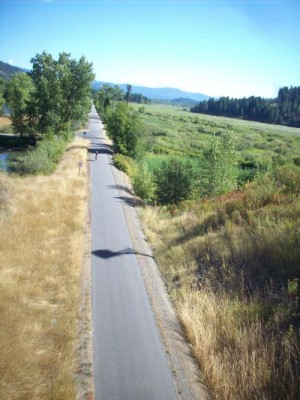
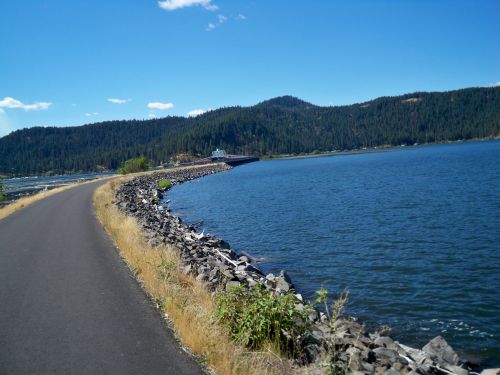
The 72-mile Coeur D’Alene bike trail in the rugged panhandle of Idaho is such a path. Designed with the hardest, smoothest blacktop you can imagine, it’s purpose is to cap-off heavy metals leftover from the Silver Valley Rail line. Paid for by the United States Government, the State of Idaho, and the Coeur d’ Alene Tribe, the 10-foot-wide, well-maintained path provides cyclists with a once-in-a-lifetime experience.

Coeur D'Alene Bike Trail

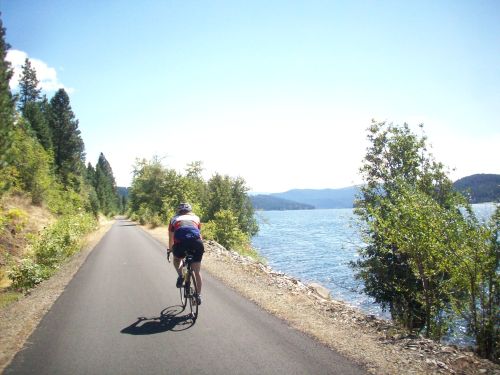
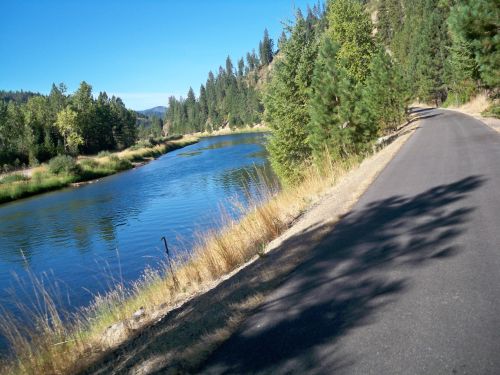
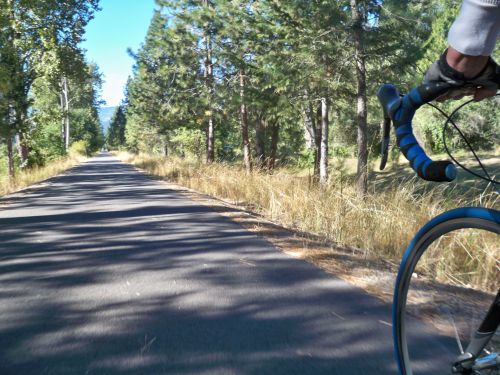
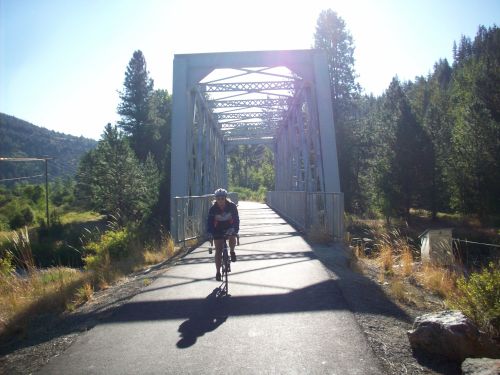
Gliding along with almost no effort, the Trail of the Coeur d’ Alene is like glass. You can’t even feel your bike on this trail, and it’s easy to cruise at 20 mph all day. The miles drop away as you pass through chain lakes, pastoral settings, over high-bridges, and through deep, forested tunnels….and most of the people you’ll see are cyclists just like you, and maybe a few deer, bear, raccoon, moose, elk, herons, etc.

scenic river - Coeur D'Alene Bike Trail
The trail follows the Coeur d’ Alene river.

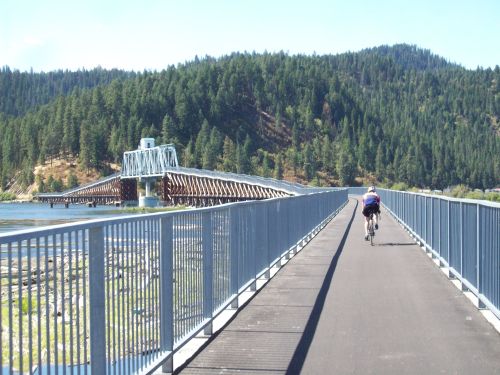
The trail starts at Plummer Idaho, and ends at Mullan Idaho, but there’s options to enter it at regular intervals. One of the best options is to leave your rig at Heyburn State park, and start your journey by climbing the Chatcolet bridge over lake Coeur d’ Alene.

Once a draw bridge for big ships, it's now a lookout for cyclists. Coeur D'Alene Bike Trail
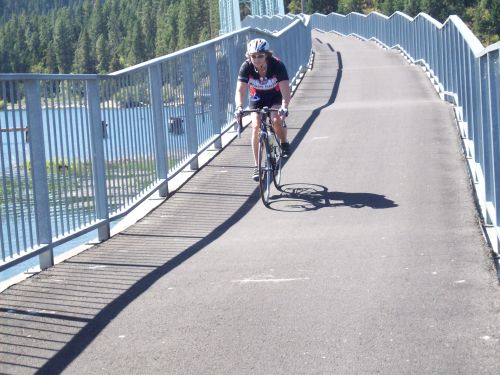
Once a draw bridge for big ships, it’s now a high point for cyclists.

Designed with bikes in mind, the draw bridge is refurbished with a series of built-in rollers. It’s the fastest part of the trail. Because it’s so smooth, intrepid cyclists can hit 40 mph — if life insurance is paid up.

Coeur D'Alene Bike Trail

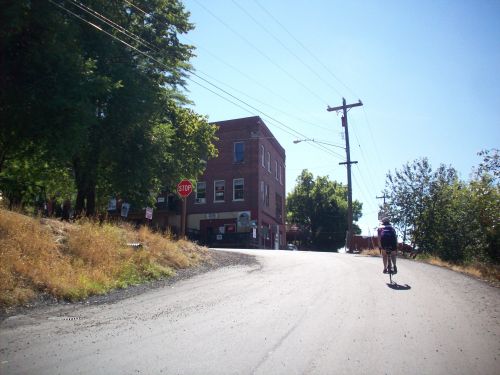
Your next stop, only about 10 miles from the bridge is the lake-front town of Harrison. It’s a bike-friendly town where you can grab an icy caramel frappacino, stop at the bike shop for advice, and visit with other like-minded cyclists.

The last refreshment stop before heading toward Cataldo, about 30 miles. Coeur D'Alene Bike Trail
The last refreshment stop before heading toward the tiny Cataldo Inn, about 30 miles.

The remainder of the trail is relatively flat — because trains can’t climb. If the path climbs at all, it’s unnoticeable.

Coeur D'Alene Bike Trail

Going the distance from Plummer to Mullan and back is about 140 miles. It’s easier than you think. But if that’s a bit intimidating, plan an overnight stay at the historic Ryan Hotel in Wallace — the center of the universe — it’s an experience you won’t soon forget. It’s right across the street from the Oasis Bordello Museum where you could get a, “straight, no frills” for $15, until about 1988 when it closed its doors.

handlebars - Coeur D'Alene Bike Trail

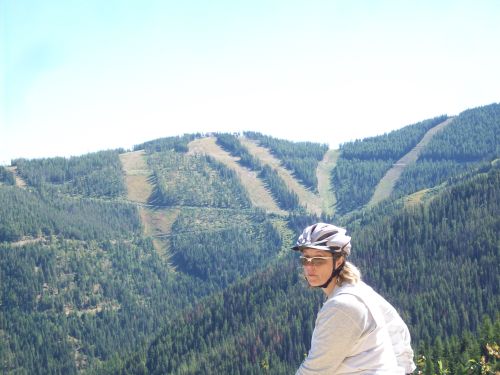
If Wallace seems like too many miles, the scenic town of Kellogg is only about 40 miles from Chatcolet, where you can ride one of the longest gondolas in the world to the top of Silver Mountain. Rent a downhill bike and practice your downhill skills.

gondola - Coeur D'Alene Bike Trail
Silver Mountain downhill has trails for all skill levels.

The ride from Harrison to Kellogg is remote. There’s bathroom facilities at regular intervals on the trail, but make sure your water bottles are filled, you’ve got a few snacks, a tool kit and a spare tube. Forget your cell phone, it’s probably not going to work out there anyway.

Sunlight reflects off the glassy trail. - Coeur D'Alene Bike Trail
Sunlight reflects off the glassy trail.

The trail ends 6 miles from Wallace at the small town of Mullan, an old mining town. But the biking adventure doesn’t end there. The Trail of the Hiawatha is another 10 miles via interstate 90 where you can rent at mountain bike in Montana, enter a two-mile long tunnel, and emerge in Idaho. Locals in Wallace will often give you a lift to Lookout Pass where they have bikes with the necessary headlights to navigate inside the tunnels. Some people ride their bikes from Wallace to Lookout pass on the interstate, but it’s best to ask around at the hotel for a lift, they’re used to it.

final - Coeur D'Alene Bike Trail

The Coeur D’Alene bike trail is what cycling is all about. Do it fast on a high-speed carbon bike for a training ride. Do it slow on a cruiser to escape the rat-race. Take a side-trip on a cushy downhill bike for an adrenaline rush, or combine them all for a trip you’ll never forget. The Coeur D’Alene bike trail is waiting.

10 Best Cycling Routes in Canada

September 2, 2015 by U.M.


10 Best Cycling Routes in CanadaThe Great White North rivals any other country in the world when it comes to areas of natural beauty. Luckily for cyclists, this also means that there are a number of cycling routes in Canada that are well worth their time.
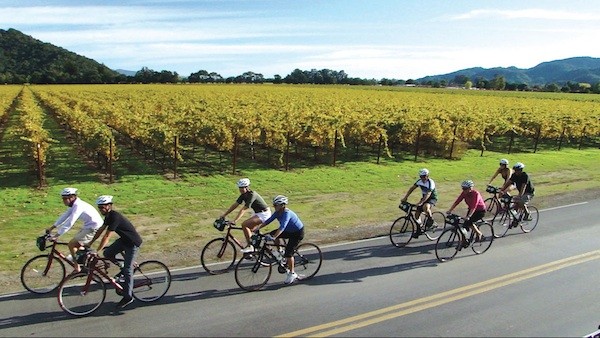
In this list we will take a look at ten of the best, all of which are worthy of you spending a little bit of time with them if you choose to go on a cycling holiday in Canada.

  1. The Gulf Islands

Rather than being a single, dedicated cycling trail, with this option you will have your choice of the Gulf Islands, which makes the route ideal for those who like a bit of flexibility when they ride. Each island has its very own personality to explore and you could spend an entire cycling holiday getting acquainted with each one of them.

  1. Yukon’s Ridge Road Heritage Trail

This 30 kilometer trail is ideal for people who want to experience some of the history of Canada, particular for those who are interested in the Gold Rush era. You’ll get to see the gorgeous Ogilvie Mountains in addition to coming across a number of old roadhouses that were built during the Gold Rush period.

  1. Fundy Tidal Trail

Those who enjoy coastal scenery will find few better cycling routes in Canada than the Fundy Tidal Trail. Not only do you get to enjoy a bit of the seaside, but you will also encounter the Fundy National Park and Rocks Provincial Park along the way, meaning there is plenty to see and do.

  1. Nova Scotia’s South Shore

If you are just looking to enjoy the ride without having to worry about having a particular place to go, then Nova Scotia’s South Shore is the route for you. You’ll ride through a number of gorgeous villages, all while taking in the wonderful scenery around you. This route is ideal for those who just want to relax and enjoy the ride.

  1. Kettle Valley Railway

Some of the best cycling routes in Canada take in abandoned railroad tracks and the Kettle Valley Railway is probably the best of the lot. It’s a popular route, so you will likely encounter a number of fellow cyclists along the way, plus the Myra Canyon is truly a sight that has to be seen to be believed.

  1. Duck Mountain

This wonderful mountain used to be a glacial summit, so make sure you wrap up warm if you’re going to take a journey there. The mountain biking trails will take you through gorgeous forest lands, where you’ll see majestic Elk and other animals if you’re lucky.

  1. Magdalen Islands

You’ll need to take a ferry ride to get there, but this trail is one of the most interesting around and offers something a little bit different. Sand dunes and stunning beaches are the order of the day, but you’ll have to be ready to deal with some particularly strong headwinds along the way.

  1. Niagara Region

One of the best cycling routes in Canada for those who simply want a chill ride, the Niagara Region allows you to follow the river that leads up to the world famous waterfall. The terrain is ideal and you will find that you spend most of your time simply soaking in the surroundings.

  1. Toronto’s Tommy Thompson Park

This wonderful nature reserve features a purpose-built cycling trail that will allow you to take in every inch of this wonderful park. The natural views contrast beautifully with the city’s skyline, creating an experience that you won’t want to miss.

  1. Icefields Parkway

Located in the heart of the Rocky Mountains, there is simply no escaping the view of the peaks, which makes this one of the most wonderful cycling routes in Canada. A pair of difficult mountain passes await you, so be sure to bring you’re A game on this trail.

10 Best Cycling Locations in California

September 2, 2015 by U.M.

10 Best Cycling Locations in CaliforniaCalifornia is one of the most gorgeous states in the USA and is home to sun-kissed beaches, and other areas of natural beauty and a wine culture that is among the most interesting in the country. All of this combines to make it an area of interest for cyclists, so it is good to know that there are plenty of good cycling locations in California.

There is something for everybody, regardless of what you are looking for from your ride, so here we will look at some of the best cycling locations in California.

  1. Napa

Napa City is a wonderful area and this route takes you through it. At a little over 20 miles it is a decent ride without being too exhausting, plus you will get to see the stunning Mt Veeder Road. Best of all, the rapid descent is one of the most exhilarating experiences you will have. Couple this ride with all of the amazing wineries and you have an ideal cycling location.

Napa Routes: napavalleybiketours.com

If you’re seeking a little bit of peace and quiet during your ride than this is one of the best cycling locations in California. From a paved road in the back-end of the village, you will encounter a gorgeous wilderness that always contains something interesting to see.

Mattole Road Route: sundaymorningrides.com

  1. Aliso Creek Riding and Hiking Trail

This 18 mile stretch of asphalt makes for a really smooth ride, which is great for road cyclists who want to see a little bit of nature as well. You will get to see a number of different parks in Orange County, allowing you to really make the most out of your visit.

Aliso Creek Trail: traillink.com

  1. Pine Flat Road

Getting to the peak of Pine Flat Road is as much an achievement as it is a bike road, so make sure that you are ready for the challenge ahead. You’ll have an 11 mile climb ahead of you, which only gets steeper as you near the summit. The view from up there provides all the reward you’ll ever need for your hard work, though.

Pine Flat Road Route: bestrides.org

  1. Stewarts Point – Skaggs Springs Road

If Pine Flat Road doesn’t offer enough of a challenge than Stewarts Point Road will. It’s considered to be one of the most difficult cycling routes in California and there are plenty of hills and off-road sections for the adventurous. Amateurs should stay away though.

Stewarts Point – Skaggs Springs Road Route: twistypedia.com

  1. American River Bike Trail

This stunning trail runs for 32 miles and runs alongside the banks of the American River, meaning that you will get to see plenty of natural beauty on your ride. It’s also very easy to navigate and includes a number of places you can stop over and refuel.

American River Bike Trail Route: americanriverbiketrail.com

  1. Bannon Creek Parkway

This cycling route is short and sweet, but it is also one of the most popular cycling locations in California. You’ll have the opportunity to mix with the locals in addition to exploring the wonderful Jefferson School Park and Bannon Creek Parkway.

Bannon Creek Parkway Route: traillink.com

  1. Miners Ravine Trail

Don’t let the name fool you, as you won’t end up deep underground while riding this route. Instead, you’ll get to see the city of Roseville in all of its glory before following the course of the ravine that gives the route its name. This route offers a great mix of nature and suburban living environments.

Miners Ravine Trail Route: everytrail.com

  1. Ohlone Loop Trail

Nature lovers, and those who enjoy birds in particular, will love this location. It takes on the wetland areas of Watsonville, which is located on California’s central coast, creating a peaceful ride that is not too far from residential areas so you don’t need to worry about getting lost.

Ohlone Loop Trail Route: cityofwatsonville.org

  1. Lario Trail

The Lario trail is one of the best cycling locations in California for people who want to experience the dual nature of the state. On one hand you will get to enjoy the natural beauty of the LA River, whereas on the other you will experience the impressive industrial landscapes of the state.

Lario Trail Route: google.com/maps

Which of the 10 best cycling locations in California is your favorite?

« Previous Page
Next Page »
  • Facebook
  • Tumblr
  • Twitter

Latest Articles

JOIN Cycling: A New Training Platform for Cyclists

May 27, 2024 By Eric Lister

cold exposure

The Benefits of Cold Exposure for Cycling & Life

June 13, 2023 By Eric Lister

hill climb

The Ultimate Hill Climb Training Guide

May 31, 2023 By Eric Lister

shoulder pain cycling

How to Treat & Avoid Shoulder Pain While Cycling

April 12, 2023 By Eric Lister

psoas stretch

The Importance of the Psoas Stretch for Cyclists

April 6, 2023 By Eric Lister

cycling neck pain

The Ultimate Guide to Cycling Neck Pain: Causes and Solutions

March 21, 2023 By Eric Lister

Useful Info

  • Contact
  • Finally, A Global Cycling Club That Is Focused On Community And Love Of Cycling!
  • Privacy Policy
  • Share Your Story!
  • Terms And Conditions Of Use
  • Welcome to I Love Bicycling
  • What Happened When I Stretched Every Day For a Month

Recent Posts

  • JOIN Cycling: A New Training Platform for Cyclists
  • How to Hang Bikes in Your Garage: 4 Inexpensive Options
  • Gravel Bike Vs. Road Bike: Which One Is Better For You?
  • The 6 Types of Mountain Bikes & How to Choose the Best One for You
  • What Is a Touring Bike Good For? 5 Benefits We Know You’ll Love

Search I Love Bicycling

Connect with Us

  • Facebook
  • RSS
  • Tumblr
  • Twitter

Copyright © 2026 · Magazine Pro Theme on Genesis Framework · WordPress · Log in