• Training
    • Injury Prevention
    • Training Tips
  • How To
    • Bike Fit
    • Gear
  • Nutrition
    • Nutrition Tips
    • Weight Loss
  • Repair
  • Reviews
  • Stories
    • Funny Stories
    • Jokes
    • Quotes
    • Videos
    • Funny Videos

I Love Bicycling

I Love Bicycling is a website that is geared towards cycling for beginners with road cycling tips, training articles, nutrition tips, weight loss, how to’s and bike repair articles.

How To

  • Bike Fit
  • Gear

How to Correctly Adjust Bike Seat Height (And Why)

January 12, 2023 by Eric Lister

Having a proper bike seat height on your rig is one of the most important parts of your bike fit overall. You risk discomfort, pain and the eventual likelihood of injury if you decide to overlook it, and may even attribute such problems to other facets of your training and lifestyle; missing the source of them altogether.

A number of factors are going to be at play including your specific upper/lower limb proportions, the mobility of your tissues, and your functional operating output in general. It might sound like a bunch of fancy nonsense, but it really all just boils down to the unique composite and capacity of your human body.
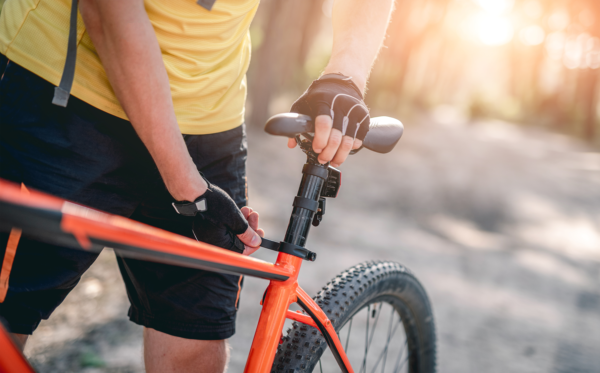
man adjusting bike seat height

levgen Skrypko/Adobe Stock

Here is what’s going to happen, we’re going to give you some simple tips and guidelines to adjust your bike seat height the correct way. Then, we’re going to hash out the problems that come with adjusting your saddle improperly. This will, for some of you (we hope), provide answers to pains that have been recurrent or chronic throughout your cycling career.

Arming yourself with the knowledge to address problems when they arise allows you to confidently push yourself in your training and competitions. Ride long enough and you’ll get hurt, you’ll feel pain, that’s just the way it is. Better to know where you can start looking, and be self-sufficient in your recovery, than to pedal away in ignorance and be at the mercy of countless practitioners because you have nowhere else to turn.

Proper Bike Seat Height

There are a couple of handy indicators that you can easily test and look for to tell if your saddle is the right height for your body. These signs should be looked for with a partner while you’re sitting on the bike while it (the bike) is in an upright position, using a support (such as a wall) to anchor yourself, and squeezing the front brakes to remain stationary.

Slight Knee Bend 

When you’re at the bottom of your pedal stroke (6 o’clock position) there should be a slight bend in the knee, approximately 25°-30° for most people. Any more, and you’re going to place excessive loads on the anterior part of the knee. Any less, and you’ll start to overextend the leg and heighten the injury risk to the back of the knee and hip extensor muscles.

1-2 cm Heel Drop

Again, at the 6 o’clock position, but this time with your knee locked out, your heel should drop 1-2 cm below the pedal. If you can’t fully straighten your leg, you’ll have to raise the seat. If you lock out your leg but are still struggling to reach the pedal, or your heel sits even with/above the pedal, the seat will have to be lowered.

Heel Pedal Test

Put your heels on the pedals and go through a full pedal stroke. If your saddle height is properly adjusted, your knee will lock out when going through the bottom position, and your heels will stay in contact with the pedal. If your knee bends at the bottom, the saddle should be raised, and if your heels lose contact at the bottom, the saddle should be lowered.


These are a few great ways to find your saddle height with the help of a friend or by using your phone to record yourself riding. More comprehensive methods are available, but these are by far the most economical. Let’s take a look at what can happen if saddle height is ignored or just improperly aligned, and the effect it can have on a person’s body.


Ljupko Smokovski/Adobe Stock

Improper Bike Seat Height

Having your saddle too low or too high is going to place excessive loads on different parts of your body. One of the reasons a bike fit is so important is because the bike is not a natural mechanism in and of itself. It’s man-made, but we are not bike-made. These are odd positions for us to be in in the first place, so doing it in the most optimal and efficient way is important due to the prolonged and repetitive nature of our sport.

Saddle Too Low

Knee pain is one of the most common problems amongst cyclists, and having a saddle that’s too low can be a significant contributor to it. When your bike seat height is too low it shortens the range of motion of your knees, and forces you to initiate your pedal stroke from a less than optimal position that places excessive load on your patella (knee cap). This can lead to irritation and pain in the patellar and quadriceps tendons (on, below and above the front of the knee). 

A low saddle will also compress your hips and shorten the rectus femoris and psoas muscles which make up the majority of your hip flexors. This leads to chronic tightness and fatigue and can actually pull your pelvis forward into what’s called anterior pelvic tilt, often a key player in the low back pain commonly experienced by cyclists. 

The structures on your lower leg are also going to suffer significantly from a lower than optimal bike seat. Because your knee won’t be able to extend properly, the body will naturally look for more room in the ankle joint. At the bottom of your pedal stroke, the ankle will remain in an excessively dorsiflexed (toes pulled up towards the shin) position. This shortens a large muscle on the front of your shin called the tibialis anterior, and can lead to the shin pain often described as “shin splints”.

Your upper body can also be compromised, because having a seat that is too low or too far back will have you reaching inefficiently for the handlebars. The body will resort to rounding the back and shoulders to optimally balance its weight over the bike, and can be a wonderful recipe for a weak, painful back, tight chest, inefficient breathing patterns and terrible posture.

Saddle Too High

While having the saddle too low can really affect the front of your knee, having it too high can injure the back just as well. If you’re reaching for the pedals and then weight bearing with a completely locked out or even hyperextended knee, you’re putting a huge load on the internal ligaments of the knee, particularly the ACL and PCL. The hamstring tendons and upper part of the calf can also be overstretched and affected by these locked out and loaded positions.

The hips will tend to rock back and forth if your saddle height is too high, and is a common sign to look out for. The reason being is because you will rotate, tilt and sway the pelvis to try and reach the pedal on every stroke. This can contribute to lower back pain and hip pain in any cyclist who doesn’t address it promptly.

Because you won’t be able to optimally generate power through your upper leg with a high saddle, the lower leg may try to compensate, which will result in fatigue and overuse of the gastrocnemius (calf), soleus (deeper calf muscle) and tibialis anterior (shin muscle). The achilles tendon will take the brunt of all these contractions, and can eventually develop its own tendinopathy.

Having the saddle too high might also make you lean forward more than you should be while riding. This can place excessive stress on the handlebars, and lead to things like “cyclist’s palsy” (ulnar nerve compression, weakness/numbness in the outer part of the hand). This position also shortens the hip flexors, and increases the likelihood of anterior pelvic tilt which can lead to back pain.


Beaunitta Van Wyk/Adobe Stock

Bike Fit At Home

MyVeloFit is a revolutionary new app that combines the powers of computer vision and artificial intelligence to help you do your very own bike fitting at home in a matter of minutes. Whether you’re an individual or a business that specializes in bike fitting, they have a subscription model that works for you. Everything from free to a fraction of the cost of an in-person fitting! Check them out today to start feeling better on your rides!
How To Choose The Best Women’s Cycling Gloves

December 1, 2022 by Guest Post

Do you aspire to become the next Marianne Vos but feel like your fingers might fall off while cycling? You are not alone to have taken an unexpected tumble and cut up your palms, lost grip on handlebars, or had sweaty hands.

These are the most common complaints among women cyclists trudging through the miles. Thankfully, a pair of cycling gloves can solve all these issues. Cycling gloves provide more control, protection in a crash, and a comfortable grip.

Cycling gloves improve the grip on handlebars and protect the palms from road rashes in the event of a crash by preventing friction and absorbing road vibration.

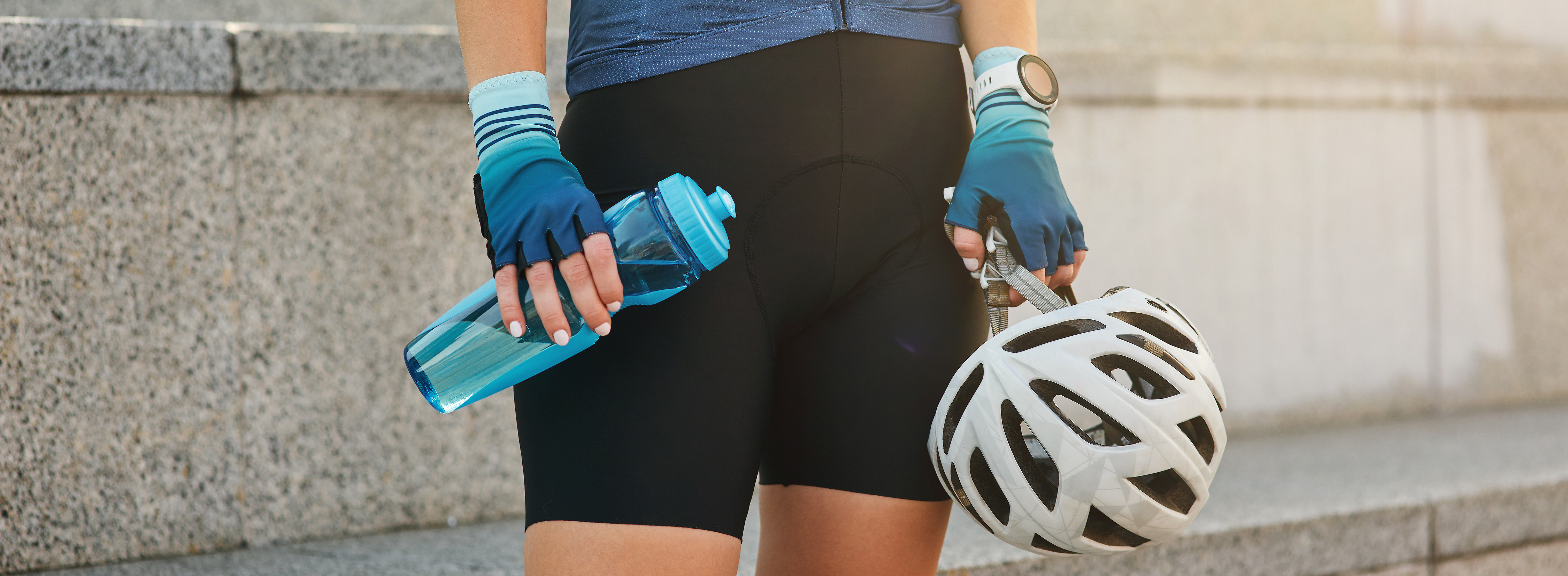
women's cycling gloves helmet and water bottle

Choosing The Best Women’s Cycling Gloves

The ideal cycling gloves must fit perfectly to retain sensitivity between the bike and hand. They serve as your second skin, so they shouldn’t cut off blood circulation or cause discomfort during cycling. After all, you need a comfortable grip to change gears, ring bells, and pull brakes efficiently.

Always go for touch-sensitive material and breathable fabric, as nothing is worse than sweaty hands inside a cycling glove that isn’t moisture wicking. A winter ride can cause your extremities to drop in temperature, so to avoid a disconnected feeling in your fingers, go for the best cold-weather cycling gloves made of insulating fabric. Cycling gloves come with both full-finger and half-finger covering and padding options.

Are you looking for the best road cycling gloves? We have tested dozens of pairs in the quest to find the best gloves for cycling.

Here’s our pick of the best women’s cycling gloves.

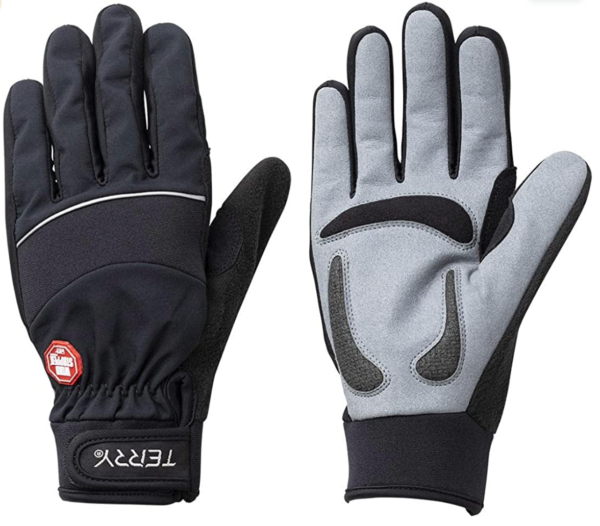
1.     Terry Women’s Windstopper Bike Gloves

Price: $54.95

Terry Full Finger WINDSTOPPER gloves are designed to deliver enhanced warmth during a chilly winter breeze with suede palms that are pre curved.

They come with thin gel inserts and Amara palms for better road shock absorption and enhanced comfort. These gloves are water-resistant, breathable, and windproof, which is why they come first in our list of the best cycling gloves for hand numbness.

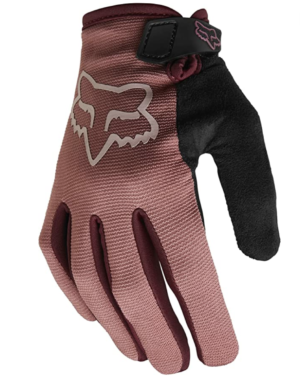
2.     Fox Racing Women’s Mountain Ranger Bike Glove

Price: $29.95

At just $ 29.95, Fox Rangers are one of the best cycling gloves you can get. They come with compression molded cuffs for an excellent and secure fit.

Fox Ranger gloves are made with absorbent micro-suede material and conductive threads at the index finger, allowing smart device touch sensitivity. These gloves set the standard in performance and comfort by offering high functionality and protection for a smooth cycling trip.

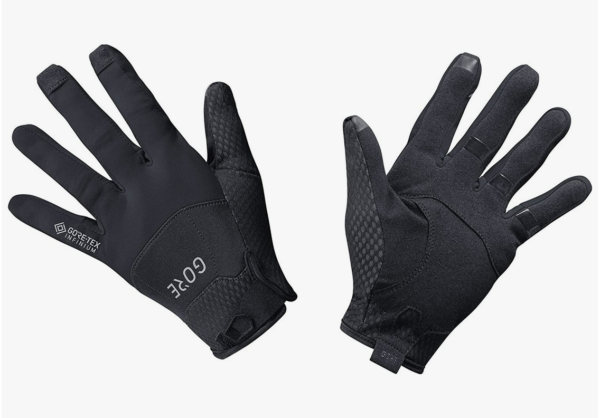
3.     Gore C5 Cycling Gloves

Price: $60.00

Like other Gore gloves, the Gore-Tex Infinium technology supports well-being and an active lifestyle without compromising functionality or comfort during cycling. Being the best cycling gloves for the winter season, they are windproof, water-repellent, breathable, and versatile.

They come with touch screen compatibility, Velcro wrist fastener, pre-shaped fingers, and silicon print with outstanding grip.

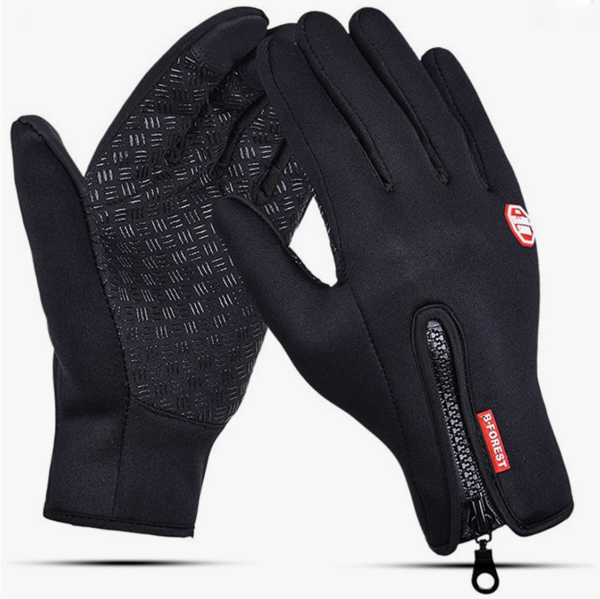
4.     B-Forest Lyna Winter Gloves

Price: $18.88

B-Forest Lyna gloves are loved by thousands of women cyclists, mainly due to their versatility, durability, and reliability. They are lightweight, breathable, and anti-abrasive, with hook closure and high elastic microfiber. Lyna gloves feature touch-sensitive pads on all fingers, allowing you to use your smart devices without removing them.

Powerful shock absorption, reduced road vibration and lower hand fatigue are some of its best characteristics.

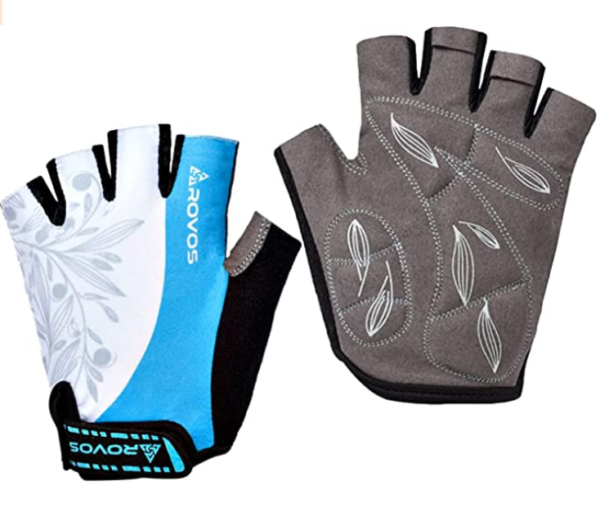
5.     ROVOS Cycling Gloves

Price: $16.99

These half-finger cycling gloves make it to our best cycling glove list as they are designed to meet women’s anatomy and size and deliver optimal performance and grip. The foam padding placement in the palm lowers pressure and absorbs road vibrations and shocks.  

They are made with breathable lycra and spandex, delivering seamless construction for unbeatable comfort. ROVOS cycling gloves are available in different colours and sizing options with Velcro closure to provide a custom and secure fit.

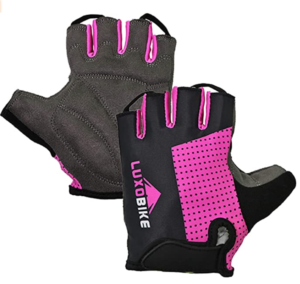
6.     LuxoBike Cycling Gloves

Price: $15.99

An affordable yet superior pick in our list of the best-padded cycling gloves, LuxoBike cycling gloves are your ideal partner for all types of cycling. The interior padding minimizes road vibration and absorbs road shock, while the durable micro suede palm delivers maximum comfort, flexibility, and a firm grip on handlebars.

These gloves are available in 8 different colours and sizes. They offer convenient features like pull-on closure, 4-zone shock adsorbing pads, moisture wicking, impact resistance, soft thumb towel, and innovative finger loops.

Wrapping Up

Always look for anti-slip, breathable fabric, cushiony comfort, and adjustability when choosing the best cycling gloves. A snug fit on the wrist, easy-pull lugs, and versatility are a few other points to consider.

No matter the type of women’s cycling glove you purchase for your next cycling trip, ensure that they meet your style and needs.

6 Ways To Immediately Get Better At Cycling

July 27, 2022 by Eric Lister

Becoming stronger on the bike is about more than wearing a speed suit and choosing the right kind of energy bar (despite what the manufacturers of such goods would have you believe). We want to delve into the more substantive aspects of how to become a better cyclist, and that involves looking at the sport from a personalized and wide-angle perspective.

The last thing we want as cyclists is to start feeling bogged down by the thought of getting on a bike. If you stop seeing improvement or the body begins to give you grief, all of a sudden the activity you used to love will become nothing more than another chore. You might already be there, but it’s never too late to change things up and reinvigorate a whole new routine.

It’s our goal today to give you six solid tips to improve your cycling, make you a better cyclist and help you feel good long-term on and off the saddle. These tidbits of advice will positively contribute to several other areas in your day to day life, so let’s start making a difference today!

Source: kunchainub – Adobe Stock

1. Slow Down

Source: insta_photos – Adobe Stock

Overtraining is a real and extremely detrimental condition that we in the cycling community are susceptible to. Your body doesn’t differentiate stress; stress from work, from relationships and from exercise. It’s all the same to the body. Having a cup that’s too full is a sure way to hurt cycling performance and eventually end up injured.

You wouldn’t think that to become a better cyclist you might have to stop cycling. Sometimes stopping completely, sometimes just learning to slow down. Try reducing the overall intensity of your rides by sticking to even terrain as opposed to hilly slopes. Or, have your goal be to enjoy the ride instead of focusing on performance, which is another way to calm a flared up system.

Look at it this way, cycling has been shown to improve executive functioning and mental health in older adults. This is evidence that our sport can be regenerative and medicinal with the proper dosage. Using it as a tool for recuperation and fulfillment (instead of punishment) is a way we can stay on the bike longer while feeling good about the choices we’re making.

2. Cross Train

Source: LIGHTFIELD STUDIOS – Adobe Stock

Cross training is one of the best ways to improve your cycling performance and make you an overall better bike rider. Not only do you get to explore other recreational and social opportunities, but it’s a physical necessity for any athlete participating in any sport. 

Proper cycling posture is a key factor in determining whether your rides will be efficient, comfortable and pain free. Even the most meticulous cyclist, however, will start to feel aggravated after too much time on the bike. Moving your body with different amounts of force through varying ranges of motion is a complexity that it constantly craves.

Integrating activities that use movements not found in cycling will provide the most benefit. Swimming is a great example; rotation, pulling, back extension, core extension, freeing of the legs and shoulders are all things cycling isn’t great at. An intelligently selected cross training activity will give your body that fresh new stimulation it has been waiting for.

3. Eat Better Food

Source: america_stock – Adobe Stock

The benefits of whole, organically grown, fresh fruits, vegetables and meats are far reaching within your own body, your community and the rest of the planet. Shopping at a farmers market is more than a nice day trip (but it is that too!). It supports local operations and people you get to meet face to face, making a connection between you and what you put in your body.

You literally are what you eat. Everything you digest breaks down to eventually form the cells of your entire anatomy. Organic food is more nutritious and contains less pesticide residues than commercially raised goods. By choosing whole, organic foods (not organic cookies) you’re supporting a sustainable ecosystem both inside your body and outside in the world.

When you eat poorly (and we all know what that means), your body has to try to build muscles, tendons, organs, blood and bone out of garbage materials. How do you think those structures will perform? A hint: They will be at high risk of injury and lacklustre on the bike. Not to mention your mental health, which your food choices have a profound effect on.

4. Implement A Strength Training & Mobility Routine

Source: Shutter2U – Adobe Stock

Unless you are a powerlifter, weightlifter or bodybuilder, your number one goal as an athlete in the gym (including cyclists) is injury prevention. When you get injured, it doesn’t matter how good you look or how strong you are or what your Vo2 max is…you won’t be able to do the activity you love. This often occurs as a result of a repetitive, improperly balanced program.

The implementation of a strength & mobility routine is how you make up for the shortfalls and detriments of your sport. There is no lack of those in cycling, so we have to be clever with the moments before we get on the bike, time actually spent riding, and off days dedicated to the health, pliability and strength of our bodies.

Dynamic Cyclist is a fully integrated training system dedicated to cyclists. It’s a fraction of the cost of a gym membership and can be performed at home with little or no equipment. They have follow along strength workouts, stretching routines, mobility exercises and injury prevention programs that are all designed to help you become a better cyclist.

5. Get A Training Partner

Source: Odua Images – Adobe Stock

Riding alongside a partner is one of the best ways to get better at cycling. Whether it’s your romantic partner, a long-time friend or someone you met at an event, cycling is a wonderful activity that should be shared and bonded over. 

Cycling solo certainly has its benefits, but we all need human connection. Shared experiences are the most memorable, and cycling offers us that opportunity to get outside together and explore. If you’ve noticed a lack of motivation lately, a training partner can help breathe new life into the sport you once fell in love with.

Nowadays there is ample opportunity to connect with local biking enthusiasts. Race events, Facebook groups and other online communities mean that if you want to find someone to ride with, you can! For the more competitive athlete, you’ll find grueling hills and long distance pushes far more enjoyable knowing someone else is going through it too!

6. Hire A Coach

Source: auremar – Adobe Stock

Commissioning the services of a qualified, experienced coach is one of the best returns on investment in any sport or activity. You’ll be under the guidance of someone who has been there and seen the problems you might be facing in themselves and other athletes. Not only that, they’ve learned ways to address those problems and figured out solutions to improve them. 

There is a plethora of information, training programs and advice that pervades the web on anything and everything cycling. Deciphering such information can be difficult and result in a lot of wasted time and effort. This is one of the main advantages to working with someone who can separate the wheat from the chaff and ensure you’re doing the right things at the right time.

Dynamic Cyclist’s dedicated 1-on-1 coach, Cory Krist, has over 20 years of experience helping people become better cyclists. He graduated with an honours degree in Kinesiology and uses his extensive knowledge to help people understand the why behind different training principles and techniques. You can learn about Coach Cory and set up a call with him HERE!

Become A Better Cyclist

As cyclists, we all know the importance of staying in top shape and maintaining muscle balance to avoid injury and ride pain-free. That’s why we’re excited to introduce Dynamic Cyclist, the program that offers daily stretching and strength training video routines designed specifically for cyclists. Created by industry professionals, these programs will take your cycling to the next level and help you reach your full potential. So, whether you’re a beginner or an experienced rider, Dynamic Cyclist has everything you need to improve your performance and keep riding for years to come. Experience the results for yourself, click here to try 7 days free. 

The Best Massage Ball Exercises for Cyclists

June 29, 2022 by Guest Post

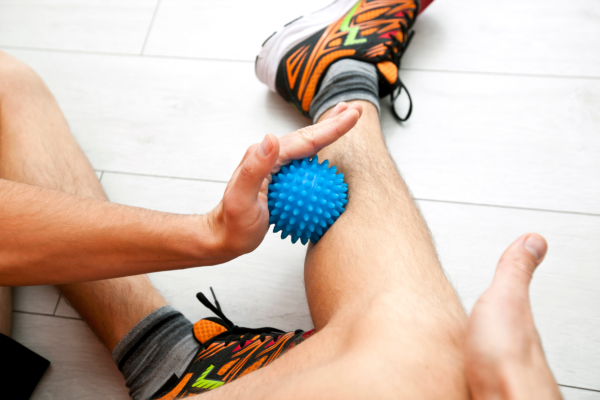
If you are currently a Dynamic Cyclist subscriber the use of a ball, of some sort, has become one of your primary self care tools. Nothing feels better than TFL release, am I right?! But this little addition to your stretching and mobility programs can be something you take on trips and races as your own personal deep tissue masseuse.

I always bring a ball with me on trips and races. It’s relatively small, light and easy to pack and is the next best thing to a foam roller. At the end of a 20 hour riding day nothing feels better than to sit down and roll out the muscles and fascia. Here are some ways you can use one to help settle the legs down after a long day in the saddle.

Rolling out the quads: Simply sit on the ground with your legs straight out in front of you. Take the ball in your hand, roll it up and down your quad, pressing deeply into the muscle. You can dig right into your adductors and IT bands as well. 

Shin and Calf: Still sitting, take the ball and roll it up and down the muscles on the outside of your lower leg. You can also place the ball on the ground underneath your calf and apply pressure to roll that area out as well. Spend time pressing on the more tender spots to facilitate release.

Glutes: Just like you would with a foam roller, place the ball on the ground, place your glute on top of it and roll around. This can be pretty gnarly as the ball applies a lot more pressure than the foam roller. Simply place more weight on your feet and hands to reduce the pressure. You can also do this against a wall to better control pressure.

TFL: Cyclists can really suffer here. To find the TFL, place your finger on the front of your pelvic bone.  Slowly move down and to the outside of the thigh until you feel a ropey muscle that is the width of a finger.  It may be tender to touch. You can roll the TFL with the ball by hand or you can use the ground or the wall to really dig in.

Shoulders, Back and Scapulae: Place the ball on the ground or use a wall to focus pressure on various knots in these areas.

Feet: Place the ball on the ground and while sitting, roll the bottoms of your feet from the heel to the ball to give yourself a lovely foot massage.

Arms: After being on the bars all day, simply rolling the ball over the muscles in the upper and lower arms can feel great and will get the blood circulating again.

For something so small and unassuming, the cork ball can really help in relieving tension in the body. It’s cheap, light, portable and really effective at finding those spots that need the most attention. Check your local yoga shop to see if they have them or you can pick them up on Amazon for less than $20.

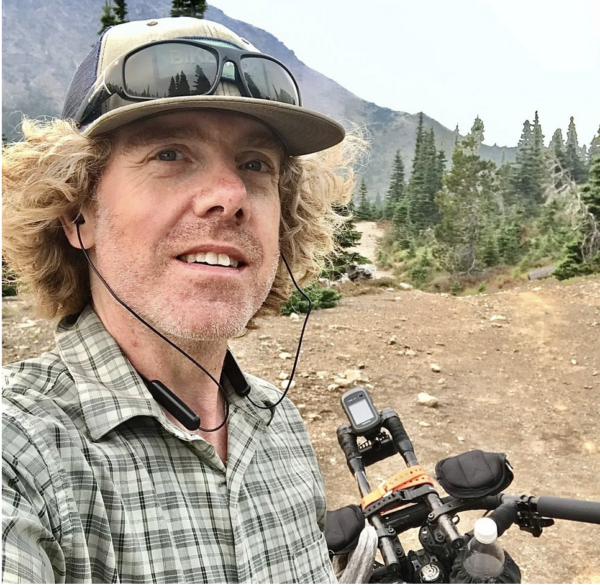
Written by Steve O’ Shaughnessy – Distance Cyclist & Podcaster

A Bit About Steve

Hi, I’m Steve O’Shaughnessy, born and raised in the town of Deep River, Ontario. I first moved west in the early 90’s and made Whistler, British Columbia my home. Years later and after careers in retail, information technology and coffee roasting I’d find myself with a wife and family in Invermere, British Columbia.

I started cycling in my 20’s after moving to Whistler, and what a place to learn to ride mountain bikes. I was a guide on Whistler Mountain well before its absorption by Intrawest. I spent most of my time on singletrack and still love a rip on the trails every now and then, but lately, riding distances has become very attractive to me.

In 2018, I rode the BC Epic 1000 and finished in (4d 4h), in 2019 I rode an ITT of the Lost Elephant (2d 15h) then again in 2020 on my single speed, where I finished in 2nd (2d9h30m) behind Justin Hettinga. 2021 was the year of my BC Epic yoyo when I also raised a modest $2000 for the Masaka Cycling Club. A huge personal challenge for me that was also a great success. 

In 2018, after the tragic loss of Ryan Correy, I picked up the Bikepack Canada podcast and put out 23 episodes before branching out to start my own podcast, My Back 40. As a podcast producer and host, my mission is to bring listeners inspiring conversations about bikepacking, ultra endurance racing, training, nutrition and the mental health benefits of this awesome activity.

I enjoy writing and recording conversations with inspiring people. If I have learned anything after over 100 conversations I’ve had, it’s that everyone has a story and can inspire. I have also learned that we are all so much more capable than we give ourselves credit for.

Check out Steve O’Shaughnessy’s podcast ‘My Back 40’!

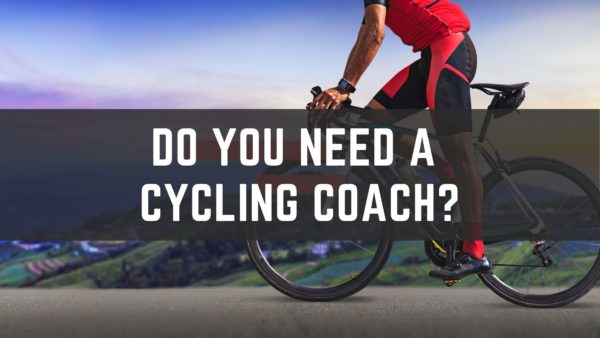
Do You Need a Cycling Coach?

June 8, 2021 by Guest Post

In my younger days as an athlete, I thought I could figure out all the aspects to effective training on my own and to a degree, I was fairly successful in that endeavor. It wasn’t until I started to surround myself with a team that I realized I was missing the most important component to success – a cycling coach.

Here is a bit about my experience, and how having a cycling coach has helped me reach my goals.

Top 3 Reasons to Hire a Cycling Coach

They help close the “knowing-doing gap”

You’ve probably heard about the “knowing-doing” gap and that defined my athletic training to a tee! I knew what to do but I often didn’t do it, or at least not consistently enough or to the best of my ability. Having a cycling coach helped me turn my knowledge into action in a tangible way (I also learned that I didn’t know everything there was to know about my training!)

A cycling coach keeps you accountable and (more importantly) consistent

Often as athletes, we are ok to let ourselves down but being accountable to someone else can be a game changer. When training and preparing for an athletic event, the likelihood that you will experience a setback is shockingly high. These setbacks can be caused by a lack of time due to other life priorities, illness/injury, burnout, a general lack of motivation or anything else that comes up to derail your training. All of these roadblocks will hinder your ability to achieve training consistency which is the ONLY “not-so-secret” to cycling success.

They save you time!

I used to waste so much time trying to figure out what to and when, that by the time I got to my training I was mentally exhausted and didn’t execute the workout to the best of my ability. It’s actually the time-crunched cyclist that needs a coach as you need to be highly efficient and effective with the time you do have. Having a cycling coach has taken out all the guesswork, and has helped me achieve maximum potential in the smallest amount of time!

How to Choose a Cycling Coach

If the most important aspect of your cycling training is simply being more consistent, what is the most important quality you should be looking for in a cycling coach? Many athletes struggle with trying to determine if a coach knows how to write a good training plan or provide you with fun and engaging workouts each week. The reality is that most cycling coaches do this part well, or, you can find some great “general” training plans online. So what really differentiate coaches from one another?

Like anything else, the answer seems too simple. The most important aspect when looking for a cycling coach is the athlete-coach relationship. If you just think back to the days you were in school, what teacher did you learn the most from? Was it the teacher you loved and had a great relationship with or the teacher you didn’t like all that much and never built a strong relationship with? Just like your favorite teacher, the relationship with your coach is the key!

A cycling coach should listen more than talk, care more about you than themselves, ask more questions than just providing “answers” or advice. You should both grow together along your training journey and a coach should be present every step of the way. You should celebrate the successes together and support each other during the difficult times. Find an engaged coach and you will find yourself more engaged and your success in cycling is now only a matter of time.  

What to work with a cycling coach? Click here to learn more about 1-on-1 Coaching and set up a free call with a coach!

Online Cycling Coaching Has Changed: Here’s what you need to know

June 8, 2021 by Guest Post

With many adult sport clubs and training facilities restricted or fully closed during the past year, athletes of all types are turning towards online services to assist with their training needs. Online cycling coaching has existed for decades, but over the last few years it has accelerated substantially with the use of more sophisticated online tools and apps to connect with athletes, deliver programs, and effectively manage training programs. Then, the global pandemic accelerated the demand for online cycling coaching even more!

3 Ways 2020 Changed Online Cycling Coaching Forever

#1: It’s Changed The Way We Communicate

How is working with an online cycling coach different from working with a local coach in-person? The answer might surprise you and the reality is, it’s not that different, especially now that we have become accustomed to online interactions more so now than ever before.

The pandemic’s first major impact is on the way we communicate and it has forced most people to learn and use various online communication tools. While it’s a nice luxury to have actual “face-time” with your coach, “face-time” by, well… Facetime… or Zoom, is almost more normal now than talking to someone in-person. This has opened up opportunities for cyclists to work with companies and coaches outside their local community.

#2: Communities and Clubs Have Moved Online

The second thing that COVID-19 has changed is the “team dynamic” of training and participating in sport. As sport clubs and organizations were forced to cease training and racing activities, more and more athletes turned to online group training options.

With the loss of our “training community” as lock-downs and restrictions tightened, we quickly saw online communities form to fill the void . Online cycling platforms like Zwift exploded and finding an indoor trainer was virtually impossible. This has opened up a whole new world for the online coach to create online group training activities and a sense of community without the constraints of physical location.

#3: Lifestyle Training Has Taken Over From Events

The third and probably largest impact COVID-19 has had on the athletic world is the complete destruction of most of our beloved events. The big event days we used to look forward to and trained for all year long were wiped from the calendar, and with it, most of our motivation. After a brief time of packing on a few pounds and lazing around the house, online coaching has become a much needed re-entry support service to help people get back to regular training activities.

Setting and achieving goals that don’t involve racing has been a new focus for most online coaches and it’s no longer just about working towards that big race. Coaches have had to shift to a more “holistic” approach and focus more on the individual athlete and their personal needs, wants, goals and aspirations that extend beyond events. Attacking deeper issues like mental illness and depression, isolation and overcoming all the new barriers to training has become a common part of the athlete-coach conversation. 

If you want to take a look at the silver lining, COVID-19 has forced the online coach to evolve and become better. From communication, to creating online training opportunities, to developing online communities, and being more focused on each athlete’s personal development, online coaches have upped their game. 

If you’re looking to “re-enter” the world of cycling and get your active life back on track, an online coach may be the answer for you. Dynamic Cyclist offers 1-On-1 Online Coaching options with a free, no pressure call with a coach. Click here to learn more!

What size bike do I need?

October 4, 2020 by Sarah Lauzé

People come in all shapes and sizes, so it makes sense that bikes do to. It’s not impossible to make the wrong sized bike work for you, but it’s definitely easier to purchase a bike that is your size from the get-go.

When you’re first getting into cycling, it’s tempting to go with a second hand bike that’s the right price rather than the right fit. However, as great as it is to get discounted bikes, the problems begin when you actually start riding. From overall comfort and enjoyment to your own safety, having the right size bike can make all the difference.

If you’re looking to get into cycling, or don’t think your current bike is right for you, this guide will help you find the perfect fit.

What size bike do I need?

Decide what kind of bike you want

When it comes to buying a new bike, it can be overwhelming with all the options out there. First thing, you need to decide what type of bike you want. Are you going to be riding on trails, road, or a little bit of both? Generally speaking, there are two main types of bikes: road bikes and mountain bikes. However, within those types there is a wide range, as well as cross bikes that bridge the gap between the two. Sizing can differ dependent on the type of bike.

Why does bike size matter?

If you’re a casual rider and aren’t going out on long distance rides, bike size and a proper fit may not be a huge deal. But as the kilometers start to fly by the more you get into cycling, the millimeters of a bike frame start to matter. Why? There are three main reasons:

  1. Comfort – If you are uncomfortable on your bike, then you’re not going to want to ride it – sometimes it’s that simple. Feeling comfortable on a bike is your first step towards ensuring it is the right size for you.
  2. Injury prevention – If a bike frame is too big or too small for you, there are many issues that can come up. For example, if the bike is too big for you, your torso will be overextended, causing a rocking in the lower back that can lead to pain and serious injury. Cycling is one of the best types of exercise for you body, but if you don’t have the right bike, it cause more harm than good in the long run.
  3. Maximize efficiency – Who doesn’t want to go faster with less effort? Ensuring you are in the correct position on the right size bike helps you make the most of every rotation, as you won’t be wasting any energy.

How are bikes measured?

What size bike do I need?

There are two basic measurement systems: by size (small, medium, large) and by measurement (in centimetres). Both systems are based on the metal frame of the bike, as the added components (handlebars, saddles, etc) are interchangeable.

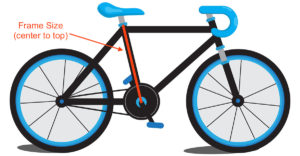
Generally, frames are measured by the distance from the centre of the bottom bracket to the top of the seat tube (see diagram below). However, the method of measurement can vary between manufacturers as they each have their own approach to bike design.

Bike sizing vs. bike fitting

They may sound like the same thing, but bike sizing and fitting are actually two entirely different things. For the sake of this article, we are focusing on bike sizing, which is fitting you, as a rider, to the bike.

An in-depth bike fitting is a great idea, but only once you have the base of your bike size. From there you can further adjust all the little things like handle bars, saddle, and pedal position – essentially fitting the bike to you.

How to determine your frame size

There are a ton of online calculators that can help you get an idea of your frame size, but won’t necessarily give you the whole picture. Two people can be the same height, while having different length legs and torso.

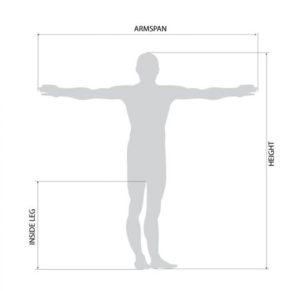
Bike size is determined by three main measurements:What size bike do I need?

  1. Your height – This is not the time to round up your 5”11 to 6”0, so be sure to get an accurate measure of your standing height.
  2. Inseam length – This refers to the distance from your crotch to the end of your pant leg and determines your standover height (so you can comfortably stand over the crossbar). You’ll need about 1-3 inches of wiggle room between the crossbar and your crotch.
  3. Your reach – Measured by the “Ape index,” your reach is your arm span compared to your height. It is calculated by subtracting your height from your arm span (measured from fingertip to fingertip).  If a positive number, your arm span is greater than your height (and perhaps you should pick up rock climbing). If a negative number, your height is greater than your arm span.

A general sizing guide

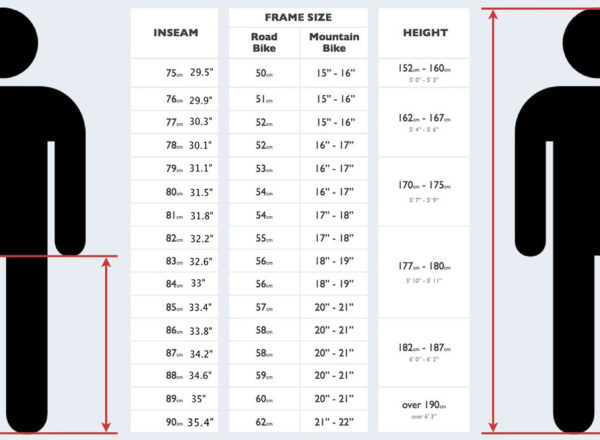
The following chart shows a general guide to bike sizing in regards to your height and inseam length.

What size bike do I need?

If you go into your local bike shop, they should help you with all these measurements and get you onto the appropriately sized bike, but it’s not a bad idea to go in with an idea of what will work for you. It’s not worth impulse buying the wrong size bike because it’s on sale or catches your eye! Make sure you take the time to try out a bike before buying when possible, and a thorough bike fitting is always a good idea.

Symptoms of Bad Bike Fit

September 8, 2020 by Sarah Lauzé

We talk a lot about the importance of a proper bike fit, but paying for a professional fit can seem daunting. It’s not exactly rocket science, but there are a lot of little adjustments that can make a huge difference. It’s hard to put a monetary value on being comfortable on a bike, but riding and being uncomfortable is only going to lead to riding less to not at all. Here are some symptoms of a bad bike fit, and how you can go about fixing them.

Bowed Knees

When pedalling, if your knees are pointing outwards, you may not feel any pain, but you look funny and you’re wasting energy. If your thighs feel the burn a little too much when your climbing, it could be a sign your saddle is too low. The solution? Raise your saddle height in small increments until your legs remain parallel to the frame through each revolution.

Aching Hands

If you’ve ever been twenty minutes into a ride only to have your hands start aching no matter how you position them on the bars, then you know how distracting it can be. Another symptom of a bad bike fit can be hand and wrist pain. If your saddle is too high (or tilted too far forward), your handlebars too low, or your either too cramped or too stretched it can result in putting too much of your weight through the front of the bike and onto your hands.

Neck Pain

Neck pain often goes hand in hand with cycling, especially for beginners, and the problem may not be entirely bike fit. Holding your head up to keep your eyes on the road for extended periods of time is tough, especially if you have a weak core. However, neck pain can also be inked to having a high seat post in relation to your bars.

When the seat post is too high it can place you in an aggressive position, which your body may not be ready for. It’s a better tactic to gradually increase the aero position as you get used to cycling. Additionally, if your road or aero bars are too far away causing you to overreach you can place unnecessary strain on these muscles. The solution would be to place the bars closer in relation to your body so you’re in a “tucked” position when riding.

Wobbly Hips and Lower Back Fatigue

Lower back pain is more often a result of a weak core, but if your hips are rocking side to side as you pedal your seat is too high, which can result in lower back fatigue. Lower the seat gradually, riding a flat circuit in between until you’ve found the perfect saddle height. When you do find it, be sure to mark it somehow so you can easily find it again.

Knee strain

Knee pain in the back or sides of the knee is likely a saddle that is too high, but could also be your cleat position. On your downstroke, your foot shouldn’t be pointed down. Instead, you should be pushing the pedal down through the heel.

Foot Numbness or Tingling

Foot numbness usually occurs when the nerves between the bones under the ball of the foot become compressed. The likely culprit here is shoe fit, cleat position or socks. Particularly if the cleat is too far forward it can cause numbness, as it places pressure on the ball of your foot.

Fit Your Bike From The Comfort Of Your Own Home

MyVeloFit is a revolutionary new app that combines the powers of computer vision and artificial intelligence to help you do your very own bike fitting at home in a matter of minutes. Whether you’re an individual or a business that specializes in bike fitting, they have a subscription model that works for you. Everything from free to a fraction of the cost of an in-person fitting! Check them out today to start feeling better on your rides!
How to Choose the Best Cycling Jersey

September 2, 2020 by Sarah Lauzé

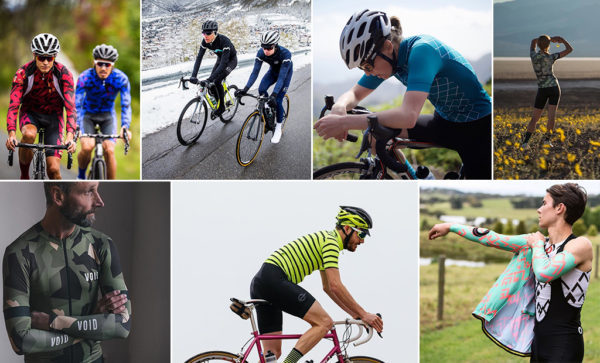
If you are new to the exhilarating cycling world, then welcome! Cycling is an amazing way to stay in shape, meet new people, and explore both your neighbourhood and the world. That being said, getting started with cycling can seem daunting. There are a ton of opinions out there on what bike is best, what gear is best, the best training or nutrition plan, what to wear–we could go on and on. When you’re heading out on your first few rides, the idea of putting on head to toe lycra may seem like overkill. If you’re looking for a general guide on what to wear cycling, click here. In this article we’re going to go into how to choose the best cycling jersey, and go through some of the best options out there.

What is a cycling jersey?

Cycling jerseys are made from materials that should work to get moisture away from your body. The general design will be a zipper down the front, with back pockets specifically designed to carry food, tools, and whatever else you’ll need out on the road. They have a shorter front panel (as you will be bent over on your bike), with a longer back panel. The bottom hem will have silicon grip tape to keep the jersey in place as you ride. A jersey should be fairly form fitting to keep you as aerodynamic as possible.

Why wear a cycling jersey?

In a word: functionality. Cycling jerseys are designed to be the best tool for the job. Most are made from material that will wick moisture away from your body, keeping you comfortable and cool. The back pockets are perfect for storing snacks, tools, and your cell phone. The snug fit keeps the jersey from flapping around in the wind making you more aerodynamic (and comfortable). Go for one ride in a loose fitting t-shirt and you’ll soon realize all the benefits of a cycling jersey.

What Type of Cycling Jersey is Right for Me?

There are two main types of cycling jerseys: race cut and club cut.

Race cuts are tailored for the fittest cyclists, such as the pros. The tightest cut available, they are form fitting so they are aerodynamic. There is generally a significant rear dip in the waistline so that when you are in the riding position the front does not bunch up, and your back is covered.

Club cut jerseys are for the everyday rider. They have a much more relaxed fit, they have more room in the ride position, a small rear dip and are still tailored to fit but are not as tight.

What Material is Best for Cycling Jerseys?

The best type of material for you depends on what kind of rider you are and the weather conditions.

Polyester

Polyester is a man-made recyclable synthetic material and is today’s most popular choice of material for cycling jerseys.

Pros

  • Great at wicking away sweat from the body and keeps your skin dry.
  • Helps keep you cool on hot days and is even UV resistant.
  • Extremely durable and can be washed and the color will not fade or wash out.
  • Mold and mildew cannot survive on it.
  • Can be bought at lower prices than other materials.
  • Great for warm or hot weather.

Cons

  • Plastic feel or artificial feel (can be fixed by washing with fabric softener).

Nylon

Nylon is another synthetic material that is known for its strength and stretchiness.

Pros

  • One of the strongest man-made fabrics.
  • Stretches, which can improve aerodynamics as it will fit snuggly.
  • Good at wicking away sweat.
  • Holds color well without fading.
  • Resistant to mildew and rot.
  • Wind and water resistant.
  • Good in all weather conditions.

Cons

  • Mold can form which can be very difficult to wash out.
  • Absorbs odors.
  • Nylon can shrink if not handled properly.
  • Not biodegradable and has an environmental impact.

Merino Wool

Pros

  • Keeps you warmer than any other material.
  • Most water resistant material.
  • Best wicking material available.
  • UV resistant.
  • Does not absorb odors.
  • Great soft feel.

Cons

  • Very expensive.
  • Can be too hot in warm or hot weather.

The Best Cycling Jerseys

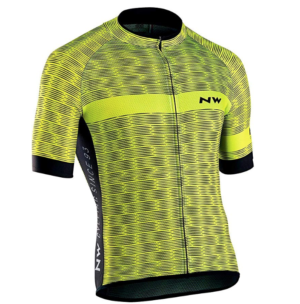
Northwave Blade Air 3

Price: $54

Designed for hot weather riding, the Northwave Blade Air does a great job at keeping you dry and cool. It’s also easy to wash and care for, which is a bonus!

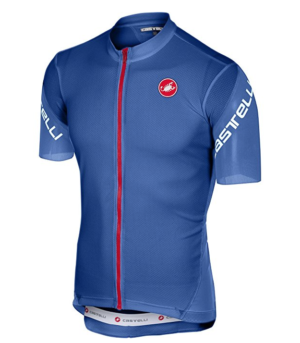
Castelli Entrada 3

Price: $59

The Castelli Entrada jersey takes pro racing technology and applies it to all-round performance and comfort. 100% polyester with Air Mesh fabric around the shoulders and sleeves, there’s a little extra stretch to give you a relaxed fit.

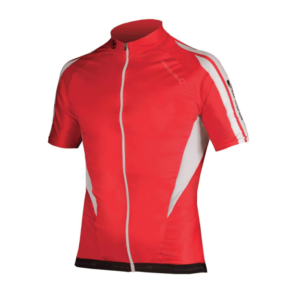
Endura FS260

Price: $34

The Endura FS260 Jersey is designed for hot climates and riders looking to stay cool and have maximum ventilation and temperature control. The Coldblack® treatment reflects UV rays and will keep your body cooler for longer.

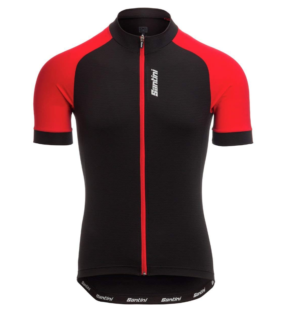
Santini Lapis 

Price: $50

Great for slightly cooler weather, the Santini Lapis Short Sleeve Jersey  is made of from lightweight Rewind fabric on the front and back offering excellent breathability. Its slightly relaxed fit more comfort for the casual rider.

Giordana Sosta 

Price: $132

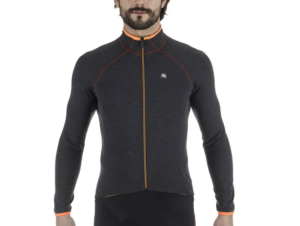
Perfect for when the weather turns cool, the Giordana Sosta Wool long sleeve jersey will keep the cold at bay and keep you visible in the lower light. The jersey is made of a knitted, heathered blend called Koln, which incorporates merino wool and nylon. The extended collar will feel great on those chilly mornings, and it includes a zippered pocket for items like keys and ID.

How To Fix Sloppy Bike Steering

August 31, 2020 by Sarah Lauzé

You may have noticed a clunking noise in your front end. You might feel a bit of play in your steering. You might notice more vibration than you think is normal. All of these symptoms are typical of loose bike headsets. Bike steering adjustments are routine, and nothing you can’t handle yourself.
Bike Steering

Bike Steering

Bike steering is made possible by your headset. The headset is a rotating joint at the bottom of the stem. It allows the steering column (tube) and front wheel to rotate and turn. The headset is your focus for bike steering issues. All you need to fix it is your multi-tool, or alternatively a 4-mm, 5-mm or 6-mm hex wrench, depending on model of bike. Tightening your headset is one of the most basic of all bike maintenance procedures.

Quick Test For a Loose Headset

If you’re not sure about bike steering or your headset, a quick test will help you decide if it needs attention, here’s how to do it: Apply pressure to your front brake by squeezing the lever. Place your other hand on the front of the stem, just above the fork. Rock the bike forward and back. If you feel a slight knocking your headset is loose. If you look close, you may even be able to see a slight separation (very slight) between the steering tube and the bushing when you rock the bike. A loose headset may also produce a more dramatic clunking sound when you bounce the front tire, or if you hit a bump when riding. That sharp clunk when you pass over railroad tracks is a perfect example.

Step One: Loosen the Pinch Bolts

Your bike should have two pinch bolts (some people call them stem clamp bolts) located on the vertical part of the stem facing the seat.  The bolts are horizontal and perpendicular to the top tube, and a critical part of bike steering. Note that one bolt typically enters the stem from the left, and the other from the right. Loosen them just enough so that the stem goes slack, or that you can move the handlebars without turning the wheel. Start with the 5-mm hex wrench, if it doesn’t fit, use the 4-mm or the 6-mm.

Step Two: Tighten the Headset

Tighten the large, vertical bolt (aka pre-load bolt) on the top cap of the stem using the 5 or 6-mm hex wrench. This is important: tighten it only enough to take the play out of the headset. The tightening motion squeezes the parts together (bearing tension) inside the headset, if you get them too tight, your bike steering will be stiff, and it will wear out the headset. In most cases, you won’t need to tighten the bolt more than about 1/4-to-1/2-turn. If you think you’ve over-tightened it, back it off a 1/4-turn.

Step Three: Test It

Grasp the front brake, and rock the bike forward and back. If you hear a clunking it’s not tight enough. If you’re not sure, do the test with your hand on the front of the stem. When you’re satisfied, go to Step four.

Step Four: Align The Handlebars

Your bike steering is still loose at this point. Stand over the bike and do a visual straightening of the handlebars. One way is to center the drop-outs (the ends of the axle on the front tire) with the center of the stem. Or you can just use the tire. This can be tricky, but easy to adjust later if you’ve tweaked it the wrong way. When you’re satisfied that the handlebars are straight, tighten the pinch bolts. These bolts need to be tight, they’re the only thing securing your stem to the steering tube.

Torque and Carbon

Something should be said about over-tightening bolts on bikes, especially carbon-fiber bikes. Even a slight miscalculation in torque can be a very expensive mistake on a carbon fiber frame. That sickening crunch can literally cost you thousands. Here’s how to avoid it: Invest in a bicycle specific torque wrench. A majority of carbon fiber bikes require a setting of 5nM. (newton meters) Using the torque wrench won’t allow you to ruin your carbon fiber frame, because you’ve set it according to manufacture’s instructions. (Don’t use the torque wrench to tighten the top cap bolt on your headset though, that’s a feel thing — unless specified to do so by your bike’s manufacterer).

Check With A Mechanic

If you’re not sure about any of your bolts torque requirements, or  how your bike steering mechanism (headset), works, check with your bike’s manufacturer or local mechanic. For extra help, check out the video below!

« Previous Page
Next Page »
  • Facebook
  • Tumblr
  • Twitter

Latest Articles

JOIN Cycling: A New Training Platform for Cyclists

May 27, 2024 By Eric Lister

cold exposure

The Benefits of Cold Exposure for Cycling & Life

June 13, 2023 By Eric Lister

hill climb

The Ultimate Hill Climb Training Guide

May 31, 2023 By Eric Lister

shoulder pain cycling

How to Treat & Avoid Shoulder Pain While Cycling

April 12, 2023 By Eric Lister

psoas stretch

The Importance of the Psoas Stretch for Cyclists

April 6, 2023 By Eric Lister

cycling neck pain

The Ultimate Guide to Cycling Neck Pain: Causes and Solutions

March 21, 2023 By Eric Lister

Useful Info

  • Contact
  • Finally, A Global Cycling Club That Is Focused On Community And Love Of Cycling!
  • Privacy Policy
  • Share Your Story!
  • Terms And Conditions Of Use
  • Welcome to I Love Bicycling
  • What Happened When I Stretched Every Day For a Month

Recent Posts

  • JOIN Cycling: A New Training Platform for Cyclists
  • How to Hang Bikes in Your Garage: 4 Inexpensive Options
  • Gravel Bike Vs. Road Bike: Which One Is Better For You?
  • The 6 Types of Mountain Bikes & How to Choose the Best One for You
  • What Is a Touring Bike Good For? 5 Benefits We Know You’ll Love

Search I Love Bicycling

Connect with Us

  • Facebook
  • RSS
  • Tumblr
  • Twitter

Copyright © 2026 · Magazine Pro Theme on Genesis Framework · WordPress · Log in