• Training
    • Injury Prevention
    • Training Tips
  • How To
    • Bike Fit
    • Gear
  • Nutrition
    • Nutrition Tips
    • Weight Loss
  • Repair
  • Reviews
  • Stories
    • Funny Stories
    • Jokes
    • Quotes
    • Videos
    • Funny Videos

I Love Bicycling

I Love Bicycling is a website that is geared towards cycling for beginners with road cycling tips, training articles, nutrition tips, weight loss, how to’s and bike repair articles.

How To

  • Bike Fit
  • Gear

What is a Gravel Bike?

August 8, 2016 by Corey Davis


The newest trend in bicycles is the gravel bike. It is a combination of a road bike and cyclocross bike. The gravel bike is the best of both worlds and is ideal for the person who wants to do some off-road exploring yet prefers to ride to the trailhead rather than drive. Gravel bikes are intended for dirt and gravel roads as well as trails that aren’t too technical and rocky that would require a mountain bike. This bike opens the door for endless adventures and countless miles exploring new areas. With that said, what exactly makes a gravel bike different from a mountain bike, cyclocross bike, and road bike?
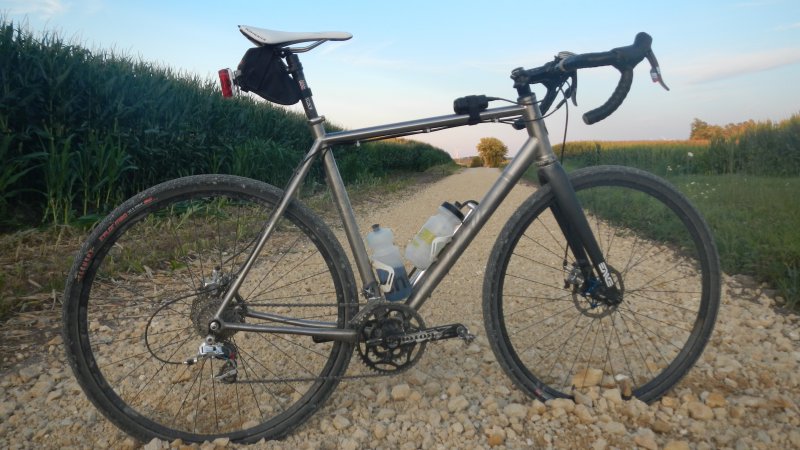
gravel bike

More rubber!

Gravel bike frames are designed to accommodate a wider tire for more comfortable riding. The larger tire will soak up a lot of the vibration from the road or trail compared to a road bike tire that would shock your hands so much you would feel it through your entire body. Running a wider tire will also give more control in the corners whether on loose dirt or tacky trails allowing you to ride smoother and faster. Perhaps the biggest advantage to larger tires is the lower chance of flatting. Many riders avoid dirt roads because of the risk. With the right setup, you don’t have to worry. Tire choice is endless for gravel bikes as depending on how much off-road riding you plan to do, you can get anything from a slick tire for smoother dirt roads to tires reminiscing a mountain bike tire. Clinchers allow you to change tires in a matter of minutes, but they lack the ability to run a low pressure due to the risk of pinch flatting. A tubeless setup is the best choice for a gravel bike as it allows for a lower tire pressure for a more comfortable ride while the sealant in the tire quickly stops any small punctures. And then if you do flat a tubeless tire, you can simply install a tube for the rest of the ride.

Gravel Bike Geometry

A gravel bike’s purpose is to make off road riding more relaxed but still fast and exciting. The geometry is reflective of this goal as it is much more relaxed than a road bike but obviously not as relaxed as a beach cruiser. Many companies have began designing their gravel bike with a longer wheel base than a cyclocross bike to make road riding more steady. Gravel bike’s headtubes are longer than a cyclocross bike, and the bottom bracket is also lower.

Disc Brakes

Almost all cyclocross and several road bikes are now featuring disc brakes. You’ll find both cable actuated and hydraulic disc brakes but what you’ll find the most on a gravel bike is hydraulic. This gives the rider much more stopping power when off-road and will be more consistent when riding in challenging weather conditions. This Tektro Hydraulic Disc brake set for example is lightweight, yet will provide all the confidence a rider needs to rip down some single track or fast fire roads!

So Many Options!

Almost every major company in the bicycling market is releasing a gravel bike. There have also been new brands created entirely around this market. Specialized has released the Diverge line for this market; Cannondale has the Slate, and Giant has the Revolt. These are certainly well engineered bikes and have a name that will back them for quality. A few of the less well-known gravel bikes are the Ridley X-Trail, Niner RLT, and the Raleigh Talus. Even smaller companies have begun manufacturing gravel bikes that’s specific to a riders wants and needs. Some companies are offering custom geometry, and almost all smaller companies allow you to customize the wheels, drivetrain and groupset.

Gravel bikes are the perfect option for a rider looking for something different and looking to get out and explore! These bikes are also great for riding in the winter in less desirable conditions and sure beat riding inside. There are many gravel bike specific events popping up and becoming the new trend in racing. Most of these events provide a more fun, stress-free environment than traditional road racing and are less daunting to attempt. Yet, some events such as the Dirty Kanza, which is a 200 mile dirt road event, feature riders with road backgrounds to mountain bike. Even with all these newly found events, the main draw to the gravel bike is the challenge and exploration the bike allows for and is less about racing or exercise even.
What Size Bike Should I Ride?

August 6, 2016 by Corey Davis

what size bike

Determining what size bike you need is one of the first steps of purchasing a new bike and will play a tremendous role in how much you enjoy and ride the new bike. The type of riding you plan to do will first determine the type of bike and then what size bike you should be riding. First you need to decide if you plan to ride on the road, off road, or a combination of both, this will determine what size bike you need. General hybrid bikes for instance may be marked simply as small, medium and large while other more serious road bikes are sized in centimeters, such as 52cm or 54cm. This article will describe why the correct bike size maters and how to determine what size bike you need.

What Size Bike is Most Comfortable?

General comfort is the first part of determining what size bike fits you. Some people have longer legs while other people may have longer torsos, which directly affect the size of the bike needed. An older rider for instance may want a more upright position to be more comfortable which may require a smaller frame size and an adjustable handlebar/stem. A rider looking to be faster and positioned lower on the bike can ride a size bigger or have a longer stem to stretch out their body and arms more. Online charts can give you recommend sizes based on a persons height, but physically sitting on the bike in your local bike shop will give you a better judgement. Some local bike shops will even let you demo the bike for several hours to see how the bike feels underneath you.

What Size Bike to Prevent Injury?

An incorrect size of bike could potentially cause an injury; this improper size can lead to severe ligament and tendon damage. A bike that is too big is likely to cause damage to your achilles tendons or put a strain on your neck and back. To small of a bike and there’s risk of developing patella tendonitis. These are just a few common injuries people develop for an incorrect size bike, but many more injuries are possible. A rider will also decrease their handling ability on the bike if it is the wrong size as well, which could result in a more serious accident or crash. Cycling will strengthen your cardiovascular and muscular systems, but if riding is causing damage to other parts of your body, you could be doing more long-term damage than good.

What size bike is the Most Efficient?

A proper fitting bike is also going to make sure you are getting the most out of the ride. When the legs are being over or under extended it is resulting in a loss of power being applied to the pedals. With less power being applied to the pedals you are going to ride slower and your legs will begin to fatigue more quickly. There are many things to consider when finding the most efficient position on the bike. Saddle height and horizontal position over the bottom bracket are two of the most common parts to adjust, but handlebar width, angle, and length are equally as important to a proper fitting bike. To get the most efficient position on your bike it is best to have a professional fit done by a certified bike fitter.

What type of professional fit to get?

There are many types of professional fits to determine what size bike to ride and “how” to ride it. Ranging from a complementary fit after purchasing a bike at a local shop to a fit that costs hundreds of dollars, it may be difficult to choose. For someone just getting into cycling up to an avid cyclist, a local bike shop employee should be able to perform a proper fit and setup. This type of fit is normally complementary with a new bike purchase or may be relatively inexpensive. A more experienced rider or a rider that is racing competitively should consider a more specific fit. This is going to be a much more expensive fit but will pay off in efficiency and aerodynamics. There are “schools” that certify individuals in bike fitting. Companies such as BG Fit and Retul Fit have specialized in creating a bike fitting experience that takes every detail of an individual’s ergonomics into affect.

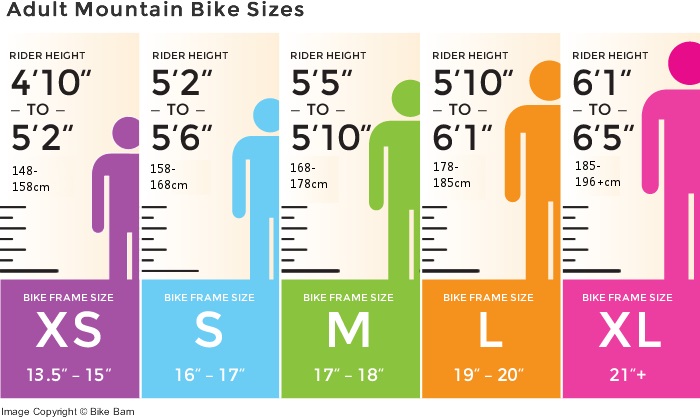
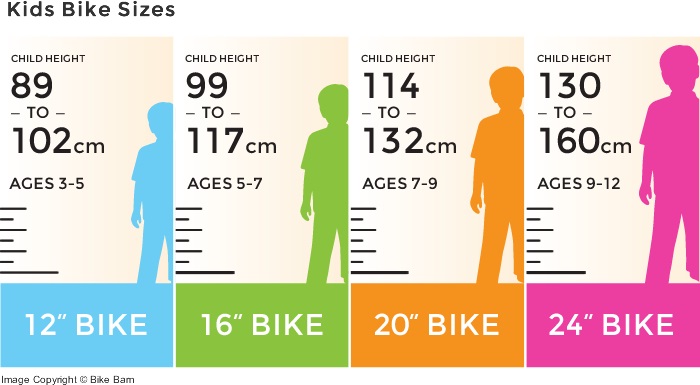
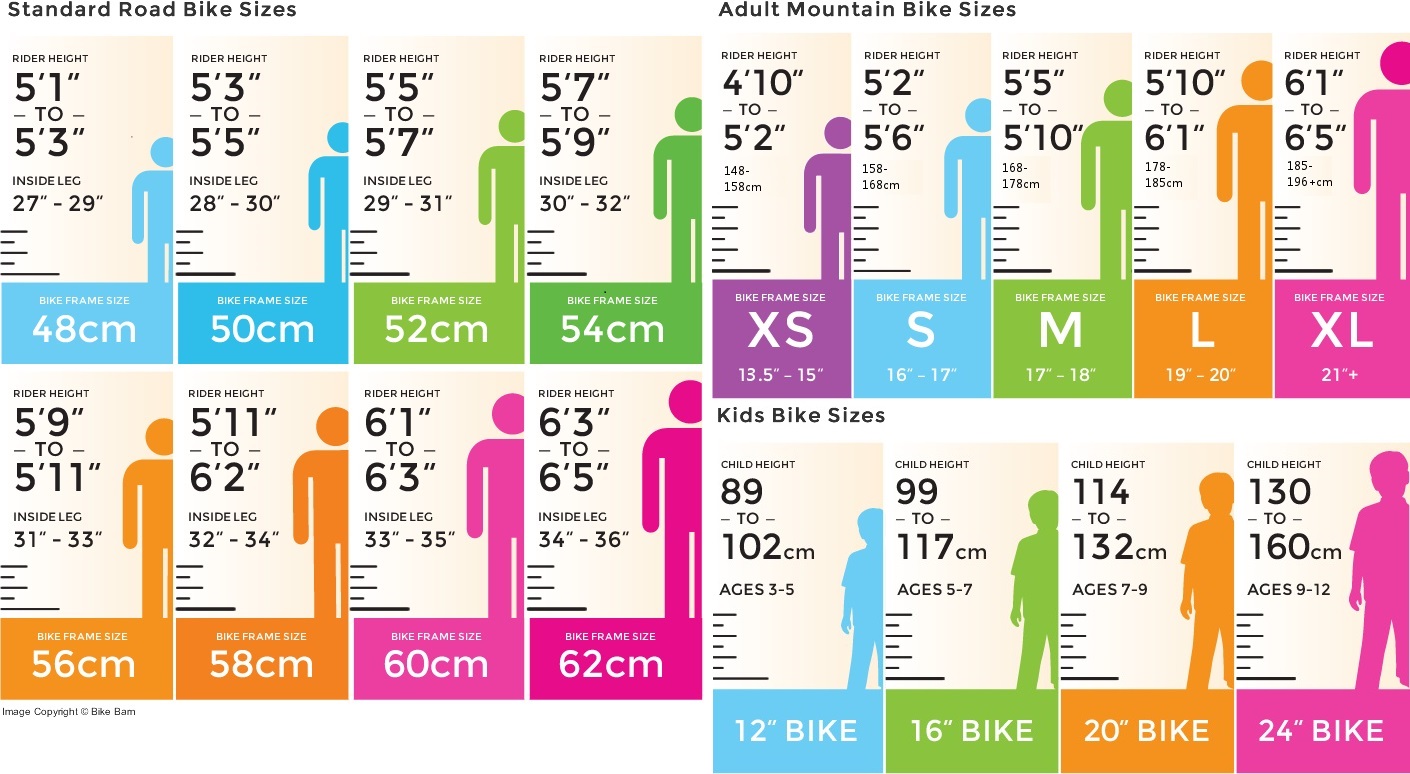
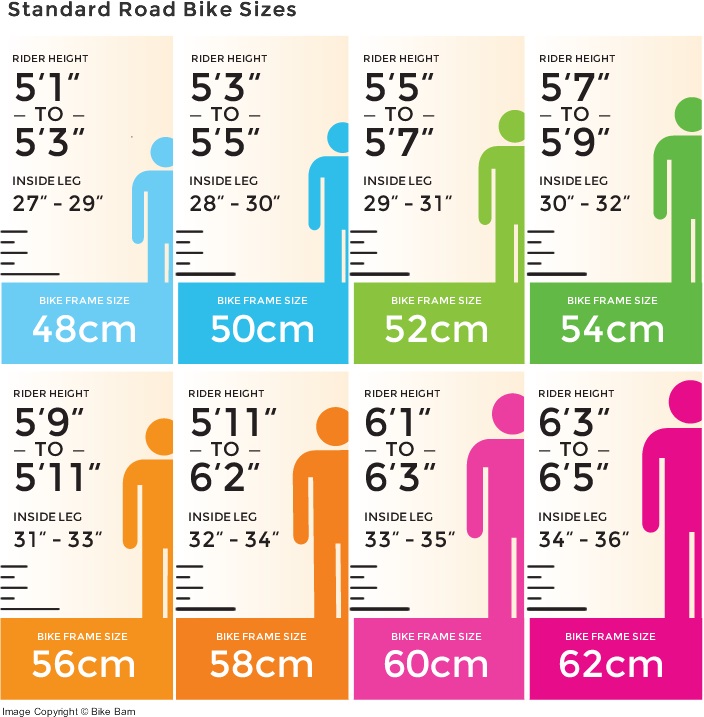
In conclusion, going to your local bike shop and physically sitting on the bicycle you want is going to give you the best idea of what size bike you need. Remember the importance of a correct fitting bike so you can be comfortable, injury free, and fast! The charts below can be used as a guide to help get an idea of the correct size you may need.

bike size

adultMTBsizes

bike-sizes-kids
Full article on sizing a kids bike can be found here.

The Art of Flying With A Bike

August 2, 2016 by Corey Davis

flying with a bike

You booked a vacation to Europe to tour historical landmarks in one of the greatest months of the year for cycling, July. Two weeks is a long time without riding your bike, so you start looking at rentals and figuring out logistics of how to ride while away. After much discussion and heartache you decide to bring your adopted member of the family along with you, saving you time and money. Bike rentals are expensive and it is difficult to dial in the fit when pushed for time. You’ve decided to take your bike, but how are you going to get it there? Flying with a bike is  actually much easier and more convenient than many people think. Below are a few tips on how to make flying with a bike a breeze.

Four+ Weeks Before Flying with a Bike

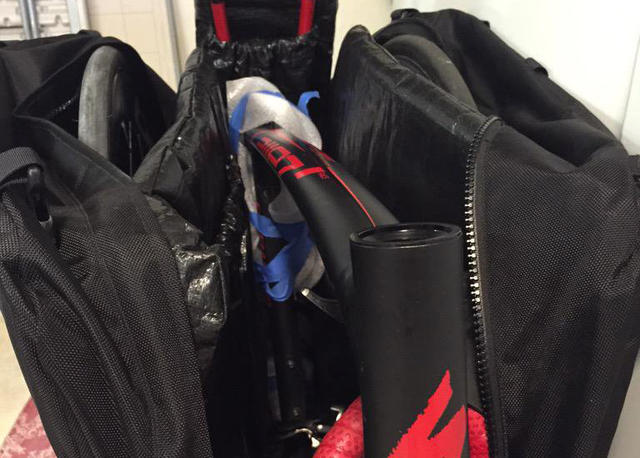
Unfortunately, you can’t show up to the airport and slap a SeaSucker Rack to the roof of the plane. Luckily, there are plenty of bike cases you can purchase to put your bike in. Pick a box that will accompany your needs in the future as well, because most of them are not cheap. Does your significant other take their bike too or do you have extra wheels you want to carry? Purchasing a double bike case may be more expensive upfront, but will save you money at the airport by only having to pay for one box. Also, cases are different sizes depending on how much work you are willing to do. A smaller box may require you to remove the fork, handlebars, seat post etc. while larger boxes may only require you to remove the front wheel. The Oru Case, or the “airport ninja” is one of the more popular bike cases. The Airport Ninja is smaller and very discrete which can help save on airport fees.

One Week Before the Flight

Make sure to take the bike by your trusted local bike shop to get a tune-up and ensure everything is running properly. Landing somewhere with a worn-out chain and stretched cables is unacceptable. The trip has already been planned in advance so leaving with a well-tuned machine is a must. No one wants to waste his or her vacation time running from bike shop to bike shop looking for break pads. Pick up an extra derailleur hanger too; those things have a special gift for bending during flights and each one is specific to the frame making them difficult to get Ask your local shop if you don’t know what one is but do so a few weeks ahead as it may need to be ordered.

24+ Hours before the Flight

After hunting the last KOM on your home turf before leaving for vacation give the bike a good wipe down and double check that everything is good. One of the most important steps of flying with a bike is making sure to properly pack the bike. It’s never a bad idea to grab some extra packing foam from the bike shop, double protection is great for this cause. Packing the bike will differ depending on which case, but watching videos of other people using the same case can simplify the process. Once the bike is packed, evaluate how much space is left in the bag and start cramming more stuff in to fill the empty space. Water bottles, training food, and essential tools for putting the bike back together are great items to fill the extra space. When flying with a bike, never pack your cycling shoes or helmet in the bike case! Cycling shoes are one of the most user specific pieces of gear that a person owns. Shoes can take weeks to position cleats back to their original point and can cause serious injuries if not aligned properly. If the airline losses the bike for a couple days you can always count on Plan B and rent or borrow a bike until yours arrives, but shoes are irreplaceable. Also, remember to remove CO2 cartridges from the saddlebag, they will be confiscated by TSA.

At the Airport

By no means is I Love Bicycling insinuating readers should lie about what is in their bike case when flying with a bike, but discretion is highly advised. Airlines have been known to charge up to $250 for a bike one way! Yet a piece of “oversized luggage” may only cost $25-$50 per way, your choice. A few good ideas to answer, “What is in the large case?” are “sporting equipment”, “medical equipment”, or “art”. All honest answers in there own right. These responses have worked in the past but will depend primarily on the airline’s staff. Have the bag marked fragile and offer to carry it to TSA yourself. The less time someone else handles your bike the better the chance it makes it out alive. Arrive a bit earlier than normal when flying with a bike; this process can take awhile and rushing around an airport is never fun or good for recovery.

Upon Landing

Typically when flying with a bike the case is considered oversized and will be waiting at a different location than normal baggage claim. Everyone is in a hurry to leave the airport upon landing, but it is highly advised to open the case at the airport and make sure nothing was damaged during the flight. If something did break, head to the airlines customer service and file a complaint. Some airlines will replace what was broken, but most are not held responsible. If the airline states they are not responsible for the damage, file a formal complaint and contact someone at the airlines corporate office for reimbursement for all or part of the damage. Bike cases are built tough and if you properly packed the bike there is not much to worry about.

Remember to follow these simple steps when flying with a bike to reduce stress and ensure everything goes according to plan. Waiting until the last minute is a horrible idea when flying with a bike; preparation is key. Hopefully these tips help for the next time that you’re going to be flying with a bike and that you can enjoy your own bike on vacation!

Confessions of a MTB Dirtbag: SingleTrack 6 Review: Day 5, Golden

July 27, 2016 by Ryan Taylor

IMG_0099

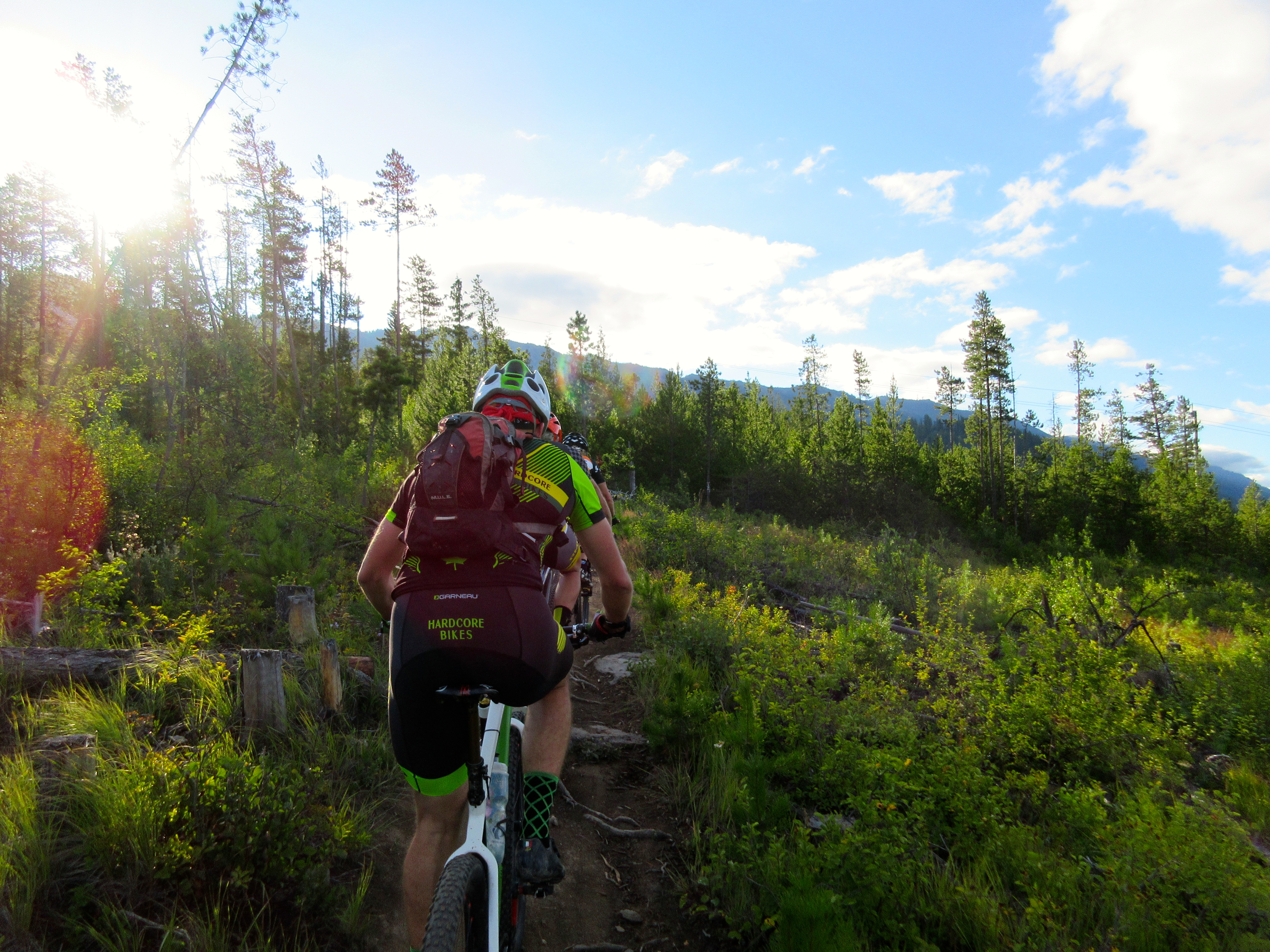
Stage 5 wrapped up in Golden today, and what a great one. Today was the shortest stage of the race, a mere 30km, and 1050m elevation gained. It was a true mountain bike race in that it was all mostly janky singletrack. You really had to be on your toes all day. Most of the elevation gained was in the first hour where we climbed up a new climbing trail that is made up of 484393489 bermed switchbacks. Luckily it was under the covering of the lush forest, and other than the horrible pain was quite pleasant.

Usually toward the end of the climbs, I am the only one in the group who is yelling at the climb in anger, but today there were a few others doing the same! Once we crested the top it opened up into a great ride.

One thing Ive learned about this race is that there is no easy gifts, or hiding from the climbing. There is never a part where you are ‘oh my I just gained that missing 500m and didnt notice.’ Nope. The trick is to never look at your ‘meters gained’ on your computer because its never as high as you want, and then you just wait until you go around a corner and there is a 20% thirty minute climb.

Which brings me to today’s stage being the shortest. The reason it is  the shortest is because tomorrow is an absolute monster.

The Death March.

Last Day. Everyone is tired. Everyone has had at least 1 bad day, or a mechanical or whatever. Tomorrow is the last day but it has the potential to be the most memorable one. 1650m elevation gain, 57km with a 3km timed decent. Its going to be a monster. Im at the point where I dont care about how hard the stage will be tomorrow. This event has been truly epic in that you get broken down and rebuild again and again and again. There is constant chatter in your brain about ‘just a little farther’ ‘just pedal’ ‘its hard for everyone else too’ to the point where you feel like you can basically go through anything. Is tomorrow going to suck a lot at times? Shit yes.

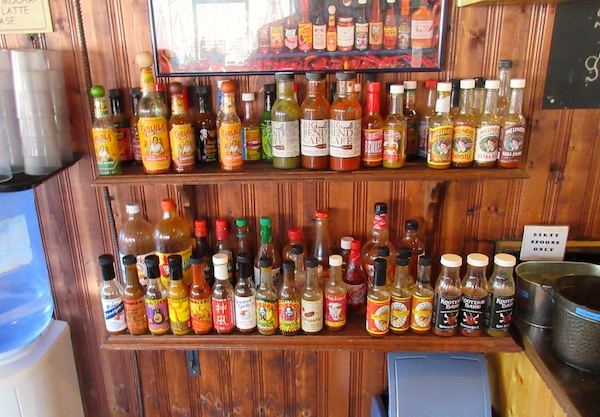
They dont joke around about hot sauce selection in Golden.

I got stung in the nipple by a bee yesterday.

Being a man with a healthy man pelt on my chest, I forgo base layers as they are too hot. So, usually I fly with the zipper fully open, and by god getting stung in the nipple hurts.I don’t mind the odd nipple twist in bed, but not when I am railing one of the rockiest and knarliest decents in British Columbia. It is a major distraction.

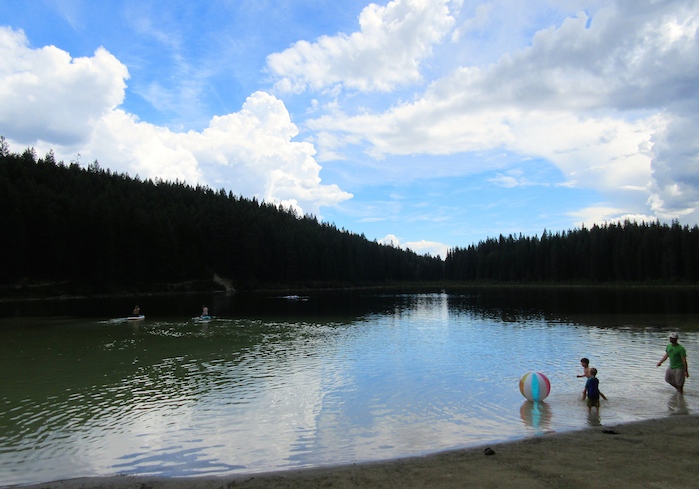
Cedar Lake

Cedar Lake
Cedar Lake

As mentioned, Golden is a great place. Live music, great beer, great food. great geople, great riding. After the stage today I took my daily shower, but today in Cedar Lake. If you are swinging through this area I would recommend camping up there, as its beautiful and a little isolated.

The Guys in the Woods

Im not talking about the ‘guys in the woods’ that your parents told you to stay away from when you were a kid. For the past few stages there have been 2 guys hanging out in the trails yelling at racers. One stage they offered whisky shots! At the time I passed on it as I couldn’t remember my own name and it was 31 degrees out, but the next day they had a beer feed. Since I was feeling great I went for the beer feed but then I realized it was a big trick, and the beer was attached to a stick with a string that they pulled out of reach as you went for it! Bastards..

What to pack tomorrow

The editors want this column to be less about my life drama, and more about helpful tips with endurance racing and Singletrack 6. During dinner this evening(which was a great beef stroganoff!) I looked around and felt great about the mountain bike world. Hundreds of people from around the world coming here just to ride some sweet trails, hang out with good people and push themselves. Its enough to make you cry like a big man baby its so good.

However, this love will not get me through 1650m elevation gain tomorrow, so Im going to take 4 gels, and drink a lot of coke and hope for the best.

Confessions of a MTB Dirtbag: SingleTrack 6 Review: Day 4, Kimberly

July 26, 2016 by Ryan Taylor

Kimberley

Kimberley’s stage has come and gone, and as expected it was a great one! After my massive bonk yesterday, this guys legs just didn’t work. Simple as that. For me the day was just to try to survive and get to the finish line.

Luckily there was ONLY 1200m climbing, and ONLY a 15ish minute downhill section which had a lot of flow and minimal climbing.

Today had a great feel to it. It was like a big group ride and everyone I think is past the ‘race’ part and more into the having fun, and riding with good people part!

The trails today were a mix of everything! Kimberley has a great blend of trails from man-made climbing trails at reasonable grades, to single track climbs with a light dusting of pine needles, roots and rocks. The downhill sections were fantastic. There were the typical flowly trails with a great mix of roots and rocks, and then on the other hand you experienced well made mini-park style descents, with fun small jumps and berms. Today had it all. The terrain would be an in-between of Fernie and the Okanagan. Dry, but with roots and rocks and lush in parts.

The ‘Race’

You can feel the fatigue in the group. Although some people have great legs with the odd burst of pep in them…for the most part everyone is tired. Naps are a must, and there is no second thoughts about grabbing the second piece of dessert at this point.

Life is pretty relaxed in Kimberly
Life is pretty relaxed in Kimberley

Today is a transfer day as well, so the final 2 stages are held in Golden BC, about 250km down the road. I chose to drive tonight to save getting up early and throwing in a drive before the race tomorrow. Luckily(thank god) the stage doesn’t start until 10:30 tomorrow.

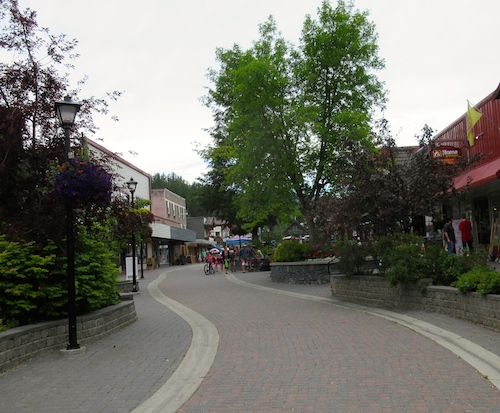
The main drag in Kimberly

Golden is a great little place. Ive fallen in love with all these small little towns, and its always good to come back to them. They have all embraced mountain biking and as a result have a very eclectic mix of youth, and great trail networks. Every one is a little different from the other in some small and big ways.

Golden tonight had a free reggae-dance band playing in the streets, with $2 tacos. The whole town comes out and enjoys the evening. Its great!

Pack Mule

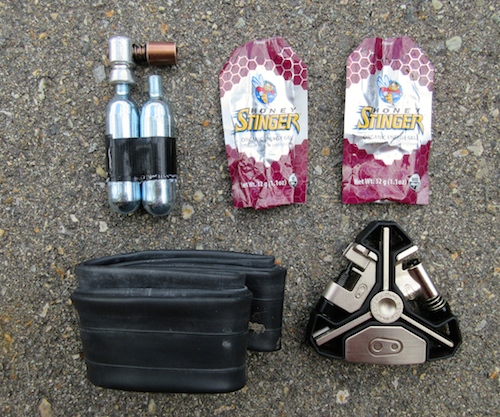
For people who are considering this race next year, I thought I would give some insight into what I am carrying with my daily. I would consider myself a bit of a minimalist, and I try to stay away from packs. For this race typically I wear a pair of Specialized ‘swat’ bib shorts which have 3 pockets in the back, and a traditional jersey over that. This way I have 6 pockets.

In total I have been carrying:

-1 digital camera(which took the photo)

-3 gels minimum(I’ve tried to get by with 2 and have been blowing up)

-CrankBrothers multi-tool(after the broken chain, Ive started taking this with me which has almost everything needed)

-29er Tube

-2 CO2 Inflators(I tape them together so they don’t rattle, and sound like a banshee down the trail)

IMG_0062

Keep in mind there are aid stations along the way to re-fuel. I would recommend never trying to push through on minimal gels and water. Which I have learned the hard way. After the 3rd or 4th day it starts to catch up with you.

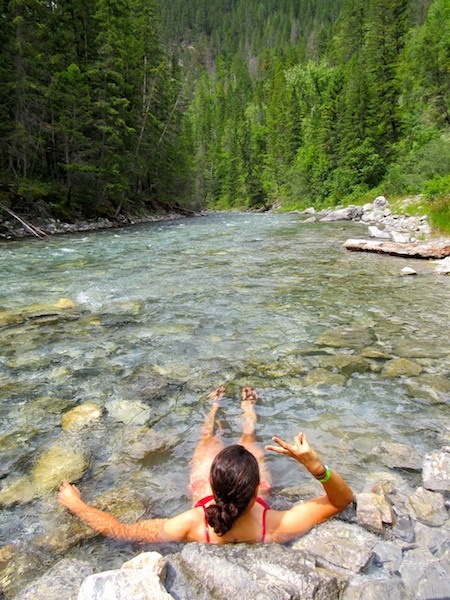
Hot Springs

IMG_0086

Along with all of the great mountain biking, beers, hospitality and pain this race offers. Its great to check out the other sights around. Half way between Kimberley and Golden is a free natural hot spring that if anyone is in the area they should definitely check out.

What are your favorite hot springs in BC?! Let us know in the comments below!

Confessions of a MTB Dirtbag: SingleTrack 6 Review: Day 3 Cranbrook

July 25, 2016 by Ryan Taylor

IMG_0059

Part of being a MTB dirtbag is mooching off someone when you see a good thing come your way. I gave Bruno the night off and took a friend up on the offer to stay at their place. Pretty sweet spot if I do say so myself! The problem with Bruno I’ve discovered is that the back is simply 3 inches too short leading to ‘the dripping faucet’ effect. No matter how tired you are, the smallest thing(such as 3 inches short of leg room) can keep you painstakingly awake.

Cranbrook

The carnival that is SingleTrack 6 moved 100km down the road from Fernie to Cranbrook which offered a complete 180 from the previous days. The trail today was very dry(like the Okanagan desert) offering punchy climbs and slightly less elevation gain(thank god). Dry, loose, dusty, and rocky trails were on the menu, and 30 degree heat! (86F)

The race started in waves today and because of my bonkings, and broken chain I was relegated to the second group start(of five). This proved to be a blessing in disguise as the pace was redlined, but not puke in your mouth redlined. After the first fantastic decent I managed to grab the head of the pack and didn’t have to deal with any dust, which was a major factor today.

To be honest I thought today was going to be a weak link of the race. I imagined long hot climbs, with boring at best singletrack. This was not the case whatsoever. As lush and green as Fernie was…Cranbrook provided dry, hot dusty trails with great flow. The climbs were punchy and I was left with a shit-eating smile on my face throughout the race. There was a lot of single track today that made up 44km of riding.

Except for when I bonked the worst I ever have my whole life.

I didn’t know it was possible to ride the last 5km that slow. There were a good 5 punchy climbs within that 5 km and I had to walk most of them. I simply couldn’t pedal on my bike. I was absolutely knackered. Probably 25 people passed me. It was terrible! It was like being in a dream where you cant run away from something, but for me I couldn’t make it to the finish line. Terrible. I immediately drank 13 glasses of coke as soon as I got in the pit and flailed miserably into the shade of a nearby tree like a giant man-baby.

Whats with the timed decent?

doncherry

I need to have a Don Cherry moment here. The timed decent was not a decent at all. There was a lot of climbing within it. If you have a ‘timed decent’ there shouldn’t be any uphill; simple, ripping downhill.

Kimberly, British Columbia

We are now in the fantastic small ski town of Kimberly. I love this place. The main drag is pedestrians only, it has great restaurants…beer..cool shops. Its great! A lot of the architecture is modeled after German styles, so it feels like a small Europe. I am actually excited for tomorrow’s ride as the trails around here are fantastic. My legs are ruined and stiff, so whats another 3 days eh?

My roommate for the next few days.

Confessions of a MTB Dirtbag: SingleTrack 6 Review: Fernie Day 2

July 24, 2016 by Ryan Taylor

Of course the first person I see in Fernie I owe money to. Drew and I use to work together 10 years ago. I was in a pinch in Las Vegas one year and he loaned me $20, I hadnt seen him since!
Of course the first person I see in Fernie I owe money to. Drew and I use to work together 10 years ago. I was in a pinch in Las Vegas one year and he loaned me $20, I hadn’t seen him since!

I awoke this morning in the back of Bruno feeling the effects of yesterdays antics. Stiff shoulders, stiff legs, stiff back. Whether this is from yesterdays stage, or sleeping in the back of my car is debatable. Luckily I knew what the actual time was this morning. Bruno has developed a constant gas smell, which is little disconcerting considering it is my house this week. It can only make me stronger.

The Meal Plan

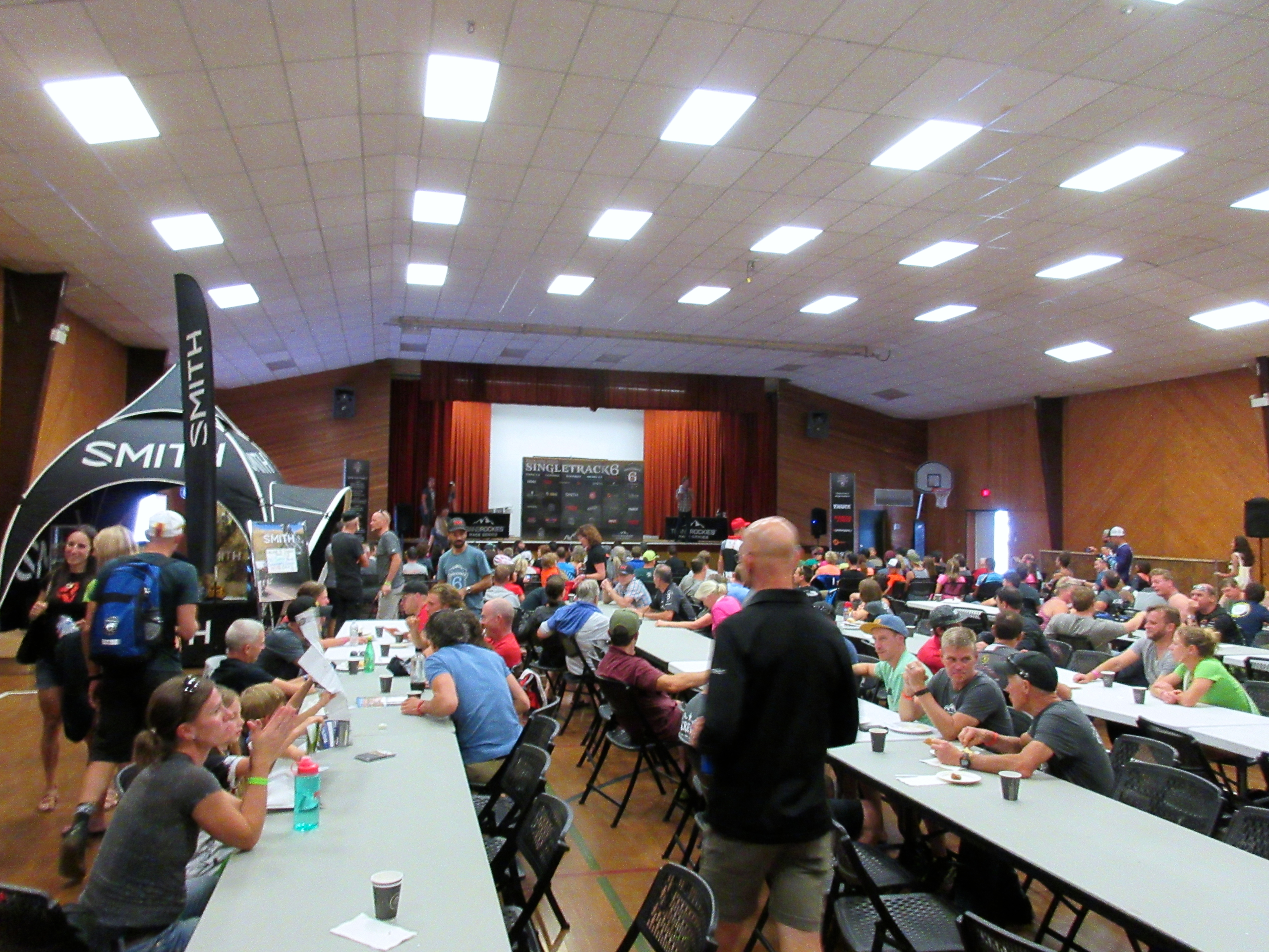
I opted to buy the meal plan offered with Singletrack 6. For around $300 they provide you with breakfast and dinner at the ungodly hour of 5:30-6:30 am and pm. Anyone who has raced an event with multiple days knows getting quality food consistently and quickly is a nightmare while trying to juggle 5 different things while also racing a bike! The meal plan is a no brainer in my opinion.

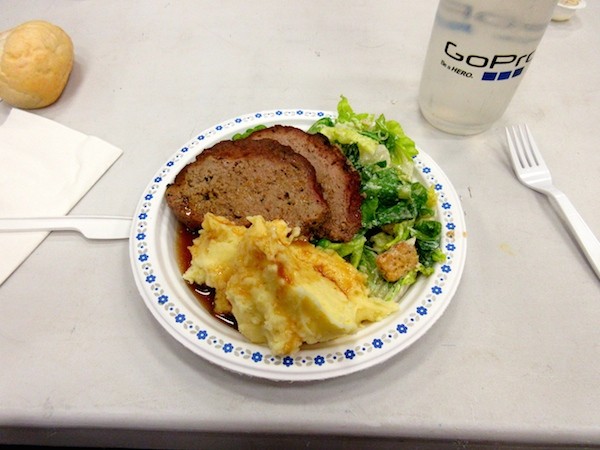
Meatloaf!
Meatloaf!

The food has been great, and there is a lot of it!  I eat better at this race than I do at home, that’s for sure. But then again, my cats eat better than I do.

Aint no Pain like Champain – Stage 2 of the SingleTrack 6

Today’s Fernie stage started at the local ski resort. Since my cut-in-line technique worked so well yesterday I opted to do the same today and managed to be in the top 1/3rd again. I find if I am friendly and look like I know what I am doing people don’t ask questions.

IMG_0044

The race exploded off the line leading into a 500m-gained double track climb. The pace wasn’t as spry as yesterday I felt, as I think there were some sore legs and egos from yesterday’s stage. I bled through my eyes trying to get my 30lb beer gut up the climbs today.

Today’s stage was much different from yesterdays. The course profile looked like shark’s teeth, and although most of the climbing was on a gravel road, there were 4-5 major ones followed by various types of descents.

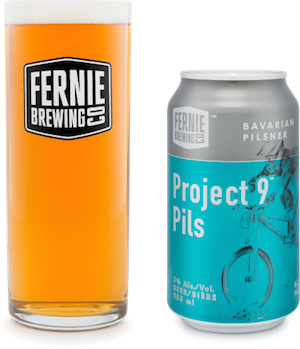
Today’s stage featured the famous ‘Project 9’ decent which is legendary in these parts. There is even a beer named after it from Fernie Brewing Co!

project-9-pils-can-glass

Project 9 is a fantastic long decent with knarly fast sections that you would expect from a BC trail. The only words that come to mind are ‘flow’ and ‘chunky’.

Really the day was made up of going up, and then down many times. Compared to yesterday’s stage it was a little frustrating for this guy. It provided 1500m elevation gain, but other than project 9 I felt like we lost a lot of hard fought elevation without a ton of quality singletrack time. Lets be serious for a minute though, anything compared to yesterdays stage would be like going from a champagne room stripper, to Pornhub.

Around the 2 hour mark, I blew up! There was no gas in the tank and I was left climbing the final climb covered in my own spit and snot just trying to make it through the day. My idea of taking 1 bottle and hoping it would last for 2 hours failed me miserably. You live and you learn. You would think after 18 years of this shit I would have learned by now.

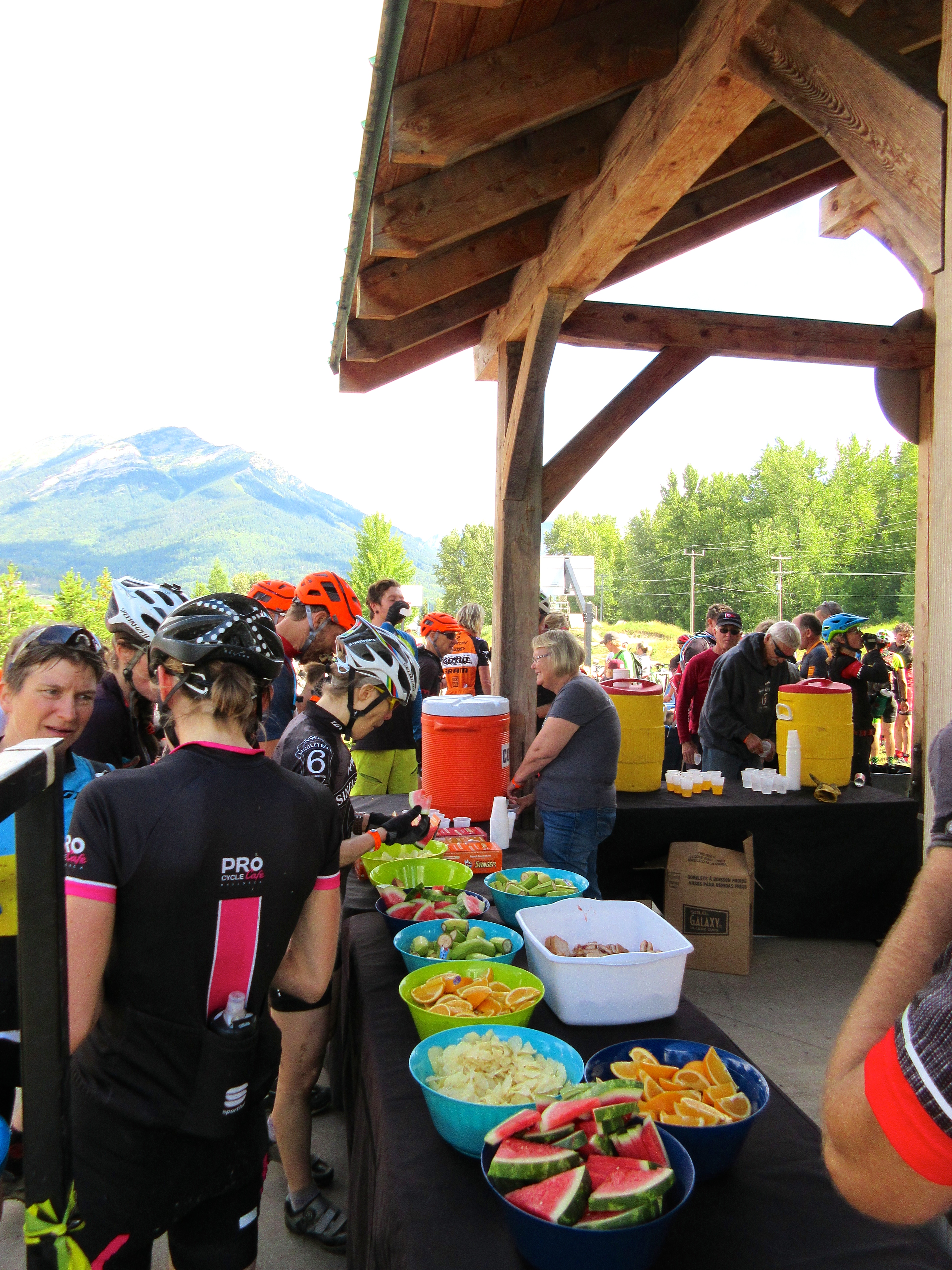
That being said, there are fantastic aid stations with everything from Coke, to Ultima electrolyte drink to watermelon and gels, but I’m too stubborn to stop. Of course it makes more sense to spend 5 minutes on the trail in the middle of no-where bonked out of your mind trying to find out where your hands are, then to take 30 seconds to fill a bottle and grab a free gel 20 minutes earlier…..hindsight is 20/20.

2016 Singletrack 6/Stage 2

As of now, while sitting in a bar with a ‘Project 9’ beer in hand, I feel pretty good. I hope this is a good sign of things to come tomorrow. It’s a good game plan to anticipate adapting into form 3rd day into an epic mountain bike race and pull out some strong legs right?

Confessions of a MTB Dirtbag: SingleTrack 6 Review: Fernie Day 1

July 23, 2016 by Ryan Taylor

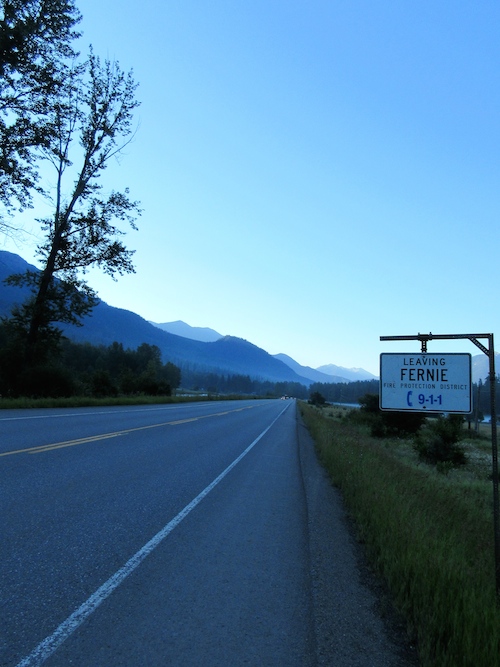
Fernie, BC
Fernie, BC

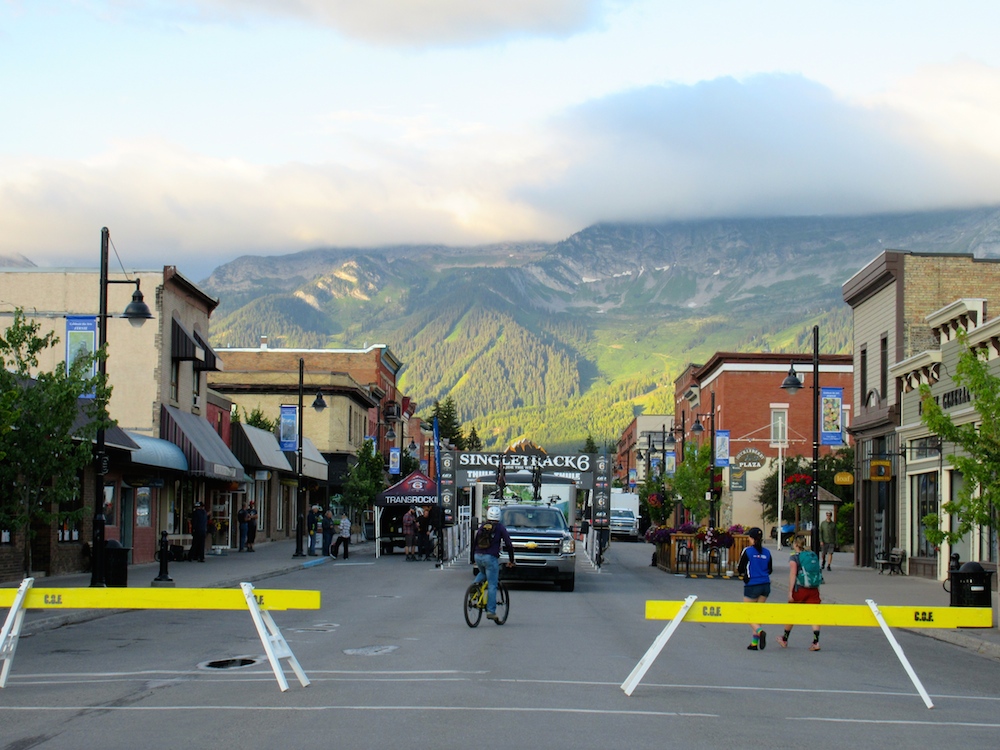
Wow what a day. Where to begin. The moving carnival that is Singletrack 6 started its wheels in motion today. The small mountain town of Fernie is full of shaved legs, and weird facial hair. There is an audible buzz to the town as hundreds of racers began their day today. Some trying to take on the world one hemp/mocha/glucosamine power shake at a time, and others just trying to earn the post race beer.

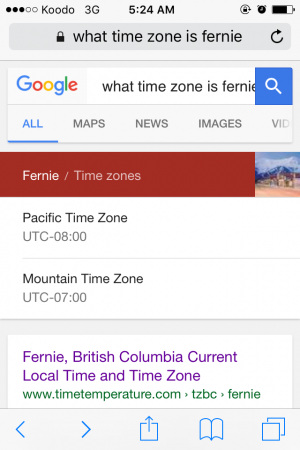
Google doesnt know what time zone Fernie is in...which leads to massive panic attacks when race start is 8am.
Google doesnt know what time zone Fernie is in…which leads to massive panic attacks when race start is 8am.

Fernie is fantastic. Ive been here many times and it holds a soft spot in my heart, but to be honest I never got my trail jazz from it until today. Today was epic.

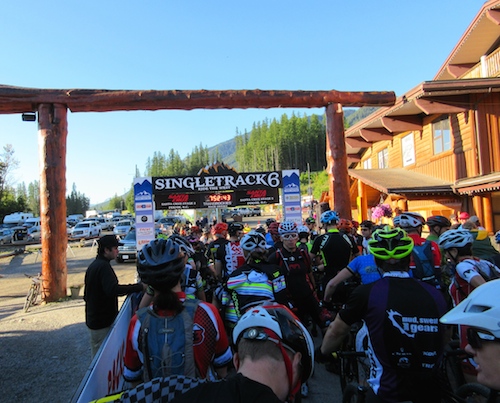
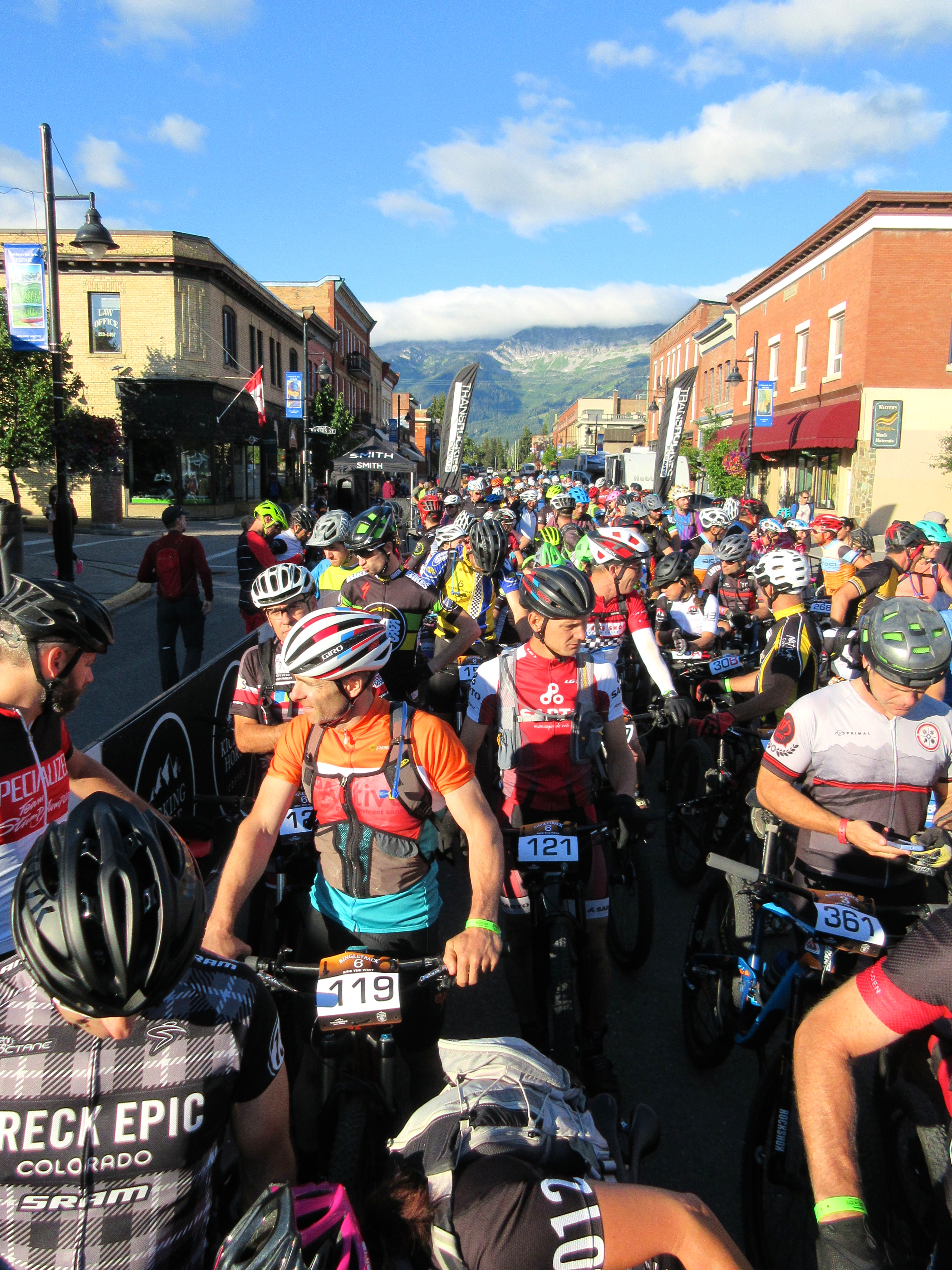
The carnival started at 8am with the likes of many speakers pounding AC/DC waking you up more than an espresso enema. I snuck my way into the first third of the massive group at the start line, where I looked around and I couldn’t see a dropper post in sight. The legs were mostly shaven, and I wondered if this was the party I wanted to be in. Mostly all I could think about was that I forgot to brush my teeth.

Like lemmings off a cliff into the pain train.

A neutral start plowed through Fernie, being led by an old town firetruck where mass carnage and chaos took place as the experienced battled with the not so experienced. On mass, we climbed and climbed and climbed what seemed like forever. Pavement turned to dirt as the vista exploded below as we were in our own personal fight club, inches from the wheel ahead and behind.

IMG_0033Being a BC resident I am use to climbing a lot…..its just part of living here. Your pre-work 1 hour burn ride typically holds 500-700m of climbing. I was not too impressed when I burned a lot of matches just holding the wheel in front of me to start the timed decent after 45 minutes of pain to read the Garmin only had 500m gained…..of 1500m for the day!
Oh god.

No matter. The decent started.

In my previous post, I mentioned that this week was a search for trail enlightenment. Well, everything from here is a bonus. I found trail enlightenment on the first day! It was fantastic. The crew at S6 has put together a truly great day of racing. Almost all of the riding was singletrack and the decents were fantastic. Today’s stage was truly a no puff puff race. When you weren’t descending for km’s at a time, you were riding rollers that felt like a roller coaster. Many times throughout the day I simply screamed with joy to the fright of people ahead and behind me. It was fantastic.

Until I hit the second climb.

The second climb, was far more steep than the first, and after 1.5-2h in the saddle getting your legs, arms, core, and head rocked…it was not a welcome sight! What is life without bringing you to your limits though. Unfortunately I broke a chain at one point and had to run to an aid station(which are fantastically well stocked) to find a chain tool, and in minutes I was back on my way.

IMG_0037I finished the day with another great but shorter, decent to roll in on the brink of being a broken man. My arms burned from pulling on the bars so much while climbing, and also from then railing extended sweet descents. My legs were cooked and my mind fearing how I am going to handle the next few days.
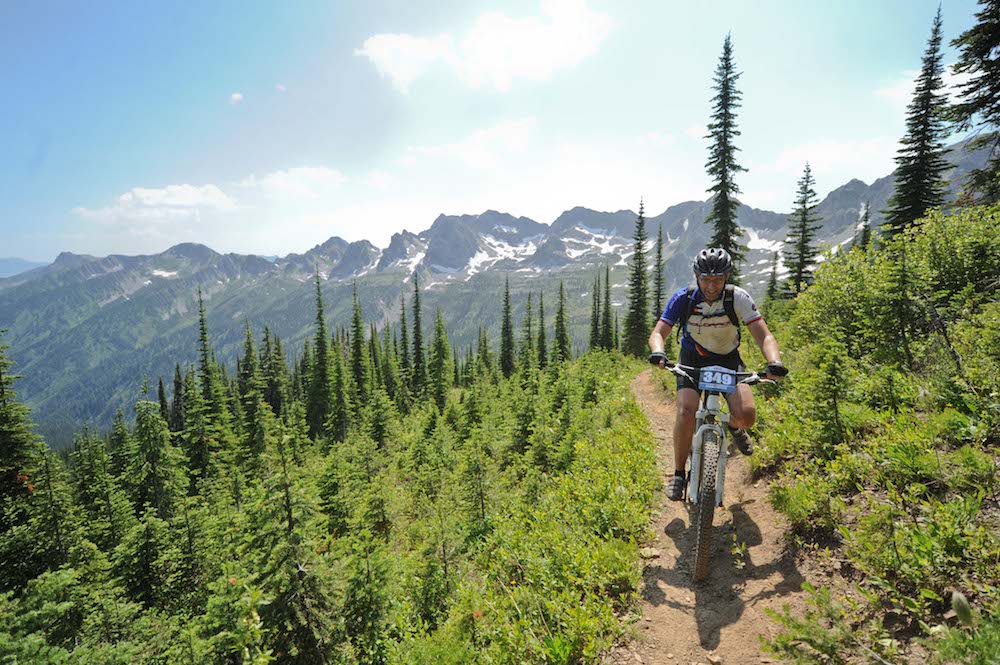
Simply it was one of my best days on a bike. Kudos!

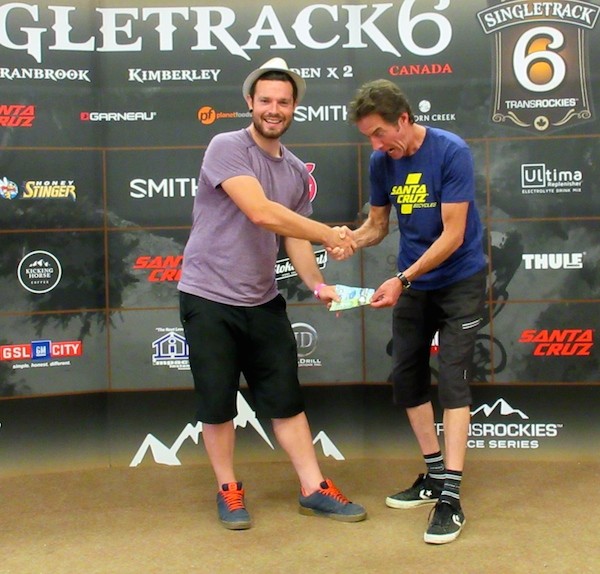
Post race meal, and awards.

Confessions of a MTB Dirtbag: Singletrack 6 Review: Foreplay

July 22, 2016 by Ryan Taylor

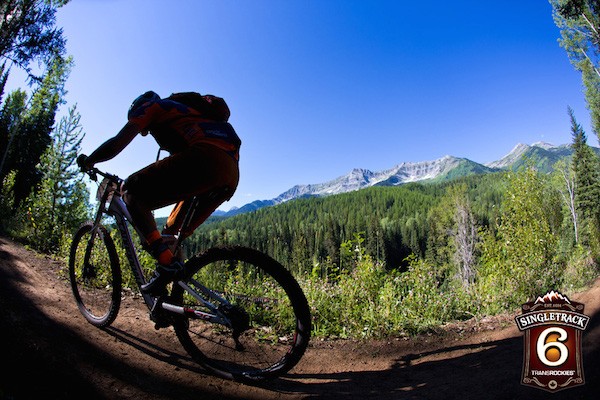
Over the next week I will be writing about my experiences at Singletrack 6, a 6 day marathon MTB race in mountain biking’s greatest hotspot, British Columbia, Canada. Singletrack 6 moves to different locations in BC every year and this year the Rocky Mountains are featured. The event stops in legendary outdoor meccas such as Fernie, Cranbrook, Kimberly and Golden.

The Views in Fernie
The Views in Fernie

My game plan for writing this article is to document the experience of Singletrack 6 as opposed to the ‘race’. The event attracts some of the best high level racers from all over the world, but I am not one of those. I am 30 pounds heavier than when I was a Cat 1 racer, and despite racing thousands of races through my life, I am more interested in the experience and the memories it gives than the race itself. Lets just say this guy will not shy away from the post ride beer. For me, this ‘race’ is an attempt to discover singletrack enlightenment through 6 days in the Canadian Rockies. What I do, what I eat, how I ride is a reflection of that journey.

Meet Bruno – My Home Base for Singletrack 6

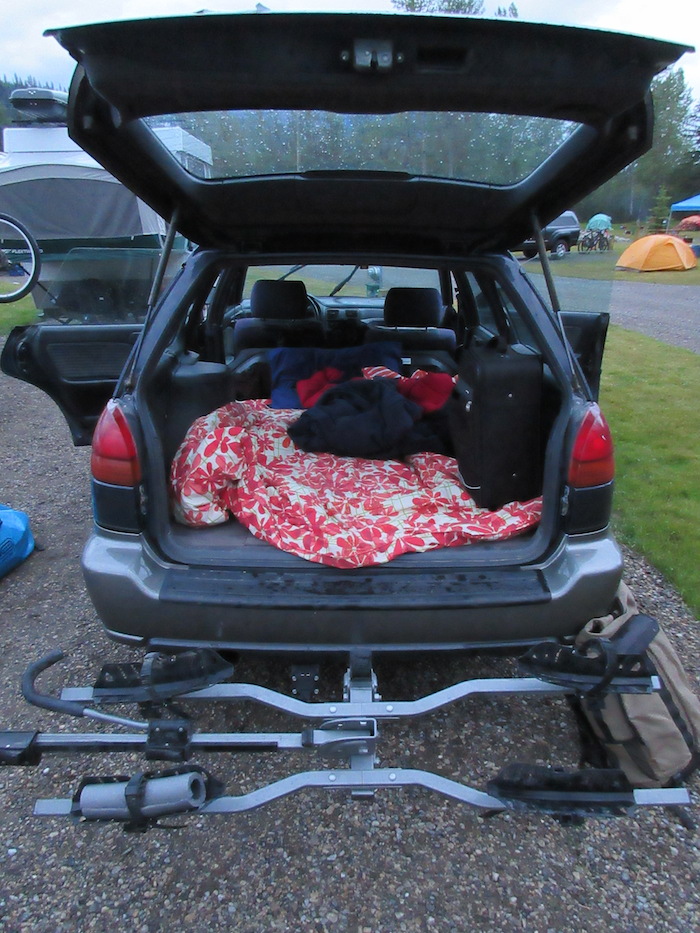
No one can find enlightenment staying in a 5 star hotel. For this adventure I wanted to get back to the grass roots of riding, and my trusty(or not so much) 98 Subaru Legacy is the perfect vehicle for that. Instead of camping, glamping, or staying in hotels(S6 offers great hotel packages) I wanted to travel and live in ‘Bruno’. Part of this reason is that I have to make my way to the start of the stage every morning(there are shuttles available from S6) and the other factor is that I didn’t want to move 6 days worth of gear every morning. Bruno would be perfect.

Base Camp for the week of S6

From home base in Penticton, BC to Fernie it is roughly a 7 hour drive. For you International folks reading this, that is roughly driving time from Paris, France to Munich, Germany. Canada is a big place!

Unfortunately, Bruno didn’t like driving through some of the hardest driving conditions North America has to offer, and he lost a small bolt in the caliper of the rear right brake preventing me from stopping and causing a lot of banging noises. After some frantic phone calls and experimenting with the powers of zip ties, I decided to drive the 90km to the nearest town through a Canadian mountain range with only the emergency brake.

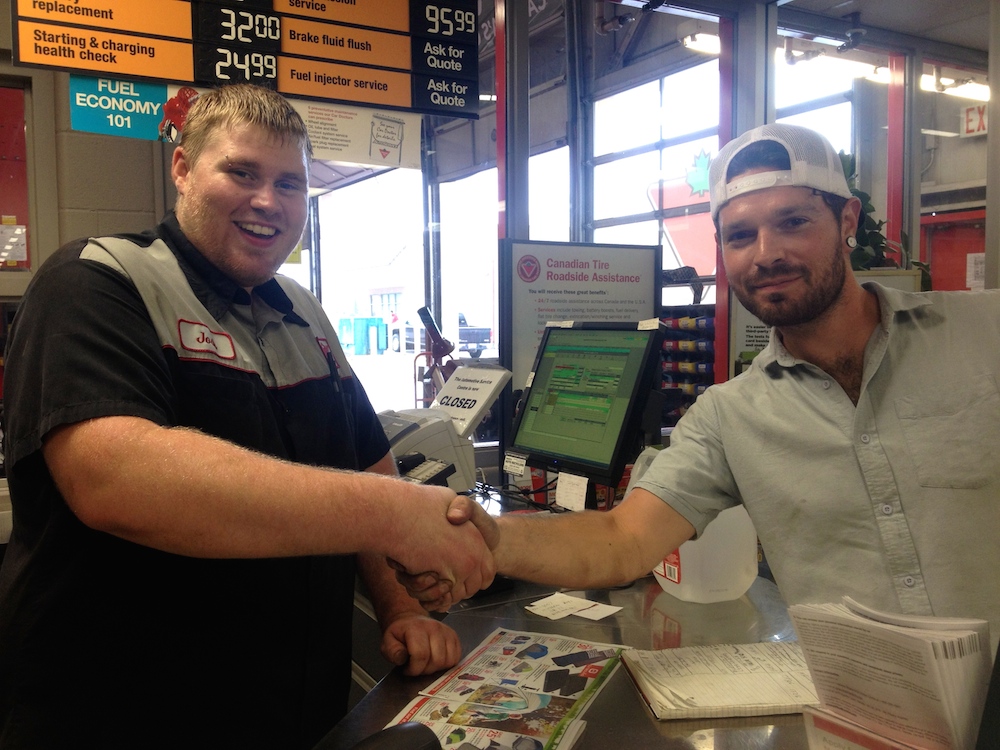
After a rain storm and about an hour of finesse braking I arrived at the nearest Canadian Tire, which is basically a do-all hardware store here in Canada. Luckily, Josh helped me out and I was on the road again!

Thanks Josh!
Thanks Josh!

With that bit of foreplay, let the adventure begin!

Bike Gear Ratios – What Size Should You Run

July 21, 2016 by Josh Friedman

bike gear ratios

Bicycles are full of perplexing choices; what saddle and tires to use, what size bars and length cranks fit best, what pedal system suits you. Perhaps the most perplexing and difficult choice is understanding bike gear ratios and what gearing will work best for you. Now with cassettes with up to eleven cogs, it may seem like there are unending options.

Cranksets

Cranksets set the tone for bike gear ratios on your bicycle. In general, there are three size options that will dictate your gearing and also set your bike up for its intended use.

Standard

A standard crankset has a one hundred thirty millimeter bolt circle diameter (or BCD, Campagnolo cranks have a one hundred thirty five millimeter BCD). Almost always, the chainrings on standard cranks are fifty-three teeth and thirty-nine teeth. For many, many years this was the only option. Today it is still the choice for racing, unless you will be tackling the steepest and longest of climbs consistently in your rides and races.

Compact

Compact cranksets allow a wider range of gearing options with their 110 millimeter BCD. Most often they will come with a fifty tooth and thirty-four tooth pair of chainrings, but increasingly you will find fifty-two tooth and thirty-six tooth pairings. The former is a great all-around combination, especially if you are tackling significant climbs. The latter gives an easier gear for climbing and still has a big enough chainring to not lose very much top-end speed when compared to a standard crankset on the downhills and flat. Compact cranksets are now stock on most new complete bikes.

Triple

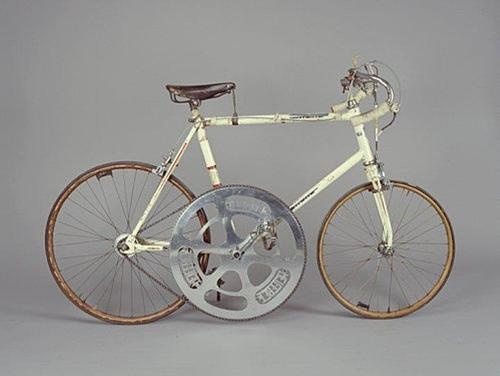
Until compact cranksets came out, triples were the only way to get a bike dedicated to climbing. The third chainring makes for a slightly heavier and more complicated shifting system. Today you will almost exclusively find them on touring bikes hauling heavy loads, unless it is a climbing bike for ascending the steepest pitches. Compact cranksets, with the right cassette can get a low gear that is very close to the low gear on a triple.

Cassettes

Your cassette will fine tune the gearing of your crankset. The flatter your riding, the closer your gearing should be on your cassette. You will encounter fewer difficulties on your daily rides. With eleven speed cassettes, you could get a eleven/twenty five (referring to the smallest and largest cogs) cassette and never be overgeared and never have more than a two tooth gap between cogs.

The biggest cog on a cassette you can use with a short cage rear derailleur is twenty eight tooth. Paired with a compact crankset, it is sufficient to ascend all but the longest and steepest climbs. If you need lower gearing, you can get a medium or long cage derailleur and get up to a thirty-six tooth cog. Note that you may have large gaps between cogs, although that is offset by your ability to get over serious difficulties with relative comfort.

With cassettes less than eleven speeds, you will not have all of the potential options available to you, but you can still find a cassette that will suit your needs. Large cogs are still available and so are cassettes with small gaps between cogs. The small sacrifice you make is not having both large cogs and smaller gaps. It is generally not worth swapping over to a completely new eleven speed setup unless your group is worn out too.

One-By Setups

A very new option for drivetrains is a one by eleven. That means you have one chainring and eleven cogs. Before manufacturers made dedicated one by eleven groups, riders would cobble them together with different means of retaining the chain. In the modern version, the chainring alternates wide and narrow teeth to correspond to the gaps in the chain and mate with the chainring better. The resulting bike should be less complicated mechanically and slightly lighter. You will require a very wide cassette to accommodate varying terrain because you lose a chainring. These setups are popular in cyclocross and mountain biking because you are generally in a low gear already.

Fixed Gear

Fixed gear and track bikes only have one gear. This makes gearing selection specific and critical for the discipline or riding that you will do. Track cranksets have a 144 millimeter BCD, although a fixie on the road may have whatever came out of the parts bin. The best way to figure out what gearing would work for you fixie is to ask other fixie riders in your area what they are riding. Remember that you cannot coast, so you need an easy enough gear that you can make it up the hills but hard enough that you are not spinning out uncontrollably on the descents.

For track, different disciplines require different gearing. You should have a few chainrings and cogs at your disposal for the different events. Figure out what works best for you; this may change as you get stronger.

Bike Gear Ratios – More Difficult or Easier?

In some ways it has gotten easier to make the choices on bike gear ratios as manufactures have made cassettes with more and more cogs; while the mechanics have gotten more complex, the gear ranges on offer are wider. Finding the right setup will take your mind off the gear and let you enjoy the ride. Do your homework and make sure you have the right setup for the riding that you’re doing be it around town, on the trail, or in the hills.

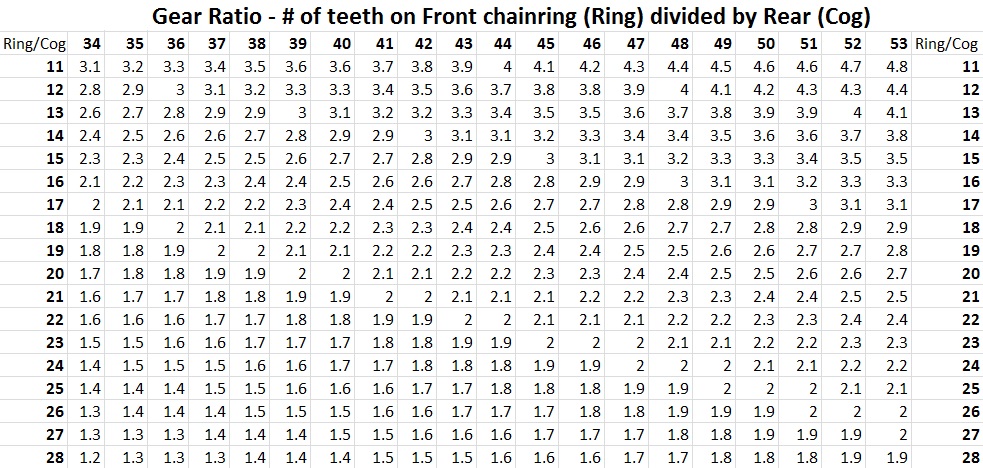
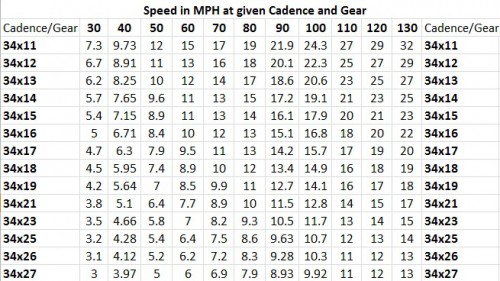
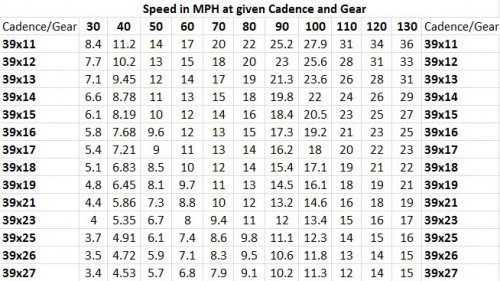
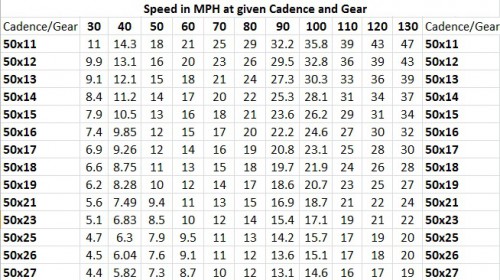
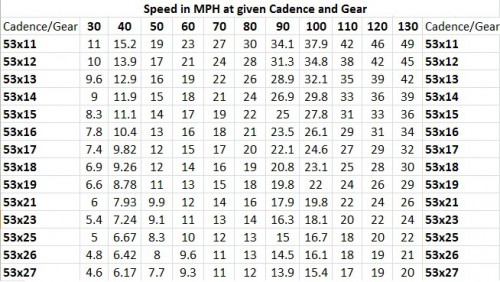
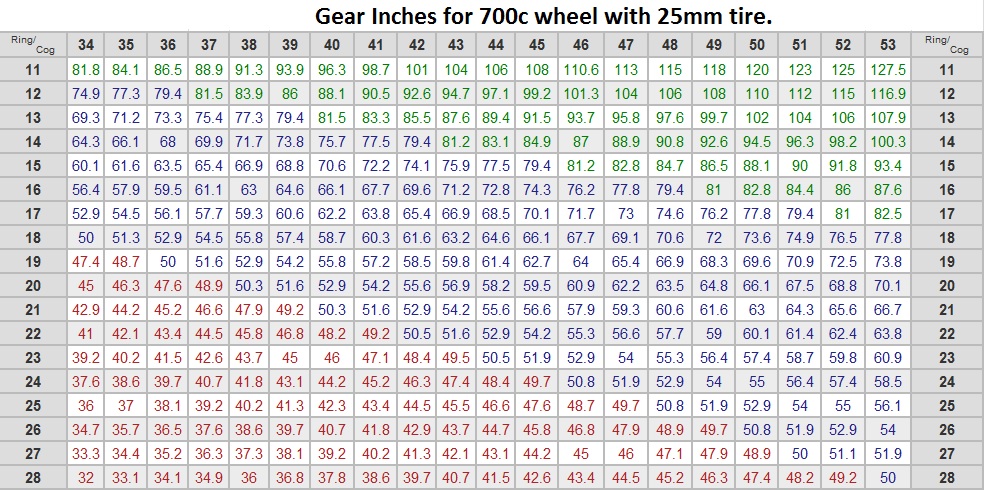
Below Are a Few Charts to Help With Finding The Right Size Gear

bike gear ratio chart

speed chart 34 tooth chainring

Speed chart 39 tooth chainring

speed chart 50 tooth chainring

speed chart 53 tooth chainring road gear ratios

« Previous Page
Next Page »
  • Facebook
  • Tumblr
  • Twitter

Latest Articles

JOIN Cycling: A New Training Platform for Cyclists

May 27, 2024 By Eric Lister

cold exposure

The Benefits of Cold Exposure for Cycling & Life

June 13, 2023 By Eric Lister

hill climb

The Ultimate Hill Climb Training Guide

May 31, 2023 By Eric Lister

shoulder pain cycling

How to Treat & Avoid Shoulder Pain While Cycling

April 12, 2023 By Eric Lister

psoas stretch

The Importance of the Psoas Stretch for Cyclists

April 6, 2023 By Eric Lister

cycling neck pain

The Ultimate Guide to Cycling Neck Pain: Causes and Solutions

March 21, 2023 By Eric Lister

Useful Info

  • Contact
  • Finally, A Global Cycling Club That Is Focused On Community And Love Of Cycling!
  • Privacy Policy
  • Share Your Story!
  • Terms And Conditions Of Use
  • Welcome to I Love Bicycling
  • What Happened When I Stretched Every Day For a Month

Recent Posts

  • JOIN Cycling: A New Training Platform for Cyclists
  • How to Hang Bikes in Your Garage: 4 Inexpensive Options
  • Gravel Bike Vs. Road Bike: Which One Is Better For You?
  • The 6 Types of Mountain Bikes & How to Choose the Best One for You
  • What Is a Touring Bike Good For? 5 Benefits We Know You’ll Love

Search I Love Bicycling

Connect with Us

  • Facebook
  • RSS
  • Tumblr
  • Twitter

Copyright © 2026 · Magazine Pro Theme on Genesis Framework · WordPress · Log in