Climbing Steep Hills
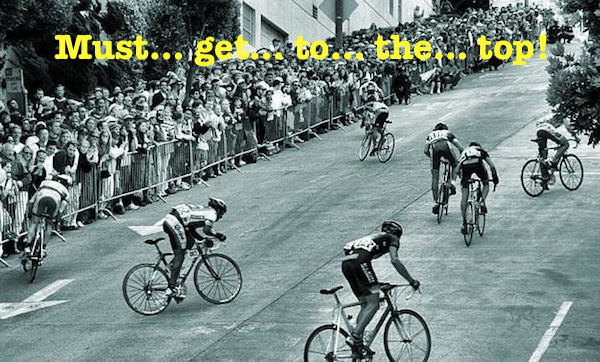 Climbing a Steep hill is a gut busting experience, but with some of these tips hopefully it wont be as painful or dreaded as it previously was.
First of all, we are not talking about an ordinary hill here, if you want climbing techniques for hills read this post. Steep hills are a whole other animal all together.
Compact Ring
Before you even begin this precipitous climb set yourself up for success, make sure your bike is set up properly. Consider if getting compact cranks or even triple cranks upfront is right for you. If you are grinding away at 50 rpm for any extended amount of time then it may be time to make a switch.
Before The Climb
If you know the steep hill is coming up, take it easy before the climb, restore your energy. If you are in a group allow them to take turns upfront, try to come into the climb as fresh as possible.
Mental Game
Brain wash yourself into “loving” the climb, always saying how easy it is going to be or how you are looking forward to it. The mental game is a most of the battle, it is the same for any type of work… It sounds ridiculous, but I promise it makes it better.
Reduce Weight
Make sure to only pack what you need… especially if there is a store that you can get things at or an aid station on the other side.
Don’t Start Too Hard
Make sure that you don’t go in to oxygen debt immediately, you may hate life half way through the climb if you started out too hard.
Zig Zag
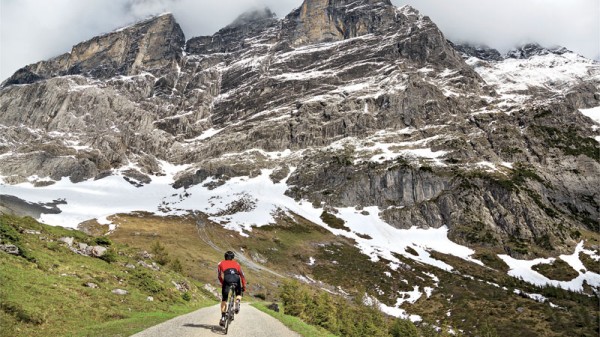
See that picture up above? The pros are doing it… so should you! I zig zag in order to reduce the grade and make it easier on myself, especially if it is a hill that is leading up to a strava segment. If your cadence is starting to slow to a grinding halt zig zagging may just save you from an embarrassing stall.
Take Wide Corners
Take the outside of the corners effectively reducing the grade. This will save your legs for steeper sections of the climb.
Stand up
Use your body weight to help you getup the hill. Make sure to rock the bike back and forth gently in order to put your body weight directly over the pedal on the down stroke.
Pull Down
As the grade continually increases you will need to start engaging more muscle groups in order to complete the climb. While standing up, pull down on the handle bars with both hands to give yourself more power.
Core Strength
It takes a lot of core strength and proper weight distribution to complete a steep climb. Your lower back might start to scream in agony, but just remember the mental mind games and how much you “love” it.
Secret Weapon
As with any hill… envision rocket boosters attached to your bike… it is practically cheating it is so effective.
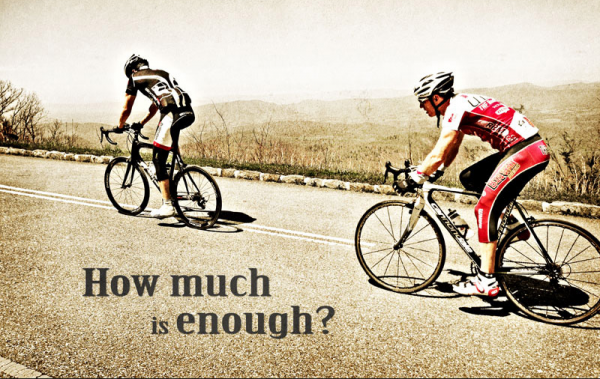 A number of athletes turn to interval training in order to improve their performance. Interval training involves periods of high-intensity riding that alternate with low-intensity rest periods. The purpose of interval workouts is to improve a cyclist’s speed/
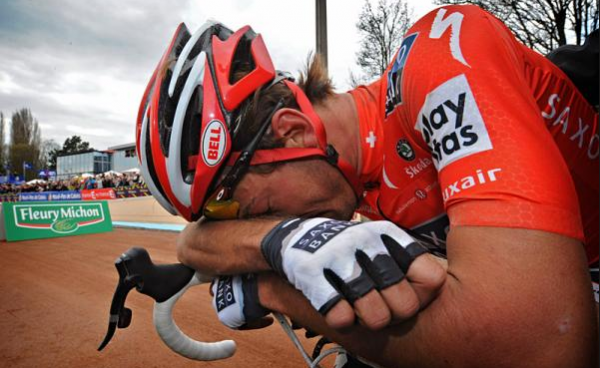 It’s great to be enthusiastic about cycling! When you love something you don’t just want to do it often, you want to do it well. It’s common for an athlete to push him or herself, trying to outdo their own record for mileage and/or speed. But it’s possible to push too hard.
 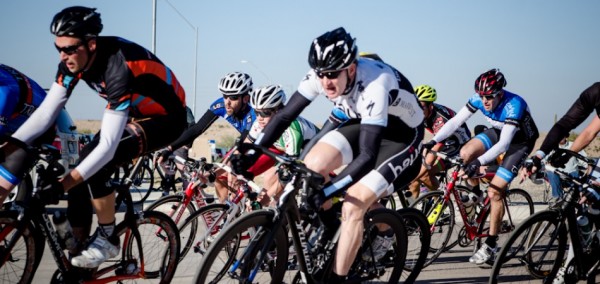 If you are looking for something a little different to add to your bike racing calendar, or you just want a fun way to improve your bike handling skills, consider signing up for a criterium race. Criteriums are personally my favorite race to ride in, and everyone I know who has come to watch one has loved the whole event. What’s not to like?
 Early season riding conditions can be very challenging. During the winter, a ton of grit and salt gets dumped on roads to keep them grippy and snow-free, and, come spring time, all of that stuff ends up in one place – the shoulder where you want to ride. Spring is also pothole season, as water seeps into cracks in the road and freezes overnight, opening up holes the size of the Grand Canyon on your favorite roads. There are a few simple bike handling tips to keep your skin off the road and your bike in one piece.
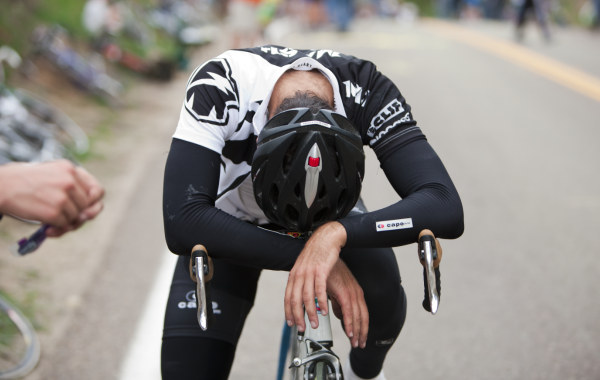 Anyone can suffer from overtraining and in fact, it’s more likely to occur in beginner cyclists as they try and do too much, too soon.
 Answering this one question, and developing a strategy to turn that weakness into strength, will pay dividends with faster times and stronger rides. Most athletes, for example, never consider they’re
 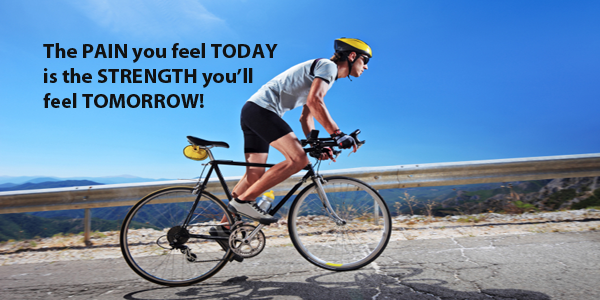 The principles of cycling training are fundamentally basic. Your goal is it overload and then allow for adaptation. Rinse and repeat.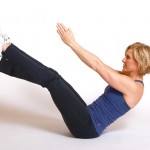
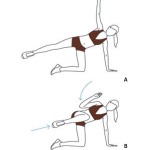
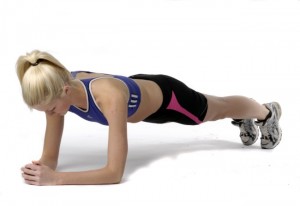
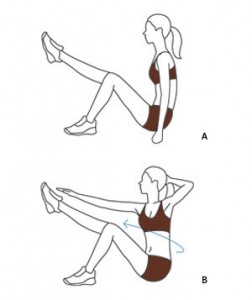

 When we think of cycling, the first parts of the body we generally think of are legs. Yes, it’s fairly obvious that our legs are important to cycling, but what may not be so evident is the role that other parts of our bodies play in moving ourselves along on our two wheeled beauties, namely our core! If you are serious about cycling this year and you want to do more than ride at a gentle pace down a sunny road or trail then you really need to start strengthening your core!