• Training
    • Injury Prevention
    • Training Tips
  • How To
    • Bike Fit
    • Gear
  • Nutrition
    • Nutrition Tips
    • Weight Loss
  • Repair
  • Reviews
  • Stories
    • Funny Stories
    • Jokes
    • Quotes
    • Videos
    • Funny Videos

I Love Bicycling

I Love Bicycling is a website that is geared towards cycling for beginners with road cycling tips, training articles, nutrition tips, weight loss, how to’s and bike repair articles.

The Importance of the Psoas Stretch for Cyclists

April 6, 2023 by Eric Lister

Your primary hip flexor, psoas major, is a muscle that seems to have its hand in just about everything. When it comes to cycling, we are constantly putting it into a shortened position through contraction in the upstroke and our bent forward, flexed hip postures on the bike. This article will show why having a psoas stretch or two in your recovery toolbox might save you from countless days of lost riding due to tension, pain, and ache. 
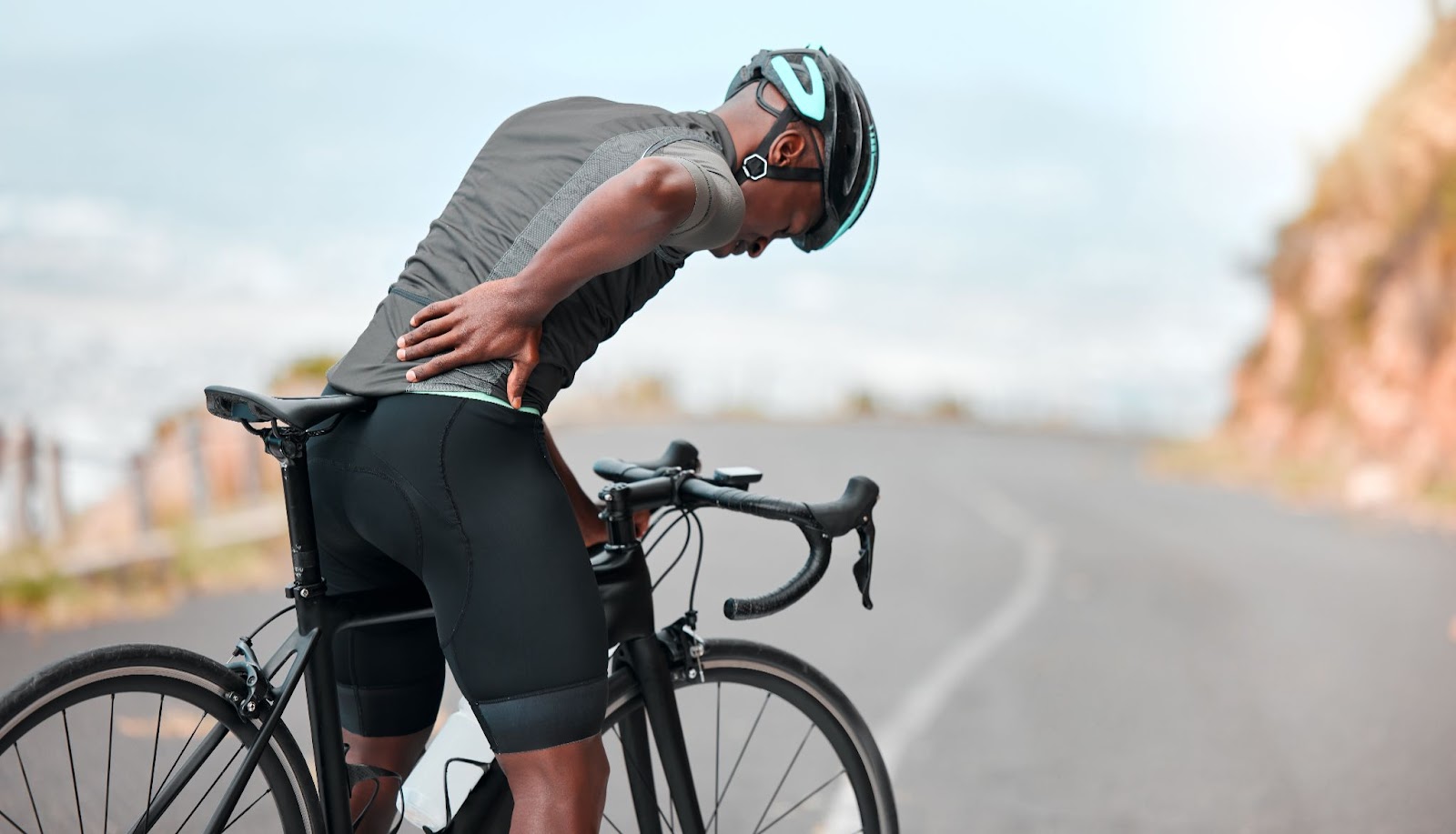
cyclist with lower back pain

We’ll see later in this article how the psoas muscle is one of the main causes of lower back pain in cyclists. (Image credit: Beaunitta Van Wyk/Adobe Stock)

Sounds dramatic, doesn’t it? Well, the truth about this tissue is a tricky one, especially in our sport. When we say it has a hand in everything, we really mean it. It is (perhaps infamously) known as the stress muscle because of its proclivity towards holding tension as a result of stress and trauma in all areas of our lives.

For example, the psoas has an intimate relationship with the diaphragm, your primary respiratory (breathing) muscle. They cross over each other and share nerve innervations through similar vertebral segments of the spine. Dysfunction in one can cause problems in the other.

Cycling is unique in that there is a lot of cardiorespiratory stress, and also postural stress on the body because of how it has to move with the bicycle. A proper bike fit can certainly help, but there is simply no way around the fact that our hip flexors are going to get smashed as a result of too much biking. 

Psoas Anatomy & Positioning on the Bike
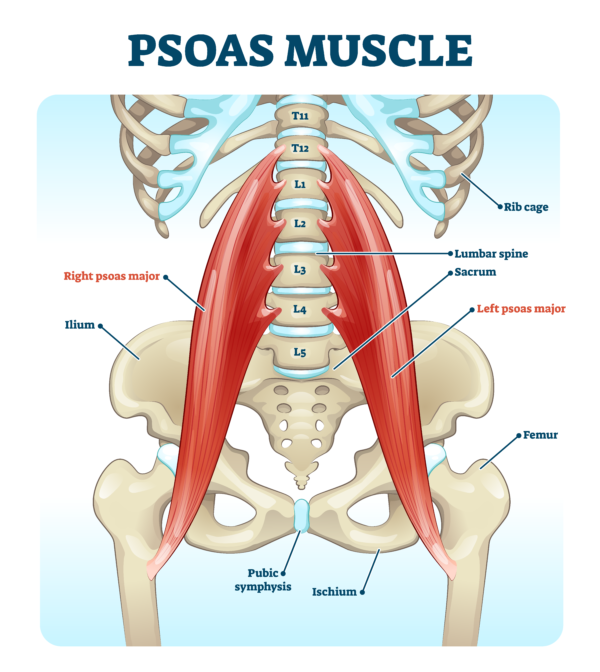
psoas stretch

(Image credit: VectorMine/Adobe Stock)

Our psoas is the only muscle that connects the upper and lower body. It attaches to all five of the lumbar (lower back) vertebrae, which is slightly troublesome (sarcasm) if you’re going to be chronically shortening it, as is the case with cyclists, but also just people in general with modern lifestyles that involve a lot of sitting at desks, on couches, and in cars.

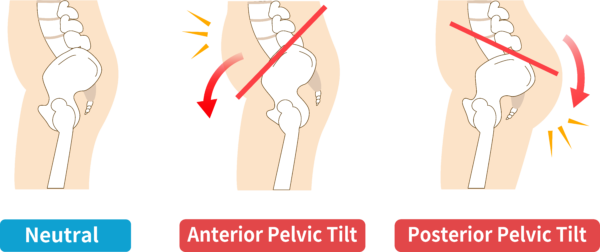
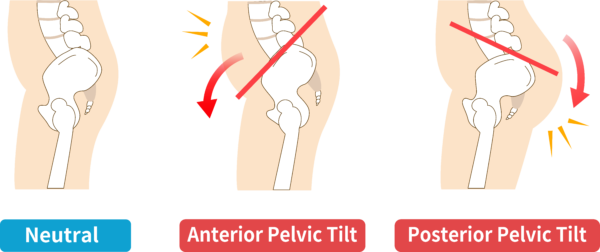
The reason is because as the psoas shortens, it starts to pull on those lumbar vertebrae. This hyperextends the back into a position called lordosis, and consequently tilts the pelvis forward into a position called anterior pelvic tilt. Tightness in the hip flexor muscles also weaken their opposing muscles, the glutes (butt), in what is known as reciprocal inhibition.

anterior pelvic tilt
Different pelvic positions. (Credit: sumaki/Adobe Stock)

Cycling exacerbates this process because of the positioning of our hips while riding. They are always in a somewhat flexed position, even at the end of our downstroke. This constant flexion is a recipe for psoas tightness, and is one of the reasons why cyclists are plagued with so much lower back pain.


Notice the position of this cyclist’s left hip. It is almost completely flexed, further exacerbated by her bent forward torso. (Image credit: Artem Varnitsin/Adobe Stock)
Benefits of Psoas Stretching for Cyclists

A testament to this muscle’s activity while we ride is that it has a bigger volume in more competitive cyclists, and grows even further with intense cycling training. By performing a variety of psoas stretches on off-days or even during and/or after your ride, it’s possible to mitigate the effects of psoas stiffness that will inevitably inhibit its function and wreak havoc throughout the rest of your body.

More than half of cyclists experience low back pain, and much of that can be attributed to dysfunction in the muscles surrounding the hip joint. Not only can a tight psoas pull on your lower back and anteriorly tilt your pelvis, but it can disrupt the timing and action of different muscles, causing some to overwork and others to become weak and underutilized.

As previously mentioned, there is a distinct relationship between the psoas and how you breathe because of its proximity to the diaphragm. Cyclist’s are already prone to faulty breathing patterns through their bent forward postures and the cardio demand of the sport. All the more reason to take care of our hips so they don’t contribute to what is often a cause of neck pain in cyclists.

Psoas Stretches

Below you’ll find some excellent hip flexor stretches that you can incorporate into your recovery routines, downtime, and even pre/during/post ride if you are experiencing low back pain as a suspected result of hip flexor tightness. Stretching before/during a ride can cause a subtle relaxing effect on the hyperactive hip flexor muscles, sometimes alleviating the pain that would otherwise arise.

Half Camel

half camel stretch

Instructions:

  1. Start in a kneeling position with your knees, hips, and shoulders all stacked posturally on top of one another
  2. Place your hands on your hips or lower back
  3. Gently press forward and arch backwards, feeling a stretch in the abdominals and front of the hip
  4. Hold here for one minute

The psoas sits deep inside your abdomen, attaching to all the lumbar vertebrae. This stretch serves as a gentle opener to the hip and mid-section, and strives to reach into those internal fibers to help them release tension and relax. This is a great one to do in between periods of sitting.

Lifted Hip Flexor Stretch
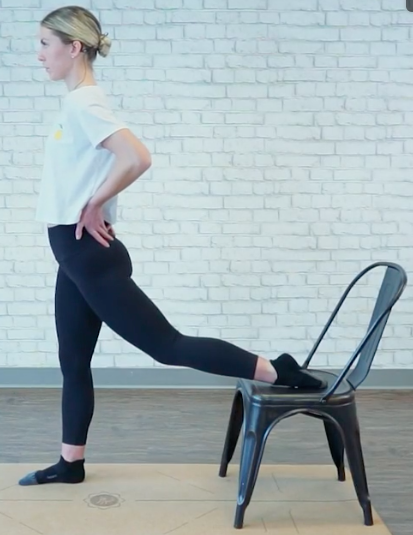
lifted hip flexor stretch

Instructions: 

  1. Rest one foot on top of a chair, focus on squaring your hips forward
  2. Keeping your chest tall, press the hips forward, extending your elevated leg behind you
  3. Hold for one minute
  4. Switch to the other leg
  5. Hold for one minute

This stretch allows you to go slightly deeper into the psoas muscle by keeping the torso erect and elevating the back leg. The elevation forces the hip to go into greater extension, which is the inverse function of the psoas and other hip flexor muscles.

Low Lunge Quad Stretch
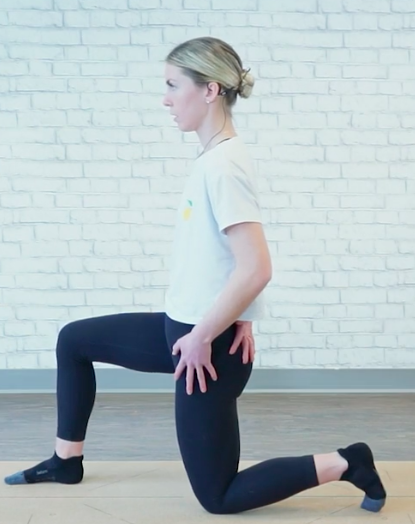
low lunge quad stretch

Instructions:

  1. Start in a kneeling lunge position, both legs bent at 90°
  2. Squeeze your butt to tilt your pelvis backwards into a neutral position
  3. Engage your core at the same time to lock the position in place
  4. From here, gently stretch the back quad and hip muscles by pressing the hips forward
  5. Hold for one minute
  6. Switch to the other leg
  7. Hold for one minute

Your rectus femoris is a quadricep muscle that gets hammered while cycling. It has a dual function of knee extension and hip flexion, both repetitive movements in pedaling. Since they’re both hip flexors, by releasing the rectus femoris it helps the psoas to relax as well.

Get Rid of Cycling Back Pain!
Are you tired of suffering from back pain and discomfort while cycling? Look no further than Dynamic Cyclist. This comprehensive resource addresses the most common muscle imbalances and adaptive muscle shortening that lead to pain and reduced performance on the bike. With just 15 minutes a day, you can follow along with the video programs to alleviate tension and improve posture, so you can ride pain free and reach your full potential on the bike. Try out their 2 month Low Back Focus program and experience the results for yourself. Click here to try 7 days free!
Anterior Pelvic Tilt: How To Correct Imbalances & Improve Performance

March 7, 2023 by Eric Lister

Two of the most common problems amongst cyclists are knee pain and lower back pain. In fact, 94% of cyclists experienced injury during a one-year period of study; low back pain and anterior knee pain being prevalent for 58% and 36% of participants, respectively. While the causes of these issues are numerous and varied, there are several similar originating factors between them, and consequently a structured approach to relieving them short and long-term. 

One of those commonalities is the presence of an anterior pelvic tilt in the cyclist’s body. This basically translates to the pelvis, which is the bony structure that your spine sits on and your femurs attach to (it also supports the intestines, contains the bladder, reproductive organs, colon, and more), is tilted farther forward than normal.

anterior pelvic tilt

Different pelvic positions. (Credit: sumaki/Adobe Stock)

This has ramifications for the entire body, and can be the source of much pain and dysfunction in cyclists at all levels of performance, especially compared to non-cycling individuals. In this article we’re going to talk about why anterior pelvic tilt tends to develop in cyclist’s, the problems it can cause, and what we can do to prevent it from happening.

Common Causes of Anterior Pelvic Tilt in Cyclists

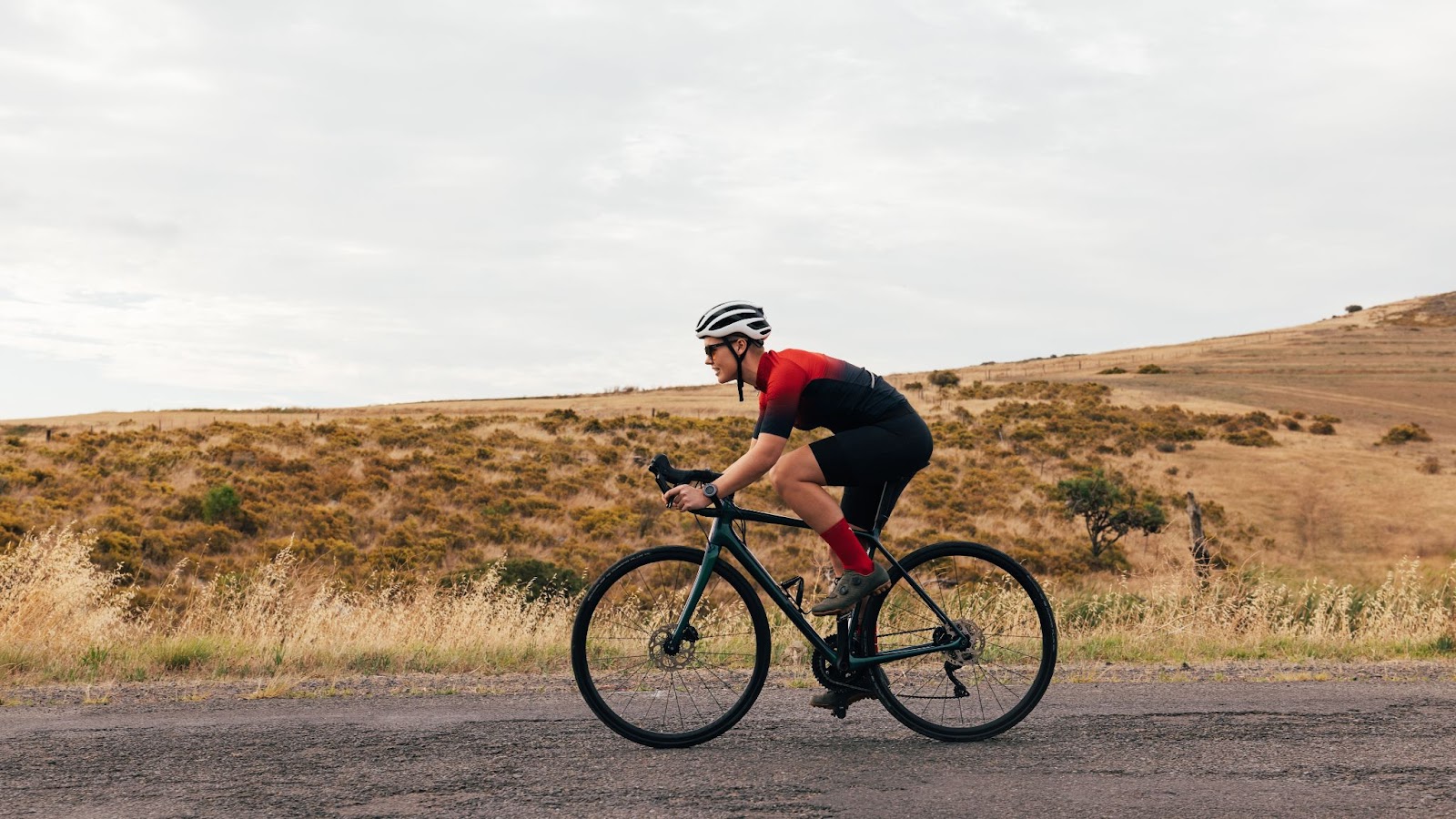
When we look at a cyclist positioned on her bike, there are some immediate red flags that we can point out as likely contributors to this postural phenomena we’re calling anterior pelvic tilt. We’re about to see very quickly that just the way people ride their bikes in general (because of their design) is one of the biggest pieces of this puzzle. 


Use this picture for reference when reading the next section. (Credit: Artem Varnitsin/Adobe Stock)

Compressed Hips

If you look at the picture above, our rider has her left leg at the top of a pedal stroke. If we look at her left hip, it’s in a fully flexed position, accentuated by her bent forward torso. Because this happens thousands of times every time we trek out for a lengthy cruise, our poor hip flexor muscles are being subjected to a lot of short, cramped positions. Over time, this will make them tight.

Tight hip flexors are one of the main causes of anterior pelvic tilt, resulting also in lower back pain. The reason for this is because one of your main hip flexors, the psoas major, attaches to all five of your lumbar (lower back) vertebrae. When the psoas becomes short and tight, it pulls on all those vertebrae, arching your lower back, and tipping your pelvis forward.


Psoas Major. Notice its attachments to all of the lumbar vertebrae. (Credit: SciePro/Adobe Stock)

Other aspects of our modern lifestyles (mainly sitting, by way of office work, driving, and excessive leisure time) further overwork our hip flexors and encourage them to stay tight 24/7. It’s an inevitable part of riding, and something we need to address it in order to get our hips and spine back into a good position.

Weak Glutes

Having a strong backside is not only attractive, but also incredibly important for keeping your pelvis in a balanced, neutral alignment. The gluteus maximus in particular is your biggest, most powerful hip extensor, and is crucial to maintaining good posture through its action of posteriorly rotating the pelvis and counteracting the pull of the hip flexors. 

Our hips never fully extend while we’re cycling. This is largely due to the fact that we’re always hinged over at the hips to keep our hands on the handlebars, and almost completely folded in half when dropping down into the aero position. Cycling has been promoted in the past as a good activity for developing our glutes, but these positions unfortunately make that almost impossible.


Biomechanically, the positions we get into while pedaling make it hard to recruit our gluteus maximus. (Credit: Jacek Dylag/Unsplash)

Because the gluteus maximus is such a big powerful muscle, it often needs intense, full hip extension to be optimally stimulated for growth and development. Cycling doesn’t offer that, and in fact causes the body to recruit secondary hip extensors (hamstrings) to do most of the hip extension as an energy conservation method. Weak glutes = anterior pelvic tilt.

Weak Abdominal Muscles

Cycling primarily occurs in what is called the sagittal plane of movement. This plane divides the body down the middle (refer to below picture) so it is split evenly in half, and accounts for forward/backward movements. There is slight frontal plane (side to side) motion when shifting weight from pedal to pedal and leaning to take hard corners, but it is minimal.


The three anatomical body planes and corresponding motions in the human body. (Credit: VectorMine/Adobe Stock)

This is important because our core musculature needs to be challenged in all planes of movement to function correctly. We need to learn to brace and be strong while twisting, moving our legs independently of our torso, lifting loads off the ground, etc. Cycling limits these opportunities by keeping us fixed and reliant on the bike frame in place of support from our core musculature.

Muscles like the exterior obliques, rectus abdominis and transversus abdominis stabilize the back by creating intra-abdominal pressure and influence the position of the pelvis by rotating it backwards. Cycling discourages mechanisms like this from happening whilst riding, allowing our pelvis to be pulled forward by the hip flexors while the core remains relatively dormant.

Other Causes of Anterior Pelvic Tilt in Cyclists

Having your bike properly fitted is essential to avoid a whole host of injuries, pain, and dysfunction, including anterior pelvic tilt. Having a saddle too high will force you to learn forward excessively to reach the handlebars, compressing the hip joint. If it’s too low, your hip will be forced into extreme flexion at the top of the pedal stroke, further tightening the hip flexors.


Our partners at MyVeloFit offer an AI powered bike fitting app you can use to adjust your bike right at home. (Credit: MyVeloFit)

There are other factors in a person’s lifestyle that are going to encourage anterior pelvic tilt, these include: Having a sedentary job, driving, spending a lot of time sitting on couches and chairs, not participating in any type of explosive movements like sprinting and jumping, etc. All of these things contribute to tight hips, weak glutes, and bad posture overall.

Symptoms of Anterior Pelvic Tilt in Cyclists

Without getting a professional postural assessment done on your body, there are some common symptoms you may be able to relate to that point to an anterior pelvic tilt being present in the body. Some of these include:

  • Knee pain: When the pelvis tilts forward, it internally rotates the femur (your thigh bone). This puts awkward strain on the structures in your knee, resulting in pain and discomfort.
  • Lower back pain & tightness: Excessive pull from the hip flexors can arch your lower back into a posture known as lordosis, often resulting in significant ache, pain, and tightness of the lower back muscles.
  • Mid back tightness: When the lower back arches excessively, sometimes the mid back will round to compensate posturally. This chronically stretches muscles in the mid back, making them feel like they need to be stretched, when actually they need to be strengthened.
  • Distended abdomen: When the pelvis tilts forward it stretches the muscles on the front of your abdomen, making them weak over team. This results in a loss of abdominal tone, and a belly that sags forward as the organs fall against a weak abdominal wall.
  • Loss of power on the bike: If the core can’t maintain optimal stability, it can’t create a strong base for your legs to push off while pedaling, resulting in a loss of power.
  • Hip pain: An individual is likely to experience ache, discomfort, and pain in the hip if the hip flexor muscles are being overworked and holding excessive tension even in time spent off the bike.

Prevention Strategies for Anterior Pelvic Tilt in Cyclists

While the picture we’ve painted so far hasn’t been favourable to our beloved sport, hope is far from lost for those of us with a tilted pelvis! Actually, the fixes for this problem, depending on the cause(s), can be quite straightforward and easy to integrate with some supplemental training. Try out some of these protocols and see what they do for you and your cycling performance.

Hip Flexor Mobility & Stretching

It has become evident now throughout the duration of this article that the hip flexors are major culprits in cyclists with anterior pelvic tilt. To combat the stiffness that is bound to develop in our time on the bike, we can actively work to lengthen and mobilize these muscles so they rest and function in a more balanced position.

Give this exercise a try, the Reverse Lunge w/Leg Lift. It offers an amazing blend of benefits for the hips as a whole. Stepping back into a deep lunge helps lengthen the hip flexors and also strengthen them in those stretched positions at the same time. The added leg lift (and lunge action in general) also helps to strengthen the glutes and pull the pelvis back down into a neutral position.

Perform three sets of 10 reps per leg, adjusting as necessary. You can also hold a dumbbell in front of you for extra intensity.

Strengthen the Glutes

As previously mentioned, the gluteus maximus, your body’s largest muscle, is our most powerful hip extensor, and plays an important role in maintaining a neutral pelvis by rotating it backwards. If we aren’t getting enough activation of this muscle through our riding, then we need to make up for it in our strength and conditioning routine. Here are some ways to make it stronger.

Any sort of squat, lunge, or deadlift type exercise is going to stimulate the glutes and help them develop. A great bang for your buck exercise is the Jump Squat to Jumping Jack, because it combines a deep squat with a jumping jack which forces you to spread your legs and extend the hips simultaneously, an amazing stimulus for all the muscles in your posterior and lateral hip.

See how you feel doing three sets of 10 reps, adding more or less sets/reps to moderate difficulty.

Strengthen the Core

Being fixed on the bike through the saddle and handlebars discourages any significant use of our abdominal musculature. The bike does all the stabilizing for us, a much different environment than a soccer player sprinting down the pitch or a powerlifter lifting a heavy squat. Certain muscles in our abdomen help to posteriorly rotate the pelvis and counter the pull of the hip flexors. Those are the ones we are going to focus on in this next exercise.

The deadbug is a wonderful introduction to low back/trunk stability and overall core strength. The main focus is keeping your lower back flat on the ground as you move alternating arm/leg away from the torso. By keeping you back flat, you’re using your exterior obliques and rectus abdominis to counter the pull of your hip flexors, and strengthen the core in concert with your extremities.

Three sets of 10 total reps (five/side) is a good start for this exercise. If you feel your lower back coming off the ground, limit the range of motion of your limbs so you can maintain that hollow position. 

Build a Better Body With Dynamic Cyclist

The above exercises were pulled from our extensive mobility, strength, and conditioning programming over at Dynamic Cyclist! We have hundreds of follow along instructional videos and routines to help you correct postural problems, prevent injury, get stronger, and become an overall better cyclist in the comfort of your own home! Sign up for a 7-day free trial by heading over to our website.

Hip Flexor / Iliopsoas Stretches

October 7, 2015 by Dyani Herrera

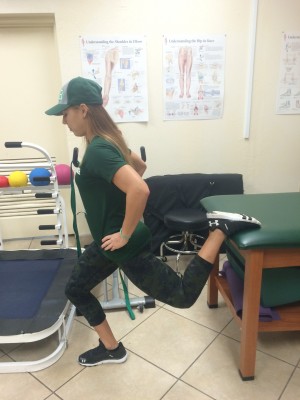
As cyclists we use every muscle in our legs during a specific stage in the pedal stroke. Typically we focus on the larger muscle groups such as the quadriceps and hamstrings, and tend to neglect the hip muscles. Hip muscles, specifically the hip flexors are used significantly during cycling especially when climbing. It is the muscle responsible for bringing the hip into flexion or plainly stated, upwards. Therefore, if we don’t consistently stretch this muscle we can put ourselves at risk for several injuries. Tight hip flexors can make us susceptible to a muscle strain, avulsion fracture where the tendon rips off the bone, anterior rotation of the hip causing a shortened leg, or limited range of motion during cycling which causes decreases in speed. There are several stretches that can be completed solo or with the assistance of a partner.

Hip Flexor – Iliopsoas Stretches

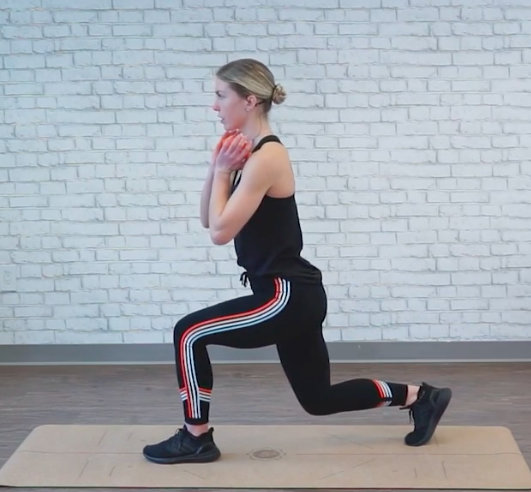
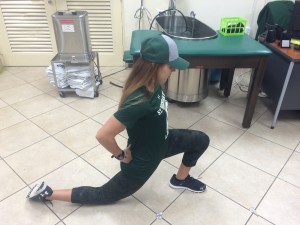
Lunge Stretch

This stretch should be completed approximately 3 times for 30 seconds each. To feel more of a stretch you can push on your glutes to push the hip slightly forward. Make sure to maintain an upright posture when completing this stretch.

Hip flexor stretch
Hip flexor stretch

hip flexor stretch with added push
Hip flexor stretch with added push

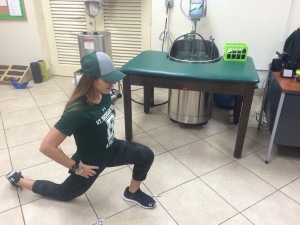
Lunge Stretch with Variation

This is a more advanced stretch of the former and will target more muscle fibers in the hip flexor. By placing the stance leg increasingly forward it will enhance the stretch. It can be completed using the edge of a table, chair, or bleacher at a park. Complete the stretch 3 times for 30 seconds.

hip flexor stretch with variation
Hip flexor stretch with variation

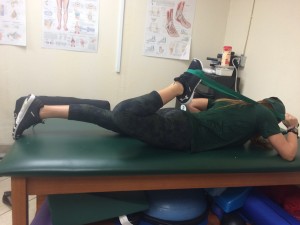
Stretch-Out Strap Hip Flexor Stretch

This stretch can be completed on a flat surface 3 times for 30 seconds each.

stretch out strap hip flexor stretch
Stretch out strap hip flexor stretch

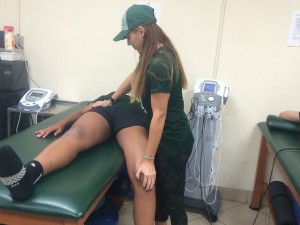
Partner Hip Flexor Stretch

Your partner should push slowly downward on the hip flexor being stretched and stabilize the opposite hip with their other hand. This can be completed 3 times for 30 seconds each.

partner hip flexor stretch
Partner hip flexor stretch

By incorporating these stretches into your normal flexibility routine it will lower your risk of injury as well as maintain normal mobility of the hips. By having good hip mobility it will assist in having a more efficient pedal stroke. If you want targeted stretching routines built for cyclists, check out Dynamic Cyclist for more information.

  • Facebook
  • Tumblr
  • Twitter

Latest Articles

JOIN Cycling: A New Training Platform for Cyclists

May 27, 2024 By Eric Lister

cold exposure

The Benefits of Cold Exposure for Cycling & Life

June 13, 2023 By Eric Lister

hill climb

The Ultimate Hill Climb Training Guide

May 31, 2023 By Eric Lister

shoulder pain cycling

How to Treat & Avoid Shoulder Pain While Cycling

April 12, 2023 By Eric Lister

psoas stretch

The Importance of the Psoas Stretch for Cyclists

April 6, 2023 By Eric Lister

cycling neck pain

The Ultimate Guide to Cycling Neck Pain: Causes and Solutions

March 21, 2023 By Eric Lister

Useful Info

  • Contact
  • Finally, A Global Cycling Club That Is Focused On Community And Love Of Cycling!
  • Privacy Policy
  • Share Your Story!
  • Terms And Conditions Of Use
  • Welcome to I Love Bicycling
  • What Happened When I Stretched Every Day For a Month

Recent Posts

  • JOIN Cycling: A New Training Platform for Cyclists
  • How to Hang Bikes in Your Garage: 4 Inexpensive Options
  • Gravel Bike Vs. Road Bike: Which One Is Better For You?
  • The 6 Types of Mountain Bikes & How to Choose the Best One for You
  • What Is a Touring Bike Good For? 5 Benefits We Know You’ll Love

Search I Love Bicycling

Connect with Us

  • Facebook
  • RSS
  • Tumblr
  • Twitter

Copyright © 2026 · Magazine Pro Theme on Genesis Framework · WordPress · Log in