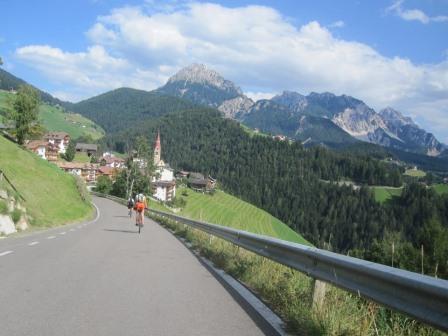
Altitude training is one way to look beyond your typical routine to improve cycling performance. Unlike other performance enhancing methods which are banned in most countries, it’s perfectly legal — with the exception of Italy. Altitude training increases the body’s production of red blood cells. Many professional cyclists have no problem admitting that they use altitude training- unless they’re in Italy — and don’t feel that it violates doping laws.
The Basic Theory
The theory behind altitude training is basic: Exposing a cyclist to a low oxygen environment (a mountain top or simulated altitude room such as a high-tech tent) allows the body to adapt to the stress by becoming more efficient at transporting and using the available oxygen. It includes, among other advantages, stronger circulatory and respiratory muscles, and more red blood cells.
Aerobic Capacity
Cycling in general is an endurance sport with a high dependency on the aerobic, oxygen dependent, energy systems. Your capacity to process oxygen is a deciding factor in cycling performance as it basically helps you to have more endurance at higher speeds.
Mountain Stages and Rides
Altitude training improves the amount of oxygen delivered to muscles by increasing red blood cells and in the process you have an immediate advantage in cycling performance. Being acclimatized to altitude helps performance when your ride takes you into mountains whether in a race or a high-alpine ride.
Not New
The application of altitude training to improve cycling performance is not new. It’s been used by cyclists for more than 40 years. Altitude training came of age during the 1968 Olympics in Mexico City, which is 7,382-feet above sea level. The significantly higher location, with thinner air than the majority of competitor countries, was the catalyst that brought altitude training to fruition worldwide.
Routine Program
Although trainers and athletes might not have been able to explain back then why altitude training worked, they knew it was true. It was proven to make them perform better. With this in mind, altitude training has become a key factor in cycling training programs for high level riders. Altitude training is now regarded as an integral part of an elite athlete’s preparation. It’s a perfect example of coaching surpassing research.
Elite or Amateur
Whether it be elite cyclists preparing for a major competition, or the average cyclist acclimatizing for strenuous rides at a higher elevation, cyclists from around the world are using altitude training more than ever before because it works.
Oxygen and Altitude
Generally speaking, when you take a breath of air at sea level, you will have more oxygen in your lungs than at altitude. As altitude increases, the atmospheric pressure that forces air into your lungs decreases resulting in less oxygen being up taken by the lungs. The effects to your body when riding at altitude are higher heart rate and less power. Because you’re getting less oxygen to your muscles, your body increases it’s heart rate to help bring in more oxygen, which in turn means you reach your maximum output quicker. Altitude also makes it harder to recover from maximum effort.
Live High, Ride Low
There are many studies supporting the concept of living high and training low. Typically, athletes live and sleep at moderate altitudes to acclimatize their bodies. For example: a cyclists living and training in Denver, about 5,130-feet, or one mile above sea level, has a distinct advantage while riding in Seattle, at sea level because of the fact that he or she is trained for cycling in much thinner air, with less oxygen.
Live High, Train Low
It is nearly impossible to train at the same intensity in higher elevations, as when training at sea level because the maximum output of your body is impossible to reach. Therefore athletes living at altitude typically train at lower intensity while high and go to a lower elevation to perform their high intensity training. This is commonly done by living in the mountains and commuting to lower altitudes for training sessions. However, this is impractical for most cyclists. Only a low percentage of the total athletic population has the resources to live high and train low, or even to simply live high for several weeks.
Before Beginning Training
Altitude training requires a well-developed base fitness level, and overall good health. It’s difficult to build a base fitness level at higher altitudes, so going into altitude training with an accomplished base is highly recommended. Appropriate levels of iron in the blood is also important. Iron is one of the building blocks of the red blood cells of which you will hopefully produce in abundance during altitude training.
Training Camps
Some professional or serious cyclists take part in specific altitude training camps when training for races or endurance rides. By spending time at higher altitudes they increase their red blood cells, allowing them to make longer and harder efforts not only at high altitudes but lower ones as well. Again, training camps are impractical for most cyclists, but there are ways around it.
Acclimate Yourself
Setting aside the altitude training regimen, many cyclists simply acclimatize, which is simply staying at the altitude where you plan on racing or riding in preparation the event. Many racers arrive at the race site well in advance to help acclimate to the altitude. By spending extra time at altitude, racers have time to build more red blood cells and become more acclimated, which in turn leads to a lower drop off rate in power when racing.
How Much
Some athletes in studies didn’t improve their performance by living at altitude but statistics suggests that it’s true for the majority of athletes. Research indicates that you need about four weeks living at about 7,000-feet to get the maximum benefit but shorter periods can still be beneficial.
The Downside
But too much of a good thing is not always the best. Cyclists and trainers conclude that three or four weeks at altitude is enough. Any longer than that and cyclist run the risk of muscle loss from riding at lower power outputs and decreased recovery.
Recovery
Recovery is important at altitude. Overall recovery is slower so nutritional measures that include hydration and rest become even more important to enhance recovery. Some cyclists lose their appetite at altitude. Dehydration is also not uncommon. Frequent weighing should be part of the monitoring process.
Get High
Setting aside the scientific data and stats, it won’t hurt you to experiment with altitude training if you have the means. Go ahead and get high. As it is with everything else, approach it with an open mind, and do it in moderation especially at first. Worst case; you’re going to do some amazing riding in some high mountains.